

Getting Lab Test and Imaging Results During Treatment in Turkey

During treatment in Turkey, your doctor orders tests, results go into the hospital system, and your treating physician explains them, often with interpreter support arranged through the international patient team. Some results are ready the same day; pathology, cultures and specialist imaging reviews take longer. Before every test, ask three things: when the result is expected, who will explain it, and whether you need another appointment.
You are waiting on a blood test or a scan, your flight home is booked, and nobody has told you when the result will be ready. Of everything international patients juggle, appointments, language, travel plans, the not knowing is often the hardest part. This guide explains how getting lab test and imaging results during treatment in Turkey actually works: who releases results, who explains them, how long different tests take, what documents to collect before you fly, and how Acibadem’s international patient team fits into each step.
At a glance
- Best time to ask: Before each test, confirm when the result is expected, who explains it, and whether you need a follow-up appointment
- Who explains results: Your treating physician or the relevant specialist, with interpreter support if you request it in advance
- Timing: Basic blood tests may be ready the same day; pathology, cultures, genetic tests and multidisciplinary reviews take longer
- What to collect: Written reports, imaging files (not just the report), discharge notes, medication lists and follow-up recommendations
- Safety note: Do not base medical decisions on translation apps, ask for professional interpretation instead
How getting lab test and imaging results during treatment in Turkey works
The process is more structured than many patients expect. Your physician orders each test as part of your care plan. The laboratory or radiology department processes it, the result is entered into the hospital information system, and your medical team reviews it before or during your next contact with them: a ward visit, an outpatient consultation, a pre-operative review or a scheduled follow-up.
What varies is speed. Some results are available within hours. Others need a specialist’s written interpretation, a second review, or a discussion between departments before anyone can honestly tell you what they mean. That is normal, not a warning sign. The mistake most patients make is not asking about timing until they are already anxious. Getting lab test and imaging results during treatment in Turkey goes far more smoothly when you ask, at the moment the test is ordered, when the result is expected and how it will reach you.
At Acibadem, the international patient services team exists partly to remove this uncertainty. They can tell you which department is handling your test, whether it makes sense to wait in the hospital or return to your hotel, and when your doctor plans to discuss the findings. If you are unsure how a result connects to your wider treatment plan, our guide on understanding what test results mean for the next step in your plan goes deeper.
Who will explain your test or imaging report
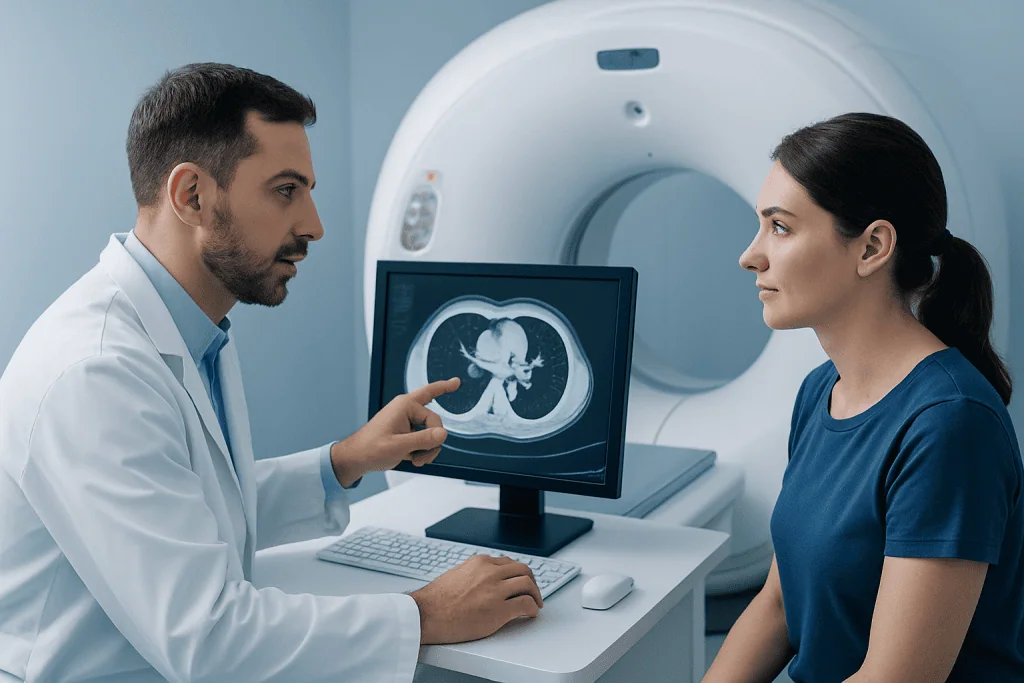
Results should be explained by a qualified member of your medical team, usually the doctor managing your treatment, or the relevant specialist. This matters more than it sounds. A laboratory value or a phrase in a radiology report means very little on its own. Its meaning depends on your diagnosis, your medications, any recent procedures, and how the finding compares with your previous results. A number that looks alarming in isolation may be entirely expected in your situation, and a “normal” line can still matter if the trend is moving.
For imaging, MRI, CT, ultrasound, X-ray, PET-CT or mammography, a radiologist typically reviews the images and writes a formal report. Your treating physician then connects that report with your symptoms, your examination and your treatment goals. So there are often two steps between the scan and the conversation: the radiologist’s report, then your doctor’s interpretation of it. Budget time for both.
If you need English or another language, request interpreter support before the consultation begins, not during it. It is always better to pause and ask for clarification than to nod along and leave uncertain. Two useful requests at the end of any results discussion: ask whether a written summary is available for your own records, and ask what, in plain words, this result changes about your plan. If the answer is “nothing yet, we are waiting for one more test,” that is a legitimate and useful answer.
Understanding timing: urgent, routine, and staged results

Not all results move at the same speed, and knowing which category yours falls into will save you a lot of hotel-room worrying.
- Fast results. Routine blood counts and basic biochemistry are often processed quickly, sometimes the same day. Urgent results, anything your team needs before proceeding safely, are flagged and prioritised.
- Slower results. Pathology after a biopsy, microbiology cultures, genetic tests and some specialised blood work need laboratory time that cannot be compressed. Advanced imaging reports may also take longer when a subspecialist review is appropriate.
- Staged results. Some plans deliberately sequence tests: pre-treatment blood work first, then imaging, then a specialist consultation once everything is on the table. If several departments are involved, your team may wait until all key results are ready before recommending anything. Staging does not automatically mean something is wrong: it is often simply the safest order of operations.
Before you leave any test area, ask three practical questions: when is the result expected, who will explain it, and do I need another appointment? Your coordinator can then plan transport, interpreter availability and hotel timing around real information rather than guesses. If you expect a gap of days rather than hours, our guide on how long results may take and how to plan your stay helps you use that time well.
Two practical notes for imaging specifically. If your scan requires sedation, the preparation and recovery rules change your day considerably, see what to ask about sedation for imaging tests. And if there is any possibility of pregnancy, tell your team before any X-ray-based imaging or surgery; pregnancy testing before surgery or imaging explains why this is asked and when.
One safety point while you wait. Pending results are almost never a reason to sit on worrying symptoms. If you develop something severe or rapidly worsening, such as chest pain, sudden breathlessness, heavy bleeding, or sudden weakness or confusion, call your local emergency number or go to the nearest emergency department now. Do not wait for a scheduled results appointment.
Check-up packages, full body scans, and how costs actually work
Many people searching for results information are also weighing a broader question: is it worth having a full health check or a comprehensive scan while in Turkey? Large hospital groups, including Acibadem, offer structured check-up programmes that combine laboratory tests, imaging and physician consultations in a single coordinated visit, which is one reason international patients often ask about them alongside their main treatment.
Two honest points, because much of what ranks online glosses over both.
First, on cost. You will find pages online quoting package prices, and this guide deliberately will not. The genuine cost of a check-up or scan depends on the scope of the programme, which blood panels, which imaging methods, whether cardiology or other specialist assessments are included, plus your age, sex, history and any findings that lead to additional tests. The only reliable figure is a written quote prepared for you after the hospital knows what is actually being examined. Ask for that quote in writing, ask what it includes and excludes, and ask what happens to the figure if a finding requires further investigation. Our guide on whether a treatment quote can change after new test results explains that last point in detail, because it catches patients out.
Second, on “full body” scans. A whole-body MRI or broad screening scan is not automatically better than a targeted check-up. Broad scans can produce incidental findings that then need more tests to clarify, and the right screening depends on your age, risk factors and symptoms. The sensible route is to describe your health concerns to a physician and let them recommend which tests genuinely serve you, rather than buying the largest package on a price list. Where you can get such an assessment is straightforward: check-up programmes run at major hospital campuses, and the international patient team can direct you to the appropriate one for your visit.
Do tourists get free healthcare in Turkey?
In short: no, you should not plan on it. Turkey’s public health insurance system covers people enrolled in it, typically residents and citizens, not visitors. As an international patient or tourist, you should expect to pay for care yourself, through travel insurance, or through the arrangements you have made directly with the hospital. Emergency departments will assess and treat genuinely urgent cases, but that treatment is not free for visitors and you or your insurer will be billed.
Practically, this means three things. Carry travel or medical insurance documents with you and know what your policy covers, including diagnostics. Confirm with the hospital’s international office, before testing begins, what is included in your existing quote and what would be billed separately. And keep every invoice and report: your insurer at home will usually want both the clinical documents and the financial ones.
Translations, copies, and the documents you should request
Before you return home, collect a complete set of your medical documents. At minimum: laboratory reports, imaging reports, the digital imaging files themselves, operation notes if you had a procedure, pathology results, your medication list, the discharge summary and written follow-up recommendations. This set is what allows your doctor at home to continue your care safely instead of starting from zero.
Three details make the difference between a smooth handover and a scramble at the airport:
- Ask about translation early. If you need reports in English or another language, request this days before departure, not on the morning of your flight. Some documents can be prepared quickly; others need time, and availability varies by document type and department.
- Get the images, not only the report. A written radiology report is useful, but doctors at home often want to view the original images. Depending on hospital policy, digital files may be provided through a secure link, USB or disc. Ask which format is available and request it before your departure day.
- Confirm the channel for pending results. If anything will still be outstanding when you leave, agree in writing who will send it, how, and to whom, you, your home doctor, or both, and whether a remote follow-up consultation is appropriate once it arrives.
If you built an organised records folder before travelling, as described in how to organise your test results before travelling to Turkeysimply extend the same folder with everything generated during your stay. One folder, one story, from first consultation to final discharge.
Protecting your privacy and sharing results safely
Your results are private health information, and the pressure of being abroad tempts people into shortcuts: photographing reports and sending them through messaging apps to relatives and multiple doctors at once. Slow down before you do. Think about who genuinely needs access, whether the image is legible enough to be interpreted safely, and where those copies will live afterwards.
Use official hospital channels wherever possible. If your doctor at home needs the results, ask the hospital team for secure copies in a recommended format rather than forwarding phone photos. Keep your personal copies in a password-protected folder, and never post medical documents publicly.
If a companion is helping you, clarify what they may receive. Hospitals normally need your permission before discussing your results with another person, even a spouse. This is a standard privacy safeguard, not an obstacle. Agreeing in advance who attends consultations and who receives updates prevents awkward moments during a busy treatment week.
When results affect your travel or treatment schedule
Sometimes a result changes the plan. Your doctor may recommend an additional test, a short observation period, or a further review before you fly. This is frustrating when flights and hotels are booked, but the recommendation exists for your safety, and the honest advice is to build flexibility into your stay from the start, especially around surgery, cancer care, fertility treatment, cardiac evaluation or any complex diagnostic work-up.
If you have a fixed departure date, say so early, to your coordinator and your doctor. They can tell you realistically whether your remaining results and final review fit inside your schedule, or whether the travel plans should move. What you should never do is skip a necessary results review to catch a flight without first discussing the risks with your medical team. The international patient team can help with the practical fallout of a changed schedule: appointment coordination, interpreter timing, hotel communication and transport.
Step by step
- Confirm the result pathway before each test. When any blood work, biopsy or scan is ordered, ask when the result is expected and who will discuss it with you. Write down the department name and your next appointment time, do not rely on memory during a busy day.
- Use your coordinator and interpreter support. Your international patient coordinator can explain where to go and how the schedule fits together. If you are not fully comfortable in the consultation language, request an interpreter before results are explained, not after.
- Ask for context, not just numbers. A lab value or a radiology phrase can sound alarming in isolation. Ask your physician what the result means for your diagnosis, your treatment plan, your travel timing and your follow-up.
- Request copies in the right format. Collect written reports, digital imaging files and any translated summaries before you leave. For scans, confirm whether your doctor at home needs the images themselves, not only the report.
- Keep a single results folder. One folder for hospital documents, insurance papers, invoices, prescriptions and appointment notes. Save digital copies securely and carry printed essentials in your hand luggage.
- Plan your final medical review before departure. Do not leave pending questions to the last hours of your stay. Schedule a final review so you understand next steps, warning signs, and exactly who to contact once you are home.
Your checklist
- Ask when each lab or imaging result is expected
- Confirm who will explain the result to you
- Request interpreter support before the consultation, if needed
- Ask for written reports and the digital imaging files
- Check whether translations are available and how long they take
- Keep medication lists and discharge notes together with your results
- Save documents securely and never share them publicly
- Tell your team your flight date and any insurance deadlines
- Agree in writing how pending results will reach you after you leave Turkey
- Keep all invoices for your insurer alongside the clinical documents
Key takeaways
- Results should be interpreted by your medical team in the context of your case, never read in isolation or through a translation app.
- Timing varies by test type: basic bloods can be fast, while pathology, cultures and specialist imaging reviews take longer. Ask in advance.
- Check-up and scan costs depend on scope and findings; the only reliable figure is a written quote prepared for your specific programme.
- Visitors are not covered by Turkey’s public health insurance, plan for insurance or direct payment, and keep every invoice.
- Collect reports, imaging files, translations and discharge documents before departure, and agree how any pending results will follow you home.
Frequently asked questions
How much does a full health check or body scan cost in Turkey?
There is no honest single figure. The cost depends on which laboratory panels and imaging methods the programme includes, whether specialist consultations are part of it, and whether any finding leads to further tests. Ask the hospital for a written quote for your specific programme, confirm what it includes and excludes, and ask how additional findings would be handled and billed.
Where can I get a full body scan or comprehensive check-up in Turkey?
Structured check-up programmes run at major hospital campuses, including Acibadem’s, and the international patient team can direct you to the appropriate location for your visit. Before booking the broadest option, discuss your health concerns with a physician: a targeted check-up chosen for your age, history and risk factors is often more useful than the largest package on a list.
Do tourists get free healthcare in Turkey?
No. Turkey’s public health insurance covers people enrolled in it, typically residents and citizens, not visitors. As a tourist or international patient you should expect to pay for care directly or through travel or medical insurance. Emergency departments will treat genuinely urgent cases, but the treatment is billed to you or your insurer, so carry your policy documents and keep all invoices.
Will I receive my lab and imaging results in English?
Many international patients request English documentation, but availability and timing vary by document type and department. Tell your coordinator as early as possible which reports, summaries or discharge documents you need in English. Some can be prepared quickly; others need extra time for translation, which is why the request should never wait until departure day.
Can I get my MRI, CT, or X-ray images to take home?
In many cases, yes: you can request digital copies of the imaging studies as well as the written report. The format depends on hospital systems and policy: a secure link, USB or disc. Ask before your departure day so there is time to prepare the files, and confirm with your doctor at home whether they want the images, the report, or both.
What if I receive an abnormal result while I am in Turkey?
Try not to interpret it alone or assume the worst. Ask your treating physician what the result means in your specific situation and whether any action is needed, many findings are expected in context or need only monitoring. If the result may affect your travel plans, tell your coordinator promptly so appointments and logistics can be adjusted around the medical advice.
What happens if results are not ready before I leave Turkey?
Agree the pathway before you fly: who will send the result, through which secure channel, and to whom: you, your home doctor, or both. Ask for a named contact person, and ask whether a remote follow-up consultation is appropriate once the result is available. Getting this in writing before departure is far easier than chasing it from another country.
Should I use an online translation tool for my medical reports?
Only for rough orientation, never for decisions. Automated tools miss medical nuance, and a mistranslated phrase in a lab or radiology report can genuinely mislead you. For anything that matters, use the professional interpreter and translation support available through the hospital, and always confirm the meaning of a result with your physician.
Add us as a Preferred Source to see more of our trusted health content across Google Search, AI Overviews and Discover.

Update history
- PublishedJune 8, 2026
- Medical review approvedSeptember 13, 2026
- Last content updateSeptember 12, 2026
References2
- MedlinePlus: How to Understand Your Lab Results medlineplus.gov
- NHS: Blood tests nhs.uk
More Patient Guides

When a Hospital Stay in Turkey Becomes Longer Than Planned: What to Arrange
If your hospital stay in Turkey is longer than planned, arrange medical updates, accommodation, travel changes, insurance and support for your companion.

Waiting for Test Results in Turkey: How to Use Time Between Appointments
Waiting for test results in Turkey is easier with a clear plan for appointments, rest, records, questions and support in Istanbul.

Unexpected ICU Stay in Turkey: What Patients and Families Should Expect
Unexpected ICU stay in Turkey: learn what patients and families can expect, from communication and visiting to care updates and travel support.

How to Manage Special Diets During Medical Travel in Turkey
Special diets during medical travel in Turkey are easier to manage when you share your needs early, confirm meals and carry safe…