

How to Manage Special Diets in Turkey During Treatment and Recovery
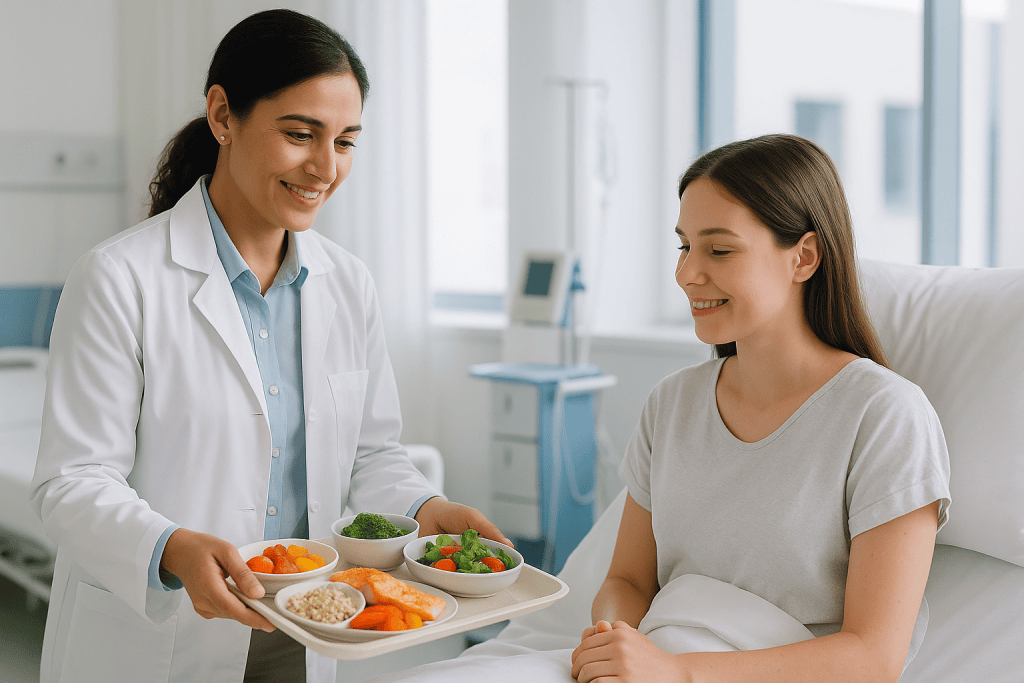
Yes, most special diets can be managed in Turkey during treatment and recovery with early planning. Write your restrictions down in English and Turkish, share them with the hospital before you arrive, confirm them again at admission, and keep meals simple in the early recovery period. Diabetic, gluten-free, low-salt, vegetarian, allergy-aware and texture-modified diets are all routinely supported.
If you follow a gluten-free, diabetic, low-salt or allergy-aware diet, you can usually keep to it while being treated far from home. To manage special diets in Turkey during treatment and recovery, the work happens before you fly: write your needs down, share them with the hospital, and decide what to bring. Do that, and the food side of your stay becomes a routine rather than a daily negotiation.
The most useful window is one to two weeks before travel. That gives your doctor time to note anything that affects your treatment plan, fasting instructions, meal timing around medication, texture requirements after a procedure, and gives the hospital time to record your diet properly. The single most valuable item you can carry is a short written diet card in both English and Turkish. It works when you are tired, when your interpreter is elsewhere, and when a waiter has thirty seconds to listen.
Diet is not a side issue during treatment. It affects your comfort, your energy, the timing of some medications and, if you have allergies, your safety.
At a glance
- Best time to prepare: 1–2 weeks before travel
- Who to inform: Your doctor, care coordinator, ward nurse and travel companion
- Most helpful tool: A one-page diet card written in English and Turkish
- Diets routinely supported: Diabetic, low-salt, gluten-free, vegetarian, allergy-aware, texture-modified
- Why it matters: Diet affects comfort, recovery, medication timing and safety
Start with your medical team, not the menu
The way to manage special diets in Turkey during treatment and recovery is to treat the diet as part of your medical record, not as a food preference you mention on arrival. Your restriction may be linked to allergy, diabetes, kidney disease, digestive problems, religious rules, swallowing difficulty or specific instructions after a procedure. The right plan depends on which of these applies, on your treatment schedule, and on what you can safely eat before and after care, so the conversation belongs with your treating doctor first.
Describe your diet in practical terms rather than broad labels. “I have a sensitive stomach” tells a kitchen almost nothing. “I cannot tolerate dairy, I need soft foods, and I must eat within an hour of my morning medication” tells them exactly what to do. If a restriction is medically necessary, an allergy, coeliac disease, a renal limit, say so explicitly and ask for it to be written into your records. A documented restriction follows you from admission to discharge; a spoken one depends on who happens to be on shift.
Sharing these details with the hospital before you arrive means the care team understands your needs from day one. This matters most when your treatment involves fasting instructions, changes to medication timing, or a recovery period in which your usual diet is temporarily adjusted. For a fuller breakdown of exactly which details to communicate, see what to tell your care team about food allergies and special diets.
Know what to prepare before you arrive
A modest amount of preparation prevents most of the stress. Write a one-page summary of your dietary needs in simple English and, if you can, a Turkish translation. It should list your allergies, the foods you must avoid, the foods that are usually safe for you, and any timing rules, eating with medication, or keeping regular meals for blood sugar control. Keep one copy in your hand luggage and one with your companion.
If you rely on specialist nutritional products, protein drinks, gluten-free staples, a particular formula, ask in advance whether they are available locally or whether you should bring an unopened supply. Availability varies by brand and city, and “a similar product” is not always an acceptable substitute mid-treatment. Keep everything in its original packaging and check airline and customs rules before you fly. For supplements, carry an ingredient list and show it to your doctor; whether any supplement continues, pauses or changes around treatment is a decision for your treating team, not something to work out yourself.
Pack a few travel-safe snacks that fit your diet: plain crackers, sealed gluten-free products, nut-free snacks if appropriate, or nutrition drinks your doctor has approved. Even when hospital meals are fully arranged, having something familiar within reach helps during flight delays, late arrivals and the first unpredictable day after discharge. It is a small bag of insurance, not a food supply: the aim is to cover gaps, not to replace meals.
Managing meals in hospital and during recovery
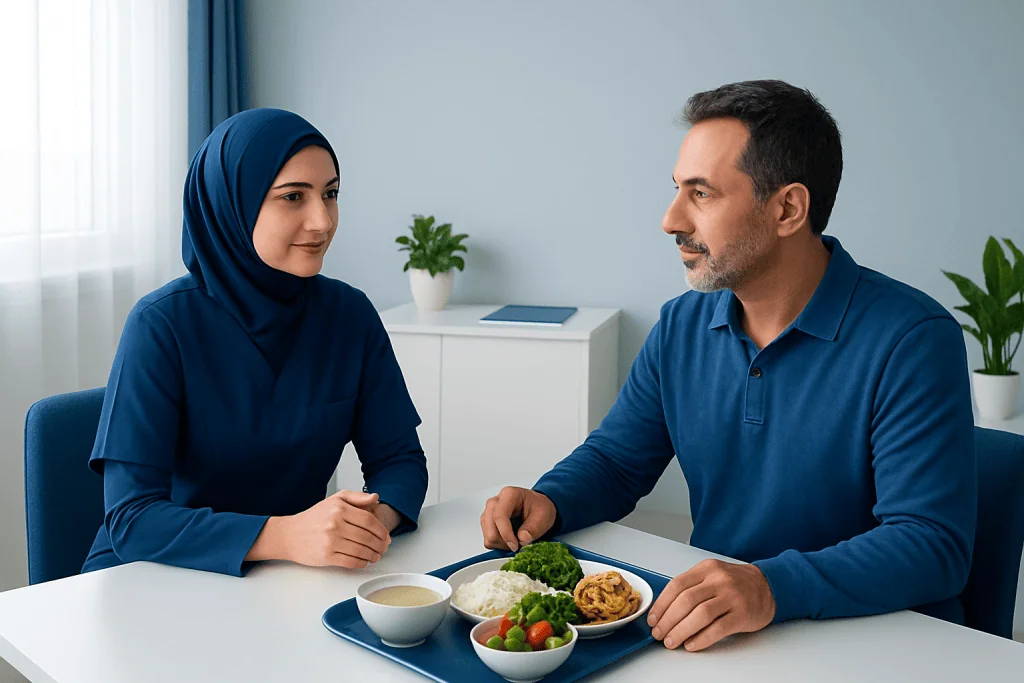
In hospital, your meal plan may change with your treatment. You might fast before a procedure, start with clear liquids afterwards, then move gradually through soft foods to a regular diet. Follow the instructions you are given rather than returning straight to your normal routine, even if you feel hungry and well. The sequence exists for clinical reasons, and it is usually short.
If your diet is medically important, state it again at admission and again if a tray arrives that does not match what you expected. Hospitals are busy places, and polite repetition is a legitimate tool. Ask what the plan is for the first 24 to 48 hours after treatment, so you and your companion know whether to expect clear fluids, lighter meals, smaller portions or temporary restrictions. Knowing the sequence in advance stops every tray becoming a surprise. Our separate guide on managing special diets during hospital care in Turkey covers the ward routine in more detail.
Interpreters and patient coordinators can clarify dietary instructions, explain what is in local dishes, and clear up questions about ingredients, textures or meal timing. Use them: a two-minute translated conversation is faster than three attempts at gesturing about gluten.
- Ask whether your diet note is visible in your chart.
- Confirm any allergy-related restrictions at admission.
- Ask when you can safely resume normal eating.
- Mention early if nausea, constipation or poor appetite is limiting what you can eat.
Eating safely outside the hospital in Turkey
If you recover in a hotel, residence or apartment, food choices outside the hospital matter just as much as those inside it. Turkish food is often fresh and simply cooked, which works in your favour, but ingredients and preparation vary, particularly in soups, sauces, breads, desserts and grilled dishes. Never assume a dish is safe based on its name or appearance. Stock and broth bases, butter finishes and shared grills are the usual sources of surprises.
Simple meals are easiest to manage and easiest to verify. Plain grilled proteins, rice, yoghurt if you tolerate it, cooked vegetables, bananas, eggs, clear-ingredient soups and basic breakfast items tend to sit better during recovery than rich, spicy or fried food. If you have been advised to eat lightly, ask for dishes prepared plainly, without extra butter, sauce or seasoning: Turkish kitchens generally handle this request without fuss. Ordering in can be simpler than eating out in the first days; our guide to ordering food and groceries during hotel recovery in Turkey explains how the delivery apps work and how to add dietary notes to an order.
Where language is a concern, your written translation card does the heavy lifting. It should state exactly what you cannot eat and how serious the consequence is, “allergy, medical emergency” reads very differently from “prefers to avoid”. If you are travelling with a companion, ask them to double-check orders. And keep an eye on fluids as well as food: appetite often returns before thirst signals do, and hydration during recovery in Turkey deserves the same planning as meals.
Handling common special diets and food concerns
Different diets fail in different ways, so it helps to know where your particular risk sits. The table below summarises the pattern for the diets international patients most often bring to Turkey.
| Diet or need | Main challenge in practice | What usually helps |
|---|---|---|
| Diabetic | Meal timing, carbohydrate consistency, fasting before tests or procedures | Agree a timing plan with the care team; carry approved snacks; ask in advance how fasting days will be handled |
| Gluten-free | Hidden gluten in bread, soups, sauces and desserts; cross-contact in kitchens | A written card naming wheat, barley and rye; choosing naturally gluten-free dishes; bringing sealed staples |
| Low-salt or renal | Broths, cured foods and cooking method matter as much as the ingredient list | Ask for plainly cooked food without added salt; keep portions consistent; confirm the restriction is in your chart |
| Vegetarian or religious rules | Meat-based broths, hidden animal ingredients, shared preparation | State the rule precisely on your card; ask specifically about stock bases, not just visible ingredients |
| Food allergy | Mixed dishes, desserts, baked goods and shared surfaces | Documented restriction in your records; the strongest possible wording on your card; a briefed companion |
| Texture-modified | Matching consistency to your stage of recovery after treatment | Confirm the current texture stage with your team before each change; keep soft, smooth options available |
Whatever the category, the working principle is the same: the more precisely your restriction is written down, the less depends on memory, language or luck.
When appetite, taste or digestion change
Treatment can change how food feels. Taste may flatten, hunger may disappear, digestion may slow. None of this means your diet plan has failed: it means the plan needs small adjustments. Smaller meals more often, room-temperature foods when nausea is present, and soft, protein-rich options when chewing is tiring are common, sensible adaptations. Mention changes early rather than pushing through them; a dietitian can usually adjust things within a meal or two. There is a broader look at this in eating and drinking during recovery in Turkey.
Your care team remains the best source of advice tailored to your treatment, because the right adjustment depends on the procedure you had, the medications you take and how your recovery is progressing.
What to do if something goes wrong
Even with good planning, things slip. A tray arrives with an ingredient you avoid. Your snacks run low. Your appetite is far below what you expected. The pattern that works is the same each time: raise it quickly rather than managing alone while recovering.
If a meal does not match your diet, leave it untouched until it has been checked. Tell the nurse, the patient coordinator or the restaurant staff exactly what the problem is; kitchens replace dishes far more easily than anyone repairs a mistake after the fact. If you carry prescribed emergency medication for an allergy, keep it accessible at all times and make sure your companion knows where it is and how it is used. In hospital, any suspected reaction is handled on the spot by the clinical team: this is one of the practical advantages of recovering close to your treating hospital.
For less urgent problems, constipation, nausea, poor fluid intake, difficulty tolerating regular food, the care team can suggest temporary meal adjustments, hydration strategies or timing changes around medication. You do not need to guess your way through recovery. Raising a small problem early is almost always easier than solving a bigger one later.
Step by step
- Write down your exact dietary needs. Create a clear one-page list of foods you must avoid, foods you can safely eat, and any timing rules linked to medication or blood sugar. Be specific, especially for allergies, gluten-free needs, texture requirements and fasting concerns.
- Send the information before you travel. Share your diet summary with your hospital contact, doctor or international patient coordinator before arrival if possible. This gives the team time to add your needs to your care plan and flag anything that could affect treatment or recovery.
- Bring translations and backup snacks. Carry your dietary information in English and Turkish, along with a few safe, travel-friendly snacks. They earn their place at airports, during transfers and in the first day or two when your appetite and schedule are unpredictable.
- Reconfirm your diet at admission. Tell the nurse and care team about your diet again when you check in, even if it was discussed weeks earlier. Ask them to confirm it is recorded correctly, particularly if you have an allergy or a medically necessary restriction.
- Ask what you can eat after treatment. Before discharge, or as soon as you are stable enough, ask exactly what foods and drinks are recommended for the next few days, liquids first, soft foods, small portions, or anything to avoid temporarily.
- Keep meals simple during early recovery. Plain, familiar foods are easier to tolerate and easier to check for ingredients. Save richer or more complicated meals for later in your recovery, once your team confirms your diet has returned to normal.
- Speak up quickly if something is not right. If a tray, restaurant order or delivery meal seems unsuitable, ask before eating. If eating itself becomes difficult, nausea, poor appetite, trouble keeping fluids down, tell the team looking after you early rather than waiting for it to resolve.
Your checklist
- A written list of your dietary restrictions and allergies
- Turkish translation card for essential food warnings
- Safe travel snacks for the journey and first recovery day
- List of supplements or nutrition products you use, with ingredients
- Questions prepared about fasting and post-treatment eating instructions
- Emergency allergy medication, if prescribed for you, packed and accessible
- Companion briefed on your diet card and where your medication is kept
- Hotel or apartment plan for simple recovery meals and deliveries
Key takeaways
- With early planning and clear communication, most people can manage special diets in Turkey during treatment and recovery.
- Tell your medical team about allergies, restrictions and meal timing needs before arrival, and again at admission.
- Bring a translated diet card and a small supply of safe snacks or specialist products if you rely on them.
- Follow post-treatment eating instructions carefully, even where they temporarily differ from your normal routine.
- Use interpreters, patient coordinators and your companion to prevent food misunderstandings before they happen.
Frequently asked questions
Can I manage a gluten-free, diabetic or allergy-aware diet in Turkey during treatment?
In most cases, yes, but planning does the work. Tell the hospital about your needs in advance, describe them in practical detail rather than broad labels, carry written translations, and bring backup snacks or specialist products if you depend on them.
Should I bring my own food or supplements to Turkey?
A small supply of safe, travel-friendly food is useful for the journey and the first recovery day. If you rely on specialist products or supplements, show the ingredient list to your doctor, whether they continue around treatment is a decision for your treating team, and pack them in original containers after checking airline and customs rules.
What if I need meals at set times because of diabetes or medication?
Raise this as early as possible with your care team and coordinator. Tests, fasting instructions and recovery routines can all shift meal times, so it helps to agree in advance how your timing needs will be handled on those days.
Will hospital staff understand my dietary restrictions if I do not speak Turkish?
They can support you far more effectively when your needs are written down clearly in both languages. Interpreters and international patient coordinators help translate the detail, allergies, restricted ingredients, meal timing and post-treatment instructions, so nothing depends on gestures or guesswork.
Is Turkish food suitable for a special diet during recovery?
Often, yes. Plain grilled proteins, rice, yoghurt, cooked vegetables, eggs and simple soups are widely available and easy to verify. The caution points are broths, sauces, breads, desserts and shared grills, where ingredients are less visible, which is why a written card matters more than the cuisine itself.
What should I do if I am given the wrong meal?
Leave it untouched until it has been checked, and tell the nurse, coordinator or restaurant staff exactly what the problem is so it can be replaced. If you carry prescribed emergency allergy medication, keep it accessible and make sure your companion knows where it is.
Can my companion help with meal planning and food safety?
Yes, and it is one of the most useful roles they can play. A companion can keep your diet card to hand, double-check restaurant and delivery orders, help track what you have actually eaten and drunk, and notice early when your appetite or intake is falling behind.
Add us as a Preferred Source to see more of our trusted health content across Google Search, AI Overviews and Discover.

Update history
- PublishedJuly 6, 2026
- Medical review approvedSeptember 1, 2026
- Last content updateSeptember 1, 2026
References3
- CDC Travelers' Health: Food and Water Safety wwwnc.cdc.gov
- MedlinePlus: Diets medlineplus.gov
- NHS: Food allergy nhs.uk
More Patient Guides

When a Hospital Stay in Turkey Becomes Longer Than Planned: What to Arrange
If your hospital stay in Turkey is longer than planned, arrange medical updates, accommodation, travel changes, insurance and support for your companion.

Waiting for Test Results in Turkey: How to Use Time Between Appointments
Waiting for test results in Turkey is easier with a clear plan for appointments, rest, records, questions and support in Istanbul.

Unexpected ICU Stay in Turkey: What Patients and Families Should Expect
Unexpected ICU stay in Turkey: learn what patients and families can expect, from communication and visiting to care updates and travel support.

How to Manage Special Diets During Medical Travel in Turkey
Special diets during medical travel in Turkey are easier to manage when you share your needs early, confirm meals and carry safe…