

Ordering Food and Groceries During Hotel Recovery in Turkey

You can order restaurant meals and supermarket groceries to most hotels in Turkish cities using delivery apps such as Yemeksepeti, Getir, Trendyol Yemek and Migros. Set up an app before you need it, confirm your hotel's delivery policy, keep your discharge diet instructions in mind for every order, and stock simple staples, bottled water, yoghurt, soup, fruit, so you are never dependent on a single meal arriving on time.
It is your first evening back at the hotel after treatment. You are tired, your appetite is unpredictable, and you are not sure what you should eat or how to get it to your room. This is one of the most common practical problems international patients face in Turkey, and one of the easiest to solve with a little preparation.
This guide covers ordering food and groceries during hotel recovery in Turkey from start to finish: which delivery apps exist and how they behave without a Turkish phone number, how supermarket delivery works, what your hotel can and cannot do, how to communicate allergies and diet rules, and what Turkish customs rules mean if you planned to bring food with you.
At a glance
- First step: Your discharge diet instructions decide what you order. Read them before you open any app.
- Main tools: Delivery apps such as Yemeksepeti, Getir and Trendyol Yemek, supermarket apps, hotel room service and reception.
- Set-up warning: Some apps are awkward to register without a Turkish phone number. Test them before you are hungry.
- Language: Short written notes in Turkish and English handle most allergy and diet requests better than long explanations.
- Payment: Cards work on most platforms, but a small amount of Turkish lira is useful for tips and door payments.
- Safety habit: Sealed drinks, well-cooked fresh food, small portions, nothing left sitting at room temperature.
Start With Your Recovery Diet, Not the Delivery App
Before your first order, read the discharge instructions your doctor, nurse or dietitian gave you. After some procedures you may be asked to choose soft foods, avoid spice, limit salt, increase protein, or stay away from particular ingredients for a defined period. Treat ordering food and groceries during hotel recovery in Turkey as part of your recovery plan, not as a separate convenience decision. The app can deliver almost anything; your discharge notes tell you which part of “almost anything” applies to you.
If the guidance you received was verbal, ask for a short written summary before you leave the hospital. A few lines on paper or in a message, what to eat, what to avoid, for how long, is far more useful at 9 pm in a hotel room than trying to remember what was said on discharge day.
When no specific restriction applies, plain and familiar tends to work best in the first days: soup, grilled chicken or fish, rice, yoghurt, eggs, bananas, toast, oats and cooked vegetables are usually easier to tolerate than rich, fried or heavily seasoned dishes. Turkish menus make this easy, lentil soup (mercimek çorbası), plain rice (pilav), grilled chicken (tavuk ızgara) and yoghurt are on almost every delivery menu. The broader question of what and how to eat in this period is covered in more depth in our guide to eating and drinking during recovery in Turkey.
Food Delivery Apps and How They Usually Work
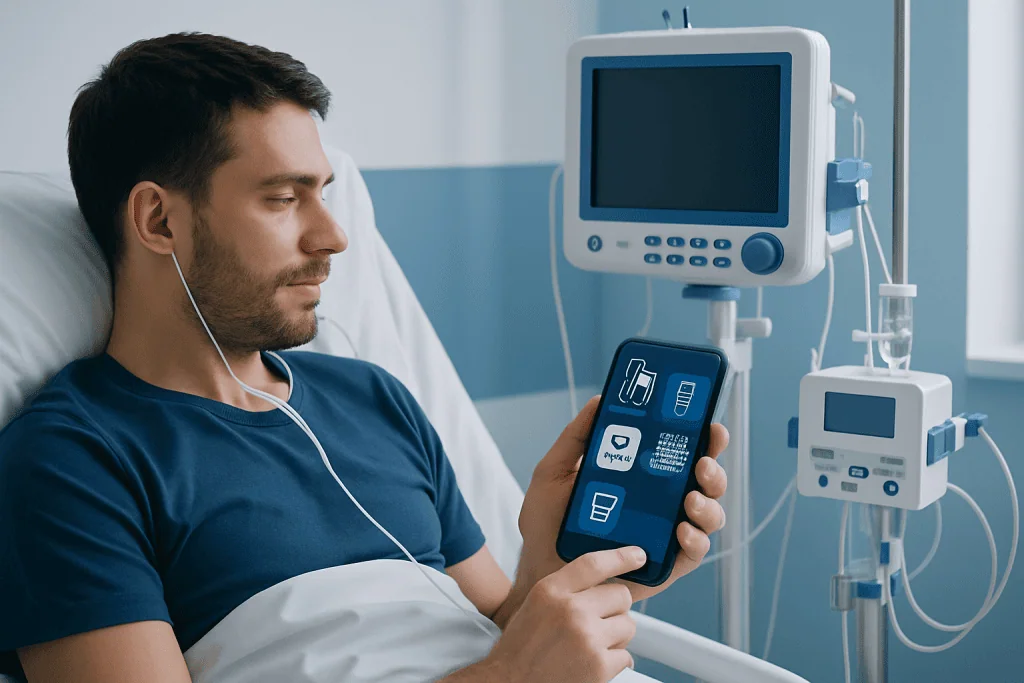
Turkey has one of the busiest food delivery cultures in Europe. In Istanbul, Ankara, Izmir, Antalya and other major cities, delivery runs from morning until late evening, and in central districts often past midnight. The platforms you are most likely to use are:
- Yemeksepetithe longest-established restaurant delivery app, with wide coverage and an English interface option.
- Getirbest known for rapid convenience-store delivery of groceries and everyday items, with a restaurant arm (GetirYemek) in many areas.
- Trendyol Yemekrestaurant delivery inside the Trendyol shopping app, strong in large cities.
- Migrosa major supermarket chain whose apps handle both fast small orders and full grocery shops.
There is no single “best” app; coverage depends on your exact hotel address, the time of day and each restaurant’s delivery radius. It is normal for one app to show plenty of options at your address and another to show few. Install two, not one.
Registration is the step that catches international patients out. Most apps ask for a phone number to verify your account, and some handle foreign numbers imperfectly. Test the full process, address, restaurant, payment, on a small order before you actually depend on it. If registration fails, the fallbacks are practical: a companion with a working account, hotel reception ordering on your behalf, or an eSIM or local SIM with a Turkish number, which many medical travellers arrange anyway.
Use the order notes field deliberately. Short, concrete requests translate well: no spicy sauce, no nuts, no sesame, no raw onion, please include cutlery. For a serious allergy, an app note is not enough on its own, call the restaurant, ask reception to call in Turkish, or choose packaged grocery items with a printed ingredient list. Our guide on handling food allergies and special diets during treatment in Turkey goes into this in detail.
Grocery Delivery for Hotel Recovery Basics

Groceries are often more useful than restaurant meals during hotel recovery, for a simple reason: recovery appetite is irregular. You may want half a banana at 10 am, soup at 3 pm and nothing at dinner time. A small stock of supplies in your room lets you eat when your body asks, instead of ordering a full meal and watching it go cold.
Supermarket delivery in Turkish cities is fast and well developed. Getir and Migros Hemen deliver small orders quickly; Migros Sanal Market and CarrefourSA handle larger shops with a scheduled slot. A sensible recovery basket looks like this:
- Staples: bottled water, plain yoghurt (yoğurtTurkish supermarkets excel at it), bananas, bread, cheese, oats, crackers, ready soups, herbal tea.
- Easy extras: applesauce, rice cakes, easy-open snacks, and an electrolyte drink only if your treating team has said it suits you.
- Comfort supplies: tissues, wet wipes, lip balm, paper towels, small bin bags: the things that make a hotel room liveable when you are moving slowly.
Match the basket to your room. If there is no kitchenette, skip anything that needs cooking, freezing or real preparation. If there is only a small minibar fridge, buy perishables in small quantities and often, rather than in one large shop. Ordering food and groceries during hotel recovery in Turkey works best as a rhythm, a small grocery order every day or two, not as a single stockpiling event on day one.
Working With Your Hotel: Reception, Room Service and Storage
Your hotel is part of your recovery logistics whether it knows it or not, so brief it early. On the day you return from hospital, or before, if a companion can do it, ask reception a short list of questions: Can couriers come to the room, or must orders be collected downstairs? Will you call my room when a delivery arrives? Can refrigerated items be held briefly at reception? What are the room service hours, and can I get extra bottled water or a kettle? The answers shape everything else in this guide, and they vary widely between hotels. The practical mechanics, courier handovers, reception holding items, what to do when you cannot come downstairs, are covered fully in our guide to receiving deliveries at your hotel during recovery in Turkey.
Room service is the lowest-effort option when you are exhausted, and most kitchens will make simple adjustments if you ask plainly: sauce on the side, less salt, no chilli, plain rice, well-cooked eggs. If you have a genuine dietary restriction, ask for confirmation rather than assuming the kitchen understood. A repeated-back order is worth more than a nod.
Storage deserves a moment of honesty. A minibar fridge is small, often warm at the door shelves, and sometimes shared with medication that must stay cold, check with your team how any refrigerated medicine should be stored before yoghurt competes with it for space. Do not keep perishable food at room temperature for hours, and if you are unsure how long a meal has been sitting out, discard it and order fresh. During recovery, a wasted meal is a far smaller problem than a bad one.
Dietary Restrictions, Allergies and Translation Tips
If you have allergies, religious dietary needs, vegetarian or vegan preferences, diabetes, gluten sensitivity or a prescribed nutrition plan, prepare short written notes in both Turkish and English before you need them. Keep them on your phone and show them to hotel staff, restaurant teams or couriers. Direct, short sentences work: fındık ve fıstık alerjim var (I am allergic to nuts), susamsız (no sesame), acısız (not spicy), domuz eti yok (no pork), şekersiz (no sugar). A few more phrases worth having ready are collected in our guide to basic Turkish phrases for hospital and hotel recovery.
Translation apps help with menus, but they are not reliable enough to carry a serious allergy on their own. For high-stakes restrictions, the safer pattern is: packaged foods with printed ingredient labels, or restaurants where a person has confirmed the preparation in words, not a machine-translated comment field. Pork is rare in Turkish cuisine and alcohol-free options are everywhere, which makes halal and alcohol-free eating straightforward; nut, sesame and dairy avoidance takes more care, because all three are common in Turkish cooking and baking.
If your restriction is clinically important after treatment, ask your care team to put it in writing before discharge; that written note becomes your reference for every hotel meal afterwards.
Food Safety and Hydration During Recovery
Recovery changes your margins. A digestive upset that would be a nuisance on holiday can interrupt medication schedules, hydration and sleep when you are healing, so it is worth being more conservative than usual. The general travel-health principles apply with extra weight: choose freshly cooked, thoroughly cooked food served hot; be cautious with raw seafood, undercooked meat, unwashed raw produce and buffet dishes that have stood for a long time; prefer sealed, packaged drinks. Delivery actually helps here: a meal cooked to order and delivered promptly is usually a better bet than food that has waited.
Hydration matters as much as food, particularly if you are taking pain medication, resting in a warm room, or moving between appointments in summer heat. Keep water within reach rather than across the room, and drink through the day rather than in large amounts at once. Many medical travellers simply use sealed bottled water throughout the trip because it is predictable and easy to have delivered by the crate. If you were given fluid restrictions because of a heart, kidney or other condition, those instructions take precedence over any general advice, including this paragraph. For a fuller treatment of the topic, see our guide to drinking water and hydration during recovery in Turkey.
It also helps to notice patterns rather than single events. Appetite, portion tolerance, nausea and bowel habits all shift during recovery, and a few written lines a day make those shifts visible to you and to your clinicians at follow-up. A short daily log takes two minutes and gives you something concrete to describe instead of a vague sense that meals have not been sitting well.
Bringing Food Into Turkey: What Customs Rules Mean for You
Some patients plan to bring familiar foods from home rather than rely on local shopping. That can work for commercially packaged, shelf-stable items in personal quantities, sealed snacks, specialist gluten-free products, familiar teas. It does not work for everything: like most countries, Turkey restricts travellers from bringing in meat, dairy and other animal-origin products, and rules on fresh produce, seeds and plant material are strict. Rules change, so check the official guidance of your own government and, where relevant, Turkish customs before you fly rather than relying on forum posts.
In practice, most patients find they do not need to import much. Turkish supermarkets carry lactose-free milk, gluten-free ranges, sugar-free products and a very wide yoghurt and soup selection, all deliverable to your hotel within the hour in city centres. What is genuinely worth packing, and what is not, is covered in our guide to packing for medical treatment in Turkey.
Step by step
- Confirm your food rules before leaving the hospital. Ask what you should eat, what to avoid and how long any restriction applies. If the guidance is verbal, request a short written summary you can keep on your phone.
- Set up delivery access before you are hungry. Install one restaurant app and one grocery app, save your hotel address precisely (hotel name, district, room number in the notes), and place a small test order while a companion or reception can help if something fails.
- Brief the hotel. Learn whether couriers reach your room or stop at reception, whether reception will call up, and how orders get upstairs if you cannot collect them yourself.
- Build a recovery basket. Order water, simple snacks, easy proteins and comfort supplies in one grocery order so no single missed meal matters. Reorder little and often rather than stockpiling perishables in a minibar fridge.
- Attach notes to every order. No spicy sauce, no nuts, please include cutlery, short and literal. For medical diets or serious allergies, get confirmation from a person, not just the comment field.
- Eat small and observe. Start with modest portions, note how meals sit with you, and record anything unusual in a short daily log so your clinicians see the pattern at follow-up.
- Plan appointment days in advance. Order early or keep an approved snack with you on follow-up days. Istanbul traffic and clinic waiting times are exactly when finding suitable food becomes hardest.
Your checklist
- Written discharge diet instructions saved on your phone
- One restaurant app and one grocery app tested and working at your hotel address
- Hotel delivery policy confirmed with reception, plus their phone number saved
- Turkish and English notes for any allergy or dietary restriction
- Bottled water and simple snacks within arm’s reach of the bed
- Payment card set up in apps, plus a small amount of Turkish lira
- Fridge space checked, with refrigerated medicine stored as your team directed
- A plan for who brings deliveries upstairs on days you cannot
Key takeaways
- Food and grocery delivery are well developed in Turkish cities, but app registration and hotel policies vary, test both before you depend on them.
- Your discharge diet instructions govern every order; the app only executes them.
- A small, regularly refreshed grocery stock beats relying on individual restaurant meals when appetite is irregular.
- Short written Turkish notes handle allergies and restrictions better than translation apps mid-order.
- Sealed drinks, freshly cooked hot food and small portions are the low-effort food-safety habits that matter most during recovery.
Frequently asked questions
What is the best app to order food in Turkey?
There is no single best app, coverage depends on your exact address. Yemeksepeti is the longest-established restaurant delivery platform, Getir is strongest for rapid grocery and convenience orders, and Trendyol Yemek and Migros are widely used in large cities. Most international patients install two apps and use whichever shows better options at their hotel.
Can I order food delivery directly to my hotel room in Turkey?
Often, but it depends on the hotel. Some allow couriers up to the room; others require all deliveries to be collected at reception, which staff may or may not bring upstairs. Ask the front desk about their policy before placing your first order, and agree how you will be notified when something arrives.
What is the most common food poisoning infection in Turkey?
As in most travel destinations worldwide, the most common food-related illness among visitors is travellers’ diarrhoea, which is usually caused by bacteria: E. coli strains are the most frequently identified, and less often by viruses or parasites. The standard precautions reduce the risk: freshly cooked food served hot, sealed drinks, and care with raw or long-standing dishes.
What are the food restrictions for Turkey’s customs?
Like most countries, Turkey restricts travellers from bringing in meat, dairy and other animal-origin products, and applies strict rules to fresh produce, seeds and plants. Commercially packaged, shelf-stable foods in personal quantities are generally treated more leniently. Rules change, so check your own government’s official travel guidance and Turkish customs information before flying rather than relying on unofficial sources.
What if I have a food allergy or strict dietary requirement?
Prepare short written notes in English and Turkish and use them with every order. For serious allergies, do not rely on app comment fields alone: get spoken confirmation from the restaurant or hotel kitchen, or choose sealed grocery products with printed ingredient labels. If the restriction is medically important, ask your care team to write it down before discharge so you have a reliable reference.
Do delivery apps work without a Turkish phone number?
Sometimes, but not reliably, some apps verify accounts by SMS and handle foreign numbers imperfectly. Test registration before you need it. If it fails, common workarounds are a local SIM or eSIM, a companion’s account, or asking hotel reception to place orders on your behalf.
Should I use cash or card for deliveries?
Most platforms and hotels accept card payments, though card compatibility varies for international visitors, and some couriers take payment at the door. A modest amount of Turkish lira is useful for tips and small purchases. There is no need to carry large amounts of cash.
Is tap water safe to drink during recovery in Turkey?
Most residents and travellers in Turkish cities drink bottled water, and during a medical trip sealed bottled water is the simple, predictable choice, grocery apps deliver it by the crate. If your treating team gave you fluid restrictions or specific hydration instructions, those take precedence over any general habit.
Add us as a Preferred Source to see more of our trusted health content across Google Search, AI Overviews and Discover.

Update history
- PublishedJune 16, 2026
- Medical review approvedSeptember 13, 2026
- Last content updateSeptember 12, 2026
References3
- Travelers' Diarrhea: CDC Yellow Book wwwnc.cdc.gov
- Food and Water Safety: CDC Travelers' Health wwwnc.cdc.gov
- Foreign travel advice: Turkey: GOV.UK gov.uk
More Patient Guides

GHIC and EHIC in Turkey: Why They Do Not Cover You
The blue card that quietly covers you across Europe stops working at the Turkish border, and every summer, travelers discover this…

Do You Need Vaccinations for Turkey?
Here is the answer travel clinics give every day: no vaccinations are required to enter Turkey from anywhere in the normal course…

Flying With a Broken Leg or Cast: Airline Rules and Comfort
A broken leg does not cancel a flight, airlines carry passengers in casts every single day. What surprises travelers is that…
Travel Insurance After Cancer: What Patients Should Know
A cancer diagnosis changes how insurers read your name, but it does not end your traveling life. Thousands of people with…