

Drinking Water and Hydration During Recovery in Turkey
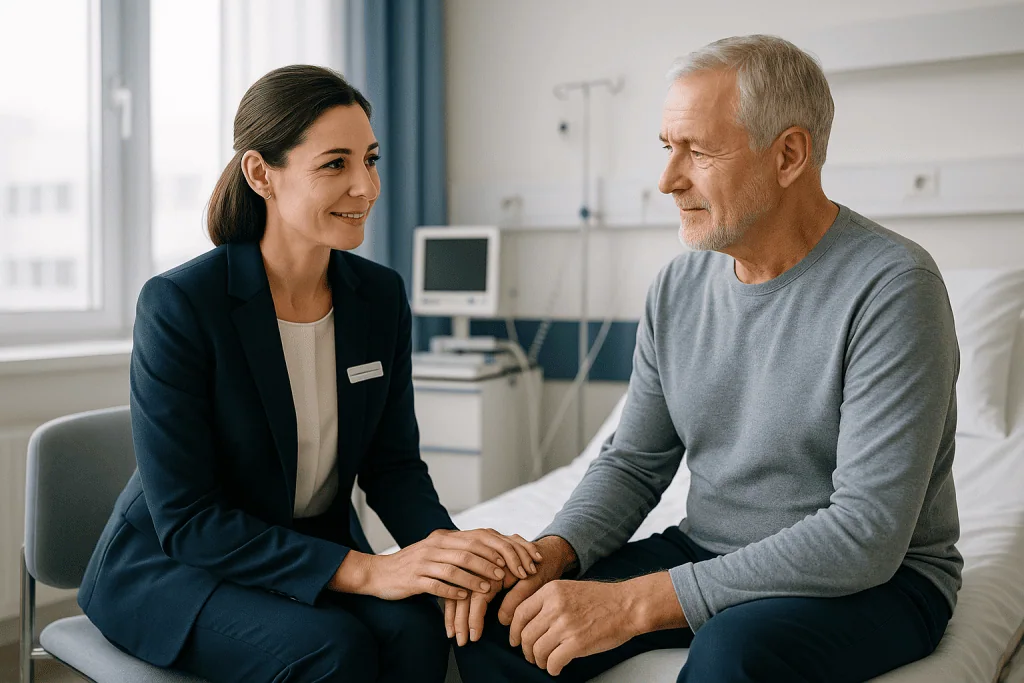
Sealed bottled water is the simplest everyday choice for most international patients recovering in Turkey. Sip small amounts regularly rather than drinking large volumes at once, and follow any procedure-specific fluid plan from your discharge papers first. Hydration supports comfort and normal body function during recovery, but it is a daily habit, not a treatment, and for some conditions, more fluid is not better.
Two questions come up again and again in the days after discharge: can you drink the tap water at your hotel, and how much should you be drinking at all? Both have practical answers. Drinking water and hydration during recovery in Turkey are mostly a matter of simple habits, the right bottle in the right place, sipped at the right pace, shaped by whatever fluid instructions your treating team gave you before you left the ward.
This guide covers the practical side: tap versus bottled water, how much to drink after treatment, electrolytes and other fluids, hotel routines, and how to stay hydrated on transfer days and the flight home. It explains what is generally true; your discharge papers describe what is true for you, and where the two differ, your papers win.
At a glance
- Best everyday option: sealed bottled water, unless your care team or accommodation confirms another suitable source.
- Pace: sip small amounts steadily through the day rather than drinking large volumes at once.
- Exceptions exist: heart, kidney and liver conditions, swelling, and some procedures come with measured fluid plans: those plans override general advice.
- Other fluids: soups, teas and electrolyte drinks all count, but not all of them suit every patient.
- Travel days: the most common time to under-drink. Plan water for transfers, airport waits and the flight.
Why drinking water and hydration during recovery in Turkey matter
Recovery abroad asks more of your body than recovery at home. You are adjusting to treatment and medication at the same time as travel fatigue, disrupted sleep, an unfamiliar climate and a changed routine. Drinking enough fluid helps your body do its ordinary work, circulation, digestion, temperature regulation, and reduces the avoidable discomforts of running dry: headache, dry mouth, sluggishness, and lightheadedness when you stand up.
It is worth being honest about what hydration is and is not. It is not a treatment, and drinking extra water does not accelerate healing beyond what your body needs. What it does is remove an unnecessary obstacle. A patient who is mildly dehydrated tends to feel worse than their recovery actually warrants, more tired, more headachy, more nauseated, and Turkey’s warmer months make that easier to slip into than many visitors expect. If you are travelling in July or January, the climate itself changes how much you lose through sweat and dry indoor air; our guide to how weather affects recovery plans in Turkey covers that side in detail.
The other honest point: for some patients, more fluid is not better. People with heart failure, kidney or liver disease, significant swelling, low sodium or a documented fluid restriction are often given a measured plan rather than a general “drink plenty” instruction. This guide describes the general case. A measured plan from your treating doctor always comes first.
Drinking water in Turkey: tap, bottled, and what most patients choose
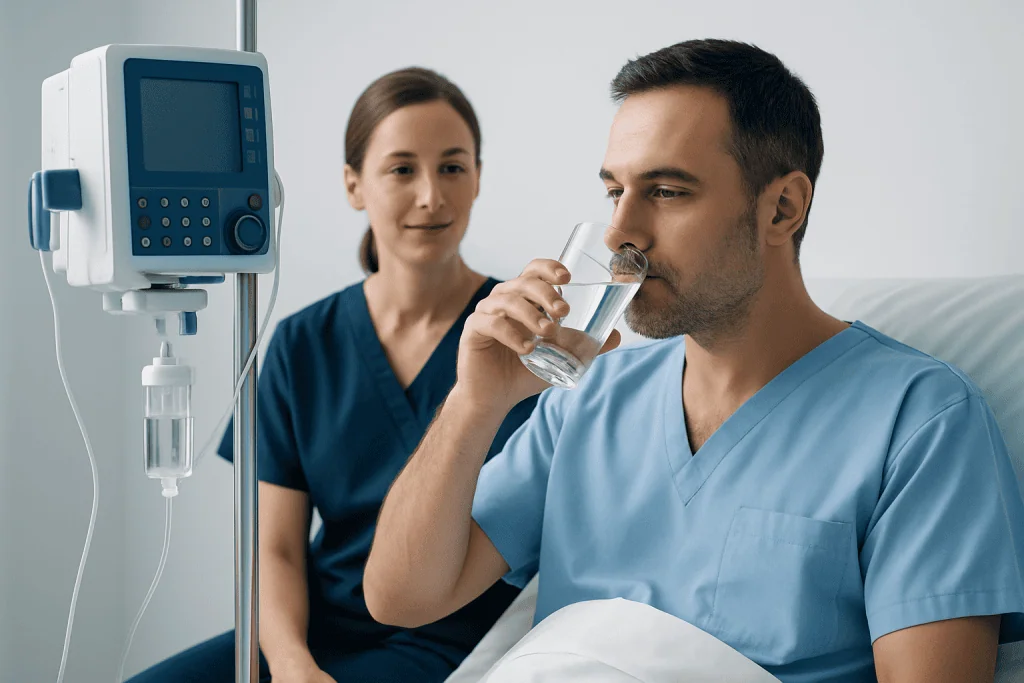
Tap water in Turkish cities is treated and widely used for washing, cooking and household needs. Even so, most residents and nearly all international visitors drink bottled water, and during recovery that is the sensible default. It is not that the tap is presumed dangerous; it is that a recovering body is a poor place to run experiments. Sealed bottled water removes the variable entirely, it is inexpensive by local standards, and it is sold everywhere, hospitals, hotels, pharmacies, corner markets, cafés. American and British patients asking whether the water is “safe” usually get the same answer travel-health bodies give: stick to bottled or properly filtered water while you are a visitor, particularly when your digestion or immune system is under strain.
Practical points that make this easy:
- Check the cap seal is intact before drinking. This is standard practice, not paranoia.
- Buy small bottles if lifting is uncomfortable after your procedure. A five-litre pack is cheap but heavy; several half-litre bottles by the bed serve you better in the first week.
- Hotel reception, your companion or your patient coordinator can arrange extra bottles for your room so you are not carrying packs yourself.
- Be cautious with ice, open jugs and drinks mixed from an unknown water source in the first days after a procedure. In reputable hospitals and hotels this is managed carefully, but asking whether water is bottled or filtered is a normal question and gets a straight answer.
If you prefer, use bottled water for tooth brushing as well during the early days. Plenty of visitors brush with tap water without issue, but bottled water for brushing is a low-effort way to remove one more uncertainty while your digestion is sensitive.
How much should you drink after treatment?

There is no single number that fits every recovering patient, and any guide that gives you one is guessing. Your needs depend on body size, medications, the weather, how active you are, what you are eating, and what was done to you. Two useful anchors work for most people in the general case: sip steadily through the day rather than in large bursts, and use your own body as the gauge. Pale, straw-coloured urine, a comfortable mouth and steady footing when you stand generally mean you are drinking enough. Dark urine, strong thirst and dizziness on standing suggest you are behind.
You may have seen the “10 gulp rule” mentioned online: the habit of taking roughly ten gulps of water each time you pick up the bottle, which works out at about a large glass. It is an informal memory aid, not a clinical guideline, and it has no special evidence behind it. As a way of turning “sip regularly” into something concrete, it is harmless enough for people with no fluid restrictions; as a substitute for a measured plan, it is worthless. Treat it as a habit trick, nothing more.
Some situations override the general advice entirely. After anaesthesia, digestive procedures or bariatric surgery, drinking is often reintroduced in stages, small sips, then clear fluids, then normal volumes, on a schedule your team sets, because too much too soon worsens nausea and discomfort. And patients with heart, kidney or liver conditions, significant swelling or low sodium may be asked to measure and limit intake. If your discharge papers describe a staged or measured plan, that plan is your answer to “how much”, and this section is background reading.
Making hydration easy in your hospital room and hotel
The main reason recovering patients under-drink is not ignorance; it is friction. The water is across the room, the pack is too heavy to lift, or drinking means a walk to a bathroom that feels far away at 3 a.m. Remove the friction and the habit largely runs itself.
Keep water where your day actually happens: by the bed, by the chair you rest in, next to your medication area. Take a few sips at natural anchor points, when you wake, after a short walk, alongside scheduled medicines if your prescription instructions allow. If bending or reaching is uncomfortable, have your companion or a nurse place bottles on your easier side. Small habits like these sit naturally inside a broader routine; our guide to building a safe daily routine during hotel recovery shows how hydration slots in alongside rest, meals and movement.
In the hotel, set up a small recovery station: water, approved snacks, your medication list, tissues, a thermometer if one was recommended, and your discharge papers. Ask housekeeping for extra bottles before evening so you are never searching at night. Counting empty bottles is an easy informal way to see how much you have drunk, unless your team asked for exact measurements, in which case record them properly. If you are noting other things day to day anyway, fluid intake fits neatly into whatever daily recovery notes you already keep.
Two small cautions: use a straw only if your procedure allows it, as some dental, facial and digestive treatments restrict suction for a period; and keep bottles out of direct sun and away from radiators.
Electrolytes, soups, tea, coffee and what to be careful with
Water is the simplest fluid, but it is not the only one that counts. Soups and broths, diluted juices, herbal teas, milk drinks and watery fruit all contribute, and when appetite is low, a warm soup often goes down more easily than plain water. Turkish cuisine is generous with lentil and chicken broths, which suit many recovering patients well, though if you have salt limits, swallowing precautions or a staged post-procedure diet, your dietary instructions decide what is on the menu. Our companion guide to eating and drinking during recovery in Turkey covers food choices in full.
Electrolyte drinks and oral rehydration solutions have a genuine role after fluid losses, vomiting, diarrhoea, heavy sweating, a long hot travel day, but they are not a default upgrade to water, and they are not neutral products. Most contain sugar and salt; some sports versions add caffeine. For a patient with diabetes, a low-salt plan, or kidney or heart concerns, that composition matters, which is why these products are best discussed with the treating doctor or dietitian before they become routine rather than after.
Coffee and tea, including the ever-present Turkish tea, are acceptable in moderation for many patients, but they are companions to water, not replacements, and in sensitive people they can aggravate reflux, palpitations and poor sleep. Alcohol is best left alone during recovery unless your doctor has specifically said otherwise: it interacts with a range of medications, disturbs sleep and works against hydration. Since several common post-operative medicines have their own effects on thirst, urination and stomach comfort, it is worth reading our guide to medicine side effects during hotel recovery alongside this one.
Dehydration and overhydration: what to know about both
Mild thirst after a travel day or a long round of appointments is ordinary. Dehydration proper announces itself more clearly: strong thirst, dry mouth, dark and infrequent urine, headache, dizziness on standing, unusual fatigue. In recovering patients these signs can overlap with medication effects and normal post-treatment tiredness, which is one reason clinicians assess fluid status with more than a symptom list: they look at intake, output, weight, blood pressure and, where needed, blood tests. Your discharge papers typically describe the situations your treating team wants reported; keep those papers accessible in print and photographed on your phone, along with the standing clinical notice at the top of this page.
Overhydration is the less famous problem but a real one. Drinking very large volumes quickly can cause nausea in anyone, and in patients with fluid restrictions it can be genuinely unsafe, contributing to swelling, breathlessness and disturbed sodium levels. This is precisely why measured fluid plans exist, and why “drink as much as possible” is bad advice dressed up as common sense.
The quieter failure mode is under-drinking by avoidance, skipping fluids because getting to the bathroom feels like an ordeal. The better fix is to make the bathroom trip easier rather than the water rarer: grab rails, night lighting, a clear path. Our guide to accessible bathroom safety during recovery covers the practical arrangements.
Hydration on transfer days and the flight home
Travel days are where good hydration habits go to die. Patients skip fluids to avoid bathroom stops in the transfer car, security queues empty their bottles at the airport, and cabin air on the flight home is dry enough to dehydrate a healthy traveller, let alone a recovering one.
Plan around it. Drink steadily in the hours before travel rather than trying to catch up mid-journey. Carry sealed water where permitted, and allow time to buy a fresh bottle after airport security so you board with water in hand. Keep it in your hand luggage with your medications and discharge papers, never in checked baggage. If you have been advised to walk at intervals during travel, pair each movement break with a few sips; hydration and movement work together on long journeys, which is one reason both feature in our guide to preventing blood clots during recovery in Turkey.
Before you leave, it is sensible to confirm at your final appointment whether any restrictions apply to your journey specifically, carbonated drinks, straws, caffeine, alcohol, or total fluid volume, and what your team recommends carrying for nausea or an upset stomach en route. Long flights and connections make written instructions especially valuable, because tired travellers forget verbal ones. Handled this way, drinking water and hydration during recovery in Turkey stop being a worry on the journey home and become one more habit that quietly runs itself.
Step by step
- Confirm your personal fluid instructions before discharge. Establish whether you should drink freely, sip in stages, or follow a measured plan, particularly after anaesthesia, digestive or bariatric procedures, or with heart, kidney or liver conditions.
- Default to sealed bottled water. Check the seal, choose bottle sizes you can open and lift comfortably, and use another source only if your team or accommodation confirms it is suitable.
- Put water where your day happens. Bedside, resting chair, medication area. Ask reception, a companion or your coordinator to stock the room before night.
- Sip steadily instead of drinking in bursts. Small, frequent sips are more comfortable, especially with nausea or fatigue. If you were given a staged drinking schedule, follow its timing exactly.
- Read your body’s basic gauges. Pale urine, a comfortable mouth and steady standing suggest you are on track; dark urine and dizziness suggest you are behind, unless you are on a measured plan, in which case the plan is your gauge.
- Treat other fluids as part of the picture. Soups, teas and diluted juices count; alcohol works against you; electrolyte products belong in your routine only if your dietary instructions allow them.
- Plan travel-day hydration deliberately. Drink before you set off, buy water after airport security, keep it in hand luggage with your medicines and discharge papers, and pair sips with movement breaks.
Your checklist
- Sealed bottled water stocked in your room, the transfer car and your day bag
- Written fluid or diet instructions from your discharge papers, in print and on your phone
- Bottle sizes you can lift and open without strain
- A bedside and medication-area water setup arranged before your first night
- Approved soups, snacks or rehydration products, if your plan includes them
- Medication list noting anything with specific fluid instructions
- An airport plan: buy water after security, keep it in hand luggage
- Companion, hotel or coordinator support arranged so you are not carrying heavy packs
Key takeaways
- Sealed bottled water is the simplest, most consistent choice for international patients recovering in Turkey.
- Sip steadily through the day; pale urine and steady footing are your everyday gauges in the general case.
- Staged and measured fluid plans exist for good reasons, for some conditions, more water is not better.
- Soups and teas count towards fluids; electrolyte drinks suit some situations but carry sugar and salt that not every patient should have.
- Alcohol works against recovery and interacts with medications; coffee and tea accompany water, they do not replace it.
- Travel days are the highest-risk time for under-drinking, plan water for transfers, security and the flight home.
Frequently asked questions
Does drinking water speed up recovery?
Not directly. Water is not a treatment and drinking extra beyond your needs does not accelerate healing. What good hydration does is keep your body’s ordinary functions, circulation, digestion, temperature control, running normally, and spare you the headache, fatigue and dizziness of running dry. Think of it as removing an obstacle rather than adding a boost.
Is it safe for Americans to drink the tap water in Turkey?
Tap water in Turkish cities is treated and widely used for washing and cooking, but most residents and visitors drink bottled water, and travel-health bodies generally advise visitors to do the same. During recovery, when your digestion may be sensitive, sealed bottled water is the practical default, inexpensive, available everywhere, and free of uncertainty.
What is the 10 gulp rule?
An informal habit of taking about ten gulps, roughly a large glass, each time you pick up your water bottle. It is a memory aid circulated online, not a clinical guideline, and it has no particular evidence behind it. It is a harmless way to make regular sipping concrete if you have no fluid restrictions, but it never overrides a measured fluid plan.
Does staying hydrated help with surgery recovery?
Being adequately hydrated supports the ordinary processes a recovering body relies on and helps you avoid feeling worse than your recovery warrants. It is one useful daily habit among several, alongside rest, nutrition and approved movement, rather than something that changes outcomes on its own. After some procedures, drinking is reintroduced in stages on a schedule set by the treating team.
Can I brush my teeth with tap water in Istanbul?
Many visitors do without issue. If your digestion is sensitive or you simply prefer to remove the uncertainty during the first days after a procedure, using bottled water for brushing is an easy, low-cost precaution. If your discharge papers include specific infection-precaution instructions, those apply here as everywhere else.
Should I drink electrolyte drinks after surgery or treatment?
Not automatically. They are useful after genuine fluid losses, vomiting, diarrhoea, heavy sweating, hot travel days, but most contain sugar and salt, and some contain caffeine, which matters for patients with diabetes, salt limits, or kidney and heart conditions. Whether they belong in your routine is a question for your treating doctor or dietitian, not the supermarket shelf.
Can I drink tea, coffee or Turkish tea during recovery?
Often yes, in moderation, depending on your procedure, medications, sleep and stomach comfort. Caffeinated drinks can aggravate reflux, palpitations and poor sleep in sensitive people, and they should accompany water rather than replace it, particularly on travel days. If you were given dietary restrictions, those come first.
Do I need to track exactly how much water I drink?
Most patients do not. A simple routine, water within reach, steady sipping, counting empty bottles if you are curious, is enough in the general case. If your treating team asked you to measure fluid intake, urine output or daily weight, record those properly; measured records exist because estimates are not accurate enough for some conditions.
Add us as a Preferred Source to see more of our trusted health content across Google Search, AI Overviews and Discover.

Update history
- PublishedJune 22, 2026
- Medical review approvedAugust 30, 2026
- Last content updateAugust 30, 2026
References3
- CDC Travelers' Health: Food and Water Safety wwwnc.cdc.gov
- NHS: Dehydration nhs.uk
- MedlinePlus: Dehydration medlineplus.gov
More Patient Guides

When a Hospital Stay in Turkey Becomes Longer Than Planned: What to Arrange
If your hospital stay in Turkey is longer than planned, arrange medical updates, accommodation, travel changes, insurance and support for your companion.
Waiting for Test Results in Turkey: How to Use Time Between Appointments
Waiting for test results in Turkey is easier with a clear plan for appointments, rest, records, questions and support in Istanbul.

Unexpected ICU Stay in Turkey: What Patients and Families Should Expect
Unexpected ICU stay in Turkey: learn what patients and families can expect, from communication and visiting to care updates and travel support.

How to Manage Special Diets During Medical Travel in Turkey
Special diets during medical travel in Turkey are easier to manage when you share your needs early, confirm meals and carry safe…