

Medicine Side Effects During Hotel Recovery in Turkey

Mild nausea, drowsiness, constipation, dizziness and stomach upset are among the more common medicine side effects during hotel recovery in Turkey. Take medicines exactly as your discharge plan states, keep them in original packaging, avoid alcohol and unapproved remedies, and record symptoms as they happen. Any change to a medicine, pausing, stopping or adding, is a decision for your treating doctor, not something to work out alone.
You have left the hospital, you are back in your hotel room, and you feel a little nauseous or unusually sleepy after your tablets. Is that expected, or is it something else? That question keeps many international patients awake on the first night. A hotel room is comfortable and private, but it is not a ward, and medicine side effects during hotel recovery in Turkey can feel bigger than they are simply because you are far from home. This guide explains which effects are common, how doctors tell an expected effect from a genuine problem, and how to organise your medicines so the week runs smoothly.
At a glance
- Best first step: Follow the written medication plan from your hospital team and keep it within reach, not packed in a suitcase.
- Do not do this: Do not skip, double or add medicines, including over-the-counter tablets, supplements and herbal remedies, on your own.
- Common effects: Nausea, drowsiness, constipation, dizziness, mild stomach upset and easier bruising, depending on what you were prescribed.
- Who decides changes: Only your treating doctor pauses, stops, replaces or adds a medicine. That is true for antibiotics, painkillers and your regular home medicines alike.
- What helps: Original packaging, a written dose schedule, phone alarms, a symptom log and a companion who knows the plan.
Why medicine side effects during hotel recovery in Turkey feel different
You were discharged because you were well enough to leave the ward, not because your body had finished its work. In the first days after treatment you may still be clearing anaesthetic drugs while adjusting to new prescriptions: pain relief, antibiotics, stomach protectors, anti-sickness tablets, sometimes blood thinners. Each of these has known, documented effects, and several of them overlap. Drowsiness, for example, can come from the anaesthetic, the painkiller, the anti-sickness tablet, or simple exhaustion after a long day, often from more than one at once.
Travel adds its own layer. Jet lag disturbs the sleep that would normally soften these effects. Unfamiliar food, less movement than usual and a warm or dry hotel room all make mild symptoms more noticeable. And attention plays a part: a dry mouth or light queasiness that you would shrug off at home reads differently in a hotel room in another country. None of this means the effects are worse in Turkey: it means the context makes them harder to interpret. That is exactly what your written discharge plan is for. It lists what you are taking, why, and what your team expects each medicine to do and to cause. The guide on post-anaesthesia side effects after discharge covers the anaesthetic side of this picture in more detail.
Common side effects and what you can do safely
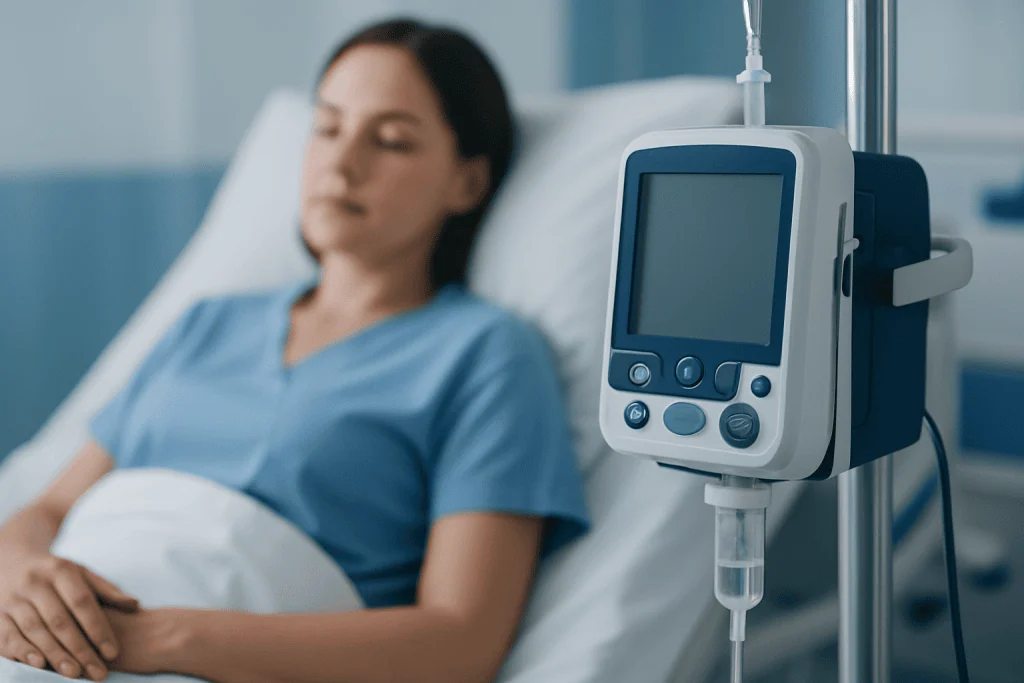
Most medicine side effects during hotel recovery in Turkey belong to a short, predictable list. Pain medicines, particularly opioid-based ones, commonly cause drowsiness, nausea, constipation and lightheadedness on standing. Antibiotics can unsettle the stomach, change your sense of taste or loosen stools. Anti-inflammatory painkillers can irritate the stomach lining in some patients. Blood-thinning medicines make bruising easier and small cuts slower to stop. Anti-sickness tablets and sleep medication add to drowsiness. These are general patterns; your personal picture depends on your procedure, age, kidney and liver function, allergies and whatever else you take.
Within the plan you were given, ordinary comfort measures are yours to use:
- Queasiness: small, bland meals eaten slowly tend to sit better than large or rich ones. Room-temperature water helps more than very cold drinks for some people.
- Constipation: fluids, fibre where your diet allows it, and the gentle walking your team recommended all work in the same direction. Laxatives and stool softeners are medicines, so they sit with your prescriber, not with guesswork.
- Dizziness: sit on the edge of the bed before standing, keep the path to the bathroom clear of luggage, and use the lift rather than the stairs while you feel unsteady.
- Drowsiness: treat it as a real impairment. Do not drive, sign documents, make financial decisions or add alcohol or sleep remedies on top of it.
Take each medicine exactly as instructed, with food or without, at the stated interval, because those details are often precisely what prevents the side effect. If your stomach protector was prescribed alongside a painkiller, the two are a pair, not options.
How doctors tell an expected effect from a problem

It helps to understand how a clinician thinks about a symptom, because it explains why the same complaint can be trivial in one patient and important in another. Doctors look at timing: an effect that starts within an hour or two of a dose and fades before the next one behaves like a side effect. They look at the known profile of the drug: nausea from an opioid is expected; a spreading rash from it is not. They look at pattern: an effect that is stable or easing usually reads differently from one that is new, spreading or building. And they distinguish side effects from allergic reactions, which involve the immune system and follow different rules entirely.
What you cannot see from a hotel room is the rest of the picture: your operation notes, laboratory results, allergy history and the interactions between everything on your list. This is why your discharge documents matter so much: they record what your team expects, what they have ruled out and how questions about your medicines are handled during your stay. Keep those documents, and the contact details printed in them, where you and your companion can find them without unpacking.
Turkish pharmacieseczane, marked with a red “E”, are professional, widespread and genuinely useful for travellers. But a pharmacist meeting you for the first time cannot see your surgical notes, and several over-the-counter products interact with painkillers, antibiotics, blood thinners and stomach medicines. In the post-treatment period, the full context sits with your treating team, and additions to your medicine list are theirs to make.
Organising medicines in your hotel room
A tidy medication setup prevents the two most common self-inflicted problems: missed doses and doubled doses. Choose one clean, visible spot away from direct sunlight, the minibar’s heat exhaust, the bathroom’s humidity and any visiting children. Keep everything in its original packaging: the name, strength and instructions on the box are what make it possible for any doctor, nurse or interpreter to help you accurately. The guide on storing and carrying medicines during treatment travel covers temperature-sensitive medicines and refrigeration in detail.
Next to the medicines, keep a written schedule: name, dose, time, with or without food, and the purpose if it was explained to you. Set phone alarms for every dose and let your companion tick each one off. If your regular home medicines continue alongside the new prescriptions, mark clearly which were paused and which must carry on: this matters most for blood pressure, diabetes, heart, hormone and blood-thinning medicines, and the answer for each one comes from your discharge conversation, not from memory. Time-zone shifts complicate this more than people expect; there is a separate guide on keeping regular medicines on schedule during medical travel.
Finally, write things down. A simple daily recovery log, when a symptom started, which dose preceded it, your temperature if relevant, what made it better or worse, turns a vague worry into usable clinical information. Memory is unreliable after anaesthesia and poor sleep; paper is not.
Food, water, alcohol and everyday hotel choices
Food changes how many medicines behave and how side effects feel. In the first days, simple meals are usually kinder: soup, rice, toast, eggs, yoghurt if you tolerate it, lean protein and plenty of water. Heavy, fried or very spicy dishes tend to amplify nausea and reflux while your stomach is already dealing with new tablets. If your doctor gave you a specific diet, low-salt, diabetic, soft-food, high-protein, that instruction overrides everything here. The guide on eating and drinking during recovery in Turkey goes deeper on room service, tap water and safe choices.
Alcohol deserves its own sentence: leave it out unless your doctor has specifically said otherwise. It deepens drowsiness from painkillers and sleep tablets, irritates a stomach already handling anti-inflammatories, worsens dehydration and raises bleeding risk with some medicines. Feeling well for a few hours in the evening does not mean the drugs have cleared. The same caution applies to herbal teas sold as remedies, supplements and over-the-counter cold or sleep products, all of them can interact with prescriptions, and none of them should join your list without your team’s knowledge.
Small physical habits matter too: keep water and a plain snack by the bed if an early dose needs food, stand up in stages, and keep the room laid out so that a dizzy trip to the bathroom is short, lit and unobstructed. The hotel room setup checklist covers this arrangement step by step.
Medication rules for travellers to Turkey
Turkey, like most countries, controls certain categories of medicine, strong opioid painkillers, some sedatives and other controlled substances among them. If you travel with medicines in these categories, the general expectation is original packaging, a copy of the prescription or a doctor’s letter, and quantities that match personal use for the length of your stay. Rules change, so check your own government’s current travel advice for Turkey before you fly rather than relying on forum posts.
Ordinary medicines are far simpler. Paracetamol for personal use is not a controlled substance and is also widely sold in Turkish pharmacies, as are most everyday remedies. Whether paracetamol is appropriate alongside your discharge medicines is a different question: some post-treatment plans already include it or a related drug, and unintentional doubling is a well-known risk. That judgement belongs to your prescriber, which is one more reason the written plan travels with you. Packing decisions, what goes in hand luggage, what needs documentation, are covered in the guide on packing for medical treatment in Turkey.
How care works for international patients during your stay
Foreigners can be treated in Turkish hospitals, both public and private, and hospitals that regularly treat international patients typically run dedicated international patient departments with coordinators and interpreters. At Acibadem, discharge for international patients normally includes written medication instructions, follow-up timing and the contact routes that apply during your recovery period: the practical structure that removes guesswork from the hotel phase.
Language is a smaller barrier than most patients fear, but preparation removes it entirely. Keep your discharge summary, medication list, allergy list, hospital contact details, passport information and hotel address together in one folder or phone note. Carry the discharge summary and medication list whenever you leave the hotel, including to follow-up appointments: a document in hand answers questions that a tired, jet-lagged memory cannot. Your companion should know where this folder lives and what is in it; during the first nights after discharge, they are your second pair of eyes.
Step by step
- Go through the medication plan before you leave the hospital. Ask what each medicine is for, when and how to take it, which effects are expected, and which of your regular home medicines continue, pause or change. Leave the ward with those answers in writing, not in memory.
- Set up a medication station in your hotel room. One spot, original packaging, away from heat, sunlight and humidity. Put the written schedule beside the boxes and set phone alarms for every dose.
- Track symptoms on paper, not by feel. Note when a symptom started, which dose came before it, your temperature if relevant, and what changed it. A dated log is worth more at a follow-up appointment than any amount of recollection.
- Keep your documents and contact routes visible. Discharge summary, medication list, allergy list and the contact details printed in your discharge papers stay out of the suitcase for the whole stay, and your companion knows where they are.
- Hold the line on additions. No alcohol, supplements, herbal remedies or over-the-counter medicines join your list during recovery unless your treating doctor has approved them. This single habit prevents most avoidable interactions.
- Prepare the flight home in advance. Confirm which medicines travel in hand luggage, which need a prescription copy or letter for your home country, and how follow-up communication works once you are back. Sort this days before departure, not at the airport.
Your checklist
- Medication list with names, doses, timing and purpose
- Written discharge instructions kept out of the suitcase
- Allergy list and any previous serious drug reactions
- Hospital and international patient coordinator contact details from your discharge papers
- Passport, travel insurance documents and hotel address in one place
- Thermometer, water bottle, plain snacks and phone charger by the bed
- Dose alarms set, plus a paper backup schedule
- Original medicine packaging and prescription copies
- A daily symptom log with dates and times
Key takeaways
- Mild nausea, drowsiness, constipation, dizziness and stomach upset are common, documented effects of post-treatment medicines, and travel makes them feel larger than they are.
- Your written discharge plan is the reference for every dose, every food instruction and every question, keep it accessible for the whole stay.
- Original packaging, a written schedule, alarms and a symptom log prevent missed doses, doubled doses and vague conversations at follow-up.
- Alcohol, supplements, herbal remedies and over-the-counter products can all interact with prescriptions; nothing joins your list without your doctor’s knowledge.
- Turkey controls some categories of medicine for travellers; original packaging, prescription copies and your government’s current travel advice cover the paperwork side.
Frequently asked questions
What are the medication restrictions in Turkey?
Turkey, like most countries, controls certain categories of medicine, particularly strong opioid painkillers and some sedatives. Travellers carrying these are generally expected to keep them in original packaging with a prescription copy or doctor’s letter, in quantities matching personal use. Rules can change, so your own government’s current travel advice for Turkey is the reliable source before you fly.
Are you allowed to take paracetamol to Turkey?
Ordinary paracetamol for personal use is not a controlled medicine, and it is also widely available in Turkish pharmacies. Keep it in original packaging like everything else. Whether it is appropriate alongside your prescribed post-treatment medicines is a separate question, some discharge plans already include it or a related drug, and unintentional doubling is a known risk that only your prescriber can rule out.
Can foreigners go to hospital in Turkey?
Yes. Foreigners can be treated in both public and private hospitals in Turkey, and hospitals that regularly receive international patients typically operate international patient departments with interpreters and coordinators. Travel insurance documents and identification make admission smoother, and emergency departments treat patients regardless of nationality.
What medical treatment is Turkey famous for?
Turkey is an established destination for a wide range of treatments, including hair transplantation, dental work, eye surgery, cosmetic and reconstructive surgery, orthopaedics, fertility treatment and oncology. Whatever the treatment, the recovery principles are the same: a written medication plan, organised doses, cautious eating and no unapproved additions.
Is it normal to feel sleepy from medicine after treatment?
Drowsiness is a recognised effect of anaesthetic drugs, opioid pain relief, anti-sickness tablets and sleep medication, and it typically eases as doses reduce and the anaesthetic clears. Extreme drowsiness, confusion or difficulty staying awake is not the expected pattern for routine discharge medicines. While you are drowsy, treat it as an impairment: no driving, no documents, no alcohol, no added sedatives.
What should I do if I vomit after taking a dose?
Do not take another dose automatically. Whether a dose was absorbed depends on the specific medicine, its coating and how long after taking it you vomited, some drugs absorb within minutes, others do not, and for several a doubled dose is more dangerous than a missed one. That calculation belongs to the prescribing doctor with the specific medicine in front of them. Noting the time, the medicine name and whether the tablet was visible keeps the facts accurate.
Should I stop antibiotics if they upset my stomach?
Stopping or changing any medicine, antibiotics included, is a decision for the treating doctor. Stomach upset is a recognised effect of many antibiotics, and prescribers have several options depending on the drug and your procedure, timing adjustments, food pairing, an added stomach protector or a switch to a different medicine. An unfinished antibiotic course carries its own risks, which is precisely why the decision is not one to make alone in a hotel room.
Can I drink alcohol in the hotel if I feel better?
Alcohol is best left out of recovery unless your doctor has specifically approved it. It deepens drowsiness from painkillers and sleep tablets, irritates the stomach alongside anti-inflammatories, worsens dehydration and raises bleeding risk with some treatments. Feeling well for a few hours in the evening does not mean the medicines have cleared your system.
Add us as a Preferred Source to see more of our trusted health content across Google Search, AI Overviews and Discover.

Update history
- PublishedJune 16, 2026
- Medical review approvedAugust 30, 2026
- Last content updateAugust 30, 2026
References4
- MedlinePlus: Drug Reactions medlineplus.gov
- NHS: General anaesthesia nhs.uk
- GOV.UK: Foreign travel advice: Turkey gov.uk
- CDC Travelers' Health: Medical Tourism wwwnc.cdc.gov
More Patient Guides

Flying With Medication: Airline Rules, Documents and Packing
Every day, travelers hold up security lines worrying about a bag full of tablets that nobody actually wants to confiscate. The rules…
How to Send Your Medical Files Securely Before Treatment in Turkey
Send medical files securely before treatment in Turkey by using approved channels, clear file names and a complete health summary.
Pain Control After Treatment in Turkey: What Patients Should Expect and Ask About
Pain control after treatment in Turkey usually includes a tailored medicine plan, clear warning signs, and follow-up support before you leave Istanbul.

Managing Medicines Across Borders After Treatment in Turkey
Managing medicines across borders after treatment in Turkey means carrying clear documents, checking import rules, and planning refills before you fly.