

Accessible Bathroom Safety During Recovery in Turkey
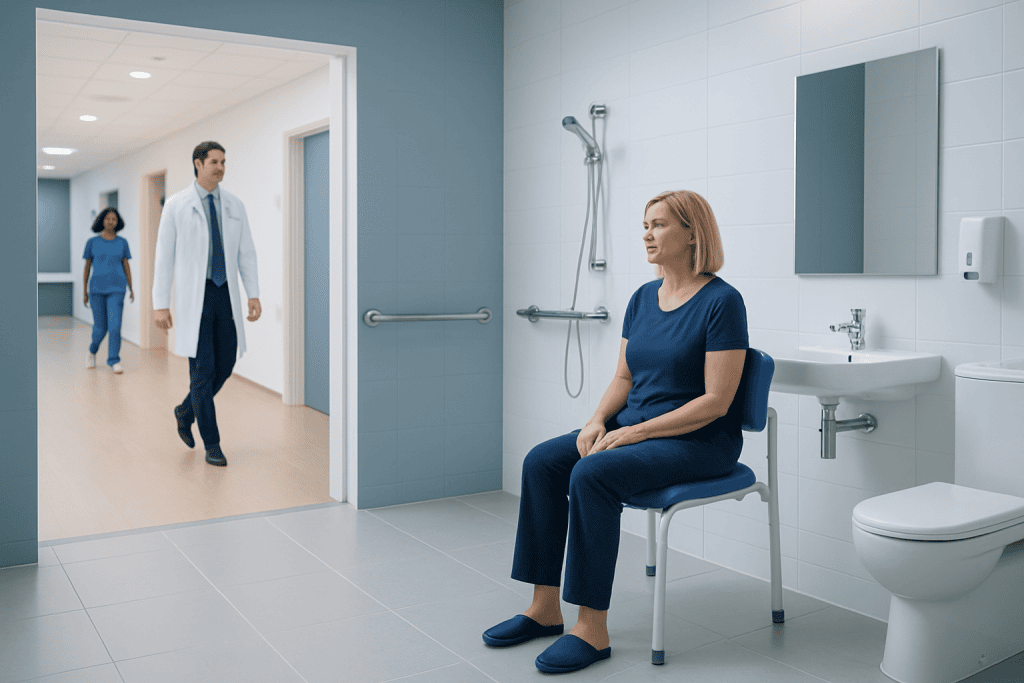
Plan accessible bathroom safety during recovery in Turkey before you book accommodation. Ask specific questions about step-free showers, toilet height, grab rails and equipment such as shower chairs, and get essentials confirmed in writing. On arrival, inspect the bathroom before your first shower, keep the floor dry and clear, and agree with your companion exactly when and how they will help.
Will you be able to shower safely in your hotel room after treatment? It is one of the most common questions international patients ask, and one of the most practical to solve before you fly. Bathrooms combine four things that make recovery harder: water, movement, privacy and limited space. That combination is why more recovery setbacks happen there than in any other room.
This guide covers accessible bathroom safety during recovery in Turkey in concrete terms: what to ask before booking, how to check a bathroom on arrival, how to shower and use the toilet with less strain, how to work with a companion without losing your dignity, and which warning signs need urgent action rather than adaptation.
At a glance
- Best time to plan: Before you confirm accommodation and travel dates, not after check-in
- Main safety focus: Preventing slips, strain, dizziness-related falls and fatigue during washing and toileting
- Who should be involved: You, your companion, your care team, the hotel and international patient services
- Useful equipment: Non-slip mats, a shower chair or stool, a raised toilet seat, grab rails and a handheld shower
- Key reminder: Ask for help early rather than testing your limits alone in a wet bathroom
Why bathroom safety needs special attention during recovery
Ordinary bathroom tasks demand more balance, strength and flexibility than most people realise. Stepping over a bath edge, lowering yourself onto a toilet, reaching overhead for a shower control or standing on a wet floor can all feel very different after a procedure, a long flight, a hospital stay or new medication. Fatigue, stiffness and light-headedness tend to arrive together, and they arrive fastest in warm, steamy rooms.
Accessible bathroom safety during recovery in Turkey is not about making you dependent. It is about making the bathroom predictable, calm and easy to use while your body heals. A well-planned bathroom protects your energy, reduces the risk of a fall and preserves your privacy, three things that matter more, not less, when you are recovering far from home.
There is also a local dimension worth knowing. Turkish hotel bathrooms are often finished in marble or polished ceramic tile, which is beautiful and unforgiving when wet. Older buildings may have high bathtub edges rather than walk-in showers, and glass shower screens are common but are not designed to bear weight. None of this makes safe recovery impossible; it simply means you should ask precise questions rather than trusting the word “accessible” on a booking page.
If you are receiving care through Acibadem International, tell the international patient services team about mobility limits, balance concerns or equipment needs before you arrive. They can help you communicate access needs clearly, arrange interpreter support and pass practical questions to the relevant care team when bathroom routines may affect your discharge or accommodation planning.
Choose accommodation with recovery in mind
Do not rely on the label “accessible room”. A room may have a lift and a wide doorway yet still have a high bathtub, slippery tiles and nothing stable to hold near the toilet. Standards vary between hotels, and what one property calls accessible another would call standard. The only reliable approach is to ask specific, answerable questions before you pay.
Questions that get useful answers include:
- Is the shower step-free or walk-in, or is there a bathtub edge to climb over? If there is an edge, how high is it?
- Is there a handheld shower head, or only a fixed overhead one?
- Are there grab rails near the shower and toilet, fixed to the wall rather than suction-mounted?
- Roughly how high is the toilet seat, and is there space beside it for a companion or a frame?
- Can the hotel provide a shower chair or stool, a non-slip mat or a raised toilet seat?
- Is there space inside the bathroom for a second person to help, with the door still able to close?
If any item is essential for your stay, ask for confirmation in writing: an email is enough. Verbal reassurance at booking has a way of dissolving at check-in.
Think about the whole route from bed to bathroom, especially at night. Is the floor level, without loose rugs or thresholds? Is there lighting you can switch on without crossing a dark room? If stairs are involved anywhere in your daily route, read our guide on choosing a ground-floor room or elevator access during recovery in Turkey before you commit. A beautiful room is worth less than a practical one that lets you wash, rest and heal without unnecessary effort.
Set up the bathroom before you need it
The safest moment to organise a bathroom is before your first shower and before you feel tired, ideally within an hour of arriving, while your companion is still with you. Walk through the space slowly. Check the shower entrance, the toilet position, the lighting and the floor surface. If something feels wrong, raise it with reception immediately rather than adapting silently; room changes and extra equipment are far easier to arrange on day one than on day four.
Then set the room up for the version of you that will use it: possibly tired, possibly sore, possibly moving more slowly than usual.
- Place towels, clean clothing, toiletries and any dressings or approved care items at waist height, within easy reach. Avoid low shelves you must bend for and high hooks you must stretch for.
- Keep the floor clear and dry. Remove loose mats unless they have a firm non-slip backing, and keep electrical items well away from water.
- If you use a stick, crutches or a frame, decide where the aid will stand before you enter, so it neither blocks the door nor becomes a trip hazard.
- Put a stable chair just outside the bathroom for resting, and a night light or lamp you can reach from bed for evening visits.
- Keep a phone, bell or agreed knock-signal within reach whenever you are in the bathroom alone.
Many Turkish bathrooms include a bidet spray next to the toilet, which some recovering patients find genuinely helpful because it reduces twisting and reaching. Test the water pressure gently before relying on it, and mop any overspray so the floor stays dry. These small setup habits fit naturally into a wider plan, see building a safe daily routine during hotel recovery in Turkey for how bathroom timing fits around meals, rest and appointments.
One more habit pays off every day: after each shower, towel-dry or mop the floor before you leave the room, so the next visit, often the tired, late-night one, starts on a dry surface. Good accessible bathroom safety during recovery in Turkey is mostly a series of small, unglamorous habits like this one, repeated until they become automatic.
Showering safely without rushing
Showering is usually the most tiring bathroom activity during recovery. Heat, steam, prolonged standing and reaching overhead all increase fatigue, and warm water can make light-headedness worse. Plan showers for the time of day when you usually feel strongest, and avoid showering straight after a long journey, a medical appointment, a heavy meal or a physiotherapy session, if you are attending physiotherapy sessions during early recovery, leave a rest gap before you wash.
If your care team allows it, use a shower chair or stool so you can sit while washing. Sitting removes the single biggest risk in the shower: standing on a wet surface while your attention is elsewhere. A handheld shower lets you direct water without twisting or stretching. Keep the water warm rather than hot, keep showers shorter than you would at home, and dry yourself while seated if standing feels uncertain.
- Test the water temperature before entering, hotel systems can run hotter than you expect.
- Step in slowly and keep one hand on a fixed support where possible.
- Use toiletries in pump bottles rather than slippery soap bars.
- Keep a towel within arm’s reach before you begin, not across the room.
- Ventilate the room if steam builds up quickly; heavy steam makes dizziness more likely.
- Stop, sit down and ask for help the moment you feel light-headed, weak or unsteady.
In hot months, dehydration adds to shower dizziness. Weather genuinely changes recovery routines here: our guide on how weather can affect recovery plans in Turkey explains how to adjust.
Toilet access, privacy and dignity
Toilet transfers are hard when movement is limited, balance is reduced or sitting and standing cause discomfort. A raised toilet seat, a side support or a properly fixed grab rail reduces strain, but only if it is stable and suits the layout. Never use towel rails, sink edges, glass screens or door handles as weight-bearing supports. They are not designed to hold you, and they tend to fail at exactly the moment you need them.
Standard seated toilets are the norm in Turkish hotels and hospitals, but you may still encounter squat-style toilets in some public places and roadside stops. If squatting is difficult or restricted after your treatment, plan outings around places with seated facilities and do not improvise.
Talk with your companion before help is needed, not during an urgent moment. Decide together what assistance is acceptable: waiting outside the door, helping you stand, handing supplies through, or staying nearby only at night. Clear expectations reduce embarrassment on both sides and make genuine emergencies easier to handle. Privacy and safety are not opposites: a good plan protects both.
If your clinical team has given you specific restrictions, for example, avoiding bending, twisting, heavy straining or certain positions, follow them exactly, and ask before improvising a bathroom routine around them. A question sent to your coordinator costs nothing; a workaround that strains a healing area can cost you weeks.
Warning signs: when a bathroom problem is a medical problem
Most bathroom difficulties during recovery are practical: fatigue, stiffness, awkward layouts. These deserve adjustments, not alarm. But some situations are different, and it is important to be plain about them.
If you faint or black out, hit your head in a fall, cannot get up after a fall, have chest pain, sudden severe breathlessness, sudden weakness or drooping on one side of the body, or heavy bleeding that does not stop with pressure, call your local emergency number or go to the nearest emergency department now. In Turkey the general emergency number is 112. Do not wait to see whether it passes, and do not treat a message to your coordinator or hotel reception as a substitute for emergency care.
New or worsening swelling, warmth or pain in one leg also needs prompt medical attention rather than a wait-and-see approach, because it can indicate a blood clot; if it comes with sudden breathlessness or chest pain, call your local emergency number or go to the nearest emergency department now. You can reduce this risk with movement and hydration, see preventing blood clots during recovery in Turkey.
Below the emergency line, there is a second tier: dizziness that keeps returning in the shower, repeatedly struggling to rise from the toilet, near-slips, or avoiding washing because you are afraid of falling. These are valid clinical questions, not complaints. Raise them with your care team promptly. If new dizziness or unsteadiness started after a change in your medicines, tell the treating doctor and read our guide on medicine side effects during hotel recovery in Turkeybut never adjust any medication yourself; that decision always belongs to the treating doctor.
How Acibadem International can help you coordinate needs
International recovery goes more smoothly when access needs are shared early. Acibadem International supports patients with coordination that can include interpreter services, appointment planning and communication with care teams, which is especially useful when you need to explain mobility limitations, bathroom concerns or companion requirements clearly across a language barrier.
Before travel, prepare a short written access note. Describe what you need in practical terms: step-free shower access, a room close to the lift, help confirming equipment availability, extra time during transfers. Concrete requests get concrete answers; “an accessible room, please” gets whatever the provider thinks that means.
After discharge, keep asking questions if your routine feels unsafe for any non-urgent reason. You do not have to wait for a problem to occur, and a practical difficulty with washing or toileting is a legitimate part of recovery planning, not a bother.
Step by step
- List your bathroom needs before booking. Write down what you need at home and what may change after treatment: shower type, toilet height, walking distance, night-time access, and whether a companion will assist.
- Ask accommodation providers specific questions. Cover step-free showers, wall-fixed grab rails, non-slip flooring, shower chairs and bathroom space. If an item is essential, get written confirmation before you travel.
- Share access concerns with your patient coordinator. Tell Acibadem International or your care contact about mobility limits, balance issues or equipment needs so questions reach the right teams before arrival.
- Inspect the bathroom on arrival. Before you unpack, check the shower entrance, toilet position, lighting, floor surface and how you would call for help. Raise anything unsafe immediately rather than adapting silently.
- Prepare supplies within reach. Put towels, toiletries, clean clothing and approved care items where you can reach them without bending or stretching. Dry the floor and clear clutter before every shower.
- Use assistance before you are exhausted. Plan washing and toileting around your energy, not the clock. Have your companion nearby for the first few showers after treatment.
- Review the plan as you recover. Needs change day to day. If you grow stronger, reduce the help; if you feel weaker, dizzy or sore, adjust the routine and ask your care team for advice.
Your checklist
- Confirm whether the bathroom has a walk-in or step-free shower.
- Ask if a shower chair, raised toilet seat or non-slip mat is available.
- Check that towels and toiletries can sit at waist height.
- Keep a phone, bell or companion call method within reach in the bathroom.
- Remove loose rugs, clutter and wet towels from the floor.
- Set up lighting for night-time bathroom visits before the first night.
- Never use towel rails, glass screens or sinks as weight-bearing supports.
- Plan showers for when you feel rested and unhurried.
- Tell your care team if dizziness, weakness or pain affects bathroom use.
- Know that 112 is Turkey’s general emergency number.
Key takeaways
- Accessible bathroom safety during recovery in Turkey starts before you travel, especially if mobility, balance or energy may be affected after treatment.
- Specific written questions beat a general request for an “accessible room”, standards vary between properties.
- Simple aids such as a shower chair, non-slip mat, handheld shower and raised toilet seat reduce strain when your care team approves them.
- Agree with your companion in advance when to assist, when to wait nearby and how to protect your privacy.
- Fainting, a head injury, chest pain or sudden one-sided weakness are emergencies: the local emergency route comes first, always.
- Acibadem International can help you communicate access needs and coordinate practical support during care in Turkey.
Frequently asked questions
Should I request an accessible bathroom even if I usually manage at home?
Yes, it is usually wise. Your abilities can change temporarily after travel, treatment or medication, and an accessible setup does not oblige you to use every feature. It simply gives you safer options on days when you feel tired, stiff or unsteady.
What is the most important bathroom feature to ask about?
For most recovering patients, a step-free or walk-in shower matters most, because climbing a bathtub edge on a wet floor combines the worst risks in one movement. After that, ask about non-slip surfaces, a shower chair, a handheld shower and stable, wall-fixed support near the toilet. The right priority depends on your mobility and your care team’s advice.
Can my hotel in Turkey provide bathroom equipment?
Some hotels can supply non-slip mats or shower stools; others have little or no equipment. Ask before booking and get written confirmation for anything essential. If you are supported by Acibadem International, your coordinator may be able to help you clarify practical accommodation needs before you commit.
Is it safe to shower alone after treatment?
That depends on your condition, your medications, your balance and your care team’s instructions. For the first showers after a hospital stay or procedure, it is often safer to have a companion nearby, even just outside the door. If you feel dizzy, weak or unsure, do not shower alone.
What should I do if I fall in the bathroom?
If you hit your head, black out, cannot get up, have severe pain or cannot move a limb, call your local emergency number or go to the nearest emergency department now, in Turkey the general emergency number is 112. If the fall was minor and you are clearly uninjured, still tell your care team about it, because a near-fall is a warning worth acting on, not an embarrassment to hide.
How can I protect my privacy if I need help in the bathroom?
Agree on a plan before help is needed. Your companion can assist with setup, wait outside, respond only when called, or help you stand while giving you as much privacy as possible. Clear communication preserves dignity and reduces stress for both of you.
What should I do if the bathroom feels unsafe when I arrive?
Do not wait for a near-fall. Contact hotel reception, your companion or your patient coordinator and describe the specific issue: a high shower step, a slippery floor, no support near the toilet. Ask whether a room change, extra equipment or additional support is possible. Problems raised on day one are usually solvable.
When should I contact the medical team about bathroom difficulties?
Contact the care team promptly if dizziness keeps returning, you struggle to rise from the toilet, pain or wound concerns interfere with washing, or you are avoiding showers out of fear. If you faint, feel sudden severe breathlessness, chest pain or one-sided weakness, do not message your coordinator first, call your local emergency number or go to the nearest emergency department now.
Add us as a Preferred Source to see more of our trusted health content across Google Search, AI Overviews and Discover.

Update history
- PublishedJune 8, 2026
- Medical review approvedAugust 30, 2026
- Last content updateAugust 30, 2026
References2
- Bathroom safety for adults: MedlinePlus medlineplus.gov
- Falls: NHS nhs.uk
More Patient Guides

Airport Wheelchair Assistance: How to Book It for a Medical Trip
Airport wheelchair assistance is free, it exists at every commercial airport, and airlines are legally required to provide it, yet half…
Travelling With a Stoma: Flights, Supplies and Airport Screening
Traveling to Turkey with a stoma is manageable with the right supplies, airport screening plan, and recovery support in Istanbul or Turkey.
Mobility Aids in Turkey: Renting a Wheelchair, Walker, or Crutches
Mobility aids in Turkey can be rented through medical suppliers, pharmacies, and hospital-linked services in Istanbul and other cities.
Traveling to Turkey with Food Allergies or Special Diet Needs
Traveling to Turkey with food allergies or special diet needs is manageable with planning, translated allergy cards, and hotel and hospital support…