

Mobility Aids in Turkey: Renting a Wheelchair, Walker, or Crutches
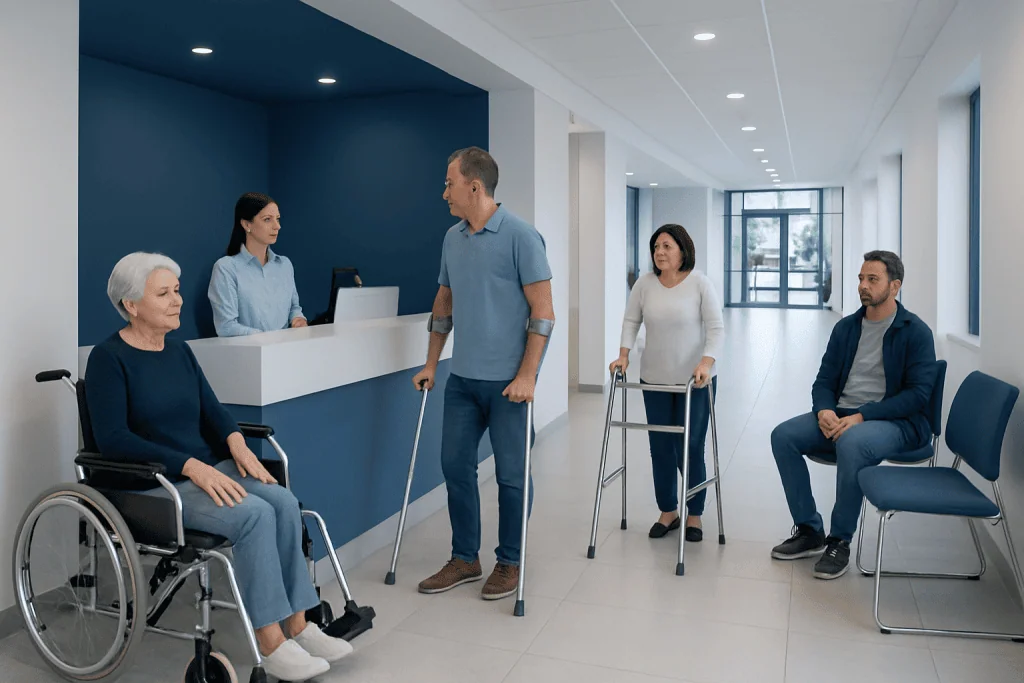
You can rent manual wheelchairs, walkers, rollators, crutches and, in some coastal cities, mobility scooters in Turkey. Independent medical equipment suppliers in larger cities usually deliver to hotels and hospitals, often within a day or two. If you need support from the moment you land, arrange airport assistance and your rental before you travel, and confirm sizing, delivery windows and pickup terms in writing.
If walking is difficult right now, because of an injury, a condition, or a procedure you are travelling for, you do not need to carry every piece of equipment with you. Mobility aids in Turkey can usually be rented for short-term use, delivered to a hotel or hospital, and collected when you leave. This guide explains what is available, where to find it, what rental terms usually look like, and how to fit the equipment into the rest of your travel plan.
At a glance
- Best for: patients, companions, and visitors who need temporary mobility support during a stay in Turkey
- Commonly available: manual wheelchairs, walkers, rollators, crutches, shower chairs, and basic bathroom support items; mobility scooters mainly in larger cities and coastal resort areas
- When to arrange: before travel if you need support from the airport onward or immediately after hospital discharge; locally if your need arises mid-stay
- Where to find them: independent medical equipment suppliers, some pharmacies, hospital-linked support teams, and accessible travel providers
- What suppliers usually ask for: a passport copy, your hotel or hospital address, rental dates, and a contact number; some also take a refundable deposit
- Extra support: interpreter help, delivery coordination, and transport planning are often available through international patient services
What to expect when arranging mobility aids in Turkey
Renting mobility aids in Turkey is usually a straightforward transaction, but it rewards early planning. The core options, manual wheelchairs, walkers, rollators, and crutches, are widely stocked by medical equipment suppliers in the larger cities. Availability thins out in smaller towns, and it fluctuates with the tourist season on the coast, so the earlier you fix your dates and delivery address, the more choice you will have.
In Istanbul, Ankara, Izmir, and Antalya, you will generally find several suppliers offering short-term rental with delivery to hotels, apartments, and hospitals, sometimes on the same day and more reliably with a day or two of notice. Coastal resort areas such as Antalya and Marmaris also have companies focused on holiday accessibility, and these are where you are most likely to find mobility scooters and powered chairs for hire alongside the basics.
The process itself is simple. You tell the supplier what type of aid you need, your dates, your delivery address, and, where it matters, your height, weight, or approximate size. A passport copy and a local contact number are commonly requested, and some suppliers ask for a refundable deposit. Before you confirm anything, ask whether the equipment folds, how it is cleaned between users, and who to contact if the item arrives damaged or your dates change. Getting the answers in a message or email gives you something to point to later.
If you are travelling for medical care, your hospital’s international patient team can be a useful shortcut. Coordinators do not always rent equipment themselves, but they know the local landscape, can communicate your needs in Turkish, and can time a delivery around your admission or discharge rather than leaving you to juggle it from a ward.
Which mobility aid may suit your needs best

The right aid depends on three things: how much support your body needs, how far you expect to move each day, and whether someone will be with you. It is worth being honest about all three, because the wrong choice tends to show up quickly, usually as fatigue, sore hands, or an aid that stays folded in the corner of the room.
A manual wheelchair is often the most practical option if you tire easily, are recovering from a procedure, or face long distances in airports, hospital corridors, or city streets. Note the difference between self-propelled chairs, which have large rear wheels you push yourself, and attendant-propelled (transit) chairs, which need a companion to push. If you are travelling alone, that distinction matters more than any other feature.
A walker or rollator suits people who can walk but need balance support. A rollator, a walker with wheels, usually a seat, and hand brakes, works well for regular short distances and gives you somewhere to rest. A frame without wheels is more stable for very short, careful movement indoors. Turkish pavements can be uneven, so wheeled models with larger wheels handle outdoor surfaces better.
Crutches are typically chosen for short-term injuries or when you are allowed partial weight-bearing on one side. They are light and easy to transport but tiring over long distances and awkward on stairs. If your need relates to a procedure or an injury, your treating clinician is the right person to say what level of weight-bearing and support is appropriate: that advice should drive the choice, not what happens to be in stock.
Mobility scooters exist in Turkey, mainly through accessibility-focused hire companies in tourist areas. They cover distance well but need step-free routes, storage space, and charging, so they suit resort settings better than dense historic districts with steep, cobbled streets.
- Wheelchair: reduced stamina, longer distances, or post-procedure support
- Walker or rollator: balance support and regular short distances
- Crutches: temporary single-side offloading, when advised by your clinician
- Mobility scooter: longer independent distances in step-free areas, mostly available in resort cities
Think about your accommodation and transport too. A wheelchair is ideal indoors and in hospitals but less useful if your hotel entrance has steps or the bathroom is narrow. A foldable walker fits in a taxi boot far more easily than a scooter. Matching the aid to the buildings you will actually use is half the decision.
Where to rent a wheelchair, walker, or crutches
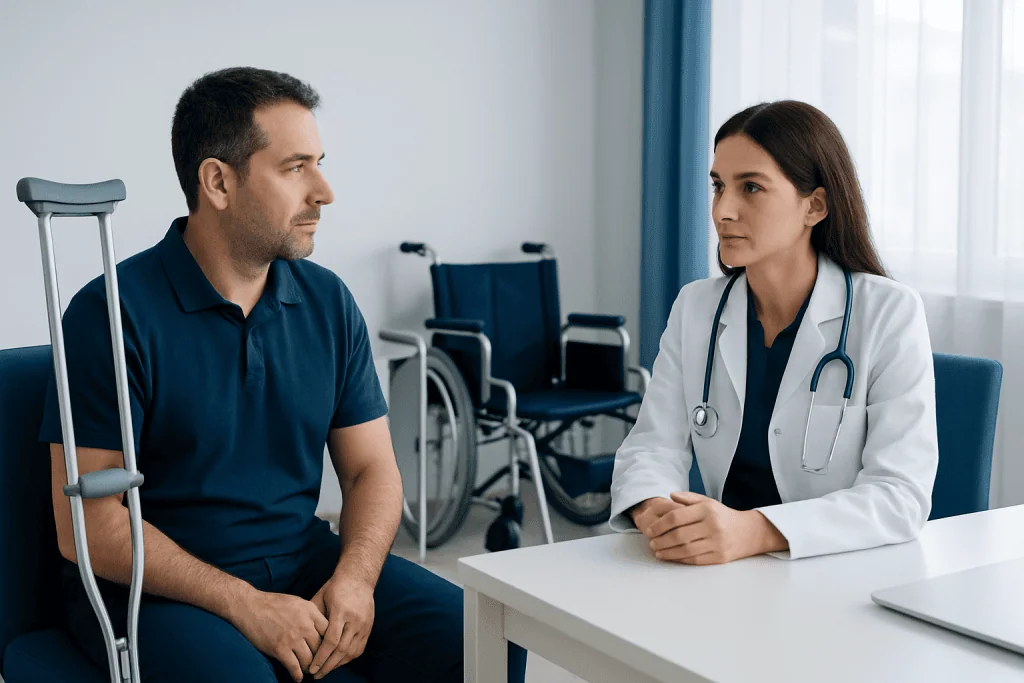
There are four common routes, and they suit different situations.
Independent medical equipment suppliers (often signed “medikal” in Turkish) are the most direct option in major cities. Many rent as well as sell, and many deliver. This is usually where you will find the widest range of wheelchairs, walkers, and bathroom support items such as shower chairs and raised toilet seats.
Pharmacies sometimes stock crutches and simple walking sticks for purchase, and pharmacists usually know the nearest medikal supplier. They rarely run a full rental range themselves, so treat a pharmacy as a starting point rather than a solution.
Accessible travel and holiday equipment companies operate in resort areas, Antalya and Marmaris in particular, and cater to visitors rather than patients. This is the main channel for mobility scooter hire, beach wheelchairs, and longer holiday rentals, often with delivery to hotels along the coast.
Hospital-linked coordination is the route worth knowing if you are travelling for treatment. At Acibadem International, support for international patients often includes practical coordination: interpreter services, transport planning, and help navigating local arrangements such as equipment delivery timed to your discharge. Even if you already have a supplier in mind, tell your care team what equipment you will be using: it affects how your transfers and follow-up visits are planned, and inside the hospital itself wheelchair, stretcher, and porter support is arranged separately from anything you rent.
How rental pricing works
Suppliers quote individually, so the honest answer to “what does it cost” is: it depends, and you should ask for a written quote before committing. What you can predict is the structure of that quote. Rental prices in Turkey are typically shaped by:
- Equipment type. Crutches and basic walkers sit at the low end; manual wheelchairs cost more; powered chairs and mobility scooters cost the most and often carry larger deposits.
- Duration. Most suppliers price per day or per week, and longer rentals usually work out cheaper per day. Ask where the weekly threshold sits: a nine-day trip is sometimes cheaper quoted as two weeks.
- Delivery and collection. Some suppliers include delivery within a central zone and charge extra for distant hotels, airports, or evening and weekend slots.
- Deposit and identification. A refundable deposit or a passport copy is common. Confirm how and when the deposit comes back to you, especially if you are paying in cash.
- Season and location. Coastal resort suppliers see peak demand in summer; city suppliers are steadier year-round.
For simple items, buying can occasionally make more sense than renting: a pair of crutches from a pharmacy involves no return logistics at all. Weigh that against whether you can take the item home; the guide on flying home with a cast, brace, or limited mobility covers what airlines expect on the return leg.
Questions to ask before you confirm a rental
Before you pay or share a delivery address, spend a few minutes on the basics. Confirm the exact model you will receive and whether it suits your weight, height, and expected use. Ask whether a wheelchair is self-propelled or attendant-propelled, whether a walker has wheels and brakes, and whether crutches are height-adjustable.
Hygiene and condition matter. Ask how the equipment is cleaned and inspected between rentals and how quickly the supplier can replace an item that arrives worn or faulty. If you will use the aid for many days, comfort features, seat width, footrests, intact rubber tips, padded handgrips, make a real difference to whether you actually use it.
Then pin down the practical terms: delivery and pickup windows, deposit amount and return method, what identification is needed, how extensions work, and what happens if your flight or discharge date moves. Get it in writing by message or email, particularly if language is a concern.
- What exact model will I receive, and is it adjustable or foldable?
- Is the wheelchair self-propelled or does it need a companion to push?
- Can it be delivered to my hotel or hospital, and in what time window?
- What is the deposit, and how is it returned?
- What happens if I need the aid longer than planned?
- Who do I contact if it becomes damaged or unsuitable?
How accessible is Turkey for wheelchair and walker users?
A fair question, and it deserves a fair answer: it varies a great deal by place. Modern hospitals, airports, newer hotels, and shopping centres in Turkey are generally built with step-free access, lifts, and accessible toilets. Istanbul’s newer metro lines have lifts, and major airports run structured assistance services for passengers with reduced mobility.
Older neighbourhoods are a different matter. Historic districts often mean cobbles, steep gradients, high kerbs, and narrow or obstructed pavements. Smaller hotels and restaurants may have entrance steps and no lift. Taxis are plentiful but standard saloon cars; genuinely wheelchair-accessible vehicles need to be booked, not hailed. None of this makes Turkey off-limits, many wheelchair users visit and manage well, but it does mean the environment you plan for matters more than a country-level verdict. Choose accommodation deliberately, confirm access features rather than assuming them, and book adapted vehicles in advance. The guides on arranging wheelchair-friendly transport and hotels and wheelchair-accessible transfers for medical patients go into the detail.
Planning airport, hotel, and hospital logistics
If you need support from the moment you land, do not rely on finding a rental after arrival. Airport assistance and local equipment rental are two separate arrangements: airport staff handle boarding, disembarkation, and movement through the terminal, while your rented aid is usually delivered only once you reach your hotel or hospital. Book the airport service through your airline in advance: the process is explained in how to arrange airport wheelchair and mobility assistance in Turkeyand treat the rental as the second link in the chain.
If you already use an aid at home, a common and sensible combination is to bring your own for the travel day and rent locally for the stay, or the reverse. What airlines allow, how equipment is checked in, and what happens at the aircraft door are covered in bringing a wheelchair or walker to Turkey for treatment.
At your hotel or apartment, check access before you commit: a step-free entrance, lift access, a walk-in shower, and enough clear space beside the bed and in the bathroom to actually use the aid. A wheelchair is far less helpful in a room too tight to turn it. If you will use a walker, ask about rugs, thresholds, and smooth flooring.
For hospital visits, think through the sequence: vehicle to reception, reception to imaging or consultation rooms, and to the ward if you are admitted. Larger facilities are used to guiding international patients through these steps, and interpreter support removes the stress of explaining your limits in a second language. The aim is to make every transfer predictable, so no single leg of the day depends on improvisation.
Safety, comfort, and fit
A rental aid should make you safer, not push you to do more than your body can manage. Follow the guidance your doctor, nurse, or physiotherapist has given about weight-bearing, walking distance, and rest, and let that guidance, not the equipment, set the pace.
Correct setup matters more than most people expect. Crutches set too high strain the shoulders and wrists. A walker set too low pulls posture forward and affects balance. A wheelchair without proper foot support becomes tiring within an hour. When the supplier delivers the item, ask for a brief demonstration, check the brakes and adjustments, and test it on a flat surface before the driver leaves. A poor fit on day one rarely improves on day five.
Needs also change during recovery. You may find you want a different aid, a shower chair, a bedside commode, or simply a more accessible room. Ask for a review rather than struggling on with the wrong equipment, suppliers can usually swap items, and patient services teams can help communicate a changing need mid-stay.
Step by step
- Decide what level of support you need. Distances, balance, standing, or non-weight-bearing movement all point to different aids. If the need relates to treatment or injury, confirm the right type with your clinician before choosing.
- Arrange the aid before you travel if possible. Once you know your dates and your hotel or hospital address, start early, especially if you need support soon after landing, after discharge, or during the summer season on the coast.
- Choose a supplier and confirm the details in writing. Model, sizing, foldability, cleaning, delivery window, deposit, extension terms, and a support contact. A short email exchange now prevents a long argument later.
- Coordinate with your hotel, driver, or hospital. Share the delivery time and ask where the item can be received if you have not yet arrived. If you are a patient, tell your coordinator so transport and appointment logistics line up with the delivery.
- Test the equipment as soon as it arrives. Brakes, wheels, handgrips, footrests, height adjustment, general stability. If anything feels unsafe or uncomfortable, request a replacement promptly rather than adapting to a bad fit.
- Review your needs during your stay. Mobility can improve or tighten as treatment and recovery progress. If you need the aid longer, need a different model, or want extra support items, contact the supplier or your patient services team early.
Your checklist
- Confirm which mobility aid your clinician recommends
- Book airline or airport assistance separately from the local rental
- Save your hotel and hospital addresses in English and Turkish if possible
- Get the rental quote, deposit terms, and delivery window in writing
- Ask whether delivery and pickup are available on weekends or evenings
- Check your room for lift access and bathroom suitability
- Bring any braces, supportive shoes, or prescriptions you normally use
- Test the equipment on arrival and report issues immediately
- Keep the supplier’s phone number and your patient coordinator’s contact details handy
Key takeaways
- Mobility aids in Turkey are readily rentable in major cities, and mobility scooters are mostly found through resort-area hire companies.
- Choose the aid based on your actual stamina, balance, and clinician advice, and on the buildings and streets you will actually use.
- Prices are quoted individually; what shapes them is equipment type, duration, delivery, deposit, and season, so always ask for a written quote.
- Airport assistance, hotel accessibility, and equipment rental are separate arrangements, plan them as one connected chain.
- Test everything on delivery, and ask for a swap or review the moment the equipment stops fitting your needs.
Frequently asked questions
How much does it cost to hire a mobility scooter in Turkey?
Prices are set by individual hire companies and change with season and location, so ask for a written quote. Expect the total to depend on scooter type and battery range, rental length (weekly rates usually beat daily rates), delivery distance, and a refundable deposit. Resort-area companies in places such as Antalya and Marmaris are the main source of scooter hire.
Is Turkey disabled friendly?
It is mixed, and honest planning helps more than a blanket answer. Modern hospitals, airports, newer hotels, metro lines, and shopping centres are generally accessible; historic districts often involve cobbles, steps, and steep or narrow pavements, and standard taxis are not adapted. Wheelchair users visit successfully by choosing accommodation deliberately and booking adapted transfers in advance.
Do they have mobility scooters in Turkey?
Yes. Mobility scooters are available to hire mainly through accessibility-focused holiday equipment companies in larger cities and coastal resort areas. They are less common through general medical suppliers, so if a scooter is essential to your plans, confirm availability and delivery before you travel rather than searching on arrival.
Do I need a prescription to rent mobility aids in Turkey?
Not usually, but suppliers may ask basic questions about your needs, dates, and destination, and often request a passport copy or deposit. If the aid relates to surgery, injury, or restricted weight-bearing, having your clinician’s guidance to hand helps you choose the type and setup that matches what your body is actually allowed to do.
Can the equipment be delivered to my hotel or hospital?
Many suppliers in larger Turkish cities deliver to hotels, apartments, and healthcare facilities and collect at the end of the rental. Confirm the exact address, a contact number, and the delivery window, and warn hotel reception to expect the item if you will not be there when it arrives.
Should I bring my own mobility aid or rent one locally?
It depends on how much you rely on the aid during the journey itself. If you need it from the airport onward, bringing your own may be simpler for the travel day, with a local rental covering the rest of the stay. Airlines carry wheelchairs and walkers free of charge in most cases, but check the rules for your specific equipment before booking.
How do I know if the rented equipment is suitable for me?
Test it the moment it arrives. It should feel stable, fit your height, have working brakes and intact grips, and support the level of mobility your clinician has advised. If anything is off, height, width, comfort, condition, request an adjustment or replacement straight away rather than adapting yourself to the equipment.
Add us as a Preferred Source to see more of our trusted health content across Google Search, AI Overviews and Discover.

Update history
- PublishedAugust 6, 2026
- Medical review approvedSeptember 1, 2026
- Last content updateSeptember 1, 2026
References2
- Mobility Aids: MedlinePlus medlineplus.gov
- Walking aids, wheelchairs and mobility scooters: NHS nhs.uk
More Patient Guides

Airport Wheelchair Assistance: How to Book It for a Medical Trip
Airport wheelchair assistance is free, it exists at every commercial airport, and airlines are legally required to provide it, yet half…

Travelling With a Stoma: Flights, Supplies and Airport Screening
Traveling to Turkey with a stoma is manageable with the right supplies, airport screening plan, and recovery support in Istanbul or Turkey.

Traveling to Turkey with Food Allergies or Special Diet Needs
Traveling to Turkey with food allergies or special diet needs is manageable with planning, translated allergy cards, and hotel and hospital support…

Flying to Turkey with Limited Mobility: Airport, Transfer, and Hotel Planning Tips
Flying to Turkey with limited mobility is easier with pre-booked airport assistance, accessible transfers, and hotel checks in Istanbul.