

Wheelchair-Accessible Transfers in Turkey for Medical Patients

Wheelchair-accessible transfers in Turkey can be arranged before you arrive, but they must be matched to your actual mobility: whether you can move into a vehicle seat or must stay in your wheelchair. Airport assistance and ground transport are separate bookings. Share your wheelchair type, dimensions, flight details and companion numbers early, and confirm the transfer method with your treating doctor before travel.
Will there be a vehicle you can actually get into when you land? That is the question most patients ask first, and it deserves a clear answer before you book anything else.
Wheelchair-accessible transfers in Turkey for medical patients are entirely arrangeable, but they do not arrange themselves. The airport assistance you request from your airline, the vehicle that meets you at arrivals and the transport you use between hotel and hospital are three separate things. Each one needs specific information from you, and each one goes wrong in a predictable way when that information is vague. This guide explains what to confirm, in what order, and where the common gaps are.
At a glance
- Best for: Patients using a wheelchair, mobility aid or stretcher, and anyone who needs extra support moving between airport, hotel and hospital
- Key routes: Airport to hotel or hospital, hotel to appointments, transfers between imaging and consultation days, discharge journeys
- Three separate bookings: Airline assistance, airport-to-city ground transport, and appointment-day transfers are arranged independently
- Plan ahead: Share wheelchair type and dimensions, whether you can transfer to a seat, luggage volume and companion numbers before arrival
- Support available: International patient coordination, interpreter arrangements and hospital arrival guidance
- Important note: Fitness to travel and the right transfer method are decisions for your treating doctor, not the transport provider
Why wheelchair-accessible transfers in Turkey matter for medical patients
When you travel for treatment, the transfer is not just a ride. It is the first part of your care journey that can genuinely go wrong, and it happens at the moment you are most tired: after a flight, in an unfamiliar airport, possibly in pain, possibly before a clinical day. A well-planned wheelchair-accessible transfer reduces fatigue, protects your dignity, gets you to appointments on time and makes the first hours in Turkey calmer for you and whoever travels with you.
Medical patients need different levels of support depending on their condition, recent surgery, pain, balance, oxygen needs and sitting tolerance. Some travellers can move from a wheelchair into a standard vehicle seat with assistance. Others need a ramp- or lift-equipped vehicle so they can remain seated in their wheelchair for the whole journey. A smaller group needs a stretcher-capable, medically supported transfer arranged under clinical guidance. These are not interchangeable, and a vehicle advertised as “accessible” does not automatically cover all three. The single most useful thing you can do is describe your real mobility, precisely, before anyone books anything.
At Acibadem International, accessible transfer planning is usually handled as part of overall arrival coordination, alongside appointment scheduling and interpreter arrangements. If you want a broader picture of how the whole journey fits together, see how medical treatment in Turkey works for international patients.
Types of wheelchair-accessible transfers you may need
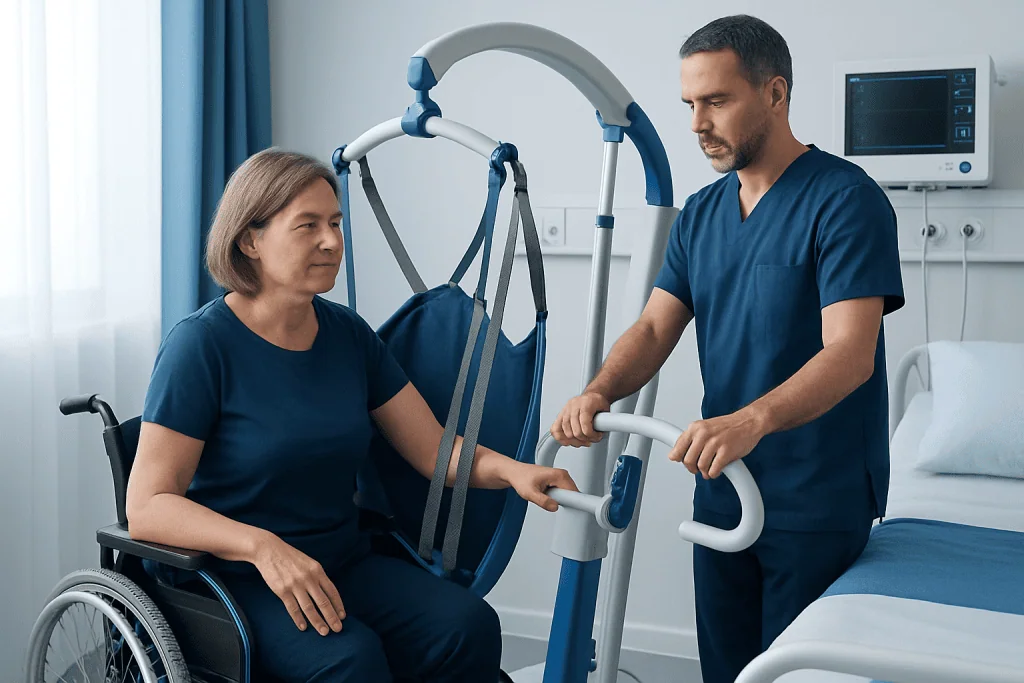
The most common route is airport to hotel, or airport directly to the hospital. Istanbul and other major Turkish cities have very large international airports, so walking distances inside the terminal can be long and arrivals halls can feel crowded. If you use a wheelchair or tire easily, the combination of airline-arranged airport assistance plus a pre-booked accessible vehicle makes a real difference on day one.
You will probably also need repeated transfers between your hotel and the hospital for consultations, imaging, laboratory tests, treatment sessions and follow-up checks. These need buffer time for traffic, drop-off, registration and moving through the building at your own pace. If a day involves sedation or a procedure, the return journey needs more comfort than the outbound one, and sometimes a different vehicle.
Depending on your situation, accessible transport in Turkey generally means one of four options:
- A standard vehicle with boot space for a folding wheelchair, for a patient who can sit in a regular seat.
- A ramp- or lift-equipped vehicle for a wheelchair user who cannot transfer, with securing points so the chair travels safely.
- A larger van for a patient plus companions, luggage and medical equipment together.
- A medically supported or ambulance-style transfer, including stretcher transport, when the medical team advises it.
The right option depends on your weight-bearing ability, your wheelchair’s dimensions and weight, your medical condition and the length of the journey. Do not assume; confirm.
Is Turkey good for wheelchair users? An honest picture
Mixed, and it is better to know that in advance. Major airports, newer hospitals, large hotels and modern shopping areas in cities such as Istanbul, Ankara, Izmir and Antalya are generally built with step-free access, lifts and accessible toilets. Hospital buildings that receive international patients are typically among the most accessible environments you will encounter in the country.
The gap appears at street level. Pavements can be narrow, uneven or blocked by parked cars. Kerb cuts exist but are inconsistent. Older neighbourhoods, particularly in historic districts, involve slopes, cobbles and steps. Public transport accessibility varies by line and station. For a medical patient, the practical conclusion is simple: plan door-to-door vehicle transfers rather than assuming you can manage pavements and public transport between points. A hotel that looks close to the hospital on a map may still be a difficult journey on wheels if the route involves a steep street or a busy crossing without a usable kerb cut.
None of this makes Turkey unsuitable for wheelchair users. It means the trip works best when it is built around pre-arranged transfers and accessibility-checked accommodation, not improvisation.
What to share before your trip

The more specific you are, the better the match. “I need wheelchair assistance” is not enough information to book the right vehicle. Your coordinator needs to know:
- Whether your wheelchair is manual or powered, and whether it folds.
- Its dimensions and approximate weight, especially for a powered chair or scooter.
- The battery type of any powered device, which matters for airline handling.
- Whether you can stand briefly, pivot, or transfer into a vehicle seat with help, or must remain seated in the chair.
- Your height and approximate weight, if lifting or positioning is involved.
- Any equipment travelling with you: oxygen, a CPAP device, drains, braces, cushions, a walker.
- How many companions are travelling and how much luggage you have.
For Acibadem International patients, the international patient services team collects these practical details and passes them to the relevant hospital and transport contacts, together with your flight number, arrival time, hotel address and appointment schedule. If a companion will also be supporting you inside the hospital, it is worth reading about medical chaperones in Turkey and when patients can request one, since transfer support and in-hospital support are arranged separately.
Airport arrival: from plane to vehicle
Request airport assistance from your airline before you travel, ideally when you book, and no later than a few days before departure. This service typically covers the route from the aircraft door through passport control, baggage claim and customs to the arrivals hall. If you have a connecting flight, request assistance for every airport on the route, not only your final arrival in Turkey. Assistance requests do not carry over automatically between airlines on separate tickets.
On arrival, switch your phone on as soon as permitted and keep it charged. Save your transfer contact, hospital coordinator and companion numbers where you can find them quickly, and carry the same details on paper as a backup. If you do not speak Turkish, written details in both English and Turkish help airport staff direct you to the correct meeting point. Our guide to medical check-in at Istanbul Airport covers the arrival process itself in more detail.
If Acibadem International has coordinated your arrival, you will normally receive meeting instructions before you fly: terminal, greeter or driver details, contact numbers and the pick-up point. Transfer teams often track flights, but tell your coordinator directly if your flight is delayed, diverted or missed, flight tracking does not catch a missed connection on a separate booking.
Hospital, hotel and city transfers
Plan every city journey with traffic in mind. Istanbul travel times swing widely with the hour, the weather and which bridge or tunnel route the driver takes. For hospital appointments, leave earlier than you would in a smaller city, and add time for entering the building, registering and reaching the department at your own pace.
When choosing accommodation, ask specific questions rather than accepting the word “accessible”: is the entrance step-free, how wide is the lift, does the bathroom have a roll-in shower or a bathtub, how high is the bed, and what does the pavement between the hotel and the vehicle pick-up point actually look like? International patient teams can often point out practical considerations when you are choosing between a hotel and a serviced apartment near your care location.
At the hospital itself, arrival is easier when the building knows your expected time and transfer type. If you need a wheelchair at the entrance, interpreter support or guidance to a specific department, request it before the appointment day whenever possible. If you have long clinic days or flights on either side of them, your doctor may also discuss whether compression stockings for travel are relevant to your situation; that is a clinical decision, not a transport one.
Accessible transfer or standard transfer: what actually differs
Search results often frame this as a price comparison. For a medical patient, the real differences are practical:
| Question | Standard transfer | Wheelchair-accessible transfer |
|---|---|---|
| Can you stay in your wheelchair? | No: you must transfer to a seat; the chair travels folded in the boot | Yes, if the vehicle has a ramp or lift and securing points |
| Is boarding assistance included? | Usually driver goodwill only | Should be part of the service; confirm who assists and how |
| Space for equipment? | Limited once luggage is loaded | Planned around the chair, equipment and companions |
| Booking lead time | Short notice often works | Book early, suitable vehicles are fewer and scheduled tightly |
If you can transfer to a seat comfortably and your chair folds, a standard vehicle with a briefed driver may be entirely adequate. If you cannot transfer, only a genuinely equipped vehicle is safe, and “we can lift you in” is not an acceptable substitute.
Safety, comfort and dignity during the journey
A good accessible transfer should feel respectful as well as practical. You should not be rushed, lifted without explanation or expected to manage steps that are unsafe for you. Anyone assisting a transfer from wheelchair to seat should wait for your consent, follow your instructions about your own body and avoid pulling on painful or vulnerable areas.
For comfort, wear clothing that is easy to adjust, keep your usual cushion with you if you use one, and carry a small bag with medications, documents, tissues and water where permitted. Keep essential items in your hand luggage, never in the vehicle boot. If you are post-operative or in pain, ask your clinical team whether you need specific positioning advice for longer journeys before you travel, do not rely on the driver to know.
If you remain in your wheelchair inside the vehicle, confirm two things: that the vehicle has proper wheelchair restraint points and an occupant belt, and that your particular chair is suitable for use as a vehicle seat. Not every wheelchair is. If either point is unclear, ask your coordinator to confirm with the transport provider and, where needed, with your medical team, before the journey rather than at the kerbside.
What accessible transfers and medical travel cost: how quotes work
This guide gives no figures, because no honest figure exists in advance of the details. What you can understand is the structure. Transfer pricing depends on the vehicle type (a lift-equipped van costs more to run than a saloon car), the distance and route, the time of day, whether the driver waits during an appointment, and how many journeys are bundled together. Treatment quotes work the same way: they depend on the diagnosis, the planned procedure, the length of stay and what the quote does and does not include.
The practical advice is to ask for everything in writing, ask explicitly what is excluded, and budget for the items that sit outside any quote, extra nights, extra transfers, companion costs. Our guide to the hidden costs patients often miss in a Turkey medical travel budget walks through those gaps in detail.
How Acibadem International helps coordinate your transfer plan
Acibadem International supports patients before, during and after a stay in Turkey with the practical logistics around treatment. For mobility planning, that typically means aligning transfers with appointment times, explaining arrival instructions, arranging interpreter support and making sure the transport side knows what your mobility actually requires.
The team also helps with details that are easy to overlook: whether the luggage fits alongside the wheelchair, whether you go to the hotel or the hospital first, and whether discharge day needs a different vehicle from arrival day: it often does, because your mobility after treatment may not match your mobility on arrival. Transport arrangements always depend on availability, medical suitability and local provider capacity, so early communication gives everyone more time to secure the right option rather than the nearest one.
Step by step
- Confirm your medical fitness to travel. Before booking flights and transfers, ask your treating doctor whether you are fit to travel and what assistance you need. Recent surgery, limited sitting tolerance, oxygen use or a high fall risk all change the right transfer method, and that decision belongs to your care team.
- Share detailed mobility information. Tell your coordinator whether you use a manual wheelchair, powered wheelchair, scooter, walker or crutches, and whether you can stand, pivot, manage one step or transfer into a vehicle seat with help.
- Request airline and airport assistance. Contact your airline before departure and request assistance for every airport on the route, including connections. Keep the confirmation with your travel documents and remind staff at check-in.
- Book the right vehicle type. Choose based on your real mobility, not passenger numbers. Confirm ramp or lift access, wheelchair securing points, luggage capacity, companion seating and whether the driver knows you need extra time.
- Coordinate arrival timing and contacts. Share your flight number, terminal, arrival time and first destination. Save driver, greeter and coordinator contacts on your phone and on paper so you can update them quickly if anything changes.
- Plan each appointment-day transfer. Do not arrange only the airport journey. Build in time for traffic, hospital entrance assistance, registration, interpreter meeting and possible delays after tests or consultations.
- Review the discharge or return journey separately. Before discharge, ask whether you need a larger vehicle, reclined positioning, extra assistance or a medically supported transfer rather than the standard accessible car that brought you in.
Your checklist
- Flight number, arrival airport, terminal and estimated arrival time
- Hotel name, full address and contact number
- Hospital name, department, appointment time and coordinator contact
- Wheelchair type, dimensions, weight and whether it folds
- Battery type for any powered wheelchair or scooter
- Whether you can transfer to a vehicle seat or must remain in your wheelchair
- Number of companions and amount of luggage
- Medical devices, oxygen needs, cushions, braces or walking aids travelling with you
- Medication and important documents kept in your hand luggage
- Emergency contacts saved on your phone and printed on paper
- Any doctor instructions about sitting, walking, lifting or transfer assistance
Key takeaways
- Wheelchair-accessible transfers in Turkey for medical patients work well when planned around real mobility details: chair type, transfer ability, equipment, luggage and schedule.
- Airline airport assistance and ground transport are separate arrangements, request both before travel, for every airport on the route.
- The core booking question is whether you can move to a vehicle seat or must remain in your wheelchair; everything else follows from that answer.
- Turkish airports and modern hospitals are generally accessible; street-level infrastructure is inconsistent, so plan door-to-door transfers rather than relying on pavements or public transport.
- Discharge-day mobility may differ from arrival-day mobility, so review the return journey as its own plan.
Frequently asked questions
Can I arrange a wheelchair-accessible airport transfer in Turkey before I arrive?
Yes, and it is strongly recommended. Provide your flight details, mobility needs, wheelchair type and dimensions, companion numbers and luggage information well before travel. Suitable vehicles are fewer than standard cars and are scheduled tightly, so early booking matters more for accessible transfers than for ordinary ones.
Is Turkey good for wheelchair users?
It is mixed. Airports, modern hospitals and larger hotels are generally step-free with lifts and accessible facilities. Street-level access is inconsistent: pavements can be uneven, kerb cuts unreliable and historic districts involve slopes and cobbles. Medical trips work best when built around pre-arranged door-to-door transfers rather than public transport or walking routes.
Is airline wheelchair assistance the same as an accessible vehicle transfer?
No. Airline or airport assistance moves you through the terminal, from the aircraft to immigration, baggage claim and arrivals. The accessible vehicle that takes you onward to your hotel or hospital is a separate ground transport arrangement, booked independently. Missing either one leaves a gap in the journey.
Can I stay in my wheelchair during the vehicle ride?
Only in a vehicle with proper wheelchair restraint points and an occupant belt, and only if your particular chair is suitable for use as a vehicle seat, not all are. If you cannot transfer to a regular seat, say so clearly during planning so the correct vehicle is booked, and confirm the securing arrangements before travel.
What if I use a powered wheelchair or mobility scooter?
Share the device’s dimensions, approximate weight and battery type before travel. Airlines have specific rules for powered mobility devices and their batteries, and the ground vehicle must have confirmed space and loading capability. Never assume a standard van can carry a powered chair safely without explicit confirmation.
How are transfer and treatment costs worked out?
There is no meaningful universal figure. Transfer quotes depend on vehicle type, distance, timing, waiting arrangements and how many journeys are bundled. Treatment quotes depend on the diagnosis, planned procedure, length of stay and what is included. Ask for written quotes, ask what is excluded, and budget separately for extras such as additional nights and companion costs.
Do I need a medical ambulance instead of an accessible vehicle?
Many wheelchair users do not, but some patients need medically supported transport. The decision depends on your condition, stability, ability to sit, monitoring needs and your doctor’s recommendation. If there is any uncertainty, ask your medical team before the transfer is confirmed: the transport provider cannot make that judgement for you.
Can a companion travel with me in the accessible transfer?
Usually yes, but confirm seating and luggage space in advance. An accessible vehicle fills quickly once a wheelchair, medical equipment and suitcases are loaded. Tell your coordinator exactly how many people are travelling so the vehicle is sized correctly, rather than discovering the problem at the kerb.
Add us as a Preferred Source to see more of our trusted health content across Google Search, AI Overviews and Discover.

Update history
- PublishedJune 9, 2026
- Medical review approvedSeptember 13, 2026
- Last content updateSeptember 13, 2026
References2
More Patient Guides

Airport Wheelchair Assistance: How to Book It for a Medical Trip
Airport wheelchair assistance is free, it exists at every commercial airport, and airlines are legally required to provide it, yet half…

Travelling With a Stoma: Flights, Supplies and Airport Screening
Traveling to Turkey with a stoma is manageable with the right supplies, airport screening plan, and recovery support in Istanbul or Turkey.
Mobility Aids in Turkey: Renting a Wheelchair, Walker, or Crutches
Mobility aids in Turkey can be rented through medical suppliers, pharmacies, and hospital-linked services in Istanbul and other cities.

Traveling to Turkey with Food Allergies or Special Diet Needs
Traveling to Turkey with food allergies or special diet needs is manageable with planning, translated allergy cards, and hotel and hospital support…