

Airport Wheelchair Assistance: How to Book It for a Medical Trip

Airport wheelchair assistance step by step: how to book it free with your airline, what happens at check-in, connections and arrivals, and tips for medical trips.
Airport wheelchair assistance is free, it exists at every commercial airport, and airlines are legally required to provide it, yet half the travelers who need it do not book it because they do not know how, and the other half book it too late for it to work smoothly. Here is the whole system in one page.
How to book it (the part everyone gets wrong)
- Book with the AIRLINE, not the airportassistance follows your ticket. Add it during booking under “special assistance,” in Manage My Booking afterwards, or by phone.
- At least 48 hours before departurethis is the standard notice airlines and regulators work to. Later requests are still honored on a best-effort basis.
- Say what you actually need. The codes behind the scenes matter: help with distances only (you can climb stairs), help with stairs, or full transfer to the seat. Distances-only travelers often get a buggy or escort instead of a chair.
- Repeat the request for every flight in a connection and for the return leg, one booking line covers them, but confirm each appears.
What happens on the day
- Arrival: assistance points are at terminal entrances, check-in and, at many airports, the car park and drop-off; call points connect you to the service.
- Security: you are screened seated if you cannot stand; medical devices and implants are handled with a swab or pat-down. An implant card is unnecessary but shortens conversations.
- Boarding: assisted passengers board first and deplane last; your own wheelchair travels free and is returned at the gate or belt depending on the airport.
- Connections: assistance hands you from team to team, allow generous connection times; 90 minutes is a realistic floor at large hubs.
Traveling for medical treatment
Post-surgical travelers are exactly who this service exists for: after joint replacement, spine or abdominal surgery, terminal distances are the hardest part of the journey home. Book assistance for the RETURN leg while planning the trip: you cannot reliably add it from a hospital bed the night before. Pair it with the right seating and clot precautions (see compression stockings and DVT and flying). Patients treated in Turkey get the arrival side arranged too: our coordinators book Istanbul Airport assistance and transfers as part of the plan; see arriving with mobility equipment.
Your own wheelchair, walker or scooter
Manual chairs and walkers fly free as medical equipment on top of baggage allowance. Powered chairs and scooters need battery details at booking (type and watt-hours), airlines have firm lithium rules. Gate-check the chair, keep cushions and removable parts in the cabin, and photograph the chair at the gate; damage claims are far easier with a boarding-time photo.
If it goes wrong
No one at the assistance point? Use the call button or the airline desk: the service is contractual, not a favor. In the EU/UK the airport operates it under EC1107/2006; in the US the airline does under the ACAA. A calm reference to the booking code in your reservation resolves most waits quickly.
Frequently asked questions
Does airport wheelchair assistance cost anything?
No: it is free by regulation on both sides of the Atlantic and at Turkish airports. Tipping the agent is optional and appreciated in some countries, never required.
Can someone travel with me through the airport?
One companion can usually accompany you through security and to the gate where local rules allow; they cannot ride the transport in some airports. Ask at the assistance desk.
Do I need a doctor’s letter to book assistance?
No. Assistance is booked on stated need alone. Letters only enter the picture for oxygen, stretchers or fitness-to-fly questions, see the fit to fly guide.
I only struggle with long distances, is that enough reason?
Yes. Distance help is the most common request category; terminals measure walks in kilometres, and using the service is what it is for.
The request types, decoded
Behind the booking form live standardized codes, and choosing the right one changes what meets you at the terminal. WCHR (“ramp”): you walk stairs and short distances but not terminal marathons, expect a buggy or chair for the long corridors. WCHS (“steps”): you manage short flat walking but not stairs: you get the chair plus lift boarding. WCHC (“cabin”): full assistance to your seat, with an aisle chair for the final metres. Telling the call-centre agent your real capability in plain words, “I can walk fifty metres and cannot do stairs”, gets the right code attached without you memorising any of this.
The big-hub playbook
At mega-hubs the service is an industrial operation with its own geography. Istanbul Airport: assistance desks sit at entrances 2 and 7 landside and throughout airside; the terminal is genuinely vast, so accept the buggy even if pride argues. Heathrow and Frankfurt: assistance is airport-run, look for the purple/green help points from the car park onwards. US hubs: airline-run, so report to YOUR airline’s check-in even for a connection. Everywhere, the golden habit is identical: make yourself known at the marked point early; the service runs on queues, and visible passengers board first in them.
Connections without fear
The handover chain, crew to gate agent to assistance team, is the part travelers distrust, usually unfairly. Make it robust: book the whole journey on ONE ticket so the assistance request travels with the record; state at booking that the connection needs assistance; allow 90 minutes minimum at large hubs (120 with a terminal change); and if the incoming flight lands late, tell the crew before landing: they radio ahead, and the connecting gate knows. Separate tickets break the chain: with them, you must exit, recheck and re-request, which is a reason to avoid separate tickets after surgery altogether.
Dignity, autonomy and the parts nobody explains
- You stay in YOUR wheelchair to the aircraft door wherever infrastructure allows, and it is returned at the door on arrival where offered, say “gate delivery” explicitly.
- Assistance staff push chairs; they do not carry bags as a duty. A trolley solves what a shoulder should not.
- You may decline parts of the service in the moment, ride to security, walk the last stretch.
- Toilets: ask BEFORE boarding; aisle-chair access to aircraft lavatories exists on widebodies and is awkward on narrowbodies, plan fluids on short flights accordingly, without dehydrating (clot risk says drink; see DVT and flying).
- Tipping: never required; in Turkey and the US a small note for genuinely personal help is warmly received, and its absence changes nothing.
Post-surgical travelers: matching service to operation
A quick matcher from the journeys we plan: joint replacement: WCHR/WCHS plus aisle seat, stockings, and the knee/hip timing rules; spine surgery: WCHS with firm-seat preference and standing breaks; abdominal surgery: WCHR mainly to avoid luggage handling; cardiac procedures: WCHR with the cardiology team’s explicit flight clearance; eye surgery, usually no chair, but the escort service (same booking path) helps when one eye is patched. Our coordinators file the request with the airline as part of the return-flight plan, so the only thing you carry through the terminal is the fit to fly note.
When the system fails you anyway
It happens: a missed handover, a forgotten gate. Escalate calmly and specifically, “I have WCHR on this booking, reference here, and no one has come”, first to the airline desk, then to the airport’s PRM (persons with reduced mobility) office, which every EU/UK/Turkish airport operates. Take names and times; both EU261-adjacent PRM rules and the US ACAA have complaint routes with teeth, and airlines settle documented failures quickly. Then let it go: the statistics are on your side, and the next journey almost always goes to script.
General information. Airline and airport procedures vary in detail: the airline’s special assistance page for your booking is the operative source.
Add us as a Preferred Source to see more of our trusted health content across Google Search, AI Overviews and Discover.

Update history
- PublishedSeptember 3, 2026
- Medical review approvedSeptember 13, 2026
- Last content updateSeptember 12, 2026
More Patient Guides

Travelling With a Stoma: Flights, Supplies and Airport Screening
Traveling to Turkey with a stoma is manageable with the right supplies, airport screening plan, and recovery support in Istanbul or Turkey.
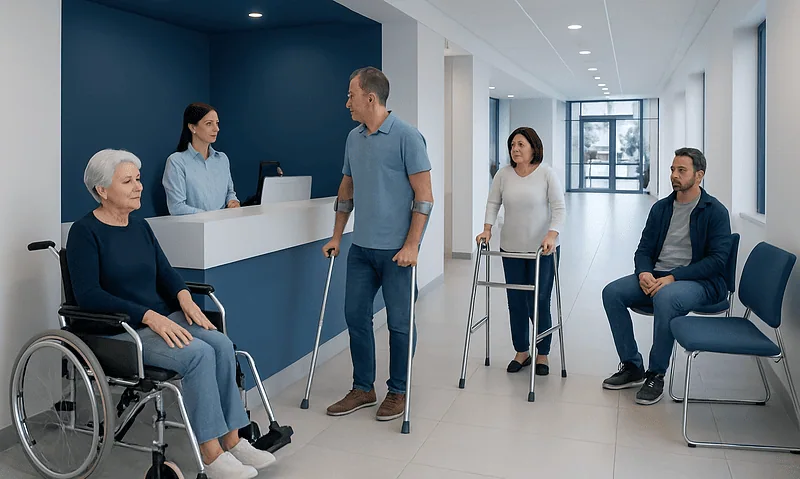
Mobility Aids in Turkey: Renting a Wheelchair, Walker, or Crutches
Mobility aids in Turkey can be rented through medical suppliers, pharmacies, and hospital-linked services in Istanbul and other cities.

Traveling to Turkey with Food Allergies or Special Diet Needs
Traveling to Turkey with food allergies or special diet needs is manageable with planning, translated allergy cards, and hotel and hospital support…
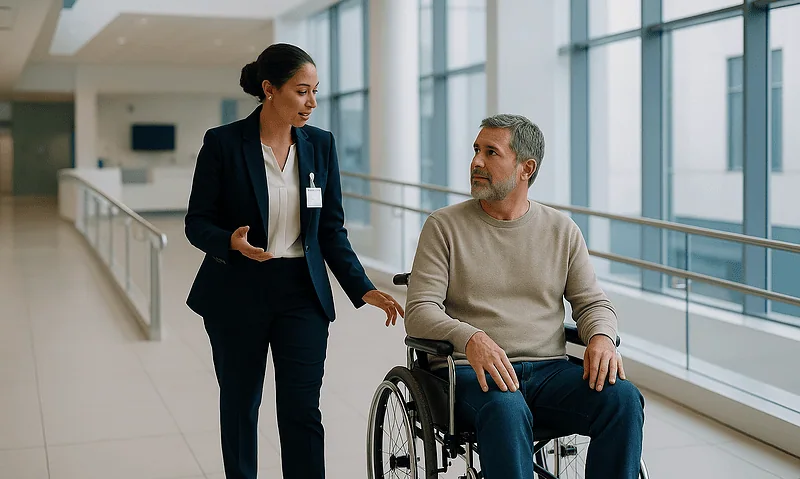
Flying to Turkey with Limited Mobility: Airport, Transfer, and Hotel Planning Tips
Flying to Turkey with limited mobility is easier with pre-booked airport assistance, accessible transfers, and hotel checks in Istanbul.