

Flying to Turkey with Limited Mobility: Airport, Transfer, and Hotel Planning Tips

Request airline special assistance when you book your flight and confirm it 48–72 hours before departure. Pre-book a transfer that matches how you actually move, and confirm hotel accessibility in writing rather than trusting the word 'accessible'. Turkish airports provide wheelchair assistance, but walking distances are long, so allow extra time for immigration, baggage and vehicle boarding.
The flight is rarely the hard part. What tires people out is everything around it: the distance from the aircraft door to passport control, the surprise step into a taxi, the hotel bathroom that turned out to have a bathtub after all. If you are flying to Turkey with limited mobility, a handful of confirmed details, arranged before you leave home, will do more for your comfort than anything you can improvise on the day.
This guide takes you through the whole journey in order: how accessible Turkey actually is, how to book airport assistance properly, what to ask airlines about wheelchairs and batteries, how to choose a transfer and a hotel room that genuinely work, and how to keep arrival day light. It is written for people travelling for treatment, but the practical advice holds for any trip.
At a glance
- When to arrange assistance: At flight booking, then reconfirm 48–72 hours before departure
- Main priorities: Airport special assistance, step-free transfers, verified room details
- Good to prepare: Labelled mobility aids, medication list, addresses in English and Turkish
- Helpful support: Airline special assistance, a companion, hospital patient services, interpreters
- Arrival planning: Allow generous extra time for immigration, baggage reclaim and vehicle boarding
Start with a realistic door-to-door plan
Flying to Turkey with limited mobility goes best when you plan the journey as one continuous route, not as a flight with loose ends on either side. Your trip has at least eight stages: getting to your departure airport, check-in, security, boarding, the flight itself, arrival formalities, baggage collection, and the transfer to your hotel or hospital. Each stage is handled by different people, airline staff, airport assistance teams, drivers, hotel reception, and none of them automatically knows what the others have promised you. Mapping the whole route on paper shows you where the gaps are.
Be specific with yourself first. Write down what you can do comfortably alone and where you need support. Perhaps you can walk short distances but cannot stand in a queue for twenty minutes. Perhaps you transfer independently from wheelchair to seat but need help with ramps, kerbs and luggage. Perhaps stairs are the single thing you cannot manage. These distinctions matter, because ‘assistance’ is not one service: it is a menu, and you get the right items only by naming them.
If you are travelling for treatment, your hospital’s international patient team will usually want to know your mobility situation as part of arrival planning. Acibadem International coordinates practical logistics for international patients, airport pickup, hospital access and arrival scheduling, and the details of how that works are covered in this guide to transfer and arrival support. The more precisely your needs are described in advance, the better any team can match the vehicle, timing and route to them.
Is Turkey accessible for travellers with limited mobility?
Honestly: it is mixed, and it depends heavily on where you go. The major international airports, Istanbul Airport, Sabiha Gökçen, Ankara Esenboğa, Antalya, Izmir, operate special assistance services, have lifts and accessible toilets, and are used to moving passengers with reduced mobility through the terminal. Modern hospitals, newer hotels and large shopping centres are generally step-free with elevator access. This is the environment most medical travellers actually spend their time in, and it works.
Older parts of Turkish cities are a different matter. Historic districts often have cobbled streets, steep slopes, narrow pavements and steps into shops and restaurants. Public transport accessibility varies by city and by line: some metro and tram systems have lifts and level boarding, but you cannot assume every station is usable. Standard yellow taxis are ordinary saloon cars with no ramp. None of this makes Turkey off-limits: it means the difference between a smooth trip and a frustrating one is planning specific venues and routes rather than trusting the city as a whole. If your trip is built around treatment, plan around the hospital, the hotel and the transfer between them, and treat sightseeing as an optional extra you assess venue by venue.
Book airport assistance early and confirm the details
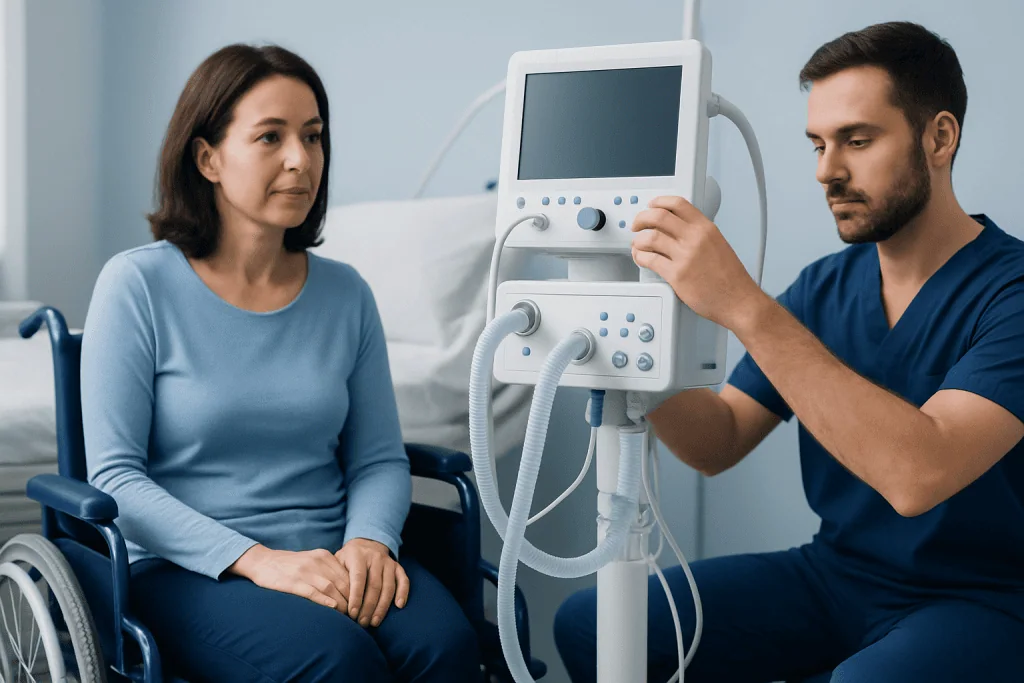
Airlines and airports can arrange special assistance, but the system rewards early, specific requests. Ask for assistance when you book the flight, most booking systems have a special assistance or SSR option, or you can call the airline. Then reconfirm 48 to 72 hours before departure so your request is attached to the live flight record, not just the original booking. Assistance requested at the check-in desk on the day is sometimes possible, but it puts you at the back of the queue.
Avoid vague phrasing. ‘I need help at the airport’ tells the airline almost nothing. Describe your actual limitations: difficulty walking long distances, inability to climb aircraft stairs, needing help with hand luggage, needing an aisle chair to reach your seat, or wanting to stay in your own wheelchair until the aircraft door where the airport permits it. Airlines use standard assistance codes behind the scenes, and a clear description lets staff assign the right one. The practical steps for requesting and using this service on the Turkish side are set out in our guide to airport wheelchair and mobility assistance in Turkey.
Travelling with your own wheelchair or powered device
If you use a wheelchair or mobility scooter, tell the airline the type, dimensions, weight and, critically, the battery type. Devices with lithium batteries usually need advance approval, and some batteries must be removed and carried in the cabin. Ask exactly how your device will be tagged, whether you can use it to the gate, when and where it will be returned after landing (at the aircraft door or at baggage reclaim), and what the procedure is if it arrives damaged or delayed. Getting these answers in writing before you fly is far easier than negotiating them at a busy arrivals hall.
- Request assistance for both the outbound and the return flight: they are separate requests.
- Ask whether you will board by jet bridge or by lift vehicle; this affects how much walking and standing is involved.
- If you have a connection, check the minimum connection time realistically, assistance handovers between flights take longer than walking connections.
- Keep your booking reference and the assistance confirmation somewhere you can reach one-handed.
Which airline should you choose?
There is no single ‘best airline’ for passengers with limited mobility, and any list claiming otherwise is guessing. Assistance quality depends on the airline, the aircraft, the airports on your route, and the ground-handling companies at each end: the same carrier can perform differently on different routes. What you can compare, and should, is specifics: whether the aircraft on your route has a jet bridge or stairs at each airport, whether an onboard aisle wheelchair is carried, how the airline handles powered wheelchairs and battery paperwork, its policy on pre-boarding, and how easy it is to actually reach its special assistance team by phone or email. A direct flight is almost always worth prioritising over a cheaper connection: every connection adds a wheelchair handover, a waiting period and a chance for something to go missing. Judge airlines by the clarity and speed of their answers to your specific questions: that responsiveness before you fly is the most reliable signal of how you will be treated on the day.
Prepare your documents, medication and mobility equipment

Keep your essentials in one small pouch you can reach without unpacking: passport, flight details, hotel address, hospital contact details, insurance documents and emergency numbers. If you are travelling for medical care, add referral letters, recent reports and a short written summary of your condition and current treatment: a single page a stranger could read in a minute is more useful than a thick folder.
Pack all medication in your hand luggage, in original packaging where possible, together with a written medication list. Carry more than you need for the scheduled journey; delays happen, and checked baggage occasionally arrives late. The same applies to catheters, continence products, dressings and any other supplies you depend on daily. Any questions about doses or timing around the flight belong with your treating doctor before you travel, do not adjust anything on your own. For a full packing framework covering hospital, hotel and recovery, see how to pack for medical treatment in Turkey.
For mobility aids, label every item with your name, phone number and destination address. Photograph your wheelchair, scooter or walker from several angles before travel, including the joystick, footrests and any attachments, photos settle damage claims quickly. If cushions, chargers or detachable parts can be removed, ask the airline whether they should travel in the cabin with you. A cushion or joystick lost in the hold is much harder to replace abroad than a suitcase.
Choose a transfer that is truly accessible, not just convenient
The journey from the airport to your hotel or hospital deserves as much attention as the flight. Do not assume a standard taxi will work, even for a short trip. Ask in advance about vehicle height, door width, the step-in level, luggage space, and whether the driver will help you in and out. A low saloon car that a fit traveller barely notices can be genuinely difficult after a long flight if your hips, knees or balance are the problem.
If you use a wheelchair, be precise about what ‘wheelchair accessible’ must mean for you. Some travellers transfer into a car seat while the chair folds into the boot; others need a ramp or lift and space to remain seated in the chair, with proper tie-downs. These are different vehicles, and a booking that confuses them fails at the kerb. Confirm the type in writing before you arrive. This matters most at Istanbul Airport, where distances inside the terminal are long and the pickup zones are large and busy: a clearly agreed meeting point, described in writing, saves a stressful search. What a pre-arranged medical transfer typically looks like, stage by stage, is described in our guide to airport transfers for medical travellers.
Build in slack. Immigration, baggage reclaim and locating your driver all take longer when you are using airport assistance, because you move on the assistance team’s schedule as well as your own. Share your live flight number with whoever is collecting you so they track delays automatically, and carry the driver or transfer company’s phone number on paper as well as in your phone.
Check hotel accessibility carefully before you arrive
‘Accessible room’ is not a regulated phrase, and it means different things at different hotels. Instead of asking whether the hotel is accessible, ask concrete questions: Is the entrance step-free? Is there a lift, and does it reach every floor you will use? How wide are the room and bathroom doors? Is the shower roll-in, step-in or over a bathtub? Are there grab bars and a shower seat? How high is the bed? How far is the room from the lift, and the lift from reception and breakfast? Ask for recent photos of the exact room type, not the hotel’s general gallery.
Then match the room to your actual routine. If fatigue is your main limit, a room near the lift and a hotel close to the hospital may matter more than any bathroom fitting. If you use a wheelchair, turning space beside the bed and inside the bathroom is the detail most listings omit. If a companion is travelling with you, confirm the sleeping arrangement works in the accessible room, not just the standard one. A hotel that is slightly closer, flatter and simpler to navigate usually beats a nicer one that costs you energy every day. How to organise your daily routine once you are settled, including moving between hotel and hospital, is covered in travelling to Turkey for treatment with limited mobility after arrival.
- Get accessibility answers in writing: an email reply is your evidence at check-in.
- Confirm whether the bathroom has a roll-in or step-in shower, not just ‘a shower’.
- Ask about ramps, automatic doors and accessible toilets in the common areas, not only the room.
- Check the route from the hotel door to the vehicle pickup point: slopes and kerbs count.
Make arrival day easier on yourself
Arrival day is usually more tiring than the flight. Waiting, dehydration, unfamiliar signage and baggage handling stack up, and they stack up faster when moving is hard work. If you can, keep your first day in Turkey deliberately light, no tight appointments, no errands, just the journey, check-in and rest.
Dress for the process: shoes you can remove and refit easily at security, layers rather than one heavy coat, nothing that fights you in a small aircraft toilet. Keep a small kit within one-handed reach in your hand luggage, medication, snacks, wipes, phone charger, a water plan for after security, and any pressure-relief cushion or neck support you normally use. If your first hospital appointment falls soon after landing, leave a genuine buffer between the two; a calm first appointment is worth an extra hour of margin.
Plan for safety, communication and the journey home
Before departure, save the important numbers in your phone and keep a written backup: airline, hotel, transfer contact, hospital coordinator, your companion, and someone at home. Carry your hotel and hospital addresses written in both English and Turkish, drivers and meeting-point staff will thank you, and it removes language from the equation at exactly the moments you are most tired.
On the broader questions travellers ask, entry requirements and general safety, rely on official sources rather than forums. Visa and entry rules for Turkey depend on your nationality and can change, so check your own government’s travel advice and Turkey’s official e-visa system before booking. Travel advisories are also the right place to check current safety guidance for the regions you plan to visit; the main destinations for medical travel are covered by standard advice for most nationalities, but the official pages are updated and forums are not.
Finally, plan the return leg as its own project. Your mobility on the way home may differ from the way out, particularly after treatment: you may need more wheelchair support, a different seat, a different vehicle, or simply more time. Reconfirm your return assistance request and transfer arrangements a few days before flying, and if anything about your mobility has changed, tell the airline so the assistance matches your new situation. The specifics of the homeward journey after treatment, casts, braces, seating and airport handling, are covered in flying home with a cast, brace or limited mobility. Asking for help at every stage is not a fallback; it is what good travel planning looks like. Handled this way, flying to Turkey with limited mobility becomes a sequence of confirmed, predictable steps rather than a day of improvisation.
Step by step
- Map your full journey. List every stage from your front door to your hotel room, departure airport, flight, arrival, transfer, check-in. Mark where you need help with walking, standing, stairs, lifting or bathroom access.
- Request airline and airport assistance. Ask at booking, describe your limitations specifically, and reconfirm 48–72 hours before departure. Request it separately for the return flight.
- Clear your mobility device with the airline. Provide dimensions, weight and battery type in advance, and get the handling and return arrangements in writing.
- Arrange the right transfer. Book a vehicle that matches how you actually move, seat transfer with a folded chair, or ramp and tie-downs, and agree the pickup point in writing.
- Verify hotel accessibility in writing. Ask specific questions about the entrance, lift, door widths, shower type and room layout, and request photos of the exact room.
- Pack for comfort and delays. Medication, documents, chargers and daily supplies in hand luggage; mobility aids labelled and photographed.
- Keep arrival day light. Build buffer time around immigration, baggage, the transfer and check-in before any appointment.
- Re-plan the return before you fly home. Your needs may have changed; update the airline, transfer and assistance requests a few days ahead.
Your checklist
- Passport, tickets, hotel and hospital addresses in one folder, addresses in English and Turkish
- Special assistance requested for both flights and reconfirmed 48–72 hours out
- Medication in hand luggage with a current written medication list
- Mobility aid labelled, photographed, battery details cleared with the airline
- Accessible transfer booked with the vehicle type and pickup point confirmed in writing
- Hotel accessibility details confirmed by email, with photos of the exact room
- Emergency contacts saved on your phone and written on paper
- Comfort kit packed: cushion, charger, snacks, wipes, water plan
- Entry requirements checked against official government sources for your nationality
Key takeaways
- Plan door to door, not airport to airport: the gaps between services are where trips go wrong.
- Request airport assistance at booking, describe your needs specifically, and reconfirm before departure.
- Turkey’s major airports and modern hotels handle limited mobility well; older streets and standard taxis often do not, plan specific venues, not the city in general.
- Confirm your transfer vehicle type and your hotel room details in writing.
- Keep medication, documents and daily supplies in hand luggage, and label and photograph mobility equipment.
- Treat the return journey as a separate plan: your needs may change during the stay.
Frequently asked questions
Is Turkey disabled friendly?
It varies by setting. Major airports, modern hospitals and newer hotels are generally step-free with lifts and assistance services, and this is where most medical travellers spend their time. Historic districts, older buildings, standard taxis and some public transport are much less accessible. Plan specific venues and routes rather than judging the country as a whole.
Which airline is best for travellers with limited mobility?
No single airline is reliably ‘best’, assistance quality depends on the route, the aircraft and the ground handlers at each airport. Compare specifics instead: direct flights versus connections, jet bridge versus stairs, wheelchair and battery policies, and how quickly the airline’s special assistance team answers your questions. Clear, prompt answers before booking are the strongest signal.
Is it safe to fly to Turkey right now in 2026?
Check your own government’s current travel advice before booking, as it is updated regularly and covers regions individually. Whether you personally are fit to fly is a separate question that depends on your health, and it belongs with your treating doctor rather than a travel guide.
Are there any restrictions to travel to Turkey?
Entry requirements depend on your nationality. Many travellers need an e-visa or visa, while some enter visa-free for short stays. Rules can change, so check Turkey’s official e-visa system and your government’s travel advice pages before you book, and again shortly before you fly.
How early should I request airport assistance for a trip to Turkey?
Request it when you book the flight, then reconfirm 48 to 72 hours before departure so the request is attached to the live flight record. Remember it must be requested separately for the return leg.
Can I take my own wheelchair on the flight?
Usually yes, but the airline needs the type, dimensions, weight and battery details in advance, powered devices with lithium batteries often need approval. Ask how the chair will be tagged, whether you can use it to the gate, where it will be returned after landing, and what happens if it is damaged or delayed.
Is a regular taxi in Istanbul suitable if I have limited mobility?
Often not. Standard taxis are ordinary saloon cars with low seats, no ramp and limited space for equipment. If you have difficulty stepping in, transferring or folding a chair, a pre-booked vehicle matched to your needs is the more practical choice.
What if I need more help on the way home than on the way out?
This is common, especially after treatment. Update your assistance request with the airline as soon as you know your needs have changed, adjust the transfer booking to match, and allow extra time at the airport on the day of the return flight.
Add us as a Preferred Source to see more of our trusted health content across Google Search, AI Overviews and Discover.

Update history
- PublishedJuly 25, 2026
- Medical review approvedSeptember 13, 2026
- Last content updateSeptember 12, 2026
References2
More Patient Guides

Airport Wheelchair Assistance: How to Book It for a Medical Trip
Airport wheelchair assistance is free, it exists at every commercial airport, and airlines are legally required to provide it, yet half…

Travelling With a Stoma: Flights, Supplies and Airport Screening
Traveling to Turkey with a stoma is manageable with the right supplies, airport screening plan, and recovery support in Istanbul or Turkey.
Mobility Aids in Turkey: Renting a Wheelchair, Walker, or Crutches
Mobility aids in Turkey can be rented through medical suppliers, pharmacies, and hospital-linked services in Istanbul and other cities.

Traveling to Turkey with Food Allergies or Special Diet Needs
Traveling to Turkey with food allergies or special diet needs is manageable with planning, translated allergy cards, and hotel and hospital support…