

Bringing a Wheelchair or Walker to Turkey for Treatment
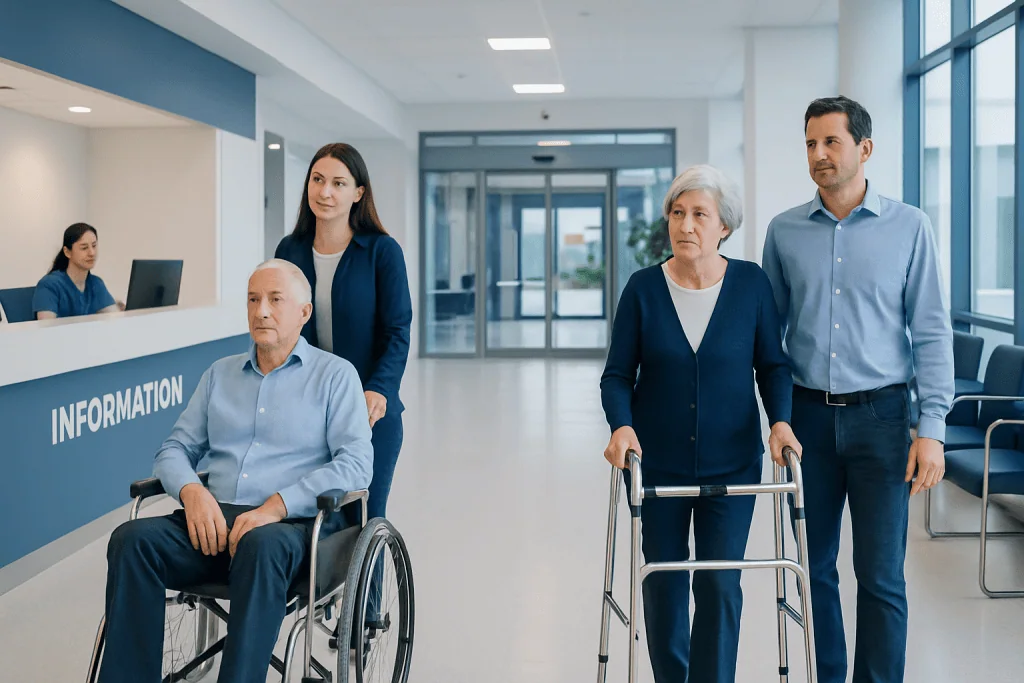
Yes, you can bring a wheelchair, walker or rollator to Turkey for treatment. Register the device with your airline when you book, provide battery details for powered chairs, and request assistance for every flight segment. Label and photograph your equipment before handing it over, confirm step-free access at your hotel, and tell the hospital about your transfer needs before you arrive.
Will your wheelchair make it to Istanbul in one piece? Will there be a step at the hotel door, or a lift too narrow for your chair? These are the questions that keep mobility-aid users awake before a treatment trip, and every one of them can be answered before you leave home.
If you use a wheelchair, walker, rollator, crutches or a cane, bringing a wheelchair or walker to Turkey for treatment is entirely manageable with the right preparation. Thousands of international patients travel with their own equipment every year. What separates a calm journey from a stressful one is rarely luck. It is a handful of specific arrangements made in the right order: airline registration, airport assistance, an honest look at your accommodation, and a clear conversation with the hospital about how you move. This guide walks through each stage, before departure, at the airport, during transfers, and throughout your hospital stay and recovery.
At a glance
- When to plan: Start mobility arrangements before booking flights where possible, so seats, assistance and transfers line up
- Airline step: Register your device and request wheelchair assistance for every flight segment, ideally at booking
- Bring or rent: Most patients bring their own familiar device; local rental can work as a backup but should never be assumed
- Powered chairs: Airlines need battery type, dimensions and weight in advance, lithium batteries have their own rules
- Hospital access: Confirm entrances, lifts, drop-off points and transfer support before arrival, not on the day
- Support available: International patient teams can help coordinate interpreters, transfers and accommodation guidance
Planning Your Mobility Needs Before You Travel
The most useful thing you can do before bringing a wheelchair or walker to Turkey for treatment is to describe your mobility honestly and in detail. Vague phrases like “limited mobility” help nobody. Specifics do: how many metres you can walk unaided, whether you can manage a single step or a flight of stairs, whether you can transfer from a seat to a wheelchair on your own, and whether your mobility is likely to change after your procedure.
If you are travelling to an Acibadem hospital, your international patient coordinator can use exactly this information to think through airport arrival, vehicle type, hospital entrances, interpreter support and whether a companion should assist you during appointments. The earlier the picture is clear, the more options remain open.
It helps to separate your needs into three stages, because they are often different:
- Travel to Turkey: long airport corridors, security queues, aircraft aisles and baggage halls. Even patients who walk well at home often want wheelchair assistance here.
- Movement during treatment: hospital corridors, imaging departments, waiting areas and the route between your accommodation and the hospital.
- Recovery before flying home: your mobility after surgery or treatment may be temporarily worse than on arrival, and your return journey should be planned around that version of you, not the one who boarded the outbound flight.
You may walk with a cane today but need a wheelchair after surgery. You may manage a walker in a hotel room but need a chair for a 400-metre hospital corridor. Planning for each stage separately prevents the common mistake of preparing only for the trip out.
Should You Bring Your Own Wheelchair, Walker, or Rollator?
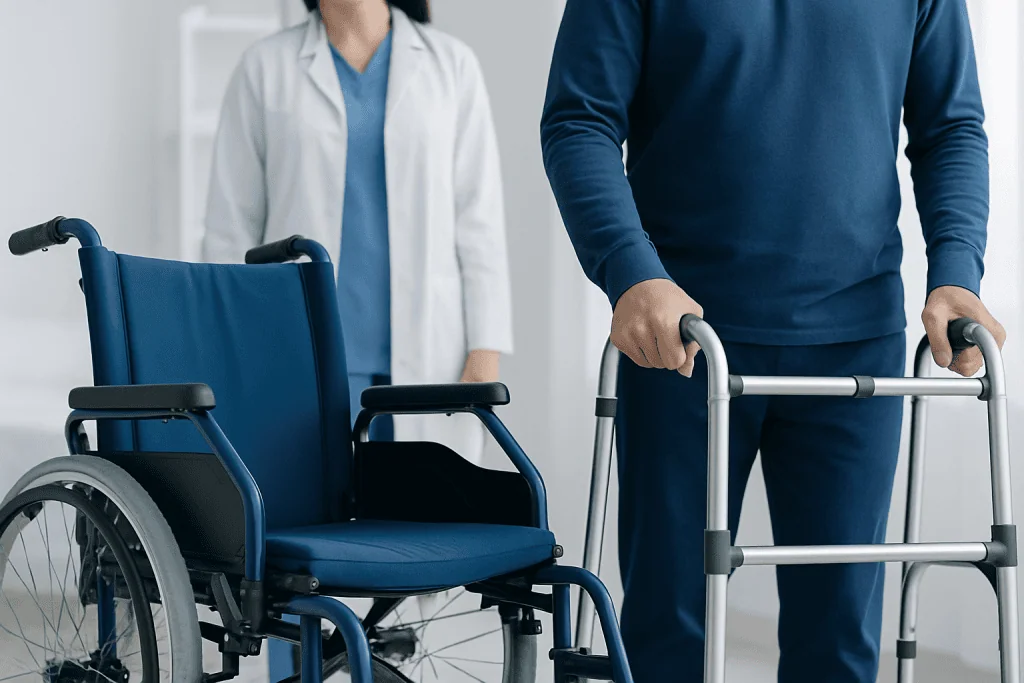
In most cases, yes. You already know your own equipment: its width, its brakes, its folding mechanism, how it behaves on a slope. That familiarity matters most when you are tired, in pain, or recovering from anaesthesia. It matters even more if your device is custom-fitted: a moulded seat, a pressure-relief cushion, a bariatric frame, or a walker adjusted precisely to your height. A borrowed replacement is rarely a true substitute for any of these.
Before travelling, give the device a proper inspection. Check wheels, brakes, rubber tips, screws, batteries, footrests, seat cushions and folding parts. If anything needs servicing, do it at home, where you know the repairer and the spare parts, not in a foreign city mid-treatment. Pack the small accessories that are hard to replace abroad: a pump, charger, Allen keys, a cushion cover, a rain cover, spare rubber ferrules for walking aids.
If you would rather not travel with your full equipment, temporary alternatives do exist. A basic wheelchair, walker or shower chair can sometimes be arranged through your hotel or hospital, and rental options vary by city and season: our guide to renting a wheelchair, walker or crutches in Turkey explains what is realistic. The honest rule: rentals work well as a backup or for short-distance use, but if a device is essential to your safety, treat local availability as a bonus, never as the plan.
Airline Rules and Airport Wheelchair Assistance

Airlines generally carry mobility aids free of charge in addition to your baggage allowance, but the rules differ sharply between manual wheelchairs, powered wheelchairs, mobility scooters and walkers. Contact your airline at booking, or immediately after, to register your device and request assistance. If your journey involves a connection, confirm that assistance is booked for every airport and every segment: it does not transfer automatically between legs or between airlines.
Turkish Airlines, like most major international carriers, offers special assistance for elderly passengers and passengers with reduced mobility: wheelchair support through the terminal, help at check-in and security, priority boarding, and cabin wheelchairs on many aircraft for reaching the toilet in flight. Requests are best made when booking or at least 48 hours before departure, because assistance is allocated in advance, not improvised at the gate. Other carriers flying into Turkey operate similar schemes under different names.
Questions worth asking your airline directly:
- Can I use my own wheelchair or walker up to the aircraft door, or must it be checked at the counter?
- Will the device be gate-checked, and will it be returned at the aircraft door or in the baggage hall on arrival?
- For powered chairs and scooters: what battery information do you need? Lithium batteries usually require the type, watt-hour rating and whether the battery is removable. Dimensions and weight of the device are often requested too.
- If I cannot walk to my seat, can an aisle chair be arranged?
Before handing your equipment over, photograph it from several angles, including any existing wear. Label it clearly with your name, phone number, destination address and, if you have one, your hospital contact. If the device arrives damaged, report it at the airport before leaving the baggage area and keep the airline’s written report together with your photos.
Allow generous extra time at the airport for check-in, security screening and boarding. Keep essential medicines, medical documents, chargers and a small repair kit in your hand luggage, never only in checked baggage. For a fuller walkthrough of terminal support at Turkish airports, see our guide to airport wheelchair and mobility assistance in Turkey.
At the Border: Equipment, Medicines, and Who Pays for Care
Personal mobility equipment, a wheelchair, walker, rollator or crutches for your own use, is treated as personal medical equipment, not commercial goods. Bringing a wheelchair or walker to Turkey for treatment requires no special permission when it is one device for your own use. Powered equipment travels under the airline’s battery rules rather than a customs restriction.
Medication is a separate matter, and a common question. You can generally bring regular medicines into Turkey in personal-use quantities, in their original packaging, accompanied by a prescription or a doctor’s letter in English naming the medicine and dose. Certain controlled medicines, some strong painkillers, sedatives and similar categories, need clearer documentation, so check before you fly rather than at the desk. Our dedicated guide on bringing regular medicines to Turkey covers packing, declaring and documentation in detail. Any change to your medicines around travel or treatment is a decision for your treating doctor, not something to adjust on your own.
One point international patients sometimes misunderstand: tourists do not receive free healthcare in Turkey. The public system covers Turkish residents enrolled in national insurance. As a visitor, planned treatment at a private hospital is paid care, by you, your insurer, or another agreed payer, and travel insurance policies frequently exclude treatment you travelled specifically to receive. Emergency departments will assess and stabilise anyone who arrives, but that care is billed afterwards. Knowing this in advance lets you sort out payment and insurance questions before departure rather than mid-trip.
Is Turkey Wheelchair Friendly? Transfers, Hotels, and Daily Movement
The honest answer is: parts of it, very much so; other parts, not yet. Modern infrastructure, major airports, private hospitals, newer hotels, large shopping centres and much of the metro network in Istanbul, Ankara and Izmir, is generally accessible, with lifts, ramps and accessible toilets. Older neighbourhoods are a different story: expect cobblestones, steep hills, narrow or uneven pavements, cars parked across kerb cuts, and historic buildings with steps and no lift. A treatment trip that moves between airport, accessible transfer, hotel and hospital is usually smooth. A spontaneous stroll through an old quarter takes more planning.
For transfers, the detail that matters is the vehicle itself. Explain whether you can step into a standard car, need a low vehicle, need boot space for a folded wheelchair, or require a wheelchair-accessible vehicle with a ramp or lift so you can travel seated in your chair. If a companion travels with you, confirm there is room for the person, the luggage, the device and any medical supplies at the same time. Our guide to wheelchair-accessible transfers for medical patients goes deeper on this. Acibadem’s international patient services can often help coordinate airport transfers and suggest accommodation suited to your mobility needs.
With hotels and serviced apartments, ask direct questions rather than trusting the word “accessible” on a booking site. Useful ones: Is the entrance step-free? How wide is the lift door, and does the lift reach my floor? Is the bathroom a walk-in shower or a high bathtub? Is there space beside the bed to park a walker? Can the hotel provide a shower chair? How far is the hospital, and is the route step-free? Ask for measurements and photos where it matters: a lift that is ten centimetres too narrow is discovered far more pleasantly by email than in the lobby.
At the Hospital: Access, Appointments, and Safety
Large private hospitals in Turkey are built with lifts, ramps, accessible toilets and wheelchair availability at entrances, and Acibadem hospitals routinely receive patients with mobility needs. Even so, your individual situation should be discussed before arrival rather than solved on the doorstep. Ask which entrance suits wheelchair access best, where your driver should stop, and whether staff support is available when you arrive. If several appointments fall on one day, ask whether the schedule can reduce unnecessary movement between departments. Inside the building, porters, wheelchairs and stretchers are part of normal operations: our guide to in-hospital patient transport in Turkey explains how that support works.
During consultations, imaging, laboratory visits and pre-operative assessments, you may need to transfer between a wheelchair, an examination chair, an imaging table or a hospital bed. Tell the team if transfers are painful, feel unsafe, or need two people. Staff would far rather bring an extra pair of hands than manage a fall. Speaking up early is not fuss; it is standard, sensible information.
If you use a walker or cane, keep it within reach whenever you stand. Hospital floors feel different from home, smoother, harder, sometimes freshly cleaned, and unfamiliar slippers, medication, pain or fatigue all change your balance. Ask for help before walking if you feel dizzy, weak or unsure, not after you have started.
After Treatment: Your Mobility May Change Temporarily
Even if you arrive in Turkey walking independently, your mobility may be different for a while after treatment. Some patients need a wheelchair only for long distances; others need a walker, crutches or a steadying arm for days or weeks. How long depends on your procedure, anaesthesia, pain, balance, fatigue and your doctor’s discharge advice, which is why no guide can tell you in advance, and why the question belongs in your discharge conversation.
Before leaving the hospital, ask your clinical team what movement is allowed, what should be avoided, and whether you will need help with stairs, bathing, dressing or transfers. If physiotherapy, wound care or follow-up appointments are part of the plan, ask how your mobility limits will be handled between hospital and accommodation. If you are travelling with someone, our guide on bringing a companion to Turkey for treatment covers how to plan their role realistically.
Plan the return flight around your post-treatment condition, not your pre-travel one. That may mean airport wheelchair assistance you did not need on the way out, extra time at security, help with hand luggage, or a companion managing documents and medicines. If your doctor advises rest, monitoring or delayed travel, build that into the plan rather than flying to a deadline.
Documents, Communication, and What to Pack
Clear paperwork makes every handover easier, airline, airport, hotel, hospital. Carry a short mobility summary in English covering your diagnosis where relevant, your mobility aid, your transfer needs, any fall risk, and any implanted devices or battery-powered equipment. Keep a printed copy and a digital copy; phones run out of battery at inconvenient moments.
If language is a concern, interpreter support can be arranged for hospital appointments: Acibadem regularly supports patients from many countries and helps coordinate communication between patients, companions and clinical teams. For airports and hotels, a few written phrases carry you a long way: I need wheelchair assistance. I cannot climb stairs. Please return my walker at the aircraft door.
Pack for independence and safety: non-slip shoes, medicines in original packaging, chargers and plug adapters (Turkey uses European-style two-pin sockets), a small torch, hand sanitiser, a spare cushion cover, compression garments if prescribed, and a lightweight bag that attaches securely to your wheelchair or walker frame. One caution: do not hang heavy bags from the handles of a walker or the push handles of a wheelchair. It shifts the centre of gravity and can tip the device: a preventable cause of falls in otherwise careful travellers.
Step by step
- Describe your mobility level before booking. Tell your patient coordinator and airline how far you can walk, whether you can climb steps, and whether you need help transferring. This shapes the right airport, transfer, hotel and hospital support.
- Check airline rules for your device. Register manual wheelchairs, powered wheelchairs, scooters and walkers with the airline. For powered devices, have battery type, watt-hour rating, dimensions and weight ready, and ask where the device will be returned after landing.
- Service, photograph and label your mobility aid. Check brakes, wheels, rubber tips, folding parts, batteries and cushions before departure. Photograph the device and add a clear label with your name, phone number and destination details.
- Arrange accessible transfers and accommodation. Confirm whether you need a standard car, space for a folded wheelchair, or a wheelchair-accessible vehicle. Ask the hotel about step-free entry, lift dimensions, bathroom layout and distance to the hospital.
- Plan hospital arrival and appointment movement. Confirm the best entrance and drop-off point. If you have multiple appointments in a day, ask how movement between departments will be managed.
- Prepare for post-treatment mobility changes. Your mobility after treatment may differ from your mobility on arrival. Before discharge, ask what support you will need for walking, stairs, bathing, transfers and the journey home.
- Keep essentials in hand luggage. Carry medicines, medical documents, chargers, glasses, hearing aids and small repair items with you, never only in checked baggage.
Your checklist
- Airline assistance requested for every flight segment, outbound and return
- Device dimensions, weight and battery details supplied to the airline if required
- Wheelchair, walker or rollator inspected and serviced before departure
- Photos taken of the device; name and contact label attached
- Spare rubber tips, charger, cushion or small repair tools packed
- Accessible airport transfer arranged with space for luggage and equipment
- Hotel step-free access, lift size and bathroom layout confirmed in writing
- Hospital entrance, drop-off point and appointment support discussed in advance
- Medical documents, prescriptions and mobility summary in print and digital form
- Non-slip shoes and safe clothing packed for walking and transfers
- Return travel planned around your expected post-treatment condition
Key takeaways
- Bringing a wheelchair or walker to Turkey for treatment starts with the airline: register your device at booking and confirm assistance for every flight segment separately.
- Bring your own familiar equipment when possible, especially if it is custom-fitted or essential for safe movement; treat local rental as a backup, not the plan.
- Photograph and label your device before handing it over, and report any damage at the airport before leaving the baggage hall.
- Confirm accessible transfers, hotel access, bathroom layout and the hospital drop-off point in advance, specifics beat the word “accessible” every time.
- Expect that your mobility may temporarily change after treatment, and plan the return journey around your post-treatment condition.
- Acibadem’s international patient teams can help coordinate practical support such as interpreters, transfers and accommodation guidance.
Frequently asked questions
Can I bring my wheelchair or walker on a flight to Turkey?
In almost all cases, yes, and usually free of charge in addition to your baggage allowance. Manual wheelchairs and walkers are handled differently from powered wheelchairs or scooters, especially where lithium batteries are involved. Confirm with the airline how your device will be checked, stored and returned after landing, and register it as early as possible.
Is Turkey wheelchair friendly?
Modern infrastructure, major airports, private hospitals, newer hotels, shopping centres and much of the metro in large cities, is generally accessible. Older neighbourhoods are harder: cobblestones, hills, uneven pavements and historic buildings without lifts are common. A treatment trip moving between airport, accessible transfer, hotel and hospital is usually smooth if each link is confirmed in advance.
Do tourists get free healthcare in Turkey?
No. Turkey’s public healthcare system covers residents enrolled in national insurance, not visitors. As an international patient, planned treatment at a private hospital is paid care, arranged between you, your insurer or another agreed payer and the hospital. Emergency departments will assess and stabilise anyone who arrives, but that care is billed afterwards, so appropriate insurance or payment arrangements matter.
What assistance does Turkish Airlines offer to elderly passengers?
Like most major international carriers, Turkish Airlines provides special assistance for elderly passengers and passengers with reduced mobility: wheelchair support through the terminal, help at check-in and security, priority boarding, and cabin wheelchairs on many aircraft. Requests should be made when booking or at least 48 hours before departure, and separately for each flight segment, as assistance does not carry over automatically.
Can I bring my medication into Turkey?
Generally yes, in personal-use quantities, in original packaging, with a prescription or a doctor’s letter in English naming the medicine and dose. Certain controlled medicines, such as some strong painkillers and sedatives, need clearer documentation, so check requirements before flying. Keep medicines in your hand luggage, and leave any changes to doses or timing to your treating doctor.
What if my wheelchair is damaged during the flight?
Report the damage at the airport before leaving the baggage area, and keep the airline’s written report together with the photos you took before departure. Airlines have formal processes for damaged mobility equipment, and a report filed on the spot is far stronger than one filed later. Having your device photographed and labelled beforehand makes the whole process quicker.
Should I bring my own walker or arrange one in Turkey?
If your walker is adjusted to your height and you rely on it for safe movement, bringing your own is usually the safer choice. Rental and loan options exist in some cities, and hotels or hospitals can sometimes arrange a basic device, but availability varies by location and timing. Treat local equipment as a backup rather than the plan.
What should I tell the hospital before I arrive?
Explain which mobility aid you use, whether you can stand and transfer independently, whether you can climb stairs, and how far you can walk. Mention dizziness, fall history, pain, weakness or the need for a caregiver. These details let the hospital plan entrances, drop-off points, porter support and safer movement between appointments during your stay.
Add us as a Preferred Source to see more of our trusted health content across Google Search, AI Overviews and Discover.

Update history
- PublishedJune 8, 2026
- Medical review approvedSeptember 13, 2026
- Last content updateSeptember 12, 2026
References2
- Turkey: Traveler View, CDC Travelers' Health wwwnc.cdc.gov
- Foreign travel advice: Turkey: GOV.UK gov.uk
More Patient Guides

Airport Wheelchair Assistance: How to Book It for a Medical Trip
Airport wheelchair assistance is free, it exists at every commercial airport, and airlines are legally required to provide it, yet half…

Travelling With a Stoma: Flights, Supplies and Airport Screening
Traveling to Turkey with a stoma is manageable with the right supplies, airport screening plan, and recovery support in Istanbul or Turkey.
Mobility Aids in Turkey: Renting a Wheelchair, Walker, or Crutches
Mobility aids in Turkey can be rented through medical suppliers, pharmacies, and hospital-linked services in Istanbul and other cities.

Traveling to Turkey with Food Allergies or Special Diet Needs
Traveling to Turkey with food allergies or special diet needs is manageable with planning, translated allergy cards, and hotel and hospital support…