

When You Need a Companion for Treatment Travel to Turkey

You do not always need a companion for treatment travel to Turkey, but one is usually worth bringing if you will have sedation, surgery, reduced mobility or a demanding schedule. Choose someone calm and practical, agree their role before you book, and plan flights, accommodation and documents as a pair. Hospital coordinators and interpreters can carry part of the load, but they do not replace a familiar person beside you.
Should you travel to Turkey alone, or ask someone to come with you? It is one of the first practical questions international patients face, and the answer shapes almost everything else: flights, hotel bookings, budget, and how your recovery days will actually feel. This guide helps you decide whether you need a companion for treatment travel to Turkey, who that person should be, and how to prepare together.
It covers the decision itself, the choice of person, what a companion can and cannot do, the paperwork and medicines both of you need to think about, and the honest limits of what hospital support services replace. It is written for treatment anywhere in Turkey, whether you are coming to Istanbul or another city.
At a glance
- Best for: Patients weighing up whether to travel alone or bring someone for treatment in Turkey
- Main decision: Whether you need a companion, who it should be, and what role they will play
- Strongest reasons to bring one: Sedation or surgery, reduced mobility, anxiety, language barriers, a packed schedule
- What to plan for two: Flights, visas, accommodation, medicines and documents, daily transport, recovery help
- What hospitals add: Coordinators and interpreters reduce the load, but they do not replace a familiar person
- Good timing: Settle the companion question as soon as treatment dates are proposed, before anything is booked
Do you need a companion for treatment travel to Turkey?
Not every patient does. Plenty of people travel alone for consultations, diagnostics, dental work or minor procedures and manage well. The question of whether you need a companion for treatment travel to Turkey depends less on the destination and more on what your body and mind will be dealing with during the trip.
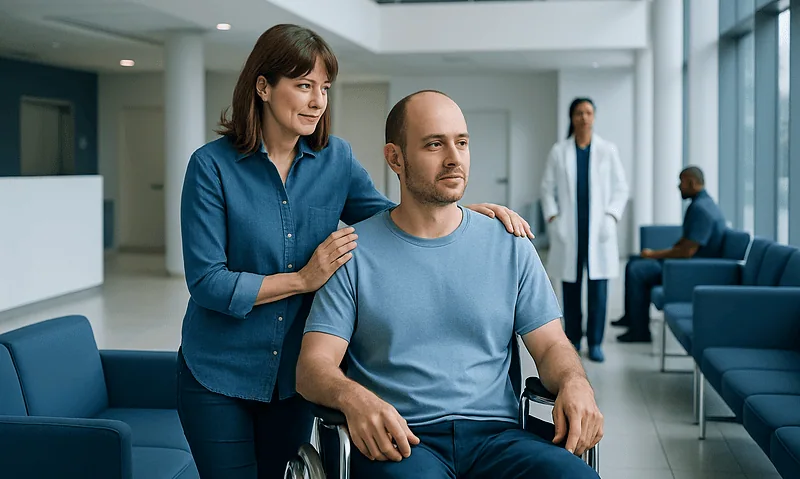
A companion earns their seat on the plane in a few specific situations. If you are having sedation or general anaesthesia, you will have hours or days when you should not be making decisions, carrying bags or navigating a city alone. If your mobility will be reduced after treatment, someone needs to manage luggage, stairs, transfers and hotel corridors. If you are anxious about hospitals or travel, a familiar person changes the emotional weather of the whole trip. And if your schedule is dense, multiple appointments, imaging, pre-op tests, follow-ups, a second pair of hands and eyes stops small logistics from becoming large problems.
Think about the whole journey rather than just the time inside the hospital. Airports, taxis, hotel check-ins, pharmacies, meals and the quiet evening hours after a procedure all sit outside the care team’s reach. Hospital staff look after you inside the building; a companion looks after everything in between. For a fuller breakdown of which situations genuinely call for one, see which patients should not travel alone.
Be honest about the other side too. A companion doubles the flights, the hotel occupancy and the time off work involved. If your treatment is short, low-intensity and you are otherwise fit, travelling solo with good hospital coordination can be a perfectly reasonable choice. If you are genuinely undecided, write the trade-offs down case by case, flights, hotel costs, time off work, the intensity of your treatment, before anything is booked. Your treating doctor’s view matters here as well: recovery expectations vary widely between procedures, and the plan for your specific treatment should drive the decision, not a general rule.
Choosing the right person to come with you

The best companion is not automatically the closest relative. It is the calmest reliable adult you know. You want someone who can wake early for appointments, sit through waiting-room hours without becoming a second source of stress, handle paperwork, and stay steady if you are tired, emotional or in discomfort after treatment.
It helps enormously if this person understands your preferences before departure. Do you want them inside consultations, or waiting outside? Do you want them asking questions and taking notes, or quietly managing taxis and meals while you rest? Some patients want an advocate; others want a porter and a friendly face. Neither is wrong, but the companion needs to know which job they have been given.
There are also people who make poor companions despite good intentions. Someone who is highly anxious themselves, has significant health needs of their own, or copes badly with changed plans will struggle. Medical travel involves waiting, occasional rescheduling, unfamiliar food and fatigue. A companion does not need any medical knowledge: they need patience, organisation and the willingness to put your needs first for the length of the trip. If your instinctive first choice fails that test, choose someone else and manage the family diplomacy at home, not at the hospital.
One more filter: availability for the whole trip. A companion who has to leave three days before your discharge creates a handover problem at exactly the moment you are least able to manage one. If nobody can commit to the full window, plan the gap deliberately rather than hoping it resolves itself.
What your companion can realistically help with

Before travel, a companion can help gather documents, confirm bookings, and keep the itinerary in one shared place. During the stay, they can accompany you to consultations, hold the list of questions you meant to ask, keep your passport and phone accounted for, and handle the dozens of small transactions, meals, pharmacies, taxis, that consume energy you should be saving.
After treatment is where a companion matters most. Depending on the care you receive, you may be tired, sore, distracted or unsteady. A companion can help you move carefully, keep track of written discharge instructions, collect prescribed medicines from the pharmacy, watch how you are doing overnight, and manage messages to family at home so you can rest. Discharge day itself, dressing, packing, checkout, transfers, is far easier with a second person handling logistics.
Keep the limits equally clear. A companion supports you; they do not replace doctors, nurses or coordinators. They should not make medical decisions on your behalf unless formally authorised, and they should not try to interpret clinical information beyond what the care team explains. The cleanest division of labour: the medical team manages treatment, the companion manages comfort, communication and practicalities.
- Keep copies of your schedule and key documents with both of you, on paper and on phones.
- Decide in advance who speaks to airlines, hotels and drivers if plans change.
- Ask your companion to take written notes in important consultations, memory is unreliable under stress.
- Agree a simple rule for family updates so your companion is not fielding calls at midnight.
If you are treated at Acibadem, the international patient services team handles much of the coordination, scheduling, interpreters, transfers, which narrows what your companion has to carry alone. The guide to how families and companions are supported during treatment travel describes that arrangement in detail. Coordination support is real help, but it is not the same thing as a familiar person who knows how you take your tea and whether your quietness means calm or worry.
Documents, visas and medicines: preparing as a pair
Two travellers means two sets of paperwork. Check both passports for validity well beyond your travel dates, and confirm whether either of you needs a visa or e-Visa for Turkey, requirements depend on nationality and change over time, so verify against an official source close to booking rather than relying on old information.
Medicines deserve specific attention, because this is where travellers most often get caught out. Turkey, like most countries, restricts the import of certain medicines, particularly controlled substances such as strong painkillers, some sedatives and stimulant medications. The general principles are the same as for most international travel: carry medicines in their original packaging, bring the prescription or a doctor’s letter naming the medicine and dose, keep quantities to what the trip requires, and check the rules for your specific medicines with the Turkish embassy or consulate for your country before you fly. This applies to your companion’s medicines as well as your own. None of this means altering what you take, decisions about your medication belong to your treating doctor; the travel task is purely about documentation and legality of carriage.
Medical documents need the same care. Recent scans, test results and referral letters may need translating before they are useful to a Turkish care team; the guide to medical records translation for Turkey explains what typically needs converting and what can stay in the original language. If your condition or a recent procedure raises any question about flying, clearance is a pre-departure matter, not an airport-day one, see medical fitness to fly to Turkey.
One structural point about money, since it shapes companion planning: treatment quotes for international patients are built from the specific procedure, the hospital stay it requires, the tests around it and the doctor’s assessment of your case, which is why hospitals ask for records before quoting rather than publishing flat figures. A companion adds travel and accommodation costs but rarely changes the medical quote itself. And to answer a question many travellers ask: tourists are not covered by Turkey’s public health insurance system. Visitors pay for care as private patients, which is why travel or medical insurance arrangements are worth confirming for both you and your companion before departure.
Travel, accommodation and room planning for two
Book flights with buffers. Avoid tight connections, especially on the return leg when you may be tired or moving slowly, and allow a clear margin between landing and your first appointment. If either of you has mobility limits, request airline special assistance when booking rather than at the airport.
Choose accommodation for recovery, not just location. Useful features are unglamorous: lift access, a walk-in shower, food options within a short walk, a quiet room, and enough space that your companion can actually rest rather than perching on a chair. If your treatment may affect mobility, ask in advance about step-free entry and how transport to and from the hospital works.
In Istanbul and other large Turkish cities, traffic is a genuine planning factor. Staying close to the hospital shortens the hardest journeys, the early-morning arrival and the post-procedure return, and is usually worth more than a scenic neighbourhood. If either of you has dietary restrictions, sort that out before arrival too; the guide to travelling to Turkey with food allergies or special diet needs covers hospital meals, restaurants and translation cards.
For a fuller pre-departure list covering both travellers, see what to plan before you travel with a companion.
Communication, privacy and decision-making
Decide before you fly how involved your companion should be in medical conversations. Some patients want them present at every appointment; others want them only for summaries, forms and discharge instructions. Tell the care team your preference early: it lets staff respect your privacy without leaving your companion guessing at the door.
On language: a companion can handle everyday communication, but professional interpretation is the safer channel for consent discussions, instructions, medication explanations and follow-up plans. A relative translating under pressure is a known source of misunderstanding, and it is an unfair burden to place on someone who is also worried about you. Where hospital interpreters are available, use them for the clinical conversations and let your companion do what they do best, context, comfort and continuity.
Agree, too, how information travels back home. Your companion often becomes the family’s point of contact, which can put them between your privacy and other people’s anxiety. A five-minute conversation before departure, what gets shared, with whom, and when, prevents genuine friction later.
Making the stay easier for both of you
A companion who is exhausted helps no one. Build rest into their schedule as deliberately as yours: proper meals, actual sleep, and an hour off while you nap. They should know who at the hospital to ask about timing and logistics so that every small uncertainty does not land on them alone.
Pack for recovery rather than tourism: loose comfortable clothes, slip-on shoes, chargers and adapters, your medication list, requested copies of test results, and a single folder for paperwork. Your companion carries their own essentials, their medicines, ID, phone access and contacts, so their problems never interrupt your care.
Finally, hold plans loosely. A smooth medical trip is not one where nothing changes; it is one where changes are absorbed calmly because roles were clear and margins were built in. That, more than anything else, is what a good companion arrangement buys you.
Step by step
- Decide whether you truly need a companion. Weigh the treatment type, sedation or surgery, expected mobility, anxiety, language and schedule density. If you will need help moving, deciding or recovering, bring someone.
- Choose the person and define the role. Pick the calmest reliable adult available for the whole trip, not simply the closest relative. Agree whether their job is advocacy, logistics, note-taking, recovery help, or all of it.
- Sort documents and medicines for two. Check both passports and visa requirements, verify Turkey’s rules for any restricted medicines with an official source, and carry prescriptions and doctor’s letters for both travellers.
- Book travel and accommodation around recovery. Buffered flights, requested airline assistance if needed, a hotel close to the hospital with lift access and space for two people to actually rest.
- Set communication rules with the hospital. Say whether your companion attends consultations, request interpreter support early, and share the schedule digitally so both of you hold the same information.
- Pre-plan the first recovery day. Decide in advance who handles meals, pharmacy pickups, transport and family messages while you rest. Decisions made before treatment feel effortless after it.
- Review the going-home plan at discharge. Both of you should understand the written instructions, medicines, movement advice and follow-up timing before leaving the hospital, with contact numbers written down rather than remembered.
Your checklist
- Choose a calm, reliable companion who can stay for the full trip
- Confirm both travellers’ passports, visa requirements and flight details
- Check Turkey’s rules for any restricted or controlled medicines either of you carries
- Carry prescriptions or doctor’s letters for all medicines, in original packaging
- Keep medical documents and bookings in one shared folder, paper and digital
- Decide whether your companion attends consultations, and tell the care team
- Request interpreter or coordinator support early rather than on arrival
- Book accommodation suited to recovery: lift, step-free access, near the hospital
- Arrange airport and hospital transfers in advance
- Agree how updates will be shared with family at home
Key takeaways
- You do not always need a companion, but sedation, surgery, reduced mobility, anxiety or a dense schedule are strong reasons to bring one.
- Choose the calmest reliable person available for the whole trip, not automatically the closest relative.
- A companion manages comfort and logistics; the medical team manages treatment. Keep those lanes separate.
- Both travellers need valid documents, and any restricted medicines need checking against Turkey’s rules before departure.
- Professional interpreters carry the clinical conversations better than a relative translating under pressure.
- Plan flights, accommodation and the first recovery day for two people, with margins for change.
Frequently asked questions
Do I really need a companion for treatment travel to Turkey?
Not always. Patients travelling for consultations, diagnostics or minor procedures often manage alone, especially with hospital coordination. A companion becomes strongly advisable when sedation or surgery is involved, when mobility will be reduced, when language or anxiety would make the trip harder, or when the schedule is intensive. Your treating doctor’s expectations for your recovery are the best guide for your specific case.
What medications can I not take into Turkey?
Turkey restricts the import of certain medicines, particularly controlled substances such as strong opioid painkillers, some sedatives and stimulant medications. Rules depend on the specific substance and can change, so check your medicines against current guidance from the Turkish embassy or consulate for your country before travelling. In general, carry medicines in original packaging with a prescription or doctor’s letter, and bring only the quantity the trip requires. The same applies to your companion’s medicines.
Do tourists get free healthcare in Turkey?
No. Turkey’s public health insurance covers residents enrolled in the national system, not visitors. Tourists and international patients pay for care as private patients, which is why confirming travel or medical insurance arrangements for both you and your companion is a sensible pre-departure step.
What medical treatment is Turkey famous for?
Turkey receives large numbers of international patients across many fields, with particularly high demand in areas such as ophthalmology, dentistry, hair restoration, orthopaedics, cardiology, oncology and fertility treatment. The right question for any individual patient is not what a country is known for, but whether the specific hospital and team suit the specific condition, which is where records review and a treatment plan matter more than reputation.
How is the cost of treatment in Turkey worked out?
Quotes for international patients are built from the specific procedure, the length of hospital stay it requires, the tests and imaging around it, and the doctor’s assessment of the individual case. That is why hospitals typically review medical records before quoting rather than publishing flat prices. A companion adds travel and accommodation costs to the trip but rarely changes the medical quote itself.
Can my companion attend medical appointments with me?
Usually yes, where hospital policy allows and you want them there. Tell the care team your preference early. Many patients choose a middle path: private conversations with the doctor, with the companion joining afterwards for summaries, forms and discharge instructions.
Should I rely on my companion for translation?
Use them for everyday communication, but not as the sole channel for clinical information. Consent discussions, instructions, medication explanations and follow-up plans are safer through professional interpretation, which many international patient departments provide. A companion plus an interpreter is the combination that works best.
What if my companion cannot stay for the whole trip?
Plan the gap before you travel rather than improvising it. Work out which days genuinely require support, usually the procedure and the first recovery days, and arrange the companion’s presence around those, with hospital coordination, interpreter services and pre-booked transfers covering the remainder. A planned handover is fine; an unplanned one on discharge day is not.
Add us as a Preferred Source to see more of our trusted health content across Google Search, AI Overviews and Discover.

Update history
- PublishedJune 25, 2026
- Medical review approvedSeptember 13, 2026
- Last content updateSeptember 12, 2026
References3
- Traveler's Health: Turkey: CDC wwwnc.cdc.gov
- Traveling Abroad with Medicine: CDC wwwnc.cdc.gov
- Foreign travel advice: Turkey: GOV.UK gov.uk
More Patient Guides
Medical Travel with a Companion: Who Should Come and Why
Medical travel with a companion can make treatment in Turkey easier by providing practical help, communication support and reassurance before and after…

How Family Members Can Help Without Disrupting Recovery
Family support during recovery helps when you listen, organize practical tasks and follow the care plan without taking over, in Turkey or…

Need a Family Member to Travel With You? A Companion Decision Guide
A companion travel guide for treatment in Turkey: decide who should travel with you, plan practical support, and prepare for Istanbul care.

Unexpected Overnight Stay in Turkey: What Patients and Companions Should Be Ready For
Unexpected overnight stay in Turkey? Here is what patients and companions should prepare for, from essentials and updates to hospital logistics in…