

Unexpected Overnight Stay in Turkey: What Patients and Companions Should Be Ready For

An unexpected overnight stay in Turkey usually happens for observation, symptom control, or timing rather than because something went wrong. Keep a small essentials bag with you, ask early whether your companion can stay, update your hotel and transport as soon as the stay is confirmed, and make sure both of you understand the discharge plan before leaving.
You packed for a few hours, not a night. Then the team tells you it is better to stay until morning, and suddenly you are thinking about your hotel booking, your companion waiting downstairs, and a phone that is nearly out of battery.
An unexpected overnight stay in Turkey happens more often than most international patients expect, and a little practical preparation makes it far calmer for both of you. This guide explains why stays get extended, what to keep within reach, how companion arrangements usually work, and how to handle the hotel, flight and paperwork side without the patient carrying all of it.
At a glance
- Best for: Patients and companions facing an unplanned overnight hospital stay in Turkey
- Main focus: Packing, companion logistics, communication, paperwork, and changes to hotels and flights
- Good to prepare: A small essentials bag, phone charger, medication list, ID, and one designated family contact
- Useful support: International patient coordinators, interpreters, and accommodation guidance
- Keep in mind: Overnight stays are often for observation, timing, comfort, or safety, not automatically a sign of trouble
Why an unexpected overnight stay in Turkey can happen
An overnight stay does not always mean something has gone wrong. Doctors commonly recommend staying for observation, pain or nausea control, hydration, a mobility check, a test result that arrives late in the day, or simply because the procedure finished later than planned and discharging you into the evening is less sensible than discharging you into the morning. This can happen even when the original plan was clearly same-day, which is why it is worth reading about what day surgery in Turkey normally involves before you travel.
Some triggers are purely practical. Anaesthesia can take longer to wear off in some people than in others. A dressing may need one more check. A doctor may want to see how you tolerate food, walking, or a first night of sleep before signing the discharge paperwork. None of these are dramatic; all of them can add a night.
When you are abroad, an unexpected overnight stay in Turkey feels heavier than the same event would at home, because your luggage is at a hotel, your companion may not speak Turkish, and your return transport is already booked. The clinical part is usually the simpler part. The logistics are what this guide is for. If your day visit specifically turned into an admission after outpatient care, there is a companion guide on unplanned overnight hospital stays after outpatient care that covers that scenario in more depth.
At Acibadem International hospitals, the clinical team will normally explain why the stay is recommended, what is being monitored, and when the next review will happen. International patient coordinators can help with language and immediate logistics so that the medical staff can focus on your care and you are not translating instructions at midnight.
What you and your companion should keep ready
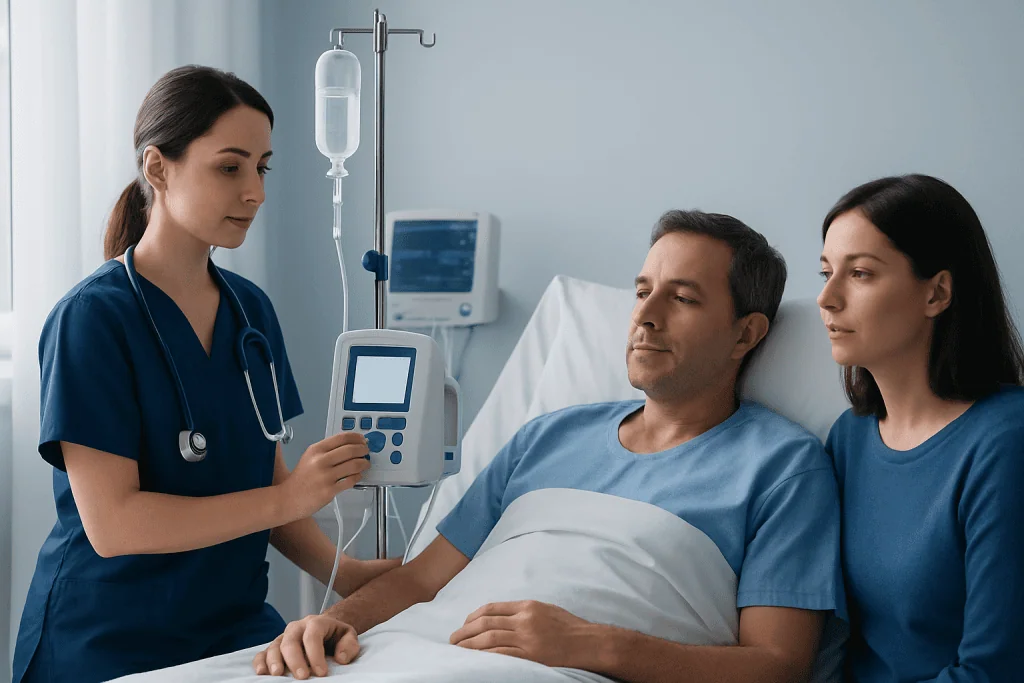
The single most useful habit is this: if there is any chance a day visit could stretch into the night, carry a small essentials kit with you rather than assuming you can get back to your hotel. Keep it in a bag that stays with you, not in a car boot, not with a driver who may leave, not in a suitcase across the city.
For the patient, the core items are your passport or national ID, any insurance or authorisation paperwork, your phone and charger, a power bank, your regular medicines in original packaging, and a written medication and allergy list. Add glasses or contact lens supplies, basic toiletries, lip balm, and one set of loose, comfortable clothing. If you use hearing aids, dentures, a CPAP machine, or mobility aids, bring them and tell the team early, labelled clearly, because hospital rooms swallow small items. The full document side of an admission is covered in our guide to documents international patients should bring for hospital admission in Turkey.
Companions need their own version of this kit. A long day in a waiting area is much easier with a charger, a light extra layer, snacks where the unit allows them, a water bottle, and a card or a small amount of cash for purchases outside the hospital. Companions should also carry the practical information the patient may be too tired to recall: hotel address, booking references, airline details, and the phone numbers of anyone who needs to be updated.
- Passport or national ID for both patient and companion
- Phone chargers and a power bank
- Written medication list and allergy list
- Regular medicines in original packaging
- Glasses, contact lens case, hearing aids, and other personal devices
- Toothbrush, wipes, lip balm, basic toiletries
- Loose clothing, underwear, slippers or non-slip footwear
- Hotel details, booking references, and emergency contacts
How hospital logistics usually work once the stay is confirmed

Once an overnight stay is confirmed, staff will arrange your bed, your monitoring plan, and any tests or medicines that need to happen before morning. You may be moved from a day unit to an inpatient room, or stay where you are for a period before transfer. Two questions are worth asking straight away: who is your main point of contact overnight, and when is the next medical review expected. Having a named person and a rough time turns a vague night into a structured one. If you want to make the most of the morning review, write down your questions the evening before, rounds move quickly, and a short written list beats a tired memory.
Whether your companion can stay beside you depends on the unit, the time of day, and your medical needs. Many inpatient rooms in Turkish private hospitals can accommodate one overnight companion, often on a sofa bed, but day units, recovery areas and intensive care areas usually cannot. If a companion bed matters to you, ask early, and see our guide on booking a companion room in Turkey for what to check, since arrangements differ by ward and room type.
Ask the practical questions while it is still evening: visiting hours, where belongings should be stored, how to call the nurse station, and where a companion should wait if they cannot stay in the room. At Acibadem International, coordinators can explain room processes, arrange interpreter support, and point companions towards nearby accommodation if staying in the hospital is not possible. It is much easier to sort this at 20:00 than at 01:00.
Staying comfortable, informed, and calm overnight
An unplanned night in a hospital in another country can feel emotionally heavy. It helps to split the situation into three piles: what is happening medically, what you need in the next few hours, and what can genuinely wait until morning. Most things belong in the third pile.
Ask for clarification whenever you are unsure why you are staying, what is being watched, or what needs to happen before discharge. If English or Turkish is not your first language, ask for interpreter support rather than relying only on a companion to translate, hearing key instructions directly reduces misunderstandings, and it spares your companion from carrying medical responsibility they should not have to carry.
Comfort is a legitimate clinical topic, not a complaint. Tell staff if you are cold, in pain, nauseated, anxious, unable to sleep, or unsure how to call for help. Pain after a procedure is managed actively in Turkish hospitals, and it is reasonable to ask what the plan is, what to do if it stops working, and when it will next be reviewed.
Companions should pace themselves. Eat, rest when the patient rests, and do not attempt to handle every phone call, translation and errand alone. A companion who has slept four hours and eaten nothing is less useful the next morning, when the discharge conversation actually happens.
Outside the room: hotel, flights, insurance, work, and children
The biggest disruption from an unexpected overnight stay in Turkey is usually outside the hospital. A hotel checkout, an airport transfer, a return flight, colleagues expecting you online, children at home: these do not pause because you are on a drip. As soon as the stay is confirmed, decide who handles what, so the patient is not managing logistics while unwell.
Work in order of time sensitivity. First: tonight’s accommodation and any transfer or driver booked for this evening. Second: tomorrow’s flight, if one exists, airlines and booking platforms generally handle changes better with more notice, and a hospital stay is a common reason for a change request. Third: work messages, family updates, and any belongings or medicines still at the hotel. Keep one note on your phone with the ward name, room number, main contact person, and the expected time of the next review; you will be asked for these details repeatedly.
Choose one family contact to relay news to everyone else. Ten separate update calls exhaust a patient and multiply the chances of contradictory information travelling home.
Insurance deserves a specific mention. If you have travel or medical insurance, an unplanned admission is exactly the kind of event insurers want to hear about promptly, and many policies have notification requirements. What is covered, what needs pre-authorisation, and what documentation you should collect from the hospital are covered in our guide to travel insurance for treatment in Turkey.
What an extra night means for the paperwork and the bill
We will not quote figures here, because they would be wrong for your situation. What we can tell you honestly is how the structure works. An unplanned overnight stay is usually itemised: the room, the level of monitoring, any medicines given, any additional tests, and any companion arrangements each appear as their own line. What the extra night adds therefore depends on why you stayed: a quiet observation night looks very different from a night that included imaging and intravenous treatment.
Three practical steps keep this manageable. Ask the international patient office for an updated itemised account before you leave, not after you fly home. Keep every document you are given, because insurers and employers often ask for them later. And if your treatment was quoted as a package, ask specifically what the package covered and what the additional night sits outside of: the answer is factual and the team can give it to you in writing.
Before discharge: make sure you both understand the plan
When discharge becomes likely, slow down rather than rushing out. Before you leave, you should understand which medications to take and when, which activities to avoid and for how long, how to care for any wound or dressing, and which warning signs the team wants you to watch for and what to do about them. Ask for written instructions, tiredness erases spoken ones.
Your companion should hear the discharge plan too, especially if you are sleepy or uncomfortable. A useful technique is to repeat the plan back to the nurse or doctor in your own words; gaps become obvious immediately. Confirm the practical layer as well: how you will get back to your hotel, whether you need help with stairs or luggage, and whether someone should stay with you the first night after discharge.
Finally, confirm follow-up before leaving the building: any review appointment, pending test results, dressing changes, and the number to use for questions outside office hours. Knowing in advance how after-hours medical help in Turkey is organised makes the first night back at the hotel considerably calmer.
Step by step
- Ask why the overnight stay is recommended. Have the team explain the reason in plain terms and tell you when the next review is expected. Knowing whether the stay is for observation, symptom control, timing, or a pending result removes most of the imagined scenarios.
- Gather essentials into one small, reachable bag. ID, phone, charger, medication list, regular medicines, glasses, basic toiletries. If belongings are split between the hospital, the hotel and the companion, decide immediately who fetches what and when.
- Choose one main family contact. One trusted person relays updates to everyone else. This saves the patient’s energy and prevents three versions of the same news circulating at home.
- Clarify companion arrangements early. Can one companion stay in the room? What are the visiting rules? Where should they wait or sleep if not? Ask before it gets late, while options still exist.
- Update transport and accommodation straight away. Tonight’s hotel and transfer first, tomorrow’s flight second, everything else third. Early changes are almost always easier than midnight ones.
- Notify your insurer if you have one. Unplanned admissions often carry notification requirements, and prompt contact keeps documentation simple later.
- Use interpreter and international patient support. If language could affect your understanding, ask for professional support rather than guessing. Coordinators can also help with directions, communication and next-day planning.
- Before discharge, repeat the plan back. Medications, warning signs, activity limits, follow-up steps, said back in your own words, with your companion listening. Ask for it in writing.
Your checklist
- Passport or ID and hospital paperwork
- Phone charger and power bank
- List of medications, allergies, and medical conditions
- Regular medicines in original packaging
- Glasses, hearing aids, or other essential personal devices
- Toiletries and one change of comfortable clothing
- Hotel details, booking references, and emergency contacts
- Insurance policy details and the insurer’s notification number
- Card or cash for small companion expenses
- A written note of the ward, room number, and main contact person
Key takeaways
- An overnight stay can happen for practical or safety reasons and does not automatically mean a complication.
- Carry a small essentials kit whenever there is any chance a day visit could extend into the night.
- Ask early about companion rules, room logistics, and who is handling hotel and transport changes.
- Notify your insurer promptly and keep every document the hospital gives you.
- Use interpreter and international patient support so you hear instructions directly, not second-hand.
- Before discharge, make sure both of you can repeat the medication, warning-sign and follow-up plan.
Frequently asked questions
Does an unexpected overnight stay mean my treatment did not go well?
Not necessarily. Overnight stays are often recommended for observation, comfort, hydration, pain or nausea control, a pending test result, or simply timing: a late finish makes a morning discharge more sensible. The most useful step is to ask your doctor exactly what is being monitored and what they want to see before discharge.
What should my companion do first if we were not prepared to stay overnight?
Start with essentials: confirm the reason for the stay and the time of the next review, gather important belongings, and sort tonight’s accommodation and transport. Then choose one family contact for updates and ask staff about companion arrangements for the night before it gets late.
Can my companion stay with me in the hospital overnight?
It depends on the ward, your condition, the room type, and hospital policy. Many private inpatient rooms in Turkey can accommodate one overnight companion, while day units, recovery areas and intensive care generally cannot. Ask as early as possible so your companion can plan realistically, including nearby accommodation if needed.
What if I do not speak Turkish or I am too tired to follow instructions?
Ask for interpreter support and have key information repeated slowly. International patient teams at hospital groups such as Acibadem can bridge language and logistics, which matters most when you are exhausted: that is exactly when misunderstandings happen.
Should I keep my regular medicines with me during a hospital visit?
Yes, in their original packaging unless you were told otherwise, along with a written list of everything you take, including supplements. Tell the clinical team about all of them, and do not take anything during your stay without checking with hospital staff first, medication decisions during an admission belong to the treating team.
How do we manage hotel and flight changes from the hospital?
Handle the time-sensitive items first: tonight’s hotel and any booked transfer, then tomorrow’s flight. A companion or one trusted contact should make these calls so the patient can rest. Ask the international patient office whether they can help with accommodation guidance or transfer adjustments, and ask the hospital for documentation your airline or insurer may request.
Will the extra night change what I pay?
Usually the night is itemised, room, monitoring, medicines and any tests appear as separate lines, so what it adds depends on why you stayed. Ask the international patient office for an updated itemised account before you leave, and if your treatment was quoted as a package, ask in writing what the package covered and what sits outside it.
What should we ask before leaving the hospital the next day?
Ask about medications and their timing, warning signs and what to do about them, activity restrictions, eating and drinking, and wound or dressing care if relevant. Confirm follow-up appointments, any pending test results, and the phone number to use for questions outside office hours, and ask for the whole plan in writing.
Add us as a Preferred Source to see more of our trusted health content across Google Search, AI Overviews and Discover.

Update history
- PublishedAugust 21, 2026
- Medical review approvedSeptember 13, 2026
- Last content updateSeptember 12, 2026
References1
- CDC Travelers' Health: Türkiye (Turkey) wwwnc.cdc.gov
More Patient Guides
Medical Travel with a Companion: Who Should Come and Why
Medical travel with a companion can make treatment in Turkey easier by providing practical help, communication support and reassurance before and after…

How Family Members Can Help Without Disrupting Recovery
Family support during recovery helps when you listen, organize practical tasks and follow the care plan without taking over, in Turkey or…

Need a Family Member to Travel With You? A Companion Decision Guide
A companion travel guide for treatment in Turkey: decide who should travel with you, plan practical support, and prepare for Istanbul care.

Booking a Companion Room in Turkey: What Patients Should Check
Booking a companion room in Turkey means checking room policy, costs, privacy, meals, visitor rules, and support before you travel.