

After-Hours Medical Help in Turkey: What International Patients Should Do

Turkey's national emergency number is 112 and it works around the clock. Hospital emergency departments never close, and a rotating system of duty pharmacies keeps designated pharmacies open overnight in most districts. Foreign visitors can use both public and private hospitals. Care is not free for tourists, so identification, insurance details and any recent medical paperwork are worth keeping together throughout your stay.
It is 2 a.m. in an unfamiliar city, something does not feel right, and your clinic is closed. The Turkish health system has a clear structure for exactly this situation: it is just easier to understand before you need it than during.
This guide explains how after-hours medical help in Turkey is organised: which services stay open overnight, how the national emergency number works, what foreigners are entitled to, how payment is handled, and what paperwork makes an unplanned hospital visit smoother. It is written for international patients who are in Turkey for planned treatment, but the same structure applies to any visitor.
One thing this guide will not do is tell you which symptoms mean what. That judgement belongs to a clinician who can see you, and the standing clinical notice above every page on this site carries the safety guidance for the whole site. What follows is the practical map of the system itself.
At a glance
- Best for: International patients who want to understand out-of-hours care in Turkey before they need it
- Emergency number: 112 nationwide, around the clock, free to call from any phone
- Open all night: Hospital emergency departments and rotating duty pharmacies (nöbetçi eczane)
- Keep ready: Passport, discharge summary, medication and allergy list, insurance details
- Payment: Visitors are normally billed; what you pay depends on the hospital, the care given and your insurance cover
How after-hours medical help in Turkey actually works
After-hours medical help in Turkey rests on three fixed points, and they do not change at weekends, overnight or during public and religious holidays.
The first is the national emergency number, 112. It is Turkey’s unified line for ambulance, fire and police, it operates twenty-four hours a day, and calls are free from any phone, including foreign mobiles. Call handlers in larger cities are used to non-Turkish speakers, though having someone nearby who can state your location in Turkish, hotel reception, for example, speeds things up considerably.
The second is the hospital emergency department, known in Turkish as acil servis. Every sizeable public and private hospital runs one, staffed continuously. Emergency departments do not require an appointment or a referral, and they do not close for holidays.
The third is the duty pharmacy system. Ordinary pharmacies keep shop hours, but each district operates a rotation so that a designated pharmacy: the nöbetçi eczanestays open overnight. Closed pharmacies post the address of the current duty pharmacy on their door, and the lists are also published online by local pharmacist chambers.
Everything else, hotel doctors, private clinics, on-call arrangements at your treating hospital, sits on top of that skeleton. Once you know these three routes exist, after-hours medical help in Turkey stops being a mystery and becomes a matter of which door fits the problem.
Emergency, urgent or routine: how the Turkish system sorts problems
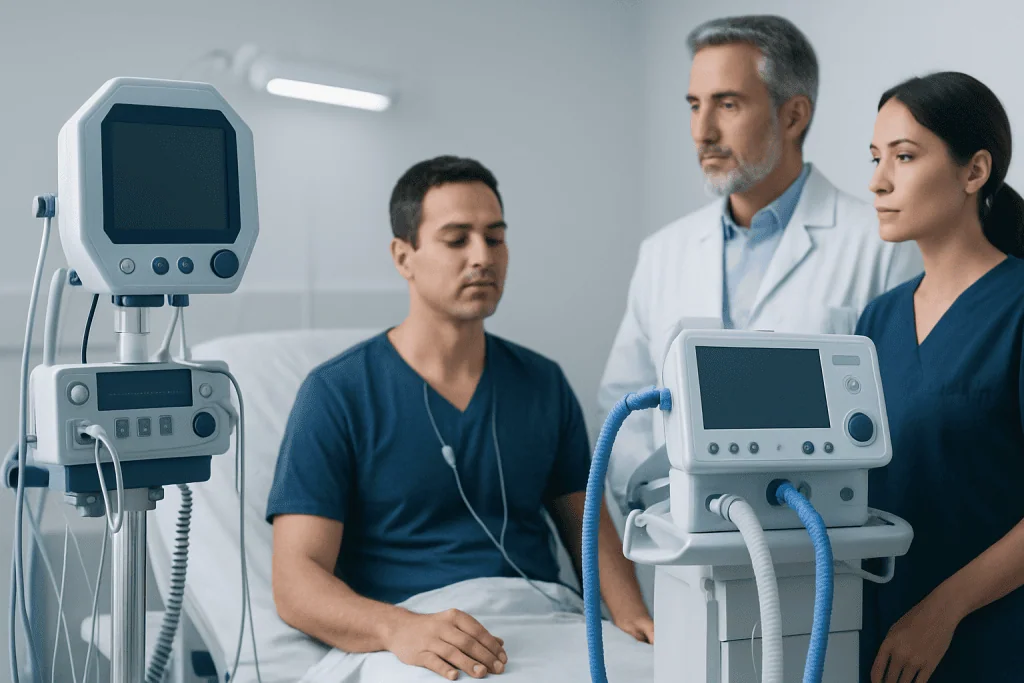
Turkish emergency departments use triage, as emergency departments do worldwide. On arrival, a nurse or doctor makes a rapid first assessment and assigns a priority: Turkish hospitals commonly use a colour-coded system, with the most severe cases seen first regardless of when they walked in. This is worth knowing for two reasons.
First, it explains waiting times. If you arrive with a stable, uncomfortable problem on a busy night, you may wait while sicker patients are seen ahead of you. That is the system working as designed, not the system ignoring you.
Second, it means the sorting is done by professionals, not by you. You do not need to arrive with a self-diagnosis or prove that your problem is ‘serious enough’. Triage exists precisely so that people who are unsure can be assessed by someone qualified to decide.
Broadly, the system distinguishes three tiers. Sudden, severe illness and injury are the territory of 112 and the emergency department. Problems that need medical attention the same day but are stable can also be assessed in an emergency department, or in a hospital’s outpatient services once they open. Minor matters: a routine prescription question, mild discomfort that was already explained to you at discharge, usually belong to normal daytime channels or a duty pharmacist. Where a particular symptom falls on that spectrum is a clinical question, and the honest answer is that triage staff are better placed to answer it than any web page.
Who provides care when clinics are closed
Several kinds of provider operate outside normal hours in Turkey, and they serve different purposes.
- Public hospital emergency departments exist in every city and most towns. They handle the full range of emergency work and are often the closest option outside major cities.
- Private hospital emergency departments run the same twenty-four-hour model. Large private groups in cities such as Istanbul, Ankara and Izmir routinely see international patients, and many have staff accustomed to working in English.
- Duty pharmacies dispense medication overnight and can answer straightforward questions about products they sell. Pharmacists in Turkey are a genuine part of the front line for minor matters, though they cannot replace a doctor’s assessment and cannot change a prescribed treatment plan, no one other than your treating doctor should do that.
- Hotel doctors and call-out services exist in tourist areas. Quality varies, and a hotel-arranged doctor is a convenience service, not a substitute for a hospital when a problem is significant.
If you are in Turkey for planned treatment at a specific hospital, there is usually a fifth route: the hospital’s own arrangements for its current patients. Wards, on-call teams and international patient departments typically have defined channels that operate outside office hours, and the sensible time to learn what they are is at admission or discharge, while everything is calm.
Can foreigners go to hospital in Turkey?
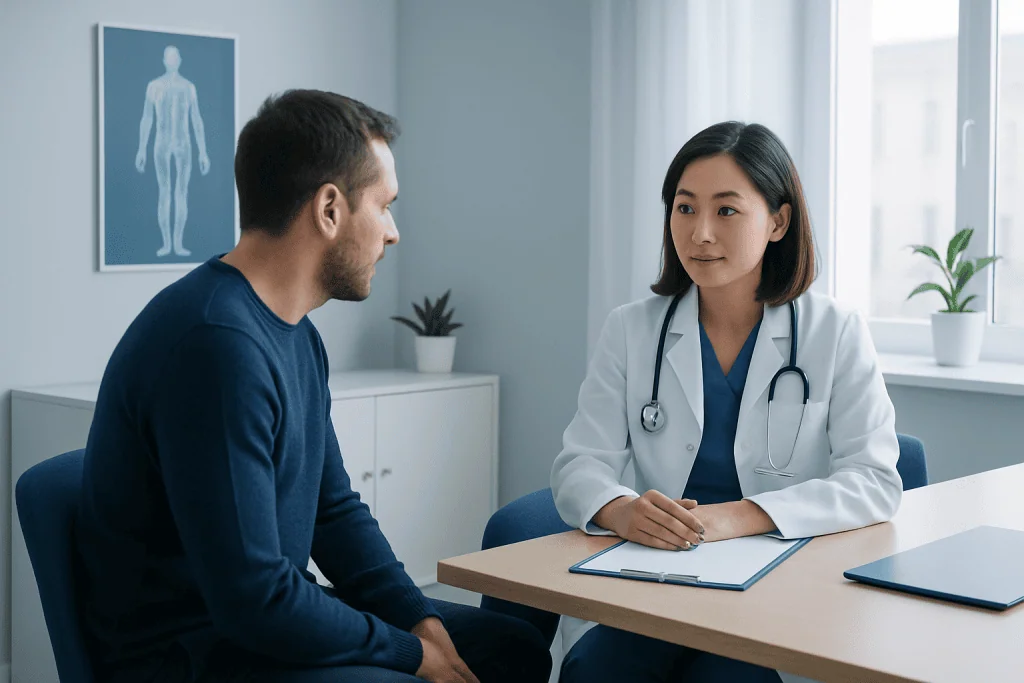
Yes. Both public and private hospitals in Turkey treat foreign nationals, and emergency departments assess anyone who arrives. You do not need Turkish residency, a Turkish ID number or a referral to be seen in an emergency department. In practice, emergency patients are assessed and stabilised first; registration and payment questions follow.
You will be asked to identify yourself, so a passport, or at minimum a clear photo of its identity page on your phone, is the single most useful document you can carry. Hospitals will also ask about insurance, your address in Turkey and, if relevant, any recent treatment.
Language is the more realistic obstacle. Large private hospitals in major cities generally manage well in English, and some maintain interpreter arrangements for other languages. Smaller public hospitals, particularly outside tourist regions, may have limited English, and translation apps plus a patient member of staff often bridge the gap. If you are travelling for treatment, it is worth reading about whether an interpreter or a family member should help during appointments, because the same question arises with more force at 3 a.m. than at a scheduled consultation.
Is emergency care free in Turkey? How payment works for visitors
This is the question international visitors ask most, and the accurate answer is structural rather than a number: emergency care in Turkey is not free for tourists, and what you pay depends on where you are treated, what is done, and what cover you hold.
Turkey’s public health insurance system (SGK) covers people enrolled in it, citizens and registered residents who contribute. A visitor on a tourist visa is not enrolled, so both public and private hospitals will normally issue a bill for a foreigner’s care. European Health Insurance Cards do not apply in Turkey, because Turkey is outside the scheme.
What the bill reflects, in any hospital, is essentially the same list: the consultation, any tests and imaging, medication given, procedures performed, and time spent under observation or admitted. Private hospitals set their own fees; public hospitals charge foreigners according to their own tariffs. Neither is predictable in advance for an unplanned visit, which is exactly why travel insurance with medical cover matters. Two habits make insurance claims dramatically easier: keep every document the hospital gives you, triage notes, results, invoices, prescriptions, and check your policy’s rules before travelling, since many insurers ask to be notified promptly when hospital care begins.
If you are already in Turkey for planned treatment, an unplanned visit connected to that treatment may be handled differently from a walk-in tourist visit, depending on the arrangements you agreed. That is a question of your specific contract and cover, and the useful move is to understand those terms before travel rather than reconstruct them at midnight.
What to keep ready during a treatment stay
If you are in Turkey recovering from a procedure, an after-hours question is more likely than for an ordinary tourist, recovery is when new sensations appear and when medication schedules are unfamiliar. Preparation is mostly paperwork.
Keep one folder, physical or on your phone, holding: your passport or a copy, your discharge summary, your current medication list with doses, your allergy list, your insurance certificate, and any recent test results or imaging reports. The discharge summary is the most valuable single item. It tells any on-call doctor what was done, when, and what instructions you were given, which changes how new symptoms are interpreted and spares you from reconstructing your own case history from memory while unwell.
Discharge itself is the moment to fill the gaps. Reasonable questions to ask your treating team before you leave the ward include: what is expected in the days ahead, what would count as unexpected, who answers questions overnight, and how your medication plan works if discomfort increases. Two companion guides cover this ground in depth: when to seek urgent medical help after treatment in Turkey and what to expect and ask about pain control after treatment. If your procedure involved sedation or a general anaesthetic, the guide on what to expect after general anaesthesia in Turkey explains why the first day or two carry their own practical rules.
Where international patient services fit in
Hospitals that treat significant numbers of foreign patients, including Acibadem, run international patient departments. Their role after hours is coordination rather than clinical care: interpreter support, making sure your records and recent treatment history reach the team assessing you, guidance on practical logistics such as transport and accommodation, and keeping a companion or family abroad informed if you are admitted.
For a patient who is unwell at night in a foreign country, the value is mostly in not repeating yourself. When your treatment history already sits within the same hospital network, the on-call team can read what was done rather than rely on your recollection of it. Coordination also matters after the event: the outcome of an unplanned visit should reach your treating consultant so that your ongoing plan reflects it, and if you have already flown home, that continuity typically runs through remote follow-up arrangements.
If you travel alone, telling the hospital so at admission is worth doing. Staff can note who should be contacted and how, which removes one decision from the middle of the night.
Inside a Turkish emergency department: what to expect
An unplanned visit usually follows the same sequence regardless of hospital. Registration first, or in severe cases treatment first and registration afterwards. Then triage, then examination by a doctor, then, where needed, blood tests, imaging, monitoring or a specialist opinion. Recent treatment is highly relevant information at this stage: a symptom means different things in someone four days after surgery than in someone who has had none, so the discharge summary in your folder earns its place here.
Visits end in one of two ways. Most patients are treated and discharged with a plan: which medicines to take, what would justify returning, and when to be reviewed. It is reasonable to ask for those instructions in writing, and in a language you understand, before leaving, and to keep the paperwork for your treating team, your insurer and your doctor at home. A smaller number of patients are admitted for observation or further treatment, in which case the hospital’s international services can help with the practical side while clinical care proceeds: informing family, contacting your insurer, adjusting travel plans.
One expectation worth resetting: an emergency department resolves the immediate question. It does not replace your treating team’s ongoing plan, and any change to your regular medication remains a decision for the doctor responsible for your treatment.
Step by step
- 1. Before you travel, save the fixed points. Note 112, the name and address of your treating hospital, your insurer’s emergency assistance line, and the contacts your hospital gives you for out-of-hours questions.
- 2. Check your cover in daylight. Read what your travel or medical insurance requires when hospital care begins, notification rules, documentation, direct billing arrangements, so that nothing about your policy is a surprise later.
- 3. Build one folder. Passport or a copy, discharge summary, medication list with doses, allergy list, insurance certificate, recent reports. Digital copies on your phone count.
- 4. Learn your own address. Know your hotel or apartment name, street and district well enough to state them clearly, and keep them written in your phone. Location is the first thing 112 and any driver will need.
- 5. Use discharge as your briefing. Before leaving the ward after any treatment, ask what is expected in the coming days, what would be unexpected, and who answers questions overnight, then save those answers.
- 6. Keep every document from any unplanned visit. Triage notes, test results, prescriptions and invoices matter for your treating team, your insurer and your doctor at home. Ask for written discharge instructions in a language you understand.
Your checklist
- 112 saved, and your hospital’s name and address written down in Turkish spelling
- Insurer’s emergency assistance number saved before departure
- Passport, discharge summary and prescriptions kept together in one folder
- Up-to-date medication and allergy list, on paper or on your phone
- Your accommodation’s address written where you can read it out
- Hotel reception asked, on arrival, how they assist guests who need medical help at night
- Photos of all reports and prescriptions stored on your phone
- Phone charged overnight throughout your treatment stay
Key takeaways
- After-hours medical help in Turkey rests on three fixed points: the 112 emergency number, twenty-four-hour hospital emergency departments, and rotating duty pharmacies
- Foreigners can be assessed in any Turkish emergency department, public or private, without a referral
- Care is not free for visitors; what you pay depends on the hospital, the care given and your insurance, which is why cover and documentation matter
- A discharge summary and medication list are the most useful items you can carry during a treatment stay
- The best time to learn who answers questions overnight is at discharge, while everything is calm
Frequently asked questions
Can foreigners go to hospital in Turkey?
Yes. Public and private hospitals both treat foreign nationals, and emergency departments assess anyone who arrives, without appointment or referral. You will be asked to identify yourself, so a passport or a copy of its identity page is the most useful document to carry. In an emergency, assessment and stabilisation come first; registration and payment questions follow.
What should you do if you get sick in Turkey outside clinic hours?
Three services operate around the clock: the national emergency number 112, hospital emergency departments in every sizeable town, and rotating duty pharmacies for medication. Which route fits depends on the severity of the problem: a judgement triage staff make professionally, so you do not need to arrive with a diagnosis. Hotel reception can help with location and language when calling 112.
Is A&E free in Turkey?
Not for visitors. Emergency departments assess and stabilise patients regardless of payment, but foreign visitors are normally billed afterwards, in public and private hospitals alike. The amount depends on the hospital, the tests and treatment involved, and any insurance cover you hold. Keeping every document from the visit makes insurance claims far easier.
Do tourists get free healthcare in Turkey?
No. Turkey’s public insurance system covers citizens and registered residents who are enrolled in it, and European Health Insurance Cards are not valid in Turkey. Tourists pay for care unless a travel or medical insurance policy covers it, which is why checking your policy’s emergency terms before travelling is one of the most useful preparations you can make.
What is a duty pharmacy and how do you find one?
Pharmacies in Turkey rotate overnight duty so that a designated pharmacy, the nöbetçi eczane, stays open in each district after normal closing time. Any closed pharmacy posts the address of the current duty pharmacy on its door, and local pharmacist chambers publish the rotation online. Duty pharmacies dispense medication and answer product questions; they do not replace a doctor’s assessment.
What documents are useful for an unplanned hospital visit?
Your passport or a copy, your discharge summary if you have had recent treatment, a current medication list with doses, an allergy list, insurance details and any recent test results. The discharge summary matters most, because it tells an on-call team what was done and what instructions you were given. Photos of documents on your phone work well when the originals are elsewhere.
What if you do not speak Turkish?
Call handlers on 112 in larger cities are used to non-Turkish speakers, and hotel staff can help state a location in Turkish. Large private hospitals in major cities generally work in English and some offer interpreter support in other languages; smaller public hospitals may rely on translation apps and improvisation. Deciding in advance who will help you communicate, a professional interpreter or a companion, is worth thinking through before treatment, not after.
Is it safe to fly after an after-hours hospital visit?
Not automatically. Fitness to fly depends on the diagnosis, the treatment given, how you are recovering and how recently any procedure took place, so it is a clinical judgement rather than a rule of thumb. It belongs on the list of questions to settle with the treating clinician before discharge, alongside medication instructions and follow-up timing.
Add us as a Preferred Source to see more of our trusted health content across Google Search, AI Overviews and Discover.

Update history
- PublishedAugust 6, 2026
- Medical review approvedSeptember 13, 2026
- Last content updateSeptember 12, 2026
References2
More Patient Guides

When to Delay Travel for Treatment in Turkey Because of Cold, Flu, or Fever
Delay travel for treatment in Turkey if you have fever, worsening flu symptoms, or breathing difficulty; contact your care team before flying.

Traveling to Turkey for Treatment While Pregnant: Safety Questions to Ask First
Traveling to Turkey while pregnant can be safe with medical clearance, airline checks and a tailored care plan. Ask these key safety…
When to Seek Urgent Help After Leaving the Hospital in Turkey
When to seek urgent help after leaving the hospital in Turkey: act fast for breathing trouble, chest pain, heavy bleeding, high fever,…
At Acibadem, How We Handle Consent, Privacy, and Patient Decision-Making
Consent, privacy, and patient decision-making at Acibadem in Turkey are handled with clear information, confidentiality, interpreters, and respect for your choices.