

Traveling to Turkey for Treatment While Pregnant: Safety Questions to Ask First

Some people can travel to Turkey for treatment while pregnant; others should wait. The answer depends on your gestational age, pregnancy history, the treatment itself and the journey. Get individual clearance from your maternity clinician, ask the treating specialist whether the procedure is appropriate during pregnancy, check every airline's rules, and confirm insurance cover before you book anything non-refundable.
You have found a treatment option in Turkey, the dates almost work, and you are pregnant. Traveling to Turkey for treatment while pregnant is a realistic option for many people, but only after some deliberate checks, made in the right order. So what do you check first?
Start with a three-way conversation: your pregnancy care team, the treating specialist and your airline. Each one holds information the others do not. Your maternity clinician knows your pregnancy. The treating specialist knows whether the procedure can safely wait, change or go ahead. The airline sets the rules on when you can fly and what paperwork it wants to see.
This guide sets out the safety questions to work through, in a sensible order, before you commit money to flights, treatment dates or accommodation. It covers medical clearance, treatment timing, airline policies, insurance, records and contingency planning. It also draws on our companion guide on when medical treatment needs extra planning during pregnancy.
At a glance
- First priority: individual clearance from your obstetrician, midwife or maternity care provider, before any booking.
- Second priority: a clear answer from the treating specialist on whether the treatment is appropriate during pregnancy or better deferred.
- Air travel: airline rules change with gestational age; many carriers ask for a fit-to-fly letter in later pregnancy and restrict flying near the due date.
- Documents to carry: pregnancy summary, medication list, insurance details and key contact numbers, in hand luggage and saved offline.
- Insurance: pregnancy complications, routine maternity care and planned treatment are often covered differently, confirm each in writing.
- Contingency: flexible bookings, a companion who can stay longer, and an agreed plan for how your usual clinician stays informed.
Is traveling to Turkey for treatment while pregnant safe?
There is no single answer, and you should be wary of anyone who gives you one before seeing your records. Traveling to Turkey for treatment while pregnant can be reasonable for one person and unwise for another, depending on three things: your pregnancy, the treatment and the journey itself.
Turkey as a destination is not the main variable. Its major cities have large, well-equipped hospitals, including maternity services. The questions that actually decide safety are more personal. How many weeks pregnant will you be on the outbound flight, and, just as importantly, on the return? Has your pregnancy been straightforward so far? Is the treatment you are considering time-sensitive, or could it wait until after delivery? Would it involve anaesthesia, sedation, imaging or medicines that need extra thought during pregnancy?
General reassurance that travel is “usually fine” in an uncomplicated pregnancy is true as far as it goes, but it is population-level advice. What you need is individual advice, and only clinicians who know your history can give it. Everything else in this guide, airlines, insurance, logistics, comes after that first conversation, not instead of it.
Start with your own pregnancy care team
Before arranging anything abroad, speak with the clinician or maternity team who knows your pregnancy best. They can weigh your gestational age, medical history, previous pregnancies, current symptoms, test results and any known risks against the specific trip you are proposing.
Be concrete when you ask. Describe the full journey: flight duration, connections, dates, the planned treatment, expected activity levels and how long you will be away. “Is it safe for me to fly to Istanbul at 26 weeks, have this procedure, and fly back ten days later?” is a question a clinician can actually answer. “Is travel okay?” is not.
Their view matters even more if you have had bleeding, raised blood pressure, diabetes, a multiple pregnancy, placental concerns, symptoms of preterm labour, severe nausea or vomiting, complications in a previous pregnancy, or any condition that needs regular monitoring. In some of these situations the sensible answer will be to postpone, and hearing that early costs you far less than hearing it after you have booked.
Ask for a concise written summary you can share with the treating team abroad: estimated due date, blood group if known, allergies, current medicines, relevant scan and laboratory results, significant history and your usual clinician’s contact details. Keep digital and printed copies with you rather than in checked luggage. If your records are not in English, ask in advance whether translation will be needed.
Ask whether the treatment itself is appropriate during pregnancy
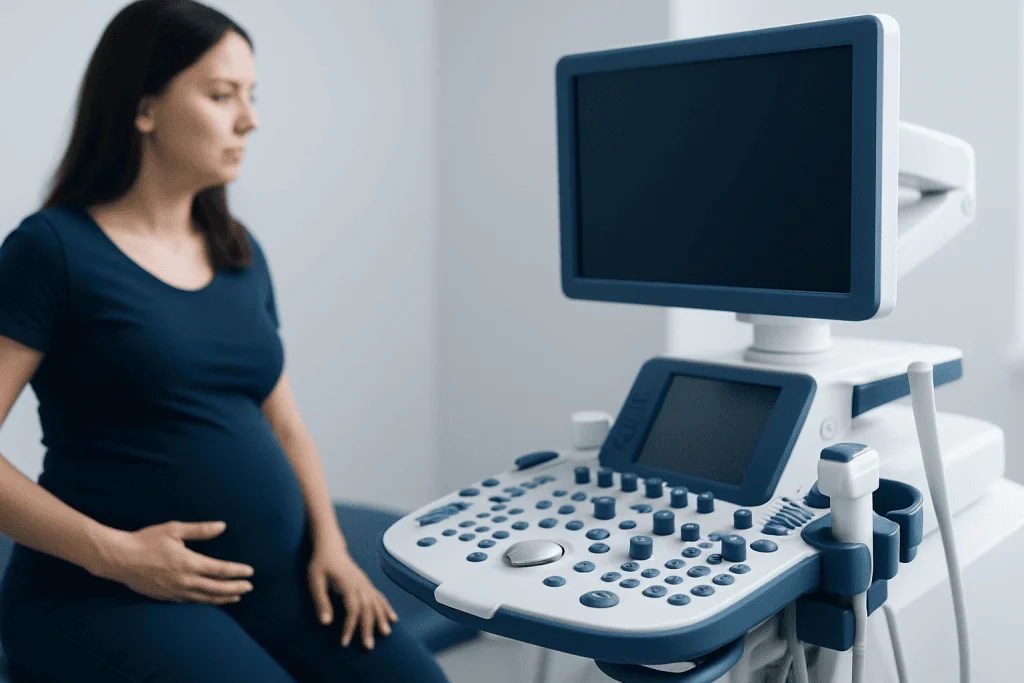
The central question is not whether you can travel. It is whether this treatment should happen during pregnancy at all. Some care is time-sensitive and can go ahead with additional safeguards. Other consultations, procedures, medicines, imaging examinations and elective treatments are better delayed until after delivery. The honest answer depends on why you need treatment and on your individual situation, which is exactly what a pre-travel review of your records is for.
Ask the treating specialist to explain the expected timing, what preparation is needed, and whether sedation, anaesthesia, contrast agents, radiation or specific medicines could be involved. Two questions are particularly revealing: “What pregnancy-related factors could change this plan?” and “What would make you recommend postponing?” A specialist who answers both plainly, including naming situations where they would decline to treat until after the birth, is giving you the kind of information you can act on. Our guide to questions to ask at your online consultation covers how to structure that conversation before you commit to dates.
What about dental work during pregnancy?
Dental treatment is one of the most common questions here. Routine dental care, examinations, hygiene treatment and necessary fillings, is generally considered manageable during pregnancy, and untreated dental infection is itself a problem worth addressing. That said, many clinicians prefer to schedule non-urgent work in the middle of pregnancy when lying back for long sessions is more comfortable, and purely cosmetic or lengthy elective dentistry involving sedation or extensive imaging is often deferred until after delivery. The decision sits with the treating dentist and your maternity team together, based on what the work actually involves. Combining elective dental travel with pregnancy adds constraints on both sides, so ask for that joint view before booking.
If the plan includes surgery
Where any surgical procedure is proposed, the consent conversation should explicitly cover pregnancy: anaesthetic approach, positioning, monitoring, medicines to be used and what would trigger a change of plan. The questions in our surgery safety and consent checklist apply here with extra weight, add “how does my pregnancy change each of these answers?” to every item.
Confirm the travel window and airline requirements

Flying is not generally considered harmful in an uncomplicated pregnancy, but airline policy is a separate matter from medical advice, and you need to satisfy both. Rules differ between carriers and change with gestational age. As a broad pattern, many airlines ask for a recent fit-to-fly letter from around 28 weeks, and most restrict or refuse travel in the final weeks before the due date, with earlier cut-offs for twins or other multiple pregnancies. Treat those patterns as a prompt to check, not as the rule: read the written policy for every airline on your itinerary, including connecting flights.
The return flight is where plans most often fail. Count your gestational age on the day you fly home, not the day you leave. If treatment or recovery runs longer than expected, will you still be within the airline’s limit? What certificate format do they require, and how recently must it be dated? Do not book a non-refundable itinerary until you can answer these questions and your healthcare team has agreed the dates.
For the flight itself, follow the individual advice your clinician gives you. Practical measures often discussed include choosing an aisle seat, drinking water regularly, wearing loose clothing, moving your legs while seated and walking the cabin when it is safe. Ask whether compression stockings or other precautions suit your situation. Do not start any medicine or preventive treatment for the journey on your own initiative: that decision belongs to the clinician who knows your pregnancy.
Everyday health in Turkey during pregnancy
Beyond the treatment and the flight, the ordinary parts of the trip deserve some thought. Drink bottled or reliably treated water, take the usual care with food hygiene that applies to pregnancy anywhere, and plan around heat if you are visiting in summer: Istanbul and the coastal cities can be very warm, and pregnancy makes dehydration and fatigue arrive faster. Sensible shoes matter more than they sound: pavements and hospital campuses involve more walking than most itineraries predict.
If your clinician raises travel vaccinations or preventive medicines, discuss the options with them rather than deciding at a pharmacy counter; some products are suitable in pregnancy and others are not, and the assessment is individual. If you take regular prescriptions, carry enough for the trip plus a margin for delays, in original labelled packaging, in your hand luggage: our guide to packing and documenting your medicines for Turkey covers the details.
Plan where you will stay and how you will move around
A calm, flexible itinerary is safer and more comfortable than a tightly packed one. Choose accommodation with easy access to the hospital, a lift, a private bathroom, heating or cooling appropriate to the season, and straightforward options for food and water. Build rest into the schedule: a day either side of long flights, and unhurried mornings around appointments.
Ask about realistic travel times between airport, hotel and hospital. Istanbul traffic is a genuine scheduling factor, and a journey that takes thirty minutes at midnight can take three times that at rush hour. International patient teams, including Acibadem’s, typically coordinate interpreters, appointment logistics and guidance on transfers and accommodation; confirm exactly what is included for your visit, who your main point of contact is, and how that person can be reached outside routine appointment hours.
If a companion is travelling with you, agree their role in advance: carrying documents, sitting in on appointments, watching your fatigue levels, and handling changes of plan. Avoid driving yourself after any appointment that may involve sedation, medicines that affect alertness, or a long period of observation.
Build a contingency plan before you leave
Good contingency planning is mostly done at home, before departure. Agree with your own maternity clinician what kinds of situation would call for urgent local assessment while you are away, so you are not making that judgement from scratch in a hotel room. Ask the treating hospital which of its locations provides maternity assessment and how pregnancy care would be handed over if you needed admission or a change to your travel dates.
Then make the plan concrete. Save the hospital’s contact details, your coordinator’s number and your insurer’s assistance line in your phone, and write them down in case your battery fails. Book flexible or changeable travel where you can. Keep access to funds for an extended stay. Choose a companion who could stay longer if needed, and agree how you will keep family and your usual clinician updated. None of this is pessimism: it is the difference between an inconvenience and a crisis if plans change.
Check insurance, records and communication
Read your travel and health insurance documents carefully, because pregnancy sits in several different boxes at once. Unexpected pregnancy complications, routine maternity care, care for a pre-existing condition and the planned treatment itself are often covered differently, and planned treatment abroad is excluded from most standard travel policies altogether. Ask the insurer directly what applies in Turkey, whether pre-authorisation is required, what gestational-age limits the policy carries, and what evidence it needs if you must change flights or extend your stay. Get the answers in writing. How the treatment itself is quoted and billed is a separate exercise, covered in our guide to deposits, balances and billing for treatment in Turkey.
Carry a current medication list using generic drug names where possible. Do not stop, substitute or buy medicines abroad without advice from a clinician or pharmacist who knows you are pregnant.
Finally, communication. Tell the care team your preferred language and any hearing, mobility or accessibility needs, and ask for a professional interpreter for consent discussions, discharge information and follow-up instructions. Sensitive medical conversations should not depend on a companion’s translation skills, however willing they are.
Step by step
- Discuss the trip with your maternity clinician first. Share why you are seeking treatment, the proposed dates, flight length and the planned procedure, so the advice is specific to your pregnancy rather than generic.
- Arrange a records review before committing. The treating team will typically want a recent pregnancy summary, medication list, allergies and key results before advising whether and when treatment can go ahead.
- Pin down the treatment plan. Ask what each appointment involves, which medicines or tests may be used, what alternatives exist, and what circumstances would lead the specialist to delay, modify or cancel.
- Check airline rules for every flight. Confirm the pregnancy policy for outbound, connecting and return flights, obtain a fit-to-fly letter in the required format if needed, and count your gestational age on the return date.
- Arrange practical support in Istanbul. Book accommodation that limits unnecessary journeys, confirm transfers, interpreter arrangements and an after-hours contact route, and leave room for rest.
- Settle insurance and contingencies. Confirm cover in writing, save assistance and hospital numbers offline, choose flexible bookings, and agree with your clinician at home what would warrant urgent local assessment.
- Travel with essentials in hand luggage. Passport, insurance documents, pregnancy summary, prescriptions, medicines in original packaging and appointment confirmations stay with you, with copies for a trusted companion.
Your checklist
- Individual travel advice from your obstetrician, midwife or maternity care provider
- Recent pregnancy summary with estimated due date, allergies and relevant history
- Treating specialist’s pre-travel review of your records, with the postponement question answered
- Written airline pregnancy policy checked for outbound, connecting and return flights
- Fit-to-fly certificate in the airline’s required format, if applicable
- Written insurance confirmation covering pregnancy complications and your planned care
- Enough prescribed medicine in original packaging, packed in hand luggage
- Hospital, coordinator and insurer assistance numbers saved offline and on paper
- Flexible accommodation and transport plan with built-in rest days
- A companion or trusted contact who knows your itinerary and could stay longer
Key takeaways
- Your own maternity clinician decides with you whether the trip suits your individual pregnancy; everything else follows from that conversation.
- The real question is often not “can I travel?” but “should this treatment happen during pregnancy at all?”, ask the specialist what would make them postpone.
- Airline rules tighten as pregnancy progresses; count your weeks on the return date, not the departure date.
- Insurance treats complications, routine maternity care and planned treatment differently, confirm each in writing before booking.
- Carry a clear pregnancy summary, keep essentials in hand luggage, and build a contingency plan while you are still at home.
Frequently asked questions
Is it safe to go to Turkey while pregnant?
For many people with uncomplicated pregnancies, yes: Turkey’s major cities have large, well-equipped hospitals, and the destination itself is rarely the deciding factor. Safety depends on your gestational age, pregnancy history, the reason for travel and the itinerary. Individual advice from your maternity clinician, given with the full trip in front of them, is what turns a general “usually fine” into an answer that applies to you.
When should you not fly internationally while pregnant?
Flying is not generally considered harmful in an uncomplicated pregnancy, but most airlines restrict travel in the final weeks before the due date, with earlier limits for multiple pregnancies, and many ask for a medical certificate from around 28 weeks. Separately, your clinician may advise against flying at any stage if you have complications such as bleeding, raised blood pressure or placental concerns. Check both the airline’s written policy and your own medical advice.
Can you get your teeth done in Turkey if you are pregnant?
Routine and necessary dental care is generally considered manageable during pregnancy, and treating dental infection matters. However, lengthy elective or cosmetic dentistry involving sedation or extensive imaging is often deferred until after delivery, and many clinicians prefer non-urgent work in mid-pregnancy. The treating dentist and your maternity team should decide together, based on what the specific work involves and how far along you will be.
Do I need a doctor’s letter to fly while pregnant?
It depends on the airline, your gestational age, whether you are carrying multiples and your medical circumstances. Many carriers require a recent fit-to-fly certificate later in pregnancy and specify its format and how recently it must be dated. Check the written policy for every airline on your itinerary, including connections and the return leg, and ask your clinician to provide documentation that matches those requirements.
What pregnancy records should I bring to Turkey?
Bring a recent maternity summary with your estimated due date, blood group if known, relevant scan and test results, a medication list with generic names, allergies and your usual clinician’s contact details. Keep copies in your hand luggage and saved securely on your phone, never only in checked baggage. If the records are not in English, ask in advance whether translation will be needed for the treating team.
Will travel insurance cover pregnancy-related care in Turkey?
Coverage varies widely. Some policies cover unforeseen pregnancy complications but exclude routine maternity care, known conditions, planned treatment abroad or care beyond a certain gestational age. Ask the insurer directly what applies in Turkey, whether pre-authorisation is needed, and what evidence is required if you must extend your stay, and get the answers in writing before you book.
What support do international patient services usually provide?
International patient departments, including Acibadem’s, typically coordinate practical aspects of a visit: professional interpreters, appointment scheduling, and guidance on transfers and accommodation. The useful things to confirm are exactly what is included for your itinerary, who your named point of contact is, and how that person can be reached outside routine hours. Practical coordination reduces stress, but it never replaces medical clearance from your own maternity clinician.
Add us as a Preferred Source to see more of our trusted health content across Google Search, AI Overviews and Discover.

Update history
- PublishedAugust 21, 2026
- Medical review approvedSeptember 13, 2026
- Last content updateSeptember 13, 2026
References3
- NHS: Travelling in pregnancy nhs.uk
- CDC Travelers' Health: Pregnant Travelers wwwnc.cdc.gov
- GOV.UK: Turkey travel advice: Health gov.uk
More Patient Guides

When to Delay Travel for Treatment in Turkey Because of Cold, Flu, or Fever
Delay travel for treatment in Turkey if you have fever, worsening flu symptoms, or breathing difficulty; contact your care team before flying.

When to Seek Urgent Help After Leaving the Hospital in Turkey
When to seek urgent help after leaving the hospital in Turkey: act fast for breathing trouble, chest pain, heavy bleeding, high fever,…

At Acibadem, How We Handle Consent, Privacy, and Patient Decision-Making
Consent, privacy, and patient decision-making at Acibadem in Turkey are handled with clear information, confidentiality, interpreters, and respect for your choices.

After-Hours Medical Help in Turkey: What International Patients Should Do
After-hours medical help in Turkey starts with urgent triage, emergency services, and your hospital’s international team in Istanbul or beyond.