

When to Seek Urgent Medical Help After Treatment in Turkey
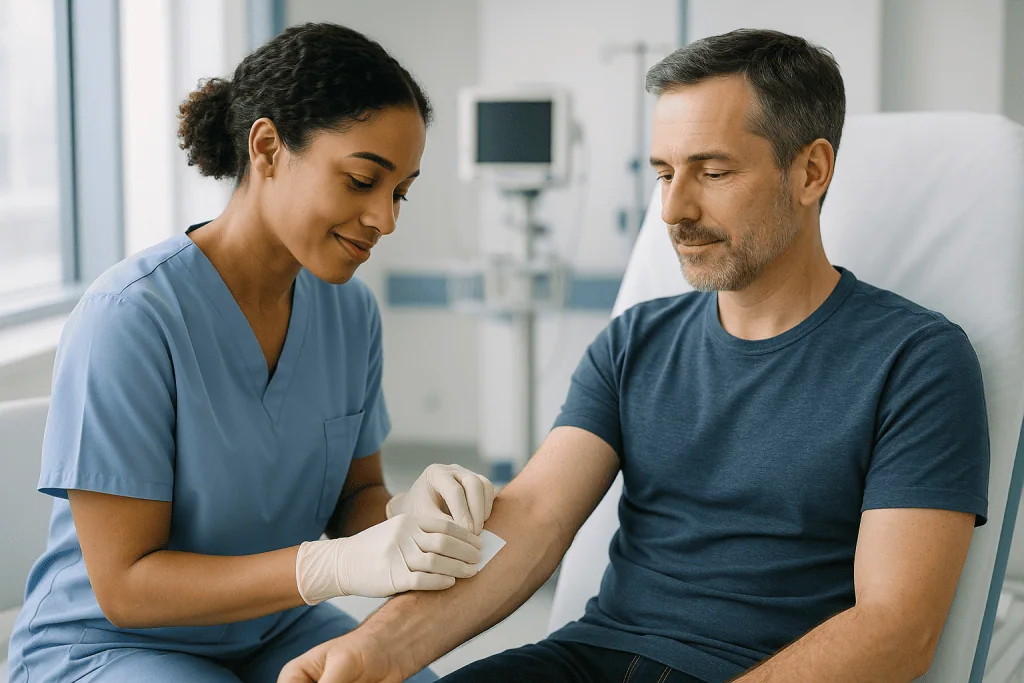
Clinicians treat sudden, severe or worsening symptoms, breathing difficulty, chest pain, heavy bleeding, high fever with confusion, as emergency-level after any treatment. In Turkey, 112 is the national emergency number and emergency departments assess foreign patients. Your discharge plan lists the warning signs specific to your procedure; symptoms outside that plan, or symptoms that worsen instead of improving, are the ones doctors want assessed promptly rather than watched.
Is this swelling normal, or is it something else? That question keeps a lot of patients awake in a hotel room, days after treatment and hours from home. Most recoveries follow the path the care team described. Some do not, and the difference between the two is usually visible earlier than people expect.
This guide explains when to seek urgent medical help after treatment in Turkey, how doctors distinguish expected recovery from symptoms that need urgent assessment, how emergency and urgent care actually work for foreign patients, and what to prepare before a problem exists. It does not diagnose. The judgement that matters most is the one written in your own discharge plan, because it was made for your procedure, your medical history and your stage of healing.
At a glance
- Best for: International patients recovering in Turkey or newly back home
- Core principle: Sudden, severe or worsening symptoms are treated as urgent; mild, expected, improving ones usually are not
- Emergency number in Turkey: 112, nationwide, free to call from any phone, ambulance included
- Keep ready: Discharge summary, medication list, passport, insurance details, hospital contact numbers
- Good to know: Emergency departments in Turkey assess foreign patients; language support varies by hospital
How urgency is judged after treatment abroad
Deciding when to seek urgent medical help after treatment in Turkey is not really a matter of memorising symptom lists. Doctors judging urgency ask three questions about any new symptom: did it start suddenly, is it severe, and is it worsening rather than improving? A symptom that answers yes to any of these is treated more seriously than one that is mild, expected and slowly settling.
The second yardstick is your discharge plan. Bruising, fatigue, temporary swelling and moderate soreness are a normal part of healing after many procedures, but which ones are normal for you depends entirely on what was done. A degree of facial swelling that is routine after one operation would be alarming after another. This is why discharge instructions matter more than any general article, including this one, and why keeping them accessible is one of the most useful things a travelling patient can do.
Distance changes the psychology, not the medicine. Patients recovering in a hotel, in a second language, with a flight booked, tend to either dismiss symptoms to protect their travel plans or panic about symptoms that are entirely expected. Understanding how the local system works, before anything happens, removes most of that uncertainty. Knowing when to seek urgent medical help after treatment in Turkey becomes far simpler once you know what your own plan says is expected, and what the emergency system around you can do.
Symptoms that clinicians treat as emergencies
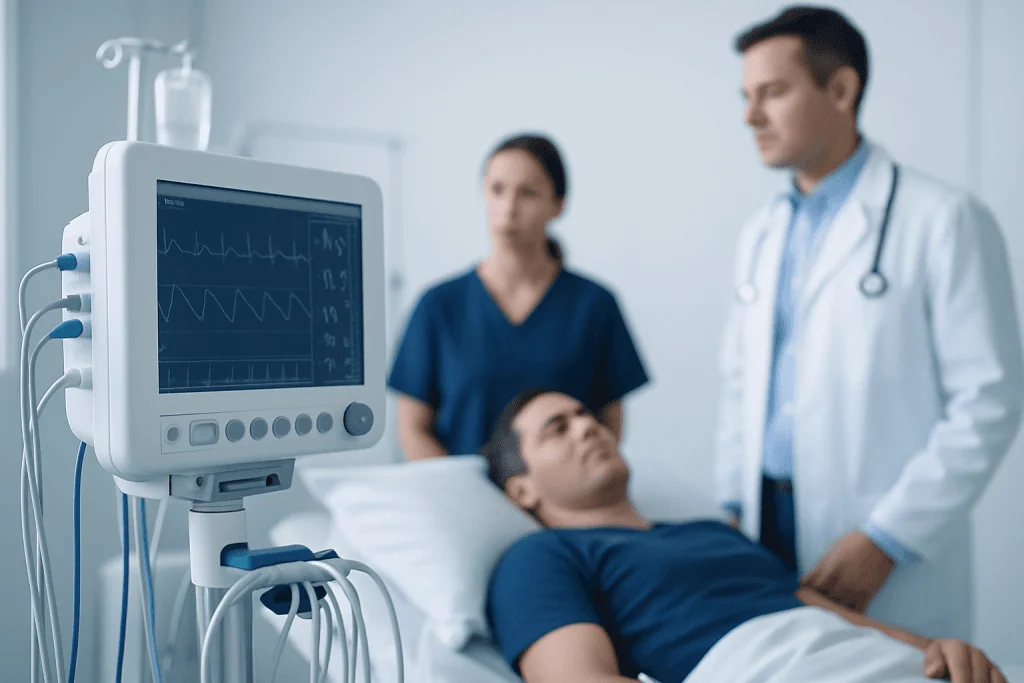
After almost any procedure or hospital treatment, there is a category of symptoms that emergency doctors treat as emergency-level presentations regardless of what caused them. These include chest pain, sudden shortness of breath or difficulty breathing, fainting, seizures, new weakness on one side of the body, difficulty speaking, severe confusion, and blue-tinged lips. These presentations are assessed in an emergency department, not monitored in a hotel room, because the conditions behind them can change quickly.
Heavy bleeding sits in the same category. In clinical terms this means bleeding that soaks dressings rapidly, does not slow with gentle pressure, fills surgical drains quickly, or comes with dizziness, paleness or a racing heartbeat. Vomiting blood, passing black tarry stools, or seeing significant fresh blood in urine or stool are also treated as urgent findings rather than things to watch overnight.
Infection is the third major group, particularly in the days after surgery or any invasive treatment. The signs doctors look for are high fever, shaking chills, redness spreading outward from a wound, pus, pain escalating despite prescribed medication, or a wound that opens. Fever accompanied by confusion, severe weakness, a very fast heart rate or breathing difficulty is regarded as an emergency-level combination. Other findings that are treated as urgent include:
- Severe or rapidly increasing swelling, particularly of the face, neck, a limb or the surgical area
- Sudden calf pain or swelling in one leg, which raises the question of a blood clot
- Persistent vomiting or an inability to keep fluids down
- Signs of serious dehydration, such as very little or very dark urine
- Pain that is dramatically worse than the discharge plan predicted
- Anything your own discharge plan specifically flagged as urgent for your procedure
Procedure-specific warning signs deserve their own reading; the guide on warning signs after surgery in Turkey covers them in more depth.
Symptoms that usually need prompt, not emergency, review
Between “normal healing” and “emergency” sits a middle category: problems that doctors want to see within a day or so rather than within the hour. Typical examples are mild redness at a wound edge without fever, constipation persisting for several days, minor medication side effects, small amounts of unusual wound drainage, or new numbness that is stable rather than spreading. These are usually handled with a same-day or next-day clinical review, sometimes remotely with photographs where the treating team has set that up.
Doctors also pay close attention to the trajectory of a recovery, not just individual symptoms. Swelling that steadily increases when it was expected to fall, pain that returns after several days of improvement, or a patient who can no longer manage basic eating, drinking, walking or toileting as planned: these pattern changes often matter as much as any single finding. A recovery moving in the wrong direction is a recovery a clinician wants to reassess.
What helps a clinician most at this stage is precise information: when the problem started, a measured temperature rather than a guess, which medicines were taken and when, and clear photographs if the team invited them. Anyone recovering in Turkey and unsure where a middle-category problem should be reviewed will find the practical routes described in the after-hours medical help guide.
How emergency and urgent care work in Turkey
Turkey has a single national emergency number, 112, which covers ambulance, fire and police. It is free to call from any phone, including foreign mobiles, and operators can usually connect callers who do not speak Turkish to language assistance, though this can take a moment. Hotels routinely help guests place the call and direct the ambulance, reception desks in tourist areas deal with medical situations more often than most guests assume.
Foreign nationals can be assessed at both public and private hospitals in Turkey. Public hospital emergency departments assess anyone who arrives, regardless of nationality. Private hospitals, especially large groups in Istanbul, Ankara, Izmir and Antalya, run their own emergency departments and typically have more English-speaking staff and international patient offices. Hospitals that treat many international patients, including Acibadem hospitals, usually maintain international patient teams who coordinate interpreters, records and communication with a patient’s original treating doctors.
Two practical points are worth knowing in advance. First, an ambulance called through 112 is a public service and will generally take a patient to an appropriate nearby hospital, which is not necessarily the hospital where the original treatment happened; records travel with the patient, not the building, which is why carrying your discharge summary matters. Second, a patient assessed at one hospital can usually have information shared with their original treating team afterwards, so being seen somewhere convenient does not break the thread of care.
Cost and insurance: what determines what you pay
Tourists and short-stay visitors are not covered by Turkey’s public health insurance system, so healthcare in Turkey is not free for foreign visitors. Emergency departments will assess an acutely unwell patient first and deal with paperwork second, but visitors should expect to be billed for care, whether public or private.
What a visit ends up costing depends on structural factors rather than a single tariff: whether the hospital is public or private, whether the visit is an emergency attendance or an outpatient appointment, which tests and imaging are needed, whether admission or a procedure follows, and how any travel insurance policy handles claims, some insurers settle directly with hospitals, others reimburse afterwards against itemised invoices. This is why no honest general figure can be quoted in advance; the meaningful step is checking, before travel, what your travel or medical insurance covers, whether it covers complications of planned treatment abroad (many standard travel policies exclude this), and what documentation the insurer requires. Keeping every invoice, report and prescription makes claims far simpler: the guide on getting a written medical report for insurance covers the paperwork side.
On a related question people often ask: several private hospitals across Turkey carry international-sounding names. The name tells you little by itself; what matters for a patient is whether a hospital has an emergency department, English-speaking staff and experience with international patients.
If symptoms appear after you return home
Warning signs do not respect flight schedules, and some complications first appear days or weeks after travel. The standard clinical advice for anyone who develops concerning symptoms after returning home is straightforward: be assessed by local services first, at the level of urgency the symptom warrants, rather than waiting for an opinion from abroad while a problem evolves. Local doctors can examine, test and treat; a phone line cannot.
What makes that local assessment fast and accurate is documentation. A discharge summary, operation or treatment notes, a medication list and recent imaging or laboratory results let a doctor who has never met you understand within minutes what was done and which complications are plausible. Earlier wound photographs, where they exist, give a comparison point that words cannot. The guide on which medical records to keep after treatment in Turkey lists exactly what to carry home.
It also makes sense for the original treating team in Turkey to be informed once local care is underway. They hold the operative detail, the intraoperative findings and the intended follow-up plan, and they can share those directly with a local doctor. Aftercare works best as one conversation between two teams, with the patient’s records as the common language, not as two separate stories.
Travel, flying and practical safety decisions
New symptoms shortly before a flight change the calculation. Cabin pressure, immobility and dehydration all interact with recent surgery, and airlines themselves can require medical clearance for recently treated passengers. Significant swelling, breathing symptoms, fever, chest symptoms, bleeding, dehydration or poorly controlled pain are all findings that a doctor would want reviewed before travel goes ahead, flying first and sorting it out later removes the safest options from the table. The guide on when flying home may need medical clearance explains how fitness-to-fly decisions are made.
Ground transport deserves the same caution. Driving while dizzy, faint, breathless, heavily medicated or in severe pain is dangerous for everyone in the vehicle; a companion, a taxi arranged by hotel staff, or an ambulance are all better options. Travelling alone while feeling weak or confused is worth avoiding for the same reason.
Finally, big decisions made while unwell are usually poor ones. Rebooking flights, arguing with insurers and reorganising accommodation can all wait until after a doctor has actually assessed the problem. Assessment first, logistics second: the order matters, and once a clinician has reviewed the situation, questions about postponing travel, dressings and activity limits all have someone qualified to answer them. Decisions about medicines, starting, stopping or adding anything, including over-the-counter products, sit with the treating doctor, not with a pharmacy shelf or an internet search.
How to prepare before a problem happens
The cheapest insurance against a bad night is a ten-minute conversation before discharge. Useful questions to ask the treating team: which symptoms are expected for this procedure, which ones are urgent, which number reaches the team during office hours and which after hours, when showering, normal eating, longer walks and flying become reasonable, and which prescribed medicines have common side effects worth recognising. Written answers beat remembered ones; recovery is not a good time to rely on memory.
A simple recovery file, on the phone and on paper, because phones run out of battery, should hold the treatment name and date, hospital and department, discharge summary, allergy list, medication list, passport details, insurance information and the treating team’s contact numbers. Patients whose first language is not English can add a short translated note describing the treatment and current medicines. A fuller list of numbers worth saving is in the guide on emergency contacts and urgent care during medical travel in Turkey.
None of this preparation means expecting complications. Most international patients never open the recovery file for anything more dramatic than a follow-up appointment. Preparation simply means that if something does change, the first hour is spent on assessment rather than on searching for a phone number in a second language at two in the morning.
Step by step
- Read the discharge plan before leaving the hospital. Confirm you understand which symptoms it describes as expected and which as urgent for your specific procedure. Ask about anything ambiguous while the team is still in front of you.
- Save the contact numbers. Store the treating hospital’s number, the international patient coordinator’s number, and 112: Turkey’s national emergency number, in your phone, and write them on paper kept with your passport.
- Assemble a recovery file. Discharge summary, medication list, allergies, insurance details and any imaging or test reports, in digital and paper form. This file is what turns a fifty-minute assessment into a fifteen-minute one.
- Establish your baselines. Know your normal temperature, take dated wound photographs if the team advised it, and note your expected recovery milestones so that a change of direction is obvious rather than debatable.
- Check your insurance before travel, not after. Confirm whether the policy covers complications of planned treatment abroad, how claims are made, and what documents the insurer will ask for. Keep every invoice.
- Keep both teams informed. If assessment happens outside the original treating hospital, in Turkey or at home, sharing the outcome with the original team keeps wound care, medication plans and follow-up aligned.
Your checklist
- Discharge summary and treatment notes kept with you, digital and paper
- Hospital and international patient contact numbers saved, plus 112
- Current medication names, doses and allergies written down
- A working thermometer, and a note of readings if you feel unwell
- Dated wound photographs, where your team advised them
- Insurance policy details and every invoice or receipt kept together
- A companion, hotel reception or coordinator aware you are recovering
- Travel plans that can flex if a doctor advises delaying a flight
Key takeaways
- Sudden, severe or worsening symptoms are the ones clinicians treat as urgent; mild, expected, improving symptoms usually are not.
- Chest pain, breathing difficulty, heavy bleeding, stroke-like signs, collapse and high fever with confusion are treated as emergency-level presentations.
- Turkey’s emergency number is 112; both public and private emergency departments assess foreign patients.
- Healthcare in Turkey is not free for tourists, insurance terms and kept paperwork determine how smoothly costs are handled.
- After returning home, local assessment comes first; records shared between both teams keep aftercare coherent.
- A discharge plan, a recovery file and saved contact numbers do more for a safe recovery than any general article can.
Frequently asked questions
Can foreigners go to hospital in Turkey?
Yes. Public hospital emergency departments assess anyone who arrives, regardless of nationality, and private hospitals across Turkey routinely treat foreign patients. Large private hospitals in major cities usually have English-speaking staff and international patient offices; public hospitals vary more in language support, so carrying written treatment details helps.
Do tourists get free healthcare in Turkey?
No. Tourists and short-stay visitors are not covered by Turkey’s public health insurance. Emergency departments will assess an acutely unwell patient first and handle paperwork second, but visitors should expect to be billed for care afterwards, at public or private hospitals alike. Travel insurance, checked before departure for exactly what it covers, is what stands between a patient and those bills.
How much does it cost to see a doctor in Turkey?
There is no single figure, because the cost depends on structural factors: public versus private hospital, emergency attendance versus outpatient appointment, which tests and imaging are ordered, and whether treatment follows. Insurance arrangements matter as much as the tariff, some insurers settle directly with hospitals, others reimburse against itemised invoices. Keeping every document makes either route workable.
Do international-sounding hospital names mean international standards?
Some private hospitals in Turkey carry international-sounding names. The name itself tells a patient little; what matters is whether a hospital has an emergency department, staff who speak your language and experience with international patients.
How do doctors tell normal recovery from a complication?
Mainly by severity, onset and direction. Expected recovery symptoms tend to be mild to moderate, match what the discharge plan described, and improve over time. Complications tend to announce themselves as symptoms that are sudden, severe, unusual for the procedure, or worsening when the plan predicted improvement. The trajectory often matters as much as the symptom itself.
What documents help most during an urgent assessment?
The discharge summary, a current medication list with doses, allergy information, a passport, insurance details and any recent test or imaging reports. Bringing actual medication packets helps clinicians confirm quickly what has been taken. Together these can shorten an assessment considerably, because the doctor no longer has to reconstruct the history from scratch.
Is it safe to fly with fever, swelling or new pain?
That is a question for a doctor before the flight, not after it. Cabin pressure, immobility and dehydration interact with recent treatment, and airlines can require medical clearance for recently treated passengers. Fever, significant swelling, breathing symptoms, bleeding or poorly controlled pain are all findings a clinician would want reviewed before travel plans continue.
If I am back home, is it still worth updating the team in Turkey?
Yes. The original team holds the operative detail, the treatment plan and the procedure-specific risks, and can share those directly with a local doctor. Aftercare works best as one conversation between two teams using the patient’s records as the common language, rather than two separate versions of the same story.
Add us as a Preferred Source to see more of our trusted health content across Google Search, AI Overviews and Discover.

Update history
- PublishedAugust 6, 2026
- Medical review approvedSeptember 13, 2026
- Last content updateSeptember 12, 2026
References2
More Patient Guides

Septoplasty Recovery: Week by Week
Learn what to expect after deviated septum surgery: a week-by-week septoplasty recovery timeline, when it is usually safe to fly home, and…

Gallbladder Surgery Recovery: Week by Week
Learn what to expect after gallbladder surgery: a week-by-week recovery timeline, pain, diet, wound care, when it is safe to fly home…
Robotic Hysterectomy Recovery: Week by Week
Recovery from robotic hysterectomy week by week: pain, lifting, wounds, driving, flying home safely, warning signs and questions to ask before you…

Breast Reconstruction Recovery: Week by Week
DIEP flap recovery week by week: hospital stay, drains, pain, walking, showering, driving, when it is usually safe to fly home, and…