

After Surgery in Turkey: Warning Signs That Need Urgent Medical Advice

Most symptoms after surgery, soreness, bruising, mild swelling, tiredness, settle gradually. Clinicians treat a different pattern as urgent: symptoms that are sudden, severe, or clearly worsening, such as breathing difficulty, chest pain, heavy bleeding, high or persistent fever, spreading wound redness, one-sided leg swelling, or new confusion. The reliable question is not "do I feel well?" but "am I improving day by day?"
You are three days past your operation, in a hotel room rather than your own home, and something feels different this morning. Is it healing, or is it a problem? Most recovery symptoms improve day by day. A small number do not, and those are the ones surgical teams want reported early rather than late.
This guide explains what normal healing looks like after surgery in Turkey, which changes clinicians treat as urgent and why, and how to organise your documents, accommodation and flight home so that any assessment, routine or urgent, happens quickly and calmly. The standing clinical notice at the top of this page carries the site’s emergency guidance; everything below is information, not personal medical advice.
At a glance
- Best for: International patients recovering in Turkey in the days after an operation
- Main goal: Understand which symptoms are part of healing and which ones clinicians treat as urgent
- The key pattern: Normal recovery trends better over days; warning signs are sudden, severe, or worsening
- Signs treated as urgent everywhere: Breathing difficulty, chest pain, heavy bleeding, high fever, new confusion, one-sided leg swelling
- Useful to keep together: Discharge summary, medication list, operation details, passport, insurance documents
- Worth knowing: 112 is Turkey’s single national emergency number; the notice above this page carries the site’s safety guidance
What normal recovery looks like after surgery in Turkey
Recovery after surgery in Turkey follows the same biology as recovery anywhere else. In the first days after most operations, some discomfort, tiredness, bruising, swelling, mild nausea and stiffness are expected. Pain often changes through the day, a little worse after walking, showering, or a night in an unfamiliar bed, and swelling frequently peaks in the evening before easing overnight. None of this means something has gone wrong.
The question clinicians ask is not whether you feel perfectly well. It is whether the overall trend is improving, flat, or worsening. A wound that looks slightly pink on day two and slightly less pink on day four is behaving normally. A wound that was settled on day four and is redder, hotter and more painful on day six is moving in the wrong direction, and that change matters more than the redness itself.
Judging that trend is harder abroad. At home you have a familiar routine, a familiar GP, and people who know what you usually look like. After surgery in Turkey you may be recovering in a hotel or short-term apartment, tired from travel and unsure how the local system works. This is exactly why discharge instructions exist: they describe what your specific operation should feel like at each stage, and they are the reference point against which any new symptom should be measured. Hospitals that regularly treat international patients, including Acibadem facilities, build interpretation and care coordination into that follow-up so that language is not the barrier that delays a review.
The warning signs surgical teams treat as urgent
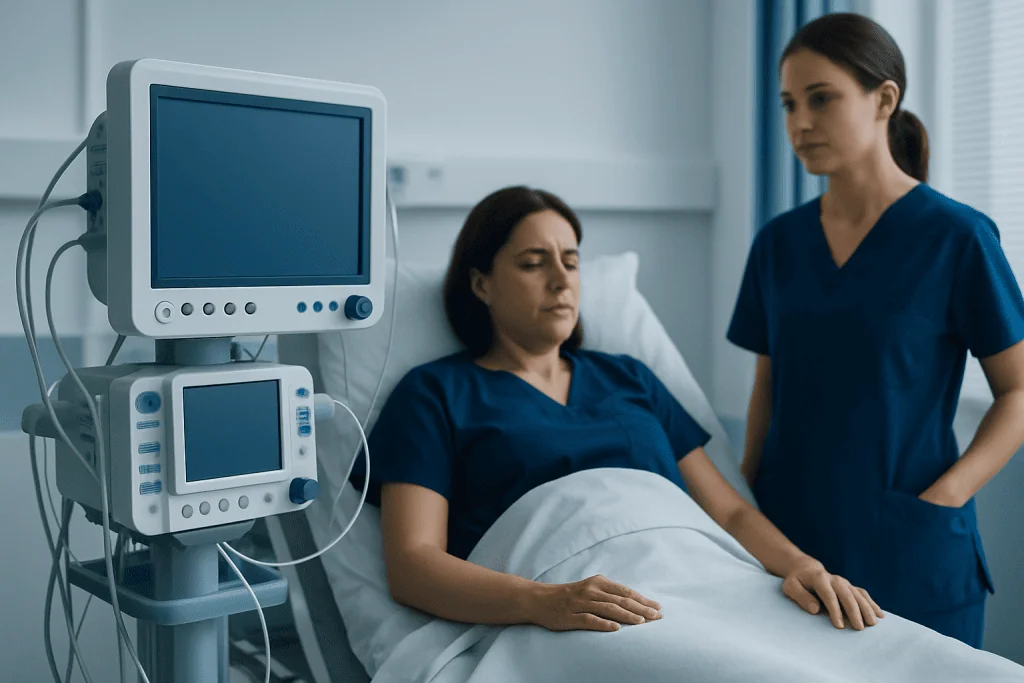
Surgical teams everywhere divide post-operative symptoms into two broad groups: those that need review the same day, and those that any health system treats as an emergency the moment they appear.
In the first group sit fever that is high or refuses to settle, redness that is spreading outward from a wound, drainage that turns thick, discoloured or foul-smelling, pain that escalates despite prescribed relief, repeated vomiting, an inability to keep fluids down, and swelling that becomes rapidly larger, tense or hard. These signs suggest a complication that is developing rather than one that has already become dangerous, which is precisely why clinicians want to see them early. There is a separate guide on when pain, swelling or fever should prompt an urgent call if those three symptoms are your main concern.
In the second group sit chest pain, breathing difficulty, blue lips, fainting, seizures, new confusion, coughing up blood, and heavy bleeding, dressings soaking through quickly, large clots, or bleeding that does not slow with gentle pressure. Clinicians also place one-sided leg swelling with pain and warmth in this group, because it can indicate a blood clot. These symptoms are treated as emergencies in every healthcare system, without waiting for a routine appointment; the notice above this page covers what that means in practice.
- Fever that is rising or not settling
- Breathing difficulty or chest pain
- Heavy bleeding or a bruise that is expanding quickly
- Severe pain not controlled by prescribed medicine
- Spreading redness, pus, or foul-smelling wound discharge
- Calf pain, one-sided leg swelling, or new numbness
- New confusion, fainting, or extreme drowsiness
Why these signs matter: what each pattern can point to
Understanding the reasoning behind the list makes it easier to remember. Fever with spreading wound redness, heat and discoloured drainage is the classic pattern of surgical site infection, one of the most common complications after any operation, and one that responds best when identified early rather than after it has taken hold.
One-sided calf pain and swelling points towards deep vein thrombosis, a clot in the leg veins. Surgery and long-haul travel each raise the risk independently, which is why the combination, an operation followed by a flight home, receives so much attention from surgical teams. Chest pain, sudden breathlessness or coughing up blood can indicate that a clot has travelled to the lungs, which is why those symptoms sit firmly in the emergency category.
Rapidly expanding swelling or bruising after surgery can indicate bleeding under the skin. A bruise that spreads slowly over days is usually old blood dispersing; one that enlarges over hours, especially with dizziness or a racing pulse, behaves differently and is assessed differently. Wound edges pulling apart, skin darkening around an incision, or a wound that reopens are treated as structural problems rather than cosmetic ones.
Most complications, caught early, are managed with medication, wound care or observation. Some mean extra nights in hospital so the team can monitor how things develop. Knowing that this is a normal, planned-for part of surgical care, not a sign that something has gone catastrophically wrong, tends to make the whole subject less frightening.
How clinicians judge a symptom: intensity, trend, function

When a surgical team assesses a symptom remotely, they weigh three things, and knowing the framework helps you observe your own recovery more usefully.
Intensity is how strong the symptom is right now. Mild evening swelling after a day on your feet reads very differently from swelling described as tense, shiny and painful to touch.
Trend is the direction of travel, and it is usually the most informative of the three. A symptom that was worse yesterday than today is generally reassuring even if it is unpleasant. A symptom that appears suddenly after a period of stability, swelling that doubles overnight, pain that sharpens after days of being manageable, carries weight even when the symptom itself seems familiar.
Function is what the symptom stops you doing. Drinking, walking, breathing comfortably, urinating, and staying alert are the basics clinicians ask about. A symptom that interferes with any of them is taken more seriously than one that is merely uncomfortable.
Simple records make this framework work. A photograph of the wound in good daylight each morning, a written temperature when you feel feverish, and a note of when you last took each medicine give a remote clinician something concrete to compare. “Fever of 38.8°C since this morning, wound redder than yesterday’s photo” can be assessed; “I feel hot and it looks worse” mostly cannot. When you are recovering abroad and follow-up may happen partly by phone or message, these small habits are worth more than they seem.
Documents and details that make any assessment faster
Wherever a post-operative patient is assessed: the original hospital, a different hospital, or a clinic near their accommodation: the same information shortens the process every time: the operation performed and its date, the hospital and surgeon’s name, the current medication list including blood thinners and pain relief, known allergies, and a short factual description of what has changed and when.
The discharge file usually contains most of this: the operation summary, wound care instructions, medication schedule, and the contact route the hospital uses in and out of working hours. Keeping it in one folder, physical or photographed on your phone, means it travels with you to any assessment. The medicine boxes themselves, or clear photos of them, resolve the naming confusion that arises when the same drug is sold under different brands in different countries.
One point sits outside the paperwork and belongs to your treating doctor alone: medication changes. Doubling pain relief, skipping antibiotic doses, stopping blood thinners, or restarting supplements can hide developing symptoms or create new problems, and decisions about any of it rest with the clinician who knows your operation. The same applies to dressings, changed as instructed, not improvised.
For patients treated at Acibadem hospitals, international patient services sit alongside the clinical team to handle the practical layer: interpretation, coordinating where a review happens, and helping records move between the hospital and a doctor at home. That support does not change the medicine, but it removes the friction that makes symptoms abroad feel more alarming than they are.
Planning your stay, and the flight home
The safest recoveries after surgery in Turkey are usually the best-planned ones. Accommodation matters more than most patients expect: lift access, help with luggage, a pharmacy nearby, and a simple route back to the hospital all reduce strain in the first week. A recovery week is not a sightseeing week; long days on your feet work against the rest and monitoring your body needs.
How long you stay before flying is a clinical decision, not a booking decision. Surgeons set a minimum stay so that the first follow-up review, stitch or drain removal, and the early risk window all happen while you are still nearby. The length varies by procedure and by how your individual recovery is going, which is why itineraries after surgery are best booked flexible.
The flight itself deserves its own thought. Cabin pressure, immobility and dehydration each interact with a healing body, and surgical teams often set specific guidance on mobility, compression garments and clot prevention before clearing a patient to fly. Two separate guides cover this stage in detail: warning signs worth reporting before flying home and when medical clearance may be needed before the flight. If recovery changes shortly before departure, the review comes first and the flight fits around it, not the other way round.
The watchfulness does not end at the airport. Some complications, particularly infection and clots, can surface in the first weeks at home, which is why the same intensity-trend-function framework applies there too. The guide on warning signs after returning home from treatment picks up where this one ends.
Step by step
- Go through the discharge summary before you leave the ward. Understand the medication schedule, activity limits, showering rules, dressing changes, and what your specific operation should feel like at each stage. Ask for written instructions in a language you read comfortably.
- Confirm the contact route your hospital uses. Note the in-hours and out-of-hours numbers and save them in your phone, along with the hospital’s name and address written in a form a taxi driver can read.
- Keep every document in one folder. Operation summary, medication list, allergy information, passport and insurance papers, together, and photographed as backup.
- Set a simple daily baseline. A morning wound photo in good light and a temperature reading when you feel unwell give any clinician a trend to work with, not just a snapshot.
- Choose accommodation that works for recovery. Lift access, nearby pharmacy, short route back to the hospital, and enough rest built into each day.
- Leave medicines exactly as prescribed. Any change, dose, timing, stopping, restarting, belongs to the treating doctor, not to trial and error in a hotel room.
- Plan the flight around the follow-up, not the other way round. Book flexible where possible, and treat the pre-departure review as the fixed point in the itinerary.
- Keep one other person informed. If you are travelling alone, make sure someone knows where you are staying and how your recovery is going, and keep your phone charged.
Your checklist
- Discharge papers and hospital contact details with you at all times
- Surgeon’s team and international patient coordinator saved in your phone
- A thermometer within reach, and readings written down when you use it
- Daily wound photos if your team recommends them
- The nearest emergency department to your accommodation identified in advance
- A current medication list, including blood thinners and pain relief
- Flexible travel bookings where possible, with the follow-up review as the fixed point
- Interpreter support arranged early if explaining symptoms in English or Turkish may be difficult
- A companion or contact who knows the warning signs on this page
Key takeaways
- Discomfort, bruising, swelling and tiredness are expected after most operations; the reassuring pattern is gradual improvement over days
- Chest pain, breathing difficulty, heavy bleeding, fainting and new confusion are treated as emergencies in every healthcare system
- Persistent fever, spreading wound redness, foul drainage, escalating pain and rapidly enlarging swelling are the signs surgical teams want reported early
- Intensity, trend and function, how strong, which direction, what it stops you doing, is how clinicians weigh any symptom
- Discharge papers, a medication list, daily wound photos and written temperatures make any assessment faster and more accurate
- Length of stay and fitness to fly are clinical decisions; flexible bookings keep them that way
Frequently asked questions
What should you eat after rhinoplasty surgery in Turkey?
In the first days, most surgeons suggest soft, cool or lukewarm foods that need little chewing, yoghurt, soups that are not steaming hot, eggs, well-cooked vegetables, plus plenty of water. Very hot, very chewy, hard or spicy foods are usually avoided early on because vigorous chewing and heat can aggravate swelling around the nose and mouth. Your own surgeon’s written instructions override any general list, because advice varies with the exact procedure.
How long should you stay in Turkey after aesthetic surgery?
It depends on the procedure and on how your individual recovery goes. Surgeons set a minimum stay so that the first follow-up review, stitch or drain removal, and the early complication window all happen while you are still nearby, commonly around a week for many aesthetic procedures, longer for more complex surgery. The treating surgeon confirms the actual date at review, which is why flexible return bookings are sensible.
How long do you stay in Turkey after breast surgery?
Most surgeons ask breast surgery patients to remain until the first post-operative review, and until any drains are removed and the wounds are checked. In practice that often means several days to about a week, but the number is set case by case. The decision to clear a patient to fly rests on how the recovery looks at that review, not on the original itinerary.
Are surgeries in Turkey safe?
Safety is not a property of a country; it is a property of the specific hospital, surgical team, and follow-up arrangements. Turkey has large hospital groups with substantial experience treating international patients, and it also has providers with far thinner infrastructure. Useful questions before booking anywhere: who performs the surgery, where any complication would be managed, what follow-up is included, and how communication works after you go home.
What surgeries is Turkey known for?
Internationally, Turkey is best known for aesthetic and plastic surgery, hair transplantation, dental treatment and eye surgery. Larger hospital groups also treat international patients across orthopaedics, cardiac surgery, oncology, organ transplantation and neurosurgery. The recovery principles in this guide apply across all of them: the procedure changes, but the logic of warning signs does not.
How can you tell normal post-operative pain from a problem?
Expected pain follows a pattern: worse with movement, responsive to prescribed relief, and gradually easing over days. The pattern clinicians treat differently is pain that sharply escalates after a stable period, pain that prescribed medication no longer touches, or pain arriving together with fever, spreading redness, new swelling or bleeding. The trend and the company the pain keeps matter more than its presence.
Is wound drainage normal after surgery?
A small amount of clear or slightly blood-tinged fluid can be expected after some procedures, depending on the operation and the dressings used. The pattern associated with infection is different: drainage that is thick, yellow, green or foul-smelling, that is increasing rather than decreasing, or that arrives alongside spreading redness, heat, pain or fever.
Is a fever after surgery always serious?
Not always, mild, brief temperature rises can occur in the first day or two after an operation. The patterns clinicians take seriously are a high fever, a fever that persists or returns, and fever combined with other findings: wound changes, chills, a cough, burning on urination, breathlessness, or confusion. A written record of readings and times makes any fever far easier to assess.
Add us as a Preferred Source to see more of our trusted health content across Google Search, AI Overviews and Discover.

Update history
- PublishedJuly 8, 2026
- Medical review approvedSeptember 13, 2026
- Last content updateSeptember 12, 2026
References2
- After Surgery: MedlinePlus medlineplus.gov
- Deep vein thrombosis (DVT): NHS nhs.uk
More Patient Guides

Septoplasty Recovery: Week by Week
Learn what to expect after deviated septum surgery: a week-by-week septoplasty recovery timeline, when it is usually safe to fly home, and…

Gallbladder Surgery Recovery: Week by Week
Learn what to expect after gallbladder surgery: a week-by-week recovery timeline, pain, diet, wound care, when it is safe to fly home…

Robotic Hysterectomy Recovery: Week by Week
Recovery from robotic hysterectomy week by week: pain, lifting, wounds, driving, flying home safely, warning signs and questions to ask before you…

Breast Reconstruction Recovery: Week by Week
DIEP flap recovery week by week: hospital stay, drains, pain, walking, showering, driving, when it is usually safe to fly home, and…