

Warning Signs After Returning Home from Treatment

Sort symptoms into three levels. Chest pain, severe breathlessness, heavy bleeding, stroke-like signs, fainting or severe allergic reaction: call your local emergency number or go to the nearest emergency department now. Fever, worsening pain, wound changes, one-sided leg swelling or medication problems: get same-day medical advice locally. Minor, stable changes: record them and report at your next scheduled check-in with your treating team.
You are home. The treatment is done, the flight is behind you, and then something changes: a warm patch near the wound, a temperature that will not settle, pain that feels different from yesterday. The question is not whether to worry. It is who to contact, and how fast.
This guide sorts the warning signs after returning home from treatment into three practical levels: emergencies that need local care immediately, symptoms that need same-day medical advice, and smaller changes worth recording and mentioning at your next check-in. It also explains how to reach the right team quickly, and how to keep your discharge paperwork working for you rather than sitting in a drawer.
At a glance
- Best for: International patients recovering at home after treatment in Turkey
- First rule: Severe or fast-worsening symptoms need local emergency care, not an email to the hospital abroad
- Three levels: Emergency now, same-day advice, note and report at your next check-in
- Keep nearby: Discharge report, medication list, doctor contacts and travel insurance details
- Remote support: Your treating team can review updates and documents, but cannot examine you in person
Why warning signs are harder to judge at home
The first days after an international trip home are the hardest time to read your own body. You are tired from travel, possibly in a different time zone, eating differently and sleeping badly. All of that can blur the line between an ordinary recovery day and a genuine problem. Warning signs after returning home from treatment also look different outside a hospital: there is no nurse walking past your bed, so you have to notice changes yourself and decide what they mean.
Your discharge plan is your baseline. It should tell you what is expected for your specific procedure, what is not, and when your next review is due. If a symptom appeared before you flew, it should already have been reported and documented: our guide on warning signs you should report before flying home explains why that matters. Anything new after landing is what this page is for.
If you were treated at Acibadem, the international patient services team can help you share updates, send requested documents and route questions to the relevant department. That support is genuinely useful for follow-up. It does not replace urgent local care. No remote team, however responsive, can examine you, take your blood pressure or run a scan. When a symptom is severe, local assessment always comes first.
Emergency warning signs: do not wait
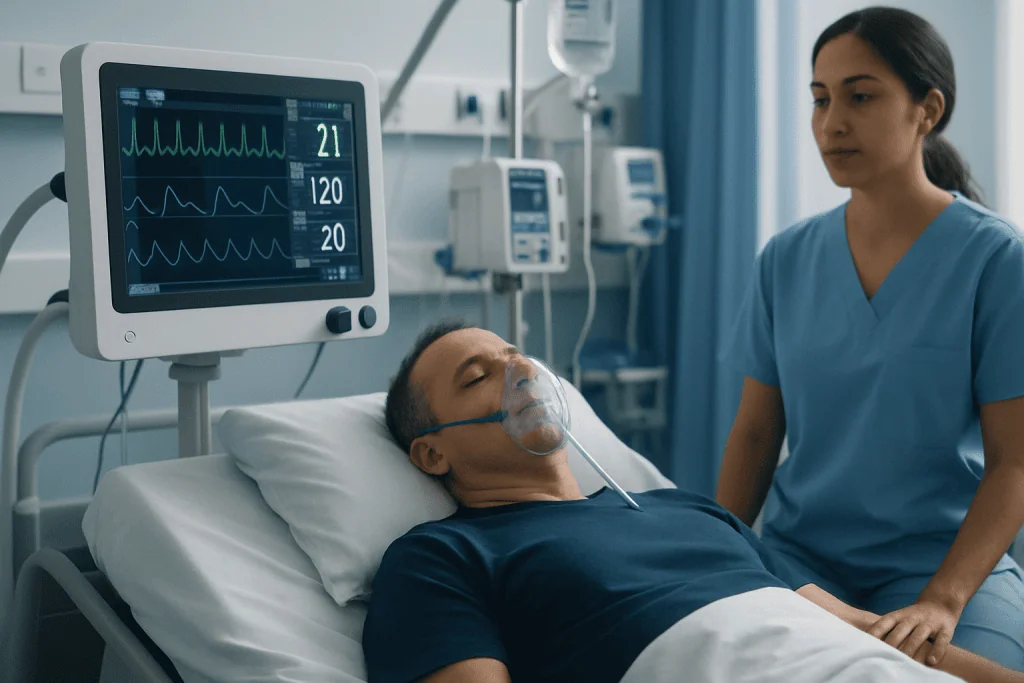
Some symptoms are urgent regardless of what treatment you had or how well you felt yesterday. If you have any of the following, call your local emergency number or go to the nearest emergency department now:
- Chest pain or pressure
- Severe or sudden shortness of breath
- Fainting or collapse
- Stroke-like signs: face drooping, arm weakness, slurred or confused speech, sudden vision loss
- Heavy bleeding that does not stop with firm, direct pressure
- Signs of a severe allergic reaction: swelling of the face, lips or throat, difficulty breathing, widespread rash
- Sudden confusion or unresponsiveness
Do not wait for an email reply, a WhatsApp message or a scheduled follow-up call. Do not drive yourself if you feel faint. Take your discharge summary, your medication list and any implant or procedure card with you, and ask a family member to help communicate and keep notes. Once you are safe and have been assessed, inform your treating hospital so your records can be updated and follow-up adjusted.
A high fever with shaking chills, rapid breathing, a racing heart, or feeling dramatically more unwell over a few hours can indicate serious infection and deserves the same urgency. Infection that spreads through the body can progress quickly, and speed matters more than certainty.
Symptoms that need same-day medical advice

The second level covers changes that are not immediately life-threatening but should not wait for next week. Speak to a healthcare professional the same day if you notice:
- Pain that is increasing despite your prescribed pain relief
- A persistent fever, or a temperature above the threshold in your discharge plan
- New or spreading redness, warmth or swelling at a wound or treatment site
- Discharge from a wound, especially if it is thick, discoloured or has an unpleasant odour
- Persistent vomiting, inability to keep fluids down, or signs of dehydration
- New dizziness, unusual drowsiness or difficulty passing urine
- A new side effect after starting a medicine
When you make contact, be specific. State when the symptom started, whether it is getting better or worse, your temperature, your pain score out of ten, and which medicines you have taken and when. Vague messages get vague answers; a clear timeline gets a clear plan. Photos can help with wound or skin concerns if your care team asks for them, use good lighting, include the date, and avoid sending unnecessary personal images.
Keep your discharge documents available in English and, if possible, translated into your local language. A local clinician who can read exactly what was done, what was prescribed and what follow-up was planned will make faster, safer decisions.
A three-level reference table
Most warning signs after returning home from treatment fit into one of three responses. This table is a general framework: your own discharge plan overrides it wherever the two differ, because it was written for your procedure and your history.
| What you notice | Level | What to do |
|---|---|---|
| Chest pain, severe breathlessness, stroke-like signs, heavy bleeding, fainting, severe allergic reaction | Emergency | Call your local emergency number or go to the nearest emergency department now |
| One-sided calf pain or leg swelling, especially after the flight | Urgent | Seek urgent medical assessment the same day; do not wait to see if it settles |
| Fever, worsening pain, wound redness or discharge, vomiting, new medication side effects | Same day | Contact your local doctor and follow your discharge instructions; inform your treating team |
| Mild tiredness, small appetite changes, itching at a healing wound, low mood that comes and goes | Note and report | Record it in your daily log and raise it at your next scheduled check-in |
Medication, wound and mobility concerns
Medicines
Medication problems are among the most common reasons patients need support in the first weeks home. Seek advice if you miss important doses, cannot tolerate a medicine, develop a rash or swelling, feel unusually sleepy or confused, or notice bleeding or unexplained bruising while taking blood thinners. Do not stop, swap or adjust a prescribed medicine on your own; that decision belongs to your treating doctor or a local doctor who has your discharge report in front of them. If a brand is unavailable in your country, a pharmacist can usually identify an equivalent by active ingredient, but confirm the substitution with a doctor first. Our guide to returning home with new medicines after treatment in Turkey covers this in detail, including how to handle time-zone dose timing.
Wounds, dressings, drains and devices
Follow the written care instructions you were given, and contact a healthcare professional if you see spreading redness, increasing warmth or tenderness, pus-like discharge, an unpleasant odour, a wound edge opening, or bleeding that does not settle with gentle pressure. Keep the area clean and dry as instructed. Do not apply creams, powders or home remedies unless your care team approved them, well-meaning additions are a common way to complicate a wound that was healing normally.
Legs, lungs and travel clots
A long flight soon after treatment raises the risk of a blood clot in the leg, which can travel to the lungs. New calf pain, one-sided leg swelling, warmth or discolouration in one leg needs urgent same-day assessment. Sudden breathlessness or chest discomfort in the days after travel is an emergency: call your local emergency number or go to the nearest emergency department now. Gentle movement as advised, good hydration and taking any prescribed anticoagulant exactly as directed all support safer recovery, but none of them is a substitute for assessment once a warning sign appears. Check your activity and lifting limits after returning home before resuming exercise, driving or physical work.
Mood, sleep and mental health
Not every warning sign is physical. It is common to feel flat, anxious or tearful in the weeks after major treatment, particularly after the intensity of travel and hospital routine gives way to quiet days at home. Some of this settles as your energy returns. Talk to your local doctor if low mood, anxiety or poor sleep persists for more than a couple of weeks, worsens steadily, or stops you eating, washing or leaving the house. If you have thoughts of harming yourself, call your local emergency number or go to the nearest emergency department now. Mention any mood changes to your treating team as well: some medicines and some conditions affect mood, and that context belongs in your record.
How to contact the right person quickly
Before leaving Turkey, confirm who to contact for each type of question: routine follow-up, urgent medical concerns, administrative documents and insurance paperwork. These are often different people, and knowing which is which saves precious time when you are tired or frightened.
Start with the urgency of the symptom. Emergencies go to local emergency services, full stop. Non-urgent but same-day concerns go to your local doctor and, per your discharge instructions, to your treating team. International patient coordinators can route your message, but clinical advice usually needs to come from the responsible medical department, which may take longer across time zones, another reason local care comes first for anything pressing.
When you write to your care team, one clear message beats five fragmented ones:
- Your full name, date of birth, hospital number if you have it, and treatment date
- What changed, when it started, and whether it is getting worse
- Your temperature, pain score and current medicines
- Your discharge report and any recent test results as attachments
- Photos only if appropriate and requested
- Your current location, preferred contact method, and a direct question: home monitoring, clinic visit, urgent care or emergency department?
Building your home follow-up plan
A good follow-up plan is written down, kept in one place, and understandable by the person looking after you as well as by you. It should list your medication schedule, wound care steps, activity limits, diet advice, dates for any tests or imaging, and the warning signs specific to your treatment. Keep it in the same folder as your discharge papers, insurance documents and passport copy.
Book a local doctor appointment soon after returning if your discharge plan recommends it, or if you have a complex condition, ongoing medication or a procedure that needs monitoring. Your local doctor can examine you, order tests and escalate quickly if something changes. In parallel, agree with your treating team how remote reviews will work: our guides on remote follow-up after returning home from Turkey and planning follow-up blood tests after returning home explain how to schedule these so results reach the right people. The safest recovery combines both: the treating team’s knowledge of what was done, and a local clinician’s ability to see you today.
Step by step
- Review your discharge instructions before you travel. Read the report before leaving the hospital and ask directly: which symptoms are expected, and which are warning signs? Confirm medication names, doses, timing and whether anything must be taken during the flight.
- Save every contact in your phone before you land. Local emergency number, local doctor, insurance assistance line and treating hospital contact, all in one note. Share the same list with your companion or a trusted family member.
- Keep a short daily log for the first days. Temperature, pain score, appetite, wound appearance if relevant, mobility and anything new. Two minutes a day gives any doctor a clear picture of whether you are improving or worsening.
- Act immediately on severe or sudden changes. For chest pain, breathing difficulty, stroke-like symptoms, heavy bleeding, fainting or severe allergic reaction, call your local emergency number or go to the nearest emergency department now. Inform your treating hospital once you are safe.
- Be specific when asking for advice. What changed, when, how severe, and what you have already done, attach your discharge report and current medication list every time.
- Keep your local doctor involved. They can examine you in person, order follow-up tests, and coordinate with the hospital abroad if treatment notes need interpreting.
- Never adjust medicines on your own. Side effects, unavailable brands and timing questions all go to a doctor or pharmacist before anything changes. Some medicines have strict interaction and stopping rules.
Your checklist
- Discharge report and treatment summary, saved digitally and printed
- Medication list with doses, timing and duration
- Warning-signs list specific to your treatment
- Local emergency number and nearest emergency department location
- Treating hospital and international patient services contacts
- Travel insurance policy and assistance phone number
- Follow-up appointment dates and required tests
- Daily symptom log started on the day you arrive home
- Companion or family member briefed on what to do if symptoms worsen
Key takeaways
- Chest pain, breathing difficulty, heavy bleeding, fainting or stroke-like signs need local emergency care immediately, never a remote message first.
- Fever, worsening pain, wound changes, one-sided leg swelling, dehydration and medication problems deserve same-day medical advice.
- Your discharge report and medication list are the most useful documents you own; keep them with you for any medical contact.
- Acibadem can coordinate follow-up communication and document review, but urgent symptoms are always assessed locally without delay.
- A two-minute daily log turns vague worry into clear information any doctor can act on.
Frequently asked questions
When should I go to the emergency department after returning home?
Immediately, for chest pain, severe shortness of breath, fainting, stroke-like signs, heavy bleeding, severe allergic reaction, sudden confusion, or any symptom that is worsening fast. In these situations, call your local emergency number or go to the nearest emergency department now. Take your discharge report and medication list with you, and inform your treating hospital once you are safe.
Should I contact Acibadem or my local doctor first?
For emergencies, local emergency services come first, always. For non-urgent concerns, involving both is often best: your local doctor can examine you, while your treating team knows exactly what was done. Acibadem’s international patient services can route your question to the right department and help share treatment details with your local clinician.
Is fever always a warning sign after treatment?
Not always: its significance depends on your treatment, timing and accompanying symptoms. A high, persistent or worsening fever, especially with chills, increasing pain, wound changes, breathing symptoms or feeling dramatically more unwell, needs prompt medical advice the same day. If your discharge plan gives a specific temperature threshold, follow that.
What should I do if my medication is not available in my country?
Do not substitute or stop it on your own. Show a local doctor or pharmacist the active ingredient, dose and instructions from your discharge report, and ask your treating hospital for clarification if needed. A qualified professional can then choose an appropriate local equivalent and confirm the timing rules that apply to you.
What are the warning signs of a mental health decline after treatment?
Watch for persistent low mood or anxiety lasting more than a couple of weeks, steadily worsening sleep, loss of interest in things you normally enjoy, withdrawing from people, or being unable to manage eating, washing or daily tasks. Raise these with your local doctor early. If you have thoughts of harming yourself, call your local emergency number or go to the nearest emergency department now.
Can I send photos of my wound or treatment area for review?
Yes, if your care team requests them, photos help with redness, swelling, discharge and dressing questions. Use good lighting, include the date and a short symptom description, and avoid unnecessary personal images. If the wound is bleeding heavily or opening, or you feel very unwell, seek local care instead of waiting for a photo review.
What if symptoms appear during the flight or airport transfer?
Tell cabin crew or airport medical staff immediately if you develop chest pain, breathing difficulty, fainting, heavy bleeding or sudden neurological symptoms: they are trained to respond and can arrange medical help. Do not try to manage serious symptoms quietly until landing. Afterwards, inform your treating hospital and your insurer as soon as practical.
How long should I keep monitoring myself after I return home?
Follow the timeline in your discharge plan, because monitoring needs vary by treatment and condition. In general, the first days and weeks matter most for fever, pain changes, medication issues, wound concerns and travel-related clot symptoms. Keep attending recommended follow-up appointments and remote reviews even if you feel completely well.
Add us as a Preferred Source to see more of our trusted health content across Google Search, AI Overviews and Discover.

Update history
- PublishedJune 9, 2026
- Medical review approvedAugust 30, 2026
- Last content updateAugust 30, 2026
References4
- Sepsis: NHS nhs.uk
- Surgical wound infection – treatment: MedlinePlus medlineplus.gov
- Deep Vein Thrombosis & Pulmonary Embolism: CDC Travelers' Health wwwnc.cdc.gov
- Deep vein thrombosis (DVT): NHS nhs.uk
More Patient Guides

Flying After a C-Section: Timing for New Mothers
A C-section is real abdominal surgery that happens to come with a newborn attached, so the flying question has two clocks…

When Can You Drive After Anesthesia or Sedation?
You feel fine an hour after the procedure. You are chatting, you walked to the car unaided, you could obviously drive it.…

Flying After Hip Replacement: When Is It Safe?
Hip replacement recovers famously well, many patients walk further at three weeks than they had in three years. Flying is part…

Flying After Knee Replacement: When Is It Safe?
The knee is new, the physio is going well, and there is a boarding pass with your name on it. Flying after…