

Activity and Lifting Limits After Returning Home
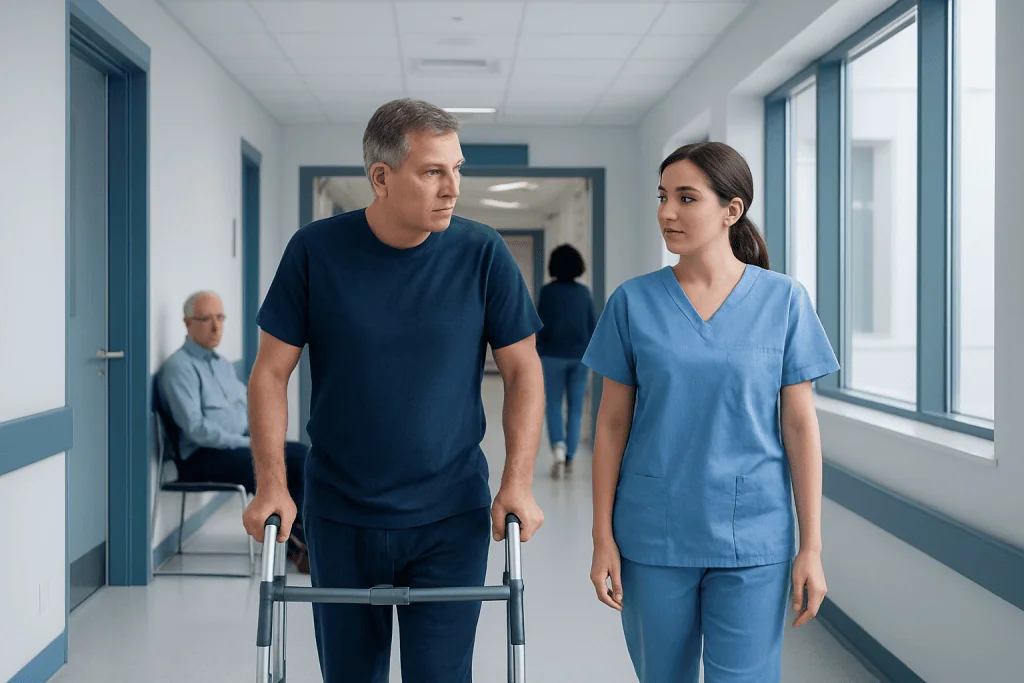
Your written discharge plan sets your activity and lifting limits after returning home, not your usual routine or another patient's experience. Increase movement gradually, avoid lifting anything your doctor has not cleared, and arrange help for luggage, groceries, laundry, and childcare. If a limit is unclear, ask your care team before testing it. Everyday items often weigh more than a safe early-recovery load.
How soon can you carry your own suitcase, climb the stairs at home, or pick up your child again? These questions usually surface the moment you unlock your front door. Coming back from treatment abroad feels like the finish line. In practice, it is the start of a new phase, and your activity and lifting limits after returning home are set by your discharge documents, not by your old routine.
This guide explains how to pace walking and daily movement, what lifting limits actually cover, how to handle housework, driving, work, and childcare, and when a symptom means you should stop and ask for help. It applies whether you had surgery, a procedure under sedation, or inpatient medical treatment. Where your written instructions differ from anything here, your instructions win.
At a glance
- Main goal: Increase movement gradually while protecting healing tissue
- Most important rule: Your written discharge plan sets your limits, not habit, not other patients
- Lifting guidance: Avoid anything your doctor has not cleared; everyday items often count as heavy
- Support at home: Arrange help for luggage, shopping, laundry, childcare, pets, and transport before you need it
- When to ask: Contact your care team about any unclear limit, accidental lift, or new symptom, early questions prevent setbacks
Why activity and lifting limits after returning home matter
Activity and lifting limits after returning home exist for one reason: healing tissue does not know you have landed. Incisions, internal repairs, and treated areas are still consolidating in the days and weeks after discharge, and strain during this window can cause pain, swelling, wound problems, or setbacks that lengthen your recovery. The limits your doctor gives you are set for your specific procedure, your incision sites, and your overall health, which is why a neighbour’s recovery timeline, or a forum post from someone who had “the same operation”, is not a safe substitute.
There is also a practical complication that patients treated locally do not face: you have just travelled. Airports, security queues, luggage, time zone changes, and disrupted sleep all add fatigue on top of recovery. Many people find their first days at home harder than their last days in hospital, simply because the journey took more out of them than expected. Building your first week around your activity and lifting limits after returning home, rather than around your normal calendar, is the single most useful thing you can do.
If you have not yet made the journey, it is worth reading when it is safe to fly home after surgery in Turkey before booking flights, because travel timing and activity limits are closely linked.
Start with your discharge plan, not your usual routine
The safest baseline for your first days at home is not how active you were before your procedure. It is the discharge plan written for your current condition. That plan may cover walking, stairs, driving, bathing, wound care, medicines, compression garments, physiotherapy, and specific lifting limits. Some of these instructions have dates attached; others say “until your doctor confirms”. Both types are binding until your clinician updates them.
Do three things in your first day or two at home:
- Re-read your documents once you are rested. Instructions read at discharge, in a hospital, before a flight, rarely stick. Read them again at your kitchen table and highlight every activity restriction, lifting limit, and warning sign.
- Keep everything in one folder. Discharge summary, medication list, imaging reports, and follow-up recommendations, together and easy to reach, digitally and, ideally, printed. Your local doctor will want these, and so will your Acibadem International team if you send questions later.
- List your unknowns. If the papers do not clearly answer “can I drive”, “can I lift my toddler”, or “when can I return to my job”, write the questions down and send them to your care team before you improvise an answer.
Recovery is rarely a straight line. You may feel energetic one day and drained the next, particularly in the week after international travel. Treat that first week as a protected transition: lighter commitments, help with chores, and rest built in between short periods of activity. If a family member or friend is supporting you, our guide on preparing a family member for your recovery explains how to divide tasks realistically.
How to pace walking and everyday movement
Gentle movement is part of many recovery plans, but it needs pacing. The practical rule: short, frequent walks beat one long walk that leaves you exhausted. Walking inside your home, along a quiet corridor, or on a flat outdoor route lets you rebuild confidence while staying close to a place to sit down. Increase distance gradually, and only from a level you tolerated comfortably the day before.
Use your symptoms as a guide, and do not negotiate with them. If pain increases sharply, or you become dizzy, breathless, unusually weak, or feel pressure or pulling around the treated area, stop and rest. If the symptom does not settle with rest, contact your care team or a local healthcare provider rather than pushing through. “Pushing through” is a sports concept; it has no place in early recovery.
Stairs deserve their own plan. They are often manageable when taken slowly, but they are surprisingly tiring after a hospital stay and a long journey. Hold the handrail, take one step at a time if needed, pause between flights, and never carry bags on stairs during early recovery. If your discharge instructions include specific stair limits, some do, follow them exactly until your clinician updates the plan. If stairs are unavoidable at home, consider setting up a temporary rest and sleep space on the ground floor for the first days.
Bending and reaching also count as movement. Repeatedly bending to a low cupboard or stretching to a high shelf can strain the same areas a lifting limit protects. Move commonly used items, kettle, medicines, phone charger, toiletries, to waist height before you need them, or ask someone to do it on your first day back.
Understanding lifting limits after you get home

Lifting restrictions protect healing tissue, reduce strain on incisions and internal repairs, and prevent avoidable setbacks. The exact limit depends on your procedure, your incision sites, your general health, and your doctor’s assessment. Some patients are told to lift nothing heavier than a light bag; others receive different guidance. There is no universal number, and this guide will not invent one. Your written plan is the authority, and if it is silent on lifting, that is a question for your care team, not a green light.
The most common mistake is thinking of “lifting” as gym weights. In daily life, the loads that break lifting limits look like this:
| Everyday task | Why it counts as lifting | Safer alternative |
|---|---|---|
| Suitcases and hand luggage | Dead weight plus twisting to hoist | Book help in advance, see airport assistance after surgery |
| Grocery bags | Sustained carrying, often one-sided | Delivery services or split loads carried by someone else |
| Laundry baskets, bed linen | Bending, lifting, and twisting combined | Delegate for the early weeks; smaller loads later |
| Children and pets | Unpredictable, moving weight | Sit down and let them come to you; no carrying until cleared |
| Vacuum cleaners, mops, bins | Pushing and pulling load the same tissues as lifting | Postpone, delegate, or use lightweight equipment once cleared |
| Heavy doors, stuck drawers, water bottles | Sudden strain, often while braced | Ask for help; keep frequently used items light and accessible |
Two technique points matter even for permitted loads. First, twisting while holding an object stresses healing areas more than lifting straight up, keep items close to your body and turn with your feet, not your trunk. Second, avoid sudden effort: a jerked lift or a caught fall loads tissue faster than it can absorb.
If you are unsure whether something is too heavy, treat it as too heavy until you confirm. Ask a family member, neighbour, or paid helper to handle carrying, bending, pushing, and pulling. Accepting temporary help is not a setback; straining a wound is.
- Split items into smaller loads instead of carrying one heavy bag, but only if even small loads are within your limit.
- Use delivery services for groceries, water, and household supplies during the restricted period.
- Keep essentials at waist level so you neither bend nor reach.
- Never handle your own luggage after the return flight without explicit clearance; if you are travelling with a cast or brace, read our guide on flying home with limited mobility before departure.
Household tasks, work, driving, and childcare
Many home activities are more physically demanding than they look. Making a bed, mopping, vacuuming, changing sheets, and standing to cook a full meal involve bending, twisting, and repetitive effort. In the first days at home, focus on essential self-care and let non-urgent chores wait. A tidy house recovers; a strained wound complicates.
Children and dependents. If you have young children, the lifting limit almost certainly includes them. Plan support before you travel or as soon as you know your discharge date: school runs, bathing, lifting toddlers, meals, and night-time care. Children usually cope well with a simple explanation: you are healing, and cuddles happen sitting down for a while. Rough play, piggybacks, and being climbed on wait for medical clearance.
Returning to work. The answer depends on what your work involves and what your discharge plan says. Desk work is not automatically safe or easy: commuting, sitting for long periods, and concentrating all drain limited energy. Jobs involving lifting, prolonged standing, driving, machinery, or physical contact usually need explicit medical clearance before you restart. A phased return, shorter days, remote work where possible, is often more realistic than a single return date.
Driving. Wait until your doctor confirms it is safe and until you can honestly answer yes to all of these: you can move freely enough to check mirrors and blind spots, you can perform an emergency stop without hesitation, you can wear a seatbelt without significant discomfort, and you are not taking medicines that affect alertness. If any answer is no or uncertain, arrange lifts or use local transport. Your insurer may also expect medical fitness to drive, so check your policy terms.
Managing fatigue after treatment and travel
International patients consistently underestimate the journey home. Airports, queues, luggage handling, time zone shifts, cabin dehydration, and broken sleep leave you more tired than the flight time alone would suggest. Even if your flight was medically approved, expect your body to need several days to settle once you are back.
Structure each day around recovery blocks: a little activity, hydration, food, medicines on schedule, rest, then sleep. Avoid stacking appointments or social visits into the first few days unless they are medically necessary. A calm, repetitive routine has a second benefit: it makes new symptoms easier to notice, because there is less noise around them.
Keep a simple log: a notebook or a phone note is enough. Record walking time, pain level, temperature if you were advised to check it, medication times, and anything unusual such as swelling or dizziness. Clear notes make every conversation with your local doctor or your Acibadem International coordinator faster and more useful. They also feed directly into your remote follow-up after returning home from Turkey, where the treating team relies on what you report and send.
When to contact your care team
Asking a recovery question is never a burden. Contact your care team if a lifting limit is unclear, if you accidentally lifted something heavy, or if you notice a new pulling sensation, increased pain, or unusual swelling around the treated area. Early advice routinely stops small concerns from growing into larger ones.
Seek prompt medical review if you develop fever, worsening redness or drainage around a wound, uncontrolled pain, or any symptom your discharge papers list as needing attention. Our guide to warning signs after returning home from treatment covers these in detail.
Some symptoms are time-critical. If you experience chest pain, severe shortness of breath, fainting, sudden swelling or pain in one leg, heavy bleeding, or confusion, call your local emergency number or go to the nearest emergency department now. Do not wait for a message reply from abroad, and do not drive yourself.
For planned, non-urgent follow-up, confirm the channel: which photos, lab results, imaging, symptom notes, or local doctor reports your treating team wants, and how to send them. Acibadem International’s patient services can help coordinate communication with the relevant hospital team, and interpreter support may be available if language is a concern. Keep time zone differences in mind when you expect a response, and always use local emergency services for anything urgent.
Step by step
- Read your discharge instructions again at home. Travel dulls attention. Review your documents once you are settled and rested, and highlight activity limits, lifting restrictions, medication timing, wound care, follow-up dates, and warning signs.
- Set up your recovery space. Water, medicines, phone charger, documents, snacks, and hygiene items within easy reach. Move commonly used items to waist height so you do not bend, stretch, or climb for them.
- Arrange help for heavy or repetitive tasks. Suitcases, groceries, laundry, cleaning, childcare lifting, and pet care go to someone else for now. If family support is thin, use delivery services or temporary home help.
- Walk in short, planned sessions. Start at the level your doctor recommended and increase only gradually, from a level you tolerated well the day before. Stop if you feel dizzy, breathless, faint, or if pain rises sharply.
- Protect your body during daily movements. Move slowly, keep objects close to your body, avoid twisting, and use handrails. Do not combine tasks, no carrying bags on stairs, unless your care team has cleared it.
- Track symptoms and questions. Log pain changes, swelling, temperature if advised, medication issues, and activity tolerance. Clear notes help your local doctor and your Acibadem International team advise you accurately.
- Confirm before increasing activity. Before gym exercise, heavy work, long drives, or lifting children, ask your medical team whether it is safe. Milestones should follow healing, not pressure to resume responsibilities.
Your checklist
- Discharge instructions and medical reports saved digitally and printed if possible
- Emergency contact numbers and local healthcare options identified
- Follow-up appointment dates confirmed
- Medication schedule adjusted to your home time zone if advised by your doctor
- Luggage, groceries, laundry, and cleaning help arranged
- A clear plan for childcare, elder care, or pet care
- Comfortable walking shoes and loose clothing available
- Essential items placed at waist height to avoid bending or stretching
- Questions about lifting, driving, work, and exercise written down and sent
- Interpreter or care coordinator contact details saved if you may need support
Key takeaways
- Your written discharge plan governs activity and lifting limits after returning home, check it before every “can I?” decision.
- Short, frequent movement is usually safer than sudden bursts of effort; increase only from levels you already tolerate well.
- Everyday items, luggage, laundry, groceries, children, pets, vacuum cleaners, routinely exceed early-recovery limits.
- Plan support at home before you need it, especially for the fatigued first week after international travel.
- Ask your care team about anything unclear, and for time-critical symptoms call your local emergency number or go to the nearest emergency department now.
Frequently asked questions
How much can I lift after returning home?
The safe amount depends on your treatment, your healing progress, and your doctor’s instructions: there is no universal figure, and another patient’s limit is not yours. If your discharge papers do not clearly state a limit, contact your care team before lifting anything you are unsure about.
Can I carry my suitcase after my flight home?
Avoid carrying or pulling heavy luggage during early recovery unless your doctor has specifically cleared it. Arrange airport assistance in advance, ask a companion to help, or use porter services where available. This matters most after a long journey, when fatigue affects balance and judgement.
Is walking safe after I get home?
Walking is encouraged in many recovery plans, but the amount and pace should match your discharge instructions. Start with short, manageable walks and rest between them. Stop and seek advice if pain increases sharply, and for chest pain, severe breathlessness, or fainting, call your local emergency number or go to the nearest emergency department now.
When can I return to exercise or the gym?
Gym sessions, weight training, stretching routines, swimming, and sports should wait until your doctor confirms they are safe. Even light exercise can strain healing areas if it involves twisting, impact, or pressure. Ask for a staged return plan rather than restarting your full routine at once.
What should I do if I accidentally lift something too heavy?
Stop the activity immediately and rest. Watch for new pain, swelling, bleeding, wound changes, dizziness, or any symptom your discharge instructions list as urgent. If symptoms appear or you are worried, contact your care team or a local medical provider promptly rather than waiting to see.
Can Acibadem International help after I return to my country?
Yes. International patient services can help coordinate follow-up communication with the relevant hospital team and clarify what information is needed, symptom notes, photos, test results, or a local doctor’s report. For urgent or severe symptoms, always use local emergency services first.
How do I know if I am doing too much?
Common signs include increasing pain, unusual fatigue, dizziness, swelling, wound discomfort, poor sleep, or taking much longer than expected to recover after simple tasks. Scale back to the last activity level you tolerated well. If symptoms persist or worsen, ask your medical team for advice.
Do lifting limits apply to pushing and pulling too?
Usually, yes. Pushing a vacuum cleaner, pulling a stuck drawer, or shoving a heavy door loads many of the same tissues as lifting, sometimes with added twisting. Unless your discharge plan says otherwise, treat pushing and pulling as covered by your lifting restriction and ask your care team if in doubt.
Add us as a Preferred Source to see more of our trusted health content across Google Search, AI Overviews and Discover.

Update history
- PublishedJune 8, 2026
- Medical review approvedAugust 30, 2026
- Last content updateAugust 30, 2026
References2
- MedlinePlus: After Surgery medlineplus.gov
- MedlinePlus: Postoperative Care medlineplus.gov
More Patient Guides

Flying After a C-Section: Timing for New Mothers
A C-section is real abdominal surgery that happens to come with a newborn attached, so the flying question has two clocks…

When Can You Drive After Anesthesia or Sedation?
You feel fine an hour after the procedure. You are chatting, you walked to the car unaided, you could obviously drive it.…

Flying After Hip Replacement: When Is It Safe?
Hip replacement recovers famously well, many patients walk further at three weeks than they had in three years. Flying is part…

Flying After Knee Replacement: When Is It Safe?
The knee is new, the physio is going well, and there is a boarding pass with your name on it. Flying after…