

Remote Follow-Up After Returning Home from Turkey
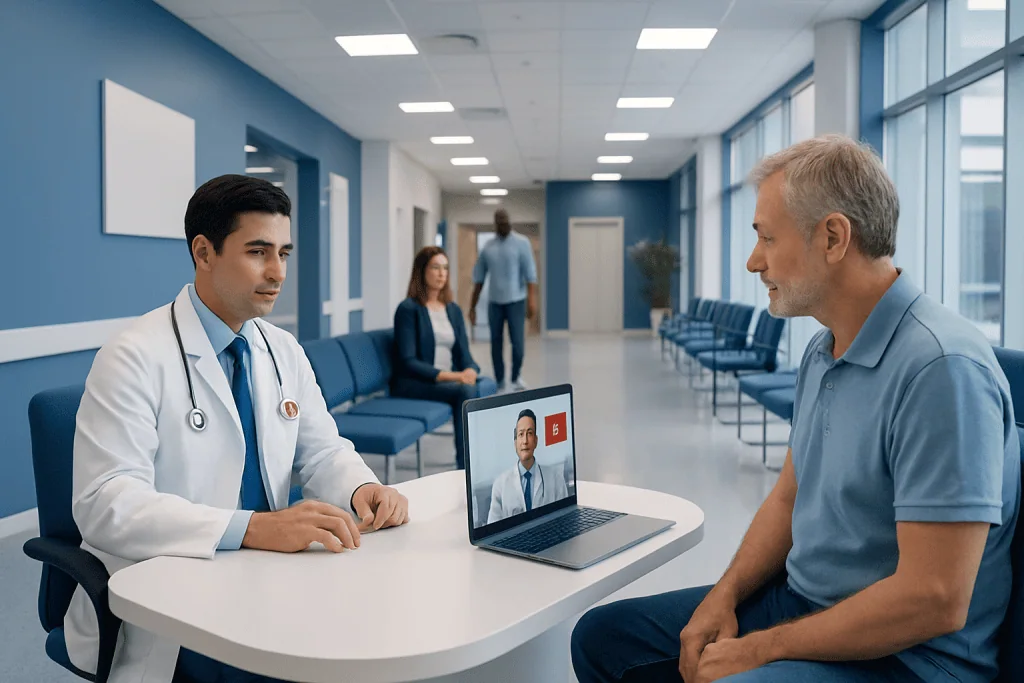
Remote follow-up after returning home from Turkey is a structured continuation of your care. Your treating team reviews your progress through scheduled calls, messages, photos and test results, advises on activity and healing, and coordinates with local services when an in-person examination is needed. It supports recovery from a distance, but it does not replace local doctors or emergency services in your own country.
The question most international patients ask is not about the operation. It is about what happens afterwards, when home is a flight away from the hospital that treated you. This guide explains how remote follow-up after returning home from Turkey actually works: what your team can review from a distance, what it cannot, and how to set things up so the weeks after your return are organised rather than uncertain.
It covers the documents you should carry, how photo and results reviews work, when local tests or a local doctor become part of the plan, and how Acibadem coordinates the process between International Patient Services and your treating specialty team.
At a glance
- Procedure type: Post-treatment aftercare, structured remote monitoring, not a procedure in itself
- Purpose: To review your recovery after you travel home, answer questions, check progress against your discharge plan, and decide next steps with your treating team
- Anaesthesia: Not applicable
- Hospital stay: None; remote follow-up begins after discharge and travel clearance
- Estimated recovery: Depends entirely on your original treatment, your health, and how healing progresses
- Return to daily life: Varies by treatment; follow-up reviews help time the return to work, driving and exercise sensibly
- Final result timeline: Some results are visible early; others continue to settle over weeks or months
- Suitable department: International Patient Services working with the specialty team that treated you
- International patient support: Coordination, interpreters, documentation, scheduled remote check-ins, and guidance on when care should move to a local doctor
What remote follow-up actually is
Remote follow-up after returning home from Turkey is the planned continuation of your care once your hospital stay has ended and you have flown back to your own country. It is not a replacement for all in-person medicine. It is a bridge: a way for the team that treated you to keep reviewing your progress until your recovery is stable or your care has been handed over to a doctor near you.
Depending on your treatment, it can include scheduled video or telephone reviews, secure review of wound or progress photos, discussion of symptoms, review of pathology and imaging results that arrive after discharge, guidance on activity and travel, and instructions to arrange blood tests or scans locally. The format is set by your specialist, not by a fixed package.
At Acibadem, the process is coordinated between International Patient Services and the specialty team responsible for your treatment. The aim is straightforward: you should know what is expected at each stage of healing, who reviews your updates, and when a question needs local, in-person assessment rather than a message.
When is it recommended?
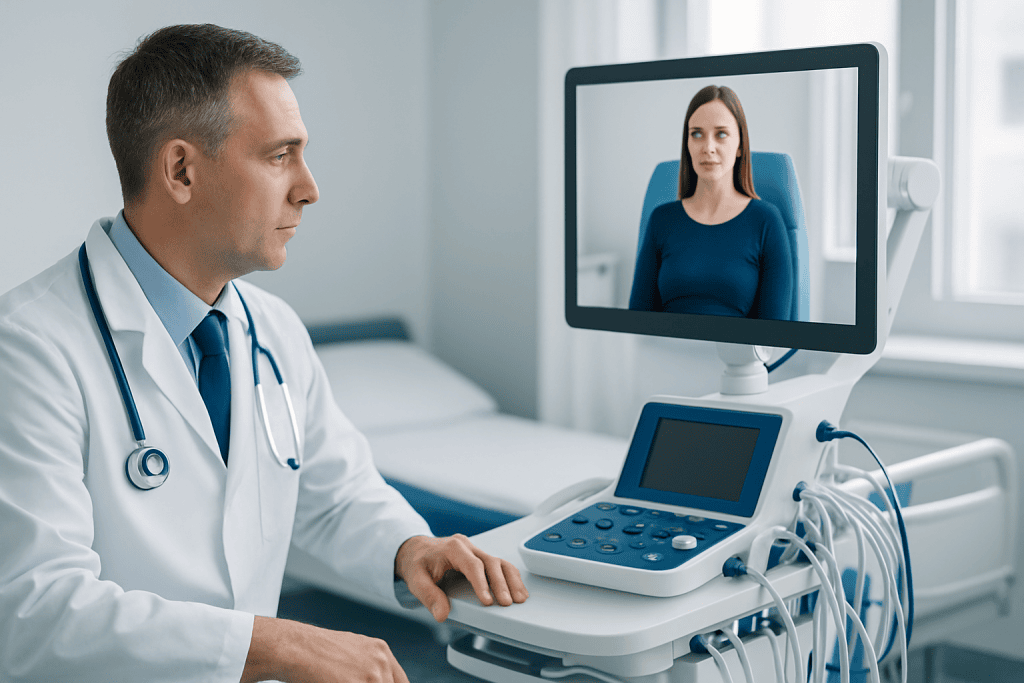
Some form of remote follow-up is recommended for almost every international patient, and it matters most where care genuinely continues beyond discharge: surgery, interventional procedures, cancer care, orthopaedics, cardiology, neurosurgery, bariatric surgery, IVF, and any treatment where medicines are adjusted or healing is monitored over weeks.
Typical follow-up work includes checking how an incision is healing, reviewing mobility and swelling, discussing pain that is settling more slowly than expected, monitoring digestive recovery after abdominal procedures, and interpreting routine tests your team asked you to complete after the trip. If pathology results were still pending when you left Turkey, the follow-up review is where they are explained. Our guide to remote results review after returning home covers that part of the process in detail.
Follow-up is worth taking seriously even when recovery is uneventful. Most of the practical questions patients have, what is normal at week two, what should be improving by week four, when exercise is reasonable, only arise once they are home. A scheduled review answers them with your actual case in front of the doctor, rather than leaving you to guess from forums.
Who is a good candidate?
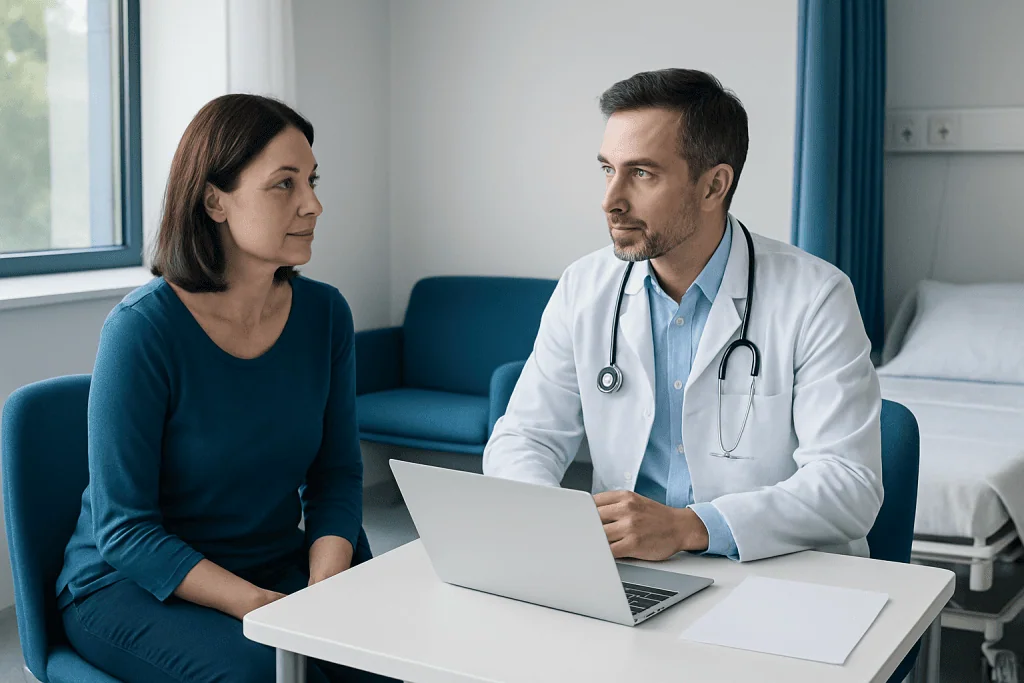
Remote follow-up suits you if you have completed treatment in Turkey, were medically stable for travel, and can communicate reliably once home. In practice that means being able to describe symptoms clearly, follow written instructions, and share photographs or test results when the team requests them. A stable internet connection and a reasonable grasp of your own discharge plan do more for the quality of a remote review than any technology.
It works best for expected recovery monitoring, progress reviews and non-urgent questions: the situations where discussion, images and documents give a doctor enough to work with.
It is less suitable as the only method of follow-up if your medical needs are complex, if you have limited access to healthcare where you live, or if your recovery is likely to need physical examination, wound procedures or hands-on rehabilitation. In those cases the plan usually pairs remote reviews with a named local doctor from the start, and your treating team will say so before you travel rather than after.
Formats of remote follow-up
There is no single pathway. The format depends on the treatment you had, your history, and how healing progresses. Your specialist may recommend one review or several staged ones over weeks or months.
Common formats include:
- Scheduled video or telephone follow-up appointments
- Secure review of wound photos or progress images
- Symptom and medication reviews with your treating team
- Review of pathology, laboratory or imaging results completed after discharge
- Rehabilitation and activity guidance, staged as healing allows
- Coordination with your local doctor or a local specialist when in-person care is needed
The pattern differs by specialty. After surgery, early reviews tend to focus on pain control, wound healing and mobility; later ones on scar care, exercise, pathology results and return to work. After medical treatment, the emphasis shifts to symptom changes, how you are tolerating medicines, and scheduled tests. If you came home with new prescriptions, read our guide on returning home with new medicines after treatment in Turkeyand note that any change to a medicine is a decision for your treating doctor, never something to adjust on your own or on the basis of a message thread.
When a review raises a concern, the outcome is usually one of four things: continue observing, adjust the practical instructions, arrange tests in your home country, or advise prompt local assessment. Which one applies is a physician’s judgement about your specific case.
Online evaluation before travel
Good remote follow-up is planned before you ever board a plane. During your initial online evaluation, the team should be able to tell you roughly how long you will need to stay in Turkey, what the first recovery period involves, when flying is usually considered, and what follow-up will look like once you are home.
Use that conversation. Ask who reviews your messages after discharge, whether wound photos will be requested, whether local blood tests or imaging are likely, and how quickly routine questions are answered. Patients who know the answers before travelling find the return home far less stressful than those who work it out afterwards.
If your health history is complex, or healthcare where you live is hard to access, say so early. It genuinely changes the plan, sometimes the length of stay in Turkey, sometimes the discharge criteria, sometimes the decision to identify a local doctor before treatment rather than after.
Before the treatment
Prepare for the period after you go home while you are still preparing for the trip itself. Keep a current list of your regular medicines, allergies, previous operations and ongoing conditions. Tell the treating team whether you have a local GP or specialist, and whether you will need translated documents for care in your home country.
Sort the practical side too: someone to help during the first days home, wound-care supplies if advised, and the ability to attend a local blood draw or scan if one is requested later. Our guide on planning follow-up blood tests after returning home from Turkey explains how to arrange that side in advance.
Before discharge, ask for written instructions covering showering, dressings, medicines, movement, exercise, work, diet and the symptoms your team considers urgent. Written instructions make every later remote review faster and clearer, because both sides are working from the same document.
What happens during your stay in Turkey
During treatment and your hospital stay, your doctors are assessing two things at once: the procedure itself and your readiness to travel afterwards. The team monitors progress, manages symptoms, reviews tests and decides when discharge is medically appropriate.
As discharge approaches, you receive instructions tailored to your treatment, medicines, wound care, mobility, diet, compression garments or braces where relevant, and activity limits. You will usually also be told when to send your first update, how to share photographs, and when the first scheduled remote review should happen.
For some treatments, the team recommends an in-person control in Turkey before departure, with remote follow-up beginning only after that check confirms early healing is on track. This is common after operations where early wounds need direct assessment before a long flight.
Discharge, documents and travel clearance
Remote follow-up starts from a solid discharge plan. Before you leave hospital, the team confirms you are medically stable, that pain and other symptoms are reasonably controlled, and that you understand the aftercare instructions. International Patient Services can help organise reports and communication routes for the journey home.
Your discharge documents matter more than most patients expect. They typically include a treatment summary, medication list, activity and diet advice, any test results available at that point, and the symptoms your team considers urgent. Keep printed and digital copies, and keep them accessible during travel: they are the reference document for every remote review that follows. For the full picture of this stage, see discharge, follow-up and flying home after treatment in Turkey.
Travel clearance is individual. Some patients fly relatively soon; others need to stay in Turkey longer before flying is considered safe. There is no standard timeline worth relying on: the decision belongs to your treating physician.
Recovery timeline
Your timeline depends on the treatment you had, your general health and how healing progresses. Remote follow-up exists to check that your recovery matches the expected pattern for your case, and to catch it early when it does not. The table below is a general framework only; your own written instructions take priority.
| Timeframe | What to expect |
|---|---|
| First 24 hours home | You continue the discharge plan, rest after the journey, take medicines as instructed, and keep an eye on how you feel compared with the day you left Turkey. |
| First week | Swelling, fatigue, mild discomfort or limited activity are common depending on the treatment. You may be asked to send an update, photos, or answers to specific questions about pain, mobility or wound healing. |
| Weeks 2–4 | Daily activity usually increases gradually. Reviews in this window often cover whether dressings, compression or medicines continue, and when work, exercise or driving can resume. |
| Months 1–3 | Healing becomes more stable, but swelling, stiffness, numbness, scar changes or energy dips can still improve over time. Some treatments need results reviews or specialty follow-up in this window. |
| Final result | Depends on the original treatment. Some outcomes are clear early; others take months to settle. Your doctor will tell you what is realistic in your case. |
If recovery does not follow the expected pattern, the remote review is where that gets noticed, and where the decision is made between continued observation and a prompt local assessment.
What to avoid after treatment
The specifics depend on your procedure, but some principles hold across the board. Do not change or stop prescribed medicines without your doctor’s instruction. Do not abandon dressings, drains, braces, dietary limits or hygiene instructions from your discharge plan because you feel better than expected.
Avoid assuming another patient’s experience applies to you. Recovery varies significantly even between people who had the same operation, and internet timelines are a poor substitute for your own team’s instructions.
Many patients are advised to avoid heavy lifting, strenuous exercise, smoking, excess alcohol, long periods of immobility, swimming before wounds have healed, and an early return to work or travel beyond what was recommended. The exact restrictions come from your treating physician. Time-zone changes on the journey home can also disrupt medicine timing: a detail that catches many patients out, and one worth raising during a scheduled review.
Risks and honest limitations
Remote follow-up is a supportive pathway, and its main limitation is simple: your doctor cannot examine you from a distance. Discussion, photographs and test results are enough for many questions. They are not enough for everything. Wounds sometimes need to be seen and touched; some symptoms need imaging the same day; some situations need emergency care, full stop.
Your original treatment carries its own risks, which depend on the specialty involved. Broadly, these can include infection, bleeding, delayed healing, fluid collections, pain that settles more slowly than expected, medication side effects, blood clots, or treatment-specific complications. Your surgeon or physician explains the risks relevant to your case before treatment, remote follow-up is one of the ways those risks are watched afterwards, not a way of removing them.
Recovery is also not always linear. Some swelling, fatigue, discomfort and low mood can be part of normal healing. Because serious problems can begin subtly, the value of remote follow-up lies in regular, honest reporting, brief updates sent on schedule beat long messages sent too late.
Where remote follow-up ends and local care begins
The clearest way to understand remote follow-up is to understand its boundary. It handles expected recovery, routine questions, results and staged reviews. It does not handle emergencies, and it is not designed to. Urgent problems are assessed by local services in your own country; the remote team’s role in those situations comes afterwards, reviewing local reports so your overall care stays joined up.
Your discharge documents identify the symptoms your team considers urgent for your specific treatment: that list is written for your case and is more reliable than any general article, this one included. For a broader look at how to think about the unexpected once you are home, see our guides on warning signs after returning home from treatment and complications after returning home from Turkey.
Results and expectations
Remote follow-up does not determine your outcome, and no follow-up method can promise one. Its purpose is continuity: making sure expected healing is confirmed, questions are answered by people who know your case, and anything unusual is assessed sooner rather than later.
Results depend mainly on the treatment performed, the underlying condition, your general health and how your body heals. Some patients need one review and nothing more; others need staged reviews, local tests, rehabilitation or medication adjustment over months.
Keep expectations grounded. Minor asymmetry, swelling, stiffness, numbness, scar changes or slower-than-expected progress can occur and often improve with time. Where further treatment or revision is ever considered, that decision needs careful physician assessment, not a judgement made in the middle of the healing period.
Travel planning for international patients
Good remote follow-up after returning home from Turkey starts with good travel planning. Before leaving Turkey, confirm how long you are expected to stay after treatment, whether an in-person control is needed before flying, and which documents you should carry. Ask about compression stockings, mobility precautions, medicines for the journey and any airline paperwork your condition requires.
Once home, keep the communication channel organised. Save the contact details International Patient Services gives you, understand the route for routine questions, and know which situations belong to local healthcare instead. Time-zone differences are manageable when you know in advance when the team reviews messages.
It also pays to identify a local doctor, clinic or hospital before you travel, particularly ahead of major surgery. If a physical examination, blood test or scan is needed later, having that option already in mind saves time when time matters.
Cost: how the aftercare pathway is priced
This guide does not quote figures, because honest figures do not exist in the abstract. What your overall pathway costs depends on the specialty, the complexity of the procedure, length of hospital stay, any implants or devices, pathology and imaging requirements, medicines, rehabilitation needs, and whether an extra in-person review in Turkey is needed before you fly home. Two patients with the same procedure name can have genuinely different pathways.
What a treatment plan typically includes on the aftercare side: discharge documentation, standard post-treatment guidance, and the routine remote communication built into your plan, scheduled reviews of messages, photos or results where the specialist has planned them.
What is often not included: consultations with local doctors in your home country, emergency care outside Turkey, blood tests or imaging performed locally, treatment of unrelated conditions, medicines bought after discharge, extended accommodation, and unplanned complication management that requires fresh assessment. The accurate version of all of this is your individual treatment plan and written quotation, read what it lists, and ask about anything it does not.
On the related question many travellers search for: healthcare in Turkey is not generally free for tourists. Turkey’s public health insurance covers people enrolled in the national system; visitors are normally expected to pay privately or claim through travel insurance. It is one more reason to have the whole pathway, including aftercare, set out in writing before treatment.
Why choose Acibadem
For international patients, continuity matters as much as the treatment itself. Acibadem structures follow-up as coordination between the hospital specialty teams and dedicated International Patient Services, so the handover from treatment in Turkey to recovery at home is planned rather than improvised.
Practically, that means support with communication, documentation and coordination: interpreters, transfer assistance, accommodation guidance during your stay, and an organised contact pathway after discharge.
The multidisciplinary side matters most when recovery involves more than one specialty. If your plan includes surgery, imaging, pathology, rehabilitation, medication review or interpretation of tests done locally after you return, coordinated follow-up keeps that information connected instead of scattered across inboxes.
Medical review and disclaimer
This guide has been medically reviewed by the Acibadem International medical team. It is intended to help you understand how remote follow-up may work after returning home from Turkey and what practical steps support a safer recovery.
The information here is for general educational purposes only. It does not replace a consultation, physical examination, diagnosis or personalised medical advice from your treating physician or a qualified doctor in your home country.
Suitability for travel, discharge, remote follow-up and any further treatment always requires individual physician evaluation. Urgent or severe symptoms are a matter for immediate local medical care.
Step by step
- Initial contact. The process begins when a patient approaches Acibadem International about treatment and the expected aftercare pathway.
- Medical record / photo submission. Relevant medical documents, medication details, test results, imaging and photos are shared for the initial review.
- Preliminary medical review. The specialist team reviews the case to understand the condition, treatment needs and expected recovery requirements.
- Treatment plan and quotation. A preliminary plan is prepared, with expected length of stay and a written outline of what the pathway and follow-up include.
- Travel planning. Flights, accommodation and practical support are organised, with preparation for the period after returning home built in from the start.
- Arrival. Schedule, transfers and hospital arrangements are coordinated through the international patient process.
- In-person consultation. The treating doctor completes a full assessment, confirms the plan, and discusses benefits, risks, expected recovery and follow-up.
- Pre-operative tests. Where relevant: blood tests, imaging, anaesthesia review and other assessments before treatment.
- Treatment. The planned treatment, procedure or operation takes place under the appropriate specialist team.
- Hospital stay. Condition is monitored, symptoms managed, and healing and medical stability assessed.
- First control. Where advised, an in-person check in Turkey before departure confirms early recovery and travel readiness.
- Discharge / travel clearance. Discharge instructions, documents, medication guidance and the remote follow-up schedule are confirmed.
- Remote follow-up. After returning home, scheduled contact continues for recovery updates, document and photo review, questions, and guidance on next steps.
Your checklist
- Passport copy
- Medical history summary
- Current medication list
- Known allergies
- List of previous surgeries or procedures
- Description of your current symptoms
- Relevant blood tests, reports and imaging
- Pathology reports if applicable
- Photos of the treated area if requested
- Contact details for your local doctor if available
- Discharge papers and prescriptions from Turkey
- Emergency contact details
Key takeaways
- Remote follow-up is the planned continuation of care for patients who have completed treatment in Turkey and returned home.
- Its format, calls, photo reviews, results reviews, staged check-ins, is set by your treating specialist, not a fixed package.
- Your discharge documents are the reference for the whole process: keep printed and digital copies.
- Remote review handles expected recovery and routine questions; physical examination, urgent tests and emergencies belong to local services.
- Cost questions are answered by your written treatment plan and quotation, which set out what is and is not included.
Frequently asked questions
What is remote follow-up after returning home from Turkey?
It is the part of your aftercare that continues once you leave Turkey. It can include scheduled communication with your treating team, review of symptoms and photos, discussion of test results that arrive after discharge, and practical advice about activity, medicines and recovery milestones.
Is remote follow-up enough on its own?
For routine recovery monitoring and non-urgent questions, it is often sufficient. It does not replace situations that need physical examination, urgent imaging, wound procedures or emergency care: those are handled by doctors and hospitals in your own country, with the remote team reviewing the reports afterwards for continuity.
How much does it cost to see a doctor in Turkey?
There is no single figure. Private consultation and treatment costs in Turkey depend on the hospital, the specialty, the complexity of the case, and any tests or imaging involved. For international patients, costs are set out in an individual written quotation prepared after the medical review, so you can see what the pathway includes before committing.
Do tourists get free healthcare in Turkey?
Generally, no. Turkey’s public health insurance covers people enrolled in the national system, mainly citizens and registered residents. Visitors are normally expected to pay for care privately or claim through travel insurance, which is why insurance and a written treatment plan matter for anyone travelling for treatment.
Will I need to send photos or test results after I get home?
Possibly, depending on your treatment. Many patients are asked to share wound photos, progress images, blood test results or imaging reports so the team can assess recovery from a distance. Your discharge instructions will say what to send, in what format, and on what schedule.
How long should I stay in Turkey before flying home?
There is no standard answer. It depends on the treatment you had, your healing progress and your doctor’s assessment; some treatments also need an in-person control before departure. Travel happens when your treating physician confirms it is medically appropriate, not on a generic timeline.
Can Acibadem communicate with my local doctor?
In many cases, yes, sharing discharge documents and relevant medical information with a local doctor can make aftercare smoother, particularly when local tests or examinations are part of the plan. This is arranged with your knowledge and handled through appropriate channels.
What if I recover more slowly than expected?
Slower recovery does not automatically mean something is wrong; healing times vary considerably between patients, even after identical procedures. Persistent symptoms or delayed progress are exactly what scheduled reviews exist to assess, and the outcome may be continued observation, local review or additional testing, depending on physician judgement.
Add us as a Preferred Source to see more of our trusted health content across Google Search, AI Overviews and Discover.

Update history
- PublishedJune 22, 2026
- Medical review approvedAugust 31, 2026
- Last content updateAugust 31, 2026
References2
- CDC Yellow Book: Medical Tourism wwwnc.cdc.gov
- MedlinePlus: Telehealth medlineplus.gov
More Patient Guides

HoLEP in Turkey: How It Compares With TURP and What Recovery Involves
HoLEP in Turkey treats enlarged prostate tissue with laser enucleation; learn how it compares with TURP, recovery, travel and follow-up.
Porcelain Veneers in Turkey: Who Is Suitable and How Many Visits Are Needed?
Porcelain veneers in Turkey can enhance tooth shape and colour in two visits for suitable patients after a personalised dental assessment.
How to Prepare for a Sedation Procedure in Turkey
Prepare safely for a sedation procedure in Turkey with guidance on fasting, medicines, travel, recovery and follow-up.
Treatment Delays in Turkey: What Happens If Tests or Recovery Change Your Schedule
Treatment delays in Turkey can happen if tests or recovery change your plan. Learn how to manage appointments, travel, accommodation and follow-up.