

How to Plan Follow-Up Blood Tests After Returning Home from Turkey

Ask your treating team in Turkey for a written blood test schedule before discharge, which tests, at what intervals, and who reviews the results. Once home, book a local laboratory early, follow any fasting or timing instructions, and send the full original reports as PDFs rather than photos or retyped numbers. After each review, confirm the next testing date before daily life crowds it out.
You are home, the treatment is behind you, and somewhere in your discharge papers there is a line saying you need blood tests in two weeks. This is the point where follow-up quietly goes wrong for many international patients, not because the tests themselves are difficult, but because nobody booked them in time, or the results ended up in a format the reviewing doctor could not use.
The fix is not complicated. To plan follow-up blood tests after returning home from Turkey, you need three things: written instructions before you fly, an early local booking rather than a last-minute one, and a reliable way to get complete results to the person who will review them. This guide walks through each part, including the details that most often cause delays, different laboratory units, referral requirements, and reports sent as blurry phone photos.
At a glance
- Best time to plan: Before you leave Turkey, ideally at the discharge conversation
- Main goal: The right tests, at the right intervals, with results reaching the right reviewer
- Who to coordinate: Your treating team in Turkey plus your local doctor or laboratory
- Useful documents: Discharge summary, written test schedule, medication list, baseline results
- Common problems: Late booking, unclear timing, different lab units, incomplete reports
- Worth asking for: Interpreter support at discharge and full copies of your records
Why follow-up blood tests matter after you return home
Blood tests are often the simplest tool doctors have for checking how a recovery is progressing once you are no longer in the hospital. Depending on your treatment, they may be used to monitor the effect of a medicine, track infection or inflammation markers, review hormone or vitamin levels, or feed into longer-term planning. Feeling well does not make them redundant, part of their value is picking up changes before you would notice anything yourself.
It helps to think of follow-up as a handover between two halves of your care: the team who treated you in Turkey and the doctor or laboratory you will use at home. When the handover is clear, which tests, when, reviewed by whom, the process usually runs smoothly. When details are missing, a local clinic is left guessing which tests are needed, how the timing was intended, and how quickly results should be looked at. That is where weeks get lost.
This is also why the best moment to plan follow-up blood tests after returning home from Turkey is before you have actually returned. Once you are back in your own routine, with work and family filling the calendar, a testing date without a booked appointment behind it tends to slip. If you want the wider picture of which checks tend to be needed after treatment, imaging as well as bloods, see when you may need imaging or labs after treatment in Turkey.
Most large international hospitals have a patient services or coordination team whose work includes preparing discharge documents and agreeing how results will travel back for review. Use that conversation well: test names can differ between countries, and your home laboratory may report in different units from the hospital in Turkey, so the clearer the paperwork you leave with, the less untangling there is later.
What to confirm before you leave Turkey
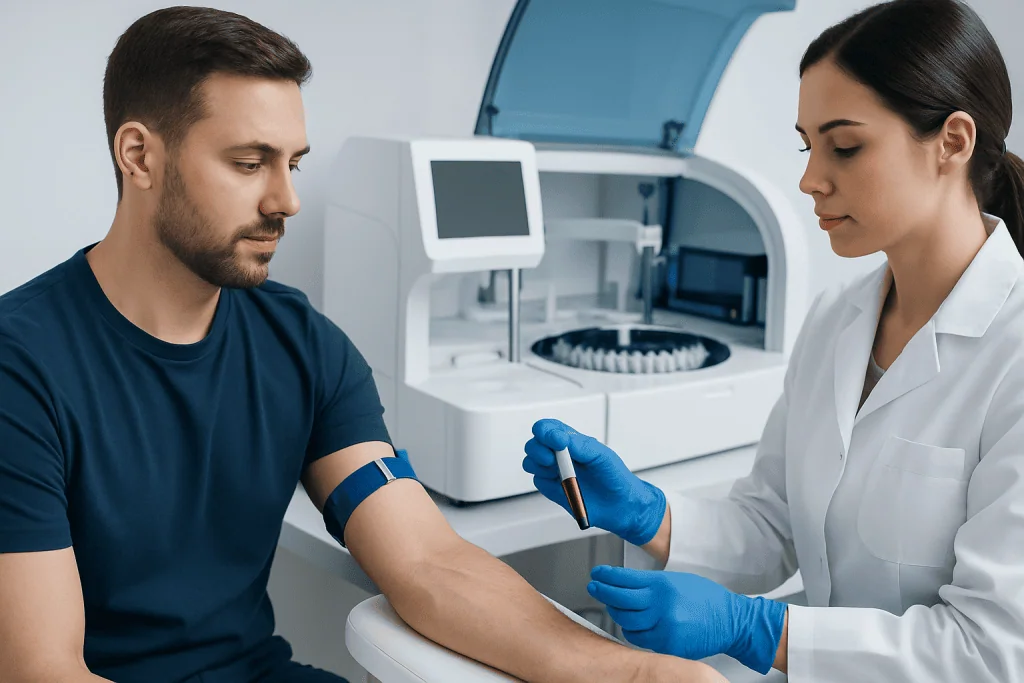
Ask your treating team for a written list of every required blood test, the reason for each if possible, and the exact timing. Intervals are rarely interchangeable: one test may be due in three days, another at two weeks, another monthly. Small timing differences can matter, particularly if you are taking antibiotics, blood thinners, hormone treatment, or any medicine that needs monitoring. Vague phrases like “repeat bloods soon” are the enemy here, push politely for dates or day counts.
Who reviews the results
Just as important as the test list is the review arrangement. In some cases your local GP or specialist manages routine follow-up entirely. In others, your treating specialist in Turkey wants to see the first set of results before advising the next step, after which care shifts to local hands. Make sure you leave knowing which model applies to you, how to send reports securely, which file format is preferred, and whether photographed printouts are acceptable or full PDF laboratory reports are required. The broader discharge conversation is covered in discharge, follow-up, and flying home.
Questions worth asking at discharge
| Question | Why it matters |
|---|---|
| Which exact tests, and on which dates? | Your local doctor cannot order tests from a vague summary; day counts remove guesswork. |
| Is timing flexible, and by how much? | Some tests tolerate a few days’ delay; others are tied to a medication dose or treatment cycle. |
| Who reviews the results: Turkey, home, or both? | Prevents the common gap where each side assumes the other is watching. |
| Any preparation, fasting, time of day, before or after medicines? | A test done under the wrong conditions may have to be repeated. |
| What format should results arrive in? | A full PDF report with reference ranges is usually needed for remote review. |
| Are there target ranges or values to watch? | Gives your local doctor context the summary alone may not provide. |
Documents to carry home
Before discharge, aim to leave with:
- A discharge summary in English, if available
- A medication list with names, doses and duration
- A written blood test schedule with dates or intervals
- Copies of your in-hospital baseline results, so trends can be compared
- Any target ranges or values your doctor wants monitored
- Contact details for the international patient team or clinic coordinator
If language is a barrier, ask for interpreter support while these instructions are reviewed with you: it matters more here than almost anywhere else, because a misunderstood interval or fasting rule quietly becomes a repeated test weeks later. If you are also going home with new prescriptions, the notes in returning home with new medicines after treatment in Turkey are worth reading alongside this guide, because several monitoring tests exist purely to track those medicines.
How to arrange blood tests in your home country

Book early rather than close to the due date. Some laboratories accept walk-ins; many require appointments, a doctor’s referral, or specific request forms, and public systems in particular can have waits of days or weeks for routine phlebotomy. If your tests must be done at a certain time of day, fasted, or before your morning medicine, say so when booking, so you are not turned away or asked to come back.
Route the request through a local clinician where you can
If you have a family doctor, GP or local specialist, send them your discharge paperwork before your first appointment and ask whether they can order the tests. This tends to be the smoothest path: a local clinician can translate the plan into the request format your country’s laboratories actually use, and can advise whether a hospital lab, private lab or community clinic suits the urgency and type of test. Some tests are widely available anywhere; a few specialised assays may only run at larger centres, which is worth discovering early rather than on the due date.
Choosing a laboratory
Practical points to weigh:
- Turnaround timeroutine panels are often same-day or next-day; specialised tests can take longer
- Report formatcan they email a complete PDF, and can they report in English if needed?
- Opening hoursearly slots matter for fasted or morning-timed samples
- Consistencyfor repeat monitoring, using the same laboratory each time keeps reference ranges and formats comparable, which makes trends far easier to read
That last point deserves emphasis. Two accurate laboratories can produce numbers that look different for the same sample because they use different methods and reference ranges. Switching labs mid-series does not invalidate anything, but it forces the reviewing doctor to interpret across formats. Where you have the choice, stay with one provider for the duration of a monitoring plan.
How to share results clearly and avoid confusion
The most common follow-up failure is not the blood test: it is the way the result travels. A blurry phone photo, a cropped screenshot missing the reference ranges, or a message with numbers but no name and no sampling date can stall a review for days. Every result you send should include:
- The full original laboratory report, ideally as a PDF
- Your full name and date of birth
- Your hospital or patient number, if you have one
- The date the sample was taken (not just the date you send it)
- A one-line note on where you are in the follow-up plan
Different units are normal
Countries report the same test in different units, glucose, for instance, may appear in one unit system at home and another in Turkey. A number that looks alarming next to your Turkish report may simply be the same value expressed differently. This is precisely why the original report matters: it carries the laboratory’s own units and reference ranges, which the reviewing doctor needs to interpret the value correctly. Do not retype numbers by hand unless specifically asked, transcription errors with decimal points and abbreviations are easy to make and hard to spot.
Use one channel, keep copies
If your treating team in Turkey is reviewing results, send them through the communication channel agreed at discharge rather than scattering them across personal messaging apps. A single, organised route lets the team match each report to your file and respond efficiently. Keep copies of everything, the original reports and any replies, in one folder, digital or paper. How remote review typically works, and what a good check-in looks like, is covered in remote follow-up after returning home from Turkey.
One structural point is worth understanding: remote review is a planning tool, not an urgent-care service. Laboratories have their own protocols for critical values, and when a local lab flags a result, that flag is acted on locally by local clinicians. International follow-up sits alongside your local medical system; it does not replace it.
Timing, fasting and preparation on the day
Many blood tests need no preparation at all. Some do: fasting for a set number of hours, avoiding certain supplements, drinking water normally, or attending at a specific hour. Others are timed around medicines, some drug-monitoring tests are taken just before a dose, and taking the tablet first changes what the number means. None of this is for you to improvise. Any question about pausing or timing a medicine around a test belongs to your treating doctor; if the instructions are unclear, clarify before the appointment rather than guessing on the morning.
For repeat monitoring, consistency helps. If checks are weekly or monthly, going at a similar time of day, in a similar fasted or fed state, at the same laboratory makes trends much easier to compare. This matters most for hormone levels, drug monitoring, and blood-sugar-related tests, all of which can shift with timing and recent food. If time-zone changes have shuffled your dosing schedule since the flight, adjusting a medication schedule after returning home explains how patients usually approach it with their doctor.
Finally, allow for the fact that the days just after long-haul travel are not typical days. Fatigue, mild dehydration and disrupted routine are common after a flight, so where the schedule permits, an early test is often better booked a few days after landing than the morning after, but if a test was deliberately timed close to your return, keep that date. The interval was chosen for a reason.
Handling delays, gaps and the long tail of monitoring
Schedules meet reality. Laboratories close for holidays, referrals take longer than expected, a test turns out not to run locally. When a logistical problem appears: the lab cannot perform a test, the report will miss the planned review date, the request form wording is unclear, flag it to the doctors involved as soon as you know, not after the window has passed. A small delay is acceptable for some routine tests and not for others; the clinicians who set the interval are the ones who can say which.
The other failure mode is slower and quieter: the first results come back fine, life resumes, and the three-month and six-month tests never happen. Guard against it deliberately. After each review, confirm the next testing date and put it in your calendar with a reminder set a couple of weeks ahead, enough lead time to book. Treat every review as producing a next date, until your doctors tell you the monitoring plan is complete. Guidance on pacing those reviews is in remote results review: when to book your next check-in.
Step by step
- Leave Turkey with a written test plan. Before you travel, get a clear list of which blood tests you need, when each is due, who reviews the results, and how they should be sent.
- Collect your key documents in one place. Keep the discharge summary, medication list, baseline results and hospital contact details together, digitally and, if possible, on paper.
- Book the local laboratory early. As soon as you are home, contact your GP, specialist or preferred lab. Mention any special requirements, fasting, morning sampling, testing before a medicine dose, when you book.
- Prepare properly on the day. Follow the preparation instructions you were given. If anything is unclear, ask before the appointment rather than improvising with food, drink or medicine timing.
- Send the full report, not just the numbers. Share the complete laboratory report in its original format, ideally PDF, with your identifying details and the sampling date, through the agreed channel.
- Let local systems handle urgent findings. Critically flagged results are acted on by local clinicians under local protocols; remote review runs alongside that, not instead of it.
- Lock in the next review point. After each set of results, confirm whether and when repeat tests are needed, and put the date in your calendar before the plan fades from view.
Your checklist
- Written list of required blood tests with exact timing
- Discharge summary in English, if available
- Current medication list with doses and duration
- Copies of your in-hospital baseline results
- Contact details for your Turkey-based care team or coordinator
- Local doctor informed and laboratory appointment booked
- Fasting, timing and preparation instructions confirmed
- Agreed secure channel for sending full PDF reports
- Next review date in your calendar with a reminder
Key takeaways
- Plan follow-up blood tests after returning home from Turkey before you actually leave: the discharge conversation is the moment to pin down tests, dates and reviewers.
- Route the request through a local doctor where possible; they translate the plan into your country’s referral and lab formats.
- Book early: referrals, appointment waits and specialised assays all take longer than people expect.
- Send complete original reports as PDFs, units and reference ranges differ between countries, and the reviewing doctor needs both.
- Use the same laboratory for repeat monitoring where you can, and always confirm the next testing date after each review.
Frequently asked questions
When should I plan follow-up blood tests after returning home from Turkey?
Ideally the plan is set before you leave Turkey, at the discharge conversation, and the local booking is made within your first days home. Early booking matters most where your country requires a doctor’s referral or where laboratory appointments carry a wait.
Can my local doctor order the blood tests instead of the hospital in Turkey?
Often, yes. A local GP or specialist can usually work from your discharge summary and written test schedule to request the same tests in the format used in your country. They can also place the results in the context of your general health and existing records.
What if the test names or units on my local report look different?
This is common and does not by itself mean anything is wrong. Laboratories in different countries use different terminology, abbreviations and units, which is exactly why the full original report, with the laboratory’s own reference ranges, should be sent rather than isolated numbers.
Do I need to fast before every follow-up blood test?
No. Fasting requirements depend on the specific tests ordered, and sometimes on the timing of medicines or the hour of day. If you are unsure, check with the laboratory or your doctor before the appointment rather than assuming either way.
How should I send my results to the team in Turkey?
Use the channel agreed at discharge, ideally a secure route that lets the team match the report to your file. Send the complete report rather than isolated numbers, and include your full name, date of birth, patient number if you have one, and the date the sample was taken.
What if I cannot get the test done on the exact date requested?
A short delay is acceptable for some routine tests and not for others: the tolerance depends on why the interval was chosen. Tell the doctors involved as soon as you know a delay is likely, so the timing can be confirmed or adjusted rather than quietly missed.
Should I use the same laboratory for every repeat test?
Where practical, yes. Different laboratories use different methods, reference ranges and report formats, so staying with one provider through a monitoring plan makes trends easier to read. If you do switch, keep the reports from both labs so the reviewer can see each result against its own reference range.
What happens if my local laboratory flags a result as critical?
Laboratories have their own protocols for critical values, and flagged results are acted on locally by local clinicians. Remote review by a team abroad runs alongside your local medical system, not in place of it: it is a planning and continuity tool, not an urgent-care service.
Add us as a Preferred Source to see more of our trusted health content across Google Search, AI Overviews and Discover.

Update history
- PublishedJuly 8, 2026
- Medical review approvedSeptember 13, 2026
- Last content updateSeptember 12, 2026
References2
- MedlinePlus: How to Understand Your Lab Results medlineplus.gov
- MedlinePlus: Fasting for a Blood Test medlineplus.gov
More Patient Guides

Flying After a C-Section: Timing for New Mothers
A C-section is real abdominal surgery that happens to come with a newborn attached, so the flying question has two clocks…

When Can You Drive After Anesthesia or Sedation?
You feel fine an hour after the procedure. You are chatting, you walked to the car unaided, you could obviously drive it.…

Flying After Hip Replacement: When Is It Safe?
Hip replacement recovers famously well, many patients walk further at three weeks than they had in three years. Flying is part…

Flying After Knee Replacement: When Is It Safe?
The knee is new, the physio is going well, and there is a boarding pass with your name on it. Flying after…