

Remote Results Review After Returning Home: When to Book Your Next Check-In

Book your remote results review before you leave Turkey where possible, following the interval in your discharge summary. If reports were still pending when you flew, the review is usually scheduled for shortly after they are finalised. The right timing depends on your treatment, your medicines and any local tests your specialist wants completed before the call. Your discharge plan, not a fixed rule, sets the date.
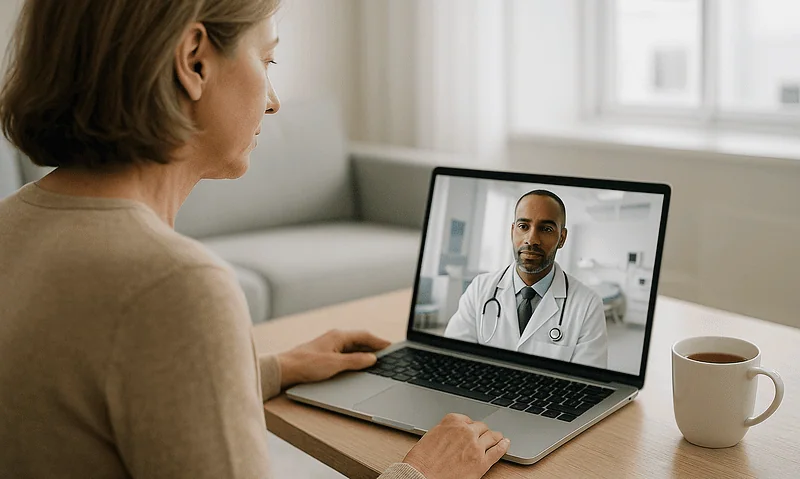
You are home, the suitcase is unpacked, and a report you were told to expect has just landed in your inbox, so who explains it now? This is what a remote results review after returning home is for. It is a planned appointment with your treating team in Turkey to go through your reports, check how your recovery is going and confirm what happens next. This guide explains when to book it, how to prepare, and, just as important, what a video consultation cannot do.
At a glance
- Best time to book: Before you leave Turkey, whenever possible
- Typical agenda: Finalised reports, recovery progress, medicines and the next tests
- Who may join: Your specialist, a care coordinator, and an interpreter when arranged in advance
- Prepare in advance: Discharge summary, medicine list, symptom notes and any local test reports
- Honest limit: Some questions still need a physical examination, either near home or in person in Turkey
Why a remote results review after returning home matters
Flying home rarely means your care plan has finished. Pathology can take longer than a typical medical trip. Imaging is sometimes reported after discharge. Blood tests may need repeating once your body has settled after surgery or treatment. A remote results review after returning home closes that gap: it gives you dedicated time with the right member of your clinical team to hear what the reports say, ask questions in plain language and agree the next steps in writing.
It also keeps your care connected. Many international patients share follow-up between their treating specialist in Turkey and a doctor at home. A structured review makes that split workable, because everyone leaves the call knowing who is responsible for which test, which prescription and which appointment. How the wider remote relationship works over the months after treatment is covered in our guide to remote follow-up after returning home from Turkey; this page focuses on the single most important appointment in that chain: the first results review.
At Acibadem, the international patient services team coordinates these bookings, routes your request to the relevant clinic and can arrange an interpreter for the call when this is requested in advance. The clinical content of the review, and its timing, are set by your specialist.
When should you book your next check-in?

There is no universal interval. The honest answer is that the right date is written into your discharge plan, and it varies with your diagnosis, the treatment you had, the reports still pending and the medicines you are taking. Some patients are reviewed within days of arriving home; others have a planned check-in weeks or months later. What matters is that a date exists, and that you know it before you travel.
If your team gave you a follow-up date, book the slot as early as you can, ideally before leaving Turkey. Early booking makes it far easier to find a time that works across time zones, and it gives you enough lead time to complete any tests your specialist wants done near home before the call. Blood drawn two days before the review is useful; blood drawn two hours before it usually is not, because the report will not be ready. Our guide on planning follow-up blood tests after returning home explains how to sequence this.
Different treatments create different timing drivers. The table below shows the kinds of factors that typically shape when a review is scheduled: it describes how planning works, not a schedule for your case.
| Situation | What usually drives the timing |
|---|---|
| Surgery | Wound-healing milestones, pathology reports finalised after discharge, and the point at which activity limits are reassessed |
| Cancer care | Final pathology, multidisciplinary team discussion, and the start date of any monitoring or further treatment |
| Cardiac treatment | Medicine review and locally performed tests your specialist wants to see before adjusting the plan |
| Orthopaedic treatment | Imaging taken at agreed healing points, often arranged near home and sent ahead of the call |
| Diagnostic work-up or check-up | Findings that need repeat testing or comparison with earlier results before conclusions are drawn |
One boundary is worth stating plainly. A remote results review is a planned appointment for planned questions. It is not designed for urgent assessment, and no video call replaces a clinician who can examine you in person when something needs to be seen the same day. The standing clinical notice on this site carries the safety guidance for every page; treat it as part of this guide.
What a remote review can and cannot do

A remote consultation is well suited to discussion: going through pathology, laboratory or imaging reports, reviewing the symptoms and progress you describe, checking how you are managing with your medicines, and confirming the monitoring plan. With your consent, it can also feed into shared care with your doctor at home, so that both sides work from the same records.
It has real limits, and it is better to know them before the call than during it.
- No physical examination. A camera cannot palpate an abdomen, listen to a chest or test a joint. If your specialist decides a hands-on assessment is needed, they may recommend a local clinician, additional tests near home, or an in-person visit. This is a normal safety step, not a sign that something has gone wrong.
- Report quality matters. A phone photo of a printed result often lacks the detail a clinician needs. Formal reports and, where relevant, original imaging files sent through the secure route your team specifies are far more useful.
- Prescribing crosses borders imperfectly. Local law, pharmacy rules and the medicine itself determine what can be arranged remotely. In many countries, a doctor licensed there must issue the actual prescription, supported by documentation from your treating team.
- Technology is a variable. Connection quality, camera resolution and platform access all affect the call. A stable connection in a quiet room is part of the preparation, not an afterthought.
Understanding these limits helps you use the appointment for what it does best, interpretation, planning and coordination, and route the rest appropriately.
How to prepare for a useful appointment
Preparation is what turns a fifteen-minute call into a genuinely useful review. In the days beforehand, write down your questions and a short symptom timeline: when each symptom started, how often it occurs, what makes it better or worse, and whether it is improving, stable or worsening. Dated notes beat memory, especially across a language barrier.
Gather your documents: the discharge summary, operative or treatment reports, your current medicine list with doses and allergies, and any results from tests completed at home. If a local provider carried out imaging, ask them for the formal report and the original image files, and send both through the secure channel your care team requested. Screenshots and partial photos frequently omit the reference values, units or technical details a specialist needs to interpret a result properly.
Set up the practical side. Choose a quiet, private room with a reliable connection, a working camera and a charged device. Confirm the appointment time in your own time zone, not just the clinic’s: a review booked for the afternoon in Istanbul may be morning or evening where you live. If you would like a family member to join and take notes, or if you need language support, arrange this in advance so the coordinator can plan the call accordingly. Preparing a relative for this role is covered in our guide on preparing a family member for your recovery.
Understanding your results and agreeing the next plan
Medical results rarely speak for themselves. A number outside a reference range may be expected after your particular treatment; a number inside it may still need watching. Results are interpreted alongside your symptoms, your treatment history and your earlier tests, which is why comparing a new report against internet searches usually raises more anxiety than it answers. Some findings need repeat testing, comparison with previous imaging, or discussion by a multidisciplinary team before anyone can say what they mean. Our guide on understanding medical test results and the next step in your plan goes deeper into how this interpretation works.
Before the call ends, make sure the plan is concrete. You should be able to answer these questions:
- What do these results mean in my situation, in plain language?
- Do I need further tests, which ones, where, and by when?
- Is anything changing with my medicines, and who will manage that change?
- Are there limits on work, exercise, lifting or driving, and until when?
- When is the next review, and what needs to happen before it?
- How do I reach the team for non-urgent questions between appointments?
Repeat the plan back in your own words during the call, and ask whether a written summary can be shared afterwards. Keep it with your discharge documents. Clear, written plans are the single best protection against information going missing when care is shared across two countries.
Working with your doctor at home
Most international patients end up with a three-way arrangement: the treating specialist in Turkey, a doctor at home, and you carrying the records between them. It works well when the paperwork does. Share the written summary and any updated reports with your local doctor if you want them involved, and tell each side what the other has said or prescribed.
Medicines deserve particular care in this arrangement. Decisions about starting, stopping or adjusting any medicine belong to a clinician who knows your history, your treating specialist or your local doctor, never to guesswork between appointments. If your supply of a medicine started in Turkey is running down, raising it early with your local doctor or pharmacy gives everyone time to sort out documentation and equivalents. Our guides on returning home with new medicines and adjusting a medication schedule across time zones cover the practical side.
Between check-ins, keep a simple recovery record: pain levels, temperature if you were asked to track it, appetite, sleep, mobility, wound appearance and any side effects, each with a date. Trends over two weeks tell a clinician far more than a single snapshot, and they make the next review shorter and sharper.
Step by step
- Confirm the recommended timeline. Read your discharge paperwork and note the follow-up interval your specialist set. If no date was written down, raise the question of timing when the booking is arranged, rather than assuming a schedule.
- Book across time zones. Secure the appointment early, ideally before you fly. Confirm the date, the time zone it refers to, the consultation platform, and whether an interpreter or family member will join.
- Complete requested local tests. If blood tests, imaging or another assessment near home were requested, arrange them early enough for formal reports to be ready before the call, and confirm the secure route for sending files.
- Track your recovery. Keep dated notes on symptoms, medicines, activity and anything that has changed since discharge. Notes carry more weight than recollection.
- Gather your documents. Put the discharge summary, treatment reports, medicine list and new local results in one folder, digital or paper, that you can reach during the call.
- Prepare your questions. Order them by what affects your next steps most: what the results mean, whether more tests are needed, and when normal activities can resume. Ask for plain-language clarification whenever an explanation is unclear.
- Leave with a written plan. Before the appointment ends, confirm what you need to do, who owns each task, when the next check-in happens and how non-urgent questions are handled in the meantime.
Your checklist
- Your discharge summary and treatment reports
- A current list of all medicines, doses and allergies
- Dated notes on symptoms, temperature or recovery changes, if relevant
- Formal reports and original files from any tests completed at home
- Your questions, in order of priority
- A reliable internet connection, a charger and a private room
- The confirmed appointment time in your local time zone
- Contact details for your local doctor
- A family member or trusted person to take notes, if you wish
Key takeaways
- Book your remote results review before leaving Turkey when possible, especially if reports are still pending.
- The right check-in date is individual and follows your specialist’s discharge plan, not a fixed rule.
- Formal reports and original imaging files, sent securely in advance, make the review far more useful than photos of paperwork.
- Remote care handles interpretation, planning and coordination well; physical examination and some prescriptions still need a clinician near you.
- Leave every review with a written plan: tasks, owners, dates and the timing of the next check-in.
Frequently asked questions
Should I book a remote results review before I leave Turkey?
Where possible, yes. Booking before departure makes it easier to find a slot that works across time zones and clarifies which tests, if any, should be completed near home before the call. Appointments can also be arranged after travel through the same coordination process, but early booking removes most of the friction.
How soon after returning home should the first check-in happen?
It depends on your treatment, your recovery, your medicines and whether reports were pending when you travelled. Some patients are reviewed within days; others have a later planned assessment. The schedule in your discharge instructions is the reference point, and it is set by your specialist rather than by a standard interval.
Can a family member join the remote appointment?
Usually, yes, with your permission. A second person taking notes is genuinely useful when complex information is discussed. Mention in advance that someone will attend, particularly if language support is also being arranged, so the call can be planned with everyone included.
What if my specialist asks for blood tests or imaging near home?
This is common. Confirm which tests are needed, when they should be done, and how the formal reports and original image files should be sent. Book the tests early enough for results to be finalised before the review: a test done the same day usually cannot be discussed on the call.
Can the remote doctor prescribe medication in my home country?
Often not directly. Prescribing is governed by local law, pharmacy rules and the type of medicine, and in many countries a locally licensed doctor must issue the prescription. Your treating team can explain the plan and provide supporting documentation, and any change to your medicines is decided by a clinician who knows your history.
Is a remote results review suitable for urgent problems?
No. It is a scheduled appointment for planned discussion of reports and recovery. Urgent clinical situations need in-person assessment through local healthcare services, which a video consultation cannot replace. The standing clinical notice on this site carries the safety guidance that applies to every page.
Will I receive a written summary after the consultation?
Ask during the appointment whether a written plan or updated recommendations can be shared. Keep any summary with your discharge documents and pass a copy to your local doctor if they are involved in your continuing care. Written instructions matter most when several follow-up tasks are agreed at once.
What happens if the connection fails during the call?
Agree a fallback at the start: whether the team will call back, switch to telephone, or rebook. Testing your camera, microphone and platform login before the appointment, and keeping a charger to hand, prevents most disruptions. If the call cannot be completed, it is rescheduled rather than rushed.
Add us as a Preferred Source to see more of our trusted health content across Google Search, AI Overviews and Discover.

Update history
- PublishedAugust 22, 2026
- Medical review approvedSeptember 2, 2026
- Last content updateSeptember 2, 2026
References1
- Telehealth medlineplus.gov
More Patient Guides

Flying After a C-Section: Timing for New Mothers
A C-section is real abdominal surgery that happens to come with a newborn attached, so the flying question has two clocks…

When Can You Drive After Anesthesia or Sedation?
You feel fine an hour after the procedure. You are chatting, you walked to the car unaided, you could obviously drive it.…

Flying After Hip Replacement: When Is It Safe?
Hip replacement recovers famously well, many patients walk further at three weeks than they had in three years. Flying is part…
Flying After Knee Replacement: When Is It Safe?
The knee is new, the physio is going well, and there is a boarding pass with your name on it. Flying after…