

After Surgery in Turkey: Warning Signs You Should Report Before Flying Home

Raise any symptom that is new, worsening, or different from what you were told to expect with your surgical team before you fly home. Fever, spreading wound redness, unusual drainage, bleeding that does not settle, breathlessness, chest discomfort, one-sided leg swelling, and persistent vomiting all matter. A short review before departure is far easier than managing a problem mid-flight or in an unfamiliar airport.
Your flight home is booked, the bags are half packed, and now there is a warm patch near the wound, a slight temperature, or an ache that was not there yesterday. You are wondering whether it is worth mentioning. It is. After surgery in Turkey, the safest habit is a simple one: anything new, worsening, or different from what your team told you to expect gets raised before you travel, not after.
This guide explains which post-operative changes matter, why the hours before a flight are a poor time to discover them, and how to organise your discharge papers, medicines, and journey so the trip home supports your recovery rather than testing it.
At a glance
- Who this is for: International patients preparing to fly home after surgery in Turkey
- Main message: Raise any new, worsening, or unexpected symptom with your surgical team before you travel, minor-looking changes included
- Signs that matter most: Fever, spreading wound redness, unusual drainage, bleeding, breathlessness, chest discomfort, one-sided leg swelling, persistent vomiting
- Before discharge: Confirm fitness to fly, wound-care rules, your medication plan, and follow-up arrangements in writing
- Good to know: Cabin conditions, long sitting, pressure changes, dry air, can turn a marginal symptom into a difficult one
Why the last days after surgery in Turkey matter
Recovery after surgery in Turkey has one feature most recoveries do not: a fixed endpoint in the form of a flight. That deadline changes how people behave. Symptoms that would prompt a question at home get filed under “probably nothing” because the taxi is booked and the hotel is checked out. It is worth naming that pressure, because it works against you.
Your body is still healing in the days after an operation. Changes in pain, temperature, swelling, breathing, mobility, or the look of a wound can be early signals of infection, bleeding, a circulation problem, dehydration, or a reaction to medicines. None of these is easier to manage in a departure lounge. Raised early, most concerns can be assessed the same day, sometimes with nothing more than an examination and reassurance, sometimes with a small adjustment to treatment or to travel timing.
The symptom that looks trivial in your hotel room can also become genuinely hard to handle in transit: hours of sitting, queues, luggage, pressure changes, and limited access to clinical help. Reporting before you fly is not caution for its own sake. It keeps the widest range of options open while help is still nearby.
The warning signs worth reporting before you fly
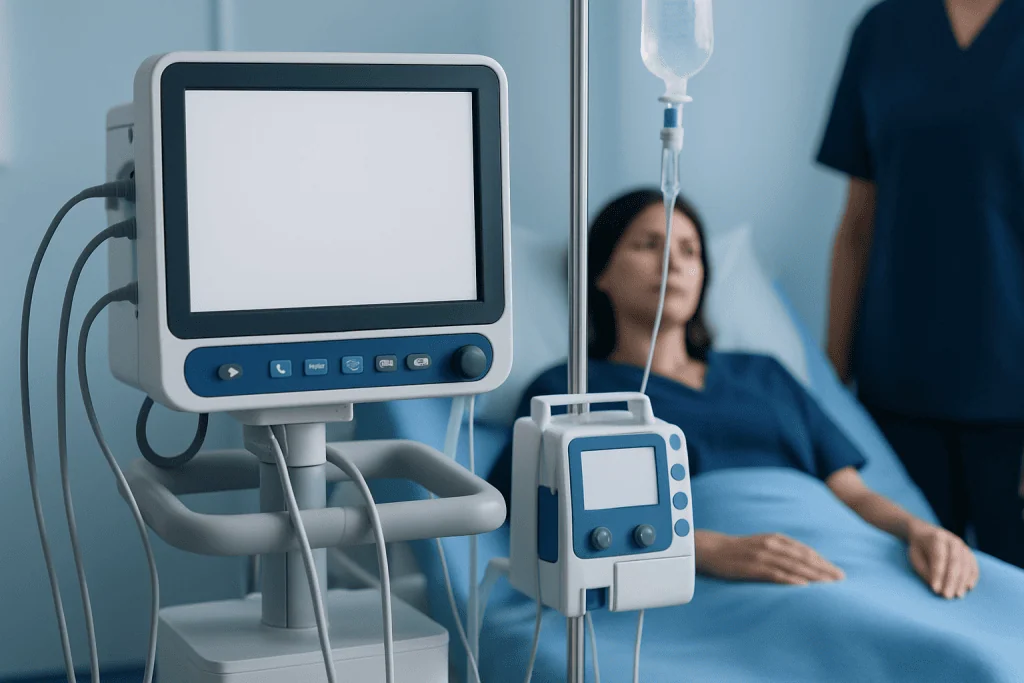
Most people recover uneventfully after surgery in Turkey, and most of the signs below never appear. Some discomfort, tiredness, bruising, and mild swelling are expected after many procedures. What matters is a clear change from the recovery pattern your team described to you. The working rule: new, worsening, or unexpected symptoms get mentioned, even if they seem small.
Wound and skin changes
Surgical teams want to know about redness that is spreading beyond the wound edges, increasing warmth or swelling, pus or drainage with an unpleasant smell, a dressing that soaks through, a wound that opens, or bleeding that does not settle with gentle pressure. Limited bruising and small amounts of clear or lightly stained drainage can be normal for some procedures: your team will have told you what to expect for yours, and a departure from that pattern is the signal.
Whole-body signs
Fever and shaking chills can point to infection. Pain that is increasing rather than settling, or that no longer responds to the medicines you were prescribed, deserves review rather than a larger dose of patience. Confusion, fainting, marked weakness, and difficulty passing urine are all changes clinicians take seriously in the days after an operation.
Breathing and circulation
Shortness of breath, chest discomfort, a fast or irregular heartbeat, and new pain, swelling, or tenderness in one calf matter particularly before a flight, because prolonged immobility is itself a risk factor for blood clots. One-sided leg swelling is the classic pattern of a deep vein thrombosis, and it is precisely the kind of finding a surgeon wants to assess before, not after, several hours in an aircraft seat.
Digestion, fluids, and medicines
Repeated vomiting, inability to keep fluids down, and signs of dehydration, dizziness on standing, very dark urine, a dry mouth that does not improve, make travel harder and can also point to an underlying problem. So can any suspected reaction to a new medicine, such as a rash or unexpected drowsiness. These belong in the same pre-travel conversation as everything above.
A note on proportion: even when a symptom turns out to be an expected part of healing, raising it costs a few minutes. The same symptom investigated for the first time in another country, through another health system, costs considerably more.
What decides whether you are fit to fly

Fitness to fly after surgery in Turkey is not a standard number of days. It depends on the operation you had, how your recovery is actually going, your overall health, and the medicines you are taking, including pain relief, antibiotics, and blood thinners. This is why generic internet timelines are a poor substitute for your surgeon’s judgement; the honest version of the timing question is answered in our separate guide on when it is safe to fly home after surgery.
The flight itself is part of the assessment. Cabin air pressure is lower than at ground level, which matters after some chest, abdominal, eye, and ear procedures where trapped gas can expand. Cabin air is dry, seats restrict movement for hours, and help is limited to what the crew and fellow passengers can offer. Recent bleeding, breathing problems, uncontrolled pain, fever, fainting episodes, severe nausea, and any suspicion of a clot are the issues most likely to change a surgeon’s answer. Significant swelling is also relevant, particularly after procedures involving the face, chest, abdomen, or limbs.
If your procedure involved sedation or general anaesthesia, timing carries its own considerations, covered in our guide on flying home after sedation or anaesthesia. And if you are still choosing dates, it is worth reading about how long before flying home you can travel after treatment before you book a rigid itinerary.
When a symptom outranks the itinerary
Some findings routinely lead clinicians to recommend assessment before any travel: high fever with shaking chills, rapidly spreading redness around a wound, significant bleeding, marked calf swelling with pain, fainting, or a condition that is clearly deteriorating. In these situations the flight becomes the secondary question. Changing a booking is inconvenient; it is also reversible, which is the property that matters.
A small number of changes are emergencies wherever they occur: the standing clinical notice at the top of this page applies to every situation described in this guide. For everything short of that, the pattern is the same: assessment first, itinerary second.
Planning a buffer makes this decision less painful if it ever arises. Patients who leave a day or two of slack between their final review and their flight rarely regret it; those weighing this up may find our guide on when to book extra recovery days in Turkey useful. A tight same-day connection between a follow-up appointment and an international departure is the arrangement most likely to force a bad choice.
Preparing your discharge, documents, and travel day
Before you leave the hospital or your hotel, make sure you can answer two questions precisely: what is normal for your recovery, and what is not. Ask your team to spell out the expected pain level, how the wound should look day by day, your mobility and lifting limits, washing and bathing rules, your medication schedule, and the changes that would need review. Get it in writing, instructions absorbed while tired and post-operative do not survive a travel day intact.
Your discharge pack should include your medical report, an operation summary where appropriate, prescriptions and a medication list, wound-care instructions, your follow-up plan, and contact details for your care team. Our guide to what your discharge summary should include before you fly home sets out the full list. If English is not your first language, ask for the instructions to be explained until they are genuinely clear; at Acibadem, international patient coordinators and interpreters help patients assemble and understand this paperwork before departure.
Then plan the day itself with the same care:
- Keep all medicines, dressings, and medical documents in your hand luggage, never in the hold
- Arrange airport wheelchair or mobility assistance in advance if walking or standing for long periods is difficult
- Confirm your lifting limit before you commit to handling your own suitcases
- Build in time for rest, fluids, and gentle movement, especially around a long transfer or layover
- Follow any advice you were given on compression stockings, positioning, or moving during the flight
- Carry spare dressings and supplies for the journey and the first days at home
After you land: recovery continues at home
Boarding the plane does not end your recovery; it relocates it. Keep following your discharge instructions, attend every recommended follow-up with your local doctor or surgeon, and share your treatment summary and medication list with any clinician you see so they know what was done and when.
If your team arranged a remote check-in, send photos and updates exactly as instructed rather than waiting for the scheduled call when something changes. A simple daily record, temperature, pain level, wound appearance, bowel and bladder function, anything new, makes any later assessment faster and more accurate. Before discharge, clarify the division of labour: which concerns go to your Turkey-based team, which to your local doctor, and which are emergencies. Our companion guide covers warning signs after you return home from Turkey in detail.
Step by step
- Do an honest symptom check the day before and the day of travel. Assess how you actually feel rather than how the itinerary needs you to feel. Look for fever, increasing pain, wound changes, bleeding, swelling, breathing difficulty, dizziness, and nausea.
- Raise concerns early, not at the check-in desk. A concern mentioned to your surgical team the day before departure leaves room for examination, treatment, reassurance, or an unhurried change of plan. The same concern at the airport leaves almost none.
- Confirm fitness to fly explicitly. Ask whether your recovery stage, current symptoms, and medicines are compatible with your specific flight, and arrange any medical report or airport assistance before discharge rather than by email afterwards.
- Organise documents and medicines. Discharge summary, prescriptions, medication list, any imaging or reports, and care-team contact details all go in your hand luggage, with enough medicine for the journey plus the first days at home.
- Design a low-stress journey. Extra time at transfers, no lifting beyond your stated limit, fluids where appropriate, and movement or stockings as advised.
- Know your contacts before you need them. Save your Turkey-based care contacts and your local medical contacts in your phone before departure, and be clear which type of concern goes to which.
Your checklist
- I know which symptoms are expected for my recovery and which are warning signs
- I have raised any new, unusual, or worsening symptom before travel
- My surgeon has confirmed I am fit to fly at my current stage of recovery
- My discharge summary, prescriptions, and contact numbers are in my hand luggage
- My medicines are packed with instructions I actually understand
- I have dressings and supplies for the journey and the first days at home
- Airport assistance is booked if walking, standing, or lifting is difficult
- I know who to contact in Turkey and at home if concerns arise after travel
Key takeaways
- New, worsening, or unexpected symptoms after surgery belong in a conversation with your surgical team before you fly, not after you land.
- Fever, spreading wound redness, unusual drainage, bleeding, chest discomfort, breathlessness, and one-sided leg swelling are the signs clinicians weight most heavily before travel.
- Fitness to fly is individual: it depends on your procedure, your progress, your medicines, and the flight itself, not on a generic timeline.
- A written discharge pack, hand-luggage medicines, and pre-booked assistance make the journey markedly easier.
- Building a buffer between your final review and your flight keeps the decision to delay cheap, if it is ever needed.
Frequently asked questions
How long should you stay in Turkey after aesthetic surgery?
It depends on the procedure and on you. Surgeons generally want at least one in-person review before travel, often around a week after facial or nasal procedures, and sometimes longer after larger body operations, particularly where drains or significant swelling are involved. Your surgeon sets the timeline for your case; treat any figure you read online as a planning estimate, not a decision.
What should you eat after rhinoplasty surgery in Turkey?
In the first days, most surgeons suggest soft, cool, easy-to-chew foods and plenty of fluids, since chewing hard foods can be uncomfortable and very hot or spicy dishes may aggravate swelling or nose bleeding for some patients. Small, frequent meals help if nausea lingers after anaesthesia. Your surgeon’s specific instructions always override general advice like this.
How long do you stay in Turkey after breast surgery?
Many surgeons plan a first review within roughly the first week, when dressings are checked and any drains are addressed, and prefer patients not to fly before that review. Some recommend a longer stay depending on the operation and how recovery is progressing. The reliable answer comes from your surgeon before you book flights, not afterwards.
What surgeries is Turkey known for?
Internationally, Turkey is best known for aesthetic and elective procedures, hair transplantation, rhinoplasty, dental treatment, breast and body-contouring surgery, and bariatric surgery. Its larger hospital groups also treat international patients across cardiology, orthopaedics, oncology, and other complex specialties. The mix of procedures varies widely between providers, which is one reason to research the specific hospital rather than the destination.
Are surgeries in Turkey safe?
There is no destination-level answer: Turkey has well-equipped hospitals and experienced surgeons, and, like every country, a wide range of quality. Safety in practice depends on choosing a properly licensed hospital, a surgeon qualified for your specific procedure, an honest pre-operative assessment, clear aftercare arrangements, and allowing enough recovery time before travel. Those factors are within your control; the country name is not the variable that matters.
Is it normal to feel tired before flying home after surgery?
Tiredness is common after anaesthesia, pain medicines, disturbed sleep, and reduced eating and drinking. What changes the picture is fatigue that is sudden or severe, or that arrives alongside fever, dizziness, breathlessness, confusion, or worsening pain: that combination is worth raising with your team before travel rather than attributing to a busy week.
What wound changes matter before leaving Turkey?
Spreading redness, increasing warmth or swelling, pus or bad-smelling drainage, a soaked dressing, a wound that opens, or bleeding that does not settle. Mild bruising and limited drainage can be expected after some procedures: the signal is a departure from the recovery pattern your team described for your operation.
What papers should I carry when flying home after surgery?
Your discharge summary, operation report where provided, medication list and prescriptions, any relevant test or imaging reports, and contact details for your hospital team. Keep everything in your hand luggage so it is accessible if airline staff or a doctor needs information during the journey, documents in the hold help no one at 11,000 metres.
Add us as a Preferred Source to see more of our trusted health content across Google Search, AI Overviews and Discover.

Update history
- PublishedJuly 8, 2026
- Medical review approvedSeptember 13, 2026
- Last content updateSeptember 12, 2026
References2
- After Surgery: MedlinePlus, U.S. National Library of Medicine medlineplus.gov
- Deep vein thrombosis (DVT): NHS nhs.uk
More Patient Guides

Septoplasty Recovery: Week by Week
Learn what to expect after deviated septum surgery: a week-by-week septoplasty recovery timeline, when it is usually safe to fly home, and…

Gallbladder Surgery Recovery: Week by Week
Learn what to expect after gallbladder surgery: a week-by-week recovery timeline, pain, diet, wound care, when it is safe to fly home…
Robotic Hysterectomy Recovery: Week by Week
Recovery from robotic hysterectomy week by week: pain, lifting, wounds, driving, flying home safely, warning signs and questions to ask before you…

Breast Reconstruction Recovery: Week by Week
DIEP flap recovery week by week: hospital stay, drains, pain, walking, showering, driving, when it is usually safe to fly home, and…