Quick answer
Deep vein thrombosis is a blood clot that forms in a deep vein, usually in the leg, and can become dangerous if it travels to the lungs. At Acibadem in Turkey, diagnosis focuses on imaging and blood tests, and treatment may include blood-thinning medication, compression, monitoring, or minimally invasive procedures to remove or dissolve the clot when needed.
What is deep vein thrombosis?
Deep vein thrombosis, often shortened to DVT, is a condition in which a blood clot (a thrombus) forms in one of the deep veins of the body. These deep veins lie beneath the muscles, far from the surface of the skin, and they carry blood back toward the heart. Deep vein thrombosis most often develops in the legs, in the calf, thigh, or pelvis, although in less common cases it can affect the arms or other areas.
Understanding what is deep vein thrombosis begins with understanding how blood normally moves. Blood in the leg veins flows upward against gravity, helped along by the squeezing action of the leg muscles and by small one-way valves inside the veins. When blood flow slows down, when the vein wall is injured, or when the blood itself becomes more likely to clot, a thrombus can form. If part of that clot breaks free, it can travel through the bloodstream to the lungs and block a lung artery. This complication is called a pulmonary embolism, and it can be life-threatening. Together, deep vein thrombosis and pulmonary embolism are known as venous thromboembolism.
Deep vein thrombosis can affect people of any age, but it becomes more common as people get older. It also affects people who have recently had surgery, an injury, a long period of immobility such as a hospital stay or a very long flight, cancer, pregnancy, or certain inherited blood-clotting conditions. Some people develop a clot without any obvious trigger; doctors call this an unprovoked deep vein thrombosis.
Symptoms
Deep vein thrombosis symptoms can vary widely. Some people notice clear, uncomfortable changes in one leg, while others have very few symptoms or none at all. In fact, a significant number of clots are discovered only when a complication develops or when imaging is done for another reason. When symptoms do occur, they usually affect only one limb: this one-sided pattern is an important clue.
Common deep vein thrombosis symptoms include:
- Swelling in one leg (or arm), often in the calf or ankle, which may develop over hours or days
- Pain or tenderness in the leg, often described as a cramping ache or soreness that may start in the calf
- Warmth in the affected area compared with the surrounding skin
- Skin color changes, such as redness or a bluish or darker tinge, depending on skin tone
- A feeling of heaviness or tightness in the limb, especially when standing or walking
- Visible surface veins that appear more prominent than usual
Symptoms can differ depending on where the clot is located and how large it is. A small clot confined to a calf vein (sometimes called a distal DVT) may cause only mild aching or no symptoms at all. A larger clot extending into the thigh or pelvic veins (a proximal DVT) is more likely to cause obvious swelling of the whole leg and carries a higher risk of traveling to the lungs. In rare, severe cases, a very extensive clot can block almost all venous drainage from the leg, causing intense pain, marked swelling, and bluish discoloration; this is a medical emergency.
It is also important to know the warning signs of pulmonary embolism, because they may be the first sign that a deep clot exists. These include sudden shortness of breath, chest pain that worsens with deep breathing, a rapid heartbeat, coughing (sometimes with blood), lightheadedness, or fainting. These symptoms need emergency care.
Some people develop long-term symptoms after a clot has been treated. This is called post-thrombotic syndrome, and it can cause chronic leg swelling, heaviness, aching, skin changes, and in some cases skin ulcers. It occurs because the clot and the healing process can damage the valves inside the vein.
Causes and risk factors
Deep vein thrombosis causes are traditionally grouped into three categories, sometimes called Virchow’s triad: slowed blood flow, injury to the vein wall, and blood that clots more easily than normal. In many patients, more than one of these factors is present at the same time.
Common risk factors include:
- Prolonged immobilitylong periods of bed rest, hospitalization, paralysis, a leg cast, or long-distance travel where the legs stay still for many hours
- Recent surgery or major injuryespecially orthopedic operations such as hip or knee replacement, and trauma to the legs or pelvis
- Cancer and cancer treatmentsome cancers and chemotherapy drugs make the blood more prone to clotting
- Pregnancy and the weeks after childbirthhormonal changes and pressure on pelvic veins increase clot risk
- Estrogen-containing medicationssuch as certain birth control pills and some hormone replacement therapies
- Inherited clotting disordersconditions such as factor V Leiden or other thrombophilias (inherited tendencies for the blood to clot too easily)
- A previous deep vein thrombosis or pulmonary embolisma prior clot substantially raises the risk of another
- Older agerisk rises with age, particularly after around age 60, although clots can occur at any age
- Obesityexcess weight increases pressure in the leg and pelvic veins
- Smokingwhich affects blood clotting and circulation
- Certain chronic illnessesincluding heart failure, inflammatory bowel disease, and some autoimmune conditions
Having one or more risk factors does not mean a clot will definitely form, and some people develop deep vein thrombosis without any identifiable cause. When a clot occurs without a clear trigger, doctors may consider additional testing to look for an underlying condition, although this decision is individualized.
Diagnosis
Deep vein thrombosis diagnosis cannot be made reliably from symptoms alone, because leg pain and swelling have many possible causes, including muscle strain, cellulitis (a skin infection), and problems with the lymphatic system. Doctors therefore use a combination of clinical assessment, blood tests, and imaging.
Clinical assessment. The doctor will ask about your symptoms, medical history, recent surgeries, travel, medications, and family history of clots, and will examine the limb. Many clinicians use a structured scoring system (such as the Wells score) that adds up risk factors and physical findings to estimate how likely a clot is. This estimate guides which tests come next.
D-dimer blood test. D-dimer is a protein fragment released when a blood clot breaks down. If the clinical probability is low and the D-dimer result is negative, a clot is unlikely and imaging may not be needed. However, a positive D-dimer does not confirm a clot, because the level can also rise with infection, surgery, pregnancy, and many other conditions. It is a screening tool, not a definitive test.
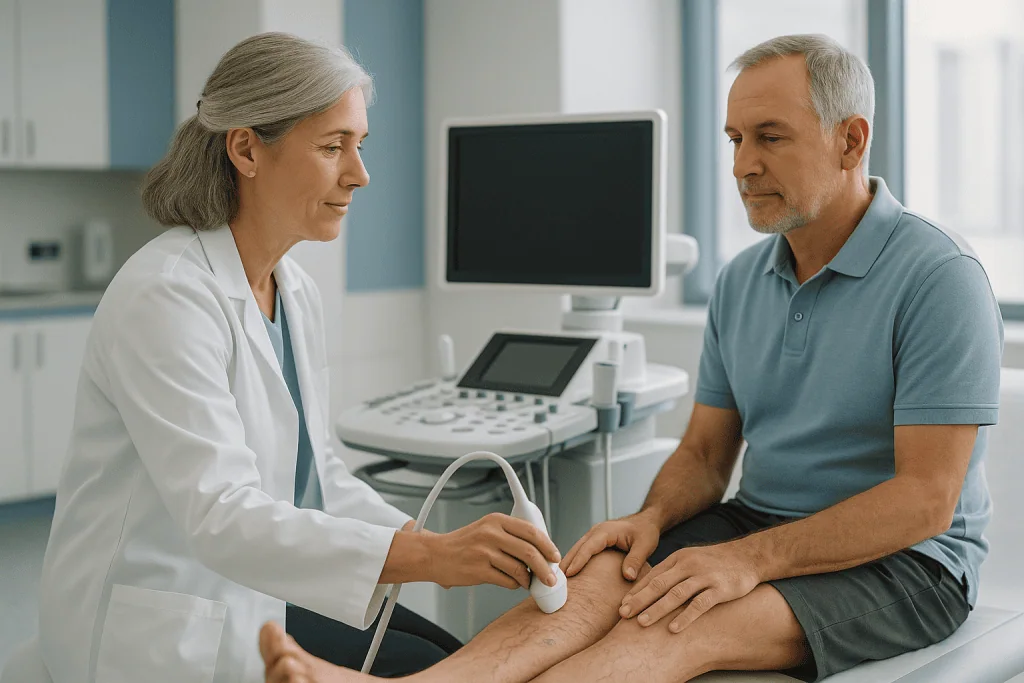
Duplex ultrasound. This is the standard imaging test for suspected deep vein thrombosis. It uses sound waves to create pictures of the veins and to measure blood flow. The examiner gently presses on the vein with the ultrasound probe; a healthy vein compresses easily, while a vein containing a clot does not. Ultrasound is painless, does not use radiation, and can usually be done quickly. If the first scan is unclear but suspicion remains, your doctor may repeat it after several days.
Other imaging. In selected situations, for example, suspected clots in the pelvic veins or in patients whose ultrasound results are inconclusive, doctors may use CT venography or MR venography, which are specialized scans of the veins. If pulmonary embolism is suspected, a CT scan of the chest arteries (CT pulmonary angiography) is commonly used.
Additional blood tests. After the diagnosis is confirmed, your doctor may order tests to check kidney function, blood counts, and clotting before starting medication. In certain cases, such as unprovoked or recurrent clots in younger patients, testing for inherited clotting disorders may be considered, usually after discussion of the benefits and limitations.
Treatment options
Deep vein thrombosis treatment has three main goals: to stop the clot from growing, to prevent it from traveling to the lungs, and to reduce the risk of another clot and of long-term leg problems. Treatment is individualized based on the clot’s location and size, your bleeding risk, other medical conditions, and personal preferences. A general overview of care for this condition is available on the deep vein thrombosis treatment page.
Anticoagulant medication
Anticoagulants, commonly called blood thinners, are the cornerstone of treatment for most patients. Despite the name, these drugs do not actually thin the blood or dissolve the existing clot; they prevent the clot from enlarging and stop new clots from forming while the body’s own systems gradually break the clot down. Options include direct oral anticoagulants (tablets that work quickly and usually do not require routine blood monitoring), warfarin (an older tablet that requires regular blood tests to adjust the dose), and injectable heparins, which are often used in the hospital, during pregnancy, or in patients with cancer. The typical duration of treatment is at least three months, but it may be longer, sometimes indefinite, depending on why the clot occurred and the risk of recurrence. The main risk of anticoagulants is bleeding, which is why your doctor weighs the benefits and risks carefully and reviews the plan over time.
Watchful waiting with monitoring
For some small clots confined to the calf veins in patients with mild symptoms and a low risk of the clot extending, doctors may recommend close surveillance instead of immediate anticoagulation. This usually involves repeat ultrasound scans over one to two weeks to make sure the clot is not growing. If it extends toward the larger veins, treatment is started. This approach is chosen selectively and only when follow-up imaging can be reliably arranged.
Compression stockings
Graduated compression stockings are elastic stockings that are tighter at the ankle and looser higher up, helping blood move upward. They can relieve swelling and discomfort, and some doctors recommend them to reduce the risk of post-thrombotic syndrome, although the evidence on prevention is mixed. Your care team can advise whether they are suitable for you and how long to use them.
Catheter-based procedures
In selected patients with large, recent clots in the thigh or pelvic veins, particularly younger patients with severe symptoms, doctors may consider catheter-directed thrombolysis. In this procedure, a thin tube (catheter) is threaded into the vein and a clot-dissolving drug is delivered directly into the thrombus, sometimes combined with mechanical devices that break up or remove the clot (thrombectomy). These procedures can relieve symptoms faster and may lower the chance of long-term vein damage in carefully chosen cases, but they carry a higher bleeding risk than anticoagulation alone, so they are reserved for specific situations.
Inferior vena cava filter
An inferior vena cava (IVC) filter is a small device placed in the body’s largest vein to catch clot fragments before they reach the lungs. It is generally considered only when anticoagulants cannot be used, for example, because of active serious bleeding, or in certain high-risk scenarios. Many modern filters are designed to be removed once anticoagulation becomes possible, because long-term filters carry their own risks.
Surgery
Open surgical removal of a clot (surgical thrombectomy) is rare and usually reserved for the most severe forms of deep vein thrombosis that threaten the limb and do not respond to other measures. Complex venous cases and procedural care are typically managed by vascular specialists; at Acibadem, such cases fall within the scope of the cardiovascular surgery department, working together with hematology and interventional radiology teams.
Living with deep vein thrombosis / outlook
With prompt diagnosis and appropriate treatment, most people recover from deep vein thrombosis, and the immediate risk of pulmonary embolism falls substantially once anticoagulation begins. The body gradually reabsorbs or reorganizes the clot over weeks to months. In many cases the vein reopens partly or fully, although some people are left with permanent narrowing or valve damage.
Day-to-day life during treatment usually continues fairly normally. Doctors generally encourage early walking rather than strict bed rest once treatment has started, as movement supports healthy circulation. If you take an anticoagulant, it is important to take it exactly as prescribed, attend follow-up appointments, tell every healthcare provider you see that you are on a blood thinner, and be alert for signs of bleeding such as unusual bruising, blood in the urine or stool, or prolonged bleeding from cuts.
Two long-term issues deserve honest mention. First, recurrence: people who have had one deep vein thrombosis are at higher risk of another, especially if the first clot had no clear trigger. Your doctor will periodically reassess whether continuing anticoagulation is worthwhile for you. Second, post-thrombotic syndrome: a proportion of patients develop chronic swelling, aching, heaviness, or skin changes in the affected leg. Symptoms range from mild to disabling, and management may include compression, leg elevation, exercise, and skin care. Maintaining a healthy weight, staying active, avoiding long periods of immobility, staying hydrated on long journeys, and not smoking are sensible steps that may lower future risk, although no measure can guarantee a clot will never return.
Frequently asked questions
What is deep vein thrombosis in simple terms?
Deep vein thrombosis is a blood clot that forms in a deep vein, usually in the leg. The clot can block blood flow, causing swelling and pain, and a piece of it can break off and travel to the lungs, where it can cause a dangerous blockage called a pulmonary embolism. Because of that risk, a suspected clot should always be checked by a doctor promptly.
How serious is deep vein thrombosis?
Seriousness varies. Small clots in the calf may cause few problems, while larger clots in the thigh or pelvis carry a higher risk of traveling to the lungs, which can be life-threatening. With timely treatment, most people do well, but deep vein thrombosis should always be treated as a potentially serious condition rather than something to wait out at home.
Can deep vein thrombosis heal on its own?
The body does have natural systems that slowly break down clots, and some very small clots resolve without specific treatment. However, relying on this is risky, because there is no way to know in advance whether a clot will grow or break loose. Doctors usually recommend anticoagulant medication or, for selected small calf clots, close monitoring with repeat scans. Decisions like these should be made with a physician, not on your own.
What do deep vein thrombosis symptoms feel like?
Many people describe a cramping ache or soreness in one calf or thigh, together with swelling, warmth, and sometimes skin discoloration. The discomfort may worsen with standing or walking. Importantly, some clots cause little or no discomfort, so the absence of pain does not rule out a clot, especially in someone with strong risk factors.
How is deep vein thrombosis diagnosed?
Doctors combine a risk assessment with tests. A D-dimer blood test can help rule out a clot when suspicion is low, while a duplex ultrasound scan of the veins is the standard way to confirm the diagnosis. In some cases, CT or MRI scans of the veins are used, particularly for clots in areas that ultrasound cannot see well, such as the pelvis.
How long does deep vein thrombosis treatment last?
Anticoagulant treatment usually lasts at least three months. If the clot was caused by a temporary trigger such as surgery, treatment often stops after that period. If the clot was unprovoked, or if risk factors persist, your doctor may recommend a longer or even indefinite course, reassessing the balance of benefit and bleeding risk at follow-up visits. The right duration is an individual decision made with your care team.
Can I fly or travel after a deep vein thrombosis?
Many people can travel safely once they are stable on treatment, but the timing depends on how recent the clot was, whether a pulmonary embolism occurred, and your overall condition. Doctors often suggest waiting until treatment is well established, and may advise compression stockings, regular leg movement, and hydration during long journeys. Ask your own doctor before planning long-distance travel.
When to see a doctor
See a doctor promptly if you develop unexplained swelling, pain, warmth, or color change in one leg or arm, especially if you have recently had surgery, an injury, a long journey, a hospital stay, or if you are pregnant, take estrogen-containing medication, or have had a clot before. Early assessment matters, because untreated clots can grow or travel to the lungs.
Seek emergency medical care immediately if you experience any of the following red-flag warning signs:
- Sudden shortness of breath or difficulty breathing
- Chest pain, especially pain that worsens when you breathe in deeply or cough
- Coughing up blood
- A rapid or irregular heartbeat, lightheadedness, or fainting
- Sudden severe swelling and pain in a limb, particularly if the skin turns pale, bluish, or cold
- Signs of serious bleeding while on anticoagulants, such as vomiting blood, black or bloody stools, blood in the urine, a severe headache, or bleeding that will not stop
These symptoms can indicate a pulmonary embolism, a severely blocked vein, or a bleeding complication, all of which require urgent evaluation. When in doubt, it is always safer to be assessed than to wait.
Medically reviewed by the Acıbadem International Medical Board September 2, 2026
See our medical review board →
Update history
- PublishedJune 14, 2026
- Medical review approvedSeptember 2, 2026
- Last content updateSeptember 2, 2026