

After Surgery in Turkey: When Pain, Swelling, or Fever Means You Should Call the Hospital

Some pain, swelling and mild temperature change is part of normal healing after surgery. What matters most is the pattern: symptoms that stay stable or ease are usually expected, while symptoms that worsen day by day, spread, or arrive suddenly are the ones surgical teams want to assess. Your discharge papers set out the contact routes your treating team has arranged for exactly those situations.
Is this pain normal, or is it a problem? That question keeps a lot of patients awake in a hotel room in Istanbul, a few days after an operation, phone in hand, unsure whether they are overreacting or underreacting.
Recovering after surgery in Turkey can feel reassuring one hour and unsettling the next, partly because you are healing away from home and comparing every new sensation with what you expected. This guide explains what recovery typically feels like, which patterns in pain, swelling and fever surgical teams take seriously, and how follow-up works once you have left the ward. It is general information, not a personal assessment: your discharge instructions, written for your operation and your medical history, always take precedence over anything a guide can say.
At a glance
- Who this is for: International patients recovering in Turkey in the days and weeks after an operation
- The core skill: Reading the pattern, improving, stable, or worsening, rather than judging any single sensation in isolation
- Patterns teams take seriously: Pain escalating despite the prescribed plan, swelling that spreads or hardens, fever that rises or returns, wound changes, breathing symptoms
- Keep within reach: Your discharge summary, medication list, a thermometer, and the contact routes your team gave you
- Treated as urgent everywhere: Chest pain, breathlessness, heavy bleeding, confusion, fainting, regardless of whether they seem connected to the operation
What normal recovery after surgery in Turkey looks like
Some pain, swelling, bruising, tiredness and mild temperature fluctuation are common after almost any operation. Tissue has been cut, moved or removed, and the body’s inflammatory response is doing exactly what it should. Feeling worse on day two or three than on day one is not unusual either, swelling often peaks before it settles, and the effects of anaesthesia and hospital adrenaline wear off before the fatigue does.
The useful question is rarely what you feel. It is whether the feeling is stable, improving, or getting worse. Pain that responds to the prescribed plan and eases with rest usually fits the expected curve. Swelling that stays limited to the operated area and softens over days usually fits it too. A brief low-grade temperature early on can reflect reduced mobility, shallow breathing after anaesthesia, or simply not drinking enough.
Surgical teams, by contrast, pay close attention to trajectory. A fever that keeps climbing, swelling that becomes tight or markedly one-sided, pain that breaks through the medication schedule, redness that spreads outward from a wound, or bleeding that does not settle: these are the changes that discharge instructions everywhere flag for reporting, because they can be early signs of a complication that is far easier to manage when it is caught small. Recovering after surgery in Turkey does not change that logic; it only changes the practicalities of who you speak to and how.
| Commonly part of healing | What surgical teams ask to hear about |
|---|---|
| Soreness or tightness that eases with prescribed medication and rest | Pain that escalates day by day, is suddenly severe, or stops responding to the plan |
| Swelling and bruising limited to the operated area, slowly softening | Rapidly increasing, hard or hot swelling, or swelling clearly worse on one side |
| A brief low-grade temperature in the first day or two | Fever that persists, climbs, or returns after settling, especially with chills or wound changes |
| Small amounts of clear or slightly blood-tinged wound drainage early on | Pus, a bad smell, wound edges opening, or dressings soaking through |
| Tiredness and low mood in the first week | Confusion, fainting, breathlessness, or heavy bleeding, treated as urgent everywhere |
Pain: how expected discomfort differs from a warning pattern
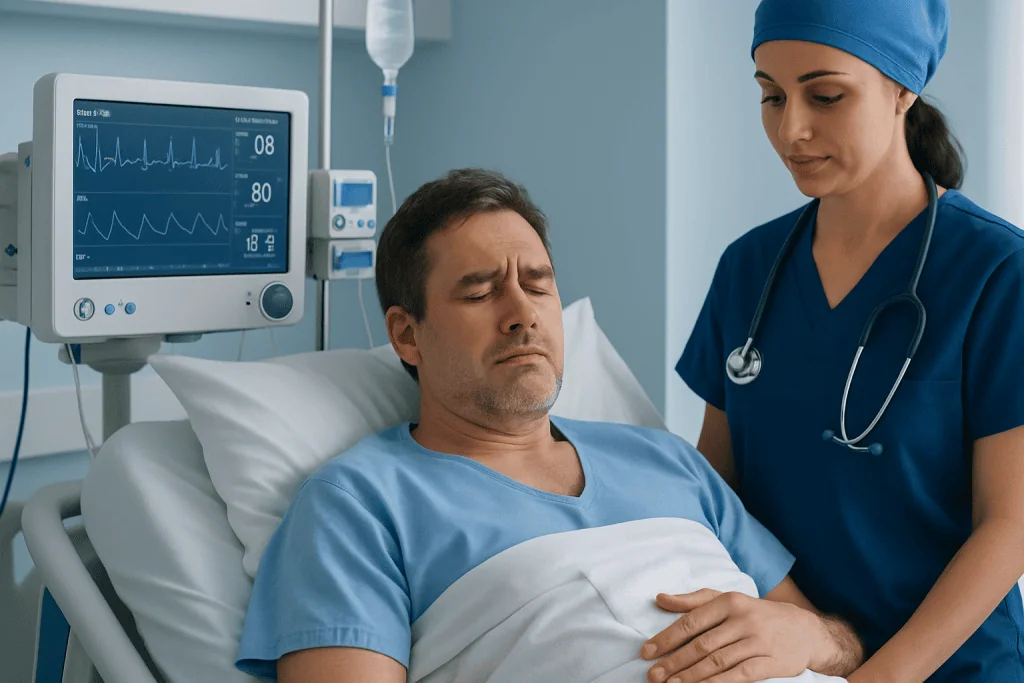
Post-operative pain usually follows a recognisable arc: sharper and more intense in the first phase, then shifting towards soreness, tightness or tenderness that flares with movement, coughing or position changes. That arc is what your prescribed pain plan is built around. If your experience broadly tracks it and the medication keeps the pain workable, you are most likely on the expected path. A fuller picture of how this is planned is in our guide on what patients can expect from pain control after surgery in Turkey, and you can read how Acibadem approaches pain control after surgery and invasive procedures.
The patterns clinicians treat differently are pain that worsens day by day when it should be easing, pain that becomes suddenly severe, pain that feels distinctly different in character from before, or pain that repeatedly wakes you despite the prescribed plan. Pain combined with other signals, spreading redness, fever, new drainage, bleeding, carries more weight than pain alone. Severe calf pain, chest pain, or pain that arrives with shortness of breath sits in a category of its own: teams everywhere treat those as needing immediate assessment, because they can point to a blood clot rather than to the wound itself.
One point that matters for anyone recovering abroad: decisions about medication, including adding over-the-counter painkillers, herbal products or supplements to what you were prescribed, belong to your treating doctor. Some common products increase bleeding risk or interact with anaesthetic after-effects, antibiotics or blood thinners, and what is sold freely in a Turkish pharmacy is not automatically compatible with your prescription. When patients report pain, teams generally want the exact names of anything already taken, which is why keeping packaging or photographing labels is a genuinely useful habit.
It also helps assessment enormously when a patient can say where the pain is, when it started, what it feels like, and whether the prescribed medication changes it. A short daily note on your phone does this better than memory ever will.
Swelling, redness and wound changes worth watching closely
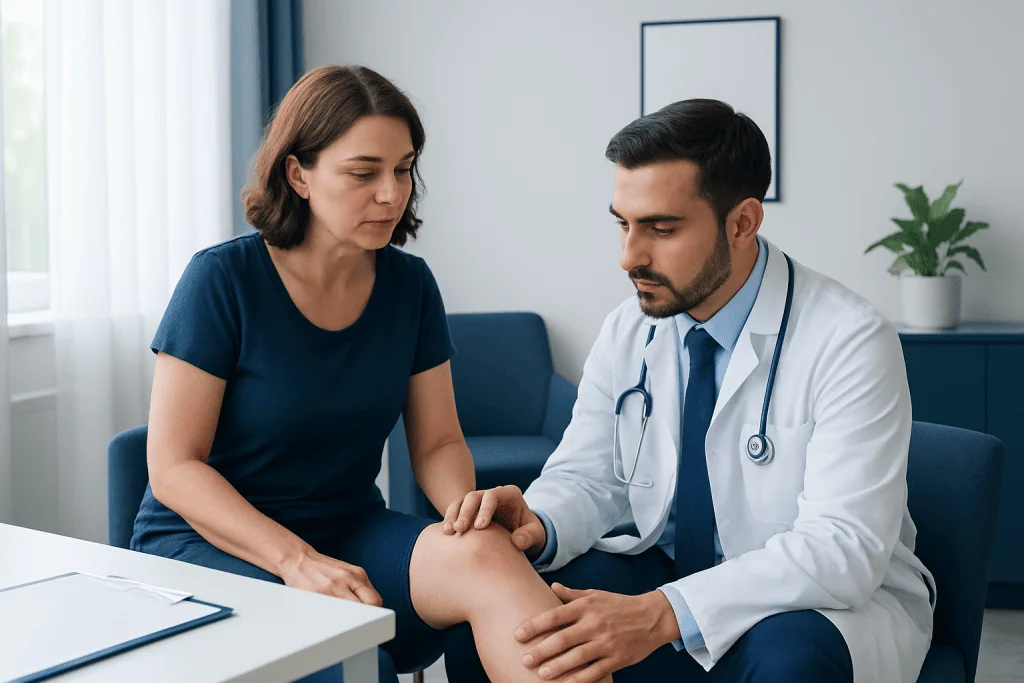
Localised swelling is part of healing after most procedures, aesthetic ones especially. It typically peaks in the first few days, sometimes looks worse in the morning or after activity, and then settles gradually over weeks. Some bruising, firmness and asymmetry near the operated area is common in that window. Elevation, gentle movement where your team has advised it, and following your dressing instructions all support the normal course: there is a dedicated guide on managing swelling and bruising after surgery in Turkey if this is your main concern.
The changes surgical teams flag for reporting are different in tempo and texture: swelling that increases rapidly rather than gradually, becomes hard and very painful, is markedly uneven compared with earlier days, or comes with warmth and redness that spreads outward. A wound that starts to open, leaks pus, develops a bad smell or soaks through dressings is the kind of change teams want to see promptly rather than at the next routine visit, because wound infections are far simpler to treat early.
One-sided limb swelling deserves its own mention. When one leg becomes noticeably more swollen than the other, particularly with pain, warmth or difficulty walking, clinicians assess for deep vein thrombosis, a blood clot that is a known risk after surgery and one reason surgeons care about when you fly home. The same principle applies to an arm swelling after a procedure involving that side. These signs may turn out to be harmless, but the assessment is time-sensitive, which is why discharge instructions single them out.
Photographs help. Wound changes are hard to describe in words, especially across a language barrier, so if your team has asked you to share pictures, taking them in good light, from a consistent angle, with a note of when the change began, makes remote review far more accurate.
Fever after surgery: reading the pattern, not the single reading
A mild temperature rise in the first day or two is common and does not automatically signal a complication. It can reflect the body’s inflammatory response, dehydration, reduced mobility, or shallow breathing after a general anaesthetic, which is why breathing exercises and early walking appear in so many discharge plans.
Fever becomes clinically significant when the pattern changes: when it persists rather than passing, climbs rather than falls, or returns after initially settling. It carries more weight still when it travels with company, chills, spreading wound redness, new drainage, a productive cough, burning when passing urine, or pain that is increasing rather than easing. Fever alongside shakiness, confusion, unusual weakness, or an inability to keep fluids down is treated as urgent in any healthcare system.
Two practical points. First, measure rather than guess: a thermometer costs little, is available in any Turkish pharmacy, and turns “I feel hot” into a number a clinician can act on. Record the reading, the time, and anything else you notice. Second, if antibiotics are part of your discharge plan, questions about continuing, stopping or changing them are for your treating doctor: the same applies to leftover antibiotics from home, which are never a substitute for assessment.
If you are recovering in a hotel or apartment, make sure your travel companion knows these patterns too. A person running a fever is often too tired to judge their own situation clearly, and a second pair of eyes is one of the most underrated pieces of post-operative equipment there is.
Symptoms treated as urgent in every healthcare system
Certain symptoms are handled as emergencies wherever in the world they occur, and whether or not they seem connected to the operation: chest pain, shortness of breath, coughing blood, fainting, confusion, severe sudden weakness, uncontrolled bleeding, blue lips, seizures, sudden severe swelling of the face or throat, and signs of a serious allergic reaction. Clinicians also treat as urgent an inability to pass urine when you were told you should be able to, an abdomen that becomes very swollen and painful, and a severe headache accompanied by neurological changes such as new numbness or trouble speaking.
The exact risks vary by procedure: the concerns after a plastic or reconstructive procedure differ from those after cardiac or abdominal surgery, but the general rule clinicians work by is consistent: breathing problems, major bleeding, altered consciousness and rapidly worsening symptoms are not watch-and-wait situations. In a small number of cases, a complication of this kind is managed in intensive care; if you want to understand how that works before you travel, see our guide on ICU after surgery in Turkey and what patients and families should expect.
The standing clinical notice at the top of this page applies here more than anywhere: this guide explains how symptoms are categorised, but it cannot assess yours.
How follow-up works once you have left the ward
Before discharge, the team treating you sets out how the days ahead are meant to go: what pain and swelling to expect, how to care for the wound, which activities to limit, and, crucially, which contact routes exist during the day, at night and at weekends. International patient units typically add interpreter support to that, so that a symptom described in English, Arabic or German reaches the surgical team accurately. It is worth having those routes saved in your phone before you leave the building, not looked up later from a hotel room.
When a patient reports a symptom, the details that make assessment fast are consistent: full name and date of birth, the procedure and its date, current location, a callback number, when the symptom started, whether it is worsening, what medication has been taken, and whether fever, bleeding, drainage or breathing difficulty is present alongside it. Measured numbers, temperature, blood pressure, oxygen saturation if you happen to have a pulse oximeter, carry more weight than adjectives. Photographs, taken as described above, often settle a wound question in seconds.
Timing matters in one more way for international patients: the flight home. Surgeons generally want certain symptoms assessed before a patient boards a plane, because cabin conditions and immobility can worsen some complications and because assessment mid-air is impossible. Our guide on warning signs to report before flying home after surgery in Turkey covers this in detail, and the question “what would stop me flying?” is one of the most useful things to ask at your discharge conversation.
Planning your recovery stay so small problems stay small
How long you stay in Turkey after surgery is a clinical decision, not a travel preference. It depends on the procedure, whether drains or sutures need removal, when the surgeon wants a wound review, and when you are considered fit to fly. Shorter procedures may involve only a few days in the country; larger operations require longer. The honest answer is that your surgeon’s stated window is the only one that matters for you, and building your flight and accommodation around it, rather than the other way round, removes a whole category of stress from recovery after surgery in Turkey.
During those days, structure helps. Take medication exactly as prescribed, keep every follow-up appointment, and follow the instructions on showering, wound care, eating and activity limits. Rest, but do not stay completely still unless specifically told to: gentle movement, hydration and regular meals support healing and make genuine changes easier to spot against a stable baseline. Wear any compression garments or stockings exactly as instructed, and respect whatever your team said about smoking and alcohol.
Keep a simple daily note on your phone, temperature, pain level, medication taken, wound observations, questions as they occur to you. If more than one specialist is involved in your care, a clear timeline like this lets them advise efficiently instead of reconstructing the week from memory. And drop the idea that asking is bothering anyone: in every surgical service, the patients who flag changes early are the easy ones, and reassurance is a perfectly good outcome of a phone call.
Step by step
- Re-read your discharge instructions first. They describe the expected pain, swelling, drainage, activity limits and temperature guidance for your specific operation. Compare what is happening now against what was predicted.
- Judge the trajectory, not the moment. Ask whether the symptom is stable, easing, or worsening; when it started; whether it is spreading; and whether prescribed medication or rest changes it at all.
- Measure and document what you can. Take your temperature, note the time symptoms began, and photograph visible changes in good light if your team asked for pictures. Numbers and images beat adjectives.
- Use the contact routes your team set up. Discharge papers name the route for office hours, nights and weekends precisely so that changes are reported through them rather than left until the next appointment.
- Give clear, practical details. Procedure and date, current location, symptom timeline, medication taken, and any accompanying fever, bleeding, vomiting or breathing difficulty: this is what lets a clinician judge urgency accurately.
- Treat the universal emergencies as emergencies. Chest pain, breathlessness, heavy bleeding, confusion, fainting and sudden severe swelling are handled through local emergency services in any country, with the treating hospital informed as soon as possible.
Your checklist
- Save the daytime and after-hours contact routes from your discharge papers in your phone before leaving the hospital
- Keep your discharge summary, medication list and allergy information within easy reach
- Pack or buy a thermometer for your recovery stay
- Keep the packaging of everything you take, so exact names can be shared if needed
- Take wound photos only if advised, in good light, from a consistent angle
- Write down temperature, pain level and symptom changes each day
- Make sure your companion knows the warning patterns too
- Ask at discharge which symptoms would affect fitness to fly, before booking anything unchangeable
Key takeaways
- Mild pain, swelling, bruising and tiredness are part of normal healing; the pattern over time matters more than any single sensation.
- Fever is most significant when it persists, climbs or returns, and when it travels with chills, wound changes or increasing pain.
- Rapid or one-sided swelling, spreading redness, pus, heavy bleeding, chest pain and breathlessness are the changes clinicians assess promptly, not watch.
- Measured details, temperature readings, timelines, medication names, photographs, make remote assessment faster and more accurate.
- Build your travel plans around your surgeon’s recovery window, and settle the “what would stop me flying?” question before you leave the ward.
Frequently asked questions
How long should you stay in Turkey after aesthetic surgery?
It depends on the procedure and on you. Surgeons set the window around drain or suture removal, the first wound review, and fitness to fly, smaller procedures may need only a few days in the country, while larger operations such as body contouring need longer. The only figure that applies to you is the one your surgeon gives, so book flexible travel rather than working backwards from a fixed return flight.
How long do you stay in Turkey after breast surgery?
Long enough for the surgeon to complete the first review and confirm you are fit to fly, commonly around a week for many patients, but this varies with the technique used, whether drains were placed, and how the early days go. Treat any general figure as a planning guide only; the discharge team’s stated window overrides it.
What should you eat after rhinoplasty surgery in Turkey?
In the first days, most teams suggest soft, easy-to-chew foods and plenty of fluids, since chewing can be uncomfortable and swelling affects the whole midface. Very hot foods and drinks are often limited early on, and anything requiring hard chewing can wait. Balanced meals with adequate protein support healing generally. Your own team’s written instructions come first, especially regarding alcohol and any supplements.
Are surgeries in Turkey safe?
There is no honest blanket answer, safety depends on the individual hospital, the surgical team, and how well aftercare and follow-up are organised, exactly as it does in any country. What patients can usefully do is look at how a hospital is regulated and organised, whether aftercare and after-hours contact routes are clearly defined before travel, and whether enough recovery time is planned in-country before flying. Rushed timelines are a bigger risk factor than geography.
What surgeries is Turkey known for?
Internationally, Turkey is most associated with aesthetic and dental procedures, rhinoplasty, hair restoration, breast and body contouring surgery, and dental work, but large Turkish hospital groups also run full-scope programmes in areas such as cardiovascular surgery, orthopaedics, oncology and neurosurgery. The recovery principles in this guide apply across all of them.
Is a mild fever after surgery always a problem?
No. A brief low-grade temperature in the early days can reflect the normal inflammatory response, dehydration or reduced mobility. Clinicians become more concerned when a fever persists, climbs, or returns after settling, and especially when it arrives together with chills, wound redness, new drainage, cough, urinary symptoms or worsening pain.
Is swelling always a sign that something is wrong?
No. Swelling is part of healing after most procedures and often peaks before it improves. The patterns clinicians assess promptly are swelling that increases rapidly, becomes hard and very painful, is clearly worse on one side, particularly in a leg, or comes with spreading warmth, redness or fever.
What if symptoms appear after you have flown home?
The same pattern-reading applies, and the post-discharge contact route in your papers remains valid from abroad, temperature readings, timelines, medication names and photographs are just as useful remotely. Severe or urgent symptoms are a matter for local emergency care first, wherever you are, with the treating hospital informed afterwards so records can be shared.
Add us as a Preferred Source to see more of our trusted health content across Google Search, AI Overviews and Discover.

Update history
- PublishedAugust 6, 2026
- Medical review approvedSeptember 13, 2026
- Last content updateSeptember 12, 2026
References3
More Patient Guides

Flying After a C-Section: Timing for New Mothers
A C-section is real abdominal surgery that happens to come with a newborn attached, so the flying question has two clocks…

When Can You Drive After Anesthesia or Sedation?
You feel fine an hour after the procedure. You are chatting, you walked to the car unaided, you could obviously drive it.…

Flying After Hip Replacement: When Is It Safe?
Hip replacement recovers famously well, many patients walk further at three weeks than they had in three years. Flying is part…

Flying After Knee Replacement: When Is It Safe?
The knee is new, the physio is going well, and there is a boarding pass with your name on it. Flying after…