

Surgical Site Infections: The Prevention Steps That Work, Including the Chlorhexidine Wash

Key Takeaways
- Roughly 1 to 3 in 100 surgical patients develop a surgical site infection, and infection-control research suggests about half of these are preventable with existing measures.
- The preventive antibiotic works only when it is in the tissue before the incision; continuing antibiotics after the wound is closed adds resistance without lowering infection rates.
- Alcohol-based chlorhexidine or iodine skin prep in the operating room has strong randomized-trial support, while the pre-surgery chlorhexidine wash reduces skin bacteria but has not clearly been shown to beat plain soap.
- Shaving the surgical area raises infection risk through microscopic cuts; clipping immediately before surgery, done by the team, is the guideline standard.
- Smoking and high blood sugar are the two patient-controlled risk factors with the most consistent evidence, and both can be improved in the weeks before an elective operation.
- A closed incision should be dry by about two weeks; cloudy, colored or smelly drainage, spreading redness, or worsening pain after day three are reasons to call the surgical team that day.
A surgical site infection is an infection at or beneath an incision that appears within 30 days of surgery, or within a year when an implant was placed. The best-supported prevention steps are antibiotics timed before the first cut, alcohol-based chlorhexidine skin prep in the operating room, hair clipping rather than shaving, keeping the body warm, and controlling blood sugar and smoking. A pre-surgery chlorhexidine wash is reasonable but has weaker evidence than many people assume.
Scroll through any pre-surgery forum right now and the same photograph keeps appearing: a bottle of pink antiseptic body wash balanced on the edge of a bathtub, captioned with some version of “the hospital says this stops infections.” Underneath, a hundred strangers trade routines, worries and a surprising amount of bad advice. The chlorhexidine wash has become the unofficial mascot of the surgical waiting period.
Two things pushed the topic back into the search charts. A large randomized trial published in February 2024 compared two antiseptics used on the skin in the operating room and found a small difference in infection rates after fracture surgery, which prompted a wave of posts asking whether “the pink stuff” had been debunked. At the same time, hospitals have been steadily sending patients home with wash kits and printed instructions. As of mid-2025, the result is a lot of people doing something sensible for reasons they only half understand.
So here is the honest version: what a surgical site infection actually is, which prevention steps carry real weight, and where the wash fits in.
What is a surgical site infection?
A surgical site infection, usually shortened to SSI, is an infection that starts in the part of the body where an operation took place. The CDC counts it as an SSI when it appears within 30 days of surgery, or within a year if an implant such as a joint replacement, mesh or heart valve was left behind. That time window matters, because the body is still healing and a small number of bacteria can gain a foothold before the barrier of skin has fully closed.
Surgeons sort these infections into three layers. A superficial incisional infection involves only the skin and the fat just under it. A deep incisional infection reaches the muscle and the tissue that holds muscles together, called fascia. An organ or space infection sits in whatever cavity or organ the operation touched, for example an abscess inside the abdomen after bowel surgery. Superficial infections are the most common and usually the least serious; the deeper two can require readmission and a second operation.
How often does it happen? Across all surgery in the United States, roughly 1 to 3 out of every 100 patients develop an SSI, according to the CDC. The rate is far lower for a clean procedure on a healthy person, such as a hernia repair, and higher after operations that open the bowel. SSIs are among the most frequent infections picked up in hospitals, and estimates from infection-control research suggest that around half could be prevented with measures that already exist. That last number is the reason this topic deserves more than a shrug.
What changed recently
The current rulebook has three main pillars, and none of them is brand new, which is worth saying plainly because social media tends to present every guideline as a bombshell.
In 2016 the WHO released its first global guidelines for the prevention of surgical site infection, updated as a second edition in 2018. In May 2017 the CDC published its own updated guideline, replacing a version from 1999. Both documents graded the evidence behind each measure, and both reached similar conclusions: time the preventive antibiotic before the incision, do not shave, keep the patient warm, keep blood sugar in range, and use an alcohol-based antiseptic on the skin in the operating room.
The newer piece is the trial that went viral. In February 2024 the New England Journal of Medicine published a randomized study of more than 8,000 adults having surgery to fix broken limbs. Patients were prepped with either chlorhexidine in alcohol or a form of iodine in alcohol. For closed fractures, iodine-alcohol produced modestly fewer infections; for open fractures there was no difference. Importantly, this tested the antiseptic painted on by the surgical team, not the wash patients use at home. Many posts blurred the two.
The CDC also reorganized its public pages on surgical site infections in 2024, and the plain-language patient advice there reads much as it did before: shower with soap before surgery, do not shave the area yourself, and tell the team about diabetes and smoking. Nothing in the recent literature overturns that. What it does do is remind everyone that chlorhexidine is a tool with a specific, well-studied job in the operating room, and a more uncertain one in the bathroom.
Why do surgical site infections happen in the first place?
Picture the surface of your skin under a microscope. Even after a shower it carries millions of bacteria, mostly harmless residents such as staphylococci that live in hair follicles and sweat glands. An incision cuts straight through that community and offers it a warm, moist, blood-rich route inward. Most of the time your immune system handles the small number that fall in. An infection takes hold when the balance tips: too many bacteria, a particularly aggressive strain, a weakened defense, or a foreign object they can cling to.
Infection-control specialists describe this with a simple equation. Risk rises with the bacterial dose and the organism’s ability to cause disease, and falls with the strength of the host’s resistance. Every prevention measure acts on one side of that equation. Skin antisepsis lowers the dose. Antibiotics given before the first cut mean that any bacteria landing in the wound meet a drug already in the tissue. Keeping a patient warm maintains blood flow and oxygen delivery, which white blood cells need to work. Controlling blood sugar removes a handicap, because high glucose slows the cells that engulf and kill bacteria.
Where do the bacteria come from? For clean operations, mostly the patient’s own skin and nose. Staphylococcus aureus, the organism behind many deep infections after joint replacement, lives in the nostrils of about one in three healthy adults. For bowel or gynecological surgery, the gut and its mixed bacterial population are the main source. Hands, instruments and the operating-room air contribute a smaller share, which is why hospital measures such as sterile technique and ventilation standards are necessary but not sufficient. The patient’s body is usually the reservoir, which is also why patient preparation matters so much.
Who is at higher risk of a surgical site infection?
Two patients can have identical operations by the same surgeon and face very different odds. The factors below are the ones that appear consistently across observational studies and in the CDC and WHO guidelines, and most of them can be influenced before the surgery date.

- Diabetes and high blood sugar. Poorly controlled glucose, in people with and without a diabetes diagnosis, is linked to roughly a doubling of SSI risk in many cohorts. The problem is both the long-term disease and the sugar level in the days around the operation.
- Smoking. Nicotine narrows small blood vessels and carbon monoxide displaces oxygen, so the wound edges are starved of what they need to knit together. Smokers have higher rates of wound breakdown as well as infection.
- Higher body weight. Thicker fat layers have poorer blood supply, incisions are longer, and antibiotics can be harder to distribute through tissue.
- Weakened immunity. Steroid medicines, chemotherapy, transplant drugs and some biologic treatments all blunt the defenses described above.
- Age and frailty. Older adults heal more slowly and often carry several of the other factors.
- The operation itself. Emergency surgery, long procedures, operations that open the bowel, and implants all raise the baseline risk regardless of the patient.
- Existing infection elsewhere. A urinary or skin infection on the day of surgery seeds bacteria into the bloodstream and is a common reason for postponement.
Notice how many of these involve blood flow and oxygen. Wound healing is, at heart, a supply-chain problem, and anything that cuts the supply gives bacteria a head start. That is also why the preparation advice later in this article leans so heavily on smoking and glucose, rather than on scrubbing.
What the evidence actually says, graded step by step
Not every measure on a hospital checklist carries the same weight. The table below ranks the main prevention steps by the kind of evidence behind them, drawing on the CDC 2017 and WHO 2018 guideline reviews. “Strong” means multiple randomized trials point the same way; “moderate” means trials exist but are mixed or small; “weak” means mostly observational data or expert consensus.
| Prevention step | Evidence strength | What the research shows |
|---|---|---|
| Preventive antibiotic given before the incision | Strong (randomized trials) | Large reductions in SSI for most procedure types when timed correctly |
| Alcohol-based chlorhexidine or iodine skin prep in the operating room | Strong (randomized trials) | Fewer infections than water-based antiseptics; the two alcohol-based options are close |
| Hair clipping instead of shaving | Strong (trials and observational) | Shaving creates micro-cuts that raise infection rates |
| Keeping the patient warm during surgery | Strong (randomized trials) | Normal body temperature lowers wound infection after major surgery |
| Blood sugar control around the operation | Moderate to strong | Protocols that keep glucose in range reduce SSI, especially in cardiac and colorectal surgery |
| Nasal decolonization for S. aureus carriers | Strong for cardiac and orthopedic surgery | Screening plus nasal treatment and chlorhexidine body wash reduced S. aureus infections in a landmark 2010 trial |
| Pre-surgery chlorhexidine shower or wash | Weak to moderate | Lowers skin bacteria, but trials have not clearly shown fewer infections than plain soap |
| Continuing antibiotics after the wound is closed | Strong evidence of no benefit | Prolonged courses add resistance and side effects without lowering SSI |
| Stopping smoking before surgery | Moderate (trials and cohorts) | Fewer wound complications; benefit grows with longer abstinence |
The pattern is clear. The measures with the heaviest evidence happen inside the operating room, under the team’s control. The patient-controlled measures that count most are smoking and blood sugar. The wash sits lower on the list than its fame suggests.
Does the chlorhexidine wash before surgery actually work?
Chlorhexidine gluconate is an antiseptic that binds to skin proteins and keeps killing bacteria for hours after it dries, which is what sets it apart from ordinary soap. In the operating room, in an alcohol base, it has a decisive track record. A 2010 randomized trial of about 850 patients having clean-contaminated surgery found infections in roughly 1 in 10 patients prepped with chlorhexidine-alcohol compared with about 1 in 6 prepped with water-based iodine. That study is a large part of why alcohol-based prep became the standard.
The home wash is a different question, and the honest answer is “probably a little, and we are not sure.” A Cochrane review that pooled trials of preoperative bathing with chlorhexidine found that it clearly reduces bacteria on the skin, but the pooled trials did not show a reliable reduction in actual infections compared with washing with plain soap or a placebo wash. Several of the trials were old and used inconsistent methods. The WHO therefore recommends bathing before surgery with either plain or antimicrobial soap, without picking a winner. The CDC says the same.
Where the wash earns stronger support is as part of a bundle. In the 2010 S. aureus trial mentioned in the table, patients who carried the bacteria in their nose received a nasal antibacterial ointment plus chlorhexidine body washing, and their rate of serious S. aureus infection fell by more than half. Hospitals that give joint-replacement and heart-surgery patients a wash kit are usually copying that protocol.
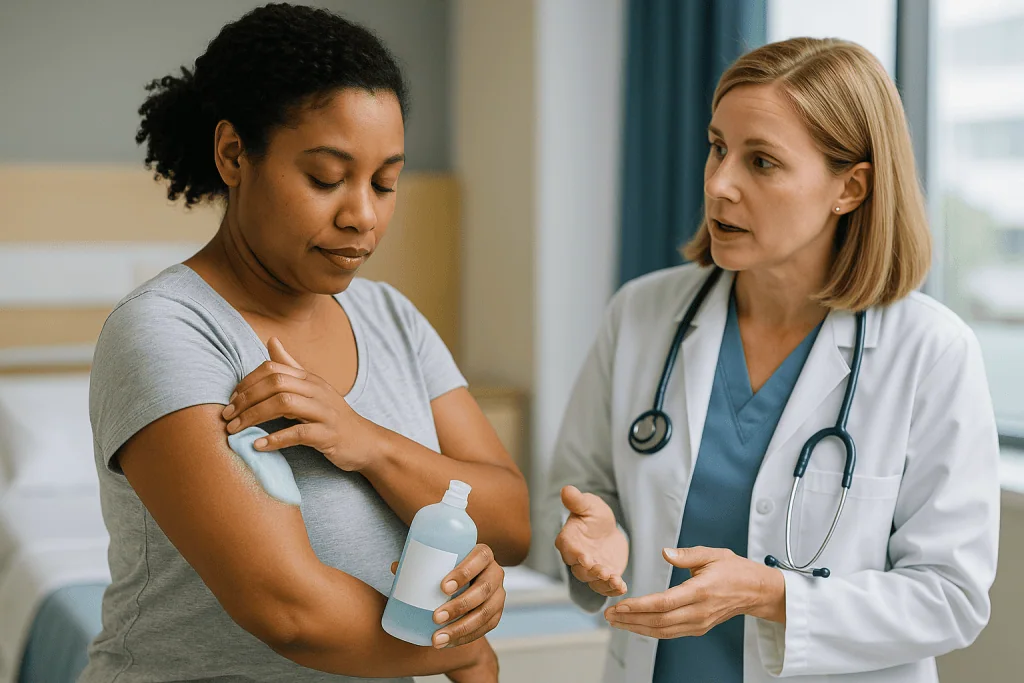
The practical takeaway is not to abandon the wash. It is cheap in effort, it lowers the bacterial load, and if your team prescribes it, they have a reason. Follow their written instructions, keep it away from the eyes, ears and genital area, and tell them if your skin reacts. Just do not expect it to compensate for a cigarette.
Skin antisepsis in the operating room: chlorhexidine versus iodine
Once you are on the table, a member of the team paints the surgical area with antiseptic and lets it dry. This step has a stronger evidence base than almost any other single act in infection prevention, and it is the one the February 2024 trial actually tested.
There are two families of antiseptic in common use. Chlorhexidine gluconate works by disrupting bacterial cell membranes and stays bound to skin. Povidone-iodine and the related iodine povacrylex release iodine, which attacks bacterial proteins. Both are available in water-based or alcohol-based forms, and the base matters more than most people realize: alcohol kills bacteria quickly on contact, so an alcohol-based preparation of either antiseptic beats a water-based one. The 2010 trial that put chlorhexidine on the map compared chlorhexidine-alcohol with water-based iodine, which stacked the deck in a way later studies tried to correct.
When both are alcohol-based, the gap narrows to almost nothing. The 2024 fracture trial found a small edge for iodine povacrylex in alcohol in closed fractures, a difference of roughly one infection per hundred patients, and no difference in open fractures where the wound was already contaminated. An earlier trial in abdominal surgery leaned slightly the other way. Read together, the randomized evidence says: use an alcohol-based product, and the choice between chlorhexidine and iodine is a reasonable call for the surgical team, influenced by the operation, local infection patterns and any patient allergy.
For patients, two things follow. First, if you have ever reacted to chlorhexidine or iodine, say so during your pre-surgery assessment; both can cause skin reactions and chlorhexidine can rarely cause a serious allergic reaction. Second, the viral claim that chlorhexidine “failed” misreads a close result in one surgical specialty as a verdict on the whole molecule.
How to prevent infection after surgery: what you can do in the weeks before
If the operating-room measures belong to the team, the weeks before surgery belong to you, and the levers you hold are bigger than the wash bottle.
Smoking comes first. Nicotine constricts the small vessels that feed a healing wound, and the carbon monoxide in smoke reduces the oxygen the blood can carry. Observational studies and several randomized trials of pre-surgery quit programs show fewer wound complications in people who stop, with the benefit growing the longer the gap before surgery. Even a few weeks helps; longer is better. Ask your surgical team or primary care clinician about support; they will not judge, and the evidence is firmly on your side.
Blood sugar is second. If you have diabetes, the weeks before surgery are the time to bring glucose into the target range your clinician has set, because high sugar around the operation is one of the most consistent predictors of SSI across surgical specialties. Many hospitals now check a longer-term sugar measure called HbA1c before elective surgery and may postpone if it is high. That is not a punishment; it is risk management.
Nutrition and weight sit third. Protein is the raw material for new tissue, and people who are undernourished heal poorly. If weight loss has been advised before a planned operation, the goal is a safer wound rather than a number on a scale.
Then the small practical items. Do not shave or wax the surgical area in the days before; let the team clip if needed. Shower with soap the night before or the morning of surgery, using the chlorhexidine wash if one was provided. Treat any skin break, rash or dental problem early and tell the team about it. Finally, wash your hands often and ask visitors to do the same; your own hands are the most likely carriers to the wound afterward.
What the surgical team does on the day to lower your risk
Much of what protects you happens while you are asleep, and understanding it can make the pre-surgery conversation more useful.
The preventive antibiotic is the headline act. For most procedures a single dose is given through the drip within the hour before the incision, so that the drug is already in the tissue when the knife enters. Randomized trials since the 1960s have shown large reductions in infection with this timing, and both CDC and WHO guidelines emphasize that the window is narrow: too early and the level has dropped, too late and the bacteria arrive first. Long operations may call for a repeat during surgery. What the guidelines explicitly discourage is continuing antibiotics after the wound is closed, because trials show no extra protection and more resistance. If you are sent home without antibiotics after a clean operation, that is the guideline, not an oversight.
Temperature is the quiet one. General anesthesia switches off the body’s heat regulation, and a patient who cools even a degree or two has constricted skin vessels and sluggish white cells. Warming blankets and warmed fluids keep core temperature normal, and a well-known randomized trial in colorectal surgery found that warmed patients had about one-third the infection rate of those left to cool.
Glucose is monitored during and after longer procedures and treated if it climbs, whether or not the patient has diabetes. Hair is clipped, not shaved, immediately before surgery. The skin is prepped with an alcohol-based antiseptic as described above. The team changes gloves and instruments at defined points in contaminated operations, and some use special wound-protector sleeves in bowel surgery. Afterward, the dressing is left in place for the period the surgeon specifies, and the team hands you instructions that are worth reading twice.
How to tell if a surgical site is infected
Every incision looks a little alarming in the first few days. The skill is telling normal healing from trouble, and the clearest guide is the direction of travel: a healthy wound gets quieter day by day, while an infected one gets louder.
Normal healing includes mild redness confined to a narrow band along the incision, some swelling, bruising, tenderness, and a small amount of clear or slightly blood-tinged fluid in the first days. Itching as the edges knit is common. All of this should be fading by the end of the first week.
Signs that point toward infection, according to the CDC and MedlinePlus patient guidance, include:
- Redness that spreads outward from the incision or develops streaks running away from it
- Warmth over the area that is noticeably greater than the surrounding skin
- Pain or tenderness that increases after the third or fourth day instead of easing
- Thick, cloudy, yellow, green or foul-smelling drainage
- Swelling that worsens, or the wound edges pulling apart
- A fever, typically defined as 100.4°F (38°C) or higher, or chills
People also ask what it feels like when the body is fighting an infection more generally. The systemic signs are fever and chills, a heart rate that stays fast at rest, unusual fatigue or drowsiness, loss of appetite, feeling cold then sweaty, and in older adults new confusion. None of these is specific to a wound, but any of them in the first weeks after surgery should prompt a call.
One practical tip that surgeons give: on day two or three, draw a thin line around the edge of any redness with a skin-safe marker and photograph it. If the redness crosses the line over the next day, you have objective evidence rather than a worry.
Is it normal for a surgical incision to leak fluid after 2 weeks?
Short answer: a closed incision should not still be leaking at two weeks, and persistent drainage deserves a look, even if nothing else seems wrong.
The context matters. In the first several days, a small amount of thin, clear or pink fluid, called serous or serosanguineous drainage, is part of healing; it is plasma and a few red blood cells leaking from the fresh tissue. Larger operations, incisions through thick fat, and wounds near joints that move a lot can ooze slightly longer. Some wounds are deliberately left open or packed and will drain by design; if yours is one of those, the team will have told you and the rules are different.
By around day 10 to 14, a wound closed with stitches, staples or glue should be dry. Fluid at that stage usually means one of a few things. A seroma, a pocket of clear fluid under the skin, is common after operations that lift tissue, such as hernia repairs and some breast or abdominal procedures; it is not an infection but can become one and sometimes needs to be drained in clinic. A stitch abscess is a small infection around a buried suture that releases a little pus and often settles once the suture is removed. A deeper infection or a collection of blood can present as drainage that starts late or increases. Rarely, in abdominal surgery, fluid that is greenish or smells of bowel content signals a leak from the gut and is an emergency.
The character of the fluid is the clue. Clear and thin is reassuring; cloudy, thick, colored or smelly is not. Fluid that returns after the wound seemed dry, or that soaks through a dressing, is worth a same-day call. Do not squeeze the wound or try to open it; let a clinician examine it, swab it if needed, and decide.
What are the signs of an internal infection after laparoscopic surgery?
Laparoscopic, or keyhole, surgery leaves only small incisions, which is one of its genuine advantages: superficial wound infections are rarer than after open surgery. The flip side is that a problem inside the abdomen has no visible wound to announce it, so the warning signs are felt rather than seen.
An organ or space infection after laparoscopic surgery most often takes the form of an abscess, a walled-off pocket of pus, or peritonitis, inflammation of the lining of the abdominal cavity. After gallbladder surgery it can follow a bile leak; after appendix or bowel surgery it may relate to the original infection or, rarely, a leak at a join in the bowel. These typically declare themselves between day three and day ten, which is why the quiet first week can be misleading.
The signs to watch for are:
- Abdominal pain that worsens rather than improves, or that becomes severe, constant or spreads beyond the surgical area
- A swollen, tense or rigid abdomen that hurts when touched or when you cough
- Fever and chills, sometimes with sweats that come and go
- Nausea or repeated vomiting, or inability to pass gas or stool
- Shoulder-tip pain that persists beyond the first couple of days (early shoulder pain from the gas used during laparoscopy is normal, but late or worsening pain is not)
- Fast heart rate, dizziness, breathlessness or feeling unwell out of proportion to the small incisions
- Yellowing of the skin or eyes after gallbladder or liver surgery
Any combination of these, especially pain plus fever, warrants urgent assessment. Diagnosis usually involves a blood test for inflammation markers and an ultrasound or CT scan. Many abscesses can be drained through the skin under imaging guidance with antibiotics, without a second operation, which is a good argument for calling early rather than waiting to see if it passes.
Common myths about surgical site infections and the chlorhexidine wash
The viral posts recycle the same handful of claims. Here is where each one lands against the evidence.
“Shaving the area yourself before surgery is cleaner.” The opposite. Razors leave microscopic nicks that fill with bacteria, and studies going back decades show higher infection rates after shaving than after clipping or leaving hair alone. Leave it to the team.
“More chlorhexidine is better; scrub hard and use it for a week.” Chlorhexidine binds to skin after a single proper application; scrubbing harder or more often does not add protection and can irritate the skin, which itself raises risk. Use it exactly as the team’s leaflet describes and no more.
“Antibiotics for a week after surgery stop infection.” Randomized trials consistently find that extending antibiotics beyond the operation does not reduce SSI and does increase resistant bacteria and gut side effects. Current guidelines recommend against it for most procedures.
“If I don’t have a fever, it isn’t infected.” Superficial infections often cause no fever at all; spreading redness, worsening pain and cloudy drainage are the earlier signals. Conversely, fever alone in the first two days is often the body’s response to surgery rather than infection.
“Keep the wound completely dry for weeks.” Most surgeons allow showering within a day or two once the dressing plan permits; brief contact with clean running water does not raise infection rates in trials. Soaking in baths, pools or hot tubs is different and is usually off limits until the wound has sealed.
“The 2024 trial proved chlorhexidine doesn’t work.” It compared two alcohol-based antiseptics in fracture surgery and found a small difference in one subgroup. Chlorhexidine remains a guideline-endorsed option for skin prep.
“Supplements prevent surgical infection.” No vitamin or herbal product has randomized-trial evidence for reducing SSI in well-nourished adults. Correcting genuine deficiency is sensible; a pre-surgery supplement stack is not a prevention strategy.
When to see a doctor about a possible surgical site infection
The single most useful habit after surgery is a low threshold for calling. Surgical teams would far rather hear about a wound that turns out to be fine than see one a week late. Keep the number you were given somewhere visible, and use it.
Contact your surgical team the same day if you notice any of the following:
- Redness spreading beyond the incision, or red streaks
- Increasing pain, warmth or swelling after the first few days
- Cloudy, yellow, green, bloody or foul-smelling drainage, or any drainage from a closed wound after two weeks
- The wound edges opening up
- A temperature of 100.4°F (38°C) or higher, or chills
Seek emergency care, by calling your local emergency number or going to the nearest emergency department, if you have:
- Severe or rapidly worsening abdominal pain, a rigid abdomen, or repeated vomiting after abdominal surgery
- A fast heart rate, breathlessness, confusion, fainting or feeling very unwell with a fever, which can signal sepsis, the body’s dangerous overreaction to infection
- Rapidly spreading redness with dusky, purple or blistered skin, or pain far out of proportion to what the wound looks like
- A large amount of bleeding through the dressing
If an infection is confirmed, treatment depends on its depth. A superficial infection is often managed by opening part of the wound to let it drain, cleaning it, and sometimes a short course of antibiotics chosen from a swab. Deeper infections may need imaging, drainage under guidance, or a return to the operating room. Implant-related infections are managed by specialist teams and can involve longer antibiotic courses. Every one of those decisions, including whether to start, change or stop any medicine, belongs to the clinician who examines you. Do not start leftover antibiotics on your own, and do not stop a prescribed course early because the wound looks better; tell the team instead and let them decide.
Frequently asked questions
How can I tell if my surgical site is infected?
An infected incision usually shows redness that spreads outward, warmth, pain that worsens after the first few days, and thick or cloudy drainage, sometimes with fever. A healing wound, by contrast, becomes less red, less sore and drier each day. Photograph the wound daily and compare; if the redness grows or the fluid changes character, contact your surgical team the same day rather than waiting for a fever.
What are the signs that my body is fighting an infection after surgery?
Whole-body signs include fever or chills, a resting heart rate that stays fast, sweats, unusual tiredness, loss of appetite, and in older adults new confusion. These are not specific to the wound, so they can come from a chest, urine or internal infection as well. In the first weeks after surgery, any of them combined with worsening pain or a changing incision justifies a call to the team.
Is it normal for a surgical incision to leak fluid after 2 weeks?
No. A closed incision is normally dry by about ten to fourteen days. Late drainage can be a seroma (a harmless but drainable pocket of clear fluid), a stitch abscess, or a deeper infection. Clear, thin fluid is less concerning than cloudy, colored or foul-smelling fluid, but both deserve a same-day call so a clinician can examine the wound rather than you squeezing or opening it.
What are the signs of an internal infection after laparoscopic surgery?
Watch for abdominal pain that worsens instead of easing, a tense or rigid abdomen, fever and chills, nausea or vomiting, inability to pass gas, persistent shoulder-tip pain beyond the first couple of days, or feeling unwell out of proportion to the small incisions. These usually appear between day three and day ten and warrant urgent assessment, often with blood tests and a scan.
Does the chlorhexidine wash before surgery really prevent infection?
Partly. A pre-surgery chlorhexidine wash clearly lowers the number of bacteria on the skin, but pooled trials have not reliably shown fewer actual infections than washing with plain soap. It has stronger support as part of a bundle for people who carry S. aureus in the nose before joint or heart surgery. If your team provides a wash, use it as their instructions describe; it is helpful, not a substitute for the measures with stronger evidence.
Should I shave the surgical area before my operation?
No. Shaving with a razor creates tiny cuts that harbor bacteria, and studies consistently show higher infection rates after shaving. Guidelines advise against hair removal unless it would interfere with the operation, in which case the team clips the hair immediately before surgery. Avoid razors, wax and depilatory creams on the area in the days beforehand, and mention any skin irritation to the team.
Why wasn't I given antibiotics to take home after surgery?
Because for most clean and clean-contaminated operations the preventive antibiotic given before the incision is what works, and randomized trials show that continuing antibiotics after the wound is closed does not reduce infection but does increase resistant bacteria and side effects. Current CDC and WHO guidelines recommend against routine prolonged courses. Your surgeon decides case by case; ask if you are unsure why.
How long after surgery can a surgical site infection develop?
Most superficial infections appear within the first one to two weeks, and deeper or internal infections typically declare themselves between days three and ten. By definition an SSI can occur up to 30 days after surgery, or up to a year when an implant such as a joint replacement or mesh was placed, because bacteria can cling to foreign material and grow slowly. Any new wound symptom in that window merits a call.
Can I shower after surgery without risking infection?
Usually yes, once your surgeon’s dressing plan allows it, often within a day or two. Trials have found that brief contact with clean running water does not increase infection rates in closed wounds. Pat the area dry rather than rubbing, and avoid baths, pools and hot tubs until the wound has fully sealed, since soaking softens the skin and lets bacteria in. Follow the specific instructions you were given.
What is the single most important thing I can do to prevent a surgical site infection?
If you smoke, stop as far ahead of surgery as you can; if you have diabetes, bring your blood sugar into the range your clinician has set. These two factors have the most consistent evidence of any patient-controlled measure, because both starve the wound of oxygen and blunt the immune cells that clear bacteria. After that, follow the team’s washing and dressing instructions and call early about any change.
References
- CDC: About Surgical Site Infections
- CDC: Guideline for the Prevention of Surgical Site Infection (2017)
- MedlinePlus: Surgical wound infection – treatment
- WHO: Global guidelines for the prevention of surgical site infection, 2nd edition
This article is for general information only and is not a substitute for professional medical advice. Please consult a qualified doctor about your individual situation.

More from the Blog

Sedation vs General Anesthesia: The Differences That Matter for Your Surgery
Sedation and general anesthesia sit on the same continuum but differ in depth. Sedation ranges from relaxed-but-awake to deeply drowsy, usually with you breathing…

Anesthesia Side Effects: The Common, the Rare and How Long They Last
Most anesthesia side effects are mild and short-lived: grogginess, nausea, a sore throat, shivering, muscle aches or confusion that typically clear within hours to…

Hospital Bag Checklist for Surgery: What to Pack and What to Leave at Home
A hospital bag checklist for surgery covers four things: paperwork (photo ID, insurance details, consent forms and an up-to-date medication list), loose front-opening clothing…

ASA Classification: How Anesthesiologists Grade Surgical Risk
The ASA classification, formally the ASA Physical Status Classification System, is a six-level scale anesthesiologists use to describe a patient's overall health before surgery,…

How to Find a Good Plastic Surgeon: Credentials, Questions and Red Flags
To find a good plastic surgeon, verify certification by the American Board of Plastic Surgery through the American Board of Medical Specialties directory, confirm…

Hypertrophic Scars vs Keloids: The Difference and the Treatments
A hypertrophic scar is a raised, firm, often red scar that stays within the edges of the original wound and usually softens and flattens…