

Emergency Contacts and Urgent Care During Medical Travel in Turkey

In Turkey, 112 is the single national emergency number for ambulance, fire and police, free from any phone. For urgent but stable problems, private hospital emergency departments and walk-in polyclinics see visitors without referral. Care is not free for tourists, you or your insurer pay, so carry your insurance details, a medication list and your treatment papers at all times.
Imagine waking at 2am in a hotel room in Istanbul feeling unwell, in a country whose health system you have never used. The people who handle that moment well are not braver than anyone else. They simply set three things up in advance: the numbers saved in their phone, the documents in their day bag, and a rough idea of how Turkish emergency and urgent care actually works. This guide covers all three.
Sorting out emergency contacts and urgent care during medical travel in Turkey takes perhaps an hour before you fly. Done early, it turns a frightening unknown into a set of steps you already understand. Done late, at 2am, unwell, on hotel wifi, it is much harder.
At a glance
- Emergency number: 112: Turkey’s single national number for ambulance, fire and police, free from any phone, including mobiles without a local SIM
- Urgent but stable problems: private hospital emergency departments and outpatient polyclinics see foreign visitors without a referral
- Cost: medical care is not free for tourists in Turkey: you or your travel insurer pay, which is why insurance documents belong in your day bag
- Keep with you: passport copy, treatment summary, medication and allergy list, insurance details, your hospital’s address in Turkish and English
- Minor problems: pharmacies (eczane) are widespread, and a rota of duty pharmacies (nöbetçi eczane) stays open overnight in every district
- Language: hospitals with international patient departments provide interpreter support; keep a short written medical summary on your phone as a backup
How emergency contacts and urgent care work during medical travel in Turkey
Turkey uses a single national emergency number: 112. Since 2021 it has covered ambulance, fire and police together, so you do not need to remember separate numbers. It works from landlines, Turkish mobiles and foreign mobiles, with or without credit, and the call is free. If you save only one number before your trip, save this one.
The 112 system dispatches state ambulances staffed by trained crews. Operators handle calls in Turkish first, and English-speaking support may be available, but you should not count on a fluent conversation. Two habits make the call work even under pressure: know your address, and keep it written down. Save your hotel and hospital addresses in your phone in both English and Turkish spelling, and drop a map pin for each. An address read out slowly, or handed to a hotel receptionist who can make the call for you, does more than any phrasebook.
Everything else in the system sits below 112. Private hospitals run their own emergency departments around the clock and their own patient transport in some cases. Pharmacies handle minor ailments. Outpatient polyclinics see walk-in patients during the day. Understanding which layer fits which kind of problem is the real substance of planning emergency contacts and urgent care during medical travel in Turkey, and the sections below take each layer in turn.
Emergency care and urgent care are different systems
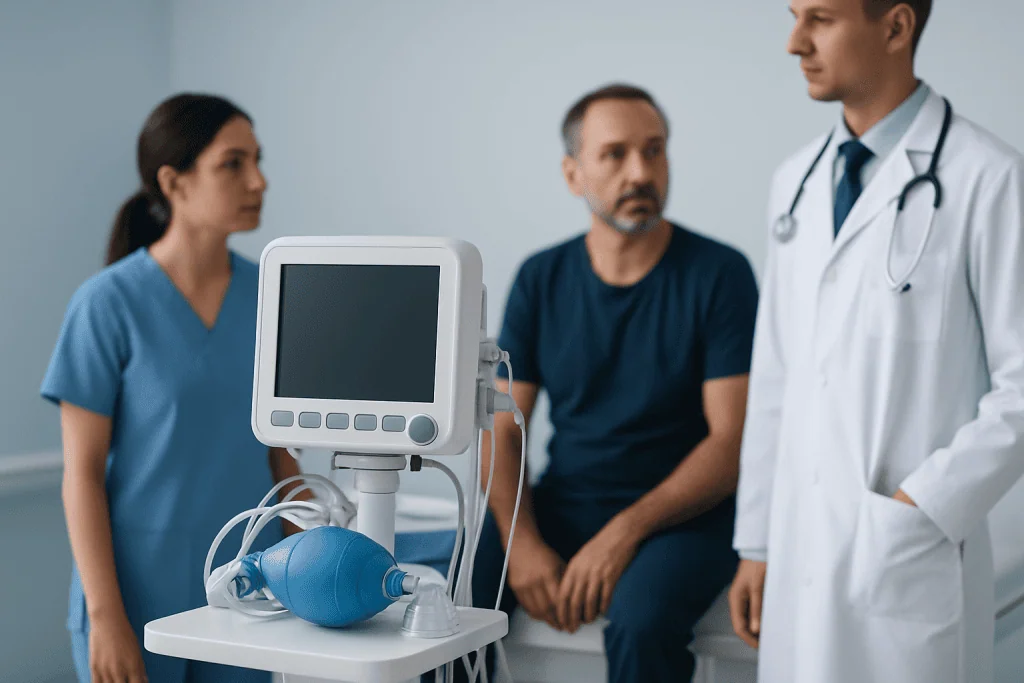
Turkish healthcare, like most systems, separates two categories of unplanned care. Emergency care deals with conditions that may threaten life, breathing, circulation or brain function. This is what 112 and hospital emergency departments exist for, and by long-standing practice in Turkey, emergency departments treat first and handle paperwork afterwards, no emergency patient is turned away at the door for administrative reasons.
Urgent care covers problems that need prompt attention but do not require an ambulance: a new fever, persistent stomach trouble, a minor injury, an unexpected reaction to something you ate. In Turkey there is no separate network of “urgent care clinics” as some countries have. Instead, this role is filled by hospital emergency departments, which see non-critical patients too, usually after triage, and by outpatient polyclinics at private hospitals, which take same-day appointments and walk-ins during working hours.
For medical travellers there is a third layer that domestic patients do not have: the hospital treating you. If you are in Turkey for planned treatment, your treating hospital already holds your records, knows your procedure and can read a new problem in context. Hospitals that regularly care for international patients, including Acibadem, run international patient departments precisely because unplanned questions arise, and they typically give patients a defined contact route for office hours and another for after hours as part of the treatment plan. Ask what those routes are during pre-travel planning and write them down: the point of this guide is preparation, and that route is part of your preparation, not something to work out mid-crisis. A companion guide on what to save before you go covers the full contact list in detail.
Is medical care free in Turkey for tourists?
No. This is worth stating plainly because search results often blur it. Turkey’s public health insurance system (SGK) covers Turkish residents and people employed or insured within Turkey. Tourists and medical travellers are outside it. Whether you are treated at a state hospital after a 112 call or walk into a private polyclinic with a sore throat, the care is billed, to you directly, or to your travel or health insurer if your policy covers it.
What does the bill depend on? Structurally, the same things everywhere: whether the facility is state or private, what tests and imaging are done, whether you are admitted, and how long you stay. State facilities generally bill less than private ones; private hospitals generally offer more English-speaking staff, shorter waits for non-critical cases and more comfortable facilities. Emergency stabilisation happens first regardless of payment, but the account still exists afterwards.
Three practical consequences follow. First, travel insurance that explicitly covers medical treatment abroad is not a luxury for a medical trip, check whether your policy covers complications of planned treatment, because many standard travel policies exclude them. Second, carry your policy number and your insurer’s emergency assistance line with you, not just in an email folder. Third, keep receipts and reports from any unplanned care, because insurers reimburse against documentation. If you are budgeting the trip as a whole, the guide to daily expenses during medical travel in Turkey explains the non-medical side of spending.
How to see a doctor in Turkey as a tourist
For problems that are neither emergencies nor connected to your planned treatment, Turkey is a straightforward place to see a doctor. You have three realistic routes.
- Pharmacies (eczane). Marked with a red “E” sign, pharmacies are everywhere in Turkish cities and are the sensible first stop for minor complaints. Pharmacists are trained professionals and many in tourist areas speak some English. Outside opening hours, every district runs a rota of duty pharmacies (nöbetçi eczane) open overnight; the list is posted in every pharmacy window and available online. Note that a pharmacist can advise on minor matters but cannot and should not change anything your treating doctor has prescribed, questions about your regular medicines belong with your doctor, and the guide to keeping regular medicines on schedule during medical travel explains how to manage them across time zones and pharmacy systems.
- Private hospital polyclinics. Private hospitals run outpatient clinics across most specialties and accept foreign patients without a referral. You can usually get a same-day or next-day appointment, and larger hospitals have international patient desks that handle registration and interpreting. Bring your passport; it is required for registration.
- Hotel-arranged doctors. Many hotels in tourist areas can arrange a doctor’s visit to your room. This is convenient for simple problems but offers no diagnostics beyond what fits in a bag, so it suits minor illness, not anything that might need tests.
If the problem relates to treatment you are having in Turkey, the order changes: your treating hospital comes first among the non-emergency options, because a doctor who can see your file will always assess a post-treatment symptom better than one who cannot.
Carry a small emergency information pack
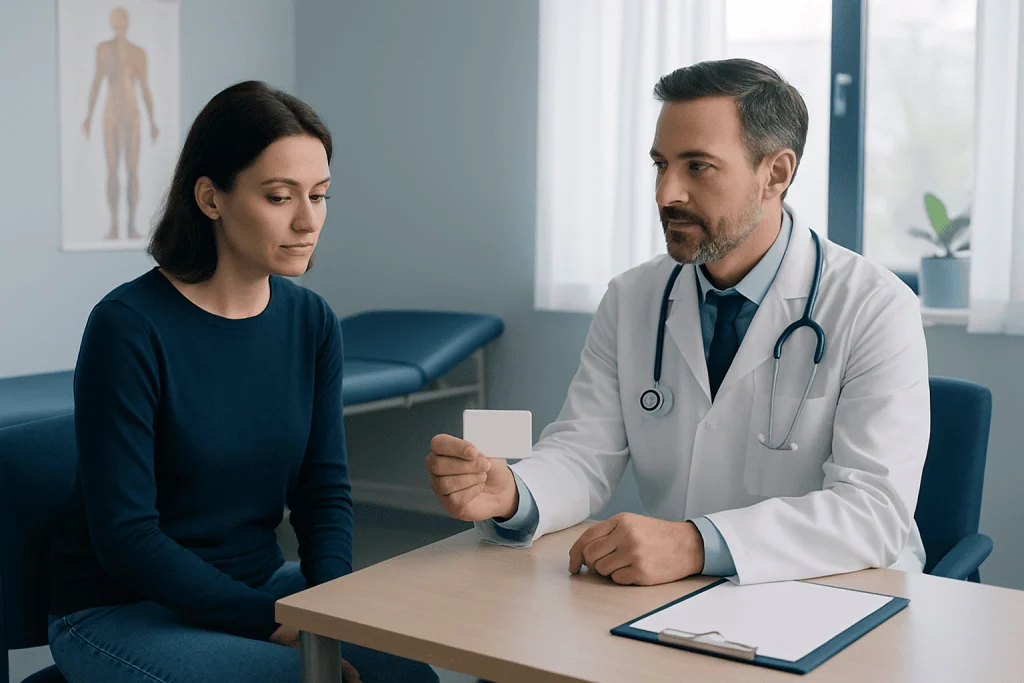
Whichever route an urgent situation takes, the doctors who receive you will work faster and more safely if they can see who you are, what has been done to you recently, and what you take. That is the whole logic of the emergency information pack: a small folder in your day bag plus photographed copies on your phone. Not in the hotel safe, not in your suitcase, in the bag that leaves the room with you.
The pack should contain:
- A copy of your passport photo page
- Your hospital’s name, address and registration details
- Your diagnosis or treatment summary, if you have one
- Your current medication list with doses, including anything recently started or stopped by your doctors
- Allergies, and a note of any blood-thinning medication
- Insurance policy number and the insurer’s assistance line
- Your companion’s number and one contact at home
- Discharge papers and written aftercare instructions, if you have already had treatment
On your phone, save the key numbers under labels a stranger could understand, “Hospital Emergency”, “Hospital Daytime”, “Hotel”, “Companion”, because in a real situation someone else may be scrolling through your contacts on your behalf. Keep the originals of valuable documents secure in your accommodation and carry copies: splitting originals and copies means losing one bag never means losing everything.
Plan transport and communication before you need them
In an urgent situation, the medicine is usually the hospital’s problem and the logistics are yours. Two pieces of logistics cause most of the stress: getting there, and being understood.
Transport. For a genuine emergency, 112 dispatches an ambulance, and an ambulance is the right vehicle, crews can begin care en route and hospitals can prepare for arrival. For stable situations, a taxi or hotel car to a hospital you have already located is often the practical answer. What you should never do is drive yourself while dizzy, sedated, in significant pain or shortly after a procedure. Istanbul traffic deserves a specific mention: journey times vary enormously by hour, so check the route from your accommodation to your hospital in advance and know roughly how long it takes at different times of day. How ambulances are dispatched, what state and private services each do, and how they are billed is covered in detail in the guide to using ambulance services in Turkey during medical travel.
Communication. If you do not speak Turkish, prepare for the moment when translation apps and patience both run short. Keep a note on your phone, in simple English, stating your name, your hospital, your diagnosis if known, your allergies and the sentence “I need medical help.” Hotel reception staff in tourist areas are used to making calls on guests’ behalf and can bridge the language gap with a 112 operator. Inside hospitals that serve international patients, interpreter support is part of the service, but the note on your phone covers the gap between your hotel corridor and the hospital door, which is exactly where language help is thinnest.
Unplanned symptoms after treatment: where the answers actually live
Most urgent questions on a medical trip are not dramatic emergencies. They are the ambiguous middle: a symptom after surgery or a procedure that might be a normal part of recovery or might not be. This guide cannot tell you which is which, and honestly, no general article can: the answer depends on your procedure, your history and your medicines.
What a general article can tell you is where the real answer lives: in your discharge papers. When you leave hospital after treatment, your team gives you written instructions that list the warning signs specific to what was done to you, along with the contact route to use if they appear. Those instructions are written by people who know your case, and they take precedence over anything generic you read online, including this page. Treat them as a document to keep, reread and carry, not a formality to sign and forget.
Two habits make that document more useful. First, before discharge, make sure you understand it: which effects are expected, and which route to use at 3am rather than 3pm. Asking these questions while you are still on the ward costs nothing. Second, if a symptom does arise, note when it started, whether it is changing, and what medicines you have taken, details that make any medical conversation faster and more accurate, in any language. If you live with a long-term condition alongside your planned treatment, the guide to managing chronic conditions during medical travel covers the extra preparation that involves.
Prepare your companion as thoroughly as yourself
If you travel with a companion, they are your backup memory, your voice if you cannot speak clearly after a procedure, and often the person who actually makes the phone call. That only works if they know what you know. Before anything happens, walk them through your hospital’s name and location, where your document pack lives, what medicines you take, and which numbers are saved under which labels in your phone. Have them save the same contacts in their own phone, keep it charged, and know your hotel address and room number, details that evaporate under stress if they were never learned calmly.
Companions carry their own load on a medical trip, and a tired, overwhelmed companion is less useful in a crisis, build rest into their days too. If you travel alone, do the equivalent remotely: send your hospital details, itinerary and emergency plan to someone at home, and agree a check-in rhythm. For situations that go beyond healthcare, a lost passport, a serious incident, questions of consent or repatriation, your embassy has a defined role, explained in when to contact your embassy during medical travel in Turkey.
Step by step
- Save the numbers before departure. 112, your treating hospital’s main and after-hours lines, your insurer’s assistance line, your hotel, your companion. Label them plainly and keep a written copy in your wallet in case your phone dies.
- Build the information pack. Passport copy, treatment summary, medication and allergy list, insurance details, contacts, one small folder in your day bag, photographed to your phone.
- Pin the addresses. Save your hospital and accommodation in your maps app and note the address spellings in Turkish. Check the route between them and how long it takes at different hours.
- Learn what each layer of the system does. 112 and emergency departments for genuine emergencies; polyclinics and your treating hospital’s contact route for urgent but stable problems; pharmacies for minor complaints.
- Check your insurance on paper. Confirm what your policy covers abroad, including complications of planned treatment, and carry the policy number and assistance line with you.
- Understand your discharge instructions before you leave the ward. Know which effects are expected after your procedure and which contact route to use out of hours, while your team is still in front of you.
- Brief your companion, or someone at home. Hospital name, document location, medication list, saved contacts. If travelling alone, send the same plan to a family member and agree how often you will check in.
Your checklist
- 112 saved, plus hospital, insurer, hotel and companion numbers
- Passport copy and hospital documents in your day bag
- Up-to-date medication and allergy list, on paper and phone
- Hospital address saved as a map pin, in English and Turkish
- After-hours contact route from your treating hospital written down
- Insurance policy number and assistance line carried with you
- Written medical summary note on your phone for language gaps
- Companion briefed, or plan shared with someone at home
- Phone charged; power bank packed
- Discharge instructions kept and understood
Key takeaways
- 112 is Turkey’s single emergency number for ambulance, fire and police, free from any phone.
- Medical care is not free for tourists, carry insurance details and keep every receipt and report.
- Pharmacies handle minor complaints; private polyclinics see walk-in visitors; emergency departments treat first and sort paperwork after.
- Your discharge papers, not general articles, hold the warning signs and contact routes specific to your treatment.
- Planning emergency contacts and urgent care during medical travel in Turkey takes about an hour before departure: a document pack in your day bag and a briefed companion turn an urgent situation into a manageable one.
Frequently asked questions
What number should I call for a medical emergency in Turkey?
Call 112. It is Turkey’s single national emergency number, covering ambulance, fire and police since 2021. It works free of charge from landlines and mobiles, including foreign phones without a Turkish SIM. Keep your address written down in Turkish spelling so you can read it out or hand it to someone who can call for you.
Is medical care free in Turkey for tourists?
No. Turkey’s public insurance system covers residents and people insured within Turkey, not visitors. Emergency departments will stabilise anyone first and handle payment afterwards, but the care is billed to you or your insurer. This is why travel insurance covering treatment abroad, and, for medical travellers, complications of planned treatment, matters, and why your policy details belong in your day bag.
How can I see a doctor in Turkey as a tourist?
Three routes work well. Pharmacies (eczane) handle minor complaints and run overnight duty rotas in every district. Private hospital polyclinics take same-day appointments and walk-ins across most specialties, with no referral needed, bring your passport for registration. Many hotels can also arrange a doctor’s visit for simple problems. If your issue relates to treatment you are already having in Turkey, your treating hospital comes first among the non-emergency options.
What should I do if I get sick in Turkey?
Match the problem to the right layer of the system. Genuine emergencies go through 112 or the nearest emergency department. Urgent but stable problems suit a polyclinic or, if connected to your planned treatment, the contact route your treating hospital gave you. Minor complaints start at a pharmacy. Whichever route applies, take your document pack, passport copy, medication list, allergies, insurance details and any recent treatment papers.
Which hospitals in Turkey are good for medical tourism?
Look for structural markers rather than marketing: an established international patient department, interpreter services, experience with your specific treatment, written quotes and clear discharge documentation, and international accreditation where a hospital holds it. Large private hospital groups in Turkey’s major cities are built around these services. Ask any hospital directly how it handles after-hours contact for international patients: the quality of that answer tells you a lot.
What documents should I keep with me during medical travel in Turkey?
A passport copy, your hospital’s name and registration details, a treatment summary if you have one, a current medication list with doses, allergy information, insurance policy details, and your companion’s contact. After any procedure, add your discharge papers and written aftercare instructions. Keep the folder in your day bag and photographed copies on your phone.
What if I do not speak Turkish during an urgent situation?
Prepare for the gap in advance. Keep a note on your phone stating your name, hospital, diagnosis if known, allergies and “I need medical help.” Hotel reception staff can make a 112 call on your behalf and bridge the language gap. Hospitals with international patient departments provide interpreter support once you arrive; the written note covers the journey in between, where language help is thinnest.
Should my companion be part of my emergency plan?
Yes, in a real situation they may be the one making calls and answering questions. Brief them on your hospital’s name and location, where your documents are kept, your medicines and allergies, and which numbers are saved under which labels. Have them save the same contacts in their own phone. If you travel alone, send the same plan to someone at home and agree a regular check-in.
Add us as a Preferred Source to see more of our trusted health content across Google Search, AI Overviews and Discover.

Update history
- PublishedJuly 8, 2026
- Medical review approvedSeptember 13, 2026
- Last content updateSeptember 12, 2026
References2
- Turkey travel advice: Health: GOV.UK gov.uk
- Türkiye (Turkey): CDC Travelers' Health wwwnc.cdc.gov
More Patient Guides

GHIC and EHIC in Turkey: Why They Do Not Cover You
The blue card that quietly covers you across Europe stops working at the Turkish border, and every summer, travelers discover this…

Do You Need Vaccinations for Turkey?
Here is the answer travel clinics give every day: no vaccinations are required to enter Turkey from anywhere in the normal course…

Flying With a Broken Leg or Cast: Airline Rules and Comfort
A broken leg does not cancel a flight, airlines carry passengers in casts every single day. What surprises travelers is that…
Travel Insurance After Cancer: What Patients Should Know
A cancer diagnosis changes how insurers read your name, but it does not end your traveling life. Thousands of people with…