

Choosing a Ground-Floor Room or Elevator Access During Recovery in Turkey

Neither option is automatically better. A ground-floor room removes the lift question entirely, which suits very limited mobility. Reliable elevator access can work just as well if the building has a step-free entrance, a spacious lift and a short route to your room. Judge the entire daily route, street to bed to bathroom, not the floor number, and decide before you book flights or accommodation.
Worried about how you will manage stairs in the first days after treatment? It is a fair question, and one worth settling before you book anything. Choosing a ground-floor room or elevator access during recovery in Turkey is a small decision on paper. In practice, it shapes how tiring every single day of your recovery feels.
This guide walks you through the real trade-offs between a ground-floor room and a building with a dependable lift. It covers what to ask before you book, how to judge elevators honestly, how accommodation should fit with hospital transfers, and how to set up your days so you spend energy on healing rather than on corridors and staircases.
At a glance
- Best for: Patients expecting limited mobility, fatigue, pain, dizziness, swelling or movement restrictions after treatment, and anyone using a wheelchair, crutches or a walking frame
- Main decision: A true step-free ground-floor room versus a building with a reliable, spacious, close-to-room elevator, judged on the whole route, not the floor number
- When to arrange: Before booking flights and accommodation, once your treating team has given you a realistic picture of your first recovery days
- Key checks: Step-free entrance, lift size and reliability, backup plan if the lift stops, bathroom layout, corridor distance, and how far you are from the hospital
- Who can help: Your treating team, international patient coordinators, hotel or apartment staff, and the companion travelling with you
Why choosing a ground-floor room or elevator access during recovery in Turkey matters more than you expect
When you picture recovery, you probably picture the treatment itself. The physical work around it is easy to forget: walking from the taxi to the entrance, standing in a lift, climbing a short flight of stairs with a bag, getting to the bathroom at night, and leaving for follow-up appointments. After treatment, each of these small movements can feel far harder than usual. A room that is genuinely easy to reach reduces strain, saves energy and lowers the chance of a stumble at exactly the time you can least afford one.
The stakes are specific. If you expect temporary weakness, reduced stamina, swelling, pain on movement or a restriction such as “avoid stairs” or “do not lift”, then every step between the street and your bed is part of your recovery plan. The same applies if you will be carrying dressings and medical supplies, using a mobility aid, or relying on a companion. Even patients who are normally fully independent find that the first days after a procedure change what feels manageable.
Turkey adds one more layer. Modern hospitals and newer hotels in cities such as Istanbul, Ankara and Izmir are generally well equipped, but the streets around them can be steep, pavements uneven, and older buildings inconsistent: a “lift” may turn out to be small, slow or reached by three steps. None of this is a problem if you ask specific questions in advance. It becomes a problem when you discover it on arrival, tired, sore and with your luggage in hand. That is why choosing a ground-floor room or elevator access during recovery in Turkey deserves the same attention as choosing your flight dates.
Ground-floor room or elevator access: how to actually decide
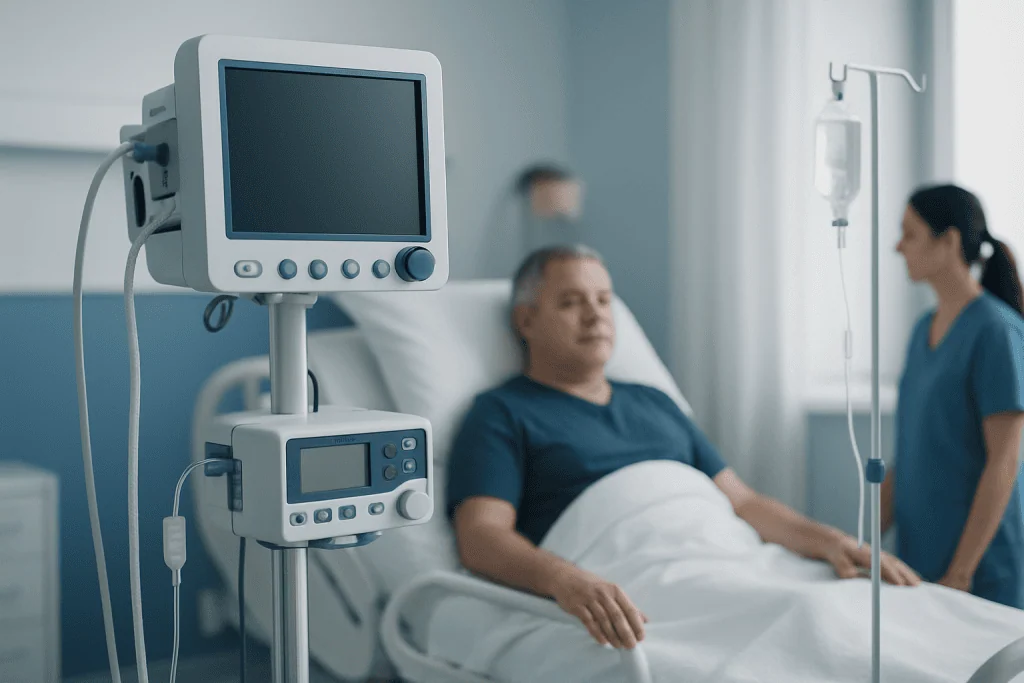
There is no single right answer, and anyone who tells you “always take the ground floor” is skipping the details that matter. A ground-floor room is the simplest option because it removes the lift question entirely: no waiting, no crowded cabins, no dependence on a machine working. It tends to suit you if your mobility is very limited, you feel unsteady, your team has advised minimising walking and stairs, or you simply do not want to think about power cuts and busy lifts while exhausted.
But “ground floor” is a label, not a guarantee. Plenty of ground-floor rooms sit behind an entrance with steps, at the end of a long corridor, or next to a noisy breakfast area or entrance door. Some are half a level below or above the street, reached by a short staircase that never appears in the listing. A ground-floor room with a difficult bathroom is a worse choice than an upper-floor room with a walk-in shower and a lift ten metres from the door.
Elevator access, meanwhile, works very well in most modern hotels, serviced apartments and hospital-linked accommodation. If the lift is spacious, reliable and close to your room, a higher floor may actually serve your recovery better: upper floors are often quieter, brighter and more private, and undisturbed sleep is not a luxury during recovery: it is part of it. The honest comparison looks something like this:
| Factor | Ground-floor room | Elevator access |
|---|---|---|
| Dependence on equipment | None, no lift needed | Depends on lift reliability and a backup plan |
| Hidden risks | Entrance steps, long corridors, split levels, noise from lobby or street | Small cabins, key-card access, intermediate stairs, waits at busy times |
| Noise and rest | Often nearer entrances, breakfast rooms and traffic | Upper floors usually quieter, but rooms beside the lift shaft can be noisy |
| Best suited to | Very limited mobility, strict stair restrictions, anxiety about lifts or outages | Moderate mobility, modern buildings, patients who value quiet and light |
| The deciding question | Is the route from street to bed truly step-free? | Is the lift large, reliable, and close to both entrance and room? |
In short: judge routes, not labels. When you are choosing a ground-floor room or elevator access during recovery in Turkey, walk the whole journey in your mind, kerb to entrance, entrance to reception, reception to room, room to bathroom, room back to the vehicle pick-up point, and pick whichever option makes that journey shortest and flattest for you.
What to check before you book

Ask for practical evidence rather than reassuring adjectives. “Accessible” and “easy access” mean different things to different properties, and neither term is regulated in everyday hotel marketing. The fastest way to the truth is to request recent photos or a short phone video of the entrance, lobby, lift, corridor and bathroom. Steps, narrow turns, steep ramps and heavy doors show up in thirty seconds of video and almost never in a written description.
Be precise in your questions. “Is there a lift?” gets a yes. “Is the route from the street to the room completely step-free, including into the lift and into the bathroom?” gets an answer you can plan around. Useful questions include:
- Is there a step-free entrance from the street or parking area, and is any ramp gentle enough to use with a wheelchair or crutches?
- How far is the room from the elevator or entrance, in metres or seconds of walking?
- Are there any thresholds, split levels, narrow doorways or steep internal ramps anywhere on the route?
- Does the lift need a key card, and are there ever intermediate steps between lift and room?
- Can staff assist with luggage, a wheelchair, or a late-night arrival?
- Is there a quiet room near the lift but away from the shaft, the entrance and the breakfast area?
Inside the room, the bathroom often matters more than the floor level. A walk-in shower, grab bars, non-slip flooring and enough space to turn are the features that prevent the most common recovery accidents. If your treatment may affect bending, balance or standing time, ask whether a shower seat, handheld shower head or raised toilet seat is available. Our guides on accessible bathroom safety during recovery and the accessible hotel room checklist cover these checks in detail.
Elevator questions worth asking specifically
If you settle on a building with a lift, treat the lift itself as part of your due diligence. Ask how large the cabin is: it should fit you, a companion and a wheelchair or luggage at the same time, because splitting up while unsteady is exactly what you want to avoid. Ask whether the lift serves every floor or skips half-levels, whether it is ever reserved or key-carded, and what the busy times are; a lift shared with a rooftop restaurant fills up at dinner. Ask how often it goes out of service and what staff do when it does. “We help guests use the service lift” is a plan. “It rarely breaks” is not. If the honest answer is that the backup for a broken lift is the staircase, then a ground-floor room, or a different property, is the safer bet for your first days.
Hospital, hotel and transport should work as one route
Your accommodation does not exist in isolation. It has to fit your hospital schedule, your transport plan and how often you will realistically go out. If your plan includes several follow-up visits, blood tests, dressing changes or early physiotherapy sessions, a smaller room close to the hospital usually beats a larger room across the city. Shorter journeys mean less fatigue, less sitting in traffic, and fewer chances for something to go wrong on the move.
Think hard about the transition points on treatment days. Leaving hospital after a procedure, you may be tired, sore or drowsy, and the simplest route wins every time. Ideally the vehicle drop-off point sits within a few flat metres of the entrance, with no kerbs, slopes or long walks in between. If you may need a wheelchair even briefly, confirm that both the vehicle and the property entrance handle one comfortably. What happens between the recovery room and your accommodation is covered in our guide to the hours after general anaesthesia.
International patient teams at large Turkish hospital groups, including Acibadem, commonly coordinate appointment scheduling, interpreters and practical travel logistics. That coordination is most useful when it happens early and with specifics: coordinators can plan far better when they know in advance about stair restrictions, fatigue, balance concerns or mobility aids, rather than discovering them on arrival day.
If you are travelling with a companion, include them in the planning. They may be the one carrying medication bags, checking in at reception, collecting food or steadying you on a ramp. A property that is easy for both of you tends to make the whole recovery period calmer. Season matters too, steep streets behave very differently in an Istanbul heatwave or a wet January, so factor the time of year into your choice of route and property.
Daily comfort: access is about energy, not just safety
Good access does more than prevent falls. During recovery you have a limited energy budget each day, and every difficult journey spends some of it. If leaving the room is tiring, you will quietly start skipping things, short walks, proper meals, fresh air, not because you decided to, but because the logistics made them expensive. A well-chosen room makes the healthy routine the easy routine. Gentle, regular movement matters for more than mood: staying reasonably mobile is one of the practical measures discussed in our guide to preventing blood clots during recovery.
Plan the inside of the room the way you planned the route to it. Is there somewhere to sit while dressing? Can water, medication, chargers and documents live within arm’s reach of the bed? Is there space for luggage without creating trip hazards across the floor you will cross half-asleep at 3 a.m.? If you will want extra pillows, a firmer chair, room service or laundry help, ask before arrival rather than assuming.
Noise deserves its own line item. Some ground-floor rooms are convenient but sit beside entrances, delivery doors or breakfast areas; some upper-floor rooms sit directly against the lift shaft. If sleep matters to your recovery, and it does, ask for a quiet room with easy access, not merely the nearest one. Then keep the days simple: essentials on one surface, supportive footwear, extra time before appointments, never carrying too much at once. Building these habits into a predictable rhythm is easier than it sounds, and our guide to building a safe daily routine during hotel recovery shows one way to structure it.
Questions worth asking your care team before you travel
Your treating team can usually give you a more realistic picture of your first recovery days than any general article. Useful questions include: Should stairs be limited, and for how long? Am I likely to need help standing up? Would a wheelchair or walking aid make sense temporarily, for the airport, for long corridors, for treatment days? The answers guide your accommodation choice far better than guesswork.
Ask about timing as well. Day one, day three and day seven of recovery can feel like three different lives. If you will need maximum rest immediately after treatment but expect to move more freely later, it makes sense to prioritise the simplest possible access for the first stretch of the stay, and to accept that the room may feel over-cautious by the end. That is the right kind of over-cautious. Some patients also keep brief notes on how far they walked and how it felt each day, which makes the picture at follow-up appointments much clearer.
Finally, be specific rather than polite. “I manage fine normally” tells a coordinator or hotel nothing useful. “I must avoid stairs for two weeks and I will have a companion and a wheeled case” tells them everything they need to arrange the right room, the right entrance and the right vehicle.
Step by step
- Ask about your expected mobility after treatment. Before booking accommodation, ask your treating team how easily you are likely to walk, stand and manage stairs in the first days. Even a rough picture separates “ground floor only” from “a good lift is fine”.
- List your non-negotiable access needs. Write them down: step-free entrance, lift access, walk-in shower, grab bars, short distance to hospital, wheelchair-friendly transport. A written list keeps you focused on recovery needs rather than attractive but irrelevant room features.
- Check the full route, not just the room. Assess kerb, entrance, lobby, lift, corridor, bathroom and pick-up point as one continuous journey. Ask for photos or a short video, hidden steps and steep ramps rarely appear in written descriptions.
- Interrogate the lift, if there is one. Confirm cabin size, key-card requirements, intermediate stairs, distance from lift to room, and what staff do when the lift is out of service. A backup plan that consists of stairs is not a backup plan for you.
- Confirm transport on treatment and follow-up days. Make sure the vehicle, the drop-off point and the entrance all work together if you are tired, sore or using assistance, and keep those journeys as short as reasonably possible.
- Set the room up for minimal movement. On arrival, create one recovery station with water, medication, chargers and documents in easy reach, and clear the floor paths you will use at night.
- Review the plan before discharge. Confirm with your team how active you should be next, and check whether the accommodation still fits the coming phase. If something has changed, adjust early rather than struggling through it.
Your checklist
- Ask your doctor whether stairs should be limited after treatment, and for how long
- Request photos or video of the entrance, elevator, corridor and bathroom
- Confirm genuinely step-free access from street to room to bathroom
- Check lift size, reliability, key-card rules and distance from lift to room
- Ask what happens if the lift is out of service
- Prefer a walk-in shower with grab bars and non-slip flooring
- Plan hospital transfers with minimal walking, kerbs and waiting
- Choose quiet over merely near, ask about lobby, lift-shaft and street noise
- Pack supportive shoes and keep daily essentials on one reachable surface
- Tell your coordinator and the property about mobility aids and restrictions before arrival
Key takeaways
- Neither a ground-floor room nor elevator access is automatically better: the whole route from street to bed to bathroom decides it.
- A ground-floor label can hide entrance steps, long corridors, split levels and noise; a good lift can make an upper floor the calmer choice.
- Judge lifts on size, reliability, distance to the room and the backup plan, not on their existence.
- Short, simple journeys to the hospital for follow-up often matter more than the size or style of the room itself.
- Decide before you book, based on your treating team’s honest picture of your first recovery days, and plan conservatively when in doubt.
Frequently asked questions
Is a ground-floor room always better after treatment?
No. A ground-floor room is only helpful if the entrance, corridor and bathroom are also easy to manage. Some ground-floor rooms hide entrance steps, split levels or long walks, and sit in the noisiest part of the building. An upper-floor room with a step-free entrance, a spacious reliable lift and a short corridor can be just as suitable, and often quieter.
Should I request a lower-level room even if the building has elevators?
It depends on the lift, not the floor number. If the lift is large, reliable, close to your room and backed by a sensible plan when it is out of service, a higher floor is usually fine. If the lift is small, key-carded, far from the room or the only fallback is the staircase, a lower floor removes a real point of failure during your least mobile days.
What if I do not know how mobile I will be after my procedure?
This is very common for patients travelling from abroad. Ask your treating team for a realistic picture of the first few days, then plan conservatively. Choosing the physically easier option gives you flexibility either way: unused access costs nothing, whereas missing access is hard to fix mid-recovery.
What should I ask a hotel or apartment before booking?
Ask about the entire route from arrival to bed: step-free entrance, ramp gradients, lift size and reliability, key-card rules, corridor distance, bathroom layout and the vehicle drop-off point. Ask what staff do if the lift stops working. Recent photos or a short video are far more reliable than a written claim that a room is “accessible”.
What happens if the elevator breaks down or there is a power cut?
Ask the property this exact question before booking. Good answers involve a second lift, a service lift staff will open for guests, or generator-backed power. If the only answer is the staircase, factor that in, either choose a ground-floor room or accept that a lift outage would temporarily confine you to the building or your floor.
Does staying closer to the hospital matter more than the room itself?
Often, yes. If your plan includes follow-up visits, tests, dressing changes or physiotherapy, a short flat transfer repeated several times is worth more than a larger room across the city. The strongest combination is straightforward access plus a genuinely short journey to the hospital.
Should I arrange wheelchair support even if I do not usually use one?
Temporary support can be sensible for airports, long corridors and treatment days, even for patients who walk independently at home. Using a wheelchair for the longest stretches conserves energy for the movement that matters. Ask your treating team whether it would be useful in your situation, and confirm that the property entrance and vehicle can accommodate one.
Add us as a Preferred Source to see more of our trusted health content across Google Search, AI Overviews and Discover.

Update history
- PublishedJuly 8, 2026
- Medical review approvedSeptember 1, 2026
- Last content updateSeptember 1, 2026
References1
- Falls: NHS nhs.uk
More Patient Guides

Airport Wheelchair Assistance: How to Book It for a Medical Trip
Airport wheelchair assistance is free, it exists at every commercial airport, and airlines are legally required to provide it, yet half…

Travelling With a Stoma: Flights, Supplies and Airport Screening
Traveling to Turkey with a stoma is manageable with the right supplies, airport screening plan, and recovery support in Istanbul or Turkey.
Mobility Aids in Turkey: Renting a Wheelchair, Walker, or Crutches
Mobility aids in Turkey can be rented through medical suppliers, pharmacies, and hospital-linked services in Istanbul and other cities.

Traveling to Turkey with Food Allergies or Special Diet Needs
Traveling to Turkey with food allergies or special diet needs is manageable with planning, translated allergy cards, and hotel and hospital support…