

Accessible Hotel Room Checklist for Treatment in Turkey
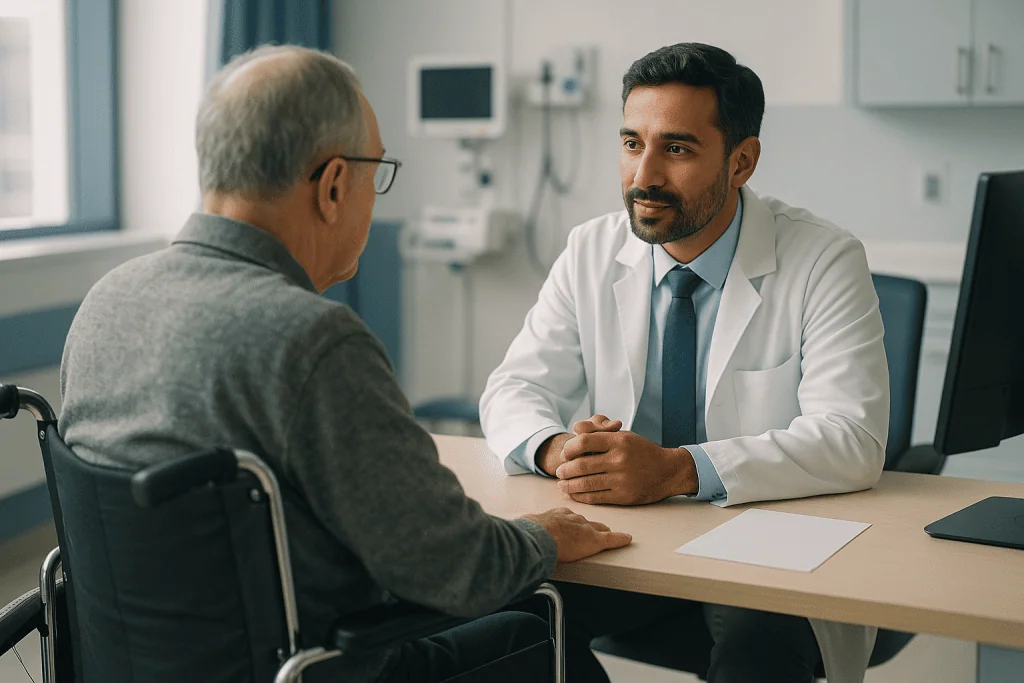
Before you book, confirm the exact room, not the hotel's general 'accessible' label. Check the step-free route from drop-off to bed, lift size, doorway widths, a roll-in or step-free shower with grab bars, transfer space beside the toilet and bed, bedside power outlets, and travel time to your hospital. Ask for recent photos and written confirmation, then reconfirm a few days before you fly.
Will your wheelchair actually fit through the bathroom door? Is there a step into the shower that nobody mentioned online? These are the questions that keep patients awake the week before a treatment trip, and they are worth answering before you pay for anything.
This guide gives you a working accessible hotel room checklist for treatment in Turkey: what to measure, what to ask, what to demand in writing, and where hotels most often fall short. It is written for international patients, but everything in it applies equally to the companion who will share the room and do much of the practical work.
At a glance
- Best time to confirm: Before flights are booked, especially if you need wheelchair access, a roll-in shower, or bathroom adaptations
- Most important areas: Entrance route, lift size, bathroom, bed height, doorway widths, and transfer space
- Key fact: Turkey has no ADA; ‘accessible’ has no single legal meaning in Turkish hotels, so confirm every feature individually
- What to request: Written confirmation of the exact room, recent photos or a short video, and key measurements
- Who can help: Your hospital’s international patient team, hotel reservations staff, and your travel companion
- Good to bring: Your mobility aid dimensions, medication list, plug adapters, and instructions for any assistive device
Why an accessible hotel room checklist matters for treatment in Turkey
When you travel for medical care, your hotel is not just a place to sleep. It is your base for rest, medication routines, hygiene, meals, companion support, and the days between appointments. A room that is hard to enter, too tight for a mobility aid, or unsafe in the bathroom adds risk and stress at exactly the moment you need predictability.
An accessible hotel room checklist for treatment in Turkey moves you from vague promises to verifiable details. Instead of asking whether a hotel is accessible, a question almost every hotel answers yes to, you confirm whether the shower has a step, whether the lift reaches your floor, whether a wheelchair can turn beside the bed, and whether your companion can stay comfortably with you. Those specifics are what decide whether your stay works.
There is a second reason to plan carefully: your needs after treatment may be different from your needs today. You may walk into the hotel on arrival day and return from the hospital needing a wheelchair, extra rest, or help in the bathroom. A room chosen only for your pre-treatment self can become unsuitable overnight. Our guide on setting up a hotel room for recovery after surgery in Turkey covers that second phase in detail; this checklist makes sure the room can support it in the first place.
If you are receiving care through Acibadem International, the international patient services team can help you think through accommodation in relation to your appointment schedule, mobility level, and hospital location. They may coordinate with hotels or accommodation partners. Even so, request written confirmation of the room features that matter most to you. Your needs are specific to you, and only you and your companion can judge whether a room genuinely meets them.
Start with your personal mobility and care needs
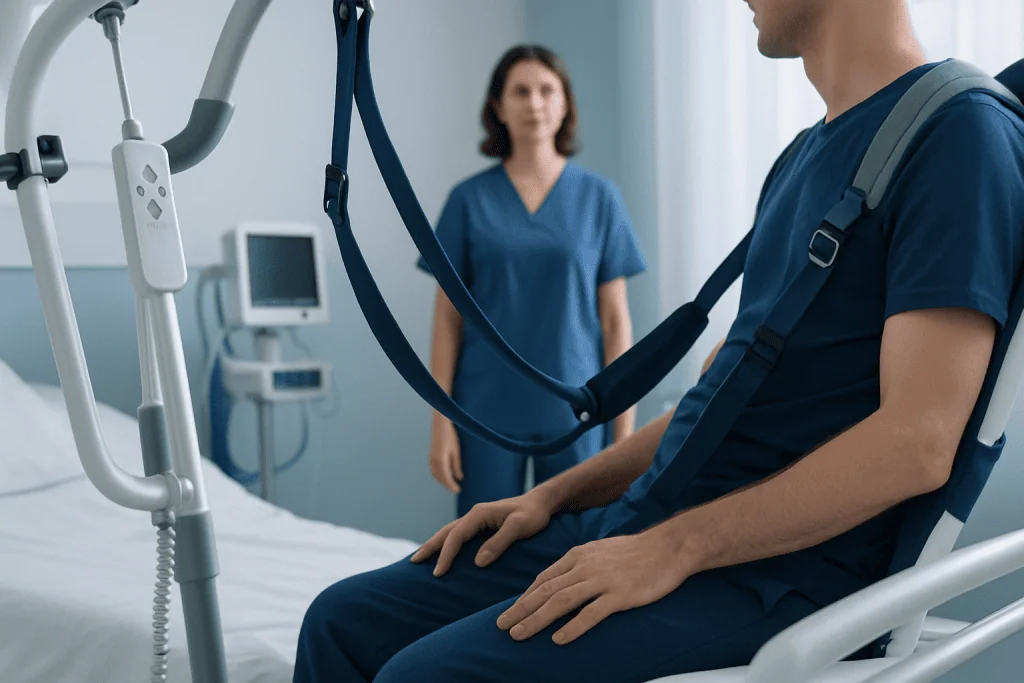
Before you compare hotels, write down what you need on a normal day and what may change after treatment. You may walk independently now but need a wheelchair, walker, or crutches afterwards, or simply far more rest than usual. You may need a companion’s help with dressing, bathing, transfers, or medication reminders. Ask your treating team what is realistic for your procedure and plan the room around the harder days, not the easier ones.
Measure any equipment you will use: wheelchair width, scooter length, walker width, and portable oxygen equipment if applicable. These numbers let you ask precise questions about doorways, lift dimensions, corridors, and turning space. As a practical benchmark, standards used internationally treat a doorway clear width of around 80 centimetres and a turning circle of around 150 centimetres as the minimum for most manual wheelchairs, but do not assume any Turkish hotel meets those figures. Ask, and compare against your own equipment. The turning space inside the bathroom is often more decisive than the room size listed online.
Consider invisible accessibility needs too. Fatigue, dizziness, pain, low vision, hearing difficulty, cognitive overload, noise sensitivity, or the need to avoid stairs are all legitimate reasons to be specific with a hotel. A quiet room near the lift, clear lighting, a simple layout, and reliable room service can matter as much as grab bars. If you use a CPAP machine, plan the bedside setup before you travel: our CPAP checklist for hospital patients travelling to Turkey walks through power, adapters, and distilled water.
What ‘accessible’ means in Turkey, and why ADA rules do not apply
Many international patients search for ADA guidelines when planning a trip, so it is worth being direct: the ADA is a law of the United States. It sets detailed design requirements for American hotels, grab bar positions, clear floor space, roll-in shower dimensions, and requires a minimum share of accessible rooms that scales with a hotel’s size. None of this is binding on hotels in Turkey. A Turkish hotel is under no obligation to meet ADA specifications, and asking whether a room is ‘ADA compliant’ will usually produce a polite yes that means very little.
Turkey has its own disability legislation and building regulations, and newer hotels in major cities often include rooms designed for wheelchair users. But enforcement, interpretation, and hotel age vary widely. In practice, ‘accessible’ on a Turkish booking site can mean anything from a genuine roll-in shower with grab bars to an ordinary room with a slightly wider door. Older buildings in historic districts frequently have steps at the entrance, small lifts, or no lift at all.
Is Turkey disabled friendly? The honest answer is mixed. Major hospitals, newer hotels, airports, and modern shopping areas are generally well equipped, and staff are typically willing to help. Pavements, older neighbourhoods, small restaurants, and historic sites can be difficult, with broken kerbs, steep hills, and cobblestones. For a treatment trip this matters less than for tourism, because your routine is mostly hotel, transfer vehicle, and hospital, three environments you can verify in advance. That is exactly what this checklist exists to do.
The useful takeaway from ADA-style checklists is not the legal standard but the habit of specificity: ask about individual features, in measurable terms, for the exact room you will occupy.
Room access, lifts, and the route from entrance to bed
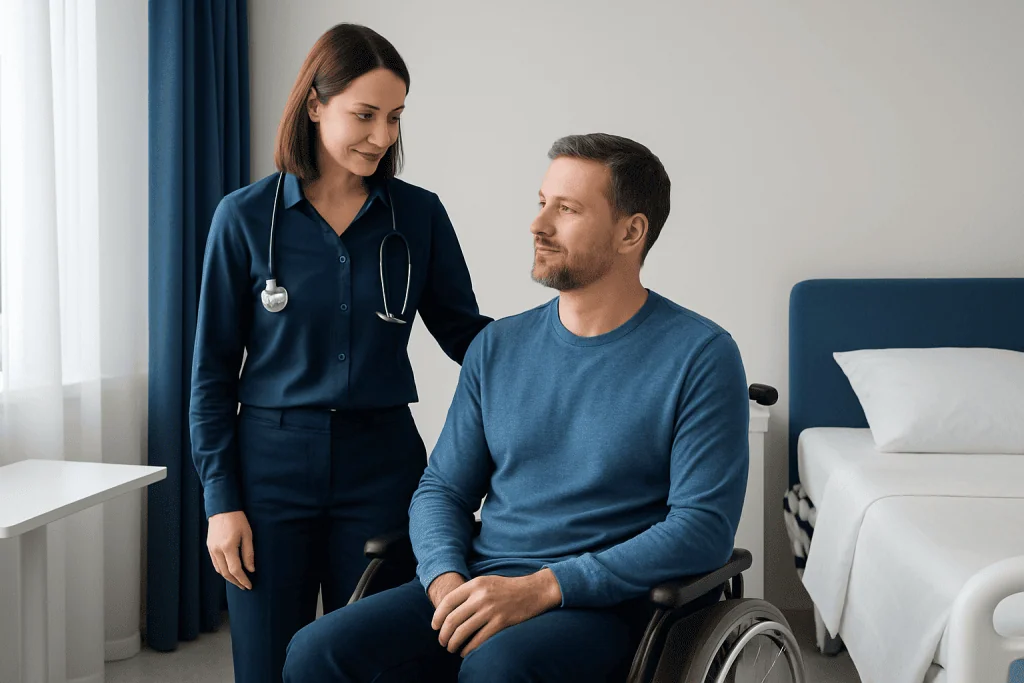
Accessibility begins before the room. Ask the hotel to describe the full route from the street or drop-off point to reception, the lift, and your room door. Check for steps at the entrance, steep ramps, heavy doors, uneven surfaces, revolving doors, and thresholds that may be difficult after treatment. A single unmentioned step can undo everything else.
For lifts, confirm that the lift serves every floor you will use, lobby, breakfast area, parking level, and terrace or wellness areas if you plan to visit them. Ask whether the lift is large enough for your wheelchair or mobility aid plus a companion; some older Turkish hotels have lifts that fit one standing adult. Ask what happens if the lift is out of service, and whether a lower-floor room is available as a precaution.
Inside the room, focus on movement and transfers. You may need to approach both sides of the bed, turn a wheelchair fully, store luggage without blocking pathways, and reach switches, curtains, bedside tables, and power outlets from a seated position. If you will need assistance, your companion also needs space to move safely without lifting awkwardly or stepping over equipment. Ask for the bed height in centimetres: a bed that is very low or very high makes transfers harder and slower.
Bathroom safety: the most important questions to ask
The bathroom decides most accessible stays. Ask for clear, recent photos of the shower, toilet, sink, floor, and doorway. Hotel websites often use generic images that do not match the specific accessible room you will receive, so request confirmation for the exact room category reserved for you, ideally with the room number.
For the shower, establish which of three things it actually is: a true roll-in shower with a level floor, a walk-in shower with a lip or step, or a bathtub. Then ask about a fixed or portable shower chair, a handheld shower head, non-slip flooring, and space for a companion to help. A small step into the shower looks trivial in photos but can be genuinely unsafe when balance, strength, or sensation is reduced after treatment.
For the toilet and sink, ask about grab bars and their positions, toilet height, transfer space beside the toilet, sink clearance for a seated user, and whether the bathroom door opens outward or slides: an inward-opening door can trap a person who falls behind it. If you have specific needs such as catheter care, wound dressing, or limited arm movement, discuss the practical setup with your care team before you travel rather than improvising in the hotel. Our guide to accessible bathroom safety during recovery in Turkey goes deeper on fall prevention and daily routines.
One safety note belongs here rather than in small print. Bathrooms are where most hotel falls happen. If you or your companion are seriously injured in a fall, for example a blow to the head, loss of consciousness, or being unable to bear weight, call your local emergency number or go to the nearest emergency department now. In Turkey the general emergency number is 112.
Comfort, rest, and recovery-friendly details
A medically suitable room supports rest, not just access. Ask about bed height, mattress firmness, extra pillows, room temperature control, blackout curtains, and noise. Request a room away from lift machinery, nightlife, street noise, and any construction. After hospital days, these small details determine whether you actually sleep.
Food and hydration matter more than most patients expect. Confirm whether the room has a small refrigerator, a kettle, easy access to bottled water, room service, and nearby dining. If you have dietary instructions, swallowing difficulty, nausea, diabetes, allergies, or specific food preferences, ask what the hotel can realistically provide and what you should arrange yourself.
Plan medication and device routines in advance. You may need bedside outlets for a CPAP machine, phone, mobility scooter battery, hearing aids, or a medical device charger, count the outlets in the photos and bring an adapter and, if permitted by the device manufacturer, a short extension lead. If any medication requires refrigeration, ask whether the in-room fridge holds a suitable temperature; minibar fridges often do not. Our guide on storing medicines safely in your hotel room in Turkey covers this in detail. Follow your treating team’s instructions on how each medicine should be kept, do not change how or when you take anything based on hotel conditions without asking them first.
If a companion is travelling with you, decide early whether they share your room or take an adjoining one, and confirm the hotel can honour that. There are trade-offs either way; see booking a companion room in Turkey for what to check.
Location, transport, and hospital coordination
The best room is not only accessible inside; it must be practical for hospital visits. Check the travel time to your hospital at the times of day when your appointments actually happen, not just the distance on a map. In large cities such as Istanbul, traffic can turn a short distance into a long, tiring journey: a real problem if you need wheelchair-accessible transport or frequent follow-up visits.
Ask whether the hotel has step-free vehicle access, a spot where a car can wait, and staff who assist with doors and luggage. If you use a wheelchair, confirm that accessible taxis or private transfers can reach the entrance directly rather than stopping across a busy street. Keep a plan for rain, late appointments, and early-morning departures. If your mobility is limited, it is worth reading our guide to flying to Turkey with limited mobility before you book anything, because airport assistance, transfer vehicles, and the hotel need to work as one chain.
Acibadem International’s patient services team can help you understand how accommodation location relates to appointments, transfers, interpreters, and companion needs. The final hotel choice is yours, but coordinating early reduces last-minute changes and gives the whole trip a calmer rhythm.
Step by step
- List your non-negotiable needs. Write down the accessibility features you must have, not what would be nice. Include mobility aid dimensions, bathroom support, bed access, companion space, dietary needs, and any fatigue or sensory considerations, for both your current state and your likely state after treatment.
- Ask for the exact accessible room details. Do not rely on the word ‘accessible’ in a listing. Request the specific room category, floor, doorway widths, bathroom type, shower access, grab bar positions, bed height, and lift dimensions.
- Request recent photos or a short video. Images of the actual room reveal steps, tight corners, low beds, small bathrooms, and blocked transfer space. Ask for the entrance, bed area, bathroom, shower, toilet, sink, and the route from the lift.
- Confirm everything in writing. After any phone call, ask the hotel to email the agreed details. Keep the confirmation on your phone and share it with your companion and, if relevant, your patient coordinator.
- Check hospital transport logistics. Confirm travel time at appointment hours, and whether accessible transfers can collect you at the hotel entrance. Build in margin for traffic, mobility assistance, and post-appointment fatigue.
- Plan your first 24 hours. Arrange arrival assistance, a simple meal, drinking water, medication storage, and a clear path from bed to bathroom. Tiredness and unfamiliar surroundings make small barriers feel bigger on day one.
- Reconfirm before arrival. Contact the hotel a few days before travel to reconfirm your accessible room and any special requests, and ask them not to reallocate your room without contacting you: a real risk in busy periods, because accessible rooms are few and sometimes given away.
Your checklist
Treat this accessible hotel room checklist for treatment in Turkey as your final pre-booking pass: every item below should have a written answer before you pay.
- Step-free route from drop-off point to reception, lift, and room door
- Lift large enough for your wheelchair, scooter, or walker plus a companion
- Doorway and corridor widths confirmed against your mobility aid’s measurements
- Roll-in or step-free shower, grab bars, shower chair, handheld shower head, non-slip floor
- Transfer space beside the toilet and on at least one side of the bed
- Bed height suitable for transfers; room layout workable for companion assistance
- Power outlets within reach of the bed for devices, chargers, or medical equipment
- Fridge or agreed safe storage for medications that need refrigeration
- Quiet location, working temperature control, blackout curtains
- Step-free vehicle pick-up point at or beside the hotel entrance
- Written confirmation, with photos, of the exact room reserved, reconfirmed before arrival
Key takeaways
- ‘Accessible’ has no single meaning in Turkish hotels: ADA rules do not apply here, so verify every feature individually.
- The bathroom, lift, entrance route, and bed access are the areas most worth checking, in that order.
- Plan for your mobility after treatment, not just your mobility today.
- Recent photos of the exact room and written confirmation are your best protection against surprises.
- The room must also work as part of a chain: airport assistance, accessible transfer, hotel, and hospital.
- Early coordination with your hospital’s international patient team makes hotel and transfer planning easier, but the final check is always yours.
Frequently asked questions
Is Turkey disabled friendly?
It is mixed. Major hospitals, newer hotels, airports, and modern city districts are generally well equipped, and staff are usually willing to help. Older neighbourhoods, small venues, hills, and cobbled streets can be difficult. For a treatment trip, most of your time is spent in the hotel, transfer vehicle, and hospital, three environments you can verify before you travel, which is why a written checklist matters more than a general impression.
What is included in an accessible hotel room?
There is no fixed standard in Turkey, but a genuinely accessible room typically offers a step-free route from the entrance, a wider doorway, turning space for a wheelchair, a roll-in or step-free shower with grab bars and a shower seat, transfer space beside the toilet and bed, a lowered sink, and reachable switches and outlets. Always confirm each feature for the exact room, some rooms offer only one or two of these and are still marketed as accessible.
Do ADA guidelines apply to hotels in Turkey, and how many rooms must be accessible?
No. The ADA is a US law; its design rules and its requirement that a share of rooms be accessible apply to American hotels, not Turkish ones. Turkey has its own regulations, applied unevenly across older and newer buildings, and there is no quota you can rely on. Borrow the ADA’s habit of asking about specific, measurable features, but never assume a Turkish hotel meets ADA specifications.
How early should I book an accessible hotel room in Turkey?
As early as possible, ideally before you finalise flights if accessibility is essential. Genuinely accessible rooms are limited in number, and specific features such as roll-in showers or wide transfer space may exist in only one or two rooms per hotel, or not at all.
Is a room labelled accessible always wheelchair friendly?
No. Some rooms have grab bars but still include narrow doorways, small bathrooms, a lip into the shower, or no turning space. Always ask for measurements, recent photos of the exact room, and written confirmation before you pay.
Should my companion stay in the same room?
For many patients it makes daily routines much easier, especially after appointments or treatment. Check that the room fits two people plus luggage and mobility equipment, with safe working space around the bed and bathroom. If you prefer separate rooms, ask for adjoining or directly neighbouring rooms and confirm this in writing.
What if my mobility changes after treatment?
Plan for a higher level of support than you currently need, especially if fatigue, dizziness, pain, or temporary weakness is possible. Ask your care team what restrictions or assistance are realistic after your specific treatment, and choose a room that can absorb those changes rather than one that only just works today.
Do I need to bring my own shower chair or mobility aid?
Some hotels can provide basic equipment, but availability and quality vary widely. If you depend on a specific device, discuss options with your care team, ask the hotel to confirm in writing exactly what they can supply, and consider bringing or renting your own if the answer is vague.
Add us as a Preferred Source to see more of our trusted health content across Google Search, AI Overviews and Discover.

Update history
- PublishedJune 8, 2026
- Medical review approvedAugust 30, 2026
- Last content updateAugust 30, 2026
References1
- CDC Yellow Book: Travelers with Disabilities wwwnc.cdc.gov
More Patient Guides

Airport Wheelchair Assistance: How to Book It for a Medical Trip
Airport wheelchair assistance is free, it exists at every commercial airport, and airlines are legally required to provide it, yet half…

Travelling With a Stoma: Flights, Supplies and Airport Screening
Traveling to Turkey with a stoma is manageable with the right supplies, airport screening plan, and recovery support in Istanbul or Turkey.
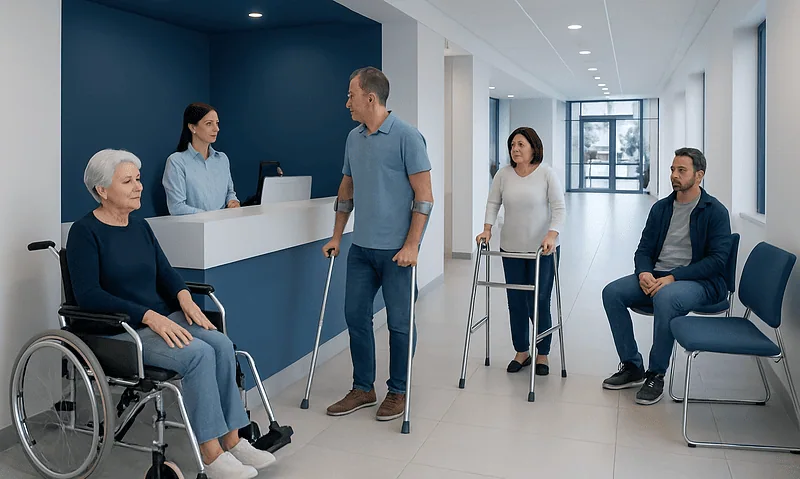
Mobility Aids in Turkey: Renting a Wheelchair, Walker, or Crutches
Mobility aids in Turkey can be rented through medical suppliers, pharmacies, and hospital-linked services in Istanbul and other cities.
Traveling to Turkey with Food Allergies or Special Diet Needs
Traveling to Turkey with food allergies or special diet needs is manageable with planning, translated allergy cards, and hotel and hospital support…