

Basic Turkish Phrases for Hospital and Hotel Recovery

The most useful basic Turkish phrases for hospital and hotel recovery cover polite basics, comfort requests and getting attention: Merhaba (hello), Lütfen (please), Teşekkür ederim (thank you), Su alabilir miyim? (may I have water?), Ağrım var (I have pain) and Hemşire çağırır mısınız? (could you call the nurse?). Use them for daily comfort. For consent, medication and discharge details, a professional interpreter does the work.
It is two in the morning. You are sore, thirsty, and the word for water is not in your language. That is the exact moment a handful of Turkish words earns its place in your phone. This guide collects basic Turkish phrases for hospital and hotel recovery: the short, practical lines you actually use when you are tired, moving slowly and want to be understood without effort.
You will find phrases for greetings, comfort requests, symptoms, meals, transport and pharmacies, plus a short pronunciation primer so the words come out recognisably. Just as important, the guide is clear about where a phrasebook stops: consent forms, medication instructions and discharge plans belong with a professional interpreter, not with your own Turkish.
At a glance
- Best for: International patients and companions spending recovery days in Turkey
- Main use: Hospital rooms, reception desks, pharmacies, taxis and hotels
- Not for: Consent, diagnosis, medication instructions or discharge plans: those need an interpreter
- Helpful habit: Save key phrases in your phone and show them when speaking is tiring
- Good to know: Turkish spelling is phonetic; once you learn six letters, you can read every phrase here
Why Basic Turkish Phrases for Hospital and Hotel Recovery Are Worth Learning
Recovery is built from small moments: asking for water, saying you feel cold, confirming a taxi destination, telling housekeeping not to knock. In Istanbul and other major Turkish cities you will meet plenty of people who speak some English, especially in hospitals that treat international patients and in hotels used to foreign guests. But English coverage is uneven, strong at a hospital’s international desk, thinner with a night-shift cleaner or a taxi driver. A few Turkish words close that gap.
The goal of learning basic Turkish phrases for hospital and hotel recovery is not fluency. It is comfort and clarity at moments when you have limited energy. Three words carry most of the load: Lütfen (please), Teşekkür ederim (thank you) and Yardım eder misiniz? (can you help me?). Everything else in this guide builds outward from there.
One boundary matters more than any phrase. For anything medical, important or legally significant, symptoms you want assessed, medication timing, consent forms, test results, discharge instructions, do not rely on your own Turkish or on a translation app. Hospitals that serve international patients, including Acibadem, provide interpreter and coordination support for exactly these conversations. The phrases below are for daily comfort and simple logistics; the interpreter is for decisions.
A Two-Minute Pronunciation Primer
Turkish is almost perfectly phonetic: every letter is pronounced, always the same way. Learn six letters and every phrase in this guide becomes readable aloud.
| Letter | Sounds like | Example |
|---|---|---|
| c | the “j” in jam | eczane (pharmacy) → “edj-zah-neh” |
| ç | “ch” in chair | çay (tea) → “chai” |
| ş | “sh” in ship | teşekkür → “teh-shek-kur” |
| ğ | silent; it stretches the vowel before it | ağrı (pain) → “aa-ruh” |
| ı (no dot) | the “uh” in open | ılık (lukewarm) → “uh-luhk” |
| ö / ü | as in German, or roughly “ur” / French “u” | üşüyorum (I am cold) → “ew-shew-yo-room” |
Stress usually falls gently on the last syllable, but Turkish speakers are forgiving. If pronunciation fails, show the written phrase. Nobody minds, and after facial, dental or throat procedures, when talking itself is tiring, showing a phrase on your phone is often the better option anyway.
Essential Greetings and Polite Words

Turkish culture is warm and courteous, and polite words are noticed. A greeting at the hospital desk, hotel reception or pharmacy sets a calm tone even when the rest of the conversation happens through pointing and a phone screen.
- Merhabahello
- Günaydıngood morning
- İyi akşamlargood evening
- Lütfenplease
- Teşekkür ederimthank you
- Çok teşekkürlerthank you very much
- Affedersinizexcuse me (to get attention politely)
- AnlamıyorumI do not understand
- Yavaş konuşur musunuz?could you speak slowly?
- Evet / Hayır / Tamamyes / no / okay
- BilmiyorumI do not know
- Bir dakikaone moment
One word deserves special mention: çok (pronounced “chok”) means “very” or “a lot”. It is one of the most-used words in Turkish, and you can bolt it onto almost anything: çok güzel (very nice), çok teşekkürler (many thanks), çok ağrı (a lot of pain). Doubled as çok çok, it simply intensifies, “very, very”: the way English speakers say “really, really”. If you learn ten Turkish words, make çok one of them.
You will also hear one phrase said to you constantly: Geçmiş olsun, literally “may it be past”: the Turkish way of saying “get well soon”. Nurses, hotel staff, taxi drivers and strangers who notice a bandage will all say it. A simple teşekkür ederim is the right reply.
Hospital Phrases for Comfort and Daily Care
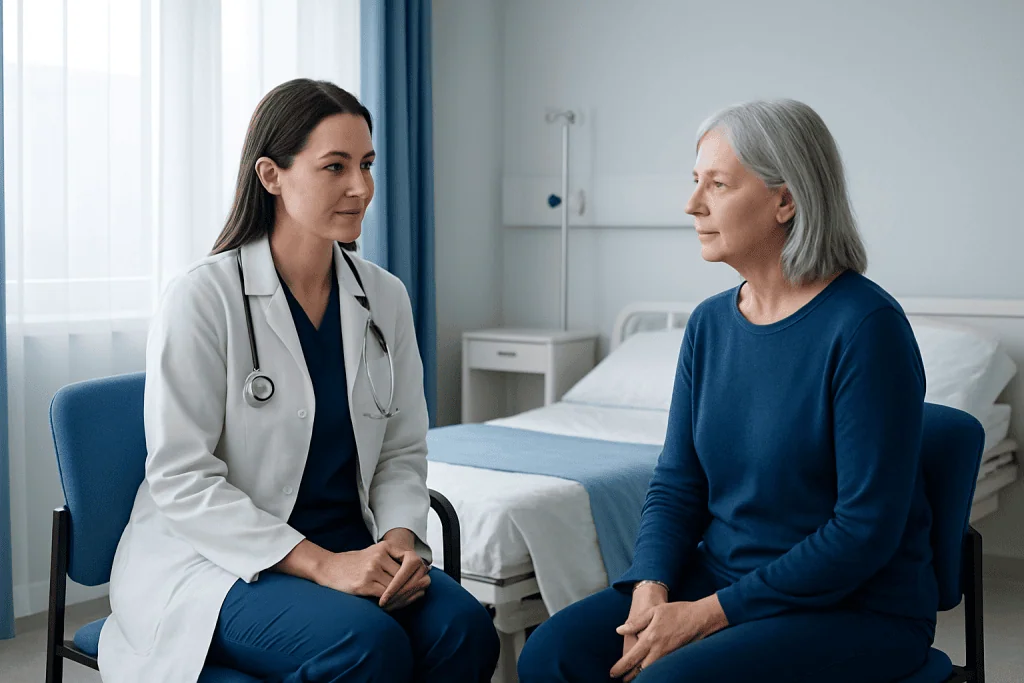
Even when your clinical team speaks your language, everyday comfort requests come up dozens of times a day, often with staff who do not. These phrases cover water, warmth, the bathroom and getting help to move. If you are connected to an IV line, drain, monitor or mobility aid, ask staff before getting upKalkabilir miyim? means “may I get up?”
- Su alabilir miyim?may I have water?
- Bir battaniye alabilir miyim?may I have a blanket?
- Tuvalete gitmem gerekiyorI need to go to the bathroom
- ÜşüyorumI am cold
- Sıcak hissediyorumI feel hot
- Işığı kapatır mısınız?could you turn off the light?
- Hemşire çağırır mısınız?could you call the nurse?
- Doktorla konuşmak istiyorumI would like to speak with the doctor
- Refakatçimi çağırır mısınız?could you call my companion?
- Tercüman var mı?is there an interpreter?
Remember that the call bell by your bed does the same job as most of these phrases, without any words at all. The phrases are for what comes next, telling the person who arrives what you need.
Phrases for Pain, Symptoms and Getting Attention
Describing how you feel is where a phrasebook is most useful and most limited. These short lines bring staff to you and tell them where to look; the assessment itself is their job, done properly through an interpreter when the conversation matters.
- Ağrım varI have pain
- Buram ağrıyorthis area hurts (point gently)
- Çok ağrım varI have a lot of pain
- Midem bulanıyorI feel nauseated
- Başım dönüyorI am dizzy
- Kendimi güçsüz hissediyorumI feel weak
- Ateşim varI have a fever
- Kanamam varI am bleeding
- Alerjim varI have an allergy
- Nefes almakta zorlanıyorumI am having difficulty breathing
- Göğsüm ağrıyormy chest hurts
- Acil yardım lazımI need urgent help
- İngilizce bilen biri var mı?is there someone who speaks English?
Keep the urgent lines at the top of your phone note, where you or your companion can find them without scrolling. A phrase is a bridge to attention, never a substitute for it, say the key words, point if you can, and let staff take it from there. Our companion checklist for hotel recovery covers how the person travelling with you can share this job.
Hotel Recovery Phrases: Meals, Room Comfort and Rest
After discharge, your hotel becomes your recovery base, and the vocabulary shifts from clinical to domestic: bedding, quiet, food, laundry. If you have not yet arranged your room, our guide to setting up a hotel room for recovery pairs well with the phrases below.
- Ekstra yastık alabilir miyim?may I have an extra pillow?
- Odamı temizler misiniz?could you clean my room?
- Rahatsız etmeyin lütfenplease do not disturb
- Daha sessiz bir oda mümkün mü?is a quieter room possible?
- Klima çalışmıyorthe air conditioning is not working
- Oda servisi var mı?is there room service?
- Çorba alabilir miyim?may I have soup?
- Şekersizwithout sugar
- Az tuzluwith little salt
- Domuz eti yemiyorumI do not eat pork
- Vejetaryen yemek var mı?is there vegetarian food?
Keep any dietary restrictions written down in both Turkish and English: a card you can hand over beats a spoken explanation every time. If you plan to use delivery apps rather than room service, the guide to ordering food and groceries during hotel recovery walks through the practical side. And expect to hear Afiyet olsun“enjoy your meal”, whenever food arrives. Like geçmiş olsun, it needs no reply beyond thanks.
Basic Turkish phrases for hospital and hotel recovery earn their keep most in this stage, because hotel staff are the people least likely to share a language with you and most involved in your daily comfort.
Transport, Pharmacy and Appointment Phrases
Most recovery weeks involve short trips: hospital to hotel, hotel to pharmacy, hotel to follow-up appointment, eventually hotel to airport. Save your hospital name, hotel name and both addresses in your phone in Turkish and English, and keep an offline copy.
- Bu adrese gitmek istiyorumI want to go to this address (then show it)
- Hastaneye gidiyoruzwe are going to the hospital
- Lütfen yavaş sürünplease drive slowly
- Bavuluma yardım eder misiniz?can you help with my suitcase?
- Ne kadar sürer?how long does it take?
- Eczane nerede?where is the pharmacy?
- Reçetem varI have a prescription
- Randevum varI have an appointment
Pharmacies (eczane, marked with a red “E” sign) are everywhere in Turkish cities, and pharmacists are often used to visitors. Even so, the phrase Bu ilacı nasıl kullanmalıyım?how should I use this medicine?, has a hard limit: anything about starting, changing or adding medicines, including over-the-counter painkillers, herbal products and supplements, is a question for your treating doctor, not for a phrasebook or a counter conversation. The guide to medicine side effects during hotel recovery explains why this line is worth respecting.
Numbers, Time Words and Quantities
A small stock of numbers and time words makes appointments, room numbers and quantities much easier to follow.
| Turkish | English | Turkish | English |
|---|---|---|---|
| bir | one | altı | six |
| iki | two | yedi | seven |
| üç | three | sekiz | eight |
| dört | four | dokuz | nine |
| beş | five | on | ten |
- Bugün / yarıntoday / tomorrow
- Şimdi / sonranow / later
- Sabah / öğlen / akşammorning / midday / evening
- Saat kaçta?at what time?
A Short, Honest Word About Slang
Search any Turkish phrase list and slang appears quickly. For a recovery trip, you can skip almost all of it, polite, standard Turkish is what hospitals and hotels expect and appreciate. That said, a few casual expressions are worth recognising because you will hear them around you: Hadi (come on / let’s go), Eyvallah (informal thanks or agreement), Boşver (never mind), İnşallah (hopefully) and Maşallah (an expression of admiration). One near-slang phrase is genuinely useful to say yourself: Kolay gelsin“may it come easy”, said to anyone doing their job, from a cleaner to a receptionist. It costs nothing and lands warmly every time.
Step by step
- Save the phrases before you travel. Copy the ones you expect to use most into a phone note with English meanings alongside. If your treatment may make speaking difficult, print a small phrase sheet too: it belongs on the same list as your packing essentials for hospital and hotel.
- Add your hospital and hotel details. Save both names and addresses in Turkish and English, plus your coordinator or hospital contact number, and keep an offline copy in case of poor signal.
- Put urgent phrases at the top. “Acil yardım lazım”, “Nefes almakta zorlanıyorum” and “Göğsüm ağrıyor” should be findable without scrolling, by you and by your companion.
- Use short sentences when you feel unwell. Say the key word, point if appropriate, and ask for the nurse or an interpreter rather than trying to explain everything at once.
- Show, don’t struggle. Displaying a written phrase is completely acceptable and often clearer than speaking, especially after dental, ENT, facial or abdominal procedures.
- Reserve interpreters for decisions. Consent, medication timing, warning signs and discharge instructions need professional language support, ask for an interpreter whenever the information affects your health.
- Confirm understanding before discharge. Make sure your medicines, wound care, activity limits, diet and follow-up appointment are clear, and have anything uncertain repeated through an interpreter before you leave.
Your checklist
- Phone note with key Turkish phrases and English meanings
- Urgent phrases pinned at the top of the note
- Hospital name, hotel name and addresses saved offline in both languages
- Coordinator or hospital contact number saved and shared with your companion
- Medication list, allergies and dietary restrictions in writing, in Turkish and English
- Discharge instructions and follow-up appointment details kept together
- Translation app downloaded for non-medical daily use
- Companion briefed on the phrase list and where to find it
- Taxi or transfer meeting points confirmed before appointments
Key takeaways
- Basic Turkish phrases for hospital and hotel recovery make daily comfort easier; they are not a tool for medical decisions.
- Turkish is phonetic, six letters unlock every phrase in this guide.
- Keep phrases short and written, with urgent lines at the top of your phone note.
- Çok (“very”) is the hardest-working word in the language; kolay gelsin and geçmiş olsun are the warmest.
- For consent, medication, results or discharge instructions, professional interpreter support does the job a phrasebook cannot.
Frequently asked questions
Do I need to speak Turkish to receive care in Turkey?
No. Hospitals that treat international patients provide interpreter and coordination support, and clinical teams in these settings routinely work across languages. A few Turkish phrases are for comfort and everyday logistics: they make small moments smoother, but they are never a requirement for receiving care.
What does “çok çok” mean in Turkish?
Çok (often written “chok” in English) means “very” or “a lot”. Doubling it, çok çok, simply adds emphasis, like “very, very” or “lots and lots” in English. You will hear it constantly: çok güzel means very nice, çok teşekkürler means many thanks, and çok ağrı means a lot of pain.
What are the most useful Turkish phrases for travel generally?
Beyond the recovery-specific lines in this guide, travellers get the most use from Merhaba (hello), Lütfen (please), Teşekkür ederim (thank you), Ne kadar? (how much?), Nerede? (where is…?), Evet and Hayır (yes and no), and Afiyet olsun (enjoy your meal). These cover greetings, shopping, directions and meals in almost any setting.
Should I learn Turkish slang before my trip?
You do not need slang for a recovery stay, standard polite Turkish is what hospitals and hotels expect. It helps to recognise a few casual expressions you will hear, such as Hadi (come on), Eyvallah (informal thanks) and İnşallah (hopefully). The one near-slang phrase worth saying yourself is Kolay gelsin, a friendly “may your work come easy” to anyone doing their job.
Can I use a translation app in the hospital?
Yes, for simple requests: water, room temperature, transport, meal preferences. It should not be your only support for medical conversations. Apps mistranslate clinical terms and dosing language, so consent forms, medication instructions and discharge planning should always go through a professional interpreter.
How can I explain pain in Turkish?
Say Ağrım var, meaning “I have pain”, and point to the area: Buram ağrıyor means “this area hurts”. If it is strong, Çok ağrım var means “I have a lot of pain”. These phrases bring staff to you and tell them where to look; the assessment of what the pain means is their job, done through an interpreter when needed.
How do I ask if someone speaks English?
İngilizce biliyor musunuz? means “do you speak English?”, useful one-to-one. İngilizce bilen biri var mı? means “is there someone who speaks English?”, useful at a desk or counter. In medical settings, Tercüman var mı? asks whether an interpreter is available, which is the better question when the conversation matters.
Should my companion learn these phrases too?
Yes. Your companion may need to speak for you when you are resting, uncomfortable or unable to communicate easily. Share the phone note, make sure they know where the urgent phrases sit, and keep the hospital contact number and discharge instructions where both of you can find them.
Add us as a Preferred Source to see more of our trusted health content across Google Search, AI Overviews and Discover.

Update history
- PublishedJune 22, 2026
- Medical review approvedAugust 30, 2026
- Last content updateAugust 30, 2026
References1
- CDC Travelers' Health: Medical Tourism wwwnc.cdc.gov
More Patient Guides
When a Hospital Stay in Turkey Becomes Longer Than Planned: What to Arrange
If your hospital stay in Turkey is longer than planned, arrange medical updates, accommodation, travel changes, insurance and support for your companion.
Waiting for Test Results in Turkey: How to Use Time Between Appointments
Waiting for test results in Turkey is easier with a clear plan for appointments, rest, records, questions and support in Istanbul.
Unexpected ICU Stay in Turkey: What Patients and Families Should Expect
Unexpected ICU stay in Turkey: learn what patients and families can expect, from communication and visiting to care updates and travel support.

How to Manage Special Diets During Medical Travel in Turkey
Special diets during medical travel in Turkey are easier to manage when you share your needs early, confirm meals and carry safe…