

Managing Special Diets During Hospital Care in Turkey
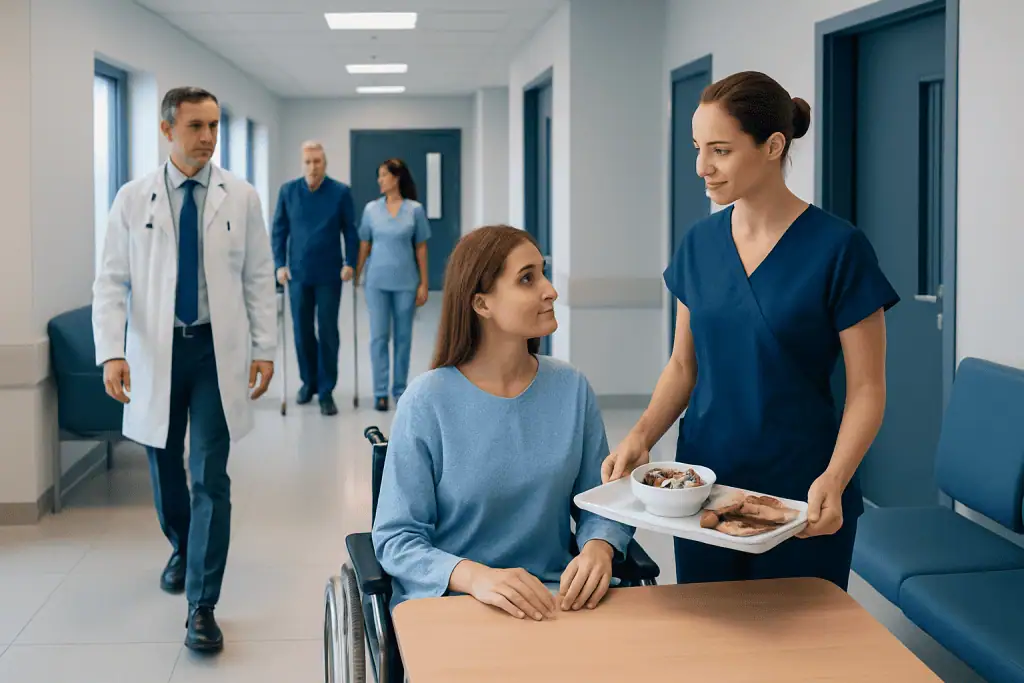
Put your dietary needs in writing before you travel, repeat them at admission, and again before every procedure. Separate severe allergies and medical diets from religious and personal preferences so staff can prioritise safety. Hospital meals follow your doctor's diet order, so check each tray before eating, and ask your care team before accepting food brought in by family.
Will the hospital really understand “no nuts” or “halal only” once you are in a room in Turkey, tired and far from home? It is one of the most common worries international patients raise before travel. The honest answer: hospitals in Turkey handle special diets every day, but the system works well only when your needs are written down, shared early, and repeated at the right moments. This guide shows you exactly how to do that.
You will find what to prepare before you fly, how hospital meals are ordered and served, what happens when family wants to bring food, and where the limits sit. Managing special diets during hospital care in Turkey is mostly a communication task, and you can control most of it.
At a glance
- When to share your diet: Before travel, again at admission, and before every procedure that involves fasting
- Commonly supported needs: Food allergies, halal meals, vegetarian meals, diabetes-conscious plans, low-salt and kidney-related diets, texture-modified foods
- Who decides your hospital diet: Your treating physician orders it; a dietitian may adjust it; food services prepare it
- Family-brought food: Needs approval from your care team, especially after surgery or during treatment
- Language support: Interpreters can explain ingredients, restrictions and fasting instructions so nothing is guessed
Why managing special diets during hospital care in Turkey matters
This is not only about comfort. What you eat in hospital can affect blood sugar, blood pressure, digestion, wound healing, medication timing and how you feel after anaesthesia. Small details carry weight: a hidden allergen in a sauce, added salt in a soup, fruit juice on a diabetes plan, or the wrong food texture after a throat or digestive procedure.
It helps to understand how hospital diets actually work. A medical diet is not chosen from a menu: it is ordered by your treating physician as part of your care plan, and the kitchen prepares your tray against that order. Preferences such as halal, no pork or vegetarian sit alongside the medical order and are passed to food services. When both layers are shared early, the hospital has time to plan, and you avoid confusion on day one.
Turkey’s healthcare system includes both public and private hospitals. International patients are usually treated in private hospitals that run dedicated international patient departments, with coordinators and interpreters who handle exactly this kind of practical detail. At Acibadem, international patient services can pass your dietary needs to the relevant hospital team before you arrive, particularly useful if you are managing diabetes, kidney disease, coeliac disease, swallowing difficulty or multiple food allergies. If you live with a long-term condition, it is worth reading our guide to managing chronic conditions during medical travel as well.
What to share before you travel to Turkey

Before you leave home, write a one-page diet summary in simple English. Include allergies, intolerances, foods you avoid for religious or personal reasons, and any diet prescribed by your doctor. For a severe allergy, name the exact food, describe the reaction you have, and note whether you carry emergency medication.
Sort the list into categories so staff can prioritise. For example: food allergypeanuts and sesame; medical diet, low sodium; preference, no pork; texture, soft foods only. This tells your coordinator and care team what is a safety issue and what is a preference to accommodate where possible. A vague list treats everything equally; a sorted list gets the dangerous items flagged first.
Bring supporting documents: recent lab results, a diabetes plan, kidney diet instructions, details of any nutrition supplements, or a letter from your home doctor. Avoid relying on brand names from your country: a supplement or product familiar at home may be unknown in Turkey. Use generic descriptions and ingredient names instead.
If your stay is being arranged through Acibadem’s international team, send this summary before travel so it reaches the hospital before you do. Your plan may still change after medical assessment on arrival, that is normal, but early notice makes admission and the first meals far smoother. For the wider journey, including flights and hotel meals, see how to manage special diets during medical travel in Turkey.
The types of diets hospitals use
Hospitals everywhere, including Turkey, work from a shared vocabulary of diet orders. Knowing the terms helps you understand your tray and ask better questions.
| Diet order | What it usually means |
|---|---|
| Regular diet | Standard balanced meals with no medical restriction |
| Clear liquids | Water, clear broth, certain juices, often before or just after procedures |
| Full liquids / soft / pureed | Texture-modified food for swallowing difficulty or post-procedure recovery |
| Diabetic / carbohydrate-controlled | Attention to carbohydrate amounts and meal timing alongside blood sugar checks |
| Low sodium / cardiac | Reduced salt for heart or blood pressure care |
| Renal | Adjusted protein, potassium, phosphorus or fluid for kidney conditions |
| NPO (nil by mouth) | No food or drink at all, usually before surgery, anaesthesia or certain tests |
Your physician may combine orders, for example, a diabetic low-sodium diet, and change them as your condition changes. If your tray suddenly looks different, the diet order has probably changed. Ask your nurse rather than assuming a kitchen mistake.
Common special diets and how they are handled

Turkish hospitals routinely support a range of dietary needs, but exact options vary by hospital, unit and physician instructions. The reliable constant is this: tell your team early, in writing, and repeat the key restrictions at admission. Do not rely on a verbal conversation from a previous appointment surviving into the kitchen’s records.
- Allergy-aware meals avoiding foods such as nuts, eggs, milk, shellfish, sesame or gluten-containing ingredients.
- Diabetes-conscious meals with attention to carbohydrate timing coordinated with blood sugar monitoring.
- Low-salt, heart-friendly or kidney-related diets when medically indicated.
- Halal meals and no-pork requestsstraightforward in Turkey, where halal food is the norm rather than the exception, though it is still worth stating explicitly.
- Vegetarian or vegan meals, depending on medical suitability; vegan needs deserve the earliest possible notice because they narrow the kitchen’s options most.
- Soft, pureed or liquid diets when swallowing, chewing or post-procedure needs require them.
If your diet is strict, ask whether a dietitian or nurse can review the meal plan with you. For serious allergies or coeliac disease, make the distinction between avoiding an ingredient and preventing cross-contact explicit: the two require different kitchen precautions, and the hospital needs to know which standard you need.
Hospital meals, mealtimes and Turkish food
During your stay, meals follow the medical plan for the day. You may receive regular meals, a restricted diet, clear liquids, or nothing at all for a set period before a procedure. If a tray does not match what you expected, pause and ask your nurse before eating. Nobody will be offended by the question.
Expect the food itself to reflect everyday Turkish eating: soups, particularly lentil, grilled or stewed meats and chicken, vegetables cooked in olive oil, rice or bulgur, bread, yoghurt, fresh salads and seasonal fruit. It is a cuisine built around vegetables, legumes, grains and dairy, which adapts reasonably well to many medical diets. Hospital versions are plainer and less seasoned than restaurant food, deliberately so.
Meal timing may differ from your home routine, and hospital schedules shift around tests, surgery slots and physician rounds. If you use insulin or any medicine that must be taken with food, tell your nurse so timing can be coordinated. Never skip, delay or double a dose on your own: that decision belongs to your medical team. If you are running low on any medicine during your stay, see managing prescription refills during a treatment stay in Turkey.
If you do not speak Turkish, ask for interpreter support rather than judging a dish by appearance. Reasonable questions include: does this contain dairy, wheat, meat broth or added sugar, and is there an alternative? These are exactly the details that get missed when you are tired or unwell, which is why coordinators and interpreters exist.
If eating becomes difficult: how hospitals support nutrition
Illness, surgery and some treatments reduce appetite, and poor intake can slow recovery. Hospitals take this seriously. If you or a companion notice that you are eating very little, say so, nutrition is part of treatment, not an afterthought.
The usual approach is stepwise. A dietitian assesses your intake and needs, then may adjust portion sizes, add snacks, fortify meals with extra energy and protein, or suggest oral nutrition supplements. When eating by mouth is not enough or not possible, the medical team may consider tube feeding or intravenous nutrition. These are clinical decisions made by your doctors based on your condition; your role is to report honestly how much you are actually managing to eat, rather than politely saying everything is fine.
For children, older adults and patients with limited appetite, small familiar comforts can sometimes help intake, within medical limits, and always discussed with the team first.
Bringing your own food or receiving food from family
Many patients feel calmer when a companion can bring familiar food, and in some situations this is possible. But it must always be cleared with your care team first. After surgery, during infection precautions, while certain medicines are given, or when your digestion is being monitored, outside food may not be appropriate, and the reasons are medical, not bureaucratic.
If family food is allowed, ask precisely what is safe: solid or soft, hot or cold, low fat or low salt, spiced or plain, and how much. Storage matters too. Hospital rooms are not designed for keeping homemade meals, and food that sits at room temperature can cause stomach illness at exactly the moment your body can least afford it. When in doubt, bring less and bring it fresh.
Your nurse or dietitian may suggest workable alternatives, small portions, bland options, protein-rich snacks or supplements, that combine cultural comfort with hospital safety. That combination, not a blanket yes or no, is the goal.
Allergies, coeliac disease and high-risk restrictions
If you have a severe food allergy, coeliac disease, or any condition where a small exposure can cause harm, be blunt about it. Tell your coordinator before arrival, tell the admission nurse, and remind the team whenever meals or medicines are given. Food is not the only route, some medicines, supplements and liquids contain ingredients that matter to certain patients, so mention your allergy when anything is offered, not only at mealtimes.
Practical safeguards worth using:
- A written allergy card in English and, if possible, Turkish, listing the allergen, your typical reaction, your emergency medication if you carry one, and a contact person.
- A medical alert bracelet if your allergy is severe.
- Confirmation that the allergy is documented in your hospital file and passed to food services, ask directly; it takes staff a moment to check.
- Following hospital policy on keeping your own emergency medication with you, so staff know what medicines are in the room and when they are used.
Hospitals run structured processes for patient identification, medication safety and communication, but your active participation still matters. If a tray looks uncertain, stopping and asking is always the right move. After discharge, stay alert too: if you develop signs of a severe allergic reaction, such as difficulty breathing or swelling of the face or throat, call your local emergency number or go to the nearest emergency department now. For a fuller briefing script, see what to tell your care team about food allergies and special diets.
Comfort, culture and communication during your stay
Food is emotional when you are far from home. You may be recovering, waiting for results, or supporting someone you love, and a familiar meal or a clear explanation can make a hospital day feel manageable. Ask for help calmly and specifically: what you cannot eat, what you can eat, and what would help you feel comfortable. Specific requests get acted on; general unhappiness does not.
Religious and cultural needs should be raised without hesitation. Halal food, avoiding pork, fasting practices and privacy around meals can all be discussed as part of your care plan, and in Turkey these conversations are familiar territory for hospital staff. If you intend to fast for religious reasons during treatment, speak with your doctor first, because hydration, medication timing and recovery may need adjusting around it. Our guide to planning for prayer, modesty and cultural needs during care in Turkey covers this in more depth.
Acibadem’s international patient services support communication between you, your companion and the hospital team through coordinators and interpreters. This does not replace advice from your doctor or dietitian, but it gets your needs to the right people at the right time. In the end, managing special diets during hospital care in Turkey comes down to exactly that: the clearer you are, the easier it is for the team to care for you safely and respectfully.
Step by step
- Write a one-page diet summary. List allergies, medical diets, religious requirements, preferences and foods you tolerate well. Sort by priority and use ingredient names, not only brand names.
- Send your needs before arrival. Share the summary with your international patient coordinator while your visit is being arranged, and ask whether any documents should be translated for the care team.
- Repeat key restrictions at admission. Tell the admission nurse and your physician your most important restrictions even if you already emailed them, admission is when hospital records and meal orders are actually confirmed.
- Ask about fasting and procedure days. Before surgery, imaging or tests, confirm when to stop eating and drinking, when you may restart, what type of food is allowed first, and how medicines that depend on food will be timed by your team.
- Check each meal tray before eating. With allergies, diabetes, coeliac disease or any strict diet, review the tray first. If anything looks unfamiliar, ask your nurse or interpreter to confirm the ingredients before you start.
- Discuss outside food before accepting it. Ask your care team before a companion brings food. Confirm permitted ingredients, portion size, storage and whether your current treatment stage allows outside meals at all.
- Plan for discharge and the hotel period. Before leaving hospital, ask what to eat during recovery at your accommodation and request written instructions, especially for a temporary soft diet, low-salt plan, diabetes guidance or restrictions after anaesthesia.
Your checklist
- One-page diet summary with allergies, restrictions and safe foods
- Medical letters or diet instructions from your home doctor
- List of current medications, supplements and nutrition drinks
- Food allergy card in English and, if possible, Turkish
- Medical alert bracelet if you have a severe allergy
- Questions about fasting, procedure days and medication timing
- Approved snacks only if your care team allows them
- Contact details for your companion or caregiver
- Discharge diet instructions for the hotel and flight home
Key takeaways
- Share special diet needs before travel, at admission and whenever your care plan changes: the hospital diet order, not the menu, decides your tray.
- Separate severe allergies and medical restrictions from religious needs and personal preferences so the team can prioritise safely.
- Halal food is standard in Turkey, but state your requirements explicitly rather than assuming.
- Outside food from family can be comforting, but it needs your care team’s approval and safe storage.
- If you are eating poorly, say so, dietitian review, fortified meals and supplements are part of hospital care, not an extra.
- Ask for written discharge diet advice if you will continue recovery in a hotel or fly soon after treatment.
Frequently asked questions
What are the different types of diets used in hospitals?
Common diet orders include regular, clear liquids, full liquids, soft or pureed, diabetic or carbohydrate-controlled, low sodium, renal, and nil by mouth before procedures. Your physician orders the diet as part of your treatment plan, a dietitian may adjust it, and the kitchen prepares your tray against that order. Preferences such as halal or vegetarian sit alongside the medical order.
Can I request halal meals during hospital care in Turkey?
Yes. Halal food is the everyday norm in Turkey, so this is one of the easier requests, but state it explicitly before admission and again on arrival rather than assuming. If you also have medical restrictions, such as low salt or diabetes management, tell the team so both requirements are combined in one meal plan.
What should I do if I have a serious food allergy?
Tell your coordinator before travel, inform the admission nurse, and repeat the allergy whenever meals or medicines are offered. Carry a written allergy card describing the food and your reaction, not just the food name, and ask staff to confirm the allergy is documented in your file and passed to food services. If a tray looks uncertain, do not eat until it is confirmed.
Can my family bring homemade food to the hospital?
Sometimes, depending on your condition, treatment stage and hospital policy. Always ask your nurse or doctor first, especially after surgery, during infection precautions or while you are on a restricted diet. If it is allowed, confirm permitted ingredients, portion size and safe storage, hospital rooms are not designed for keeping homemade meals.
How is poor appetite or malnutrition treated in hospital?
Usually stepwise: a dietitian assesses your intake, then may fortify meals, add snacks or suggest oral nutrition supplements. When eating by mouth is not enough, the medical team may consider tube or intravenous feeding. These are clinical decisions made by your doctors: your job is to report honestly how much you are actually eating.
What is the typical diet of Turkish people, and will hospital food reflect it?
Everyday Turkish eating centres on soups, grilled or stewed meats, vegetables cooked in olive oil, legumes, rice or bulgur, bread, yoghurt and fresh salads. Hospital food draws on the same foundations but is plainer and less seasoned, and it adapts reasonably well to low-salt, diabetic and vegetarian requirements when ordered.
Can I fast for religious reasons during treatment?
Discuss fasting with your doctor before changing anything about eating, drinking or medication timing. Some treatments, anaesthesia, imaging tests, dehydration risks or recovery needs may make fasting unsafe or require adjustment. Your care team can talk through options while respecting your beliefs, and interpreters can help make the conversation precise.
Do I need special diet instructions after discharge?
Often, yes, particularly after surgery, digestive procedures, anaesthesia or treatment that affects appetite. Ask what to eat at your hotel, what to avoid, how much fluid to drink and when to return to your normal diet. Request the instructions in writing so companions, hotel staff and airline crew can follow them too.
Add us as a Preferred Source to see more of our trusted health content across Google Search, AI Overviews and Discover.

Update history
- PublishedJune 8, 2026
- Medical review approvedSeptember 13, 2026
- Last content updateSeptember 12, 2026
References2
- Food allergy: NHS nhs.uk
- Nutritional Support: MedlinePlus medlineplus.gov
More Patient Guides

When a Hospital Stay in Turkey Becomes Longer Than Planned: What to Arrange
If your hospital stay in Turkey is longer than planned, arrange medical updates, accommodation, travel changes, insurance and support for your companion.

Waiting for Test Results in Turkey: How to Use Time Between Appointments
Waiting for test results in Turkey is easier with a clear plan for appointments, rest, records, questions and support in Istanbul.

Unexpected ICU Stay in Turkey: What Patients and Families Should Expect
Unexpected ICU stay in Turkey: learn what patients and families can expect, from communication and visiting to care updates and travel support.

How to Manage Special Diets During Medical Travel in Turkey
Special diets during medical travel in Turkey are easier to manage when you share your needs early, confirm meals and carry safe…