

How to Plan for Prayer, Modesty, and Cultural Needs During Care in Turkey
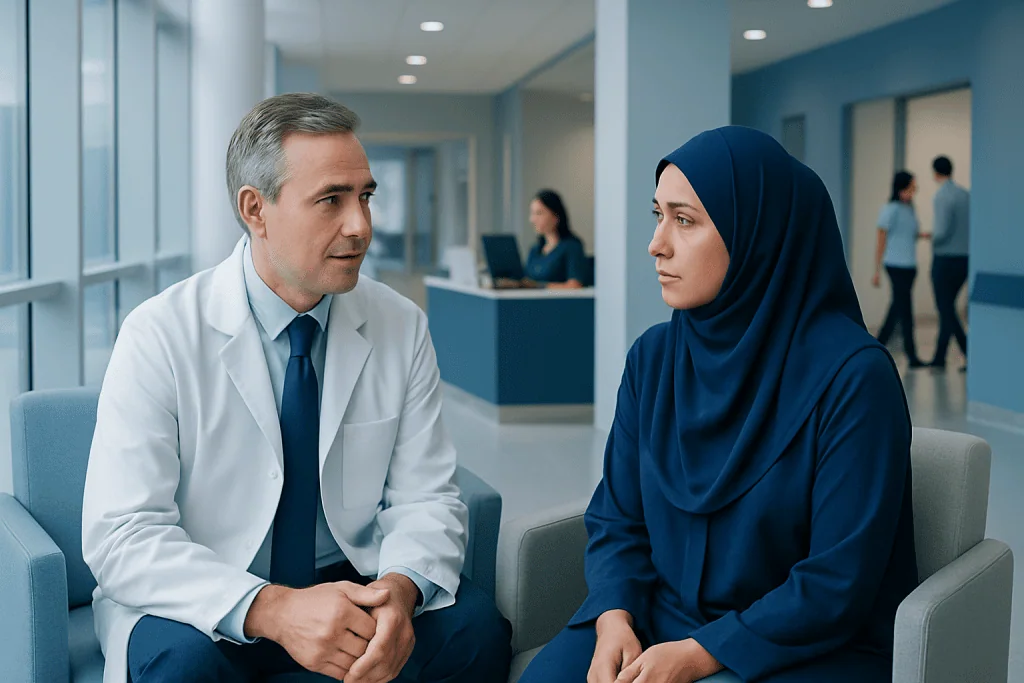
Tell your international patient coordinator about prayer, modesty, dietary, language, and family preferences before you travel, then repeat the key points at admission. Ask the ward team about quiet spaces for prayer, extra coverage during examinations, halal meals, and interpreter support. Most requests are easier to arrange with notice, and staff should explain plainly when a request cannot be met for clinical reasons.
Where will you pray after surgery? Can your head covering stay on during an examination? Will the meals be halal? These are practical questions, and they deserve practical answers rather than reassurance. This guide explains how to plan for prayer, modesty, and cultural needs during care in Turkey, what you can arrange in advance, what depends on the clinical situation, and what to ask once you arrive.
At a glance
- Best time to raise preferences: Before travel, then again at admission and before each examination
- Prayer: Many Turkish hospitals have a small prayer room; ask about location, timing, and ablution access for your ward
- Modesty: You can ask about gowns, draping, who is in the room, chaperones, and staff-gender preferences
- Food: Raise halal, allergy, fasting, and medical-diet needs before admission, not at the first meal
- Language: Ask for a professional interpreter for consent, preparation, and discharge discussions
- Limits: Requests are weighed against safe care; urgent situations narrow what can be arranged
Why it pays to plan for prayer, modesty, and cultural needs before you travel
The single most useful step is to say what you need early. When you plan for prayer, modesty, and cultural needs during care in Turkey before appointments are scheduled, the hospital team has time to consider staffing, ward layout, meal arrangements, and interpreter availability. Raised on the day, the same requests compete with clinical priorities and may simply not be practical.
You do not need to justify your preferences in detail. A short, specific list, prayer matters to me, I prefer a female clinician where possible, I eat halal, I would like my sister present for consent discussions, is more useful to staff than a general request for culturally sensitive care. Specific requests can be planned; vague ones cannot.
Be prepared for honest limits. Some arrangements depend on the type of treatment, the urgency of your condition, hospital policy, and who is on shift. A good team will tell you plainly when something cannot be done and will explain why, rather than agreeing to everything and delivering some of it. Your preferences sit alongside safe medical care, not above it. A companion guide covers the wider picture of planning prayer, diet, and daily routine during treatment in Turkey in more day-to-day detail.
What the religious culture in Turkey is like
Turkey has a majority-Muslim population and a secular state, which shapes daily life in ways that matter to visiting patients. Mosques are found in almost every neighbourhood, halal food is the norm rather than the exception in most restaurants and markets, and the call to prayer (adhan) sounds five times a day in cities and towns. At the same time, levels of personal observance vary widely, and everyday dress in large cities such as Istanbul ranges from conservative to entirely Western. Hospital staff are used to caring for patients across that whole range, as well as for patients of other faiths and none.
For Muslim patients, this familiarity is a practical advantage. Requests around prayer, ablution, fasting, and modest dress are widely understood and rarely need explaining from first principles. For patients of other backgrounds, the same applies in reverse: you are not expected to observe local religious practice, and no one will ask you to.
What should you do during the call to prayer?
Nothing is required of you. Daily life in Turkey continues through the adhan, shops stay open, traffic moves, conversations carry on. As a visitor, ordinary courtesy is enough: lower loud music if you are directly beside a mosque, and if you plan to visit one as a sightseer, dress modestly, remove your shoes at the entrance, and avoid the main prayer times, particularly Friday midday prayers. Inside a hospital, the call to prayer has no effect on appointments, treatment schedules, or visiting arrangements.
Planning for prayer during appointments and admission
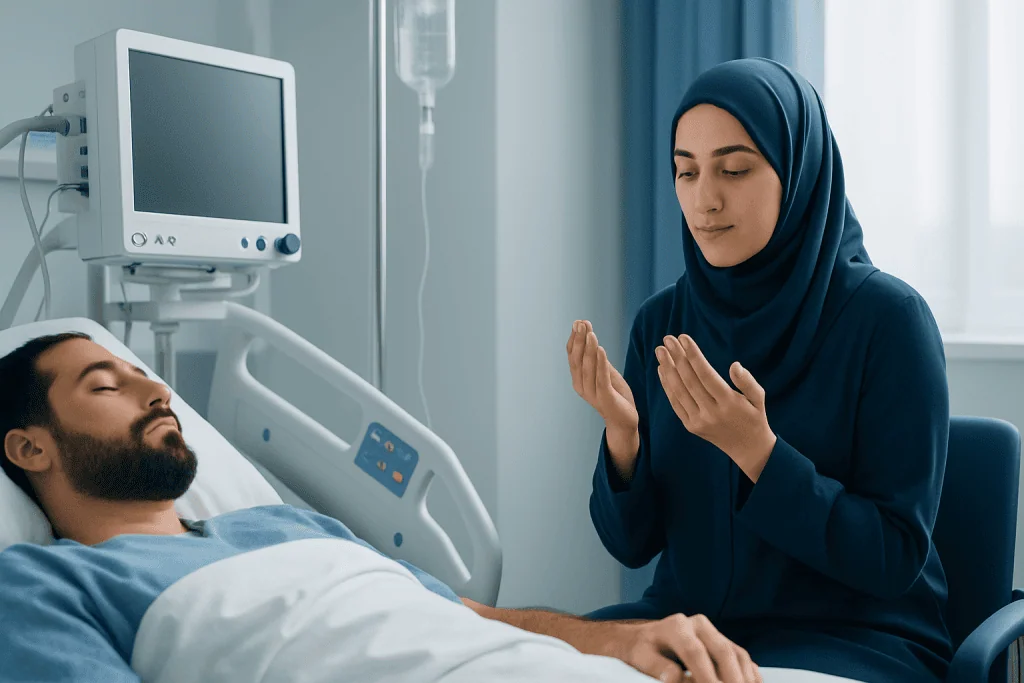
If regular prayer matters to you, ask your coordinator or the ward team where you can pray and whether there is a quiet space near your ward. Many hospitals in Turkey have a small prayer room (mescit), but availability, size, and distance from your bed differ by building and unit, so check rather than assume, especially if you will have limited mobility after a procedure.
If you are well enough to walk, staff can usually point you to the most practical place and suggest timing around your appointments. If you are in bed, connected to monitoring, or recovering from anaesthesia, ask the clinical team what is safe before you adapt your routine. You may need to remain in a particular position, avoid standing unassisted, or pray from the bed or a chair. Islamic practice accommodates illness and limited mobility, and nursing staff in Turkey are familiar with patients praying seated or lying down during recovery.
For ablution (wudu), ask about the nearest suitable washroom and any restrictions that apply to you. After surgery, sedation, or imaging with preparation requirements, or while connected to a drip or monitor, you may need help or an alternative approach such as dry ablution (tayammum). One firm rule: do not disconnect equipment, leave a monitored area, or delay treatment in order to pray without speaking to your nurse first. There is almost always a safe way to manage both, but it needs a brief conversation.
- Bring a small, lightweight prayer mat if it is meaningful and practical for you.
- Keep a prayer-times app or qibla compass on your phone; hospital rooms rarely mark the direction of prayer.
- Ask staff to help you plan prayer around scans, consultations, medication rounds, and any fasting instructions.
- If you will be an inpatient over Friday, ask in advance what is realistic for Jumu’ah rather than deciding on the day.
Modesty, privacy, and preferences around staff
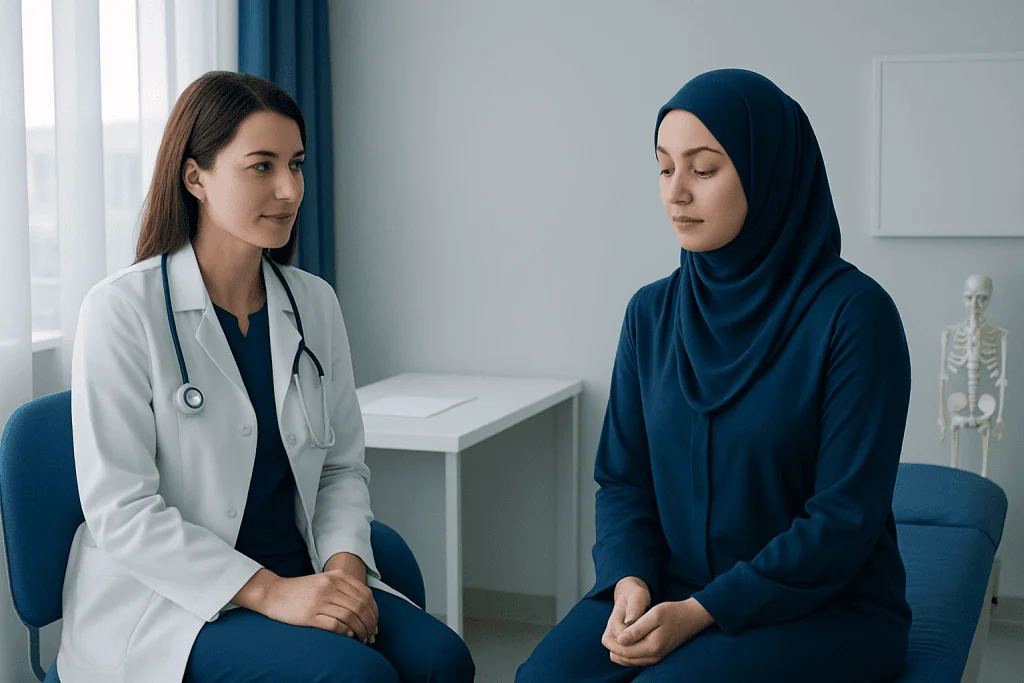
Modesty means different things to different patients, so tell the team what it means to you. That might be extra coverage during examinations, a private space to change, keeping your head covering on whenever clinically possible, or a preference for a clinician of a particular gender. The more specific you are, the more practical the response can be.
Clinicians need access to the area being examined or treated, and gowns or monitoring equipment are sometimes necessary for safety. Within those limits, you can reasonably ask for several things before any examination: an explanation before clothing is adjusted, a sheet or drape where appropriate, the door or curtain closed, confirmation of who will be in the room, and a chaperone where one can be arranged. These are ordinary requests in Turkish hospitals and asking for them does not mark you out as difficult.
On head coverings specifically: you can often keep a scarf on when it does not interfere with identification, hygiene, monitoring, or the treatment area. For surgery and some imaging, a hospital-provided covering or temporary removal may be necessary. Ask what the requirement is and why; there is usually an alternative that preserves coverage, such as a surgical cap.
Staff-gender preferences are handled as sensitively as possible, but they cannot always be met. In emergency care, overnight shifts, intensive monitoring, and narrow specialties, the clinician available may not match your preference. When that happens, the team should tell you clearly and discuss reasonable ways to protect your privacy, draping, a chaperone, limiting who is present, rather than leaving you to negotiate it in the moment. Raising the preference before travel gives scheduling the best chance of accommodating it for planned appointments.
Halal food, fasting, and medication timing
If you follow halal dietary practice, tell your coordinator before admission and remind the ward team when you arrive. Do the same for allergies, vegetarian preference, diabetes, kidney disease, swallowing difficulties, or any prescribed diet. Meal arrangements sit inside your medical plan, so a halal request may interact with a low-salt, diabetic, or pre-procedure diet: the dietitian resolves this, but only if both requirements are on record. The guide to managing special diets during hospital care in Turkey covers how these requests move through the hospital in practice.
Fasting needs its own conversation. Medical fasting is sometimes required before anaesthesia, surgery, certain scans, and blood tests; religious fasting, including Ramadan, may be unsafe during certain treatments or recovery periods. If you intend to fast, discuss it with your doctor before changing anything about your meals, fluids, or medication schedule. Islamic scholarship broadly recognises exemptions for illness and travel, but the medical question, whether fasting is safe for you, now, with this treatment, belongs to your treating doctor. If your trip may overlap with Ramadan or Eid, the guide on planning a medical trip to Turkey during Ramadan or public holidays explains what changes during those weeks.
Do not stop, delay, or change any medicine without medical advice. If a medicine raises a religious or ingredient concern, gelatine capsules or alcohol-based preparations, for example, raise it with your doctor or the hospital pharmacist, who can check whether relevant information or an appropriate alternative exists. In urgent situations your immediate safety takes priority, and the team will focus on the care you need.
Language, consent, and involving family or faith support
You should understand every piece of information you are asked to make a decision about. If English or Turkish is not your preferred language, ask for interpreter support as early as possible, ideally before travel, so it can be arranged for your first consultation. Interpretation matters most for diagnosis, consent, risks and alternatives, preparation instructions, medication changes, and discharge planning.
A family member can offer real reassurance, but they should not be your only interpreter for complex medical conversations. Relatives tend to soften bad news, skip technical detail, and answer on your behalf. A professional interpreter lets you hear the information directly and ask your own questions. Use family for comfort; use the interpreter for decisions.
If you want relatives involved, tell the team who may receive information about you and what you are comfortable sharing: this is recorded, not assumed. Visiting rules vary between units and are tighter in recovery areas and intensive care. If your family is travelling with you, it helps to sort out family accommodation near the hospital before arrival; if they are staying at home, a simple remote family communication planwho gets updated, by whom, and when, prevents confusion on treatment days. You can also ask whether a local faith representative or a video call with someone at home can be accommodated when clinically appropriate.
Prepare for the realities of treatment days
You can plan for prayer, modesty, and cultural needs during care in Turkey carefully and still find that treatment days do not follow your normal routine. Appointment times shift, fasting instructions may apply, and after sedation or surgery you may be temporarily unable to manage washing, dressing, or prayer independently. Planning for flexibility is not a compromise of your observance; it is what makes observance workable in a hospital.
Pack loose, modest clothing that is easy to put on over dressings or devices: front-opening tops, a lightweight scarf, non-slip slippers, a small toiletry kit, a charger, and your medication list. Leave valuables behind, and expect that personal items, including jewellery and sometimes head coverings, may need to be removed for surgery, imaging, or infection control. Ask beforehand rather than being surprised in the anaesthetic room.
Once admitted, your nurse is the best person for day-to-day comfort requests: help with washing before prayer, privacy while changing, timing a companion’s visit, or adjusting when meals arrive. Small requests are easiest to meet when raised early and specifically.
Step by step
- Write your list. Note the needs that matter most: prayer, modesty, staff-gender preference, halal meals, fasting intentions, interpreter, family involvement. Keep it short and specific.
- Send it before travel. Share the list with your coordinator before appointments are finalised, and ask which items can be confirmed in advance and which depend on the day.
- Discuss fasting and medicines with your doctor. Raise any plan to fast and any ingredient concerns before changing anything. Follow the medical fasting instructions given for your procedure unless your care team says otherwise.
- Repeat the essentials at admission. Remind the admissions and ward teams about language, diet, privacy, and who may receive updates. Ask about the prayer room, ablution facilities, and visiting rules for your unit.
- Ask before each examination. Say if you want extra coverage, an explanation of who is present, or a chaperone. Ask questions whenever clothing, positioning, or monitoring requirements are unclear.
- Fit prayer around safe care. Check timing and safe movement with your nurse, especially after anaesthesia or while connected to equipment. Ask for help rather than getting up or leaving a monitored area alone.
- Review discharge in a language you understand. Before leaving, confirm how medicines, diet, activity limits, and wound care may affect prayer, fasting, and daily routine at your accommodation and on the journey home.
Your checklist
- Send cultural, religious, dietary, and language preferences before travel.
- Bring an up-to-date medication list with doses and known allergies.
- Request interpreter support for consent and discharge discussions.
- Confirm whether a companion may attend appointments or visit the ward.
- Pack loose, modest, front-opening clothing and non-slip footwear.
- Bring a small prayer mat and a prayer-times or qibla app if you wish.
- Tell the team about any fasting plans before tests or procedures are scheduled.
- Confirm halal meals and any medical diet requirements at admission.
- Keep your coordinator’s contact details and accommodation address to hand.
- Carry copies of relevant medical records, prescriptions, and insurance documents.
Key takeaways
- Share prayer, modesty, dietary, language, and family preferences before travel and repeat them at admission, early, specific requests get planned; late, vague ones do not.
- Turkey’s hospitals are familiar with Muslim patients’ needs, but prayer-room access, ablution arrangements, and quiet spaces still vary by building and ward, so ask rather than assume.
- Be specific about privacy and staff-gender preferences, and expect honesty about limits in urgent or specialist care.
- Use a professional interpreter for consent and discharge, even when a companion speaks English or Turkish.
- Never change fasting, fluids, or prescribed medication without discussing it with your doctor first.
Frequently asked questions
What is the religious culture like in Turkey?
Turkey has a majority-Muslim population and a secular state. Mosques are widespread, halal food is the norm in most places, and the call to prayer sounds five times daily, while personal observance varies widely and dress in large cities ranges from conservative to fully Western. Hospital staff routinely care for patients across that spectrum and for patients of other faiths and none.
What should tourists do during the call to prayer?
Nothing is required. Daily life continues through the adhan and visitors simply carry on. Ordinary courtesy applies near mosques, lower loud music, dress modestly if entering as a sightseer, remove shoes at the door, and avoid main prayer times, especially Friday midday. Inside hospitals, the call to prayer does not affect appointments or treatment schedules.
Can I pray during my hospital stay in Turkey?
In many cases yes, if your condition allows. Ask the ward team about the prayer room or a quiet space, and about the safest way to pray if you have limited mobility, monitoring equipment, or recovery restrictions. Praying seated or from the bed is a familiar arrangement, and your nurse can help you plan around treatment times.
Can I request a female or male doctor or nurse?
You can, and the team will try to accommodate it where possible. Availability depends on the specialty, staffing, urgency, and setting, so the preference cannot always be met. If it cannot be met, staff should explain why and take practical steps, draping, a chaperone, limiting who is present, to protect your privacy and dignity.
Will halal food be available during my stay?
Raise halal requirements with your coordinator before admission and remind the ward team on arrival. The hospital reviews the request alongside any medically necessary diet, allergies, or preparation instructions, so both sets of needs must be on record. Confirm meal arrangements directly with the team rather than assuming.
Can I fast during Ramadan while receiving treatment?
Discuss it with your doctor before changing food, fluids, or medicine routines. Medical fasting may be required before some procedures, and religious fasting may be unsafe during certain treatments or recovery. Islamic practice recognises exemptions for illness and travel; whether fasting is safe for you now is a question for your treating doctor.
Can I keep my head covering on during examinations or surgery?
Often yes, when it does not interfere with identification, hygiene, monitoring, imaging, or the treatment area. For some procedures a hospital-provided covering, such as a surgical cap, or temporary removal may be necessary for safety. Ask the team to explain the requirement and discuss alternatives before the day of the procedure.
Add us as a Preferred Source to see more of our trusted health content across Google Search, AI Overviews and Discover.

Update history
- PublishedAugust 22, 2026
- Medical review approvedSeptember 2, 2026
- Last content updateSeptember 2, 2026
References3
More Patient Guides

Medical Chaperones in Turkey: When Patients Can Request One
Medical chaperones in Turkey can be requested for sensitive exams or when you want added reassurance during care in Istanbul.

Medical Interpreter or Family Member: Who Should Help During Appointments in Turkey?
Medical interpreter or family member in Turkey? Use a trained interpreter for clinical communication and keep family involved for support and notes.

Interpreter Support in Turkish Hospitals: When to Request Help
Interpreter support in Turkish hospitals helps you understand appointments, consent and discharge clearly in Turkey or Istanbul.

Medical Interpreter at the Hospital: When to Request One and How It Helps
Medical interpreter at the hospital helps you understand care, consent and next steps clearly in Turkey or Istanbul. Request one before key…