

Managing Nausea and Appetite Loss After Treatment in Turkey

Start with fluids, not full meals. Take small sips often, then move to five or six mini-meals of bland, low-odour foods such as toast, rice, banana, yoghurt or soup. Review medicine timing with your team, watch for constipation, and report persistent vomiting, dehydration signs or fever promptly. Most post-treatment nausea eases gradually, but it should never be ignored.
You had your treatment. Now you cannot face a meal, and you are quietly worried about feeling sick on the flight home. Nausea and appetite loss are common during recovery, after surgery, cancer treatment, general anaesthesia, antibiotics or strong pain medicines, and they are usually manageable with a few practical adjustments.
This guide covers managing nausea and appetite loss after treatment in Turkey in a way you can actually use: what to drink and eat first, which triggers to remove, when a symptom stops being a nuisance and becomes a warning sign, and how to prepare for the journey home. It does not replace your discharge instructions. Where the two differ, your treating team’s advice wins.
At a glance
- Main goal: Stay hydrated and steadily nourished while your care team monitors your recovery
- First priority: Fluids in small, frequent sips before you attempt proper meals
- Best first foods: Five or six mini-meals of bland, soft, low-odour foods, eaten slowly while sitting upright
- Hidden causes to check: Constipation, medicine timing, poorly controlled pain, dehydration and fatigue
- Key safety point: Persistent vomiting, dehydration signs, fever, blood in vomit or severe pain need prompt medical contact, do not wait them out
- Travel note: Plan light meals, medication timing and fluids before flights; ask your doctor whether travel should be postponed if you are still vomiting
Why nausea and appetite loss happen after treatment
Your body has been through a lot. Anaesthetic drugs, the stress response to surgery, chemotherapy, radiotherapy, antibiotics and opioid pain medicines can each unsettle the stomach on their own. Combine two or three, add disturbed sleep and reduced movement, and it is easy to see why food loses its appeal for a while. Common patterns include queasiness in waves, feeling full after a few bites, tastes seeming metallic or flat, and food smells feeling far stronger than usual.
For most patients these symptoms improve gradually as mobility returns, sleep settles and medicine routines stabilise. Nausea in the first hours after a general anaesthetic is a well-recognised and usually short-lived effect: our guide to the recovery room after general anaesthesia in Turkey explains what that early phase normally looks like.
Managing nausea and appetite loss after treatment in Turkey is not something you should do silently, though. If you cannot keep fluids down, feel dizzy on standing, pass very little urine, develop fever or worsening abdominal pain, contact your care team. Doctors can check for treatable causes, constipation, infection, medicine interactions, and prescribe anti-nausea medication when it is appropriate. Suffering quietly helps nobody, and it can delay your discharge or your flight.
If you are recovering at Acibadem away from home, international patient services can arrange interpreter support so you can describe symptoms precisely, understand instructions, and reach your physician before you travel. Vague symptom reports lead to vague advice; a clear description gets you a clear plan.
Hydration comes before full meals
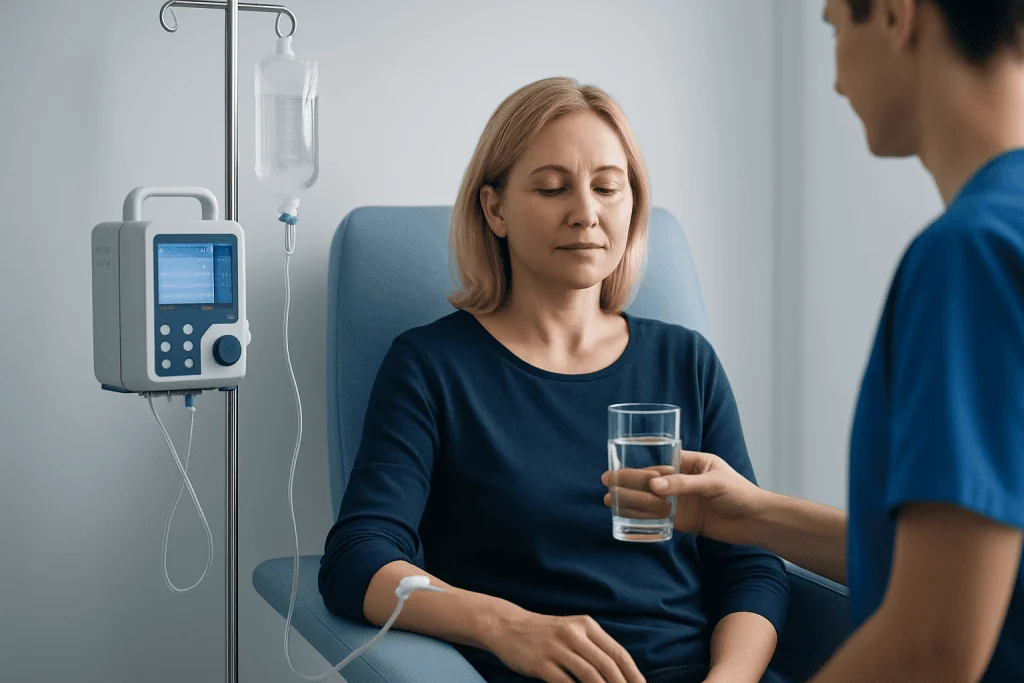
When you feel sick, a full plate is the wrong target. Fluids are the priority. Dehydration itself worsens nausea, headache and fatigue, so a patient who stops drinking because they feel sick often ends up feeling sicker. Break the cycle with small, frequent sips rather than a full glass at once.
Depending on any restrictions your team has given you, try still water, weak tea, clear broth, diluted fruit juice, or oral rehydration solution if it has been recommended. A workable rhythm: a few sips every five to ten minutes while awake, increasing slowly as your stomach settles. Temperature matters more than most people expect. If cold soothes you, use chilled water or small ice chips. If cold triggers discomfort, room-temperature fluids are often gentler. Go easy on fizzy drinks and very sweet beverages, and avoid alcohol entirely while you are taking pain medicines, antibiotics or blood thinners.
Learn the simple hydration signs. Reassuring: pale urine, a moist mouth, and standing up without dizziness. Concerning: dark urine, dry lips, headache, a racing heartbeat, confusion, or not urinating for many hours. The concerning list should be discussed with your care team the same day, particularly after major surgery or cancer treatment. If you have been given a fluid limit for heart or kidney reasons, follow it, do not push fluids beyond it on the strength of this guide.
Gentle eating strategies when your appetite is low

Abandon the idea of three normal meals for now. Aim for five or six mini-meals instead: a few spoonfuls every two to three hours is a far more realistic target than a full breakfast, and it delivers more nutrition over the day than one large meal you cannot finish. Stop before you feel full. Early fullness is common after treatment, and forcing food past that point tends to backfire.
Foods that tend to be tolerated first
- Toast, crackers, plain biscuits and bread
- Rice, plain pasta and boiled or mashed potatoes
- Banana, applesauce and other soft fruit
- Yoghurt, clear soup and well-cooked, soft vegetables
- Boiled eggs and small portions of plain chicken or fish
Adding protein back without heavy meals
Protein matters for healing, but it does not need to arrive on a large plate. If your condition allows, yoghurt, kefir, eggs, lentil soup, chicken broth with small pieces of meat, fish, cheese or tofu are all gentle routes back. A nutrition drink can help when solid food is hard going, but ask first. If you have kidney disease, diabetes, swallowing difficulties, recent bowel surgery or a specific oncology diet, high-protein supplements should only be added with your dietitian’s or doctor’s approval.
Temperature, smell and position
Cool or room-temperature food gives off far less odour than a hot dish, which is why cold meals are often easier when smells trigger nausea. Keep portions small, eat slowly, and stay sitting upright for at least 30 minutes after eating. Lying flat straight after food is one of the most common self-inflicted triggers. If hospital or hotel food smells bother you, say so: meals can often be served covered, prepared away from your room, or swapped for simpler options.
Medicines, constipation and the triggers people miss
Nausea is sometimes a timing problem, not a food problem. Some tablets need to be taken with food; others must be taken on an empty stomach; some pairs should be separated by hours. Do not guess, and do not stop or adjust any prescribed medicine on your own: that decision belongs to your treating doctor. Instead, ask your nurse, pharmacist or doctor to review the whole schedule with you in plain language, especially if you left hospital with several new medicines. If you have been prescribed anti-sickness tablets, our safe use guide to anti-nausea medicines after treatment in Turkey explains what to clarify before you rely on them.
Constipation is the most commonly overlooked cause of post-treatment nausea. Anaesthesia, reduced movement and opioid painkillers all slow the bowel. If you are bloated, cramping, or have not opened your bowels as expected, tell your care team: it is a routine conversation for them, and the fix (fluids, walking, fibre adjustments, or a prescribed stool softener or laxative appropriate to your operation) is usually straightforward.
Other triggers worth removing: strong cooking smells, greasy food attempted too early, car motion on transfers, tight waistbands, anxiety, poor sleep, and pain that is not properly controlled. Uncontrolled pain and exhaustion both feed nausea, so it is worth reading our guide on pain control after surgery in Turkey alongside this one.
A simple symptom diary earns its keep here. Note what you ate, which medicines you took and when, your pain score, bowel movements, and when nausea worsened. Patterns appear quickly, follow-up calls become far more useful, and you avoid a lot of unnecessary worry.
Nausea and appetite loss after chemotherapy
Cancer treatment deserves its own word, because the pattern differs from surgical recovery. Chemotherapy-related nausea can appear before, during or in the days after a treatment cycle, and appetite often dips in a rhythm that roughly follows the cycles, typically worse in the days after treatment and easing as the next cycle approaches. How long each dip lasts varies with the drugs used, the doses, and your own body, so ask your oncology team what pattern to expect from your specific regimen rather than comparing yourself with other patients.
Modern anti-sickness medicines work best when taken exactly as scheduled, not only once nausea has already taken hold. If your prescribed plan is not controlling symptoms, report it, regimens can often be reviewed, but only your treating doctor should change them. The mini-meal approach above applies fully to chemotherapy patients, with one addition: eat what appeals on the good days without forcing an ideal diet, and keep fluids going on the difficult days. Taste changes are common and usually temporary; cold foods, plastic cutlery instead of metal, and rinsing your mouth before meals help some patients.
If your immune system is suppressed, food safety rules tighten. Follow any neutropenic diet instructions precisely, and when in doubt about a specific food, ask before eating it.
Eating safely in Turkey during recovery
Turkish food is one of the pleasures of being here, and there will be time for it. During early recovery, keep it simple. Mild soups such as lentil soup, plain rice, grilled or boiled meat and fish, yoghurt and well-cooked vegetables are widely available and sit comfortably within the bland-food approach. Save the very spicy, fried or rich dishes for when your appetite and digestion are clearly stable.
Food safety matters more when your defences are lowered, after chemotherapy, transplant-related care, major surgery or high-dose steroids. Choose freshly prepared, thoroughly cooked food. Be cautious with raw seafood, unpasteurised dairy, buffet items that have been sitting out, and raw salads if you have been told to avoid uncooked produce. Any neutropenic, diabetic, low-residue or post-surgical diet instructions from your team override general advice, including this guide’s.
Practical accommodation requests make a real difference: a small refrigerator, a kettle, plain breakfast options, covered or low-odour meals, and room service at flexible times. Acibadem international patient coordinators can advise on hospital-area logistics and help communicate special requests to your accommodation, including when a medical note is needed. If nausea or poor intake means your departure needs to slip by a few days, raise it early rather than at check-out.
Before you fly home: managing nausea on the journey
Before travel, three things should be true: your nausea is manageable, you can keep fluids down, and you understand your medicines, diet limits and warning signs. Long transfers and flights amplify mild nausea through fatigue, motion, missed meals and cabin dryness. If you are still vomiting, cannot drink, feel faint or have needed urgent medical attention in the past day or two, ask your doctor directly whether travel should be postponed, and read our guide on when it is safe to fly home after surgery in Turkey before you commit to a departure date.
Build a simple travel plan. In your hand luggage: prescribed anti-nausea medication, your discharge summary, a full medication list, water, dry snacks you know you tolerate, and any medical letters. Eat lightly before departure and skip heavy airport meals. If you have diabetes or another condition that requires regular intake, ask your team in advance how to handle meal timing through delays. Our guide to returning home with new medicines after treatment in Turkey covers documentation and carriage rules for the medicines themselves.
Finally, confirm how follow-up will work once you land: video call, sharing of test results, wound photographs if appropriate, or handover to your local doctor. Make sure you know which symptoms should be reported back to your Turkish team and which need urgent local care at home. Ambiguity here is the most common gap in international aftercare, and it is entirely avoidable.
Step by step
- Start with a symptom check. Are you mildly queasy, vomiting repeatedly, unable to drink, or showing dehydration signs? If symptoms are severe or worsening, contact your care team rather than managing alone.
- Sip fluids in small amounts. A few sips every five to ten minutes beats a large glass at once. Increase gradually as tolerated, respecting any fluid limits set for heart, kidney or surgical reasons.
- Move to bland mini-meals. Small portions of toast, crackers, rice, potato, banana, yoghurt or soup every two to three hours. Stop before you feel full and repeat through the day.
- Review your medicines with a professional. Ask which should be taken with food, which need an empty stomach, and whether nausea itself should prompt a review. Do not stop or change any prescribed medicine without your doctor’s instruction.
- Check bowel function. Constipation quietly drives both nausea and appetite loss. Tell your nurse or doctor if you are bloated, uncomfortable or not passing stool as expected.
- Remove triggers around you. Ventilate the room, avoid strong smells and greasy food, loosen tight clothing, and sit upright for at least 30 minutes after eating.
- Plan the journey. Pack medicines, documents, water and tolerated snacks in hand luggage, eat lightly before departure, and confirm with your team that you are stable enough to travel.
Your checklist
- Discharge summary and medication list in English or your preferred language if available
- Written instructions for any anti-nausea medicine: timing, whether before meals, and maximum daily dose
- Small tolerated snacks, crackers, plain biscuits or an approved nutrition drink
- Water bottle, plus oral rehydration solution if your doctor recommended it
- Thermometer and a written note of the warning signs that require urgent care
- Contact details for your Acibadem coordinator and care team, saved in your phone
- Constipation plan if you are taking opioid pain relief
- Light-meal plan for transfers, the flight and possible delays
- Follow-up appointment details for both Turkey and your home country
Key takeaways
- Managing nausea and appetite loss after treatment in Turkey starts with fluids first, food second: small sips and mini-meals are more realistic than normal meals in early recovery.
- Nausea often has a treatable cause, medicine timing, constipation, pain, dehydration or infection, so report it rather than tolerating it.
- Cool, bland, low-odour foods eaten upright are the easiest starting point, in Turkey as anywhere else.
- Never stop or change prescribed medicines yourself; ask your treating doctor to review them.
- Do not fly while you are still vomiting or unable to drink, confirm the travel plan with your doctor first.
Frequently asked questions
What could be causing my constant nausea and loss of appetite?
After treatment, common causes include anaesthetic and pain medicines, chemotherapy or radiotherapy effects, antibiotics, constipation, dehydration, poorly controlled pain, anxiety and fatigue. Often several combine. Because some causes are easily treatable and others need checking, constant nausea should always be reported to your care team rather than assumed to be normal.
How do I get my appetite back after being sick?
Rebuild gradually. Keep fluids going first, then offer yourself small amounts of bland food every two to three hours, crackers, toast, rice, banana, yoghurt, soup. Eat what appeals rather than what seems ideal, stop before you feel full, and add protein gently as tolerance returns. Gentle daily movement and treating constipation also help appetite recover.
How long does loss of appetite last after chemo?
It varies with the drugs, doses and the individual. Appetite typically dips in the days after each cycle and improves as the next approaches, but there is no universal timetable. Ask your oncology team what to expect from your specific regimen, and tell them if appetite loss is not lifting between cycles or you are losing weight.
What can I do about nausea after chemotherapy?
Take prescribed anti-sickness medicines exactly on schedule rather than waiting for nausea to start, use small frequent meals and steady fluids, favour cool low-odour foods, and avoid strong smells and lying flat after eating. If the prescribed plan is not controlling symptoms, report it: your team may review it, but only your doctor should change medicines.
What if food smells make me feel sick?
Choose cool or room-temperature foods, which release far less odour than hot dishes. Keep portions covered until you eat, ventilate the room, and ask a companion or hotel staff to prepare food away from where you rest. Small, simple, covered portions solve most smell-triggered nausea without medication.
When is appetite loss a warning sign?
Take it seriously when it comes with persistent vomiting, dehydration signs, fever, severe pain, confusion, rapid weight loss, or inability to take essential medicines. It also carries more weight after major surgery or during cancer treatment, when nutrition and hydration are part of safe recovery. In those situations, contact your medical team promptly for individual advice.
Can I try Turkish food while recovering?
Yes, in stages. Start with mild, well-cooked options, lentil soup, rice, yoghurt, grilled or boiled dishes, and hold off on spicy, fried or very rich meals until digestion is stable. If you are immunosuppressed or on a restricted diet, follow your team’s food safety instructions exactly, including any advice to avoid raw produce.
How can Acibadem help with nausea after discharge?
Coordinators can arrange interpreter support so you describe symptoms accurately, help you reach the right medical team, clarify follow-up instructions, and assist with practical matters such as documents, accommodation requests and travel timing. Clinical decisions stay with your doctors; the coordination makes sure your questions reach them quickly, especially before your flight home.
Add us as a Preferred Source to see more of our trusted health content across Google Search, AI Overviews and Discover.

Update history
- PublishedJune 8, 2026
- Medical review approvedSeptember 13, 2026
- Last content updateSeptember 12, 2026
References3
- Feeling sick (nausea): NHS nhs.uk
- Nausea and Vomiting Related to Cancer Treatment: National Cancer Institute cancer.gov
- Nausea and Vomiting: MedlinePlus medlineplus.gov
More Patient Guides

Septoplasty Recovery: Week by Week
Learn what to expect after deviated septum surgery: a week-by-week septoplasty recovery timeline, when it is usually safe to fly home, and…

Gallbladder Surgery Recovery: Week by Week
Learn what to expect after gallbladder surgery: a week-by-week recovery timeline, pain, diet, wound care, when it is safe to fly home…
Robotic Hysterectomy Recovery: Week by Week
Recovery from robotic hysterectomy week by week: pain, lifting, wounds, driving, flying home safely, warning signs and questions to ask before you…
Breast Reconstruction Recovery: Week by Week
DIEP flap recovery week by week: hospital stay, drains, pain, walking, showering, driving, when it is usually safe to fly home, and…