

Anti-Nausea Medicines After Treatment in Turkey: Safe Use Guide

Take only the anti-nausea medicine your treating doctor prescribed or approved, at the dose and timing on your discharge list. Different medicines target different causes of nausea, so a friend's tablet or a stronger drug is not automatically better. In Turkey, brand names often differ from home, so learn the generic name, keep original packaging, and carry your discharge summary when you travel.
You are recovering in a hotel room far from home, your stomach is unsettled, and you are staring at a box of tablets wondering whether you can take another one. Nausea after treatment makes everything harder, eating, sleeping, packing, sitting through a long flight. This guide explains how anti-nausea medicines after treatment in Turkey work, how to take them safely, and how to plan the journey home around them.
It is written for international patients who have had surgery, chemotherapy, or another procedure and left hospital with an anti-nausea medicine on their discharge list. It explains what the different medicines do, why the choice is individual, and what changes when you cross borders with them. It does not replace your discharge instructions. Where the two differ, your discharge instructions win.
At a glance
- Main purpose: Help you use prescribed anti-nausea medicines safely after treatment and during the journey home
- Most important rule: Take only what your treating doctor prescribed or approved, at the stated dose and timing
- In Turkey: Pharmacies (eczane) dispense many medicines only against a prescription, and brand names often differ from your home country: the generic name is what matters
- Travel tip: Keep medicines in original packaging, in hand luggage, with your prescription or discharge summary
- Good habit: Use one written medication plan covering all your medicines, not just the anti-nausea tablet
Why nausea happens after treatment, and why the medicine is chosen for you
Nausea after treatment is common and rarely has a single cause. Anaesthetic drugs, opioid pain relief, antibiotics, chemotherapy, radiotherapy, reduced food intake, constipation, dehydration, anxiety, and the plain fatigue of travelling can each unsettle the stomach, and after a hospital stay abroad, several of these usually overlap. Some nausea settles within a day or two. Some comes and goes through the first week of recovery.
This is why prescribing is individual. Before choosing an anti-nausea medicine, your care team weighs your treatment type, allergies, heart rhythm history, kidney and liver function, pregnancy status, your other medicines, and whether you are about to fly. A medicine that suits one patient can be a poor choice for another with a different history. It is also why anti-nausea medicines after treatment in Turkey should never be borrowed from another patient or topped up with extra tablets nobody has reviewed: the tablet itself is only half the prescription. The other half is the judgement behind it.
Common types of anti-nausea medicines you may be given
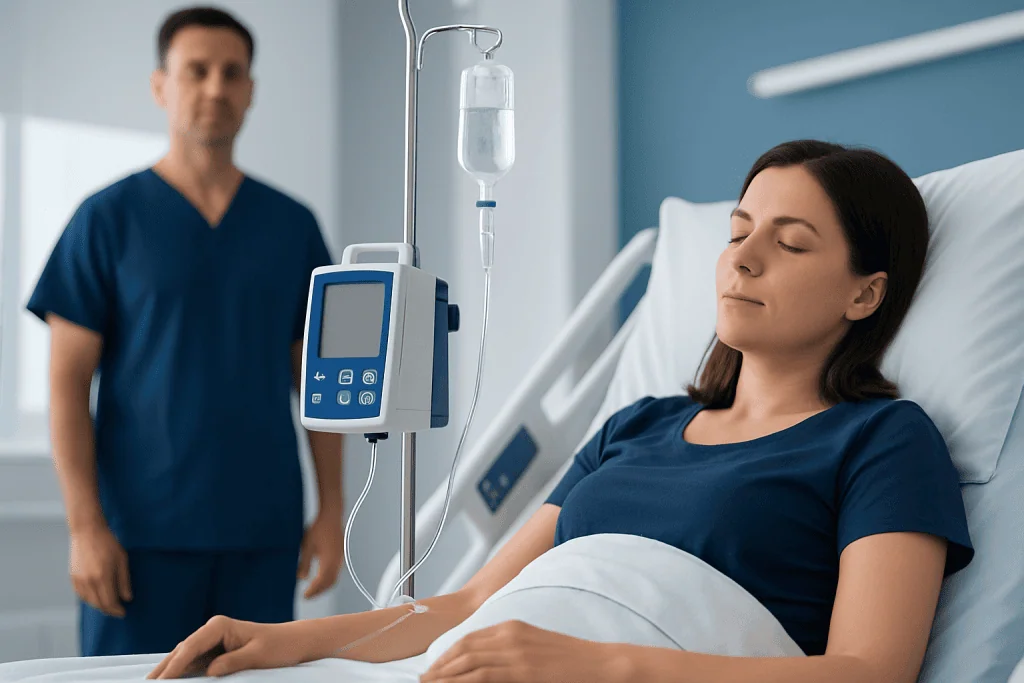
Anti-nausea medicines, antiemetics, in clinical language, are not interchangeable. They act on different signalling pathways between the gut, the inner ear, and the brain, which is why the right choice depends on what is driving the nausea.
- Serotonin (5-HT3) blockers, such as ondansetron, are widely used for nausea after anaesthesia and chemotherapy. Constipation and headache are among their known side effects.
- Dopamine blockers, such as metoclopramide and domperidone, also help the stomach empty. They are typically prescribed for short, defined periods because of movement-related and heart rhythm side effects with longer use.
- Antihistamine-based medicines, such as dimenhydrinate, work well for motion-related nausea and dizziness but commonly cause drowsiness.
- Other agentsincluding NK1 blockers and short corticosteroid courses, appear mainly in chemotherapy plans, usually in combination and always under specialist direction.
Two practical points follow from this. First, “stronger” is not “better”: a drug matched to the wrong cause does little except add side effects. Second, in Turkey the box in your hand may carry an unfamiliar brand name even when the medicine inside is one you know. The generic name, printed on the packaging and on your discharge list, is the reliable identifier. If you cannot match a box to your list, a pharmacist can confirm what it is before you take it.
How teams prevent nausea after surgery
Much of the work against post-operative nausea happens before you are awake to notice it. Anaesthetists assess each patient’s risk: a history of post-operative nausea or motion sickness, the type of surgery, the anaesthetic technique, and expected opioid use all feed into it, and often give preventive antiemetics during the operation itself, sometimes as a combination of drugs acting on different pathways. Adjustments to the anaesthetic and to pain relief are part of the same strategy.
That is why the question “what can I take to prevent nausea after surgery?” does not have a self-service answer: prevention is designed into the anaesthetic plan, and anything you add on top needs to fit that plan. What happens in the first hours after you wake, and how nausea is handled there, is covered in our guide to the recovery room after general anaesthesia in Turkey. The medicine on your discharge list is the continuation of that plan, not a separate decision, which is another reason to follow it exactly rather than improvise.
How to take your medicine safely

Before the first dose after discharge, read your medication list properly, not from memory. Check five things: the medicine name, the dose, the timing, whether it goes with food or on an empty stomach, and the maximum number of doses in 24 hours. Notice whether the medicine is scheduled (taken at set times regardless of symptoms) or as-needed (taken only when nausea starts). The two patterns are not interchangeable, and swapping between them is a prescribing decision, not a personal one.
Keep one written plan for all your medicines together, pain relief, antibiotics, stomach protectors, blood thinners, supplements, long-term prescriptions. Most medication errors in the first days after discharge come from juggling several boxes without a single overview. If a companion is helping you, make sure both of you are working from the same plan. Phone alarms are a simple defence against missed doses and accidental doubles when you are tired.
- Do not combine two anti-nausea medicines unless your doctor has explicitly approved the combination.
- Avoid alcohol while taking any medicine that can cause drowsiness or dizziness.
- Do not crush tablets, open capsules, or split doses unless instructed, some formulations release the drug in a specific way.
- Vomiting shortly after a dose does not automatically mean the dose “didn’t count”, and repeating it is not automatic either; whether to repeat depends on the drug and the timing, and that call belongs to your prescriber or a pharmacist.
- Note each dose you take and how you felt afterwards: a two-line record turns a vague story into useful clinical information at follow-up.
Side effects, and what expected versus unexpected looks like
Most people take short courses of anti-nausea medicine without major problems, but no antiemetic is free of side effects. Mild drowsiness, dry mouth, headache, constipation, and temporary tiredness are recognised effects of several of these drugs. They are worth recording even when they seem minor, because a side effect that interferes with eating, walking safely, or sleeping changes the balance of whether a medicine is still the right one: a judgement your doctor makes with better information if you have kept notes.
Clinicians also draw a line between nausea and a changing clinical picture. Repeated vomiting that prevents fluids staying down is treated as a dehydration problem, not merely a comfort problem. Nausea that arrives together with fever, severe abdominal pain, blood in vomit or stool, unusual confusion, marked new drowsiness, or allergic swelling is read as a signal about the underlying recovery rather than something an extra tablet should be expected to fix. The standing clinical notice at the top of this page applies here, as everywhere on this site. The point for medication safety is narrower: an anti-nausea medicine treats a symptom, and a worsening pattern is a reason for reassessment of the cause, not for escalating doses on your own.
What you can buy at a Turkish pharmacy
Turkish pharmacies, marked eczane, usually with a red “E” sign, are common in every city and well stocked. But the rules differ from many home countries in ways that matter to a recovering patient. Many medicines that sit on open shelves elsewhere are dispensed in Turkey only against a prescription, and the reverse is also true for some products. Which anti-nausea medicines are available over the counter, and under what names, is not something to assume from home-country habits.
Three habits keep pharmacy visits safe. First, ask by generic name, not home brand name: the brand you know may not exist in Turkey, and a same-sounding brand can occasionally contain a different drug. Second, treat any addition to your regimen as a question for your prescriber, because even common over-the-counter antiemetics can interact with pain medicines, sedatives, heart rhythm drugs, and antidepressants. Third, keep whatever you are dispensed in its original packaging with the receipt or prescription; you will want that paper trail at the airport and at home. Buying extra “just in case” tablets nobody has reviewed adds risk, not reassurance.
Food, fluids, and everyday comfort while the medicine works
Anti-nausea medicine works best alongside small, unglamorous adjustments. Take frequent small sips of water or oral rehydration solution rather than large glasses. When you can eat, start plain: crackers, toast, rice, bananas, soup, yoghurt. Heavy, oily, or heavily spiced meals are harder work for an unsettled stomach in the first days. Sit upright to eat, eat slowly, avoid lying flat straight afterwards, and keep the room ventilated, strong smells are an underrated trigger. If your team gave you a specific diet, fluid limit, or swallowing instruction, that plan overrides this general advice.
Constipation deserves a specific mention because it quietly makes nausea worse, and it is common after anaesthesia and opioid pain relief, and some antiemetics add to it. It is worth tracking alongside your doses, because it often explains nausea that “should” have settled. Laxatives and herbal remedies are not automatically safe after every procedure, so treatments for it belong in the same reviewed plan as everything else, not in a separate self-managed pile.
Travelling home with anti-nausea medicines
Prepare your medicines before travel day, not on it. Anti-nausea medicines belong in hand luggage, checked bags get delayed, and delays are exactly when you may need a dose. Keep everything in original packaging with your prescription or discharge summary, so a security or customs officer can see at a glance what the medicines are and why you carry them. Our guides on storing and carrying medicines during treatment travel and returning home with new medicines cover packing, temperature, and customs paperwork in detail.
Two questions are worth settling with your doctor before the flight. First, timing: whether a dose before the airport transfer or before boarding makes sense for you, especially if motion sickness is part of your history. Second, sedation: whether your medicine can make you drowsy or unsteady, because that affects how you move through a large airport, and travelling alone with a sedating medicine is a good reason to request airport assistance in advance. Sedation and flying interact in other ways too, covered in our guide to flying after sedation or anaesthesia.
If your medicine runs on set intervals, ask for a simple travel schedule written in both local Turkish time and your home time. Time zones plus fatigue is precisely the combination in which doses get doubled or skipped, and a one-page schedule removes the arithmetic. Anti-nausea medicines after treatment in Turkey are usually short courses, so also confirm before departure whether yours ends on a set day or continues until a review at home.
How Acibadem approaches medication safety for international patients
Medication safety for a patient flying home is a coordination task as much as a clinical one. At Acibadem, discharge for international patients includes a written medication list and practical instructions in a language you can understand, with interpreter support available at the discharge conversation: the moment you are most tired and most likely to mishear a dose. You can ask for the list to be walked through medicine by medicine: which tablet is for nausea, which for pain, which for anything else, and what the generic names are. If a companion will manage your medicines, they can join that conversation. How this works across the whole treatment journey is described in how we manage your medicines before and after treatment.
Two limits are worth stating plainly. Discharge documents translate best when they carry generic drug names, so ask for those in writing: your doctor at home will need them to avoid duplications and unsafe combinations. And no discharge conversation can anticipate every question that surfaces three days later in a hotel room, which is why the written plan, not memory, should be the thing you consult first.
Step by step
- Review your medication list before leaving hospital. Have your nurse, doctor, or pharmacist point out exactly which medicine is for nausea, the dose, the timing, the maximum in 24 hours, and whether it is scheduled or as-needed.
- Declare everything you take. List all medicines, vitamins, herbal products, and over-the-counter drugs for your team, especially heart rhythm medicines, antidepressants, sedatives, blood thinners, and strong pain relief, which interact with several antiemetics.
- Get generic names in writing. Turkish brand names may mean nothing to your doctor at home; generic names travel across borders intact.
- Track doses in one place. A notebook or phone note with time taken and how you felt prevents double dosing and gives your follow-up doctor real data instead of guesswork.
- Support the medicine with fluids and plain food. Small frequent sips, simple meals when possible, upright posture after eating, and attention to constipation all reduce the load the tablet has to carry.
- Plan travel-day timing in advance. Settle before departure whether a pre-transfer dose is appropriate for you, pack the medicine in hand luggage with documentation, and allow extra time if drowsiness may slow you down.
- Confirm the endpoint. Before leaving Turkey, establish whether the medicine stops after a set number of days or continues until review, and make sure your discharge documents are ready to hand to your doctor at home.
Your checklist
- Your anti-nausea medicine is clearly identified on your medication list, with its generic name
- You know the dose, timing, maximum daily amount, and whether it is scheduled or as-needed
- You know whether it can cause drowsiness and how that affects your travel day
- Its compatibility with your pain medicines, antibiotics, and regular prescriptions has been confirmed
- Medicines are in original packaging, in hand luggage, with prescription or discharge notes
- You have enough for the journey without unreviewed “just in case” extras
- You have a plan for fluids, plain meals, and constipation prevention if advised
- Your companion, if you have one, understands the plan as well as you do
- You know whether the course ends on a set day or continues until review at home
- Your discharge documents are ready to share with your doctor at home
Key takeaways
- Anti-nausea medicines after treatment in Turkey are chosen for your specific situation; take them exactly as prescribed, and do not share, borrow, or combine them without approval.
- Different antiemetics target different causes of nausea, “stronger” is not “better”, and a mismatched drug adds side effects without benefit.
- Turkish brand names often differ from home; the generic name on the packaging and your discharge list is the reliable identifier.
- Keep one written plan for all your medicines, record your doses, and let that record inform your follow-up.
- For travel: original packaging, hand luggage, documentation, and a dose schedule written in both time zones.
Frequently asked questions
What is the most powerful anti-nausea drug?
There is no single “most powerful” antiemetic, because different drugs act on different causes. Serotonin blockers such as ondansetron are mainstays for nausea after anaesthesia and chemotherapy, NK1 blockers are added in some chemotherapy plans, and antihistamines work better for motion-related nausea. A drug matched to the wrong mechanism does little regardless of its strength, which is why the prescriber’s choice for your situation matters more than any general ranking.
What medication can I take to prevent nausea after surgery?
Prevention is built into the anaesthetic plan rather than added afterwards. Anaesthetists assess each patient’s risk and often give preventive antiemetics during the operation itself, sometimes in combination. The medicine on your discharge list continues that plan, so the honest answer is: the one your team prescribed for you, taken as written, rather than any general-purpose choice.
What is the best medication to stop feeling nauseous?
The best medicine is the one matched to the cause, anaesthesia, opioids, chemotherapy, motion, constipation, and dehydration each respond differently. That is why two patients leaving the same hospital can carry different antiemetics, and why side-effect profiles, heart rhythm history, and your other medicines all shape the choice. “Best” is an individual answer, made by the prescriber who can see your whole picture.
What anti-nausea medicines can I buy in Turkey without a prescription?
Availability rules in Turkish pharmacies differ from many home countries: some medicines that are over-the-counter elsewhere require a prescription in Turkey, and vice versa. Rather than assuming from home habits, ask a pharmacist by generic name and treat any addition to your regimen as something your prescriber should approve first, because even common antiemetics interact with pain medicines, sedatives, and heart rhythm drugs.
What happens if I vomit soon after taking my anti-nausea tablet?
Whether a repeated dose is appropriate depends on the specific drug and how long after the dose the vomiting happened, some medicines are largely absorbed quickly, others are not. Because the answer varies by drug and timing, repeating a dose is a decision for your prescriber or a pharmacist, not an automatic response. Note the times of the dose and the vomiting; that detail is exactly what they will ask for.
Can anti-nausea medicines make me sleepy?
Yes. Antihistamine-based antiemetics in particular can cause drowsiness, slower reactions, and dizziness, and other classes can do so in some people. Avoid alcohol while taking them, take extra care on stairs and in unfamiliar hotel bathrooms, and factor possible drowsiness into airport plans: it is one of the standard questions to settle with your doctor before travel day.
How do I explain my Turkish medicine to my doctor at home?
Keep the original packaging, the prescription, and the discharge medication list, and ask before departure for the generic name, dose, and reason for use in writing, in English if possible. Generic names are the common language between health systems; with them, your doctor at home can check for duplications and interactions with your regular prescriptions in minutes rather than guesswork.
Add us as a Preferred Source to see more of our trusted health content across Google Search, AI Overviews and Discover.

Update history
- PublishedJune 16, 2026
- Medical review approvedAugust 30, 2026
- Last content updateAugust 30, 2026
References4
- MedlinePlus: Ondansetron medlineplus.gov
- NHS: Metoclopramide nhs.uk
- MedlinePlus: Nausea and Vomiting medlineplus.gov
- NHS: Feeling sick (nausea) nhs.uk
More Patient Guides

Flying With Medication: Airline Rules, Documents and Packing
Every day, travelers hold up security lines worrying about a bag full of tablets that nobody actually wants to confiscate. The rules…

How to Send Your Medical Files Securely Before Treatment in Turkey
Send medical files securely before treatment in Turkey by using approved channels, clear file names and a complete health summary.
Pain Control After Treatment in Turkey: What Patients Should Expect and Ask About
Pain control after treatment in Turkey usually includes a tailored medicine plan, clear warning signs, and follow-up support before you leave Istanbul.

Managing Medicines Across Borders After Treatment in Turkey
Managing medicines across borders after treatment in Turkey means carrying clear documents, checking import rules, and planning refills before you fly.