

What to Pack for Recovery After Treatment in Turkey

Pack in three layers: essentials you cannot replace (passport, hospital paperwork, all regular medicines in original packaging, kept in hand luggage), recovery-friendly clothing (loose, front-opening, easy shoes), and a small comfort kit for the hotel and the flight home. Confirm with your treating team which aftercare supplies the hospital provides before you buy anything, and keep total luggage light enough to manage without straining.
Standing over an open suitcase, wondering what you will actually need after your treatment? It is one of the most common questions international patients ask before travelling. Packing well for recovery after treatment in Turkey does not require more luggage: it requires different luggage. The right bag makes your first days after discharge quieter, safer and less tiring.
This guide walks through what to pack for recovery after treatment in Turkey in three stages: the hospital period, the hotel or apartment recovery period, and the journey home. It also answers the practical questions patients search for most, including how pharmacies work in Turkey and whether tourists pay for healthcare.
At a glance
- Best for: International patients staying in Turkey to recover after treatment
- Main goal: Comfort, safety and simple day-to-day routines while you heal
- Pack first: Documents, all regular medicines, loose front-opening clothing, chargers
- Keep in hand luggage: Medicines in original packaging, plus a written list of names and doses
- Do not buy in advance: Dressings or medical supplies, unless your treating team has told you to
- Helpful extra: A small day bag for follow-up visits and a separate travel-home kit
Why packing for recovery after treatment in Turkey is different
Packing for a holiday and packing for recovery are two different jobs. On holiday, a forgotten item is an errand. During recovery, the same errand may mean walking further than is comfortable, bending when you have been told not to, or navigating an unfamiliar city while tired. What you pack shapes how much energy your daily routines cost you.
Your exact needs depend on your treatment, your mobility, how long you will stay and the time of year. But almost every recovery stay divides into the same three stages, and each one asks something different of your luggage:
- The hospital periodyou need very little, but the few things you need must be within arm’s reach.
- The hotel or apartment periodyou need daily basics organised so that resting is easy and searching is unnecessary.
- The journey homeyou need travel-day essentials separated out so your main suitcase can stay closed.
There is one more constraint worth naming early. If your treatment comes with lifting or movement restrictions, your luggage has to respect them. A single heavy suitcase that was manageable on the way out may not be manageable on the way back. Smaller bags, a case that rolls smoothly, and less overall weight are part of the packing plan, not an afterthought.
If you are being treated at Acibadem, the international patient services team typically discusses practical recovery arrangements, interpreter support, transfers, follow-up visit logistics, before you travel, which helps you decide what genuinely needs to go in the bag and what does not.
The essentials: documents, medicines and communication
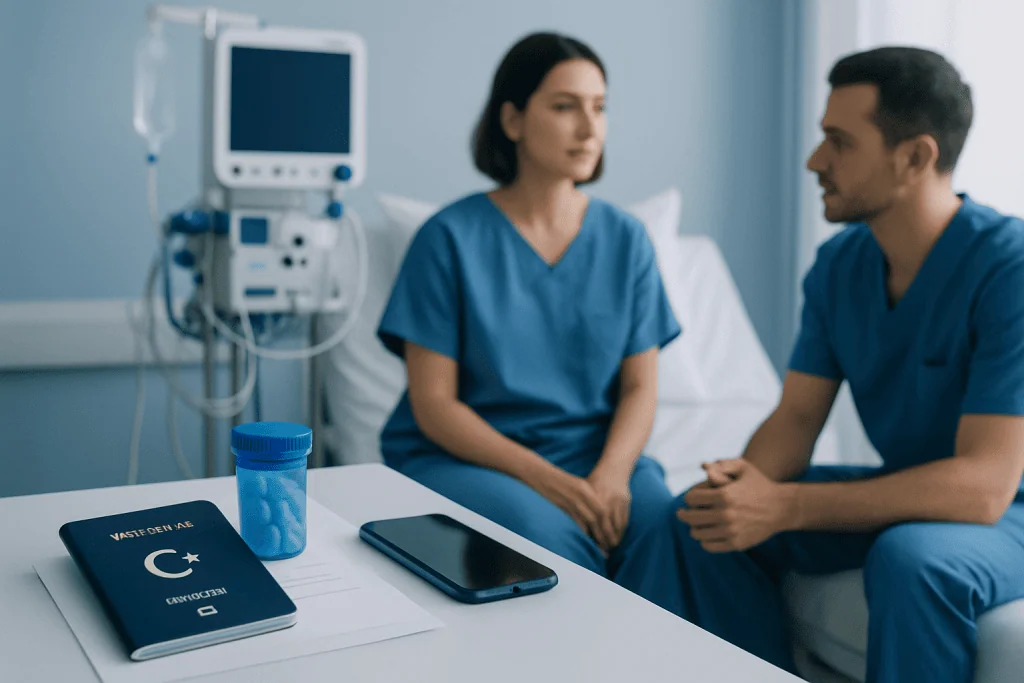
The most important items in your luggage are also the smallest. Keep your passport, visa documents if required for your nationality, insurance papers, hospital correspondence, treatment plan, prescriptions and emergency contact details together in one travel wallet or folder. Carry printed copies and keep digital backups on your phone and in your email. If your documents are not in Turkish or English, having key medical letters translated in advance makes conversations at the hospital simpler.
Medicines: the rules worth following
Bring all of your regular medicines in their original packaging, with enough supply for your full stay plus your journey home and a margin for delays. Original packaging matters at borders and at pharmacies: it shows what the medicine is, who prescribed it, and at what dose. Alongside the medicines themselves, carry a written list of medication names, doses, allergies and any supplements you take. This list does more work than you might expect: it speeds up admission paperwork, helps the anaesthesia team, and answers most questions a pharmacist might have.
Medicines belong in your hand luggage, never in checked baggage. Checked bags can be delayed or lost, and you may need a dose during travel or soon after landing. The same applies to anything you rely on daily: inhalers, eye drops, glucose monitors, hearing aid batteries, CPAP equipment or compression garments your team has asked you to wear. If your team has recommended compression wear, our guide on compression garments after surgery in Turkey explains what is usually worth bringing and what is easier to source locally.
Some medicines are controlled substances and are subject to import rules. If you take strong painkillers, sedatives or similar prescription-only medicines, check the rules for bringing them into Turkey before you fly and carry the prescription with you. Your pharmacist at home can usually tell you whether a medicine falls into this category.
Phones, chargers and adapters
Your phone becomes a genuine recovery tool: translation apps, hospital instructions, maps, messaging with family and appointment details all live on it. Pack your charger, a power bank for long transfer days, and a plug adapter: Turkey uses the round two-pin sockets common across continental Europe (type F, 230 volts), so travellers from the UK, Ireland, and outside Europe will need one. Before arrival, save your hotel address, the hospital address and your transfer contact details somewhere you can reach offline.
Clothing that supports comfort and healing

After treatment, comfort beats style every time. The test for every item of clothing is simple: can you put it on and take it off without twisting, stretching overhead, or pressing on a treated area? Clothes that pass this test tend to share a few features:
- Front openingsshirts, zip-up hoodies and button cardigans rather than anything pulled over the head
- Elastic waistbands and wide legsnothing that presses on an abdomen or hip that may be tender or swollen
- Soft, non-tight underwearseams and elastic sit differently when there are dressings underneath
- Slip-on shoes with good gripbending to tie laces is one of the first movements to become awkward
- Lightweight layershospital corridors, hotel air conditioning and outdoor weather rarely agree on a temperature
Think about the small movements that recovery makes difficult, and pack around them. A light robe or cardigan earns its place for hospital follow-up visits and for resting in your room. Warm, non-slip socks are useful on hotel floors. If your team has advised specific supportive wear, pack it where you can reach it without unpacking everything.
Weather in Turkey varies considerably by season and city: Istanbul winters are cold and wet, summers are hot, and inland cities swing further in both directions, so check the forecast for your destination shortly before travel. Even in warm months, indoor air conditioning can feel cool when you are sitting still for long periods, which is most of what early recovery involves. One extra light layer covers this.
On quantity: pack fewer clothes than instinct suggests. Three or four practical, comfortable outfits plus extra underwear usually outperform a full wardrobe, and most hotels offer laundry. Fewer clothes also means lighter luggage, which matters if you have lifting restrictions on the way home.
Comfort items that make recovery easier
Small comfort items carry a lot of weight-to-benefit value when you are recovering away from home. Worth considering: a neck pillow, a small extra cushion for support during transfers, lip balm, unscented moisturiser, tissues, a refillable water bottle, and a few familiar snacks that suit your dietary situation, particularly useful if your team has given you eating guidance, which our recovery nutrition guide covers in more detail.
Once you reach your accommodation, build a bedside recovery kit: phone and charger, medicines, water, hand sanitiser, glasses, headphones and your written instructions, all within arm’s reach. The point is to reduce the number of times you stand up, bend down or cross the room when you should be resting. Our hotel room setup checklist walks through arranging the whole room this way, and if you are still choosing where to stay, it is worth reading about how to choose recovery-friendly accommodation in Turkey before you book.
If your sleep is easily disturbed, an eye mask and earplugs are among the lightest, cheapest items you can pack, and a new environment is exactly where they earn their keep. A familiar playlist or downloaded podcasts help with long waits as much as with sleep.
Hygiene, wound care and daily routines
Bring basic toiletries in travel sizes so that nothing forces a shopping trip in your first days after treatment: gentle soap, a soft toothbrush, unscented wipes, deodorant, a hairbrush, dry shampoo and skincare suitable for sensitive skin. Fragranced products can irritate skin near a treated area, so plainer is safer. If you wear contact lenses, pack glasses too, eyes often feel dry after flights and long indoor days, and glasses are the easier option when you are tired.
On wound care, the honest advice is: do not pack medical supplies unless your treating team has asked you to. What you need after discharge, dressings, tapes, supportive pillows, compression stockings, depends entirely on your treatment, and much of it is either provided by the hospital or specified precisely at discharge. Buying generic supplies in advance often means carrying the wrong thing. The useful preparation is a question, not a purchase: find out before you travel what the hospital provides, what you will be given at discharge, and whether anything is worth bringing from home. Your own team’s instructions override any general checklist, including this one.
A few unglamorous items make daily routines less tiring: a small laundry bag, zip pouches to separate clean and used items, and hand luggage organised by category so you never have to empty a bag to find one thing. If you know you will have lifting restrictions, distribute weight across smaller bags rather than one heavy case. Turkish pharmacies, marked eczane, usually with a red sign, are widespread in cities and can supply most everyday toiletries and basic non-prescription items, so anything ordinary that you forget is genuinely replaceable.
How to pack for the trip home
The return journey deserves its own plan, made before you are tired enough to need it. Keep travel-day essentials in one small bag that never goes in the hold: passport, discharge papers, fit-to-fly documentation if your team has provided it, medicines, snacks, water bottle, charger and anything you might want during a long wait. The goal is a main suitcase that stays closed from hotel checkout to your front door.
Dress for the journey as if comfort were part of your aftercare, because it is. Loose layers, easy shoes and any support garments your team has approved make transfers and long periods of sitting more tolerable. If your team has advised regular walking, extra hydration or a particular seated position during the flight, plan your journey around that advice rather than around convenience.
Two pieces of paperwork planning help here. First, know how your follow-up communication will work after discharge, who reviews your progress, and through which channel, so the transition from hospital care to home recovery is organised rather than improvised. Second, if there is any chance your discharge date could move, understand your ticket’s change conditions before you buy; our guide on booking flexible return flights after treatment in Turkey explains the options. For what happens once you land, see preparing for recovery once you return home.
Practical questions about healthcare in Turkey
Patients researching a recovery stay often have the same background questions, so here are plain answers.
Do tourists get free healthcare in Turkey? No. Visitors are not covered by Turkey’s public health insurance system and are expected to pay for medical care they receive, whether in public or private facilities. This is why travel insurance that covers your circumstances, including, where relevant, complications of planned treatment, which many standard policies exclude, is worth arranging and reading carefully before you fly. Government travel advice for Turkey covers this in more detail.
How does everyday healthcare access work during a recovery stay? Turkey’s major cities have dense networks of pharmacies (eczane), and in each district a rotating duty pharmacy (nöbetçi eczane) stays open outside normal hours. Private hospital groups operate across Istanbul and other large cities, and hospitals treating international patients typically provide interpreter support. Your discharge paperwork will set out the follow-up arrangements your treating team has planned, which is the framework your recovery period runs on.
What is Turkey known for medically? Turkey receives large numbers of international patients each year across many fields, dentistry, hair restoration, cosmetic and reconstructive surgery, ophthalmology, orthopaedics, bariatric surgery, cardiology and oncology among them. Whatever the field, the packing principles in this guide stay the same; only the treatment-specific details change, and those come from your own team.
What do “health packages” for Turkey usually include? Structures vary, but a typical arrangement for international patients bundles the treatment itself with airport transfers, hotel accommodation near the hospital, interpreter support and scheduled follow-up visits. What any individual quotation covers depends on your treatment plan, your length of stay and the level of accommodation, so the useful step is always to ask for a written breakdown of exactly what is and is not included, particularly follow-up visits and aftercare supplies, which is where packages differ most.
Step by step
- Start with your medical and travel documents. Put your passport, booking confirmations, hospital letters, prescriptions and emergency contacts in one dedicated folder. Keep printed copies with you and digital versions on your phone and in your email.
- Pack your medicines in hand luggage. Carry all regular medicines in original packaging, with enough for your stay, the journey home and a margin for delays. Add a written list of names, doses and allergies, and check import rules for any controlled medicines.
- Choose recovery-friendly clothing. Pack loose, soft, front-opening clothes that you can change without twisting, stretching or bending. Add slip-on shoes, warm non-slip socks and one light outer layer for air-conditioned indoor spaces.
- Build a small comfort kit. A pouch with lip balm, tissues, moisturiser, headphones, eye mask, earplugs and charger covers most waiting rooms, hotel evenings and flights.
- Separate hotel essentials from travel-home essentials. One small bag for daily recovery needs, another for the return journey. This keeps your main suitcase closed when you are at your most tired.
- Confirm aftercare supply needs before you fly. Find out what the hospital provides at discharge and whether anything specific is worth bringing from home. Do not buy medical supplies speculatively.
- Pack light enough to manage safely. If lifting restrictions are likely, use smaller bags or a smooth-rolling case, and assume the return journey will be harder than the outbound one.
Your checklist
- Passport, travel documents and hospital paperwork (printed and digital)
- Regular medicines in original packaging, in hand luggage
- Prescription list, allergy list and emergency contacts
- Loose, front-opening, comfortable clothing in soft layers
- Slip-on shoes and non-slip socks
- Phone, charger, power bank and a type F plug adapter
- Travel-size toiletries and unscented, sensitive-skin products
- Glasses (even if you normally wear contact lenses)
- Water bottle, light snacks, eye mask and earplugs
- Small day bag for follow-up visits and a separate travel-home kit
Key takeaways
- Pack for the three stages of a recovery stay: hospital, hotel and the journey home.
- Medicines, documents and chargers travel in hand luggage, never checked baggage.
- Loose, front-opening clothing and slip-on shoes remove the movements recovery makes hard.
- Ask what aftercare items the hospital provides before you travel; do not buy supplies speculatively.
- Tourists pay for healthcare in Turkey, so arrange insurance that actually covers your circumstances.
- Keep total luggage light enough to manage with possible movement restrictions on the return trip.
Frequently asked questions
What are the most important things to pack for recovery after treatment in Turkey?
Documents, regular medicines and comfortable front-opening clothing come first. Then add practical items: slip-on shoes, travel-size toiletries, chargers and a plug adapter, a water bottle and a small comfort kit. These basics do more for your recovery days than a large wardrobe would.
Should I bring my own medical supplies, such as dressings?
Only if your treating team has asked you to. What you need after discharge depends on your treatment, and much of it is provided or specified by the hospital. Confirm before travelling what will be supplied locally so you neither overpack nor arrive short of something specific.
Do I need to keep medicines in my cabin bag?
Yes. Checked baggage can be delayed or lost, and you may need a dose during travel or soon after arrival. Keep medicines in original packaging with a written list of names, doses and allergies, and check import rules in advance if any of your medicines are controlled substances.
Do tourists get free healthcare in Turkey?
No. Visitors are not covered by Turkey’s public health insurance and are expected to pay for care they receive. Travel insurance that genuinely covers your situation matters, standard policies often exclude complications of planned treatment abroad, so read the terms before you fly.
What should I do about everyday health needs during my stay in Turkey?
Turkish cities have widespread pharmacies (eczane), with a rotating duty pharmacy open outside normal hours in each district, so ordinary toiletries and basic non-prescription items are easy to obtain. For anything connected to your treatment, your discharge paperwork sets out the follow-up arrangements your treating team has planned.
How many clothes should I pack for recovery in Istanbul or another Turkish city?
Fewer than instinct suggests. Three or four soft, practical outfits, front-opening tops, loose bottoms, extra underwear, usually cover a recovery stay, and hotel laundry handles longer trips. Lighter luggage also matters if you have lifting restrictions for the journey home.
What should I wear for the journey home after treatment?
Loose, soft layers and shoes that go on and off without bending or effort. Avoid anything tight or heavy over a treated area, and follow whatever travel advice your care team gives about support garments, hydration or moving regularly during the flight.
Does Acibadem help with practical recovery planning?
International patient services at Acibadem typically assist with the logistics around a treatment stay, interpreter support, transfers, accommodation coordination and follow-up arrangements. Knowing what is organised for you before you travel makes it much easier to decide what actually needs to go in your suitcase.
Add us as a Preferred Source to see more of our trusted health content across Google Search, AI Overviews and Discover.

Update history
- PublishedAugust 21, 2026
- Medical review approvedSeptember 2, 2026
- Last content updateSeptember 2, 2026
References3
- CDC Travelers' Health: Türkiye (Turkey) Traveler View wwwnc.cdc.gov
- CDC Travelers' Health: Pack Smart wwwnc.cdc.gov
- GOV.UK: Foreign travel advice: Turkey (Health) gov.uk
More Patient Guides
Septoplasty Recovery: Week by Week
Learn what to expect after deviated septum surgery: a week-by-week septoplasty recovery timeline, when it is usually safe to fly home, and…

Gallbladder Surgery Recovery: Week by Week
Learn what to expect after gallbladder surgery: a week-by-week recovery timeline, pain, diet, wound care, when it is safe to fly home…
Robotic Hysterectomy Recovery: Week by Week
Recovery from robotic hysterectomy week by week: pain, lifting, wounds, driving, flying home safely, warning signs and questions to ask before you…
Breast Reconstruction Recovery: Week by Week
DIEP flap recovery week by week: hospital stay, drains, pain, walking, showering, driving, when it is usually safe to fly home, and…