

Recovery Compression Garments After Surgery in Turkey: What to Bring and Buy

If your surgeon has confirmed the garment type and size, bring at least one in your hand luggage and know how to source a spare locally. Garment requirements vary by procedure, so the specification should come from your surgical team, not general advice. Learn the wearing schedule before discharge, and plan washing, hotel routines and travel-day use in advance.
Pack a compression garment, or buy one after you land? Most international patients face this question at some point before flying. The honest answer is that it depends on your procedure, but a small amount of planning before departure removes almost all of the stress.
This guide explains how recovery compression garments after surgery in Turkey usually work in practice: what to confirm with your surgical team before you travel, what belongs in your hand luggage, how buying locally works if you need a backup, and how to look after the garment through hotel recovery and the flight home. It covers logistics and everyday use. The medical decision, whether you need a garment at all, and which one, always belongs to your treating surgeon.
At a glance
- Best time to plan: Before you travel, once your procedure and garment type are confirmed
- Bring or buy?: Usually bring at least one approved garment and know how a backup would be sourced locally
- Most important check: The exact garment type, size or measuring method, and when wearing begins
- Where it goes: Hand luggage, not the checked suitcase
- Useful support: International patient teams can point you to pharmacies and medical supply shops, with interpreter help if needed
- Do not do: Do not switch brands, sizes or wearing schedules without checking with your surgical team
Why recovery compression garments matter after surgery in Turkey
After certain operations, surgeons advise a compression garment to help manage swelling, support healing tissue and make movement more comfortable. The style varies enormously by procedure. A garment used after abdominal surgery has little in common with one used after limb surgery, and post-operative garments are different again from the compression stockings sometimes used around surgery to support circulation. Because the categories overlap in name but not in purpose, the single most useful rule is this: follow the specification given for your own operation, not general advice found online.
When you travel abroad for treatment, the garment stops being purely a medical item and becomes a travel item too. You may need to wear it soon after the procedure, rotate a clean one during your stay, and possibly keep wearing it on the journey home. Procedures where garments are commonly discussed include many performed in plastic, reconstructive and aesthetic surgery and some in bariatric and metabolic surgery, though the decision is always case by case.
Before you travel, clarify with your care team what type of garment has been specified, whether you should arrive with one already packed, and how a replacement would be sourced in Istanbul or another city if needed. Sorting out recovery compression garments after surgery in Turkey is far easier before the operation than after it, when you are tired and moving carefully.
Should you bring your garment from home or buy it in Turkey?
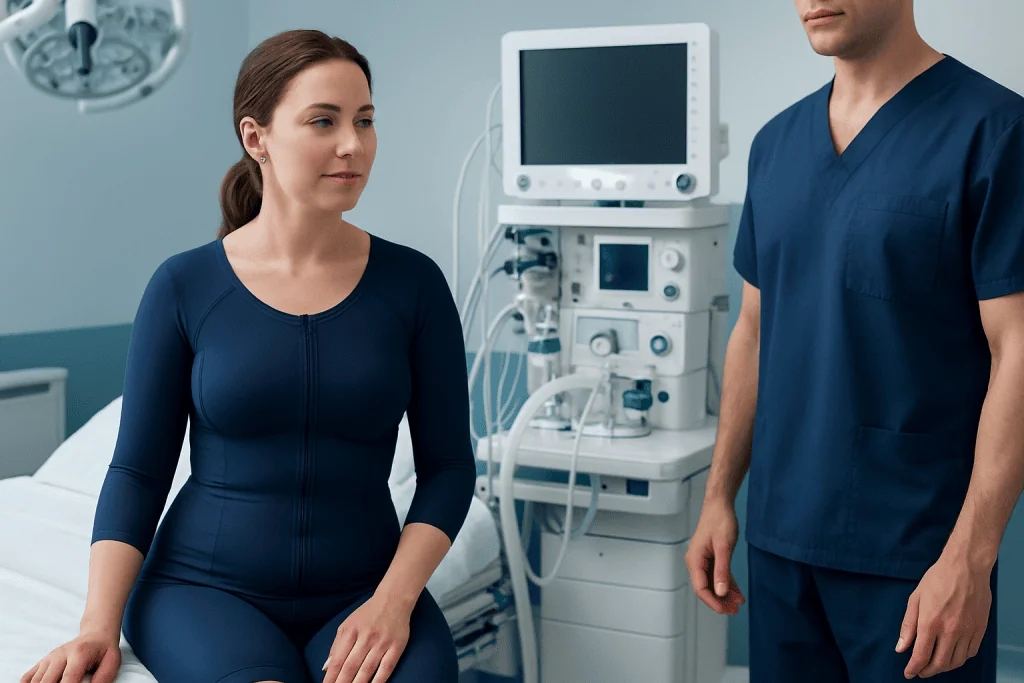
In most cases, bringing at least one garment from home is the sensible default, provided your surgeon or coordinator has already told you exactly what you need. Bringing your own removes uncertainty about sizing systems, labelling and brand availability, and it means the garment is with you from the first day it is required. This matters most if you know your size well or have worn the same brand before.
Buying in Turkey can also be practical, particularly when the final size can only be confirmed close to the procedure date or after surgery, once swelling patterns are known. Some patients buy a second garment locally as a backup, especially during longer stays where daily wear makes washing and rotation necessary. The most reliable approach is not either-or: travel with one approved garment and keep a clear local backup plan.
There are limits to what a hospital can promise about retail availability. Specific brands, unusual sizes and specialist designs may not be stocked everywhere, even in a large city. This is exactly why the specification from your own team matters: a written description of the required type, coverage area and compression level is far more portable than a brand name that may not exist on Turkish shelves. Ask early whether the hospital, a medical supply partner or a nearby pharmacy can help with sourcing, and whether interpreter support is available for the conversation about fit, closures and washing instructions.
What to confirm before you pack or purchase

Before spending money on any garment, get the exact specification from your care team in writing. Different operations call for different lengths, coverage areas, fastenings and compression levels. A product that looks similar in an online photo can still be unsuitable if it places pressure over the wrong area, covers a wound edge it should not, or is difficult to remove safely with limited mobility.
Sizing deserves particular attention because surgery changes the body it was measured against. Some patients are measured before the operation; others are fitted afterwards, once early swelling is taken into account. If your measurements sit between sizes, do not guess: a garment that is too tight can dig in and mark the skin, while one that is too loose does little useful work. Your surgeon or nursing team should make that call.
Practical design details matter more than they first appear. Front zips, hook-and-eye closures, adjustable straps and step-in designs all change how easily a garment goes on and off. If you are travelling alone, ask specifically whether the recommended design can be managed without a second pair of hands. Confirm these points before you travel:
- Exact garment type and coverage area
- Recommended size or the measuring method to use
- When wearing begins after surgery
- How many hours per day it is typically worn, and for roughly how long overall
- Whether a spare is recommended for washing and rotation
- Which fit problems your surgical team wants reported, pressure marks, rolling edges, numbness or new skin changes are treated as fit issues to assess, not discomfort to endure
What to bring in your luggage
If compression wear is part of your aftercare plan, it travels in your hand luggage, not your checked suitcase. Delayed baggage is an inconvenience on a holiday; it is a genuine problem when a specific medical garment is needed shortly after surgery. Keep the item in its original packaging where practical, along with the label and sizing information, so anyone helping you source a replacement can see exactly what it is.
Build a small recovery kit around the garment. Useful additions include a second approved garment if your team recommends one, a gentle fragrance-free detergent for hand washing, a sealable laundry bag, loose clothing that fits comfortably over compression wear, and slip-on shoes if bending will be uncomfortable. If the garment has hooks or zips, practise putting it on and taking it off at home, unhurried and in private, before you ever have to do it while sore. Our guide on packing for recovery after surgery in Turkey covers the wider kit in detail.
Choose travel clothes with the garment in mind. Soft, loose layers sit far better over post-operative compression than tight waistbands, structured jackets or anything that presses on the treated area. For the return journey, think ahead about airport queues, sitting tolerance and bathroom access: an outfit you can manage one-handed makes a long travel day noticeably easier.
Buying a replacement or backup garment in Istanbul or elsewhere in Turkey
If you need a replacement after arrival, the situation is manageable. In major cities such as Istanbul, medical supply shops and some pharmacies stock compression products, though availability varies by brand, size and garment type, and specialist post-surgical designs are less widely stocked than general compression wear. The efficient first step is to ask your hospital team exactly what to look for rather than shopping independently and hoping for the best.
An international patient coordinator can usually save you considerable time here: pointing you to an appropriate supplier, helping you communicate measurements and requirements in Turkish, or checking whether a product can be delivered to your hotel or the hospital.
If you do buy locally, take your current garment, any prescription note and the written specification with you. Photos help; exact written details help more. A replacement should be confirmed as appropriate for your stage of recovery before it goes on, early post-operative garments and later-stage garments are often not interchangeable, even when they look alike.
How to wear and care for your garment safely
A compression garment should feel supportive, not punishing. Firm, even pressure is normal; severe discomfort, marked rubbing, numbness, new skin discolouration or edges that dig in are not things to tolerate quietly. Surgical teams treat these as fit problems to be assessed and corrected, which is one reason the fit is usually checked on the ward before discharge rather than left to chance.
Washing and drying matter more than most patients expect. Elastic fabrics lose their usefulness when treated roughly: heat, wringing and harsh detergents all degrade compression over time. Follow the care label and any hospital advice, wash gently, and dry flat away from direct heat. If you are wearing the garment most of the day, this is where a second one earns its place, one worn, one drying, no gaps in the schedule.
Keep the skin under the garment clean and dry, and check the edges regularly for folding or rolling, which concentrates pressure in a narrow band. If your mobility is limited in the first days, have someone help with the first few removals and reapplications. Ward teams generally demonstrate a safe on-and-off routine before discharge; it is worth watching closely and repeating it once under supervision, because the technique that works in a hospital bed also has to work in a hotel room.
Planning for discharge, hotel recovery and the flight home
Your routine changes once you leave the hospital. In a hotel or recovery apartment you need a simple, repeatable system for washing, drying, storing and reapplying the garment without drama: a drying spot away from radiators, a laundry bag, and clothing laid out so dressing does not become a puzzle. Setting the room up deliberately helps; our hotel recovery room setup checklist walks through the details, and written discharge instructions should cover who handles questions about fit or swelling once you are out of the building.
The return flight deserves its own conversation before discharge. Some patients are still wearing their post-operative garment on travel day; others receive separate guidance depending on the procedure and the interval since surgery. Note that flight-related compression socks and surgical aftercare garments serve different purposes and are prescribed differentlywhy surgeons recommend compression socks for flying explains the distinction. Timing questions around the journey itself are covered in when it is safe to fly home after surgery in Turkey; the answer for your case comes from your own team.
Discharge paperwork, interpreter support for follow-up questions and practical arrangements for the journey home usually sit with the hospital’s international patient service. With those details confirmed and written down before you leave the ward, recovery compression garments after surgery in Turkey stay a solved problem rather than a running worry.
Step by step
- Get the exact garment recommendation in writing. Before travel, ask your surgeon or coordinator for the precise garment type, coverage area, compression level and sizing guidance. A general idea is not enough; recovery garments vary widely by procedure and stage of healing.
- Decide between one garment and two. If a specific product is approved in advance, bring at least one in your hand luggage. For longer stays or daily wear, a second garment makes washing and rotation far simpler.
- Pack a small aftercare clothing kit. Loose layers, slip-on shoes, a laundry bag and mild fragrance-free detergent cover most needs. Choose items you can manage with limited bending and reaching.
- Practise before you fly. Put the garment on and take it off at home a few times, especially if it has hooks or zips. The first attempt should not happen while you are sore.
- Confirm the wearing schedule before discharge. When wearing starts, how many hours per day, whether there are removal windows, write it down rather than trusting a tired memory.
- Have the fit checked early. Pressure points, rolling edges and difficulty getting the garment on are fit problems for the team to assess, not discomforts to push through.
- Ask about local sourcing early. If a replacement might be needed in Istanbul or elsewhere, find out before discharge which suppliers stock the right type and whether language help is available, saving hours of guesswork.
- Plan travel day around the garment. Confirm whether it is worn on the flight, keep it and your discharge instructions accessible in hand luggage, and dress in layers that work over it.
Your checklist
- Written confirmation of the exact garment type, coverage area and compression level
- Correct size or body measurements recorded before travel
- One approved garment packed in hand luggage, with its label and packaging
- Second garment, or a clear plan for sourcing a backup in Turkey
- Loose clothing and slip-on shoes that work over compression wear
- Mild fragrance-free detergent and a small laundry bag
- Written discharge and wearing instructions
- Contact details for your hospital and international patient coordinator
Key takeaways
- Bring at least one approved compression garment if your team confirms the type before travel, and keep it in hand luggage.
- Confirm size, coverage area and the wearing schedule with your surgeon rather than guessing or relying on general online sizing.
- A second garment makes daily wear and washing far easier during a longer stay.
- Replacements can usually be sourced in Istanbul and other major cities, but availability varies, buy only against your team’s written specification.
- Flight compression socks and post-surgical garments are different products with different purposes; your own aftercare plan governs which applies on travel day.
Frequently asked questions
Do I need to bring my compression garment to Turkey before surgery?
Usually yes, if your surgeon has already specified exactly which garment to use. Bringing one approved garment in your hand luggage is the most reliable option, with a plan for sourcing a local backup if one is needed during your stay.
Can I buy a compression garment in Istanbul after my operation?
Often yes. Medical supply shops and some pharmacies in major cities stock compression products, though availability varies by brand, size and type. Buying against your team’s written specification, rather than shopping independently, is the way to get the correct garment for your procedure and stage of recovery.
How many compression garments should I have?
Many patients manage with one, but two is considerably more convenient when daily wear and regular washing are involved, one worn while the other dries. Whether a spare is recommended depends on your procedure and length of stay, so it is worth asking before you travel.
What if the garment feels too tight or uncomfortable?
Firm, even pressure is normal; severe pain, numbness, skin discolouration or edges that dig in are not. Surgical teams treat these as fit problems to assess and correct, which is why the fit is generally checked on the ward before discharge and why wearing instructions are given in writing.
Should I wear the garment on my flight home?
It depends on your procedure, the time since surgery and your surgeon’s aftercare plan. Post-surgical garments and flight compression socks serve different purposes, so the answer for your case comes from your own team’s travel-day instructions rather than general flying advice.
Can I wash my compression garment in my hotel?
Usually yes, following the care label and any hospital instructions. Gentle hand washing with mild detergent and drying flat away from direct heat helps preserve the elasticity that makes the garment useful, and is the main reason many patients prefer to have a second one available.
Will the hospital show me how to use it?
Ward teams generally demonstrate how to put the garment on and take it off safely before discharge, and it is reasonable to ask to repeat the routine once under supervision. Interpreter support can usually be arranged if you want the instructions explained in your own language.
Are compression garments the same as compression stockings?
No. Post-surgical garments support healing tissue and manage swelling over a treated area, while compression stockings are used to support circulation in the legs, including around travel. They are specified differently, and one is not a substitute for the other.
Add us as a Preferred Source to see more of our trusted health content across Google Search, AI Overviews and Discover.

Update history
- PublishedJuly 8, 2026
- Medical review approvedSeptember 13, 2026
- Last content updateSeptember 12, 2026
References2
- Compression stockings: MedlinePlus patient instructions medlineplus.gov
- Deep Vein Thrombosis & Pulmonary Embolism: CDC Travelers' Health wwwnc.cdc.gov
More Patient Guides

Septoplasty Recovery: Week by Week
Learn what to expect after deviated septum surgery: a week-by-week septoplasty recovery timeline, when it is usually safe to fly home, and…

Gallbladder Surgery Recovery: Week by Week
Learn what to expect after gallbladder surgery: a week-by-week recovery timeline, pain, diet, wound care, when it is safe to fly home…

Robotic Hysterectomy Recovery: Week by Week
Recovery from robotic hysterectomy week by week: pain, lifting, wounds, driving, flying home safely, warning signs and questions to ask before you…

Breast Reconstruction Recovery: Week by Week
DIEP flap recovery week by week: hospital stay, drains, pain, walking, showering, driving, when it is usually safe to fly home, and…