

Compression Stockings and Garments After Surgery in Turkey

Compression stockings and garments after surgery in Turkey support circulation and swelling control while you recover and travel. Wear only the type, size and schedule your surgical team prescribes, durations vary by procedure and personal risk, so there is no universal timeline. Ask for written instructions before discharge, have the fit checked by a nurse, and pack everything in your cabin bag for the flight home.
Will you need to wear compression stockings on the plane home? Should you pack a garment from home, or will the hospital give you one? Most patients start asking these questions a day or two before discharge, usually while working out what fits in the cabin bag. The honest answer to almost all of them is: it depends on your procedure, your risk factors and your surgeon’s plan, but you can prepare for every likely version of that plan, and this guide shows you how.
Compression stockings and garments after surgery in Turkey are a routine part of many aftercare plans, from orthopaedic and abdominal operations to liposuction and body contouring. They are not cosmetic accessories and they are not optional extras you can freely swap for high-street travel socks. This guide explains what each type does, how long people typically wear them and who decides, how to get the fit right, and how to manage them during hotel recovery and the flight home.
At a glance
- Main purpose: Support circulation in the legs, help control swelling and make early movement feel more secure, when your doctor recommends them.
- Most important rule: Wear only the type, size and schedule prescribed by your surgical team. Duration is set case by case, not by a universal timetable.
- Do not skip: If a garment is uncomfortable or you want to stop wearing it early, ask your team first rather than quietly abandoning it.
- Fit matters: Compression should feel supportive, never numbing, painfully tight or breath-restricting.
- Travel planning: Confirm whether stockings are needed for the flight, and keep garments and discharge papers in your hand luggage.
- Support in Turkey: International patient teams can arrange interpreters, written instructions and follow-up coordination before you fly home.
Why compression stockings and garments matter after surgery in Turkey
After an operation, your body needs support on two fronts. First, circulation: you move less than usual in the early days, and blood flow in the leg veins slows when you sit or lie for long periods. Medical compression stockings apply graduated pressure, firmest at the ankle, easing off up the leg, to encourage blood back towards the heart. Second, swelling and tissue support: after certain procedures, particularly in plastic, reconstructive and aesthetic surgery, a fitted body garment provides even pressure over the operated area, which can help manage swelling and make walking, sitting and dressing feel more stable while tissues settle.
Whether you need stockings, a body garment, both or neither depends on your procedure, your mobility, your medical history and your travel plans. A patient having a short day procedure with immediate walking may need nothing at all. A patient recovering from abdominal surgery who then boards a long-haul flight has a different profile. This is why compression stockings and garments after surgery in Turkey should always come with a specific, written plan rather than a general rule of thumb.
At Acibadem, aftercare instructions are normally explained before discharge, with interpreter support when needed. If you are unsure whether your garment is for daytime use, overnight use, travel only, or a set number of weeks, ask the team to write it down. A simple written schedule prevents most of the confusion that otherwise starts once you are back at the hotel, tired, and trying to remember exactly what the nurse said.
Types of stockings and garments you may be given
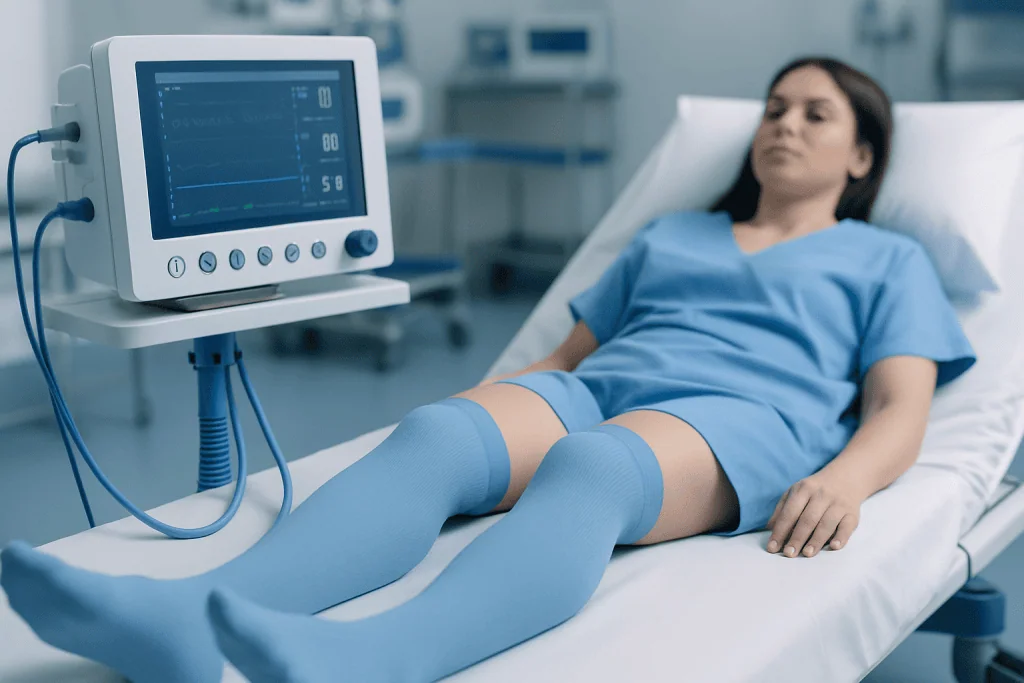
The most familiar item is the medical compression stocking, usually knee-high or thigh-high. These apply graduated pressure and come in specific sizes based on measurements of your ankle, calf and sometimes thigh. They are not the same as ordinary travel socks or athletic compression wear, which are built to different pressure standards. Do not substitute one for the other unless your doctor explicitly agrees.
Beyond stockings, the garment your team recommends depends entirely on the operation:
- Abdominal binderswide, adjustable bands used after some abdominal and bariatric procedures to support the midsection during movement.
- Post-operative brasfront-closing, wire-free support used after breast procedures.
- Full or partial body garmentsfitted suits or shorts commonly used after liposuction and body contouring to apply even pressure over treated areas.
- Arm sleeves and facial support garmentsused after specific procedures on the arms, face or neck.
These garments may close with hooks, zips, Velcro or adjustable panels. Your care team should show you how to put yours on, how tight it should feel, and whether any dressings, drains or sensitive areas need protecting. Many patients are advised to have a second garment so one can be washed while the other is worn, useful if you are staying in Turkey for several days after discharge. Your patient coordinator can tell you whether your garment is supplied by the hospital, obtained from a medical supplier locally, or something to pack from home; our separate guide on what to bring and what to buy in Turkey covers that decision in detail.
How long will you wear them, and what if you don’t?
These are the two questions patients search for most, so here is the honest answer. There is no single correct duration. How long you keep compression stockings on after surgery depends on your procedure, how mobile you are, your personal clotting risk and whether you have a flight ahead of you. Some patients wear stockings only around the operation and travel period; others are asked to continue for a number of weeks. Body garments after aesthetic procedures often follow a phased schedule, a longer daily wearing time at first, reducing in stages, but the phases and their lengths are set by your surgeon, not by a chart on the internet. Whatever schedule you are given, get it in writing before discharge and ask specifically what to do about nights, showers and the journey home.
What happens if you simply don’t wear them? Nobody can promise you a specific outcome either way, and this guide will not pretend otherwise. What can be said plainly is this: if your surgeon prescribed stockings, it is because slower circulation in your legs was judged a relevant risk for you, and the stockings are one part of managing it, alongside walking, hydration and any measures your doctor has prescribed. Discarding one part of that plan without telling anyone means recovering with less protection than your team intended, and doing so silently means nobody can adjust the plan for you.
The same logic applies to skipping a compression garment after liposuction. The garment is part of how your surgeon manages swelling, comfort and tissue support in the treated areas during healing. If yours feels unbearable, rolls, digs in or seems the wrong size, that is a fixable problem: a different size, a different style or an adjusted schedule may solve it. Raise it with your team rather than quietly leaving the garment in the drawer. “It was uncomfortable so I stopped” is a conversation your surgeon would much rather have before you stop than weeks afterwards.
Getting the fit right before you leave hospital
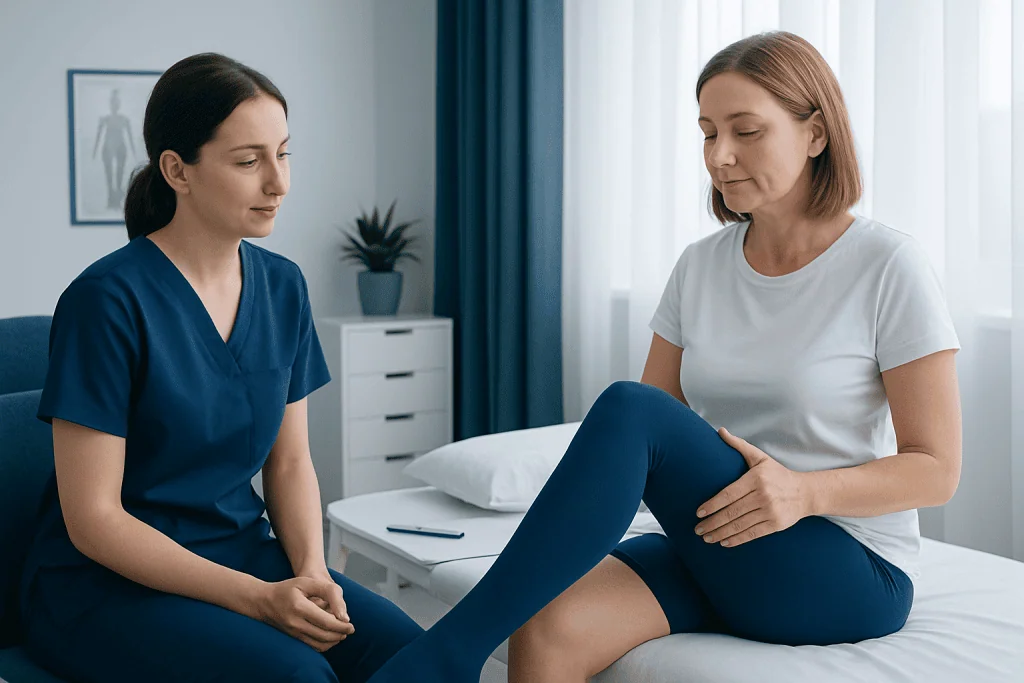
Fit is the single most important safety and comfort detail. A garment that is too loose does not provide the intended support. One that is too tight can cause pain, deep skin marks, numbness or circulation problems: the opposite of what it is for. Before discharge, ask a nurse or clinician to check the fit while you are in the position you will use most: standing for stockings, sitting or lying for many body garments.
For stockings, check that there are no deep folds, rolled edges or tight bands behind the knee. Your toes should stay their normal colour and temperature, not blue, cold or numb. For body garments, the fabric should lie smoothly and support you without digging into wounds, causing sharp pain or making it difficult to breathe comfortably. Firm is expected; painful is not.
Then practise. Ask for a demonstration and repeat the process yourself while the nurse watches. This is when you learn to manage closures, avoid twisted fabric and protect dressings, much easier in a hospital room with help on hand than alone in a hotel bathroom. If a companion is travelling with you, invite them to watch too. In the first days after surgery, reaching, bending and pulling firm fabric over swollen tissue can be genuinely difficult, and a briefed helper is worth a great deal.
Wearing compression during hotel recovery
Your first days after discharge may be spent at a hotel, serviced apartment or recovery accommodation. Follow the wearing schedule your team gave you, including whether the garment stays on overnight, comes off for showering, or is used mainly during walking and travel. Do not change the plan because it feels inconvenient; if it is uncomfortable, ask for advice instead of improvising.
Short, gentle movement is often part of recovery, but match your activity to your surgeon’s instructions. Stockings are not a substitute for safe mobility and hydration, and a supportive garment is not permission to lift, stretch or exercise earlier than advised. If you had a day procedure and are unsure what activity is reasonable, our guide to what to expect after day surgery in Turkey covers the basics.
Practical comfort keeps you consistent. Wear loose outer clothing that does not press on incisions, keep the room at a comfortable temperature, and put a chair beside you when dressing so you are not balancing on one leg while pulling on a stocking. Compression can also mask or mimic discomfort, so know your baseline: if pain changes character or steadily worsens, tell your team: our guide on when pain, swelling or fever should prompt an urgent call explains what deserves a same-day conversation.
Flying home with stockings or garments
Medical travel adds one more layer to aftercare, for many patients, compression stockings and garments after surgery in Turkey matter most on the journey home. Before you book or board a return flight, confirm two things with your doctor: when you are medically fit to fly, and whether stockings should be worn during the transfer, the flight and the arrival journey. Both answers depend on your procedure, the flight duration, your mobility and your clotting risk, see our guides on when it is safe to fly home after surgery in Turkey and why surgeons recommend compression socks for flying for the full picture.
Pack stockings and garments in your hand luggage, never the checked suitcase: a lost bag should not mean lost aftercare. Carry your written instructions, medication list and discharge summary with you. If airport security asks about a medical garment, explain calmly that it is part of your post-surgical recovery; you can request discreet screening where available.
During the journey, follow your team’s advice on walking the aisle, ankle exercises, hydration and medication timing. Do not remove stockings mid-flight unless you have been told you may, or you are experiencing concerning symptoms. If significant swelling, pain or numbness develops during travel, tell the cabin crew and seek medical assessment rather than waiting until you get home.
Skin care, washing and warning signs
Compression sits directly against your skin for many hours a day, so cleanliness and daily skin checks matter. Wash garments according to the manufacturer’s instructions and your team’s guidance, usually mild detergent, no harsh wringing, careful air drying. Aggressive washing or tumble drying can degrade the elastic fibres that create the compression in the first place. Avoid strongly fragranced products on sensitive post-surgical skin, and do not apply lotions or powders under a garment unless your team confirms they are safe.
Check your skin daily, paying attention to seams, edges, ankles, the back of the knee, underarms, groin folds and anywhere near incisions. Mild temporary marks where fabric pressed are common. Deep grooves, blisters, increasing redness, broken skin, new numbness or worsening pain are not, report them. If you have diabetes, circulation problems or reduced sensation in your legs, ask your doctor whether you need extra skin monitoring, because you may not feel a pressure problem developing.
Some symptoms need faster action than a routine callback. If you develop sudden chest pain, breathlessness, fainting, coughing up blood, or new pain and swelling in one calf, especially with warmth or redness in that leg, call your local emergency number or go to the nearest emergency department now. These symptoms do not automatically mean something serious is happening, but they are exactly the ones that must be assessed immediately rather than watched overnight. While you are still in Turkey, Acibadem’s international patient services can tell you who to call and can help share your records with your home doctor after you leave.
Step by step
- Ask for your exact compression plan. Before discharge, confirm which stocking or garment you should wear, how many hours per day, and for how many days or weeks. Request written instructions in a language you understand, especially if you will be recovering in a hotel.
- Confirm the correct size and fit. Have a nurse or clinician check the garment on your body before you leave the hospital. Say immediately if you feel numbness, sharp pressure, restricted breathing or severe discomfort, fit problems are easiest to fix on the ward.
- Practise putting it on safely. Apply and remove the garment yourself while the care team or your companion watches. Learn to avoid folds, protect dressings and manage zips, hooks and firm fabric.
- Plan washing and backup use. Ask whether you need a second garment and how to wash and dry compression fabric without damaging it. Keep garments clean and dry.
- Coordinate garment use with travel. Confirm when you are cleared to fly and whether stockings should be worn for the journey. Keep the garment, discharge notes and medications in your cabin bag.
- Monitor comfort and warning signs. Check skin, swelling and comfort every day. If you notice worsening pain, numbness, skin injury, one-sided leg swelling, chest pain or breathing difficulty, act on it, do not wait and see.
- Arrange follow-up after returning home. Ask how long to continue compression and who reviews your progress. If you had surgery at Acibadem, the international patient team can help coordinate documents and follow-up communication.
Your checklist
- Written instructions for when and how long to wear compression
- Correct size confirmed by a nurse or clinician before discharge
- Second garment or spare stocking pair if recommended
- Loose clothing to wear over compression garments
- Mild detergent and a drying plan that will not damage the fabric
- Discharge summary and medication list in hand luggage
- Emergency contact numbers for your hospital and local care team
- Flight clearance and in-flight instructions from your doctor
- Companion briefed on how to help you dress if needed
Key takeaways
- Use only the compression stockings or garments recommended for your surgery and your measurements, durations are individual, not universal.
- Get a written wearing schedule before you leave hospital, including instructions for nights, showers and travel.
- A proper fit is supportive without numbness, skin injury or severe pain; have it checked before discharge.
- Do not skip or stop compression on your own, if it is uncomfortable, ask for an adjustment instead.
- Pack all compression items and discharge papers in your cabin bag for the flight home from Turkey.
- Know the emergency symptoms, sudden breathlessness, chest pain, one-sided calf swelling, and act on them immediately.
Frequently asked questions
How long should you keep compression stockings on after surgery?
There is no universal answer. Some patients wear stockings only around the operation and travel period; others are asked to continue for a number of weeks. The duration depends on your procedure, mobility, clotting risk and flight plans, and it is set by your surgical team. Ask for the timeframe in writing before discharge, including what to do at night.
How long should I wear a compression garment after surgery?
Body garments often follow a phased schedule, longer daily wear at first, reducing in stages, but the phases and their lengths are procedure-specific and set by your surgeon. Do not rely on generic timelines online; your own written plan is the only one that applies to your body and your operation.
Is it okay to skip wearing my compression garment after liposuction?
Not without asking your surgeon first. The garment is part of how swelling, comfort and tissue support are managed while treated areas heal. If it feels unbearable, digs in or seems the wrong size, that is usually fixable with a different size, style or schedule, raise the problem rather than quietly stopping.
What happens if I don’t wear compression stockings after surgery?
No one can predict a specific outcome for an individual, but if stockings were prescribed, it is because slower leg circulation was judged a relevant risk for you. Not wearing them removes one part of the plan your team built to manage that risk. If you want to stop early, tell your doctor so the plan can be reviewed rather than abandoned.
How tight should a post-surgery garment feel?
Firm and supportive, but not painfully tight. You should not feel numbness, tingling, coldness, blue discolouration of toes or fingers, or difficulty breathing. If you are unsure whether yours fits correctly, ask a nurse to check it before discharge, and contact your team if problems appear later.
Can I remove my garment to shower?
It depends on your wound care plan and the type of garment. Some may be removed briefly for showering once your team allows it; others have specific restrictions in the early days. Follow your written discharge instructions, and ask before your first shower if the notes are not clear.
Can I buy my own compression stockings before travelling to Turkey?
You can ask in advance whether to bring stockings, but do not assume any travel sock is suitable after surgery. Medical compression comes in specific sizes, lengths and pressure levels, and the right combination depends on your measurements and procedure. Your surgical team should confirm what is appropriate before you buy.
Who can help me understand the instructions if I do not speak Turkish?
International patient services can arrange interpretation and clarify practical discharge instructions. At Acibadem, patient coordinators and interpreters support communication between you and the clinical team, so you leave hospital knowing exactly what to wear, when, and who to call with questions.
Add us as a Preferred Source to see more of our trusted health content across Google Search, AI Overviews and Discover.

Update history
- PublishedJune 8, 2026
- Medical review approvedSeptember 13, 2026
- Last content updateSeptember 12, 2026
References2
- Compression stockings: MedlinePlus Medical Encyclopedia medlineplus.gov
- DVT (deep vein thrombosis): NHS nhs.uk
More Patient Guides

Septoplasty Recovery: Week by Week
Learn what to expect after deviated septum surgery: a week-by-week septoplasty recovery timeline, when it is usually safe to fly home, and…

Gallbladder Surgery Recovery: Week by Week
Learn what to expect after gallbladder surgery: a week-by-week recovery timeline, pain, diet, wound care, when it is safe to fly home…
Robotic Hysterectomy Recovery: Week by Week
Recovery from robotic hysterectomy week by week: pain, lifting, wounds, driving, flying home safely, warning signs and questions to ask before you…

Breast Reconstruction Recovery: Week by Week
DIEP flap recovery week by week: hospital stay, drains, pain, walking, showering, driving, when it is usually safe to fly home, and…