Porcelain Veneers
Porcelain veneers are thin ceramic shells bonded to the front of teeth to improve color, shape, size, and alignment. They are commonly used in cosmetic smile design.
Quick answer
Porcelain veneers are thin, custom-made ceramic shells bonded to the front surfaces of teeth to improve colour, shape, length and symmetry. Treatment usually involves a consultation and smile design, conservative reshaping of the enamel, laboratory fabrication of the veneers, and a bonding appointment. Veneers suit adults with healthy teeth and gums whose concerns are mainly cosmetic. Once enamel is prepared, the treatment is long-term and not easily reversed.
Porcelain Veneers: A Clear Guide for International Patients
Porcelain veneers are thin, custom-made ceramic shells bonded to the front surfaces of your teeth. They are used to change tooth colour, shape, length and symmetry when the teeth themselves are healthy but the visible smile needs improvement. Veneers are typically chosen by adults whose concerns, staining, chips, small gaps, worn edges, uneven proportions, cannot be fully corrected by whitening or polishing alone. If you are researching porcelain veneers in Turkey, this page explains what the treatment involves, who it suits, and what an honest care pathway looks like from first consultation to long-term maintenance.
The decision to have veneers is rarely just about wanting whiter teeth. For many people it comes after years of feeling self-conscious in photographs, covering the mouth when smiling, or noticing that the front teeth have gradually become worn, stained or out of proportion with the face. If you are considering treatment abroad, you are probably also weighing practical questions: whether the trip can be planned safely, how many visits are needed, how natural the result will look, and whether the dentist will understand both your cosmetic goals and your long-term oral health.
It helps to be clear about one thing from the start. Veneers are a dental procedure, not merely a cosmetic service. In most cases they require some preparation of the tooth surface, and once enamel has been reshaped, the treatment is long-term and not easily reversible. That is why careful diagnosis, conservative planning, high-quality ceramic work and precise bonding matter so much. The goal is to improve appearance while protecting tooth structure, gum health, comfort and function, not to trade one for the other.
A well-designed smile is planned around your facial features, lip movement, gum line, bite, speech and personality, not around a single template. It should look attractive at conversational distance and natural close up. The best veneer treatment begins with understanding what veneers can do, and, just as importantly, what they cannot.
What Are Veneers?
Veneers are thin covers, made from ceramic or composite resin, that are bonded to the front surface of a tooth to improve its appearance. Each one is made for a specific tooth, so the fit, contour and colour are individual rather than generic. Porcelain versions are fabricated outside the mouth by a dental laboratory or digital production workflow, then cemented in place with a resin adhesive. The porcelain is chosen because it reflects light in a way that resembles natural enamel: slightly translucent at the edges, brighter in the body of the tooth, with subtle variation rather than a flat, uniform white. Unlike a surface whitening treatment, a veneer gives the visible front of the tooth an entirely new ceramic surface. That makes veneers especially useful for discoloration that does not respond to whitening, deep internal staining, certain medication-related colour changes, old darkened restorations, or developmental enamel defects.
How Is a Veneer Different from a Crown?
A veneer covers only the front surface and biting edge of a tooth, while a crown covers most or all of it. That difference matters because it determines how much natural tooth structure must be removed. Dental crowns are usually chosen when a tooth is heavily damaged, structurally weakened, or has been treated with a large filling or root canal, situations where the tooth needs full-coverage protection, not just a new face. A veneer is the more conservative option: in many cases only a thin layer of enamel is reshaped, and in selected situations a minimal-preparation or no-preparation approach may be possible. Whether that applies to you depends on tooth position, starting colour, enamel thickness, your bite, and how much cosmetic change you want. A dentist who recommends crowns on healthy front teeth purely for cosmetic reasons should be able to explain exactly why a more conservative veneer would not work.
Which Type of Dental Veneers Should You Choose?
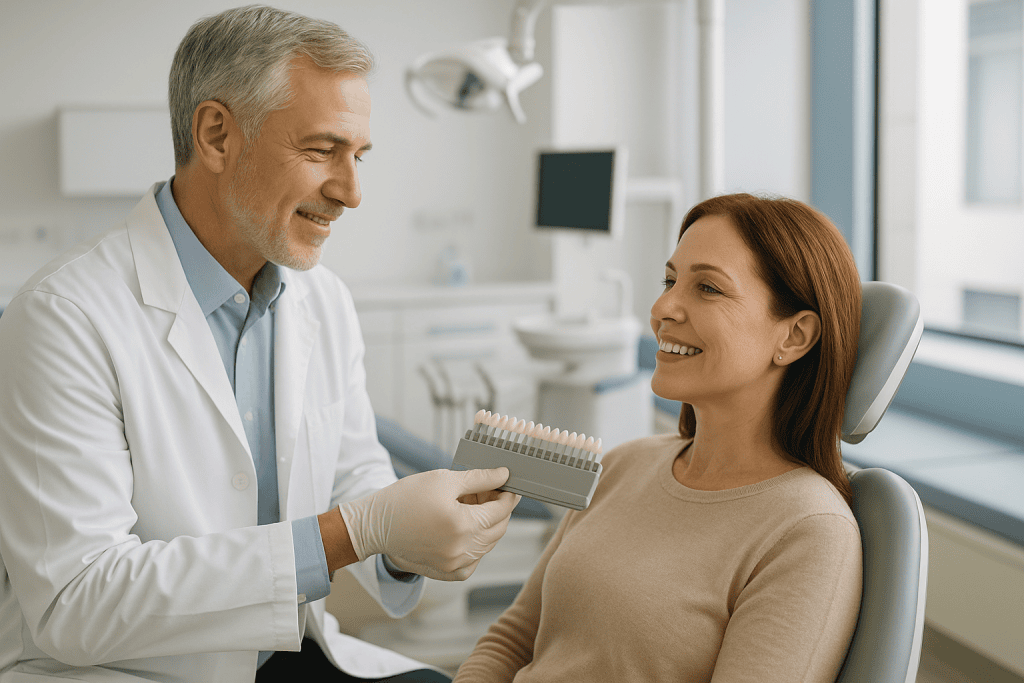
Dental veneers fall into two broad families: porcelain veneers, made in a laboratory and bonded in place, and composite veneers, built directly onto the tooth from tooth-coloured resin. Composite bonding can be useful for small repairs and more limited cosmetic changes, usually in a single visit and at lower complexity. Porcelain, including the very thin ceramic type often called laminate veneersis generally chosen when you want stronger colour stability, a more refined ceramic surface finish and a longer-lasting cosmetic result. Porcelain resists staining better than composite, holds its polish, and can be layered to mimic the depth of natural enamel. Composite is easier to repair and modify but tends to dull and pick up stain over time. The honest comparison depends on your teeth, budget, timeline and expectations; our guide on porcelain vs composite veneers works through the trade-offs in detail.
What Do “Veneer Teeth” Actually Look Like?
Veneer teeth, the phrase many people search for, simply describes teeth that have been restored with bonded veneers, and when the work is done well they should not look like “veneer teeth” at all. A natural result has slight differences between individual teeth, gentle surface texture, translucency at the biting edges, and proportions that suit your lips and face. The flat, opaque, uniformly bright look that people sometimes associate with veneers is not an inevitable feature of the treatment; it is the result of over-aggressive design choices. During planning, you should be able to discuss whether you want a soft, age-appropriate improvement, a brighter cosmetic smile, or a more dramatic redesign, and see a preview before anything irreversible happens.
Who May Need Porcelain Veneers?
Porcelain veneers may suit adults who are unhappy with the appearance of their front teeth and who have enough healthy tooth structure to support a bonded ceramic restoration. Most people who request veneers have fundamentally healthy teeth; their concerns are cosmetic problems that whitening, orthodontics or simple polishing cannot fully correct. Common examples include teeth that look permanently stained, old or mismatched front fillings, small gaps between teeth, mild crowding or unevenness, teeth that appear too short, chipped front edges, peg-shaped or unusually narrow teeth, and visible enamel defects. Some patients have one or two teeth that stand out from the rest of the smile; others want a broader smile design involving several upper, and sometimes lower, front teeth.
The first step is always diagnosis, not design. A proper cosmetic consultation includes a detailed dental history, a frank discussion of your expectations, examination of the teeth and gums, bite analysis, dental photographs, shade assessment and imaging where needed. The dentist looks for cavities, cracks, gum inflammation, bone loss, tooth wear, clenching or grinding patterns and existing restorations. These findings decide whether veneers are appropriate and how they should be designed.
You may be a good candidate for porcelain veneers if you have:
- Stable oral health, with no untreated tooth decay or active gum disease.
- Cosmetic concerns that mainly affect the front surface of the teeth.
- Enough enamel or healthy tooth structure for reliable bonding.
- Realistic expectations about shade, shape, symmetry and maintenance.
- A bite that can support thin ceramic restorations, or a plan to manage bite-related risks.
- A willingness to maintain excellent oral hygiene and attend periodic dental check-ups.
Veneers may not be the right first treatment if your teeth are severely misaligned, heavily decayed, structurally weak or affected by uncontrolled gum disease. If you grind or clench strongly, you may still be a candidate, but the higher risk of chipping or debonding needs to be discussed openly, and a protective night guard is often recommended. If the cosmetic result you want would require major tooth movement, orthodontic treatment may be advised before veneers, or instead of them. For a fuller picture of candidacy and how appointments are typically sequenced, see our guide on who is suitable for porcelain veneers and how many visits are needed.
For international patients, a remote initial review can help establish whether a trip is worthwhile before anything is booked. Clear photographs, dental X-rays, a description of previous dental work and a summary of your cosmetic goals allow a clinical team to prepare a provisional plan. That plan should always be confirmed after an in-person examination, because gum health, enamel thickness, bite forces and true tooth colour are difficult to judge fully from photographs alone. A clinic that quotes a fixed, final plan from photos alone is skipping the diagnostic step that protects you.
Porcelain Veneers: What They Can and Cannot Change
Veneers are most often used for cosmetic smile design, and the concerns they address vary widely. Treatment is usually considered when the front teeth are visible during smiling or speaking and you want a more balanced, natural and confident appearance.
Veneers can help with tooth discoloration that does not improve sufficiently with professional whitening. This includes deep yellow, grey, brown or mottled discoloration; staining from older dental materials; fluorosis-related enamel changes; and uneven colour between neighbouring teeth. Because the porcelain colour is selected and layered during fabrication, veneers can create a brighter appearance while preserving natural translucency, provided the design is careful rather than simply “as white as possible”.
They can also correct minor shape and size concerns. Teeth that look too small, short, pointed, flat, asymmetrical or uneven can be redesigned. Worn edges can be lengthened, and the visible smile line made more harmonious. When only one or two teeth are involved, the technical challenge is matching the veneer to the surrounding natural teeth; when several teeth are treated together, the design can be more comprehensive. Veneers can close small spaces between teeth and soften the appearance of mild alignment irregularities. What they cannot do is move teeth biologically the way orthodontics does. If crowding, rotation or bite problems are significant, orthodontic care is usually safer and more conservative. In some cases a combined approach produces the best result: align the teeth first, then use veneers only where colour or shape still needs help.
The main indications for porcelain veneers are:
- Discoloration: deep stains or uneven colour that whitening cannot adequately correct.
- Shape irregularities: teeth that are small, narrow, pointed, worn or asymmetrical.
- Minor spacing: small gaps between front teeth.
- Mild alignment concerns: slight rotations or uneven edges when orthodontics is not required, or after orthodontic treatment.
- Chips and edge wear: minor fractures or worn front edges that affect smile appearance.
- Enamel defects: surface irregularities, mottling or developmental enamel changes.
- Smile design: a broader cosmetic plan to harmonise tooth proportions, shade and symmetry.
Veneers are also used to restore the appearance of chipped or slightly fractured front teeth, provided the remaining tooth is strong enough and the bite can be managed. For teeth with larger fractures, root canal history, big old fillings or reduced structural integrity, crowns or other restorations may be the more appropriate, and more durable, choice.
How Porcelain Veneer Treatment Is Performed
Veneer treatment follows a defined sequence, and each stage protects the one after it. The typical pathway looks like this:
- Consultation, examination and records.
- Smile design, mock-up and shade planning.
- Conservative preparation of the teeth and impressions.
- Temporary veneers while the ceramics are fabricated.
- Try-in, bonding and bite adjustment.
- Follow-up review and long-term maintenance.
Initial Consultation and Smile Assessment
Treatment begins with a consultation that covers both oral health and aesthetic goals. The dentist will ask what you want to change, which smiles you find natural or attractive, whether you prefer a subtle or brighter result, and whether there are functional concerns such as grinding, jaw discomfort or tooth sensitivity. A clinical examination follows: teeth, gums, existing restorations, enamel quality, bite and jaw movement. Photographs are taken from multiple angles, relaxed smile, full smile, side views, close-ups, so the clinician can analyse tooth proportions, gum symmetry, midline position, how much edge shows when you speak, and how the teeth relate to your lips and face. Digital imaging, intraoral scanning and X-rays support the diagnosis. Intraoral scanners can create a precise digital model of the teeth without conventional impression material in many cases, and radiographs reveal decay, bone support, root health and hidden problems that could affect the plan.
Planning and Smile Design
The dentist then develops the treatment plan: how many teeth to treat, whether whitening should happen before veneer shade selection, whether gum treatment is needed, and whether orthodontic alignment or bite management should come first. Treating too few teeth can make shade matching difficult; treating more teeth than necessary is overly aggressive. The plan should balance your cosmetic goals against conservative dentistry, and you should hear the reasoning, not just the recommendation.
Smile design often involves digital planning and a diagnostic wax-up or mock-up. A mock-up lets you preview the proposed changes directly in your mouth using temporary material, tooth length, width, shape, lip support and overall smile character become visible and discussable before any enamel is reshaped. For international patients this step is particularly valuable, because it turns an abstract design into something you can evaluate and adjust while there is still time to change course.
Shade selection deserves its own conversation. A natural-looking veneer is not simply “white”: real teeth vary in brightness, translucency, surface texture and warmth. The dentist considers your skin tone, facial features, age, neighbouring teeth and personal preference. If only some teeth are receiving veneers, the surrounding teeth may be whitened beforehand so the final shade can be matched more predictably.
Preparation of the Teeth
Once the design is finalised, the teeth are prepared. In most cases this means removing a thin layer of enamel from the front surface, and sometimes the biting edge, of each tooth. How much depends on the tooth’s starting position and colour, the desired final shape, and the thickness the porcelain needs to look natural and stay strong. Modern planning aims to preserve as much enamel as possible, because enamel is the most reliable bonding surface a veneer can have. Local anaesthesia may be used to keep you comfortable, although preparation for veneers is generally less invasive than preparation for crowns. After reshaping, the dentist takes digital or conventional impressions, which the laboratory uses to fabricate veneers with precise margins, contours and contact points. Temporary veneers are usually placed while the final ceramics are made: they protect the prepared teeth, preview the planned shape and let you function socially in the meantime. They are not as strong or polished as the final porcelain, so avoid hard or sticky foods and follow your dentist’s care instructions during this period.
Laboratory Fabrication and Ceramic Craftsmanship
The final veneers are fabricated from high-quality dental ceramics selected for strength, translucency and aesthetics. The specific material and design depend on your tooth colour, how much masking of the underlying tooth is required, your bite forces and the appearance you have agreed on. Technology supports accuracy at this stage: digital impressions reduce distortion and improve communication between dentist and laboratory, and computer-aided design can refine contours and proportions. Ceramic layering, staining, glazing and polishing create the surface texture and light reflection that make porcelain resemble enamel. The finished veneer should not look flat or artificial; it should integrate with your face and mouth.
Try-In and Bonding
At the bonding appointment, the dentist first tries the veneers on the teeth without permanent cement. Fit, shape, colour, length and symmetry are checked carefully, and you see the veneers before final bonding. Minor adjustments may be possible at this stage; major changes may require laboratory modification or remaking a veneer, which is precisely why the try-in exists. Once approved, the teeth and veneers are prepared for bonding. The process requires a clean, dry field and careful handling: the inner surface of the ceramic is treated, the tooth surface is conditioned, and a resin cement creates the connection between porcelain and enamel. The dentist places each veneer with a deliberately chosen cement shade, removes excess cement and hardens the material with a curing light. Afterwards the bite is checked and adjusted, evaluating how the upper and lower teeth meet during biting and side-to-side movements: a step that reduces stress on the new ceramics. Final polishing smooths the margins and improves comfort.
How Many Visits Does Veneer Treatment Take?
Most straightforward porcelain veneer cases are completed over several appointments: consultation and planning, preparation and impressions, and final bonding, sometimes with a separate try-in or review visit. The total time depends on how many teeth are treated, the complexity of the case, whether gum or orthodontic treatment is needed first, and the laboratory schedule. For international patients, appointments can often be coordinated within a defined travel period when that is clinically appropriate; more complex smile design cases may need additional planning time or staged care across more than one trip. The procedure is performed on an outpatient basis, and you can typically return to normal daily activities soon after each appointment. If local anaesthesia was used, delay eating until the numbness has fully worn off, to avoid accidentally biting your cheek or lip.
Early Recovery and Adaptation
Recovery after porcelain veneers is short compared with surgical dental procedures, but it is not zero. Some patients notice mild sensitivity to cold, air or pressure for several days, especially where enamel was prepared, and the gums can feel slightly tender around the new margins. These symptoms usually settle as the teeth and tissues adapt. It can also take a short period to get used to the shape and feel of the veneers: speech, lip movement and bite sensation may feel different at first, particularly if tooth length has changed. Most people adapt quickly. A follow-up appointment lets the dentist check the bite, polish any rough areas and confirm that the gums are responding well.
Recovery Timeline After Porcelain Veneers
Most patients recover quickly after veneer placement, but the experience varies with the amount of preparation, gum health, bite adjustment and the number of veneers placed.
| Time Period | What You Can Expect |
|---|---|
| Day 1 | Mild numbness may persist if local anaesthesia was used. Teeth may feel slightly different in shape or bite. Avoid very hard foods and wait until numbness wears off before eating. |
| First week | Temporary sensitivity to cold or pressure can occur, and the gums may feel mildly tender. Most patients return to normal social and work activities quickly. |
| First month | The bite and speech usually feel natural again. A follow-up visit may be used to polish small rough areas, check the gum response and make fine bite adjustments. |
| Longer term | Veneers need regular brushing, flossing, dental check-ups and protection from excessive bite forces. A night guard may be recommended if you clench or grind. |
Potential Benefits of Porcelain Veneers
When carefully planned and maintained, porcelain veneers offer several practical and aesthetic benefits for suitable candidates.
| Benefit | What It Means for You |
|---|---|
| Improved tooth colour | Veneers can cover discoloration that does not respond well to whitening and create a brighter, more even smile. |
| Enhanced shape and proportion | Teeth that appear short, narrow, worn, chipped or uneven can be redesigned to suit your lips and facial features. |
| Natural ceramic appearance | High-quality porcelain reflects light in a way that resembles enamel, helping the result look refined rather than artificial. |
| Conservative alternative to crowns | For suitable teeth, veneers usually preserve more natural tooth structure than full-coverage crowns. |
| Colour stability | Porcelain resists staining better than natural enamel or composite resin, although the surrounding teeth and margins still require care. |
| Personalised smile design | The plan is tailored to your preferred shade, tooth shape, smile line and overall facial harmony. |
How Long Do Porcelain Veneers Last?
Well-made porcelain veneers bonded to healthy enamel can function for many years, but there is no fixed lifespan, longevity depends on how the case was selected, how the veneers were made and bonded, and how you treat them afterwards. Veneers are not maintenance-free, and any honest dentist will tell you they may need repair or replacement at some point. The factors below are what actually determine whether a veneer lasts.
Case selection. Veneers perform best when bonded to healthy enamel, supported by stable gums, and designed within the limits of your bite. If cavities, gum disease or severe grinding are present, those issues should be treated before veneers are placed, not papered over.
Conservative preparation. Removing too much tooth structure weakens the tooth and reduces bonding quality; removing too little in the wrong situation makes veneers look bulky or opaque. Judging how much space the porcelain needs while preserving enamel is one of the core skills of veneer dentistry, and one reason diagnostic planning and mock-ups matter.
Material selection. Different ceramics vary in translucency, strength and their ability to mask dark underlying tooth colour. A severely discoloured tooth needs a different design approach than a naturally light tooth requiring only small shape changes.
Bonding technique. Veneers are thin and depend entirely on precise adhesion. Moisture control, surface preparation, cement selection, seating pressure, curing and removal of excess cement all affect the outcome. Even a beautifully made veneer can fail early if bonding is careless.
Bite forces and habits. Clenching, grinding, chewing ice, biting fingernails or using your teeth to open packaging all put ceramic at risk. A protective night guard may be recommended, and you should be willing to change habits that could damage the restorations. In some cases, bite adjustment or management of jaw muscle activity is part of the plan.
Gum health. Inflamed or bleeding gums interfere with impressions and bonding, and gum recession after placement can expose margins or make teeth look longer. Hygiene and maintenance are part of the cosmetic result, not separate from it. Remember that veneers themselves do not decay, but the natural tooth around and beneath them can, which is why margins must stay clean and check-ups must continue.
How Do You Care for Porcelain Veneers?
Caring for porcelain veneers means treating them like valuable natural teeth: brush twice daily, floss around every veneered tooth, attend regular dental check-ups, and protect the ceramic from forces it was never designed to take. Do not bite hard objects such as ice, pens, fingernails or hard shells, and do not use your teeth as tools. If you clench or grind at night, a custom night guard protects both the veneers and your natural teeth. Routine professional visits allow early detection of gum inflammation, bite changes or small ceramic issues before they become serious: a small polish or adjustment now is far better than a debonded or fractured veneer later.
How Do You Clean Porcelain Veneers Properly?
Clean porcelain veneers with a soft-bristled toothbrush and a non-abrasive fluoride toothpaste, paying particular attention to the margin where ceramic meets tooth, because that junction is where plaque does the most harm. Floss daily, sliding the floss carefully along the side of each tooth rather than snapping it against the gum. Harsh whitening pastes with gritty abrasives can dull the glazed ceramic surface over time, so a standard low-abrasion paste is the better choice. Porcelain itself resists staining, but the cement line and any exposed natural tooth do not, so heavy coffee, tea, red wine and tobacco habits will still show at the edges eventually. Good daily dental hygiene, combined with professional cleaning at your regular check-ups, keeps both the veneers and the gums around them healthy.
How Much Are Porcelain Veneers?
The cost of porcelain veneers varies widely, because the price reflects a set of variables rather than a single fixed fee. The main drivers are the number of teeth being treated, the ceramic material and laboratory craftsmanship involved, the experience of the clinical team, the diagnostic and design work included (photography, scanning, mock-ups), and any preparatory treatment your mouth needs first, gum therapy, whitening of neighbouring teeth, replacement of old fillings, or orthodontic alignment. A single veneer matched to natural neighbours is a different undertaking from a full smile design across many teeth, and quotes should reflect that. Be cautious with any offer priced before anyone has examined your teeth: a figure given without diagnosis is a marketing number, not a treatment plan. When comparing quotes, ask what is included, planning, temporaries, the try-in stage, follow-up visits and a night guard if you need one, because a low headline figure that omits these stages is not genuinely cheaper. For a structured look at what shapes pricing for international patients, see our guide How Much Do Veneers Cost in Turkey?.
Why Acting Early Matters
Porcelain veneers are usually elective, so treatment is not urgent in the way an infection or dental trauma can be. But delaying an evaluation matters when cosmetic concerns are connected to underlying oral health problems. Teeth that look stained, chipped, worn or uneven may also have decay, weakened enamel, grinding damage, old leaking fillings or gum inflammation, all easier to manage when identified early.
If tooth wear continues undiagnosed, the bite can become less stable and more tooth structure is lost. Small chips enlarge, and exposed dentine becomes sensitive. Untreated gum disease can cause recession, which affects both the appearance of future veneers and the health of the supporting tissues. Cavities under old restorations can progress silently until far more extensive treatment is needed.
Acting early also preserves conservative options. A patient with minor spacing or mild discoloration may qualify for minimal-preparation veneers or limited bonding. If the problem progresses, more tooth preparation, crowns, root canal treatment or periodontal care may become necessary instead. Early planning gives the dentist more flexibility and lets you make informed choices rather than reacting to advanced damage. For international patients there is a further practical point: early consultation leaves time to gather records, clarify expectations and plan travel around the correct treatment sequence. If whitening, gum therapy, orthodontics or bite management should come before veneers, it is far better to know that before flights are booked than after arrival.
Having Porcelain Veneers in Turkey: Planning Your Visit
Turkey has become a well-established destination for cosmetic dentistry, and many international patients plan veneer treatment around a short stay. Good planning is what separates a smooth experience from a stressful one. A sensible pathway starts before travel: a remote review of photographs, X-rays and your dental history produces a provisional plan and a realistic estimate of how many days you need on the ground. On arrival, the in-person examination confirms, or revises, that plan before any irreversible preparation begins. The visits themselves then follow the standard clinical sequence: examination and design, preparation and temporaries, try-in and bonding, and a final review before you fly home.
Is It a Good Idea to Go to Turkey for Dental Veneers?
It can be, provided the treatment is planned as dentistry first and travel second. The clinical requirements do not change because you crossed a border: you still need a full oral health assessment, a conservative plan, a design preview, quality ceramics, careful bonding and a clear maintenance strategy. The risks arise when a trip is compressed so tightly that diagnosis is skipped, healthy teeth are prepared more aggressively than necessary to save laboratory time, or follow-up is left undefined. Before committing, you should understand what happens if a veneer needs adjustment after you return home, what records you will take with you, and how the clinic handles questions at a distance. A trustworthy provider will tell you plainly if you are not a good candidate, if orthodontics would be more conservative, or if your plan needs more time than your itinerary allows.
How Long Do Veneers Take in Turkey?
Straightforward porcelain veneer cases are typically completed within a single stay covering several appointments, consultation and design, preparation and impressions, then try-in and bonding, with the laboratory fabrication happening between visits. The exact number of days depends on how many teeth are involved, whether a mock-up needs refinement, and whether any preparatory dental work is required first. More complex smile designs, or cases that need gum treatment or alignment beforehand, may be staged across more than one trip. Build a small buffer into your travel dates rather than booking the tightest possible schedule: an extra day for a final polish, bite refinement or gum check is a much better outcome than bonding veneers in a rush before a flight.
Think about follow-up before you travel, too. Ask for copies of your records, images and the details of the materials used, so a dentist at home can maintain the work intelligently. Plan your first routine check-up after returning, and clarify how remote review works if you notice anything unusual in the months after treatment. Veneers are a long-term commitment; the trip is only the beginning of their life.
Porcelain Veneers at Acibadem
International patients tend to approach veneers with a mix of excitement and caution: they want a high-quality smile improvement, and they want confidence that the plan is safe, well explained and medically responsible. At Acibadem, dental care is provided within a hospital-group healthcare environment, which matters for veneer patients because treatment involves more than cosmetics, diagnostic imaging, medical history management, infection control, and coordination across specialties when a case requires it.
Veneer planning can involve more than one dental discipline. You may need periodontal evaluation for gum health, endodontic assessment of a previously treated tooth, orthodontic input on alignment, or restorative expertise around old fillings and crowns. Where appropriate, cases are discussed with the relevant specialists so the cosmetic plan rests on sound oral health decisions. This multidisciplinary approach matters most for patients who want a complete smile design rather than a single-tooth correction.
Modern diagnostic pathways improve precision and communication. Digital photography, intraoral scanning, radiographic evaluation and smile analysis help you understand what is being proposed and why. Digital tools support design, preview tooth proportions and improve communication with the dental laboratory. None of this replaces clinical judgement, but it makes the planning visual, discussable and more predictable.
Personalisation is treated as a clinical requirement, not a slogan. The same shade or tooth shape does not suit every face, and patients from different countries often hold different aesthetic preferences, from very natural and understated to brighter and more defined. Consultations include time to work through those preferences properly, including examples of what you like and what you want to avoid. Acibadem supports patients before, during and after travel with appointment coordination, medical record transfer and language support in more than 20 languages, and if you already hold dental records from the United States, Europe, the Middle East or elsewhere: X-rays, periodontal records, orthodontic history, implant details or previous cosmetic plans: these can be reviewed as part of preparation, helping the team understand the full picture and avoid repeating or contradicting earlier work.
Above all, choosing veneers abroad should never feel rushed. You should have room to ask questions, understand the clinical reasoning and review the proposed design before any irreversible preparation begins. A responsible plan does not promise perfection; it aims for a result that is attractive, functional, healthy and appropriate for you, and it says so plainly, including the fact that veneers need maintenance and may one day need repair or replacement.
A Realistic Final Word
Porcelain veneers can be an elegant solution for improving tooth colour, shape, size and smile symmetry when the teeth and gums are healthy enough to support them. Done well, they help people feel comfortable smiling, speaking and being photographed again. But they are dentistry, not decoration: they require careful diagnosis, conservative preparation, skilled ceramic work, precise bonding and a lifelong commitment to oral care. The most useful first step is always a professional evaluation that establishes whether veneers are suitable at all, whether a more conservative treatment would serve you better, and what kind of result is realistic for your teeth and face. Understand the plan, see the design, and take your time: the smile has to last far longer than the decision.
Preparation
- Before porcelain veneers, the dentist evaluates oral health, bite, gum condition, and aesthetic goals. Digital or clinical smile planning may be used to design the desired tooth shape and shade. Any cavities, gum disease, or teeth grinding concerns should be managed before treatment.
Aftercare
- After placement, mild tooth sensitivity or gum tenderness can occur for a few days. Patients should maintain good oral hygiene, attend regular dental check-ups, and avoid biting hard objects. A night guard may be recommended for patients who grind their teeth.
Frequently Asked Questions
What affects the cost of porcelain veneers?
Cost depends on the number of teeth treated, ceramic material, laboratory quality, smile design complexity, dentist experience, and whether additional treatments such as whitening, gum care, or bite correction are needed.
How can I get a personalised quote?
A personalised quote is prepared after reviewing dental photos, imaging if available, oral health status, bite condition, and aesthetic goals. Acibadem International can arrange a free consultation to help clarify the recommended plan.
What is usually included in a veneer package in Turkey?
A package may include consultation, digital smile design, temporary veneers, ceramic laboratory work, final bonding, translation support, and coordination for international patients. Inclusions vary, so they should be confirmed before travel.
Can the final cost change after I arrive?
Yes. The plan may change if the dentist finds gum disease, decay, bite problems, old restorations, or a need for different materials. A clinical examination is needed before confirming the final treatment plan.
Are porcelain veneers the cheapest cosmetic option?
Not always. Composite bonding, whitening, or orthodontic alignment may be more appropriate for some patients, while porcelain veneers may be preferred for durability and ceramic aesthetics. Suitability is decided by a specialist.
Should I choose a clinic based only on price?
Price is important, but patients should also consider dentist experience, laboratory standards, treatment planning, infection control, accreditation, communication, aftercare, and realistic expectations.
Medically reviewed by the Acıbadem International Medical Board August 30, 2026
See our medical review board →
Update history
- PublishedJune 8, 2026
- Medical review approvedAugust 30, 2026
- Last content updateAugust 30, 2026
Read this treatment guide in your language
Planning this treatment in Turkey
Our English guides for international patients: costs, timelines, safety and travel.
Planning tools for this treatment
Indicative figures for orientation only: your written plan and quote follow a free medical review.
Trusted care for international patients
Veneer costsledger-based guide ranges, or browse the full Turkey Medical Price Index.
From the Acibadem Blog

Can Grinders Have Porcelain Veneers? Night Guards and What Bruxism Changes in Planning
Yes, many people who grind or clench their teeth can have porcelain veneers, but bruxism changes how the work is planned. Dentists usually look…
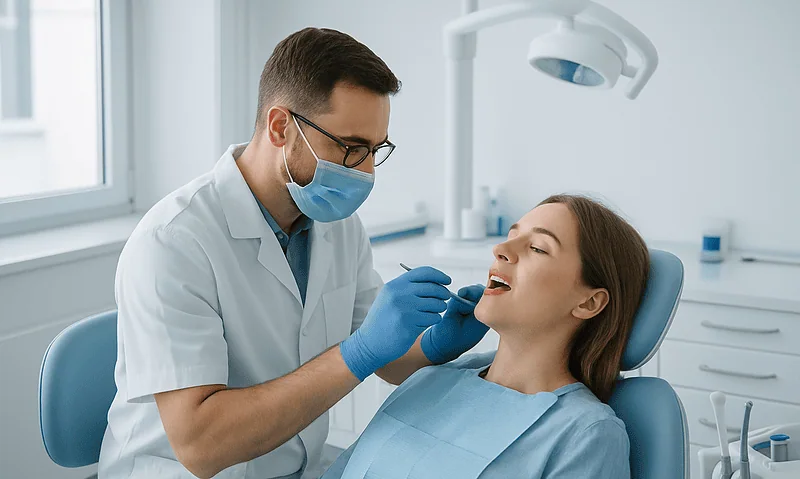
Do Teeth Need Straightening Before Porcelain Veneers? When Orthodontics Comes First
Not everyone needs braces before veneers, but many people benefit from straightening first. Porcelain veneers can mask mild rotations, small gaps, and uneven edges,…
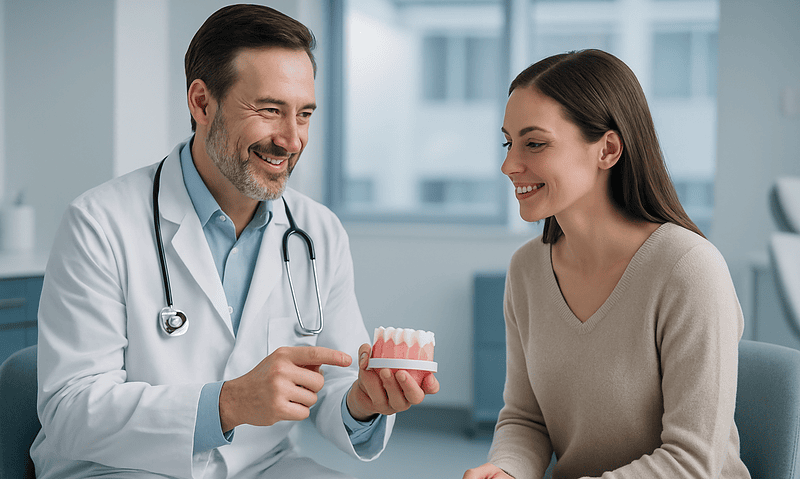
Porcelain Veneers Cost: What Shapes the Price of a Lasting Smile
Porcelain veneers cost between EUR 250 and 500 per tooth in our guide range for international patients, compared with roughly GBP 900–1,500 per tooth…

E-max Veneers Cost: Per Tooth, Per Smile, and How Türkiye Compares
E-max veneers cost EUR 250-500 per tooth on our guide range for international patients in Türkiye, against a Turkish market average of EUR 200-400,…