

Porcelain Veneers Cost: What Shapes the Price of a Lasting Smile

Key Takeaways
- Our guide range for a porcelain or E-max veneer is EUR 250–500 per tooth, against roughly GBP 900–1,500 in the UK: a gap driven mostly by overheads, not ceramic quality.
- Veneer preparation removes about half a millimeter of enamel, roughly a fingernail's thickness, and is done under local anesthetic, so most patients report pressure rather than pain.
- The '4-8-10 rule' is planning shorthand for how many upper teeth show when you smile fully, not a clinical standard, and a conservative dentist may recommend fewer.
- Porcelain veneers average around ten years of service, so dividing any quote by ten gives a truer annual cost than the sticker price.
- Composite bonding costs about half as much per tooth but typically needs redoing sooner, which narrows the lifetime price gap with porcelain considerably.
- Untreated gum disease and nighttime grinding are the two biggest veneer killers, so periodontal care and a custom night guard belong in the real budget.
Porcelain veneers cost between EUR 250 and 500 per tooth in our guide range for international patients, compared with roughly GBP 900–1,500 per tooth in the UK and USD 900–2,500 in the US. The final price depends on how many teeth are treated, the ceramic and dental laboratory used, the dentist's experience, and any preparatory work such as gum treatment or whitening.
There is a particular habit dentists learn to spot in the first thirty seconds of a consultation: the hand that drifts up to cover the mouth mid-sentence. People do it in wedding photos, in job interviews, on video calls. By the time they ask about veneers, most have been doing it for years.
Then they open a price list and the confusion starts. One clinic quotes per tooth, another per “smile.” A friend paid a four-figure sum for a single veneer in London; a colleague flew abroad and covered eight teeth for less. Both are telling the truth, which is exactly what makes the market so hard to read.
This guide takes the question apart piece by piece: what a porcelain veneer actually is, why the same slip of ceramic varies so wildly in price across borders, and which costs never make it into the headline number.
What actually determines porcelain veneers cost?
A porcelain veneer is a wafer of ceramic, often about half a millimeter thick, bonded to the front of a tooth to change its shape, shade, or alignment. According to the Cleveland Clinic, the process typically spans two to three visits: assessment and enamel preparation, impressions or digital scans, and final bonding. Every one of those steps carries a cost that ends up in your quote.
Four ingredients drive most of the price:
- The ceramic itself. Pressed lithium disilicate (widely known by the material family “E-max”) and layered feldspathic porcelain behave differently in strength and translucency, and the raw material plus milling or pressing time differs accordingly.
- The laboratory technician. A veneer is handcrafted or digitally designed to mimic the way natural enamel scatters light. Master ceramists are scarce, and their hours are expensive everywhere in the world.
- Chair time and expertise. Preparing a tooth conservatively, removing as little enamel as possible while creating room for the ceramic, is slow, meticulous work. Experienced cosmetic dentists charge for that judgment.
- Overheads. Rent, staff salaries, regulation, and insurance vary enormously by country, which is the single biggest reason the identical veneer costs several times more in one city than another.
Notice what is missing from that list: marketing gloss. A dramatic before-and-after gallery tells you about photography; the lab, the material, and the dentist’s preparation philosophy tell you about the veneer.
How much do porcelain veneers cost per tooth?
Here is where the numbers land, side by side with the treatments people most often weigh against veneers. The per-tooth figure matters most, because almost every veneer plan is built by multiplying it.
| Procedure | Turkey market average | Our guide range | UK typical | US typical |
|---|---|---|---|---|
| Porcelain / E-max veneer (per tooth) | EUR 200–400 | EUR 250–500 | GBP 900–1,500 | USD 900–2,500 |
| Composite bonding (per tooth) | EUR 100–250 | EUR 130–300 | GBP 200–500 | USD 100–500 |
| E-max crown (per tooth) | EUR 200–400 | EUR 250–500 | GBP 550–1,200 | USD 1,200–2,500 |
| Full smile makeover (20–24 units) | EUR 2,500–6,000 | EUR 3,250–7,800 | GBP 16,000–24,000 | USD 15,000–40,000 |
| Single dental implant incl. crown | EUR 400–1,400 | EUR 500–1,800 | GBP 1,800–3,500 | USD 3,000–6,000 |
| In-chair teeth whitening | EUR 150–350 | EUR 200–450 | GBP 300–700 | USD 300–1,000 |
Prices last reviewed: August 2026. These are guide ranges for international patients, based on published market data – not a quote. Your exact price depends on your clinical assessment; you will receive a personalised treatment plan and fixed quote after consultation.
Two things jump out. First, the per-tooth gap between markets is far wider than any material difference could justify. Second, a full smile makeover in the UK or US can cost more than most family cars, which is precisely why so many patients now compare across borders before committing.
Why are veneers three times cheaper in some countries?
The instinctive worry is that a lower price means a lesser veneer. The economics tell a more mundane story. A dental chair in central London or Manhattan sits on some of the most expensive commercial floor space on earth. Staff wages, indemnity insurance, and regulatory overheads scale with the local economy, and every one of those line items is folded into your per-tooth fee.
In countries with lower operating costs, the arithmetic simply changes. Many high-volume clinics also run their ceramic laboratory in-house, cutting courier time and lab markups, and the sheer number of cases means materials are bought at scale. The lithium disilicate blocks and bonding systems used in reputable clinics worldwide come from the same handful of international manufacturers: the ceramic does not know which country it is in.
That said, price differences are not the whole decision. Three questions deserve honest answers before you book anything anywhere:
- Who handles adjustments, repairs, or a debonded veneer once you are home, and at whose expense?
- Is the treatment plan built around preserving enamel, or around speed?
- Can the clinic name the exact ceramic system on your written quote?
A fair reading of the market is this: geography explains most of the price gap, and quality varies within every country rather than neatly between them. The skill of the individual dentist and technician matters more than the flag on the building.
What is the 4-8-10 rule for veneers?
You will see the “4-8-10 rule” quoted across cosmetic dentistry websites as if it were a clinical law. It is not, no dental association defines it, but the shorthand does describe something real about how veneer cases are planned.
The numbers refer to common set sizes. Four veneers cover the upper front teeth (the central and lateral incisors), which suits someone whose concern is limited to chips or gaps right at the front. Eight extends coverage through the canines to the first premolars, roughly matching an average smile. Ten reaches further back, for people whose smile is broad enough to show the premolars and beyond.
The logic behind it is the “smile line”: when you grin fully, most adults display somewhere between six and ten upper teeth. Veneering fewer teeth than you show risks a visible seam where bright ceramic meets natural enamel, one reason dentists often recommend even numbers, treated symmetrically, and sometimes suggest whitening the untreated teeth first so everything blends.
Treat the rule as a budgeting framework rather than a prescription. A conservative dentist may photograph your widest laugh, count what actually shows, and recommend fewer veneers than a package deal assumes. That conversation can save you the cost of two to four teeth that no one would ever have seen, and every unnecessary veneer avoided is also enamel preserved, which matters more over a lifetime than any single invoice.
How many veneers do you need, and what does a set cost?
Multiply the per-tooth guide range and the set economics become clear quickly. Six veneers at EUR 250–500 each works out to EUR 1,500–3,000; eight veneers lands between EUR 2,000 and 4,000; a ten-tooth plan spans EUR 2,500–5,000. In the UK, the same simple multiplication of typical per-tooth fees pushes an eight-veneer case well into five figures, which explains why full-set patients dominate international dental travel.
What people call a “Hollywood smile” is a different animal: 20 to 24 units covering both arches, often mixing veneers on front teeth with crowns further back. As the table above shows, that full makeover carries a guide range of EUR 3,250–7,800, against GBP 16,000–24,000 typical in the UK.
How many you actually need depends on three things a photograph can settle in minutes:
- Your smile widthhow many teeth show at a full, unguarded laugh, not a polite smile.
- The problem being solveda single discolored tooth may need one carefully shade-matched veneer, while generalized wear or tetracycline-type staining usually needs symmetry across the whole visible zone.
- Your lower teethoften they barely show and can be whitened instead of veneered, halving the bill.
A useful rule of thumb from conservative practice: veneer the teeth that show, whiten the teeth that peek, and leave alone the teeth that hide. The best treatment plan is rarely the largest one.
Porcelain veneers vs composite bonding: what does the price gap buy?
Composite bonding is the budget question hiding inside every veneer consultation. At EUR 130–300 per tooth in our guide range, it costs roughly half the porcelain figure, sometimes less, and it is usually completed in a single visit, with the dentist sculpting tooth-colored resin directly onto the enamel. Little or no drilling is involved, and the result can be excellent in skilled hands.
So what does the extra money for porcelain buy? Three things, chiefly:
- Durability. The Cleveland Clinic puts the average lifespan of porcelain veneers at around ten years, while composite typically needs repair or replacement sooner, resin chips and wears in a way glazed ceramic does not.
- Stain resistance. Composite is slightly porous, so coffee, tea, and red wine gradually dull it. Fired porcelain holds its shade; it cannot be whitened later, but it rarely needs to be.
- Optics. Layered ceramic mimics the translucency of natural enamel more convincingly, which matters most on front teeth in daylight.
Run the lifetime math and the gap narrows. A composite tooth redone once or twice over a decade can approach the cost of a porcelain veneer that simply stayed put. Bonding remains the sensible choice for small chips, young patients whose teeth are still changing, or anyone testing a cosmetic change before committing to enamel removal. Porcelain earns its price when you want the result to survive a decade of breakfasts, and the decision genuinely deserves a case-by-case conversation rather than a blanket rule.
Is it cheaper to get veneers or implants?
Per unit, yes, veneers are cheaper. Our guide range puts a porcelain veneer at EUR 250–500 per tooth against EUR 500–1,800 for a single implant with its crown. But the comparison is something of a category error, because the two treatments solve opposite problems.
A veneer needs a living, structurally sound tooth underneath it; the ceramic is a facade bonded to your own enamel. An implant replaces a tooth that is missing or beyond saving: a titanium post placed in the jawbone, topped with a crown, with healing time measured in months rather than weeks. Nobody chooses between them for the same tooth in the same condition.
Where the question becomes real is the borderline tooth: heavily broken down, root-treated, or repeatedly repaired. There, the honest choice is usually between a crown (EUR 250–500 in our guide range for E-max) and extraction plus an implant, and a veneer is off the table entirely, because it cannot carry that structural load.
The financial lesson underneath the question is worth stating plainly: keeping your own teeth healthy is the cheapest dental strategy ever devised. A veneer on a sound tooth is a cosmetic upgrade. An implant is reconstruction after a loss. If a clinic proposes extracting savable teeth to fit a uniform smile package, the correct response is a second opinion, whatever the price tag says.
What is the cheapest way to get veneers?
There are legitimate ways to shrink a veneer bill, and there are corners that should never be cut. Start with the legitimate ones.
- Treat fewer teeth. The single most effective saving. Whitening the smile first (guide range EUR 200–450 in-chair) can brighten the whole mouth so that only two to six genuinely flawed teeth need ceramic.
- Consider composite bonding for minor chips and gaps, half the per-tooth price, no lab fee, one visit.
- Compare markets. As the table shows, per-tooth prices in Turkey’s market average EUR 200–400 against GBP 900–1,500 in the UK; even after flights and hotels, multi-tooth cases can cost less abroad. Factor in a follow-up trip when you calculate.
Now the false economies. “Veneers” priced suspiciously low sometimes turn out to be aggressive crowns, with far more enamel ground away than a true veneer requires: a shortcut that is faster for the clinic and irreversible for you. Unnamed ceramics, no written material specification, and plans that skip gum assessment are the other classic markers of a cheap job that becomes expensive later, because a failed veneer is not refunded by the tooth.
Snap-on cosmetic appliances and mail-order “clip veneers” exist at the very bottom of the market; they are removable gadgets, not dentistry, and they solve nothing structurally. The cheapest veneer, in the end, is the one you did not need, and the second cheapest is the one done properly the first time.
How painful is getting porcelain veneers?
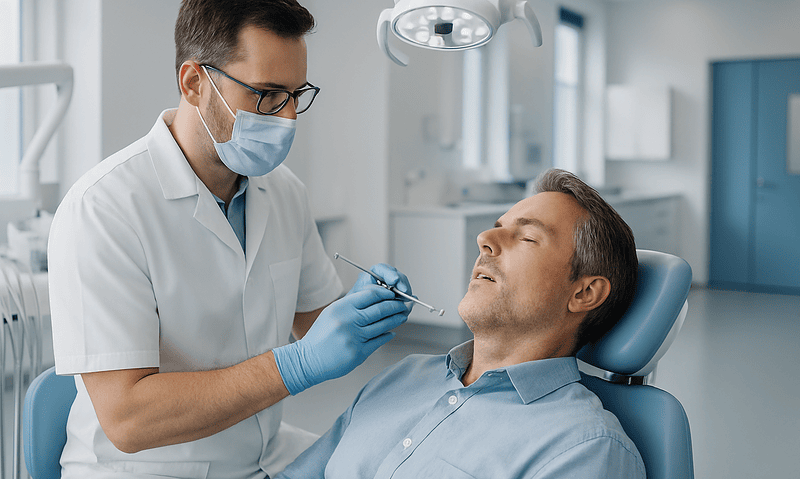
Less than most people fear, and the mechanics explain why. Preparing a tooth for a veneer typically removes about half a millimeter of enamel, roughly the thickness of a fingernail, from the front surface. Enamel itself has no nerve endings; discomfort only becomes possible near the deeper dentin layer, which is exactly why the work is done under local anesthetic. During the preparation and bonding visits, most patients report pressure and vibration rather than pain.
Afterward is a different phase. Between preparation and final fitting you wear temporary veneers, and prepared teeth can feel sensitive to hot, cold, and sweet foods during that window. Once the porcelain is bonded, mild sensitivity commonly lingers for a few days to a couple of weeks as the tooth settles: the Cleveland Clinic lists temporary sensitivity among the expected trade-offs of the procedure. Minimal-prep and “no-prep” veneer techniques, where clinically suitable, reduce even that.
What is not normal: sharp pain on biting, throbbing that wakes you at night, swelling of the gum around a veneered tooth, or sensitivity that intensifies rather than fades after two to three weeks. Any of those warrants a prompt dental review, because they can signal a bite that needs adjusting, a bonding issue, or an underlying problem in the tooth itself. Pain is information, not a rite of passage: a well-executed veneer case should be remembered for the mirror moment, not the recovery.
How long do porcelain veneers last, and what is the real cost per year?
Average figures first: the Cleveland Clinic gives porcelain veneers a typical lifespan of around ten years, and published dental literature consistently reports high survival rates over that period, with many veneers lasting considerably longer when the bite is favorable and hygiene is good. Composite alternatives generally need attention sooner.
That lifespan is the missing denominator in every price comparison. A veneer is not a purchase; it is a subscription with a decade-long billing cycle. Divide any quote by ten and the annual cost of our guide range works out to a figure most people find surprisingly modest, while a UK per-tooth fee spread over the same decade still runs several times higher per year.
What stretches a veneer toward the long end of its life:
- A managed bite. Nighttime grinding is the great veneer killer; a custom night guard is cheap insurance by comparison.
- Ordinary discipline. Ceramic does not decay, but the tooth margin beneath it can. Brushing, flossing, and routine check-ups protect the seal.
- Common sense with hard objects. Ice-crunching, pen-chewing, and using teeth as bottle openers end more veneers than time does.
What shortens it: untreated gum recession exposing the veneer edge, acidic erosion, and contact sports without a mouthguard. Budget for the replacement cycle honestly, a veneer placed at thirty may be redone twice in a lifetime, and the ten-year number becomes a planning tool rather than a disappointment.
The hidden costs that never make the headline price
The per-tooth figure is the beginning of the budget, not the end of it. Several supporting costs appear in almost every real-world veneer case, and a trustworthy treatment plan itemizes them rather than burying them.
- Whitening the untreated teeth. Porcelain shade is fixed on the day it is fired. If your lower teeth or back teeth will show, whitening them first (guide range EUR 200–450 in-chair) keeps the smile coherent, and needs periodic topping up at home.
- Gum contouring. Uneven gum lines undermine even perfect ceramic; reshaping runs EUR 300–800 in our guide range when clinically indicated.
- Underlying dental work. Decay must be treated before bonding, and a tooth with deep damage may need root canal treatment (guide range EUR 130–400) or a crown instead of a veneer. Skipping this step to hit a package price is how veneers fail early.
- A night guard if you grind: a small recurring cost that protects a four-figure investment.
- Travel and follow-up, for international patients: flights, accommodation for the multi-visit sequence, and a realistic plan for who adjusts or repairs the work later.
- Replacement, eventually. No veneer is permanent; each replacement also revisits the bonding surface.
- Bleeding, swollen, or receding gums. Active periodontal disease shifts the foundations veneers depend on; the Cleveland Clinic notes it must be controlled before restorative work. Veneering over inflamed gums is building on sand.
- Known or suspected tooth grinding. Mayo Clinic lists flattened, chipped, or worn teeth and morning jaw soreness among the signs of bruxism. Untreated grinding can fracture ceramic; the habit needs managing first, usually with a custom guard.
- Untreated decay or old, leaking fillings in the teeth being considered: these change the plan from veneer to filling, crown, or root treatment.
- Significant bite or alignment problems. Sometimes short orthodontic treatment first means fewer veneers, less enamel removed, and a better long-term result.
- “Which ceramic system, exactly?” The material should be named in writing on the quote, not described as “premium porcelain.”
- “How much enamel will you remove, and could any teeth be treated with bonding or whitening instead?” A dentist who talks you down from twenty veneers to eight is demonstrating the judgment you are paying for.
- “Is this per tooth or per package, and what happens if the plan changes after examination?” A scan sometimes reveals a tooth that needs a crown or root treatment instead; the quote should say how that reprices.
- “What does the fee include?” Temporaries, all visits, adjustments, and imaging should be inside the number, not appended later.
- “What is your policy if a veneer chips or debonds, and who does the work if I live abroad?” Written warranty terms matter more than verbal reassurance.
None of these is a reason to avoid veneers. They are simply the difference between the price on a banner and the cost of a smile that still looks right in ten years, and any quote that anticipates them is a mark of seriousness, not padding.
When should you see a dentist before even discussing price?
Some mouths are not ready for veneers at any price, and a good consultation screens for exactly that. Book a full dental assessment, not a cosmetic sales visit, before comparing quotes if any of the following applies:
After veneers are placed, see a dentist promptly if you notice persistent or worsening pain, gum swelling or bleeding around a veneered tooth, a veneer that feels loose or has visibly shifted, a bite that suddenly feels “off,” or sensitivity that intensifies beyond two to three weeks. Most of these are fixable, quickly and cheaply, when caught early, and expensive when ignored. Routine check-ups afterward are not optional extras; they are how a ten-year veneer becomes a fifteen-year one.
What a fair veneer quote includes, questions worth asking
Reading a veneer quote is a skill, and it takes about five questions to master. Clinics that welcome them are usually the ones worth trusting; clinics that dodge them have answered a different question entirely.
One last calibration. The evidence on veneers is genuinely reassuring, high ten-year survival, low complication rates in well-selected cases, but every one of those studies describes careful planning on healthy mouths. Price shapes which door you walk through; the assessment behind that door shapes everything else. Compare ranges by all means, then choose the clinician whose plan removes the least tooth for the result you want. That, more than any exchange rate, is where value lives.
Frequently asked questions
What is the 4-8-10 rule for veneers?
It is informal planning shorthand, not a clinical standard: veneers are commonly placed in sets of four (front incisors), eight (through to the first premolars), or ten (a broad smile). The logic is the smile line, most adults show six to ten upper teeth in a full smile, and veneering fewer than you show creates a visible seam. A conservative dentist counts what your smile actually reveals before recommending a number.
How much do porcelain veneers cost per tooth?
Our guide range for international patients is EUR 250–500 per porcelain or E-max veneer, with Turkey’s market averaging EUR 200–400. UK patients typically pay GBP 900–1,500 per tooth and US patients USD 900–2,500. The spread within each market reflects the ceramic used, the laboratory, and the dentist’s experience, and every figure is a guide range, not a quote, until a clinical assessment is done.
Is it cheaper to get veneers or implants?
Per unit, veneers cost less: EUR 250–500 in our guide range versus EUR 500–1,800 for a single implant with crown. But they solve opposite problems: a veneer needs a healthy tooth underneath, while an implant replaces a missing one, so no honest dentist offers a choice between them for the same tooth. If a clinic suggests extracting savable teeth to fit a smile package, seek a second opinion.
What is the cheapest way to get veneers?
Treat fewer teeth. Whitening first often means only two to six genuinely flawed teeth need ceramic, and composite bonding handles small chips at roughly half the per-tooth price. Comparing markets also helps: per-tooth guide ranges abroad can be a fraction of UK or US fees even after travel costs. What never pays is cutting clinical corners, unnamed ceramics or aggressive over-grinding disguised as veneers cost far more when they fail.
How painful is getting porcelain veneers?
Most patients describe pressure and vibration rather than pain, because the preparation removes only about half a millimeter of enamel, a layer with no nerve endings, under local anesthetic. Temporary sensitivity to hot and cold is common for a few days to a couple of weeks after bonding. Sharp pain on biting, swelling, or sensitivity that worsens after two to three weeks is not normal and warrants a prompt dental review.
How much does a full set of veneers cost?
A full smile makeover of 20–24 units carries a guide range of EUR 3,250–7,800 for international patients, against GBP 16,000–24,000 typical in the UK and USD 15,000–40,000 in the US. Smaller sets are simple multiplication: eight veneers at EUR 250–500 each works out to EUR 2,000–4,000. Many people need fewer teeth treated than they assume, since lower teeth often barely show and can be whitened instead.
How long do porcelain veneers last?
Around ten years on average, according to the Cleveland Clinic, and published studies report high survival rates over that period, with many veneers lasting well beyond it. Lifespan depends heavily on habits: nighttime grinding, chewing ice, and untreated gum problems shorten it, while good hygiene, routine check-ups, and a night guard when needed extend it. Budgeting for eventual replacement makes the ten-year figure a planning tool rather than a surprise.
Do veneers ruin your natural teeth?
No, but the preparation is irreversible. A properly done veneer removes roughly half a millimeter of enamel, and the tooth will always need a veneer or similar restoration afterward. The tooth underneath stays alive and can still decay at the margins, which is why hygiene and check-ups remain essential. The real risk is over-preparation: aggressive grinding sold as veneers removes far more tooth than necessary, which is why the technique matters as much as the price.
Can porcelain veneers be whitened if they stain?
No. Whitening agents work on natural enamel, not glazed ceramic, so a veneer’s shade is fixed on the day it is made. The good news is that porcelain resists staining far better than natural teeth or composite resin. The practical consequence: whiten your natural teeth before veneers are made, so the ceramic can be matched to your brightest achievable shade, and maintain that shade with periodic top-up whitening on the untreated teeth.
Does insurance or the NHS cover porcelain veneers?
Almost never for purely cosmetic reasons. The NHS provides veneers only when there is a clear clinical need, for example, protecting a damaged tooth, and most private dental insurance policies exclude cosmetic treatment outright. Related clinical work, such as treating decay or gum disease before veneers, may be covered separately. Because coverage rules vary, check your specific policy or NHS eligibility before building a budget around any assumed contribution.
References
This article is for general information only and is not a substitute for professional medical advice. Please consult a qualified doctor about your individual situation.

More from the Blog
Are Veneers Bad for Your Teeth? What Preparation Really Involves
Veneers are not inherently bad for teeth, but traditional porcelain veneers require permanently removing a thin layer of enamel, often around half a millimeter,…

Veneers vs Implants: Two Very Different Problems, Two Very Different Fixes
Veneers and dental implants solve different problems, so one is not simply better than the other. Veneers are thin porcelain or composite shells bonded…

Composite Veneers Cost: How They Compare to Porcelain on Price and Lifespan
Composite veneers cost EUR 130-300 per tooth in our guide range, compared with EUR 250-500 for a porcelain or E-max veneer, and the gap…

No-Prep Veneers: Who Qualifies for Veneers Without Drilling
No-prep veneers are ultra-thin porcelain shells, often 0.2 to 0.5 millimeters, bonded to teeth with little or no enamel removal. Good candidates typically have…

Snap-On Veneers: What Removable Veneers Can and Cannot Do: an Honest Look
Snap-on veneers are removable resin covers that clip over natural teeth to temporarily mask stains, chips, gaps, or a missing tooth. They can improve…

Can You Whiten Veneers? What Works, What Does Not, and What to Do Instead
No, porcelain veneers cannot be whitened with bleaching products, because the glazed ceramic is nonporous and does not respond to peroxide the way…