Teeth Whitening
Teeth whitening is a dentist-supervised cosmetic dental treatment that lightens tooth discoloration and improves smile brightness using professional bleaching agents tailored to enamel condition.
Quick answer
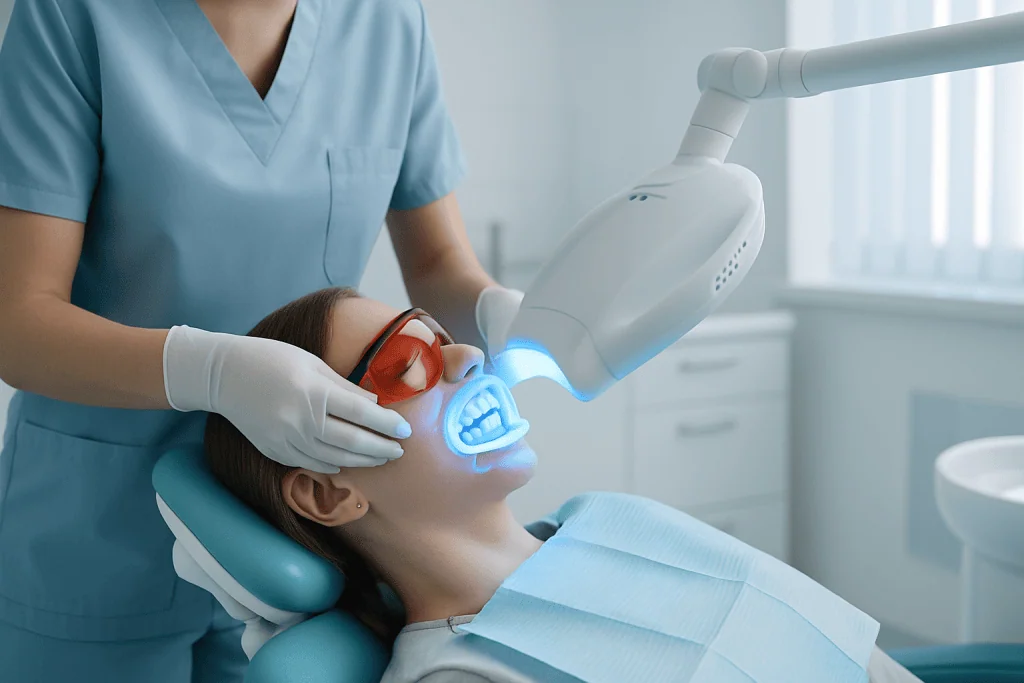
Teeth whitening is a cosmetic dental treatment that lightens the natural colour of teeth using a peroxide-based bleaching gel. A dentist applies the gel in the clinic, prescribes custom take-home trays, or combines both approaches. It brightens stains within the enamel and dentin without changing tooth shape, and it works only on natural teeth, not on crowns, veneers or fillings.
Teeth Whitening: What It Does and What It Cannot Do
Teeth whitening is a cosmetic dental treatment that lightens the natural colour of your teeth using a bleaching agent, usually hydrogen peroxide or carbamide peroxide. It works on stains held within the enamel and the dentin beneath it, so your teeth look brighter without any change to their shape or structure. It suits adults whose teeth have yellowed or dulled through age, diet, smoking or medication, and whose mouths are otherwise healthy.
Tooth colour is one of the first details people notice in a smile, and it is often the first thing you notice in your own photographs. When teeth look yellow, grey or stained, the temptation is to reach for the fastest fix on the shelf. The better starting point is a question: what is actually causing the discolouration? Coffee, tea, red wine and tobacco leave one kind of stain. Ageing enamel, certain medications, fluorosis and dental trauma leave others. Some respond well to bleaching. Some barely respond at all. And occasionally a single dark tooth is not a stain but a sign of an underlying dental problem that needs diagnosis before any cosmetic treatment.
That is why whitening should be planned around your oral health, not only your desired shade. A dentist-supervised approach identifies the cause of the discolouration first, then matches the whitening method to your enamel condition, your sensitivity level, any existing restorations and your expectations. Unlike veneers or crowns, whitening removes no tooth structure. It is one of the most requested cosmetic dental treatments precisely because it changes how teeth look while leaving them intact.
Many international patients arrange teeth whitening in Turkey alongside a wider dental check-up, and the same principle applies there. At Acibadem, whitening sits within comprehensive dental care. The aim is not an artificial, uniform white, but a clean, balanced, healthy-looking smile that suits your face, your age and your natural tooth structure. For visitors on a short trip, that planning matters: the oral health checks, the whitening itself and any additional dental needs can be coordinated within the time you have.
What Is Professional Teeth Whitening?
Professional teeth whitening is a dentist-supervised procedure that lightens natural tooth colour using bleaching agents selected for clinical use. The gels contain hydrogen peroxide or carbamide peroxide at concentrations appropriate to the setting, stronger formulations for supervised in-clinic use, milder ones for prescribed home use. The difference between professional whitening and a shop-bought product is not only the gel. It is the diagnosis before it, the soft-tissue protection during it, and the management of sensitivity and uneven results afterwards.
How does whitening actually work?
The whitening gel releases oxygen molecules when it contacts the tooth. These molecules pass into the enamel and break down the pigment compounds that make teeth look stained. As the pigment molecules become smaller and less concentrated, they reflect light differently and the tooth appears brighter. The process is chemical, not abrasive, nothing is scraped or polished away. This is also why the effect takes hold gradually and why the final shade often settles over several days as the teeth rehydrate after treatment.
Whitening acts only on natural tooth structure. It does not change the colour of porcelain crowns, ceramic veneers, composite bonding, dental implants or tooth-coloured fillings. If you have visible restorations, this needs to be part of the plan from the start. Your dentist may recommend whitening the natural teeth first and letting the shade stabilise, then replacing any restorations in the smile zone to match. The same logic applies if you are considering zirconium crowns or veneers later: the restoration is made to match your teeth, and it will not lighten afterwards, so the whitening comes first.
In-office whitening
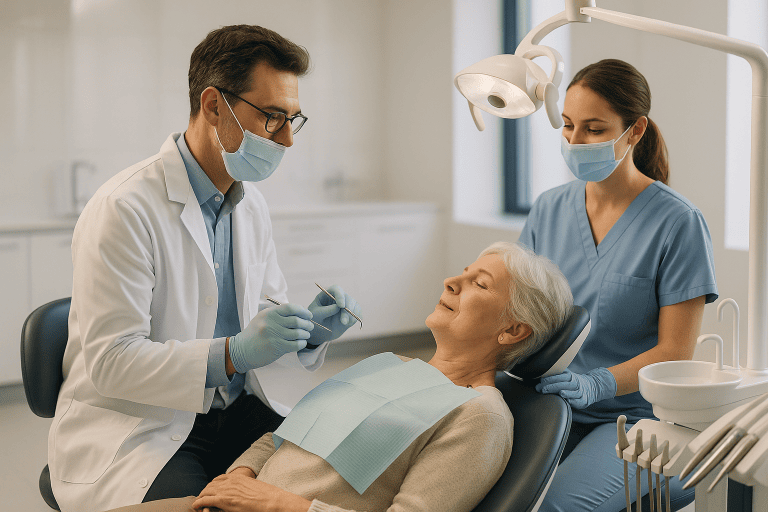
In-office whitening is performed at the clinic in a single controlled session. Protective barriers cover the gums, the gel is applied to the visible tooth surfaces for timed intervals, and the dentist monitors the teeth and soft tissues throughout. Some systems use a dental light to support activation of the gel; whether a light is used depends on the system and the dentist’s judgement. This is the faster route, and it suits patients who want a visible change within one appointment, including travellers with limited days available.
Professional take-home whitening
Take-home professional whitening uses custom trays made from impressions or digital scans of your teeth. Your dentist provides gel at a suitable concentration and precise instructions: how much gel per tray, how long to wear it, how often, and what to do if sensitivity develops. Depending on the formulation, trays are worn for short daily periods or overnight, usually over several days to a few weeks. This route whitens more gradually and gives you more control over the pace. Because the trays are custom-made, they can be reused later for touch-ups under professional guidance.
Some patients do best with a combined approach: an in-office session for the initial change, then take-home trays for refinement or maintenance. The right plan depends on your starting shade, the type of stain, your enamel condition, your sensitivity risk and your schedule.
Whitening Strips and Home Kits: An Honest Comparison
Whitening strips are thin, flexible films coated with a low-concentration peroxide gel, worn against the front teeth for a set period each day. They are the most widely used over-the-counter whitening product, and searches for the best at home teeth whitening kits return hundreds of options, strips, pens, LED trays and powders of very variable quality. It is worth being clear about what these products can and cannot do before deciding whether professional treatment is worth it for you.
Do teeth whitening strips work?
Teeth whitening strips can produce a modest, genuine improvement on mild surface staining of natural teeth. Reputable products, Crest whitening strips are the best-known example, contain real peroxide at low concentrations, and used consistently over the recommended course they do lighten teeth. Their limits are equally real. Strips deliver a fixed dose to a flat surface, so they reach curved or crowded teeth unevenly, they do not touch the spaces between teeth well, and they cannot address deeper intrinsic discolouration. They also whiten nothing that is not natural tooth: any filling, crown or bonding keeps its colour, which can leave a visible mismatch.
Are whitening strips bad for your teeth?
Used as directed on a healthy mouth, whitening strips are generally tolerated and do not damage enamel. The problems arise at the edges of that sentence. Strips used over untreated cavities, cracked teeth, leaking fillings or inflamed gums can cause real discomfort. Overuse, wearing them longer or more often than instructed in pursuit of a whiter result, increases sensitivity and gum irritation without improving the outcome. And because no examination precedes them, strips cannot tell you whether your discolouration is cosmetic staining or a symptom of something that needs treatment. The product is not inherently harmful; using it without knowing what is causing the discolouration can be.
Should I brush my teeth before using whitening strips?
Your teeth should be clean when the strip goes on, because plaque sits between the gel and the enamel and makes the result patchy. Brushing gently beforehand is reasonable; brushing hard immediately before application is not, because freshly scrubbed gums are more easily irritated by the gel. Most manufacturers give specific timing guidance for their product, and it is sensible to follow it. The same principle explains why dentists often recommend a professional cleaning before clinical whitening: a plaque-free, tartar-free surface lets the gel work evenly.
A great whitening result depends less on the product name and more on matching the method to the cause of the staining. That matching is what professional supervision adds: diagnosis first, gum protection during treatment, a gel concentration chosen for your enamel, and a plan for any restorations that will not whiten. Strips can maintain a result. They are a blunt instrument for creating one.
Who May Need Teeth Whitening?
Teeth whitening may be appropriate for adults whose teeth have become stained, yellowed or dull and who want a brighter smile without changing tooth shape. Many patients time it before a wedding, a graduation, a public role or a career change. Many others simply feel their smile no longer matches how healthy they feel. Both are legitimate reasons; neither changes the clinical requirements.
The most common candidates are people with surface stains from coffee, tea, cola, red wine, dark sauces, tobacco or strongly pigmented foods, stains that accumulate gradually even with good brushing. Whitening also helps teeth that have darkened with age, as enamel thins and the yellower dentin underneath shows through more. Some patients notice their teeth look less bright after orthodontic treatment or years of dietary staining and choose whitening as the finishing step.
Not every discolouration responds the same way. Yellow-toned teeth usually respond well. Grey, brown or banded discolouration is more resistant. Staining from certain medications, developmental enamel conditions, fluorosis or trauma may need a different plan altogether, bonding, microabrasion, veneers, or internal bleaching for a single non-vital tooth.
Diagnosis starts with a consultation. Your dentist examines the teeth and gums, checks for cavities, cracks, gum recession, enamel wear, exposed roots and existing restorations, and records your starting shade so expectations can be discussed honestly. If plaque, tartar or surface staining is present, a professional cleaning usually comes first. This lets the gel contact the tooth evenly and helps the dentist separate removable stains from deeper discolouration.
Some patients need treatment before whitening rather than instead of it. Tooth sensitivity, gum disease, untreated decay, leaking fillings and cracked teeth all need attention first, because whitening gel can irritate inflamed gums and cause discomfort where dentin is exposed. Dental health is the foundation of cosmetic dentistry: a brighter smile should also be a healthy one. Whitening is generally not recommended for children and young adolescents except under specialist supervision for a specific indication, and pregnant or breastfeeding patients are usually advised to postpone elective whitening. People with significant enamel defects, severe gum recession or extensive visible restorations may need alternatives or a more individualised plan.
What Teeth Whitening Can Address
Teeth whitening addresses discolouration of natural teeth, and it works best when the staining sits within or on the enamel and the tooth is otherwise healthy. Common indications are age-related yellowing, dietary stains, tobacco-related discolouration and a generally dull smile. Whitening does not correct tooth position, size, shape, chips, gaps, severe enamel defects or the colour of crowns and veneers, if those concerns are present, whitening may be one part of a broader aesthetic plan rather than the whole answer.
Sequencing matters when whitening is combined with other dentistry. Patients considering composite bonding, veneers or crowns typically whiten their natural teeth first, so new restorations can be matched to the brighter shade. Restorations will not lighten later, so getting this order right avoids a mismatch that is difficult to correct. Patients who have completed braces or clear aligners often choose whitening as the final step, and it can also follow periodontal or hygiene treatment once the gums are healthy and stable.
A single tooth that has darkened after trauma or root canal treatment is a special case. External whitening often cannot lighten it enough, because the discolouration comes from inside the tooth. Here the dentist may assess whether internal bleaching is suitable: a different technique in which whitening material is placed inside the non-vital tooth under controlled conditions. It requires careful diagnosis and is not the same as routine smile whitening. A thorough consultation clarifies what whitening can achieve on its own and where another treatment would serve you better. It is also the point at which unrelated findings surface: a check-up arranged around whitening sometimes identifies problems such as impacted wisdom teeth or an old filling that needs attention, which is useful to know before you plan anything cosmetic.
How Teeth Whitening Is Performed, Step by Step
The clinical pathway is straightforward and follows the same logic whether you are treated at home or abroad:
- 1. Consultation and examinationcause of discolouration, oral health check, shade record.
- 2. Preparationcleaning if needed, sensitivity management, any dental treatment that must come first.
- 3. Whiteningin-office session, prescribed take-home trays, or both.
- 4. Stabilisationthe shade settles over the following days.
- 5. Maintenancehygiene, diet awareness and occasional touch-ups.
Consultation and smile assessment
Your dentist reviews your medical and dental history, asks about sensitivity and any previous whitening, and examines your teeth and gums. The purpose is to confirm whitening is suitable and to choose the safest method for your mouth. The assessment covers the type of discolouration, enamel thickness, gum recession, bite-related wear, and the position and colour of any fillings, crowns, veneers or bonding, since these will not change shade, their location shapes the plan. Photographs or digital shade records may be taken to document the starting point and support honest discussion of the likely result. If active problems are found, cavities, defective fillings, gum inflammation, they are addressed first. Whitening over plaque, tartar or inflamed tissue compromises both comfort and the final appearance.
Preparation before whitening
Many patients benefit from a professional cleaning first, particularly where surface stains or tartar are present. If you are prone to sensitivity, your dentist may suggest a desensitising toothpaste before and after treatment. For in-office whitening, the lips, cheeks and gums are protected before the gel goes anywhere near them. For take-home whitening, impressions or digital scans are used to make custom trays; a precise fit distributes the gel evenly and keeps it off the gums.
The in-office appointment
You sit in the dental chair while the team prepares the treatment area. A cheek retractor keeps the lips clear of the teeth, a protective barrier covers the gums, and the whitening gel is applied to the visible tooth surfaces. The gel stays in place for a controlled period and may be refreshed in cycles; some systems add light activation. The dentist monitors your teeth and soft tissues throughout, and if sensitivity appears, the application time is adjusted or a desensitising agent is used. The appointment usually takes about one to two hours, depending on the system, the number of cycles and the level of discolouration. Many patients see a visible difference immediately, though the shade often looks especially bright straight after treatment and then settles to its true level over several days as the teeth rehydrate.
The take-home protocol
With take-home whitening, you carry out the treatment yourself using the prescribed gel and your custom trays. The dentist tells you exactly how much gel to load, how long to wear the trays, how to clean them and what to do if sensitivity develops. Depending on the gel, wear may be a short daily period or overnight, continuing for several days to a few weeks. This route suits mild to moderate discolouration, patients who prefer gradual change, and maintenance after an in-office session.
Technology used in professional whitening
Modern whitening relies on tools that improve precision rather than spectacle: shade guides, clinical photography and digital imaging to document the starting point; impressions or digital scans for accurately fitting trays; controlled gel formulations, gingival protection and isolation techniques in the chair; and light-assisted activation in selected cases. The value is not just speed. These tools let the dentist protect soft tissue, monitor shade change, avoid uneven application and tailor the treatment to your enamel. For international patients, digital records also support planning before arrival and follow-up communication after you return home.
Aftercare in the first days
Whitening needs little to no downtime, and most patients return to normal activities immediately. Temporary sensitivity is the most common side effect, brief sharp sensations with cold drinks or cold air. Gum irritation can occur where gel has touched soft tissue. Both usually settle quickly with time, desensitising products and the instructions you are given. In the first days, your dentist will likely advise avoiding strongly pigmented food and drink, coffee, tea, red wine, cola, berries, tomato-based sauces, dark spices, because the teeth are temporarily more prone to picking up stain. Smoking stains teeth quickly and shortens the life of the result at any stage.
Recovery Timeline After Teeth Whitening
Recovery is quick, but the shade and the sensitivity both need a little time to settle. This is the typical pattern:
| Time Period | What Patients Can Expect |
|---|---|
| Day 1 | Teeth may look noticeably brighter. Mild sensitivity or gum tenderness can occur. Dark-coloured foods, drinks and smoking are best avoided. |
| First week | The shade settles as the teeth rehydrate. Sensitivity usually eases. Good brushing, flossing and careful dietary choices protect the result. |
| First month | The outcome becomes stable. If take-home trays are part of the plan, treatment may be completed or adjusted during this period. |
| Longer term | Brightness can last months to years depending on diet, smoking, oral hygiene, enamel characteristics and cleaning habits. Periodic touch-ups may be recommended. |
How long does teeth whitening last?
Teeth whitening typically lasts from many months to a few years, and the range is wide because the variables are personal. A non-smoker who drinks little coffee and keeps regular hygiene appointments will hold a result far longer than a heavy smoker with a daily espresso habit. Enamel characteristics play a part too: the same treatment ages differently in different mouths. Whitening is not permanent, because the habits that stained your teeth the first time continue afterwards. What keeps a result alive is maintenance: consistent hygiene, professional cleanings, sensible diet choices and occasional touch-ups, often using your existing custom trays under your dentist’s guidance rather than repeating a full course.
Factors That Influence Your Result
Whitening results genuinely vary from person to person, and it is better to understand why before treatment than to be surprised after it. The starting shade matters most. Yellow and light brown discolouration usually responds readily; grey, blue or banded staining resists, and deep intrinsic stains may need more time, a combined approach or a different cosmetic treatment entirely.
Enamel and tooth structure come next. As enamel thins with age or wear, the darker dentin beneath shows through more strongly, and whitening can brighten but cannot change the tooth’s anatomy. Exposed root surfaces whiten less than enamel because root tissue is different material. If recession has exposed roots in your smile zone, your dentist should discuss this before you start.
Existing restorations keep their original colour throughout. Crowns, veneers, bonding and fillings in the smile zone may look darker once the natural teeth around them lighten. The usual answer is to let the new shade stabilise, then replace the visible restorations to match, which is why the whitening-first sequence matters so much in any larger cosmetic plan.
Oral health underpins everything. Healthy gums and cavity-free teeth make whitening more comfortable and the result more even. Gum inflammation, untreated decay, cracked teeth and leaking restorations increase sensitivity and need managing first.
Finally, lifestyle sets the lifespan. Coffee, tea, red wine, tobacco, dark sauces and frequent pigmented foods create new staining; brushing technique, flossing, cleaning intervals and maintenance trays preserve brightness. Expectations belong on this list too. Whitening improves brightness: it does not deliver an identical shade for every patient, and a good dentist will say so plainly. The best result is usually the one that looks clean, fresh and believable against your skin tone and features, not the whitest shade on the guide.
Why an Early Dental Assessment Matters
Whitening is elective, so simple discolouration carries no medical urgency. But delaying a dental evaluation can let real problems hide behind a cosmetic label. A tooth darker than its neighbours may have a history of trauma, nerve changes, internal bleeding or previous root canal treatment. Brown or black areas may be decay rather than stain. Gum recession, enamel erosion and exposed dentin change tooth colour and raise sensitivity, all of which affect whether whitening is appropriate and how it should be done.
Using over-the-counter or online whitening products without any assessment can make things worse rather than better: gel over an untreated cavity hurts, gel on inflamed gums irritates, and abrasive whitening toothpastes used aggressively can contribute to enamel wear and root abrasion. An early professional evaluation separates cosmetic staining from dental disease. If whitening is right for you, it proceeds safely. If something else is going on, catching it early may prevent more complex treatment later. For international patients the practical benefit is the same: early planning leaves time for a cleaning, sensitivity management or restorative work before the whitening itself, all within one trip.
Benefits of Professional Teeth Whitening
The case for dentist-supervised whitening rests on appearance, safety, planning and maintenance, not on marketing superlatives:
| Benefit | What It Means for You |
|---|---|
| Brighter natural teeth | Professional bleaching lightens stains and improves brightness while preserving your natural tooth shape and structure. |
| Dentist-supervised safety | Your gums, enamel, restorations and sensitivity risk are assessed before treatment, reducing avoidable irritation and discomfort. |
| Personalised shade planning | The goal is a natural-looking result that suits your smile, not an artificial uniform white. |
| Faster visible improvement | In-office whitening can produce a noticeable change within a single clinical visit, useful when travel time is limited. |
| Options for sensitive teeth | Gel concentration, application time and aftercare can all be adjusted, with desensitising products where needed. |
| Coordination with other dental care | Whitening can be sequenced before bonding, veneers or crowns so restorations are matched to the new shade. |
What Determines the Cost of Teeth Whitening?
How much does teeth whitening cost?
There is no single price for teeth whitening, because the cost depends on what your mouth actually needs rather than on the treatment name alone. The main drivers are the method, an in-office session, a prescribed take-home course, or a combination, and the preparation required before it. A patient who needs only whitening pays for whitening; a patient who first needs a professional cleaning, a filling replaced or gum treatment is paying for a broader plan, and quoting whitening alone would misrepresent it. The whitening system used, the number of sessions, custom tray fabrication and follow-up arrangements all shape the final figure. When you compare quotes from any clinic, in any country, ask what the number includes: examination, cleaning, the whitening itself, trays and gel for maintenance, and what happens if sensitivity needs managing. A quote that names a low headline figure and leaves the rest undefined is not comparable with one that covers the whole pathway. The honest answer to how much teeth whitening costs is therefore a personal one, and it only becomes concrete after an examination has established what your treatment plan actually contains.
Teeth Whitening in Turkey: Planning Your Visit as an International Patient
Teeth whitening in Turkey is one of the simpler treatments to plan around a trip, because the clinical pathway is short and downtime is minimal. Even so, the visit goes better when it is organised as a care pathway rather than a single appointment. A typical plan for an international patient runs: an examination and shade assessment on arrival; a professional cleaning if needed; the in-office whitening session; and, where appropriate, custom trays and prescribed gel to take home for refinement or maintenance. Sharing dental photographs or records in advance, where available, helps the clinical team anticipate what your visit will involve, including whether anything needs treating before whitening can go ahead.
Build a small margin into your schedule. If the examination finds a cavity, an old leaking filling or gum inflammation, treating it first is the correct clinical order, and that may add a day or an extra appointment. Whitening itself does not restrict flying or normal activity, so most patients travel freely afterwards; the main aftercare in the first days is dietary, avoiding strongly pigmented food and drink while the shade settles, which is easy enough to manage in a restaurant or an airport. If you want a structured way to think through the whole comparison before you commit, this guide on what to check before comparing treatment in Turkey with care at home covers the questions that matter, and there is practical advice on preparing your home before travelling to Turkey for treatment if whitening is part of a larger dental trip.
Is it safe to get teeth whitened in Turkey?
The safety of teeth whitening depends on how it is done, not on where the clinic sits on a map. The clinical requirements are the same everywhere: an examination before treatment, gum and soft-tissue protection during it, a gel concentration matched to your enamel, and a dentist who manages sensitivity and knows when whitening is the wrong answer. What you should look for abroad is exactly what you should look for at home: a proper assessment before anyone quotes you a treatment, clear answers about who performs the procedure, and written aftercare instructions you can follow once you leave. Where whitening is delivered within a hospital-based dental service, patients with broader health considerations, diabetes, cardiac conditions, pregnancy questions, medication use, have the added benefit that dentists can coordinate with other medical specialists when timing or suitability needs a second opinion. Most whitening patients never need that; those who do value it.
Is it worth travelling to Turkey for dental work?
For whitening alone, the honest answer is: it depends on your circumstances, because whitening is a short procedure that most people can access locally. Where travel makes more sense is when whitening is one part of a wider dental plan: a comprehensive check-up, hygiene treatment, restorative work, or cosmetic dentistry that would take multiple visits anyway. In that case, coordinating everything within one trip, in the correct clinical sequence, is where the value lies. Weigh the practicalities honestly: who provides your follow-up at home, what records you take back with you, and whether your schedule allows an extra day if the examination changes the plan. A trip that is planned around those questions tends to go smoothly; a trip planned around a headline offer tends not to.
How Acibadem approaches whitening for international patients
At Acibadem, teeth whitening begins with an individualised dental assessment rather than a one-size-fits-all protocol. Dentists evaluate the cause of your discolouration, the condition of your enamel and gums, the presence of restorations, and what you actually want to achieve. When needed, whitening is integrated with other care, cleaning, restorative dentistry, periodontal treatment, orthodontic or prosthetic planning, in the sequence that protects the final result. Acibadem International supports visiting patients before, during and after the trip with multilingual coordination, appointment scheduling and transfer of medical information, so that consent is informed and aftercare instructions are ones you can genuinely follow at home. Sometimes that balanced assessment means being told that whitening alone is enough and more invasive cosmetic treatment is unnecessary. That, too, is part of responsible aesthetic dentistry.
A Brighter Smile, Planned With Care
Teeth whitening is a simple, effective way to refresh a smile, when it starts with a proper dental evaluation. The right method depends on your tooth colour, enamel condition, sensitivity, restorations, oral health and expectations, and no strip, kit or single-session offer can assess any of those for you. With dentist-supervised treatment, the process is tailored to your mouth, the soft tissues are protected, and the result is planned to look natural rather than uniform. Whether you whiten at home over a few weeks with custom trays or in a single clinical session during a trip abroad, the principles do not change: diagnosis first, health before shade, and honest expectations throughout. A brighter smile should feel like yours, cleaner and fresher, with the structure and health of your teeth left exactly as they were.
Preparation
- A dental examination is performed to check tooth enamel, gums, fillings, crowns, and the cause of discoloration. Professional cleaning may be recommended before whitening for more even results. Patients should inform the dentist about tooth sensitivity, gum disease, pregnancy, or recent dental work.
Aftercare
- Avoid coffee, tea, red wine, tobacco, and strongly colored foods for the first 24 to 48 hours. Mild tooth sensitivity is common and usually temporary; desensitizing toothpaste may help. Maintain results with good oral hygiene, regular dental check-ups, and dentist-approved touch-up guidance.
Frequently Asked Questions
What affects the cost of teeth whitening in Turkey?
Cost depends on the whitening method, dental examination findings, whether cleaning or sensitivity care is needed, the dentist’s experience, clinic setting, and what is included in the international patient package. A free consultation can help clarify the most suitable plan and provide a personalised quote.
How can I get a personalised quote before travelling?
You can usually share dental photos, a brief dental history, sensitivity concerns, and any previous whitening or restorative treatments with the international patient team. The final plan is confirmed after an in-person dental examination, because enamel condition and restorations must be assessed directly.
What is usually included in a teeth whitening package?
A package may include consultation, shade assessment, professional whitening, post-treatment instructions, and patient coordination support. Inclusions vary, so it is important to ask whether cleaning, trays, desensitising products, follow-up guidance, travel support, or interpreter assistance are included.
Will crowns, veneers, or fillings whiten with the treatment?
No. Bleaching agents work on natural tooth enamel and do not lighten ceramic, composite, or other restorative materials. If restorations are visible when smiling, the dentist may recommend planning whitening before any shade-matched restorative work.
Is professional teeth whitening safe for sensitive teeth?
Professional whitening is dentist-supervised and can be adjusted for enamel condition and sensitivity risk. Temporary sensitivity can occur, so the dentist may recommend desensitising measures, a gentler protocol, or postponing whitening if untreated dental problems are present.
Medically reviewed by the Acıbadem International Medical Board September 13, 2026
See our medical review board →
Update history
- PublishedJune 8, 2026
- Medical review approvedSeptember 13, 2026
- Last content updateSeptember 12, 2026
References1
- Teeth whitening nhs.uk
Planning this treatment in Turkey
Our English guides for international patients: costs, timelines, safety and travel.
Trusted care for international patients
Teeth whitening costsledger-based guide ranges, or browse the full Turkey Medical Price Index.
From the Acibadem Blog
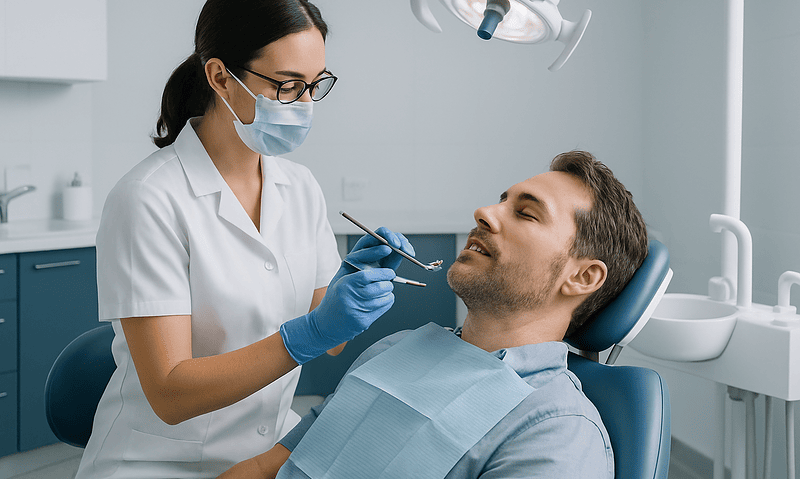
Teeth Whitening Myths: Enamel Damage, Baking Soda and Other Claims Dentists Correct
Most teeth whitening myths collapse under evidence. Dentist-supervised peroxide whitening does not dissolve or thin healthy enamel; it oxidizes stain molecules inside the tooth.…
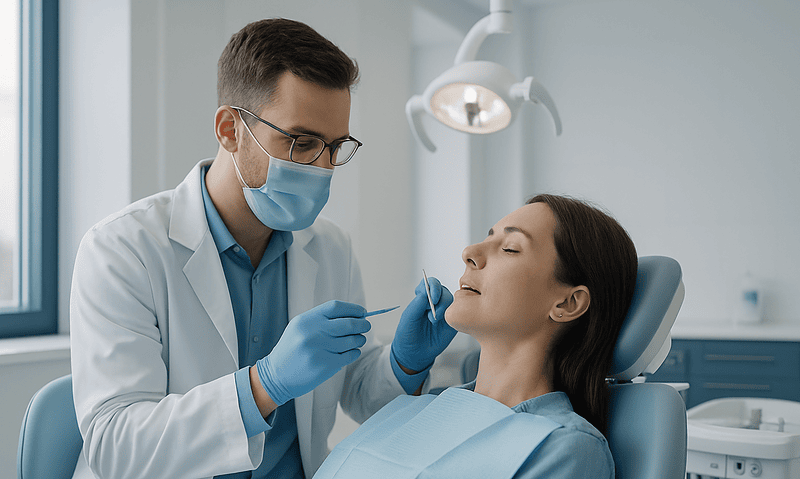
Why Teeth Discolor: How the Cause Decides Whether Teeth Whitening Will Work
Teeth discolor for three broad reasons: pigments from food, drink or tobacco settle on the outer enamel; enamel thins with age so the yellower…
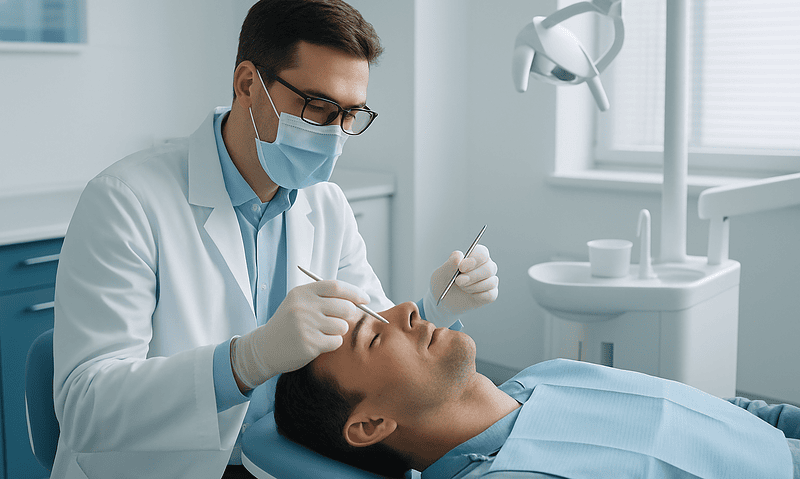
What Happens During Professional Teeth Whitening: Gum Protection, Gel and Shade Checks
A professional teeth whitening procedure usually starts with a dental exam and a shade check against a standard guide. The dentist isolates the lips…
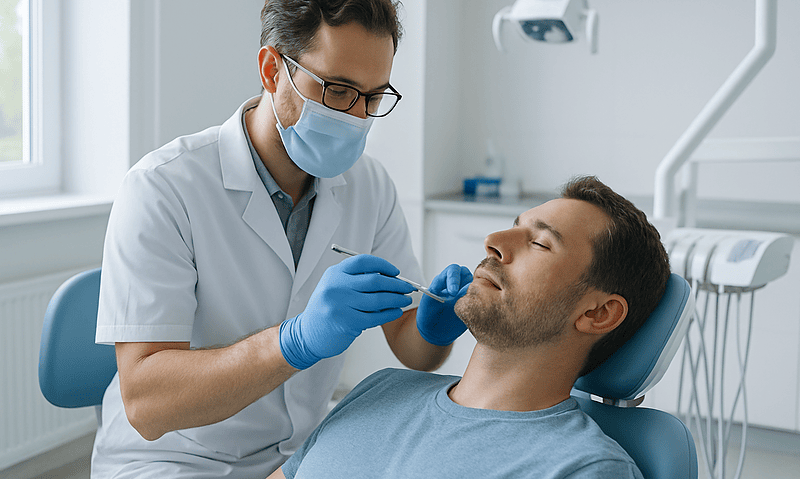
Does Professional Teeth Whitening Hurt? Zings, Gum Irritation and Managing Discomfort
Professional teeth whitening is not usually painful, but many people feel temporary tooth sensitivity: brief, sharp jolts often called zingers, plus mild gum soreness…
Teeth Whitening Cost: In-Chair vs Take-Home Pricing and How Long Results Last
Professional in-chair teeth whitening typically falls in our guide range of EUR 200-450, compared with roughly GBP 300-700 in the UK and USD 300-1,000…