

Is Sensitivity After Teeth Whitening Normal? What Helps and When to Call the Dentist
Key Takeaways
- Whitening zings come from hydrogen peroxide diffusing through enamel to irritate the fluid-filled dentin tubes and the nerve, not from enamel being stripped away.
- Typical whitening sensitivity peaks within the first day and usually fades within a few days once gel application stops and the tooth rehydrates from saliva.
- Potassium nitrate toothpaste calms the nerve while fluoride helps plug dentin tubes, but neither works instantly, so many dentists suggest starting before whitening rather than after.
- White patches on the gums after whitening are a brief chemical irritation from gel contact, almost always caused by an overfilled tray, a slipped strip or an incomplete barrier.
- Sensitivity that sits in a single tooth, becomes a constant ache, or lasts beyond about a week is not typical and usually points to a cavity, crack or nerve problem that predated the gel.
- Whitening effects last from a few months to about three years, so a repeat schedule agreed with your dentist beats chasing an ever-brighter shade with more peroxide exposure.
Yes. Temporary sensitivity is one of the most common side effects of peroxide-based teeth whitening. It usually appears during or shortly after treatment as brief, sharp zings to cold or air, and typically fades within a few days as the tooth rehydrates and the nerve settles. Pausing whitening, using a desensitizing toothpaste and avoiding temperature extremes often help. Severe, worsening or week-long pain warrants a call to your dentist.
The glass of iced water had been sitting on the desk all morning, and she reached for it without thinking. Then came the jolt: a bright, electric flash through the front teeth, gone almost before she could name it. Twenty hours earlier she had been reclining in a dental chair with a cheek retractor in place, watching a countdown timer, thinking mostly about how her smile would look at her sister’s wedding. Nobody had mentioned that a sip of water might feel like biting tinfoil.
Teeth whitening sensitivity is the part of the process that tends to get a single line on the consent form and a shrug at the front desk. Yet it is common enough that dentists plan around it, and predictable enough that most of it can be explained by the plain biology of a tooth.
So here is the honest version: why it happens, how long it typically lasts, what genuinely helps, and the handful of situations in which a zing stops being a nuisance and becomes something your dentist needs to hear about.
Why does teeth whitening make my teeth so sensitive?
A tooth is not a solid pebble. Under the enamel, the hard outer shell, sits dentin, a softer layer riddled with thousands of microscopic tubes that run inward toward the pulp, the soft core carrying the nerve and blood supply. Those tubes are filled with fluid. When something makes that fluid move, the nerve fires. Dentists call this the hydrodynamic theory, and it is the working explanation for most tooth sensitivity, whether the trigger is a receding gum line or a whitening gel (Cleveland Clinic).
Whitening gels rely on hydrogen peroxide, either directly or released from carbamide peroxide, a compound that breaks down into hydrogen peroxide once it meets saliva. Hydrogen peroxide is a small, restless molecule. It does its intended job by diffusing into enamel and dentin and breaking apart the larger pigment molecules that make teeth look yellow. The same smallness that lets it lighten a tooth also lets it travel deeper, where it can irritate the fluid-filled tubes and, in some people, the pulp itself. The result is a mild, temporary inflammation of the nerve, a state dentists describe as reversible pulpitis because it is expected to calm down on its own.
Two other things pile on. First, prolonged exposure to air during an in-office session, with the lips held back and the teeth isolated, dries the enamel. A dehydrated tooth is more reactive to cold and often looks chalky white for a day, which is partly why an immediately-after photo can flatter. Second, a tray that fits poorly or a strip that slides can let gel sit on the gums, producing a separate, stinging irritation that is not tooth sensitivity at all.
Put together, it is easy to see why the NHS lists sensitivity to cold as a recognized effect of whitening, during or after treatment, rather than a rare complication (NHS). It is the biology working as expected, just a little louder than most people are warned to expect.
What actually happens to a tooth during whitening
Strip away the branding and every mainstream whitening method does one thing: it holds a peroxide-based gel against the tooth surface long enough for oxygen-releasing reactions to bleach the stains locked inside enamel and dentin. The differences lie in concentration, contact time and who is supervising.
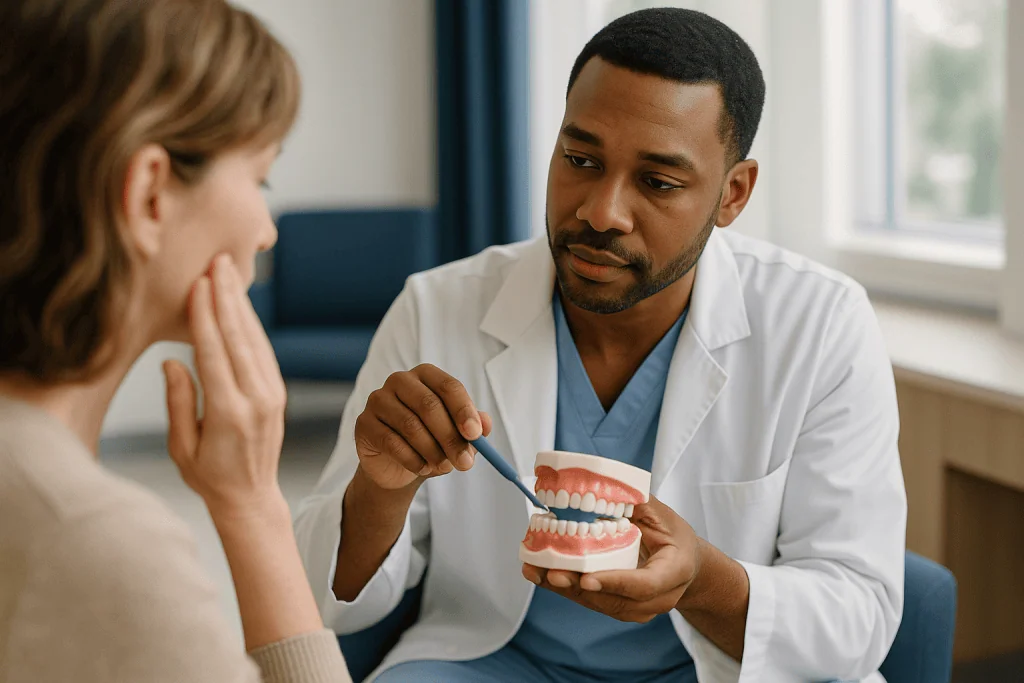
In a dental office, the clinician first protects the gums with a barrier, then applies a stronger gel to the teeth, sometimes with a light or laser that is meant to speed the reaction. A session commonly runs around an hour and may be repeated (Cleveland Clinic). With a dentist-supervised take-home kit, custom trays molded to your teeth hold a milder gel for a set period each day, often over a couple of weeks. Over-the-counter strips and paint-on products use weaker formulations still, worn for shorter windows, with no fitting and no supervision.
Whitening toothpastes are a different category. Most work by gentle abrasion and mild chemical action on surface stains; they do not change the intrinsic color of the tooth the way peroxide gels do, which is why results with them tend to be modest (Mayo Clinic).
None of these methods work on crowns, veneers or fillings. Restorations are made of porcelain or resin, which do not respond to peroxide, so a whitened smile can leave an older crown looking darker than its neighbors. A good pre-whitening exam will flag this before you start.
The important thing to understand for sensitivity is that whitening is a chemical process happening inside living tissue. The tooth is not being painted; it is being changed, temporarily, at the molecular level. A pulp that has just spent an hour under an oxidizing gel is entitled to be irritable for a while.
How long does teeth whitening sensitivity last?
The honest answer is: not long, for most people. Sensitivity typically begins during the session or within the first few hours afterward, tends to be at its most noticeable in the first day, and usually fades within a few days once whitening stops and the tooth rehydrates (Cleveland Clinic). The NHS similarly frames it as an effect experienced during or after treatment rather than a lasting change (NHS).
That said, the pattern differs by method. After a single in-office session, people often describe a sharp first evening, an uneasy morning, and then a steady quieting over the next day or two. With take-home trays worn nightly, sensitivity tends to build cumulatively. Someone may feel fine after night one, notice zings by night three, and by night five be pausing to let things settle. Because the gel is applied repeatedly, the pulp never quite gets a rest, which is why dentists often suggest alternating nights or shortening wear time. Exactly how to adjust is a conversation for your treating dentist, not a decision to make alone.
Individual factors matter too. Teeth that were already twinging before whitening, thin or worn enamel, small cracks, exposed root surfaces from gum recession, and clenching or grinding habits all tend to prolong the recovery.
The threshold to hold in mind is roughly a week. Sensitivity that is clearly easing day by day is following the expected script. Sensitivity that is unchanged or worsening a week after your last application, or that has shifted from brief zings to a dull, lingering ache, is not typical whitening sensitivity and deserves an examination.
Zings, aches and white gums: three different problems
People use the word “sensitive” for very different experiences, and sorting them out tells you a lot about what is going on.
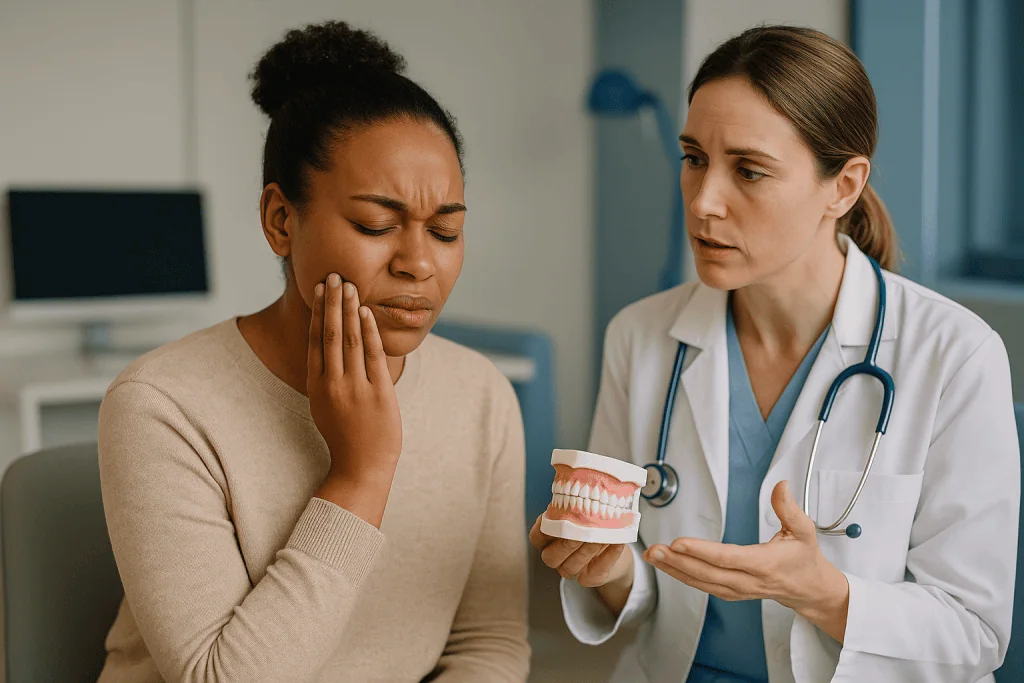
The classic whitening zing is short and sharp, often described as electric. It arrives without warning, sometimes with no trigger at all, and disappears within seconds. This is the irritated pulp and stimulated dentin tubes firing off. Zings are uncomfortable, occasionally alarming, and almost always harmless. They fade as the tooth recovers.
Cold sensitivity is the more familiar cousin: the wince when iced water, a spoonful of ice cream or a deep breath of winter air touches the teeth. It behaves like ordinary dentin hypersensitivity, the condition behind many everyday sensitive-teeth complaints, in which exposed dentin responds to temperature change (Cleveland Clinic). After whitening it is usually temporary; if it lingers, it may be revealing a pre-existing area of exposed root or worn enamel that the gel simply amplified.
A dull, constant ache that keeps you awake, or pain concentrated in one tooth rather than spread across the front teeth, is a different matter. Whitening does not typically cause this. It is more likely to point to a cavity, a crack, a failing filling or an inflamed nerve that predated the gel.
Gum irritation is separate again. White, blanched patches or a sore, raw feeling along the gum line mean the peroxide touched soft tissue rather than enamel. It stings, and it tends to settle quickly once contact stops, but it is a sign that the tray, strip or barrier did not do its job.
Knowing which of these you have is the first useful thing you can tell your dentist.
Who whitening is usually for, and who is usually asked to wait
Whitening is a cosmetic procedure for healthy adult teeth. That phrase does most of the work. It is well suited to someone whose enamel is intact, whose gums are free of active disease, whose recent dental exam turned up no untreated decay, and whose color complaint is the yellowish tone that comes from coffee, tea, red wine, tobacco and simple age.
Several groups are commonly asked to wait or to skip peroxide whitening altogether, and the reasons are practical rather than bureaucratic. Anyone with untreated cavities, cracked teeth or leaking fillings risks the gel reaching the pulp far more directly, which turns a mild irritation into real pain. Active gum disease, with inflamed or receded gums, exposes root surfaces that are far more porous than enamel. People who already have marked tooth sensitivity are often advised to treat that first. Adolescents whose teeth are still developing, with larger pulps closer to the surface, are typically asked to wait until adulthood. Pregnancy and breastfeeding are usually treated as reasons to postpone, not because harm has been demonstrated but because safety has not been studied well enough to say (Cleveland Clinic).
Expectations matter as much as eligibility. Grayish discoloration from certain medications taken in childhood, or from an injured tooth, responds poorly to bleaching. Crowns and veneers will not change. And a tooth that is dark because the nerve inside has died needs a diagnosis, not a whitening tray.
The NHS is blunt that whitening should be done by, or under the supervision of, a dental professional, partly so that these checks happen before any gel touches a tooth (NHS). The pre-whitening exam is the least glamorous and most protective step in the whole process.
In-office, trays, strips, toothpaste: how the options compare for sensitivity
People often ask which method is gentlest. The truthful answer is that sensitivity tracks mostly with peroxide strength and how long it stays on the tooth, and each approach trades speed against comfort in a different way.
| Method | How it is applied | Typical sensitivity pattern | What tends to reduce it |
|---|---|---|---|
| In-office whitening | Stronger gel applied by a clinician with gum protection, roughly an hour per session | Sharpest in the first day, often easing within a few days | Good gum isolation, a pre-treatment desensitizer, fewer or shorter sessions |
| Dentist-supervised trays | Custom-fitted trays with milder gel worn daily over about two weeks | Builds gradually with repeated wear; can be paused | Alternating nights, shorter wear time, well-fitted trays that keep gel off gums |
| Over-the-counter strips or gels | Weaker gel on a flexible strip, self-applied | Usually milder, but strips can slip onto gums | Careful placement, stopping between courses |
| Whitening toothpaste | Mild abrasives and surface-acting agents used at normal brushing | Rarely causes zings; very abrasive types can wear enamel over time | Choosing a non-abrasive formulation, not over-brushing |
Two cautions belong with this table. The reduced sensitivity of weaker products comes at the price of slower, more modest results; whitening toothpaste in particular acts on surface stains only (Mayo Clinic). And a professional’s involvement does not eliminate sensitivity, but it does mean someone has checked for the cavities, cracks and recession that turn expected zings into something worse (Cleveland Clinic). Whichever route you and your dentist choose, the point is to match the method to your teeth, not to a marketing promise.
How do you fix sensitive teeth after whitening? The first 48 hours
The most effective step is also the simplest: stop applying gel. Whitening sensitivity is largely dose-dependent, and every additional hour of peroxide contact is another hour the pulp has to recover from. If you are midway through a take-home course, pausing for a night or two is usually reasonable, but confirm the plan with the dentist who supplied the kit rather than improvising.
Next, take the temperature extremes out of your day. Room-temperature water instead of iced. Soup that has cooled a little. Breathing through the nose in cold air. This is not squeamishness; it removes the stimulus that makes dentin fluid move and the nerve fire (Cleveland Clinic). Acidic foods and drinks, such as citrus, soda and wine, are worth avoiding for a day or two as well, since acid softens enamel and can amplify sensitivity while the tooth is still recovering.
Brush gently with a soft toothbrush and lukewarm water. Hard scrubbing on a freshly whitened surface adds insult to irritation. Some dentists recommend switching to a desensitizing toothpaste for the duration; how these work, and why they take time, is covered in the next section.
Many people also find a short spell of not whitening at all is more helpful than any product. The tooth rehydrates from saliva over the first day, the chalky look fades, and with it much of the reactivity.
Over-the-counter pain relievers are sometimes used for a particularly rough first evening. Whether one is appropriate depends on your health history and any medicines you already take, so that is a question for your dentist or pharmacist, not for this article. What can be said is that if you feel you need pain relief for more than a day or two, the sensitivity has moved outside the typical range.
Desensitizing toothpaste and fluoride: what they do and how long they take
Two ingredients show up repeatedly in advice about sensitive teeth after whitening relief, and it helps to know that they work by completely different mechanisms.
Potassium nitrate, the active ingredient in many desensitizing toothpastes, works on the nerve. Potassium ions accumulate around the nerve fibers inside the dentin and make them less able to fire in response to a stimulus. The nerve is still there and the tubes are still open; it is simply harder to trigger. Because the potassium has to build up over repeated use, the effect is not immediate. Mayo Clinic notes that desensitizing toothpaste can help block pain after several applications, not after one (Mayo Clinic). In practice, people often notice the difference over a couple of weeks, which is why some dentists suggest starting it before whitening begins rather than after the zings arrive.
Fluoride works on the structure. It strengthens enamel and can help occlude, or plug, the openings of the dentin tubes, so there is less fluid movement to begin with. A dentist may apply a concentrated fluoride varnish in the office; at home, an ordinary fluoride toothpaste contributes more modestly. Some whitening gels now include potassium nitrate or fluoride in the formulation for this reason.
Neither approach changes the underlying cause if that cause is a cavity or a crack. They are for the expected, temporary sensitivity of a healthy tooth that has been whitened. A dentist can also apply bonding resin to exposed root surfaces or, for the rare tooth with persistent nerve pain, discuss further treatment (Mayo Clinic). Which, if any, of these you need is a decision for the clinician who has looked inside your mouth.
Is there a teeth whitening that doesn't cause sensitivity?
Not entirely, and it is worth being suspicious of anyone who says otherwise. Any product that genuinely changes the color of a tooth does so with peroxide, and peroxide diffuses into living tissue. What exists is a spectrum of whitening for sensitive teeth strategies that make sensitivity less likely, less intense or shorter.
Lower concentration is the most obvious lever. Milder gels worn for longer periods tend to produce fewer zings than a strong gel applied for an hour, at the cost of a slower result. Shorter or alternating sessions give the pulp recovery time between exposures. Gels formulated with potassium nitrate or fluoride aim to counter sensitivity while whitening happens, although they do not remove it.
Preparation matters more than most people realize. Using a desensitizing toothpaste for a period before whitening, having a fluoride application at the dentist, and, crucially, treating any decay, recession or cracked teeth first can transform the experience. Much of the severe sensitivity people report online comes from whitening teeth that were not ready to be whitened.
Fit and technique reduce gum irritation, the other half of the complaint. Custom trays keep gel where it belongs; a professionally placed barrier does the same in the chair.
Then there are the products that promise whitening without peroxide at all. Charcoal powders, oil pulling, baking soda and acidic fruit pastes are widely promoted, and none of them has good evidence of lightening the intrinsic color of teeth. Several are abrasive or acidic enough to wear enamel, which can eventually make teeth both more sensitive and, because thinner enamel shows more of the yellower dentin beneath, darker. Whitening toothpaste is safer than these but limited to surface stains (Mayo Clinic). The gentlest effective route is a properly supervised one.
Gum irritation after teeth whitening: why the white patches appear
Open your mouth in the mirror the evening after a whitening session and you may find pale, almost chalk-white streaks along the gum line, sometimes with a raw, stinging sensation. This is not tooth sensitivity. It is a mild chemical irritation of the gum surface where peroxide made contact, and it frightens people far more than it should.
Hydrogen peroxide is an oxidizer. On soft tissue it briefly disrupts the outer cell layer, which is what produces the whitened appearance, in much the same way that peroxide dabbed on a cut foams and blanches the skin. The tissue underneath is intact, and the surface repairs quickly once the gel is removed. Both the NHS and Cleveland Clinic list gum irritation alongside tooth sensitivity as the expected, temporary side effects of whitening (NHS; Cleveland Clinic).
The cause is almost always mechanical. In the office, it means the protective barrier did not fully cover a stretch of gum. At home, it means the tray was overfilled and gel oozed onto the gums, or the tray edges extend too far, or a strip slid upward. Wiping away excess gel with a clean finger or tissue immediately after seating the tray, and using less gel than seems necessary, prevents most of it.
If you notice white patches, rinse with water, stop the session and let the area recover. Avoid spicy, acidic or very hot foods while it is tender. Irritation that has not faded within a day or two, that is spreading, or that comes with bleeding, swelling or ulceration is unusual and should be seen. The same applies to any burning sensation on the tongue, lips or inside the cheeks, which suggests gel has been getting where it never should.
What the following days and weeks usually look like
Picture the course of a typical, uncomplicated whitening experience, whichever method you use.
The first evening is often the hardest. Teeth may feel dehydrated and unusually bright, zings can arrive at random, and cold drinks are unwelcome. Most people describe this as annoying rather than debilitating. Sleep is usually fine, although a few report being woken by a sharp twinge.
By the next morning, the chalky look has often softened as saliva rehydrates the enamel, and with it the sensitivity begins to retreat. Day two and three continue that trend; cold still registers but with less voltage. Within a few days most people have forgotten about it (Cleveland Clinic). Anyone on a multi-week tray course may cycle through this pattern in miniature, with a peak after a few consecutive nights and relief when they pause.
Over the first week or two, the color settles. Some of the initial brightness fades as the tooth rehydrates, which is why dentists advise waiting before judging the result or deciding whether to do more. This is also the window in which teeth are thought to stain more readily, and many clinicians suggest going easy on coffee, tea, red wine, berries and tobacco for a while.
Looking further out, whitening is not permanent. The NHS gives a range of a few months to about three years before the effect fades, shorter for people who smoke or drink a lot of staining beverages (NHS). Each top-up is another round of peroxide exposure, so a sensible schedule for repeat whitening is something to work out with your dentist rather than a matter of chasing the brightest possible shade.
What people often get wrong about teeth whitening sensitivity
Myth one: sensitivity means the whitening is damaging your enamel. The evidence points the other way. The zings come from peroxide irritating the pulp and dentin, not from enamel being stripped, and appropriately used peroxide whitening has not been shown to cause lasting harm to healthy enamel. Abrasive home remedies and acidic pastes are far more likely to wear enamel than a supervised gel.
Myth two: more pain means more whitening. There is no bonus for suffering. Pushing through severe sensitivity mostly prolongs the recovery, and whitening does not work faster on an inflamed tooth.
Myth three: whitening toothpaste is a gentle version of the same thing. It is not the same thing. It polishes away surface stains and has little effect on the intrinsic tooth color that peroxide targets (Mayo Clinic). It rarely causes zings because it is barely reaching the dentin.
Myth four: the light or laser is what makes in-office whitening hurt. The light is intended to accelerate the peroxide reaction. The gel is doing the work, and the sensitivity comes from the gel, the concentration and the dehydration of the isolated tooth.
Myth five: charcoal, lemon juice or baking soda whiten teeth safely without sensitivity. None has good evidence of changing tooth color, and the acidic and abrasive ones can thin enamel over time, which makes teeth more sensitive and, eventually, yellower.
Myth six: a tooth that hurts after whitening was fine before. Very often it was not. Sensitivity that stays put in one tooth is usually the gel exposing a cavity, crack or worn area that had been quietly waiting (Cleveland Clinic). The whitening did not create the problem. It handed you a reason to get it looked at.
Questions to ask your care team
The single most useful conversation about whitening happens before any gel touches your teeth. Walk in with questions and you are far less likely to walk out with surprises.
- Have you checked for cavities, cracks, gum recession or leaking fillings that could make whitening painful for me, and should any of those be treated first?
- Do I have crowns, veneers or fillings on visible teeth that will not change color, and how will the final result look alongside them?
- Given my history of sensitivity, which method and gel strength do you suggest, and why?
- Should I start a desensitizing toothpaste before treatment, and would a fluoride application beforehand help?
- How will my gums be protected during the session, or how do I keep gel off them with a home tray?
- What level of sensitivity should I expect afterward, how long should it last, and at what point should I call you?
- If I am using trays and the zings build up, what exactly should I do: pause, shorten wear time, or alternate nights?
- Are there foods, drinks or habits you want me to avoid in the first days, and for how long?
- Is there any reason, such as pregnancy, ongoing dental treatment or a medical condition, that you would prefer I wait?
- How often is it reasonable for me to repeat whitening, and how will we know if it is time to stop?
Write the answers down. Whitening sensitivity is easier to tolerate when you know it was predicted, and far easier to act on when you know the plan for what to do if it does not follow the script. The decisions about method, strength, timing and any adjustments belong to you and the clinician who has examined your mouth.
When to call your doctor or dentist
Most whitening sensitivity is a nuisance that resolves on its own within a few days. A small number of experiences are telling you something else, and those deserve a phone call rather than patience.
Call your dentist promptly if the pain is severe enough to disturb sleep or normal eating, or if it is getting worse rather than better after the first day or two. Pain that has not clearly improved about a week after your last application is outside the typical pattern (Cleveland Clinic). So is pain that settles in one tooth rather than spreading across several, or that changes character from brief zings into a constant, throbbing ache; both patterns suggest a pre-existing problem such as decay, a crack or an inflamed nerve that whitening has unmasked. Sensitivity to heat, as opposed to cold, and pain that lingers for many seconds after a stimulus is removed also point toward the nerve rather than the surface and warrant an examination.
For the gums and soft tissue, seek advice if white patches or soreness have not faded within a day or two, if the area is spreading, bleeding, swelling or ulcerating, or if you notice burning on the tongue, lips or cheeks.
Seek urgent care the same day for facial swelling, fever, a foul taste or discharge, or difficulty swallowing; these indicate infection, not whitening sensitivity, and need treatment regardless of what caused them. If you have accidentally swallowed a significant amount of gel and feel unwell, contact your local poison control service or a medical provider.
None of this is meant to alarm. The point is that your dentist would much rather hear about a zing that has not behaved than see the same tooth weeks later with a bigger problem. Any decision about continuing, pausing or changing your whitening plan rests with the clinician who is treating you.
Frequently asked questions
How do you fix sensitive teeth after whitening?
Stop applying whitening gel, avoid very hot, cold and acidic foods for a day or two, and brush gently with a soft brush. Many dentists suggest a desensitizing toothpaste containing potassium nitrate, which builds up over repeated use rather than working immediately. Most sensitivity settles within a few days as the tooth rehydrates. If pain is severe or persists, contact your dentist before resuming any whitening.
Why does teeth whitening make my teeth so sensitive?
Hydrogen peroxide is a small molecule that passes through enamel into the dentin, where fluid-filled microscopic tubes connect to the nerve. Movement of that fluid, plus mild temporary inflammation of the nerve, produces the sharp zings. Drying of the teeth during a session adds to the reactivity. Teeth with worn enamel, gum recession, cracks or untreated decay let the gel reach the nerve more easily and hurt more.
How long does whitening sensitivity last?
For most people it begins during or shortly after treatment, is most noticeable in the first day, and fades within a few days once whitening stops. With nightly take-home trays it can build over several sessions and ease when you pause. Sensitivity that is unchanged or worsening about a week after your last application falls outside the typical range and should be assessed by your dentist.
Is there a teeth whitening that doesn't cause sensitivity?
No method that genuinely changes tooth color is free of it, because all rely on peroxide reaching living tissue. Sensitivity can be reduced with milder gels over longer periods, shorter or alternating sessions, gels containing potassium nitrate or fluoride, and treating decay or recession before starting. Products claiming to whiten without peroxide, such as charcoal or acidic pastes, lack good evidence and may wear enamel.
What helps gum irritation after teeth whitening?
Rinse with water, stop the session and let the gum recover. The white, stinging patches are a brief surface irritation from gel touching soft tissue and typically fade quickly once contact ends. Avoid spicy, acidic or very hot foods while tender. Prevent it next time by using less gel, wiping excess off the gums, and checking tray fit. Irritation that spreads, bleeds or does not settle within a day or two needs a dental check.
Should I use desensitizing toothpaste before or after whitening?
Both can be reasonable, but starting before whitening often helps more. Potassium nitrate, the usual active ingredient, must accumulate around the nerve over repeated brushing to dampen its response, so it needs a head start to be working when the zings arrive. Mayo Clinic notes it helps after several applications, not one. Ask your dentist whether it suits your plan and whether an in-office fluoride application would add benefit.
Does sensitivity after whitening mean my enamel is damaged?
Generally not. The zings arise from peroxide irritating the dentin and nerve, not from enamel being removed, and properly used whitening has not been shown to cause lasting damage to healthy enamel. Abrasive or acidic home remedies are a bigger threat to enamel than supervised gels. Persistent sensitivity is more likely to be revealing pre-existing enamel wear, recession or decay than to signal new damage from whitening.
Can I take painkillers for whitening sensitivity?
Some people use an over-the-counter pain reliever for a rough first evening, but whether one is appropriate depends on your medical history and other medicines you take, so ask your dentist or pharmacist first. Removing the trigger, by pausing gel and avoiding temperature extremes, usually helps more than medication. Needing pain relief for more than a day or two suggests the sensitivity is outside the typical pattern and warrants a call.
Why is only one tooth sensitive after whitening?
Typical whitening sensitivity spreads across several teeth, most often the front ones. Pain concentrated in a single tooth usually means the gel found an existing weak point, such as a small cavity, a crack, a worn filling or an area of exposed root. The whitening did not create the problem but has made it noticeable. This pattern deserves a dental examination rather than waiting for it to pass.
How soon can I whiten again after sensitivity settles?
There is no single rule; it depends on how strong the sensitivity was, which method you used and the state of your teeth and gums. Whitening effects typically last from a few months to around three years, so frequent top-ups are usually unnecessary. Each round is another peroxide exposure. Let the color settle for a couple of weeks before judging results, and agree any repeat schedule with your dentist.
This article is for general information only and is not a substitute for professional medical advice. Please consult a qualified doctor about your individual situation.

More from the Blog
Adding a Dental Spa Visit to a Trip: How to Fit Hygiene Care Into a Short Stay
A dental spa visit during a trip can fit a short stay if you keep it to preventive hygiene care: a professional cleaning, an…
What Tooth Decay Looks and Feels Like: Early Signs, Stages and When to See a Dentist
Early tooth decay often looks like a dull, chalky white patch on the enamel, usually near the gumline or between teeth, and typically causes…

Eating After a Tooth Extraction: Soft Foods, Straws to Avoid and Getting Back to Normal
After a tooth extraction, most people are asked to stick to cool, soft foods such as yogurt, applesauce or smooth soup for the first…

Questions to Ask Your Surgeon and Orthodontist Before Orthognathic Surgery
Before orthognathic (corrective jaw) surgery, ask your surgeon which jaw or jaws will be moved and why, what the alternatives are, how surgery and…

How Clear Aligner Treatment Unfolds: From Scan to Attachments to Your First Trays
Clear aligner treatment usually unfolds in stages: an orthodontic examination and digital scan of the teeth, a computer-planned sequence of movements the clinician reviews…

How a Jaw Cyst Is Diagnosed: Panoramic X-Ray, CT Imaging and Pathology Review
A jaw cyst is usually diagnosed in three steps. A panoramic dental X-ray first reveals a dark, fluid-filled space in the bone, often by…