Gum Recession
Learn what gum recession is, common gum recession symptoms and causes, how dentists diagnose it, and the treatment options that may help protect your teeth.
Quick answer
Gum recession is when the gum tissue around a tooth pulls back or wears away, exposing the root. It is usually caused by gum disease, hard brushing, or thin gum tissue. Symptoms include longer-looking teeth and sensitivity. Lost gum does not regrow, but dentists can slow it and, in some cases, cover roots with grafts.
What is gum recession?
Gum recession, sometimes called receding gums, is a condition in which the gum tissue that surrounds a tooth pulls back or wears away, exposing more of the tooth or its root. The gums (gingiva) normally sit snugly around the neck of each tooth, forming a seal that protects the root and the bone underneath. When this tissue shrinks back, the root surface, which is not covered by hard enamel, becomes exposed to the mouth. This can make teeth look longer, feel sensitive, and become more vulnerable to decay and further damage.
Gum recession is very common. It is seen most often in adults, and it tends to become more frequent with age, although it is not simply a normal part of getting older. Younger people can also develop it, particularly if they brush too hard, have an aggressive form of gum disease, or have naturally thin gum tissue. Because the change is usually slow and painless at first, many people do not notice it until a dentist points it out or until sensitivity develops.
Understanding what gum recession is matters because the exposed root and the bone loss that may accompany it do not grow back on their own. Early recognition gives dental professionals more options to slow the process and protect the tooth.
Gum recession symptoms
Gum recession symptoms often develop gradually, and in the early stages there may be no discomfort at all. Many people first notice a visual change rather than a physical one. Common signs include:
- Teeth that look longer than they used to, or a visible notch or line where the gum has moved down the tooth
- Exposed tooth roots, which are often slightly yellower than the enamel above them
- Sensitivity to hot, cold, sweet, or acidic foods and drinks, or a sharp twinge when brushing
- Gums that bleed when brushing or flossing
- Red, swollen, or tender gums
- Persistent bad breath or an unpleasant taste
- Visible gaps or dark triangles between teeth near the gum line
- Loose or shifting teeth in more advanced cases
The pattern of symptoms often reflects the underlying cause. When recession is related to overly forceful brushing, it commonly affects the outer surfaces of the front teeth and the teeth toward the corners of the mouth, and the gums may look pale and firm rather than inflamed. When recession is driven by periodontitis (gum disease that involves the supporting bone), the gums are more likely to be red, puffy, and prone to bleeding, and the recession may be more widespread. In later stages, the loss of bone and gum support can allow teeth to become mobile.
Root sensitivity is one of the most frequently reported complaints. The root surface is covered by cementum and dentin, softer tissues that contain tiny channels leading toward the nerve of the tooth. When these are exposed, temperature changes and certain foods can trigger short, sharp pain. Not everyone with recession has sensitivity, and its intensity does not always match how much the gum has receded.
Causes and risk factors
Gum recession causes usually fall into two broad groups: mechanical wear on the gum tissue and inflammatory damage from gum disease. In many people, more than one factor is involved.
Periodontal (gum) disease is a leading cause. Gingivitis is inflammation of the gums caused by plaque, the sticky film of bacteria that builds up on teeth. If it progresses to periodontitis, the inflammation damages the fibers and bone that hold the teeth in place. As the bone level drops, the gum tissue often follows, creating recession.
Aggressive tooth brushing is another very common cause. Using a hard-bristled brush, scrubbing back and forth with force, or brushing for too long can gradually wear the gum away, especially where the tissue is naturally thin.
Misaligned teeth or bite problems can place uneven pressure on certain teeth. A tooth that sits toward the outside of the jaw may have only a thin layer of bone and gum over its root, making recession more likely.
Orthodontic tooth movement, particularly when teeth are moved outward beyond the supporting bone, may in some cases contribute to recession.
Tobacco use, including smoking and chewing tobacco, is strongly linked to gum disease and slower healing of gum tissue.
Teeth grinding or clenching (bruxism) places heavy forces on teeth and their supporting tissues, which may play a role in some people.
Trauma to the gums from oral piercings, poorly fitting partial dentures, or habits such as picking at the gums with fingernails or sharp objects can also cause localized recession.
Genetics and anatomy matter as well. Some people are born with thin gum tissue or a thin layer of bone over the roots, a pattern dentists describe as a thin gingival phenotype. Others have a frenum (the small fold of tissue connecting the lip or cheek to the gum) that attaches very close to the gum edge and tugs on it.
Additional risk factors include hormonal changes (for example during pregnancy or menopause), which can make gums more sensitive; diabetes, which affects the body’s response to infection; and certain medications that reduce saliva or affect gum tissue. Age is associated with a higher likelihood of recession, largely because the effects of other risk factors accumulate over time.
Gum recession diagnosis
Gum recession diagnosis is usually made by a dentist or a periodontist, a dentist who specializes in the gums and the structures that support the teeth. In most cases, the condition is identified during a routine dental examination rather than through complex testing.
The assessment typically includes the following:
- Visual examination of the gums and teeth to look for exposed roots, changes in gum color and texture, and signs of inflammation.
- Periodontal probing, in which a thin, blunt-ended instrument marked in millimeters is gently placed between the gum and tooth to measure the depth of the space (the pocket) and the distance from the gum edge to the point where the enamel meets the root. These measurements help determine how much attachment has been lost.
- Recession measurement and classification. Dentists often record how many millimeters the gum has receded on each tooth and classify the recession according to whether the tissue between neighboring teeth (the papilla) is intact. This classification helps predict how well the area might respond to surgical coverage.
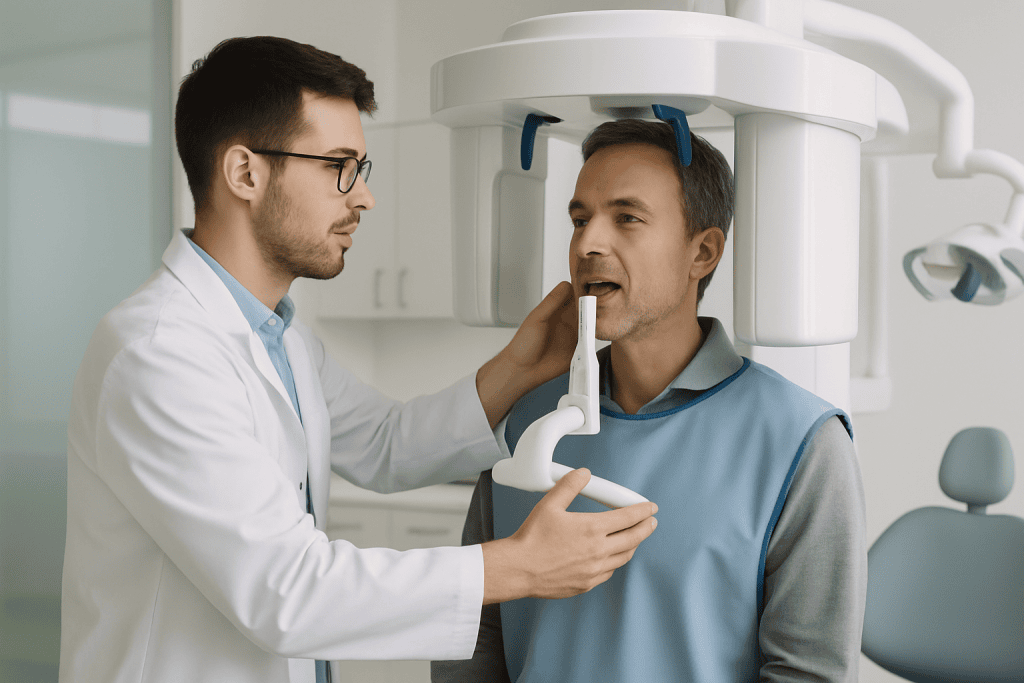
- Dental X-rays, which show the level of bone around the roots. Bone loss on X-rays suggests periodontitis rather than purely mechanical recession.
- Assessment of contributing factors, such as brushing technique, bite relationships, tooth position, restorations, piercings, and habits like grinding.
- Tooth sensitivity testing in some cases, using a gentle stream of air or cold to identify sensitive root surfaces.
Your dentist may also review your medical history, medications, and tobacco use, since these influence both the cause and the likely response to treatment. Photographs or digital scans are sometimes taken to document the gum line so changes can be tracked at future visits. Because recession develops slowly, comparing measurements over time is often the most reliable way to tell whether it is stable or progressing.
Gum recession treatment options
Gum recession treatment options depend on how severe the recession is, whether it is getting worse, what is causing it, and whether it is causing symptoms such as sensitivity or affecting appearance. Not all recession needs active treatment; in many cases the first goal is simply to stop it from progressing.
Monitoring and addressing the cause. For mild, stable recession without symptoms, your dentist may recommend regular monitoring. This is usually combined with correcting whatever is driving the problem: switching to a soft-bristled or electric toothbrush, learning a gentler brushing technique, stopping tobacco use, replacing an ill-fitting appliance, or removing an oral piercing. If clenching or grinding is suspected, a night guard may be suggested.
Professional cleaning and periodontal therapy. When gum disease is the underlying cause, treatment focuses on controlling the infection. Scaling and root planing is a deep cleaning that removes plaque and hardened deposits (tartar) from above and below the gum line and smooths the root surfaces so the gums can heal against them. This may be done over several visits, often with local anesthetic. Antimicrobial rinses or, less commonly, antibiotics placed into the gum pockets may be used alongside cleaning in some cases.
Managing sensitivity. Exposed roots can be treated with desensitizing toothpastes containing ingredients that block the tiny channels in the dentin. Dentists may also apply fluoride varnish or bonding agents to the root surface to reduce discomfort. These measures manage symptoms but do not restore lost gum tissue.
Composite restorations. When the exposed root has worn away or developed a notch, a tooth-colored filling material can be bonded over the area to protect it and improve appearance. This is a conservative option that does not involve surgery.
Gum graft surgery. For more significant recession, especially when it is progressing, causing persistent sensitivity, or affecting appearance, a periodontist may recommend a soft tissue graft. In a connective tissue graft, a small piece of tissue is taken from under the surface of the roof of the mouth and placed over the exposed root, where it is stitched into position. A free gingival graft uses tissue from the surface of the palate and is often chosen to thicken thin gum tissue. In some cases, donor or processed tissue is used instead of the patient’s own, avoiding a second surgical site. A pedicle graft moves neighboring gum tissue sideways to cover the root when enough tissue is available nearby.
Pinhole and tunneling techniques. Some periodontists use minimally invasive approaches in which the existing gum is loosened through a small opening and repositioned over the root, sometimes with added material to support it. Suitability depends on the pattern of recession and the amount of tissue available.
Orthodontic treatment. When a tooth sits outside the supporting bone, moving it into a better position may, in selected cases, improve the gum coverage or make later grafting more predictable.
Healing after gum surgery generally takes several weeks. Your periodontist will usually advise a soft diet, careful cleaning around the site, and avoiding brushing the treated area directly until it has healed. Results vary from person to person, and full root coverage is not always achievable, particularly when the tissue between teeth has also been lost. At Acibadem, gum recession is assessed and managed within the dental and oral health department, where general dentists and periodontists work together on periodontal care.
Living with gum recession and outlook
Gum tissue that has receded does not regrow by itself, so the realistic goal for most people is to prevent further loss and protect the exposed roots. With good daily care and regular professional attention, many people keep their recession stable for years. Where periodontitis is the cause, keeping the disease under control through ongoing maintenance visits is central to protecting the remaining gum and bone.
Day-to-day self-care usually includes brushing twice a day with a soft brush using gentle circular or short back-and-forth motions, cleaning between the teeth daily with floss or interdental brushes, and using a fluoride toothpaste. A desensitizing toothpaste may help if sensitivity is bothersome. Avoiding tobacco, limiting sugary and acidic foods and drinks, and managing conditions such as diabetes support gum health more generally.
The outlook after surgical treatment is often good when the recession is limited to one or a few teeth and the surrounding tissue is healthy, but outcomes depend on many factors, including the original cause, smoking status, and how carefully the area is cared for afterward. Recession can recur if the cause is not addressed. Your dentist will generally want to monitor the gum line at routine checkups so that any change is caught early.
Frequently asked questions
What is gum recession and is it the same as gum disease?
Gum recession describes the gum tissue pulling back from the tooth and exposing the root. Gum disease refers to inflammation and infection of the gums and supporting bone. Gum disease is one of the main causes of recession, but recession can also occur without infection, for example from hard brushing or thin tissue. A dental examination can usually tell which is involved.
What are the earliest gum recession symptoms I might notice?
The earliest signs are often subtle: a tooth that looks slightly longer, a faint line where the gum used to sit, or a brief twinge of sensitivity to cold. Bleeding or tenderness may appear if gum disease is present. Because early recession is frequently painless, it is often first noticed by a dentist during a routine visit.
What are the most common gum recession causes in younger adults?
In younger people, overly forceful brushing and naturally thin gum tissue are frequent contributors, and recession is often limited to a few teeth. Aggressive forms of gum disease, tobacco use, oral piercings, and teeth positioned toward the outside of the jaw can also play a role. Identifying the cause is important because it guides how the problem is managed.
How is gum recession diagnosis carried out?
Diagnosis is usually straightforward and is made during a dental examination. The dentist looks at the gums, measures the depth of the gum pockets and the amount of recession with a small probe, and often takes X-rays to check the bone level. These findings, together with a review of your habits and health history, help determine the cause and severity.
What gum recession treatment options do not involve surgery?
Nonsurgical measures include correcting brushing technique, professional cleaning to control gum disease, desensitizing toothpaste or fluoride applications for sensitivity, and tooth-colored fillings to cover worn root surfaces. These approaches can protect the tooth and relieve symptoms, but they do not replace lost gum tissue. Surgery is generally considered when recession is progressing or causing ongoing problems.
Can receding gums grow back with home remedies?
Gum tissue that has receded does not grow back on its own, and there is no established evidence that oils, rinses, or supplements can regenerate it. Good home care can help stop recession from getting worse and keep the gums healthy. Restoring gum coverage over an exposed root generally requires a surgical procedure performed by a dental professional.
When to see a doctor
Gum recession is rarely an emergency, but it is a sign that your gums need attention. It is reasonable to arrange a dental checkup if you notice that your teeth look longer, your gums bleed regularly, or you develop sensitivity that does not settle with a desensitizing toothpaste. Regular dental visits are the most reliable way to catch recession early and monitor it over time.
Seek prompt dental or medical care if you experience any of the following red-flag signs, which may indicate an infection or advanced gum disease:
- Gums that are swollen, very red, or painful, particularly with pus or a bad taste
- A tooth that has suddenly become loose or has shifted position
- Severe or persistent tooth pain, or pain that wakes you at night
- Swelling of the face or jaw, or difficulty opening your mouth
- Fever together with gum pain or swelling
- Bleeding from the gums that is heavy or does not stop
- Rapid worsening of recession over a short period
If you have diabetes, a weakened immune system, or take medications that affect bleeding or healing, it is especially important to have gum changes evaluated early, since gum infections can be more serious and slower to resolve in these situations.
Medically reviewed by the Acıbadem International Medical Board September 9, 2026
See our medical review board →
Update history
- PublishedSeptember 9, 2026
- Medical review approvedSeptember 9, 2026
- Last content updateSeptember 9, 2026