Quick answer
Bruxism is involuntary teeth grinding or jaw clenching, often during sleep, that can cause tooth wear, jaw pain, headaches, and disturbed sleep. At Acibadem in Turkey, evaluation focuses on dental and jaw health, bite patterns, and contributing factors, with treatment tailored to the cause and may include night guards, stress management, dental correction, or care for related sleep disorders.
What is bruxism?
Bruxism is the medical term for grinding, clenching, or gnashing the teeth in a way that is not part of normal chewing or swallowing. Many people who ask “what is bruxism” are surprised to learn that it is often an unconscious habit: the person may not realize they are doing it until a dentist notices worn teeth, or a partner hears grinding sounds at night. In the international classification of diseases, bruxism is coded under ICD-10 F45.8.
Doctors usually divide bruxism into two main types. Sleep bruxism happens during sleep and is considered a sleep-related movement behavior. Awake bruxism happens during the day, often as jaw clenching or teeth pressing during concentration, stress, or emotional tension, usually without grinding sounds. A person can have one type or both.
Bruxism affects both children and adults. It is fairly common in childhood and often lessens or disappears as children grow, although this is not guaranteed. In adults, it can appear at any age and is frequently linked to stress, sleep problems, certain medications, and lifestyle factors. Mild, occasional bruxism may cause no harm at all. Frequent or forceful bruxism, however, can damage the teeth, strain the jaw muscles, and affect the temporomandibular joints (the hinge joints that connect the lower jaw to the skull, often shortened to TMJ), which is why recognizing it matters.
Symptoms of bruxism
Bruxism symptoms vary widely from person to person. Some people have clear tooth damage but feel no pain; others have significant jaw or head discomfort with relatively little visible wear. Common bruxism symptoms include:
- Teeth grinding or clenching, sometimes loud enough during sleep to wake a bed partner
- Worn, flattened, chipped, or fractured teeth, or worn tooth enamel that exposes the deeper layers of the tooth
- Increased tooth sensitivity to hot, cold, or sweet foods and drinks
- Jaw pain, tightness, or fatigue, especially in the muscles used for chewing
- Locking of the jaw or difficulty opening and closing the mouth fully
- Clicking or popping sounds in the jaw joints
- Dull headaches, often starting at the temples
- Pain that feels like an earache, even though the ear itself is healthy
- Damage to the inside of the cheek from chewing on it, or indentations on the sides of the tongue
- Disrupted sleep for the person or their partner
Symptoms often differ by type. In sleep bruxism, people frequently wake with jaw stiffness, temple headaches, or facial muscle soreness that is worst in the morning and eases through the day. Grinding noises at night are typical of sleep bruxism. In awake bruxism, clenching is more common than grinding, and discomfort often builds during the day, particularly during stressful tasks; many people notice they are pressing their teeth together only when they consciously check.
Severity also matters. In early or mild bruxism, there may be no symptoms at all, and the first sign is often subtle enamel wear spotted during a routine dental checkup. In longstanding or forceful bruxism, the damage can progress to cracked teeth, broken fillings or crowns, loose teeth, enlarged jaw muscles, and chronic pain in the jaw joints. Because damage tends to accumulate slowly, symptoms can be easy to dismiss until they become significant.
Causes and risk factors
The exact bruxism causes are not fully understood, and in many cases several factors act together. Doctors generally consider bruxism to result from a mix of physical, psychological, and genetic influences rather than a single cause.
- Stress, anxiety, and emotional tension. These are among the most consistently reported contributors, particularly for awake bruxism. Anger, frustration, and intense concentration can also trigger clenching.
- Sleep disorders. Sleep bruxism is associated with other sleep-related conditions, including snoring, obstructive sleep apnea (a condition in which breathing repeatedly stops and starts during sleep), and frequent brief awakenings.
- Medications and substances. Certain antidepressants and other psychiatric medications have been linked to bruxism in some people. Caffeine, alcohol, tobacco, and recreational stimulant drugs may also increase the risk or worsen grinding.
- Genetics and family history. Sleep bruxism tends to run in families, suggesting an inherited component.
- Age. Bruxism is common in young children and often improves with age, though it can persist or start in adulthood.
- Personality and coping style. People described as highly driven, competitive, or hyperactive may be more prone to clenching and grinding.
- Other medical conditions. Bruxism has been reported alongside conditions such as gastroesophageal reflux disease (stomach acid flowing back into the food pipe), epilepsy, attention-deficit/hyperactivity disorder, Parkinson disease, and dementia, although the relationships are complex and not fully explained.
Dental factors such as the way the upper and lower teeth meet were once thought to be a main cause, but current evidence suggests bite alignment plays a smaller role than previously believed. That said, existing dental problems can influence how much damage bruxism causes.
Diagnosis
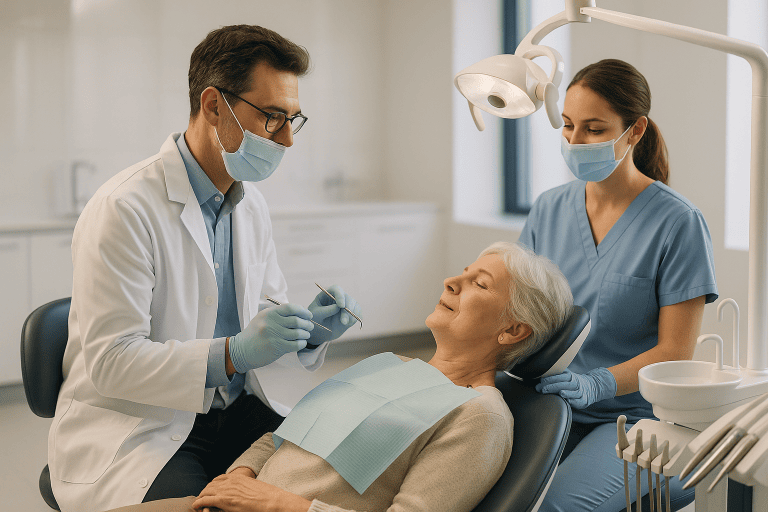
Bruxism diagnosis usually begins with a dental examination and a careful conversation about symptoms, sleep habits, stress levels, medications, and lifestyle. Because many people are unaware of their grinding, information from a bed partner or family member can be very helpful.
During the examination, the dentist typically looks for characteristic signs, including:
- Flattened, worn, chipped, or cracked teeth and worn enamel
- Damage to fillings, crowns, or other dental restorations
- Tenderness or enlargement of the jaw muscles
- Marks or ridges on the inside of the cheeks or the sides of the tongue
- Reduced or painful jaw movement, or joint sounds when opening and closing
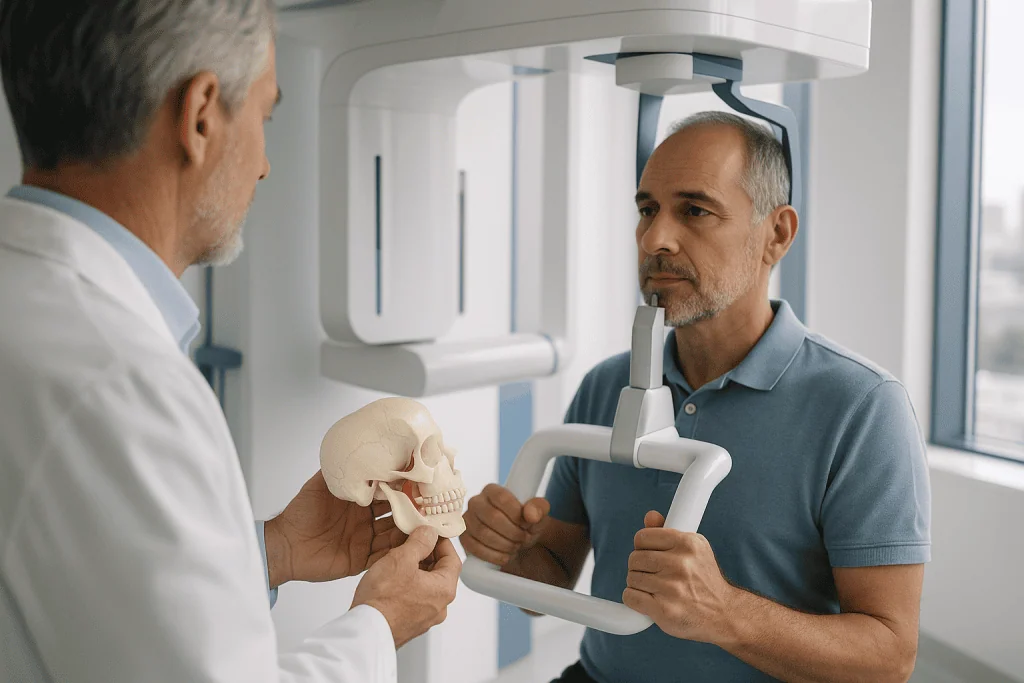
Dentists often monitor tooth wear over successive visits, since progressive change over time is more meaningful than a single snapshot. Dental X-rays may be taken to assess the teeth, supporting bone, and jaw structures, and to rule out other causes of pain or damage. If problems with the temporomandibular joints are suspected, further imaging may occasionally be recommended.
When sleep bruxism is suspected alongside another sleep disorder, for example, if there is loud snoring, pauses in breathing, or severe daytime sleepiness: the doctor may refer the patient for a sleep study, known medically as polysomnography. This overnight test records brain activity, breathing, heart rate, and muscle activity, including the jaw muscles, and is currently the most definitive way to confirm sleep bruxism. In routine practice, however, most cases are diagnosed clinically, based on the examination and history, without a sleep study.
Part of diagnosis is also identifying contributing factors. The doctor may ask about anxiety, work stress, caffeine and alcohol intake, smoking, and current medications, since addressing these can be an important part of management. In some hospital settings, such as the Dental and Oral Health department at Acibadem, dentists work with sleep specialists, neurologists, or mental health professionals when bruxism appears connected to a broader condition.
Treatment options for bruxism
There is no single cure that reliably stops bruxism in everyone. Instead, bruxism treatment focuses on three goals: protecting the teeth from damage, relieving pain and muscle strain, and reducing the frequency or intensity of grinding where possible. The right combination depends on the type of bruxism, its severity, and its likely causes. An overview of clinical approaches is available on the bruxism treatment page.
Watchful waiting
Mild bruxism that is not causing pain or visible tooth damage may not need active treatment at all. In children especially, bruxism often lessens with age, so dentists frequently choose to monitor the situation at regular checkups rather than intervene immediately. Watchful waiting still involves periodic assessment, because bruxism can worsen over time.
Dental appliances
The most common intervention is a night guard or occlusal splinta custom-fitted plastic device worn over the upper or lower teeth during sleep. These appliances do not necessarily stop grinding, but they create a protective barrier so the guard, rather than the tooth enamel, absorbs the wear. Custom-made guards from a dentist generally fit better and last longer than over-the-counter versions. They are usually the first-line approach for sleep bruxism.
Behavioral and stress-focused approaches
Because stress and anxiety are common contributors, techniques such as relaxation exercises, mindfulness, improved sleep habits, and counseling or cognitive behavioral therapy (a structured form of talk therapy) may help some people. For awake bruxism, habit awareness training can be useful: the person learns to notice clenching during the day and consciously rest the jaw with lips together and teeth apart. Reducing caffeine and alcohol, especially in the evening, and stopping smoking are often advised, since these can worsen grinding.
Medications and injections
Medication is not a routine long-term treatment for bruxism, but a doctor may consider short-term options in specific situations. These can include muscle relaxants taken before bedtime for a limited period, or a change in an existing medication if a drug, such as certain antidepressants, appears to be contributing. In selected cases of severe bruxism that has not responded to other measures, botulinum toxin injections into the chewing muscles may be considered to reduce muscle force; this is a specialist decision with effects that wear off over months and require repetition. Over-the-counter pain relievers and warm compresses may ease temporary muscle soreness, but they do not treat the underlying habit.
Treating related conditions
When bruxism occurs together with obstructive sleep apnea or another sleep disorder, treating that condition can sometimes reduce grinding as well. Similarly, managing reflux disease or an underlying neurological or psychiatric condition may be part of the overall plan.
Repairing dental damage
Bruxism itself is managed with the measures above, but the damage it causes may need restorative dentistry. Severely worn or fractured teeth can sometimes be rebuilt with crowns, protective caps that cover a damaged tooth, including ceramic options such as E-Max crowns. When wear is extensive and involves many teeth, dentists may plan a staged rehabilitation known as full mouth reconstruction to restore function and protect what remains. Importantly, restorative work is usually combined with a night guard or other protective measures, because untreated grinding can damage new restorations just as it damaged the natural teeth. Surgery on the jaw joints is rarely needed for bruxism itself and is generally reserved for specific joint problems assessed by a specialist. These treatments are typically coordinated within a dental and oral health department.
Living with bruxism and outlook
For most people, bruxism is a manageable condition rather than a dangerous one. The outlook depends largely on how early it is recognized and how consistently protective measures are used. Mild bruxism may cause little or no lasting harm, particularly when a night guard is worn and regular dental checkups catch changes early. Childhood bruxism often improves on its own, although parents should still mention it to a dentist.
When bruxism is severe and untreated over years, it can lead to significant tooth wear, repeated fractures of teeth and restorations, chronic jaw muscle pain, and temporomandibular joint problems. These complications are usually preventable or at least limitable with appropriate care, but repairing advanced damage can be more involved than preventing it.
Practical steps that many patients find helpful in daily life include keeping the jaw relaxed during the day (teeth apart, lips together), avoiding chewing gum and very hard or chewy foods during painful flare-ups, applying warmth to sore jaw muscles, limiting caffeine and alcohol in the evening, and maintaining regular sleep routines. Because stress is a common trigger, ongoing attention to stress management can matter as much as any dental device. It is honest to say that bruxism often fluctuates: it may quiet down during calm periods and return during stressful ones, so long-term monitoring rather than a one-time fix is the realistic expectation for many people.
Frequently asked questions
What is bruxism in simple terms?
Bruxism means grinding or clenching your teeth outside of normal chewing. It can happen during sleep, when most people are unaware of it, or during the day, often as jaw clenching linked to stress or concentration. It ranges from a harmless occasional habit to a persistent condition that wears down teeth and strains the jaw, which is why a dentist’s assessment is useful if you suspect it.
Can bruxism go away on its own?
Sometimes. Bruxism in children frequently lessens or disappears as they grow, and in adults it may ease when a stressful period passes or a contributing medication is changed. However, there is no way to guarantee this, and grinding can return. Because tooth damage accumulates quietly, most dentists recommend protecting the teeth rather than simply waiting, especially if there are already signs of wear.
How serious is bruxism?
In many cases bruxism is mild and causes no lasting harm. When it is frequent and forceful, it can chip and fracture teeth, wear away enamel, damage fillings and crowns, cause chronic jaw and headache pain, and contribute to temporomandibular joint disorders. The seriousness depends on intensity, duration, and whether protective measures are in place, so early evaluation generally leads to a better outcome.
What are the most common bruxism symptoms to watch for?
Typical bruxism symptoms include grinding noises at night reported by a partner, waking with a sore or tight jaw, dull temple headaches in the morning, increased tooth sensitivity, and teeth that look flattened, chipped, or worn. Daytime clenchers may notice jaw fatigue building through the day. Some people have no symptoms at all, and the condition is found during a routine dental checkup.
How is bruxism diagnosed?
Bruxism diagnosis is usually clinical: a dentist examines the teeth, jaw muscles, and jaw joints, asks about symptoms and sleep, and may take dental X-rays. Reports from a bed partner are often valuable. If another sleep disorder such as sleep apnea is suspected, the doctor may recommend an overnight sleep study, which can record jaw muscle activity and confirm sleep bruxism directly.
Does a night guard cure bruxism?
No. A night guard protects the teeth from grinding forces but does not usually stop the grinding itself. It is best understood as damage control, often very effective damage control, used alongside other measures such as stress management, habit awareness, and treatment of any contributing sleep or medical conditions. Guards should be checked periodically, as they wear down over time.
Can stress really cause teeth grinding?
Stress and anxiety are among the most consistently reported contributors to bruxism, particularly daytime clenching. Not everyone under stress grinds their teeth, and not all bruxism is stress-related, but for many people flare-ups clearly track with stressful periods. Addressing stress through relaxation techniques, better sleep habits, or counseling may reduce grinding in some cases, though results vary from person to person.
When to see a doctor
It is reasonable to mention any suspected teeth grinding or clenching at your next dental visit, even if it seems minor. Arrange an evaluation sooner if you notice any of the following warning signs:
- Teeth that are visibly worn, chipped, cracked, or loose, or repeated breakage of fillings or crowns
- Persistent jaw pain, facial pain, or morning headaches that do not improve within a few days
- Difficulty opening or closing the mouth, or a jaw that locks, catches, or shifts
- New or worsening tooth sensitivity or toothache, which can signal exposed dentin or a cracked tooth
- Loud grinding at night reported by a partner, especially together with snoring, gasping, or pauses in breathing, which may suggest a sleep disorder
- Ear pain or pressure without an ear infection, or persistent clicking and pain in the jaw joints
- Grinding that began after starting a new medication, which your prescribing doctor should know about before any changes are made
Seek prompt care for sudden severe jaw pain, a jaw that will not open or close, significant facial swelling, or a broken tooth with sharp pain, as these may need urgent dental attention. This article is for general information and does not replace an individual assessment by a qualified dentist or physician.
Medically reviewed by the Acıbadem International Medical Board September 2, 2026
See our medical review board →
Update history
- PublishedJune 14, 2026
- Medical review approvedSeptember 2, 2026
- Last content updateSeptember 2, 2026