Sleep Apnea
Learn what sleep apnea is, common symptoms, causes and risk factors, how a sleep study confirms the diagnosis, and treatment options such as CPAP and surgery.

Quick answer
Sleep apnea is a sleep disorder in which breathing repeatedly stops and starts during sleep, most often because relaxed throat tissue blocks the airway (obstructive sleep apnea). It causes loud snoring, gasping, and daytime sleepiness. Diagnosis is confirmed with a sleep study, and treatment commonly includes CPAP, oral appliances, lifestyle changes, or surgery.
What is sleep apnea?
Sleep apnea is a common sleep disorder in which breathing repeatedly stops and starts during sleep. The word apnea means a pause in breathing. In sleep apnea, these pauses can last from a few seconds to longer, and they may happen many times an hour. Each pause briefly lowers the oxygen level in the blood and usually causes a short, often unnoticed awakening as the body works to restart normal breathing. Over time, this broken pattern of sleep and repeated drops in oxygen can affect the heart, blood vessels, mood, and daytime functioning.
There are three main types of sleep apnea:
- Obstructive sleep apnea (OSA) is by far the most common form. It happens when the muscles at the back of the throat relax too much during sleep, allowing soft tissue to narrow or block the airway.
- Central sleep apnea (CSA) is less common. Here the airway stays open, but the brain does not send steady signals to the muscles that control breathing.
- Complex or mixed sleep apnea is a combination of both obstructive and central patterns in the same person.
Sleep apnea can affect people of any age, including children, but it is most often diagnosed in middle-aged and older adults. It is more frequently recognized in men, although women are also affected, and the risk for women appears to rise after menopause. Many people who have sleep apnea do not know it, because the pauses happen while they are asleep. Often a partner or family member is the first to notice loud snoring, gasping, or silences in breathing at night.
Sleep apnea symptoms
Sleep apnea symptoms fall into two broad groups: things that happen at night, which are often noticed by someone else, and things that happen during the day, which the person with sleep apnea usually notices themselves.
Common nighttime symptoms include:
- Loud, persistent snoring, often broken by pauses
- Episodes where breathing stops, observed by another person
- Gasping, choking, or snorting sounds during sleep
- Restless sleep, frequent awakenings, or tossing and turning
- Waking with a dry mouth or sore throat
- Needing to urinate several times during the night
- Night sweats
Common daytime symptoms include:
- Feeling unrefreshed after a full night in bed
- Excessive daytime sleepiness, including dozing off while reading, watching television, or driving
- Morning headaches
- Difficulty concentrating, forgetfulness, or slowed thinking
- Irritability, low mood, or anxiety
- Reduced interest in sex or erectile difficulties
Symptoms can differ by type. People with obstructive sleep apnea usually snore loudly, while snoring may be mild or absent in central sleep apnea. In central sleep apnea, people more often report waking suddenly with shortness of breath or having trouble staying asleep, rather than being told about loud snoring.
Severity also matters. Doctors describe obstructive sleep apnea as mild, moderate, or severe based on how many breathing events happen per hour of sleep. People with mild sleep apnea may notice only occasional tiredness or snoring, while those with severe disease often struggle to stay awake during the day and may have noticeable effects on blood pressure and concentration. However, the number of events does not always match how a person feels; some people with many events report few symptoms, and others with fewer events feel very unwell.
In children, sleep apnea symptoms can look different. Parents may notice mouth breathing, restless sleep, bedwetting, poor growth, or behavior and attention problems at school that can be mistaken for other conditions.
Sleep apnea causes and risk factors
Sleep apnea causes depend on the type. In obstructive sleep apnea, the underlying cause is a narrowed or collapsible upper airway. When a person falls asleep, the muscles that hold the throat open naturally relax. In people whose airway is already narrow, this relaxation is enough to let the tongue, soft palate (the soft tissue at the back of the roof of the mouth), and side walls of the throat fall together and block airflow.
Factors that narrow the airway or make it more likely to collapse include:
- Excess body weight. Fat deposits around the neck and throat can press on the airway. This is one of the strongest and most common contributors to obstructive sleep apnea, although people of normal weight can also be affected.
- Anatomy of the head and neck. A naturally narrow throat, a large tongue, a thick neck, a small or set-back lower jaw, or a large uvula (the small tissue that hangs at the back of the throat) can all reduce airway space.
- Enlarged tonsils or adenoids. This is the most common cause of obstructive sleep apnea in children and can also contribute in some adults.
- Nasal blockage. Chronic congestion, a deviated septum (a crooked wall between the nostrils), or nasal polyps can make breathing through the nose difficult and worsen apnea.
Central sleep apnea arises from a problem with how the brain controls breathing rather than a blocked airway. It is more often seen in people with heart failure, in those who have had a stroke, in people using opioid pain medications, and sometimes at high altitude. In some cases no clear cause is found.
Beyond these direct causes, several risk factors make sleep apnea more likely or more severe:
- Being male, or being a woman past menopause
- Older age
- A family history of sleep apnea or snoring
- Smoking, which can inflame and swell the upper airway
- Alcohol, sedatives, or sleeping pills, which relax the throat muscles further
- Sleeping on the back, which allows the tongue to fall backward
- Medical conditions such as high blood pressure, type 2 diabetes, hypothyroidism (an underactive thyroid gland), and certain hormonal disorders
- Neuromuscular conditions or Down syndrome, which can affect airway tone and shape
Sleep apnea diagnosis
Sleep apnea diagnosis usually begins with a conversation about symptoms and sleep habits. Your doctor may ask you and, if possible, a bed partner about snoring, witnessed pauses in breathing, and daytime sleepiness. Questionnaires that score sleepiness or the likelihood of sleep apnea are sometimes used as a first step. A physical examination will typically check body weight, neck size, blood pressure, and the structure of the nose, mouth, jaw, and throat.
A clinical assessment alone cannot confirm sleep apnea. The condition is diagnosed with a sleep study, which records what actually happens to breathing during sleep. There are two main types:
- In-laboratory polysomnography. This is the most complete test and is considered the reference standard. You spend a night in a sleep center while sensors record brain activity, eye movements, heart rate, breathing effort, airflow through the nose and mouth, blood oxygen levels, and leg movements. A technologist monitors the recording overnight. This test can distinguish obstructive from central sleep apnea and detect other sleep disorders.
- Home sleep apnea testing. For adults whose history strongly suggests moderate to severe obstructive sleep apnea and who do not have other major medical or sleep conditions, your doctor may offer a simplified device to use at home. It usually measures airflow, breathing effort, oxygen levels, and heart rate. It is more convenient but records less information, and if the result is unclear or negative despite strong symptoms, an in-laboratory study is often recommended.
The main result from either test is the apnea–hypopnea index, or AHI. An apnea is a complete pause in breathing; a hypopnea is a partial reduction in airflow with a drop in oxygen or a brief awakening. The AHI is the average number of these events per hour of sleep. Doctors combine the AHI with symptoms to classify sleep apnea as mild, moderate, or severe, and the study also shows how low oxygen levels fall and whether events are worse in certain sleep positions or sleep stages.
Imaging is not routinely needed to diagnose sleep apnea. However, if surgery is being considered, or if the cause of the obstruction is unclear, a specialist may recommend a detailed look at the airway. This can include nasal endoscopy (a thin flexible camera passed through the nose), drug-induced sleep endoscopy (viewing the airway during light sedation to see where it collapses), or in some cases X-rays or scans of the jaw and facial bones. Blood tests may be ordered to check for contributing conditions such as thyroid problems.
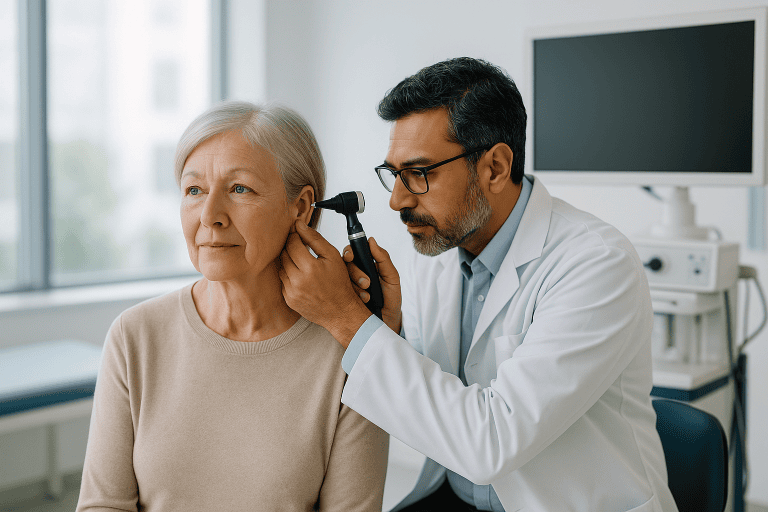
Evaluation of the nose, throat, and upper airway is commonly carried out by an ear, nose, and throat specialist. At Acibadem, the Otorhinolaryngology (ENT) department is among the units involved in assessing the airway in people with suspected obstructive sleep apnea, often working alongside sleep medicine, pulmonology, and neurology teams.
Sleep apnea treatment options
Sleep apnea treatment options depend on the type, its severity, the underlying causes, and your overall health and preferences. The goals are to keep the airway open during sleep, restore normal oxygen levels, improve sleep quality, and reduce the longer-term strain on the heart and blood vessels. Several approaches are often combined.
Lifestyle and behavioral measures. For mild obstructive sleep apnea, and as a foundation for all severities, your doctor may recommend:
- Weight loss if you are overweight, which in many cases reduces the number of breathing events and sometimes leads to marked improvement
- Avoiding alcohol and sedative medications, especially in the hours before bed
- Stopping smoking
- Positional therapy, meaning devices or techniques that discourage sleeping on your back, for people whose apnea is mainly position-related
- Treating nasal congestion with saline rinses or prescribed nasal sprays
- Keeping a regular sleep schedule and allowing enough time for sleep
Positive airway pressure (PAP) therapy. Continuous positive airway pressure, known as CPAP, is the most widely used and best-studied treatment for moderate to severe obstructive sleep apnea. A small bedside machine delivers gently pressurized air through a mask worn over the nose, or the nose and mouth, during sleep. The air pressure acts like a splint that holds the throat open. CPAP does not cure sleep apnea, but when used every night it usually eliminates most breathing events and improves daytime sleepiness. Variations include auto-adjusting PAP, which changes pressure through the night, and bilevel PAP, which uses different pressures for breathing in and out and may be chosen for people who need higher pressures or who have central sleep apnea. Mask fit, humidification, and follow-up adjustments are important, because many people need time and support to become comfortable with the device.
Oral appliances. A custom-made mouthpiece, fitted by a dentist trained in sleep medicine, holds the lower jaw slightly forward during sleep, which pulls the tongue away from the back of the throat. These devices are often considered for mild to moderate obstructive sleep apnea, or for people who cannot tolerate CPAP. They are generally less effective than CPAP for severe disease, and a follow-up sleep study is often recommended to confirm they are working.
Surgery. Surgical treatment is usually considered when there is a clear anatomical cause, when other treatments have failed or cannot be tolerated, or in children with enlarged tonsils and adenoids. Options are chosen based on where the airway collapses and may include:
- Tonsillectomy and adenoidectomy, the standard first-line treatment for most children with obstructive sleep apnea
- Nasal surgery, such as straightening a deviated septum or reducing swollen tissue, which can improve nasal breathing and CPAP comfort
- Uvulopalatopharyngoplasty (UPPP) and related palate procedures, which remove or reshape soft tissue at the back of the throat
- Tongue-base procedures that reduce tissue or reposition the tongue
- Jaw advancement surgery (maxillomandibular advancement), which moves the upper and lower jaws forward to enlarge the airway; this is a major operation generally reserved for selected people with severe disease
- Hypoglossal nerve stimulation, an implanted device that stimulates the nerve controlling the tongue so it moves forward with each breath; this is an option for certain adults with moderate to severe obstructive sleep apnea who cannot use CPAP
Surgical outcomes vary from person to person, and surgery does not guarantee that sleep apnea will resolve completely. Your surgeon will explain the expected benefits, risks, and recovery for any procedure being considered.
Medication. There is no medication that reliably treats obstructive sleep apnea itself. Some prescription medicines may be used to reduce persistent daytime sleepiness in people who remain sleepy despite good CPAP use, or to help with weight management as part of an overall plan. In central sleep apnea, treatment focuses on the underlying cause, for example optimizing heart failure treatment or reviewing opioid medications, together with PAP therapy where appropriate.
Follow-up. Whatever treatment is chosen, regular review is important. Your doctor may check how consistently you use a device, whether symptoms have improved, and whether weight changes or new medical conditions require adjustments to the plan.
Living with sleep apnea and outlook
Sleep apnea is generally a long-term condition, but it is also one that responds well to treatment in most cases. When breathing events are controlled, many people notice better energy, clearer thinking, improved mood, and more restful sleep within weeks. Bed partners often report better sleep as well once loud snoring and gasping stop.
Untreated sleep apnea is associated with a higher risk of high blood pressure, heart rhythm problems such as atrial fibrillation, heart disease, stroke, type 2 diabetes, and motor vehicle or workplace accidents related to sleepiness. It can also complicate anesthesia and surgery. Effective treatment appears to reduce some of these risks, particularly blood pressure and sleepiness-related accidents, although it does not remove all long-term risk, and the benefit depends heavily on how consistently treatment is used.
Living well with sleep apnea usually involves a few practical habits: using your CPAP or oral appliance every time you sleep, including naps and travel; cleaning and maintaining equipment as instructed; keeping follow-up appointments; and telling other healthcare providers, especially before any operation, that you have sleep apnea. If you drive or operate machinery, it is important to be honest about sleepiness and to follow local rules about fitness to drive. Weight changes in either direction, new medications, or aging may alter your treatment needs, so symptoms that return should be discussed with your doctor rather than ignored.
Prognosis varies. Some people, particularly children after tonsil and adenoid surgery or adults who lose substantial weight, may see their sleep apnea resolve or become mild. For many adults, however, sleep apnea remains a condition to be managed over the long term rather than cured, and ongoing treatment is what keeps symptoms and risks under control.
Frequently asked questions
What is sleep apnea in simple terms?
Sleep apnea is a condition in which your breathing repeatedly stops for short periods while you sleep. In the most common form, obstructive sleep apnea, relaxed throat tissue blocks the airway. Each pause lowers your oxygen level and disturbs your sleep, often without you fully waking, which is why many people feel tired despite spending enough time in bed.
What are the most common sleep apnea symptoms?
The most frequently reported sleep apnea symptoms are loud snoring, pauses in breathing noticed by a partner, gasping or choking during sleep, waking unrefreshed, morning headaches, and feeling very sleepy during the day. Not everyone has all of these, and some people, particularly women and those with central sleep apnea, may mainly notice fatigue, insomnia, or low mood rather than snoring.
What causes sleep apnea, and can thin people get it?
Sleep apnea causes include excess weight around the neck, a naturally narrow airway, a small or set-back jaw, enlarged tonsils, nasal blockage, and, in central sleep apnea, problems with the brain’s control of breathing. Excess weight is a major factor, but people of normal weight can and do develop sleep apnea, usually because of the shape of their jaw, tongue, or throat.
How is sleep apnea diagnosis confirmed?
Sleep apnea diagnosis is confirmed with a sleep study. This may be an overnight test in a sleep laboratory, which records brain activity, breathing, oxygen levels, and heart rate, or a simplified home test for selected adults. The study counts how many times per hour breathing pauses or becomes shallow, and your doctor uses this number together with your symptoms to decide whether you have sleep apnea and how severe it is.
What are the main sleep apnea treatment options if I cannot tolerate CPAP?
If CPAP is difficult, your doctor may first try to solve the problem with a different mask, added humidification, or a machine that adjusts pressure automatically, since many issues improve with these changes. If PAP therapy still is not workable, alternatives can include a custom oral appliance, positional therapy, weight loss, upper airway surgery, or, for selected adults, an implanted hypoglossal nerve stimulator. The best option depends on the severity of your sleep apnea and where your airway collapses.
Can sleep apnea go away on its own?
Sleep apnea rarely disappears without any change. It may improve or resolve in children after tonsil and adenoid removal, or in adults who lose a significant amount of weight or correct a specific anatomical problem. For most adults, it is a long-term condition that needs ongoing management, and stopping treatment usually leads to the return of breathing events and symptoms.
Is snoring the same as sleep apnea?
No. Snoring is the sound of air vibrating through a partly narrowed airway, and many people who snore do not have sleep apnea. Sleep apnea involves actual pauses or major reductions in breathing with drops in oxygen. Loud snoring combined with pauses, gasping, or daytime sleepiness makes sleep apnea more likely and is a reason to be evaluated.
When to see a doctor
It is reasonable to arrange a medical review if you or a bed partner notice loud snoring with pauses in breathing, if you frequently wake gasping or choking, or if you feel sleepy during the day even after a full night in bed. Evaluation is also advisable if you have high blood pressure that is hard to control, morning headaches, or unexplained difficulty concentrating, since these can be linked to undiagnosed sleep apnea.
Seek urgent medical care, or emergency services where available, if any of the following occur:
- Severe shortness of breath while awake, or difficulty breathing that does not settle
- Chest pain, pressure, or a very fast, irregular, or pounding heartbeat
- Sudden weakness or numbness of the face, arm, or leg, trouble speaking, or confusion, which may indicate a stroke
- Falling asleep while driving, or a near-miss or accident caused by sleepiness
- Blue or gray color of the lips or face during or after sleep
- In a child, pauses in breathing, struggling to breathe, or unusual drowsiness that is hard to wake from
If you have already been diagnosed with sleep apnea and your symptoms return despite treatment, your equipment is uncomfortable or seems ineffective, or you are planning surgery that requires anesthesia, discuss this with your doctor so your treatment plan can be reviewed.
Patient Guides for This Condition
Medically reviewed by the Acıbadem International Medical Board September 9, 2026
See our medical review board →
Update history
- PublishedSeptember 9, 2026
- Medical review approvedSeptember 9, 2026
- Last content updateSeptember 9, 2026