

Sleep Study in Turkey: Overnight Test Checklist
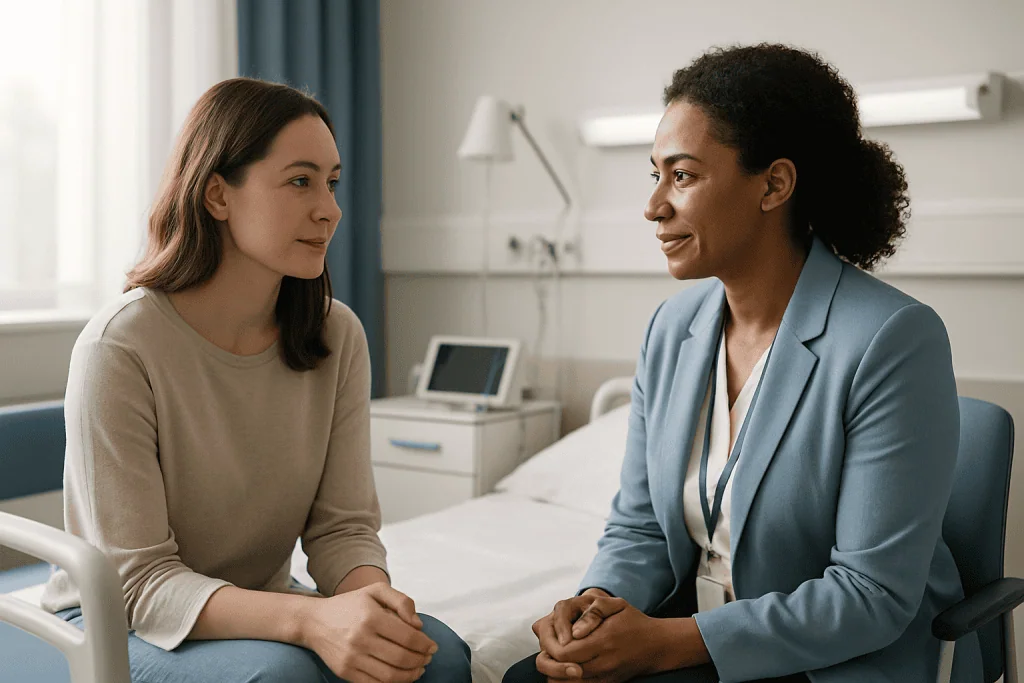
A sleep study in Turkey is a non-invasive overnight test that records your breathing, oxygen levels, heart rhythm, movements and sleep stages while you sleep in a monitored room. Preparation is mostly practical: share your medical records in advance, keep your routine normal on the day, avoid hair and skin products that loosen sensors, and pack light for a single night.
Wondering what a night in a sleep laboratory abroad actually involves, and what belongs in your bag? A sleep study in Turkey is a practical overnight test that records your breathing, oxygen levels, heart rhythm, movements and sleep stages while trained staff monitor the recording. It is non-invasive, and most of the preparation is logistical rather than medical.
This guide walks you through the whole sequence: what to send before you travel, what to pack, how to prepare your body on the day, what the night itself looks like, and how results and follow-up are usually organised for international patients within a sleep medicine service.
At a glance
- Typical setting: Overnight sleep laboratory or monitored hospital room, usually one night
- Common reason: Evaluation for suspected sleep apnea, loud snoring, daytime sleepiness or disrupted sleep
- Pain level: Non-invasive; sensors are attached to the skin, no needles are required for the recording itself
- Travel support: International patient coordination, interpreter arrangements and accommodation guidance are available
- What to bring: Two-piece sleepwear, medication list, toiletries, ID and any previous sleep or specialist reports
What a sleep study in Turkey involves and why it may be recommended
A sleep study, formally called polysomnography, is an overnight recording of what your body does while you sleep. Doctors may recommend one when a person snores loudly, wakes gasping or choking, feels unusually sleepy during the day, has morning headaches, moves excessively at night, or when a condition such as sleep apnea or another sleep disorder is suspected. The study does not treat anything by itself; it produces the detailed information a specialist needs to understand what is happening during your sleep.
The test is non-invasive. Small sensors are attached to your scalp, face, chest, abdomen, legs and a finger. Together they record brain activity, eye movements, muscle tone, airflow, breathing effort, blood oxygen, heart rhythm, body position and leg movements. Soft belts around the chest and abdomen measure how your chest wall moves as you breathe. You sleep in a private, monitored room while a technologist watches the signals from outside and adjusts sensors if one comes loose.
If you are arranging a sleep study in Turkey as an international patient, the aim is to keep the process simple: arrive with the right documents, understand the overnight routine, and know in advance how language support works.
The table below summarises what the main sensors measure. You do not need to memorise any of this: it simply helps the wires make sense when they are attached.
| Sensor or device | What it records |
|---|---|
| Scalp electrodes (EEG) | Brain activity, used to identify sleep stages and awakenings |
| Sensors near the eyes and chin | Eye movements and muscle tone, which distinguish REM from non-REM sleep |
| Nasal and oral airflow sensors | Air moving in and out as you breathe |
| Chest and abdominal belts | Breathing effort and how the chest and abdomen move |
| Finger probe (pulse oximeter) | Blood oxygen level and pulse through the night |
| Chest electrodes (ECG) | Heart rhythm during sleep |
| Leg sensors | Leg movements, relevant to conditions such as periodic limb movements |
In-laboratory testing versus home-based testing
Not every sleep question needs a full laboratory night. Some patients are assessed with a simplified home sleep test that measures breathing and oxygen with fewer sensors, while others need the complete in-laboratory recording described in this guide. The choice depends on your symptoms, your medical history and what the specialist is trying to rule in or out. In-laboratory polysomnography records more signals and is attended by staff overnight, which is why it is often preferred when the picture is complex or when conditions other than straightforward breathing pauses are being considered.
If your evaluation focuses specifically on breathing pauses during sleep, our guide to sleep apnea testing in Turkey describes that pathway in more detail, including how the consultation before the test usually runs. For sleep concerns with a neurological component, such as unusual behaviours during sleep or suspected narcolepsy, assessment may sit within neurological sleep medicine, and the study protocol may be adapted accordingly.
Before you travel: documents, reports and appointment planning
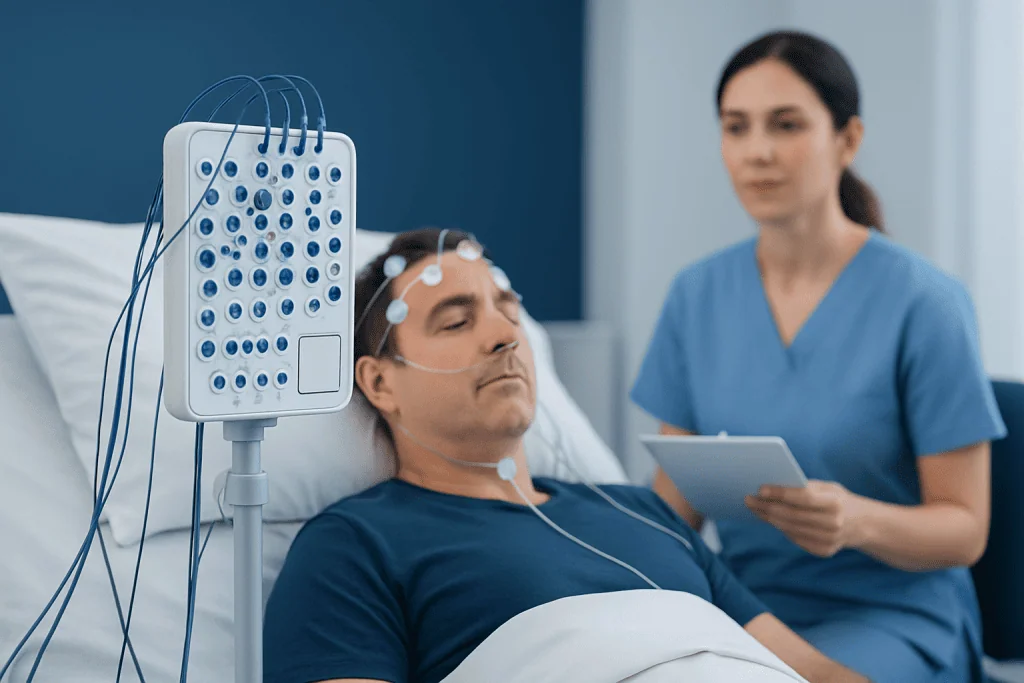
Good preparation begins before you leave home. The clinical team will usually ask for your medical history, a description of your current symptoms, previous sleep reports if any exist, and details of relevant diagnoses such as high blood pressure, heart rhythm concerns, lung disease, diabetes or neurological conditions. This background helps the specialist decide whether a standard overnight study is appropriate or whether the protocol needs adjusting.
A clear medication list matters just as much: sleeping tablets, antidepressants, blood pressure medicines, allergy medicines, inhalers and supplements can all be relevant to how a recording is interpreted. Decisions about whether any medication should be adjusted before the test belong to your treating doctor, do not change anything on your own initiative. Bringing the list in writing, with doses and timing, saves a lot of back-and-forth on the night.
Practical points worth confirming before you fly include the hospital location and check-in time, how interpreter support will be arranged, whether a companion may accompany you, and how the test night fits into your wider itinerary. Airport transfer and hotel arrangements can usually be planned alongside the appointment, which is helpful because a sleep study occupies an evening and a morning rather than a standard daytime slot.
How the quote and paperwork side works
Because this guide is often read alongside travel planning: the arrangements for a sleep study are usually confirmed in writing before travel, based on the type of study, the room, whether interpreter support is needed and whether additional consultations or tests are planned around it. What a quote covers depends on those elements, so it is worth reading it carefully and asking what is and is not included, for example, whether the pre-test consultation and the results consultation are part of the same arrangement. There is no single fixed format, which is exactly why written confirmation matters.
Your overnight checklist: what to pack
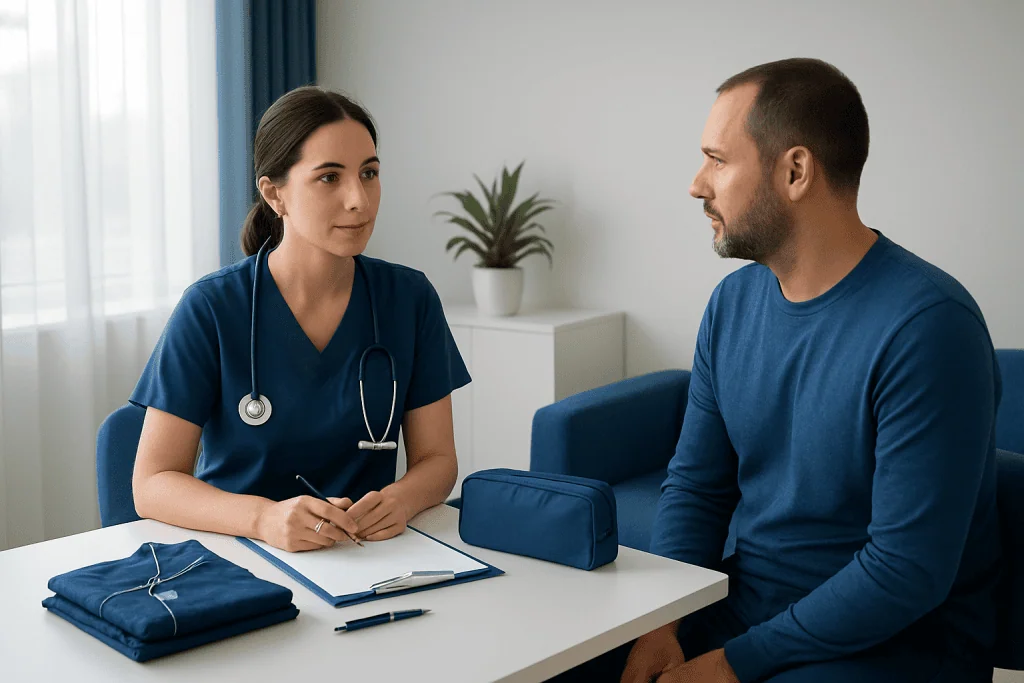
Pack as if you are staying one quiet night away from home, and keep the bag light. Two-piece sleepwear works best, because sensors and belts are placed on the chest, abdomen and legs; a one-piece nightgown makes that harder. Avoid tight clothing, heavy creams and elaborate hairstyles, scalp electrodes need reasonably clean, product-free hair to stay attached.
Bring your passport or ID, any insurance documents, your appointment confirmation, previous test results and your written medication list. If you already use a CPAP, BiPAP or an oral appliance at home, ask in advance whether to bring it: the team may want to review your device settings or observe how you sleep with your usual equipment. If you are flying with a device, our separate guide on travelling to Turkey with CPAP covers airline rules, adapters and packing in detail.
- Comfortable two-piece sleepwear and slippers
- Toothbrush, facial cleanser and personal toiletries
- Medication in original packaging where possible
- Glasses, hearing aids or mobility aids if you use them
- Phone charger and one small personal comfort item
- Previous sleep reports, imaging, blood tests or specialist letters
- CPAP or oral appliance, if the team has asked you to bring it
Leave valuables at your hotel unless they are essential. If a companion is travelling with you, clarify in advance whether they will wait at the hospital, stay nearby or return in the morning; policies vary with room type and medical need, so it is better to know before arrival than to negotiate at check-in.
The day of the test: preparing your body and routine
On the day itself, keep things ordinary unless your doctor has said otherwise. Eat your usual meals, stay hydrated and avoid long naps: a heavy afternoon sleep can make it harder to fall asleep during the recording, and the study works best when your night resembles a typical one.
Avoid alcohol and recreational substances before the test, as they change breathing and sleep patterns and can distort the recording. Caffeine also interferes with sleep, so ask your care team when to stop coffee, tea, energy drinks or cola. If you drink caffeine every day, say so: an abrupt, unplanned caffeine stop is itself a change worth mentioning, and the team can advise on timing.
Wash your hair and skin before arrival and skip hair oil, gel, heavy conditioner, body lotion and makeup. Clean, dry skin is what keeps sensors attached until morning. If you have sensitive skin, an adhesive allergy or a skin condition, tell the staff before the electrodes go on so they can adjust materials or placement.
What happens when you arrive at the sleep laboratory
On arrival you check in, confirm your identity and meet the sleep laboratory staff. If interpreter support has been arranged, the interpreter helps with instructions, consent forms and any questions. Expect questions about your usual bedtime, symptoms, medication taken that day, alcohol and caffeine intake, and whether anything about the day was out of the ordinary: an unusually stressful day or a long flight is worth mentioning.
After you change into sleepwear, the technologist attaches the sensors one by one: scalp, face, chest, abdomen, legs and finger, plus the breathing belts. Setup is careful and unhurried, and it takes longer when instructions pass through an interpreter, so arrive with time to spare rather than straight from a taxi.
Once recording begins, sleep in your usual position as far as the wires allow. Staff monitor from outside the room and may come in briefly to reattach a sensor. Sleeping with wires feels strange at first, and a first night in any unfamiliar bed is rarely your best night: the technologists know this, and the study is designed with it in mind. If you need the bathroom during the night, you call the technologist, who temporarily disconnects the cable bundle; you are not trapped in the bed.
Morning discharge, results and next steps
In the morning the sensors are removed, you can wash up, a little electrode paste in the hair is normal and comes out with shampoo, and you leave once staff confirm the recording is complete. You may feel more tired than usual if you slept less, so plan a gentle morning and avoid demanding activities straight after the test, especially if you are travelling alone.
The recording is then scored and interpreted by the medical team. A report typically describes breathing pauses, oxygen drops, sleep stages, awakenings, heart rhythm patterns and movements. How long interpretation takes varies with the complexity of the study and whether additional specialist review is needed, so ask at discharge when your report and results consultation are expected before you fix onward travel.
Your doctor then explains what the findings mean in your specific situation and discusses possible next steps. Depending on the results, these may include lifestyle measures, further evaluation, a CPAP or similar device assessment, an ENT review, or a dental sleep medicine opinion where an oral appliance is being considered. Reports can be shared securely with you so your home doctor has the full picture, which matters if any treatment will continue in your own country.
Fitting the test night into your travel plans
A sleep study occupies one evening and the following morning, but it rarely stands alone. Many international patients have a consultation before the test and a results discussion afterwards, and the sensible itinerary leaves room for both. Booking a flight home for the morning immediately after the test is technically possible but rarely wise: you may be short of sleep, and you lose the chance to discuss results in person if they are ready quickly.
A practical pattern for a sleep study in Turkey is to arrive at least a day before the test night, keep the day of the study calm, and hold one or two flexible days afterwards. If jet lag is significant, for example after a long-haul flight across many time zones, mention it, because a severely shifted body clock on the test night is relevant information for whoever interprets the recording.
Step by step
- Share your medical background in advance. Provide your symptoms, medical history, medication list and any previous sleep, heart or lung reports before the appointment, so the team can decide between a standard overnight study and a tailored protocol.
- Confirm logistics before arrival. Check the hospital location, arrival time, interpreter arrangements and companion policy. If you are travelling internationally, confirm airport transfer, hotel plans and how the test night sits within your itinerary.
- Prepare your body on test day. Keep meals and routine fairly normal, avoid alcohol and long naps, and ask about caffeine timing. Do not alter prescribed medication except on your doctor’s specific instruction.
- Pack for one simple overnight stay. Two-piece sleepwear, toiletries, ID, medical documents and any device you were asked to bring. Skip lotions, hair products and makeup so sensors stay attached.
- Arrive relaxed and allow setup time. Sensor placement is unhurried and takes longer with interpretation. Tell staff about skin sensitivities, mobility needs, anxiety or hearing difficulties before setup begins.
- Follow morning and follow-up instructions. Ask when and how results will be shared, keep a copy of your report, and discuss the findings with your specialist or home doctor before any treatment decision.
Your checklist
- Passport or ID and appointment confirmation
- Current medication list, including doses and timing
- Previous sleep study results, CPAP details or specialist reports
- Comfortable two-piece sleepwear and slippers
- Toiletries, glasses, hearing aids or mobility aids if needed
- Phone charger and essential personal items
- Clean hair and skin, free of oils, gels and heavy creams
- Interpreter, transport and companion arrangements confirmed in advance
- A flexible morning after the test, with no demanding commitments
Key takeaways
- A sleep study in Turkey is a non-invasive overnight recording of breathing, oxygen, heart rhythm, movements and sleep stages.
- Preparation is mostly practical: share records in advance, confirm logistics, avoid hair and skin products, and pack light for one night.
- Medication decisions belong to your treating doctor, do not adjust anything before the test on your own.
- Setup takes time and the night may feel unusual; an imperfect night of sleep still yields useful information.
- Ask at discharge when results are expected, and leave flexibility in your itinerary for the results consultation.
Frequently asked questions
Is a sleep study painful?
The recording is non-invasive and involves no needles, and most people feel no pain. Sensors are attached to the skin with adhesive or soft belts. Some people find the wires unfamiliar at first, but staff position them as comfortably as possible and adjust them during the night if needed.
Can I take my usual medication before the test?
Do not change or stop prescribed medication on your own. Bring a full written list, including sleeping tablets, antidepressants, allergy medicines, inhalers and heart or blood pressure medicines, and follow whatever instructions your treating doctor gives about the test night.
Will I be able to sleep with the sensors attached?
Most people sleep somewhat differently in a laboratory, and that is expected. A perfect night is not required for the study to provide useful information. Staff monitor the signals throughout and reattach any sensor that comes loose, so you can focus on resting rather than on the equipment.
Should I bring my CPAP or sleep apnea device?
If you already use CPAP, BiPAP or an oral appliance, tell the team before your appointment and ask whether to bring it. Device details and current settings can be helpful even if the device is not used during the study. There are also practical airline and adapter points to plan if you fly with a machine.
Can my companion stay with me during the sleep study?
This depends on hospital policy, room type and your medical or mobility needs. Clarify it before arrival so you know whether your companion will wait, stay nearby or return in the morning. For international patients this is normally settled as part of appointment planning.
How soon will I get my results?
Timing varies, because the recording has to be scored and interpreted by the medical team, and complex studies take longer. Ask at discharge when your report and results consultation are expected, and avoid booking tight onward travel until you know.
Can I fly home the day after the test?
Physically, most people can, but it is rarely the best plan. You may be short of sleep, and leaving immediately means the results discussion happens remotely rather than in person. Holding one or two flexible days after the test night usually makes the trip smoother.
Is interpreter support available for a sleep study in Turkey?
Interpreter support is commonly arranged for international patients, but it should be requested before the visit so it is in place for consent forms, sensor setup and the results discussion. Language support is normally organised as part of the overall appointment planning.
Add us as a Preferred Source to see more of our trusted health content across Google Search, AI Overviews and Discover.

Update history
- PublishedJune 16, 2026
- Medical review approvedSeptember 13, 2026
- Last content updateSeptember 12, 2026
References3
- Polysomnography: MedlinePlus Medical Encyclopedia medlineplus.gov
- Sleep Study (Polysomnography): Cleveland Clinic my.clevelandclinic.org
- Sleep apnoea: NHS nhs.uk
More Patient Guides
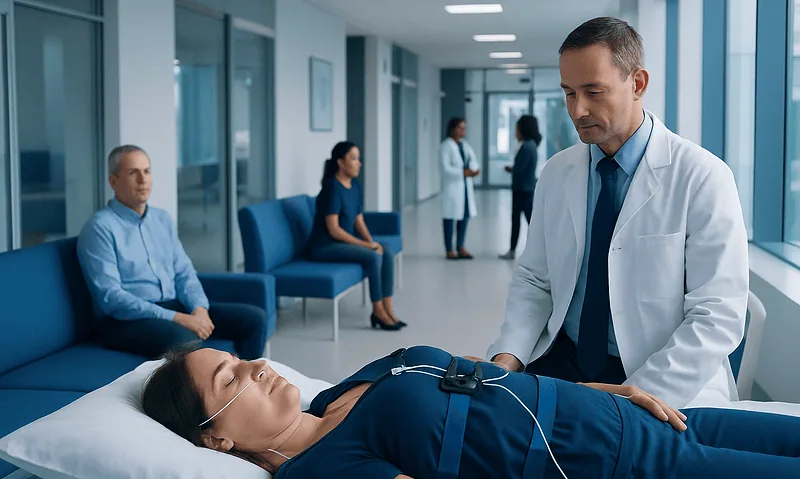
Sleep Apnea Testing in Turkey: What Happens During Your Evaluation
Sleep apnea testing in Turkey may include a consultation, overnight sleep study or home test, and a clear review of your results…

How to Organize Your Test Results Before Traveling to Turkey
Organize your test results before traveling to Turkey by sorting records, images, medicines and timelines so your Istanbul care team can review…

When Extra Tests Are Needed Before Treatment in Turkey
Extra tests before treatment in Turkey may be needed to confirm diagnosis, timing, and safety. Here is what you can expect in…

At Acibadem, How to Prepare for Blood Tests, Scans, and Pre-Op Checks
Blood tests, scans, and pre-op checks at Acibadem in Turkey help confirm you are ready for treatment and avoid delays on the…