Wisdom Teeth
Wisdom teeth treatment usually involves monitoring or removing third molars that are impacted, painful, infected, or crowding other teeth. Evaluation includes dental examination and imaging to plan safe extraction.
Quick answer
Wisdom teeth removal is the extraction of one or more third molars, usually because they are impacted, repeatedly infected, decayed or damaging the neighbouring tooth. Under local anaesthetic, sometimes with sedation, the dentist or oral surgeon loosens the tooth or surgically frees it, occasionally dividing it into sections. Most extractions are outpatient procedures; early healing takes days to weeks, while bone remodelling continues for months.
Wisdom Teeth Removal: What It Involves and When It Matters
Wisdom teeth removal is the extraction of one or more third molars: the last teeth to develop, positioned at the very back of the mouth. It is usually recommended when a wisdom tooth is impacted, repeatedly infected, decayed beyond predictable repair, or damaging the tooth next to it. It is one of the most common oral surgical procedures, carried out either as a simple extraction when the tooth is visible in the mouth, or as a surgical extraction when the tooth is trapped under gum tissue or bone.
Wisdom teeth can feel like a minor dental matter until they begin to cause pain, swelling, infection or pressure on other teeth. For many people, these third molars emerge in late adolescence or early adulthood, often at a point when the jaw no longer has enough space to accommodate them comfortably. Some come through normally and need only routine monitoring. Others remain trapped under the gum or bone, grow at an angle, or erupt partially, creating pockets that are difficult to clean and prone to repeated inflammation.
If you are weighing up wisdom teeth removal, you are probably trying to answer a short list of practical questions. Is removal truly necessary, or can the tooth be left alone? How complex will the procedure be? What are the risks, and what will recovery actually feel like? These are reasonable concerns, and the honest answer to each of them depends on careful diagnosis: the position of the tooth, its relationship to nearby nerves and sinuses, your general health, and the pattern of your symptoms. There is no single answer that fits every mouth.
The decision matters because a problematic wisdom tooth can affect far more than the tooth itself. Impacted or infected third molars may contribute to gum disease around the second molars, cavities in areas a toothbrush cannot reach, jaw discomfort, cyst formation, and recurrent infections that interfere with eating, sleep and work. A well-planned evaluation establishes whether observation, preventive care or extraction is the safest and most appropriate path, and, just as importantly, when.
At Acibadem, wisdom teeth care is treated as a planned clinical decision rather than a routine appointment. Dental and oral surgery teams review symptoms, imaging findings, medical history and patient expectations before recommending treatment. This planning stage helps align treatment timing, recovery and follow-up with the realities of an individual case rather than a standard template.
What Are Wisdom Teeth?
Wisdom teeth are the third molars: four teeth, one in each back corner of the mouth, that develop later than every other permanent tooth. In terms of dental anatomy, they are ordinary molars in structure, a crown, a root system, an enamel surface, but their timing and their position set them apart. By the time they attempt to erupt, the rest of the dental arch is already established, and in many jaws there is simply not enough room left. The name varies from language to language; in some non-English sources you may see them written as akal teeth, a transliteration of the Turkish term, but the teeth in question are the same third molars. Among dentists, wisdom teeth have a well-earned reputation as the most frequent source of tooth-related trouble in early adulthood, precisely because so many of them run out of space before they finish erupting.
Does everyone have wisdom teeth?
No, not everyone develops wisdom teeth, and among those who do, not everyone develops all four. Some people are born without one or more third molars, a normal anatomical variation rather than a problem. Others have all four teeth present in the jawbone but never see them erupt, because the teeth remain fully impacted beneath gum and bone. A panoramic X-ray is the reliable way to find out what your own situation is: it shows whether the teeth exist, how developed their roots are, and whether they have a realistic path into the mouth. It is entirely possible to reach middle age without knowing you carry an unerupted wisdom tooth, which is one reason routine dental imaging occasionally produces surprises.
When do wisdom teeth come in?
Wisdom teeth typically come in between the ages of about 17 and 25, which is later than every other permanent tooth and the origin of their name: they arrive at the supposed age of wisdom. Eruption is not a single event: the crown may break through the gum months or years before the roots finish forming, and some teeth begin to erupt, stall, and never fully emerge. Others shift position slowly over years. Because development continues into the mid-twenties, a wisdom tooth that looks harmless at eighteen can look quite different on an X-ray taken at twenty-five, which is why dentists often recommend periodic review rather than a one-off assessment.
What Wisdom Teeth Treatment Involves
Wisdom teeth treatment covers the assessment, monitoring and, when necessary, removal of the third molars. These teeth may erupt fully, erupt partially, or remain impacted beneath the gum or within the jawbone, and each of those situations calls for a different response. Treatment is therefore not a single procedure but a decision-making process that begins with examination and imaging and ends, in some cases, with extraction.
Not every wisdom tooth must be removed. If a wisdom tooth is fully erupted, healthy, easy to clean, correctly positioned and not affecting nearby teeth, it can simply be monitored during routine dental visits like any other molar. Removal becomes the recommendation when a wisdom tooth is painful, infected, decayed, damaging the adjacent tooth, associated with gum disease, or judged likely to cause predictable future problems. In classification terms the procedure is straightforward: it is the dental removal of teeth that either never found a functional position or have stopped being worth preserving.
Extraction itself may be simple or surgical. A simple extraction is generally possible when the tooth is visible in the mouth and can be loosened and delivered without extensive manipulation. A surgical extraction is required when the tooth is impacted, covered by gum tissue, partly enclosed in bone, angled toward the neighbouring tooth, or located close to important anatomical structures: the inferior alveolar nerve in the lower jaw, or the maxillary sinus in the upper jaw. Surgical cases involve an incision, sometimes controlled removal of a small amount of bone, and often division of the tooth into sections so it can be removed through a smaller opening.
The goal of treatment is consistent regardless of technique: relieve symptoms, remove the source of recurrent infection or damage, protect the health of the adjacent teeth and gums, and perform the procedure with careful attention to comfort and safety. Depending on complexity and the patient’s medical background, treatment may involve local anaesthesia alone, sedation options planned with dental anaesthesiology input, or, in selected cases, a hospital-based setting, for example, for patients with complex medical histories or several procedures planned in one session.
Who May Need Wisdom Teeth Evaluation or Removal
People arrive at wisdom teeth treatment by different routes. Some have sudden pain and swelling. Others are referred after a routine dental X-ray reveals impaction they never suspected. Some have lived through repeated episodes of gum inflammation around a partially erupted tooth and want the cycle to end. Others seek evaluation before orthodontic treatment, jaw surgery, a long trip or a demanding period of life, preferring to rule out an avoidable dental emergency in advance.
Typical symptoms that may point to a wisdom tooth problem include:
- Pain at the back of the mouth, constant or intermittent
- Swelling of the gum or jaw on one side
- Difficulty opening the mouth fully
- A bad taste or odour caused by trapped debris or infection
- Bleeding or tender gums behind the last visible molar
- Pain when chewing on the affected side
- Jaw discomfort or headaches associated with the area
- Recurring inflammation that flares, settles and returns
The flare-and-settle pattern deserves particular attention. It is characteristic of partially erupted wisdom teeth, where a flap of gum tissue traps food and bacteria; the area becomes inflamed, calms down for weeks or months, and then flares again. Each episode may feel manageable in isolation, but the underlying cause does not resolve on its own.
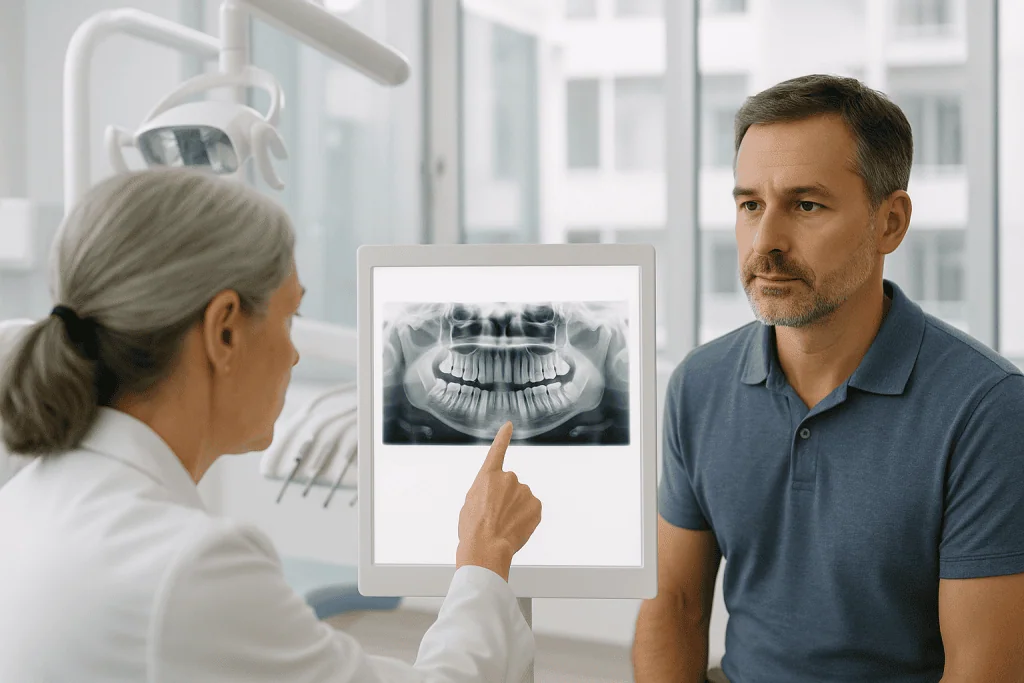
Diagnosis begins with a dental and oral examination. The clinician checks the position of the wisdom teeth, signs of infection, gum health, mouth opening, bite relationships and whether nearby teeth are affected. Imaging is an essential part of planning. A panoramic X-ray is commonly used to view all four wisdom teeth, their roots, the surrounding bone and adjacent structures in a single image. When the anatomy is more complex, roots wrapped near the nerve canal, unusual angulation, deep impaction, three-dimensional imaging may be added to map the tooth’s exact relationship to nerves, sinuses and neighbouring roots.
A careful evaluation is especially valuable for patients with medical conditions such as diabetes, bleeding disorders, heart valve disease or immune system concerns, and for those taking blood thinners, osteoporosis medications or other drugs that can influence healing. These factors rarely rule out extraction, but they do require coordinated planning; any adjustment to regular medication is a decision that belongs to the treating doctor, never something to change independently before a dental procedure.
When do wisdom teeth need to be removed?
Wisdom teeth need to be removed when they are causing disease or predictably will: acute or recurrent infection, impaction producing pain or pressure, cavities that cannot be reliably restored, decay or root damage developing on the adjacent second molar, cysts or other pathology around the tooth, gum disease in the area, or a position that makes adequate cleaning impossible. Removal may also form part of orthodontic or oral surgery planning when third molars threaten stability or access. In younger patients, extraction is sometimes considered before the roots finish developing, if imaging suggests a high likelihood of future impaction or disease, earlier surgery in these cases can be technically simpler. In adults, the decision is individualised, because root development, bone density, medical conditions and recovery considerations all shape the risk-benefit balance. A stable, symptom-free, cleanable wisdom tooth does not need removal simply because it exists.
Conditions Addressed by Wisdom Teeth Treatment
The most common indication is impaction, which occurs when the tooth cannot erupt normally because of limited space, an abnormal angle, or obstruction by bone, gum tissue or another tooth. An impacted tooth may stay silent for years, but it can also contribute to infection, periodontal problems or slow damage to the second molar it presses against. Impaction comes in degrees: a tooth may be fully buried in bone, covered only by soft tissue, or tilted so that part of the crown emerges while the rest remains trapped, and the degree strongly influences how the tooth is removed.
Partial eruption is the second major reason for treatment. When only part of the crown emerges, bacteria collect beneath the overlying gum flap, and the result can be pericoronitis: a painful inflammation or infection around the crown of the tooth. Symptoms may include swelling, a bad taste, difficulty chewing and, in some episodes, fever or limited mouth opening. Antibiotics can help control a significant infection temporarily, but they treat the episode, not the anatomy; recurrent pericoronitis usually ends only when the source is removed.
Wisdom teeth also decay, and often earlier than other molars. Because they sit at the very back of the mouth, cleaning them properly is difficult even for people with disciplined oral hygiene. Cavities in wisdom teeth can be hard to restore predictably with dental fillings, particularly when the tooth is partially erupted or awkwardly angled, and decay can also develop on the back surface of the second molar where a tilted wisdom tooth creates a food trap. In that scenario, the wisdom tooth endangers a tooth genuinely worth keeping, often the deciding argument for extraction.
Other indications include gum disease behind the second molar, cysts or benign lesions arising from the tooth follicle, orthodontic concerns, preparation for prosthetic or restorative dental work, and persistent jaw discomfort once other causes have been excluded. Treatment decisions rest on the overall clinical picture rather than imaging alone. A wisdom tooth that looks dramatic on an X-ray may still be monitored if it is stable and low risk, while a tooth that looks unremarkable may need removal because it is repeatedly infected or quietly damaging its neighbour.
How Wisdom Teeth Removal Is Performed
Preparation and treatment planning
Preparation begins with a consultation. Your dentist or oral and maxillofacial surgeon reviews your symptoms, dental history, general medical history, current medications, allergies, previous anaesthesia experiences and any relevant medical conditions. The review also settles whether one tooth or several are to be treated in the same session.
Imaging defines the safest approach. A panoramic X-ray is often sufficient for straightforward cases. When the wisdom tooth sits close to the nerve canal in the lower jaw, has unusual root shape, is deeply impacted, or lies near the sinus in the upper jaw, three-dimensional imaging may be recommended. It lets the clinician examine the tooth from multiple angles and plan the incision, the extent of any bone removal, the way the tooth will be sectioned, and its path of removal with far greater precision.
Before the procedure you receive instructions matched to the planned anaesthesia. For local anaesthesia alone, eating instructions differ from those for sedation or general anaesthesia; if sedation is used, fasting is usually required and you will need an escort afterwards. Patients who smoke are usually advised to stop before and after extraction, because smoking increases the risk of delayed healing and dry socket. Questions about regular medication are worked through with the treating team rather than resolved on your own.
What happens during the procedure
On the day of treatment, the sequence is deliberately methodical:
- The clinical team confirms the treatment plan, reviews consent, verifies the tooth or teeth to be treated and answers final questions.
- Local anaesthetic is administered to numb the area. Many patients remain awake and comfortable, feeling pressure and movement but not sharp pain. Sedation options may be added for anxious patients, complex surgical extractions or multiple teeth, according to medical suitability.
- For an erupted tooth, the clinician loosens it gently and removes it with instruments designed to widen the socket and deliver the tooth with controlled force.
- For an impacted tooth, the surgeon makes a small incision in the gum. A limited amount of bone may be removed to expose the crown, and the tooth is often divided into sections so it can come out through a smaller opening with less pressure on surrounding structures.
- The socket is cleaned and inspected, and stitches are placed if needed. Some dissolve on their own; others are removed at a follow-up visit.
- You bite gently on gauze while the initial blood clot forms, and you are observed before going home or back to your accommodation the same day.
How long does wisdom teeth removal take?
A single, fully erupted wisdom tooth can often be removed in a matter of minutes once the area is numb, while a deeply impacted tooth or a session treating multiple teeth can take considerably longer, sometimes an hour or more of surgical time. Duration depends on the number of teeth, their position, root shape, bone density and the complexity of impaction, plus the time needed for anaesthesia to take effect and for post-procedure observation. It is realistic to plan for the appointment as a whole rather than the extraction alone. Almost all cases are completed as outpatient care, with patients leaving the same day.
How painful is wisdom tooth extraction?
The extraction itself should not be sharply painful, because the area is fully numbed with local anaesthetic before any work begins; what patients typically feel is pressure, pushing and vibration rather than pain. If anything sharp is felt, more anaesthetic can be given before continuing. The genuinely uncomfortable phase usually comes afterwards, as the anaesthetic wears off: soreness and swelling tend to build over the first day or two and then ease. This discomfort is real but generally manageable with the pain relief your clinician prescribes or recommends, cold compresses in the early hours, and rest. Surgical extractions of impacted teeth usually involve more post-operative soreness than simple extractions, which is one more reason the pre-treatment assessment matters: it tells you what to expect for your specific tooth, not the average one.
Technology that supports safety and precision
Modern wisdom teeth treatment relies on accurate imaging, careful surgical planning and appropriate anaesthesia monitoring. Digital dental imaging shows tooth position, root development, bone levels and the condition of adjacent teeth; three-dimensional imaging is particularly useful when lower roots approach the inferior alveolar nerve or when an upper tooth sits close to the sinus floor. This information lets the clinician choose an approach that minimises unnecessary tissue trauma and supports a more predictable recovery. During the procedure, technique does the quiet work: tooth sectioning, controlled bone removal, irrigation to protect bone from heat, and gentle soft-tissue handling all aim to remove the tooth while protecting everything around it. When sedation is used, monitoring equipment tracks vital signs throughout, and in hospital-based settings additional medical support is available for patients with complex health needs. Technology does not replace clinical judgement: it sharpens it, and it makes the conversation about risks and options more concrete.
Recovery After Wisdom Teeth Removal
Recovery begins the moment the tooth is out. A blood clot forms in the socket, and that clot is the foundation of healing, protecting it is the single most important task of the first days. You will usually bite gently on gauze for a period to control bleeding, and mild oozing during the first day can be normal. Swelling typically develops over the first 24 to 48 hours and then gradually improves; bruising, when it occurs, follows a similar arc.
Standard advice for the early phase: rest on the day of the procedure, avoid strenuous activity for a short period, eat soft foods, drink plenty of fluids, and avoid straws, because suction can dislodge the clot. Gentle dental hygiene matters from day one, but brushing directly over the surgical site should wait initially; your clinician may recommend warm salt-water rinses after the first day, depending on the case. If antibiotics are prescribed, they should be taken exactly as directed. Smoking should be avoided throughout early healing, as it markedly raises the risk of dry socket and slow healing.
How long does it take for wisdom teeth to heal?
Most people are through the uncomfortable phase within the first week and back to normal routines soon after, but complete healing of the socket is a longer, layered process: gum tissue closes over weeks, while the bone beneath remodels over several months. The complexity of the extraction matters: a simple extraction of an erupted tooth generally heals faster than a surgical extraction involving bone removal, as does your personal healing response, age and general health. The pattern below reflects a typical course:
| Time Period | What Patients Can Expect |
|---|---|
| Day 1 | Numbness wears off over several hours. Mild bleeding or oozing can occur. Rest, soft foods, cold compresses and careful biting on gauze may be recommended. |
| First Week | Swelling and bruising may peak early and then improve. Discomfort usually becomes easier to manage. Patients should avoid strenuous activity, smoking, straws and anything that disturbs the socket. |
| First Month | Gum tissue continues to close and tenderness decreases. Most daily routines are usually resumed, although deeper sockets may still feel as if they are filling in gradually. |
| Longer Term | Bone remodelling continues beneath the gum. The area typically becomes easier to clean, and the risk related to the removed wisdom tooth is eliminated. |
What to eat after wisdom teeth removal?
Stick to soft, cool or lukewarm foods for the first days: yoghurt, smooth soups that are not hot, mashed potato, scrambled eggs, porridge, well-cooked pasta, smoothies eaten with a spoon rather than drunk through a straw. Avoid anything that fights back, crunchy, hard, chewy or sharp-edged foods, as well as very hot dishes, spicy food, and small seeds or grains that can lodge in the socket. Alcohol is best avoided during early healing. As tenderness fades over the following days, you can step up gradually to firmer textures, chewing on the opposite side at first. There is no prize for rushing; the socket will tell you what it is ready for.
How long after wisdom teeth removal can I eat?
You can usually eat soft food on the same day, but the sensible rule is to wait until the numbness has fully worn off before chewing anything, with a numb lip, cheek or tongue it is surprisingly easy to bite yourself without noticing. In the first hours, cool fluids and very soft foods are the safest choice, keeping everything away from the extraction site itself. From there, the progression is gradual: soft foods for the first days, then a step-by-step return toward your normal diet as comfort allows.
One practical difference between wisdom teeth and other extractions is what happens afterwards. When a front tooth or a chewing molar is lost, replacement is usually part of the plan: the guide on dental implants after tooth extraction explains that timing and process. Wisdom teeth are the exception: because they sit beyond the functional bite and their removal frees rather than compromises the arch, they are not normally replaced. The socket heals, the bone remodels, and the area simply becomes easier to keep clean.
Why Acting Early Matters
Wisdom teeth problems tend to develop gradually. A tooth may be partially erupted and only mildly uncomfortable at first, then become repeatedly infected. A wisdom tooth pressing against the second molar may silently create decay or periodontal bone loss long before significant pain appears. By the time symptoms become severe, treatment is often more urgent, more uncomfortable and more complicated than it would have been earlier.
Early evaluation does not always mean early extraction. It means having enough information to make a safe decision. If monitoring is the right call, your clinician can set a sensible review interval and explain which changes would justify reassessment. If removal is recommended, planning it before a severe infection develops reduces the likelihood of emergency treatment, intense swelling, limited mouth opening and disruption to work or travel plans.
Delaying genuinely necessary treatment carries real costs: recurrent pericoronitis, abscess formation, spread of infection to nearby tissues, cavities in the wisdom tooth or the second molar, gum disease behind the second molar, cyst development, and more complex surgery later. In some adults, roots become fully formed and bone denser over time, which can make extraction more technically demanding. That does not mean adults cannot be treated safely, they are, routinely, but it reinforces why individualised assessment and unhurried planning are worth more than either rushing to surgery or indefinite postponement.
Benefits of Wisdom Teeth Treatment
When wisdom teeth are causing disease, or are on a predictable path toward it, timely treatment protects oral health and reduces the chance of future complications. The benefits are concrete rather than cosmetic:
| Benefit | What It Means for You |
|---|---|
| Relief from pain and inflammation | Removing the source of pressure, infection or gum irritation can help resolve recurrent discomfort at the back of the mouth. |
| Reduced risk of repeated infection | Extraction can prevent recurring episodes of pericoronitis or abscess when a partially erupted tooth repeatedly traps bacteria. |
| Protection of neighbouring teeth | Treatment may help prevent decay, root damage or gum problems affecting the second molars next to impacted wisdom teeth. |
| Improved ability to clean the area | Removing a poorly positioned tooth can eliminate hard-to-reach spaces where food and bacteria collect. |
| Better planning for orthodontic or restorative care | Addressing wisdom teeth may support broader dental treatment plans when third molars interfere with stability, hygiene or access. |
| Lower chance of urgent dental problems during travel | For patients who travel frequently or live far from their dentist, planned treatment can reduce the likelihood of an unexpected wisdom tooth emergency away from home. |
What are the downsides of having wisdom teeth removed?
The main downsides are the recovery period and a set of known surgical risks. Recovery means days of swelling, soreness and dietary restriction, and possibly time away from demanding work or exercise. Recognised complications include dry socket, post-operative infection, prolonged bleeding and, for lower teeth close to the nerve canal, temporary or, rarely, longer-lasting altered sensation in the lip, chin or tongue; upper extractions near the sinus carry their own small, specific risks, which is why imaging that maps these relationships is part of proper planning. There is also the opportunity-cost question: removing a healthy, well-positioned, cleanable wisdom tooth exposes you to surgical risk without a matching benefit. This is exactly why a good clinician distinguishes between teeth that need removal, teeth that need monitoring and teeth that need nothing at all, and is willing to recommend against surgery when the evidence points that way.
Factors That Influence Outcomes
A good result after wisdom tooth treatment depends on several clinical and personal factors, and tooth position leads the list. A fully erupted tooth with simple roots is usually straightforward to remove; a deeply impacted tooth angled toward the second molar is a different undertaking. Root shape and proximity to the lower jaw nerve influence both the surgical plan and the risk profile, and upper wisdom teeth require attention to their relationship with the maxillary sinus.
Age and stage of root development matter too. In many younger patients, bone is more flexible and roots are less fully formed, which can simplify removal. In adults, completed roots and denser bone can make the procedure more involved, though experienced oral surgery teams manage adult wisdom teeth routinely. Active infection may influence timing: sometimes an infection is brought under control before definitive treatment, while in other cases removal itself is the step that resolves the problem.
General health shapes healing. Diabetes control, immune status, bleeding risk, medication use, smoking and nutritional status all play a part. Patients taking anticoagulants, antiplatelet medications, certain osteoporosis drugs or immunosuppressive therapies need individualised planning coordinated with their treating doctors. Clear, complete communication about your health history is essential, even when the information seems unrelated to a tooth.
Technique and planning are central. Accurate imaging, careful handling of soft tissue and bone, appropriate anaesthesia and clear post-operative instructions all contribute to a smoother recovery. For impacted teeth, the ability to section the tooth and remove it in controlled pieces reduces pressure on the jaw and adjacent structures. When a tooth lies very close to the nerve, the surgeon will discuss the specific risks, temporary or, rarely, longer-lasting altered sensation, and, in selected high-risk situations, alternative surgical approaches may be considered.
Finally, aftercare belongs to you. Protecting the blood clot, avoiding smoking, following diet instructions, maintaining gentle oral hygiene, taking medications as prescribed and attending follow-up when recommended all reduce the risk of complications. The best-known complication is dry socket: a painful condition that develops when the clot is lost or fails to form properly, exposing bone in the healing socket. It is treatable once recognised, but prevention through disciplined aftercare in the first days is by far the better path.
How Wisdom Teeth Care Is Organised at Acibadem
For anyone considering oral surgery away from their usual dentist, the decision is rarely about the procedure alone; it is about assessment quality, communication and coordination. Within Acibadem’s Dental & Oral Health units, wisdom teeth care combines dental and oral surgery expertise with the broader infrastructure of a large healthcare group: a combination that matters most for patients with complex medical histories or a preference for treatment in a hospital-based environment.
The clinical approach starts from a question, not an assumption: should this tooth be monitored, or removed? Dentists and oral and maxillofacial surgeons assess symptoms, imaging findings, anatomy and medical history before recommending either path. For some patients the plan means removing one problematic tooth; for others it means treating multiple wisdom teeth in a single planned session, or controlling an infection first and scheduling definitive care when it is safer. Where a case involves additional medical considerations, heart conditions, bleeding risks, diabetes, immune concerns, medication-related healing questions, coordination with relevant specialists can be organised within the same healthcare network, including anaesthesiology input and pre-operative medical evaluation when sedation is planned.
Diagnostic pathways support that decision-making. Digital imaging and, when the anatomy warrants it, three-dimensional assessment clarify the relationship between the wisdom tooth and nearby structures, particularly valuable when lower roots approach the nerve canal or an upper tooth sits near the sinus.
The aim throughout is not to make wisdom tooth treatment feel larger than it is. It is a common procedure, but a common procedure still deserves respect for anatomy, honest discussion of risks, and a recovery plan that reflects your actual case. Organised properly, the difference is the one between a stressful dental emergency and a controlled, unremarkable treatment experience.
Making a Well-Informed Decision
A wisdom tooth decision rests on a handful of knowable facts: where the tooth sits, how its roots relate to nerve and sinus, whether it is diseased or damaging its neighbour, and what your health and schedule can accommodate. With an examination and appropriate imaging, those facts stop being guesswork. You may learn that your tooth needs nothing more than periodic review, or that removal, planned calmly at a time of your choosing, is the safer course than waiting for the tooth to choose the timing for you.
Either way, the value lies in the quality of the assessment. A wisdom tooth evaluated carefully, position mapped, risks named plainly, alternatives discussed, leads to a decision you can trust, whether that decision is surgery this month, monitoring this year, or simply leaving a well-behaved tooth alone.
Preparation
- A dentist or oral and maxillofacial surgeon examines the mouth and reviews panoramic X-rays or other imaging. Patients should share medical history, medications, allergies, and any bleeding disorders. If sedation or general anesthesia is planned, fasting and escort instructions may be given.
Aftercare
- Bite gently on gauze, use prescribed pain relief, and apply cold compresses as advised. Avoid smoking, straws, hard foods, and vigorous rinsing for the first days to reduce the risk of dry socket. Follow-up may be recommended if swelling, fever, worsening pain, or bleeding occurs.
Frequently Asked Questions
What affects the cost of wisdom teeth removal?
The main factors are tooth position, impaction severity, imaging needs, infection status, anaesthesia or sedation choice, specialist involvement, and whether care is delivered in a clinic or hospital setting. Travel and support services may also affect the overall cost for international patients.
How can I get a personalised quote for wisdom teeth treatment in Turkey?
You can request a free consultation by sharing your symptoms, dental history, and any available dental imaging. A specialist team can review the case, advise whether monitoring or extraction is appropriate, and prepare a personalised estimate based on your treatment plan.
Is imaging always needed before wisdom tooth extraction?
A dental examination is always important, and imaging is commonly used to understand root shape, tooth angle, bone position, and the relationship to nerves or sinus areas. The specialist decides which imaging is necessary for safe planning.
Does the quote usually include sedation or anaesthesia?
This depends on the planned approach. Local anaesthesia may be part of routine extraction, while sedation or hospital-based anaesthesia may be quoted separately or included in a package. The care team should clarify exactly what is included before treatment.
Can international patients complete evaluation and treatment in one trip?
In many cases, consultation, imaging, and extraction can be coordinated within a planned visit, but this depends on infection, case complexity, and recovery needs. A pre-travel review helps confirm whether the schedule is realistic.
Is wisdom teeth removal always necessary?
No. Some wisdom teeth can be monitored if they are healthy, accessible for cleaning, and not causing damage or symptoms. Removal is usually considered when there is pain, infection, impaction, cyst risk, decay, gum problems, or harm to nearby teeth.
Medically reviewed by the Acıbadem International Medical Board September 13, 2026
See our medical review board →
Update history
- PublishedJune 8, 2026
- Medical review approvedSeptember 13, 2026
- Last content updateSeptember 12, 2026
References2
- Wisdom tooth removal nhs.uk
- Wisdom Teeth Removal my.clevelandclinic.org
Trusted care for international patients
From the Acibadem Blog

How Long Does Wisdom Teeth Removal Take? In the Chair and in Recovery
Wisdom teeth removal usually takes 20 to 60 minutes of actual surgery. A single, fully erupted tooth can come out in a few minutes,…
Does Everyone Have Wisdom Teeth? The Evolution Happening in Your Jaw
No. While most adults develop four wisdom teeth, research suggests that between 5% and 37% of people, depending on ancestry, never form one or…
Simple vs Surgical Wisdom Teeth Removal: How the Approach Depends on the Tooth’s Position
A simple wisdom tooth extraction is used when the tooth has fully erupted and can be loosened and lifted out with hand instruments. A…
What to Eat After Wisdom Teeth Removal: A Day-by-Day Menu
For the first 24 hours after wisdom teeth removal, stick to cool liquids and smooth foods such as yogurt, applesauce, and lukewarm broth. Add…
When Do Wisdom Teeth Come In, and Why So Late?
Wisdom teeth, the third molars, most often come in between ages 17 and 21, though anywhere from the late teens to about…
Why Do We Have Wisdom Teeth? A Leftover From an Older Menu
Wisdom teeth are third molars inherited from human ancestors whose coarse, uncooked diets demanded extra grinding power and larger jaws. As cooking and softer…