

Flying After Wisdom Teeth Removal: Timing Your Return Trip Around the Healing Socket
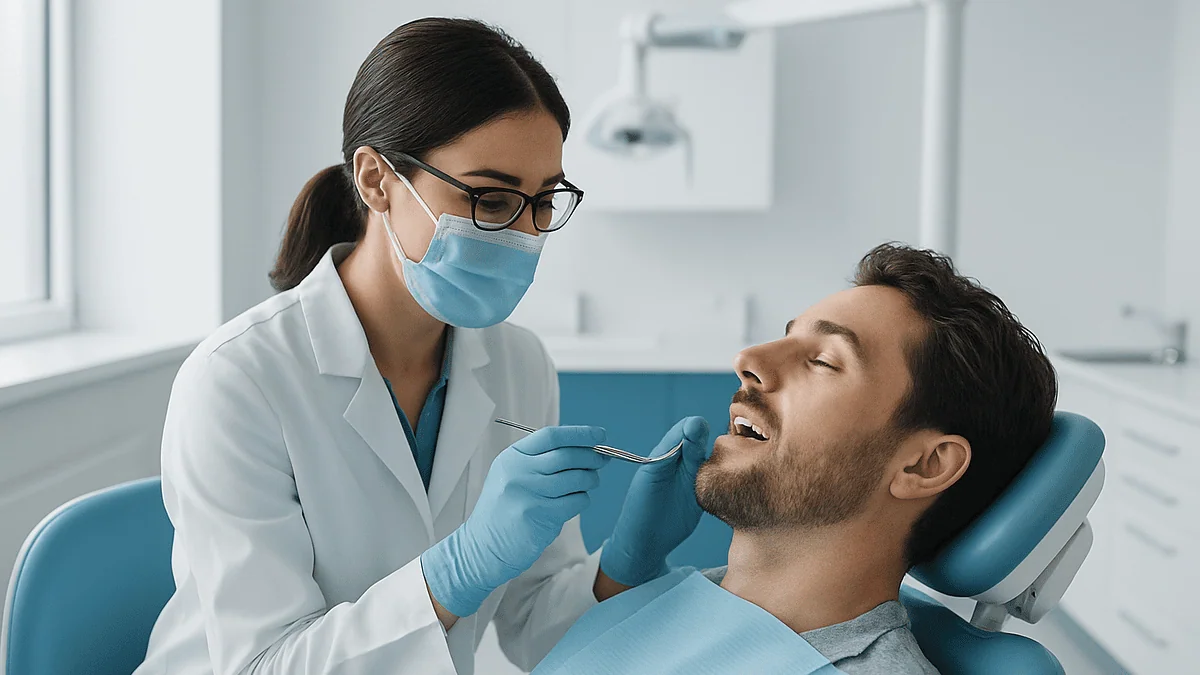
Key Takeaways
- Cleveland Clinic places the peak window for dry socket at three to five days after extraction, which is why many surgeons prefer patients stay within reach of care through that period.
- Cabin pressure does not dislodge a socket clot; the CDC notes cabins are pressurized to roughly 6,000 to 8,000 feet, and a clot-filled socket contains no air pocket for that change to act on.
- The NHS advises against traveling home unaccompanied or making important decisions on the day of a general anesthetic, which effectively rules out same-day flights after sedated extractions.
- The CDC identifies travel of more than four hours and recent surgery as factors that raise deep vein thrombosis risk, so ankle exercises, aisle walks and steady hydration matter on long flights.
- Upper wisdom teeth sit near the maxillary sinus, and a socket that communicates with that air space is the one situation where ascent and descent may genuinely cause pressure discomfort.
- Pain that improves and then returns sharply around day three, rather than pain that is simply severe on day one, is the pattern that should delay a departure and prompt a call to the surgeon.
Most dental sources describe the first 24 hours after wisdom tooth removal as the period for bleeding control and the first three to five days as the window when dry socket most often appears, so many clinicians suggest waiting at least a few days before flying and a week or more after a complex extraction. Cabin pressure itself does not dislodge a clot, but travel timing, pain control and access to follow-up matter. Ask your surgeon before booking.
The boarding pass is already on her phone. The wisdom tooth appointment landed two days before the flight home from a semester abroad, and now she is sitting in the recovery chair with gauze in her cheek, asking the assistant the only question that matters to her: can I still get on that plane?
It is a more common scene than surgeons like to admit. Wisdom teeth tend to get pulled during the narrow gaps in a busy life, right before a move, a wedding, a return to campus, or the end of a work contract in another city. Flying after wisdom teeth removal is therefore less a medical curiosity than a scheduling problem with a biological deadline attached.
The honest answer is that no trial has ever randomized people to fly or stay grounded after an extraction. What exists is a well-described healing timeline, a clear picture of the complications that show up in the first week, and some sensible physiology about what a pressurized cabin does and does not do to a fresh socket. That is enough to plan around.
Why flying after wisdom teeth removal is a real question, not a fussy one
A wisdom tooth extraction leaves a socket: the bony hollow in the jaw where the root once sat. For a tooth that had already erupted, the socket may be shallow and the procedure quick. For a tooth still buried under gum or bone (an impacted tooth, meaning one that never came through properly), the surgeon usually has to cut the gum, remove a little bone and sometimes section the tooth into pieces. That is a small operation, and the body treats it as one.
Mayo Clinic describes the standard aftermath: bleeding on the first day, swelling that peaks over two to three days, bruising that can take longer to fade, and a jaw that opens stiffly for a while. None of that is dangerous. All of it is inconvenient in an airport.
The concern with air travel is less about the sky and more about the calendar. The first week is when the two problems that genuinely need a dentist tend to surface: renewed bleeding, most often in the first 24 hours, and dry socket, which Cleveland Clinic notes usually appears three to five days after the extraction. If either happens while you are between cities, the person who knows your mouth is hours away.
There is also the practical texture of travel itself. Security lines, dehydration, a cramped seat, snack food that is either crunchy or sticky, and a cabin where you cannot easily rinse or lie down. Each of those is manageable on its own. Stacked on top of a healing wound, they add up. Timing the flight so the socket has cleared its most fragile days is the single decision that reduces most of the risk.
What actually happens inside the socket during the first week
Healing after an extraction follows a predictable sequence, and understanding it makes the flying question much easier to reason about.
Within minutes of the tooth coming out, blood fills the socket and forms a clot. That clot is not debris to be cleaned away; it is the scaffold for everything that follows. MedlinePlus describes it plainly: the clot protects the exposed bone and nerve endings and gives the body a surface on which new tissue can grow. Over the next several days, the clot is slowly replaced by granulation tissue, a soft, pinkish healing tissue rich in tiny blood vessels. Gum tissue then creeps in from the edges to cover it.
The NHS puts the outer timeline at roughly two weeks for the gum to settle after wisdom tooth removal, with the bone underneath continuing to remodel for months. Stitches, if used, either dissolve on their own or are removed at a follow-up visit around a week later.
The critical window is the first three to five days. During that time the clot is present but not yet anchored by new tissue. Forceful rinsing, sucking through a straw, smoking, and vigorous spitting all create suction or turbulence inside the mouth that can pull the clot loose. That is why every post-operative leaflet bans straws and cigarettes: it has nothing to do with the liquid and everything to do with the pressure change inside the cheek.
Once granulation tissue has knitted into the socket walls, the clot is no longer a loose plug. The risk of losing it drops sharply. So when people ask how soon they can fly, the underlying question is really this: has the clot been converted into tissue yet? For most straightforward extractions, that transition is well under way by the end of the first week.
How long after wisdom teeth removal can you fly? What the evidence shows
Start with what does not exist: there is no published trial and no formal guideline that names a mandatory grounding period after a wisdom tooth extraction. Airlines do not routinely ask about dental work. The advice patients receive comes from oral surgeons applying the general healing timeline to the realities of travel.
That timeline gives a defensible framework. The first 24 hours are when Mayo Clinic says oozing is expected and when the clot is freshest; most surgeons would rather you not be at cruising altitude for it. Days three to five are the dry socket window described by Cleveland Clinic. After a week, the NHS notes that most people are past the worst of the swelling and pain, stitches are dissolving, and a follow-up check has usually happened or can happen.
Put together, a reasonable reading of the evidence looks like this:
- Same-day or next-day flights are the least advisable, particularly after sedation or a surgical extraction.
- Waiting until roughly day three to five lets you see whether pain is settling or climbing, which is the practical test for dry socket.
- Flying after a week, once a post-operative check has confirmed the socket is healing, is the most conservative and most commonly suggested approach for impacted or difficult extractions.
Notice that none of these are hard cutoffs. A single upper tooth that came out in a few minutes sits at one end of the spectrum; four impacted lower teeth removed under general anesthesia sit at the other. The right number of days depends on how much bone was removed, how the bleeding behaved, whether you have a bleeding disorder or take blood thinners, and how far you are flying. Those are questions for the surgeon who saw the socket, not for a general article.
Does cabin pressure affect a healing socket?
A commercial cabin is pressurized, but not to sea level. CDC’s Yellow Book explains that most aircraft maintain a cabin pressure equivalent to an altitude of roughly 6,000 to 8,000 feet. Air in closed spaces expands as the plane climbs and contracts as it descends, which is why ears pop and why a sealed bag of chips puffs up in the overhead bin.
That physics matters for the middle ear and the sinuses, which are air-filled cavities. It matters much less for a socket, which is filled with clot and tissue, not air. There is no gas pocket inside a normally healing extraction site for altitude to expand. The idea that cabin pressure will suck out a clot has no physiological basis; the clot is not held in by a vacuum, and the pressure change is gradual and applied evenly to the whole mouth.
Two exceptions deserve mention. Upper wisdom teeth sit close to the maxillary sinus, the air space behind the cheekbone. If the surgeon mentioned that the sinus was exposed or very close, the socket may communicate with an air-filled space, and pressure changes can be uncomfortable. Mayo Clinic’s description of airplane ear applies the same logic: trapped air plus pressure change equals pain. Ask directly whether the sinus was involved.
The second exception is barodontalgia, tooth pain triggered by pressure change. It has been described in aviators and divers and is typically linked to an existing problem such as an untreated cavity, a leaking filling or an inflamed pulp, rather than to a healthy socket. A recently treated area with lingering inflammation can, in principle, ache more during ascent and descent. This is discomfort rather than danger, but it is one more reason not to schedule a flight for the days when the site is most tender.
Dry socket and flying: the complication travelers worry about most
Dry socket, known clinically as alveolar osteitis, is what happens when the clot is lost or breaks down before healing tissue has covered the bone. Bare bone and exposed nerve endings are the result. Mayo Clinic describes the classic picture: pain that begins one to three days after the extraction, often severe, sometimes radiating to the ear, eye or neck on the same side, along with a bad taste or odor and a socket that looks empty or bony rather than filled with dark clot.
It is not an infection, though the two are often confused, and it does not usually require antibiotics. Treatment is local: the dentist flushes the socket and places a medicated dressing that eases the pain while healing catches up. That dressing frequently needs changing over several days.
Why does this matter for travel? Because dry socket is a problem that is intensely uncomfortable and almost entirely dependent on being able to see a dentist. Pain that would be a phone call and a quick visit at home becomes a crisis in a departure lounge. Cleveland Clinic lists the recognized risk factors: smoking or any tobacco use, poor oral hygiene, oral contraceptive use, a history of dry socket, and traumatic or difficult extractions, particularly of lower wisdom teeth.
Flying itself is not on that list. What flying does is compound the ordinary risks. Travelers are more likely to be dehydrated, more likely to skip gentle salt-water rinses because there is nowhere convenient to do them, and more likely to grab a straw or a cigarette in a stressful terminal. Those behaviors, not the altitude, are the real threat.
The practical implication follows: if you must travel early, the goal is to be past day five with pain trending downward. Pain that is worsening on day three is a reason to delay the flight and see the surgeon, not to board and hope.
Who is usually fine to travel soon, and who is usually asked to wait
Surgeons think about this in terms of how much was done, how the body responded, and what could go wrong at a distance. A few patterns emerge.
People who often travel with fewer concerns after a short wait:
- A single erupted tooth removed with forceps, minimal bone work and no stitches.
- Bleeding that stopped cleanly within the first hours and did not restart.
- Pain that is clearly easing by day two or three.
- A short domestic flight with a dentist reachable at the destination.
People who are commonly asked to wait longer, often a week or more, and to have a post-operative check first:
- Multiple impacted teeth, especially lower ones, where bone was removed and the gum was stitched.
- Procedures done under intravenous sedation or general anesthesia, where the NHS advises against travel on the same day and recommends an adult escort home.
- A history of dry socket or a bleeding disorder, or treatment with anticoagulant medicines (blood thinners), which raise the stakes of renewed bleeding far from care.
- Any mention by the surgeon of sinus involvement, nerve proximity or an unusually difficult extraction.
- Long-haul flights, where the CDC notes that travel lasting more than four hours is itself associated with a higher risk of blood clots in the legs.
- Smokers, whose risk of dry socket is higher and whose ability to abstain in a stressful airport is often lower than planned.
Age alone is not the deciding factor. Teenagers heal quickly but often have deeply impacted teeth; older adults may have simpler teeth but denser bone and more medications in play. The variable that predicts trouble is the complexity of the socket, and only the person who created it can grade that. Ask them where you sit on this spectrum before you look at fares.
Sedation, anesthesia and why the day of surgery is the wrong day to fly
Many wisdom tooth extractions are done with local anesthetic alone, a numbing injection that wears off over a few hours. Others use intravenous sedation, which makes you drowsy and forgetful, or full general anesthesia in a hospital setting. The NHS notes that for general anesthetic you will be asked to have someone accompany you home and to avoid driving, operating machinery or making important decisions for the rest of that day.
That guidance sits awkwardly with airport logistics. Sedation impairs balance, judgment and reaction time in ways that are easy to underestimate. Airlines and security staff can refuse boarding to a passenger who appears intoxicated or unwell, and sedation can look exactly like that. You would also be traveling during the hours when Mayo Clinic says oozing is most likely and when the numb lip and tongue make it easy to bite yourself without noticing.
Even with local anesthetic only, the first day is a poor travel day for practical reasons. Gauze needs changing, the head should stay elevated, and the standard advice is to rest and avoid exertion so blood pressure does not spike and restart bleeding. Hauling a suitcase through a terminal is exertion.
A pattern worth knowing: post-operative nausea is common after sedation, and the motion of takeoff and landing does not help. Vomiting in the first day is unpleasant in itself and can dislodge a fresh clot through the same pressure mechanism as spitting.
If the schedule truly cannot move and a flight falls within a day of surgery, the conversation to have is whether the procedure can be done under local anesthetic alone, whether a simpler tooth can be prioritized, or whether the extraction should wait until after the trip. Those are legitimate options, and a surgeon will usually prefer any of them to a sedated patient boarding a plane.
Wisdom teeth removal recovery time: what the days and weeks usually look like
Every mouth heals on its own schedule, but the shape of recovery is consistent enough that Mayo Clinic, the NHS and Cleveland Clinic describe nearly the same arc. The table below summarizes what is typical and what each phase means for travel planning. Treat it as orientation, not as a promise about your own socket.
| Phase | What is usually happening | Travel consideration |
|---|---|---|
| First 24 hours | Clot forms; oozing expected; numbness fades; swelling begins (Mayo Clinic) | Rest, head elevated, no straws or exertion; not a flying day |
| Days 2 to 3 | Swelling and bruising peak; jaw stiff; soft foods only (Mayo Clinic) | Pain should be steady or easing; worsening pain warrants a call before any trip |
| Days 3 to 5 | Highest-risk window for dry socket (Cleveland Clinic); clot converting to healing tissue | Many surgeons prefer you stay within reach through this window |
| Around day 7 | Stitches dissolving or removed; follow-up check often scheduled; most pain resolved (NHS) | Common point after which longer flights are considered reasonable for complex cases |
| Weeks 2 and beyond | Gum closed over socket; bone remodeling continues for months (NHS) | Ordinary travel; food can catch in the socket, so keep rinsing gently |
Two observations shape how to use this table. First, the direction of pain matters more than its intensity. Soreness that is bad on day one and better each day afterward is normal healing; soreness that improves and then returns sharply around day three is the pattern that needs a dentist. Second, the follow-up visit is not a formality. It is the moment a professional looks into the socket and confirms that tissue, not bare bone, is what they see. Booking the flight for after that appointment removes much of the guesswork.
Bleeding, blood thinners and long-haul flights: two different kinds of clot
The word clot carries two opposite meanings in this conversation, and travelers sometimes tangle them.
The first is the socket clot, which you want to keep. Losing it causes bleeding or dry socket. The advice here is about gentleness: no suction, no smoking, no prodding with the tongue, no aggressive rinsing for the first day.
The second is a deep vein thrombosis (DVT), a clot in a leg vein that can form during long periods of sitting. This is the one you want to avoid. The CDC notes that the risk rises with travel of more than four hours and with additional factors such as recent surgery, older age, obesity, pregnancy, estrogen-containing medicines, and a personal or family history of clots. Wisdom tooth removal is minor surgery, and the CDC’s concern is chiefly with major operations, but recent surgery of any kind is on the list, and dehydration and immobility are the modifiable pieces.
The CDC’s recommendations for reducing DVT risk on long flights are straightforward and compatible with a healing socket: stand and walk the aisle when it is safe, flex and extend the ankles and calves while seated, avoid crossing the legs for long stretches, and drink water. None of that disturbs the mouth. Compression stockings are discussed with a clinician for people at elevated risk.
The intersection that genuinely needs a doctor is anticoagulant therapy. People taking blood thinners for atrial fibrillation, a prior DVT or a heart valve are usually kept on them through dental extractions, because the risk of stopping outweighs the bleeding risk, but their sockets may ooze longer. Traveling far from care while still oozing is not a good combination. Nobody should adjust an anticoagulant around a flight or an extraction without instructions from the prescriber, and the extraction itself should be planned with that clinician in the loop.
Managing pain, swelling and dry mouth at cruising altitude
Pain after wisdom tooth removal is usually managed with over-the-counter analgesics. Nonsteroidal anti-inflammatory drugs (NSAIDs, which reduce pain and swelling by dampening the chemical signals that drive inflammation) and acetaminophen (paracetamol outside the United States) are the classes most commonly used, sometimes in combination. Some patients are prescribed a short course of something stronger after complex surgery. Which of these applies to you, and on what schedule, is a decision that belongs to your surgeon; carry their written instructions and follow them, not a stranger’s advice in the seat next to you.
Travel-specific points are practical. Keep any medicines in your carry-on, in their original labeled containers, along with the after-care sheet from the surgery. Time zone changes can quietly stretch or compress the interval between doses; set alarms to the clock the instructions assume rather than to local time. If an antibiotic was prescribed for a specific reason, finishing it as directed matters more than convenience.
Swelling is normally managed with cold packs over the cheek during the first day or two, after which Mayo Clinic notes that warmth may help stiffness. A soft gel pack in a resealable bag will pass security if it is frozen solid; melted, it counts as a liquid. Keeping your head above your heart reduces throbbing, so ask for a window seat you can lean against and resist the urge to nap flat across empty seats.
Cabin air is dry, and a dry mouth is uncomfortable around a wound and encourages bad taste and bacterial growth. Sip water steadily. Skip alcohol, which dehydrates, interacts with many pain medicines and thins the blood slightly. Skip anything through a straw for the first several days, and avoid carbonated drinks, which the NHS lists among things to avoid early because of the fizz and the temptation to swish.
Arranging follow-up when your surgeon is in one city and you are landing in another
Much of the anxiety around flying after wisdom teeth removal dissolves when the question shifts from where am I flying to who will look at my mouth if something goes wrong. Neutral, sensible planning covers most of it.
Before you leave, ask the surgical team for a written summary: which teeth were removed, whether they were impacted, whether bone was removed, what kind of stitches were used and whether they dissolve, whether the sinus or a nerve was involved, and what medicines were prescribed. This is standard information and any dentist at your destination will want it. Ask for a phone number or patient portal contact that will be answered, and ask what time zone their office keeps.
Identify a general dentist at your destination before you travel, not from an airport chair with a throbbing jaw. Most dry socket care and stitch problems fall well within general dentistry. If you are traveling internationally, the CDC’s traveler pages recommend confirming how your health coverage handles care abroad and knowing how to reach local emergency services.
Pack for the socket: a small supply of sterile gauze for unexpected oozing, a soft-bristled toothbrush, table salt for warm rinses, and the after-care sheet. Photographs of the surgical site taken on days two and three at home give a remote dentist a useful baseline if you need to send a picture later.
Schedule the flight after the post-operative check if one is planned, or ask whether that check can be moved earlier for a straightforward case. And keep one principle fixed: if pain is climbing or bleeding has restarted on the morning of departure, a change fee is cheaper than a complication managed by phone from a foreign hotel. The treating team makes that call with you; give them the chance to.
What people often get wrong about flying after wisdom teeth removal
Because this topic lives mostly in travel forums rather than textbooks, a few durable myths have taken root.
The altitude will pull the clot out. It will not. The clot is not held in place by suction, and the socket contains no air pocket for pressure to expand. What dislodges clots is straws, smoking, spitting and vigorous rinsing. Those are fully within your control at any altitude.
Flying causes dry socket. Cleveland Clinic’s list of risk factors includes tobacco, oral contraceptives, poor hygiene, prior dry socket and difficult lower extractions. Air travel is not among them. Travel raises risk indirectly, through dehydration and skipped care, not through the plane.
You must wait two full weeks no matter what. Two weeks is roughly the NHS timeline for the gum to settle, not a mandatory grounding order. Many people with simple extractions travel comfortably well before that. The right interval depends on the case.
If it is only a short flight, day one is fine. Flight length matters for DVT risk, but the first 24 hours are risky on the ground too, because of oozing and sedation. A 45-minute hop on the afternoon of surgery is still a poor idea.
Throbbing on the plane means something is wrong. Pressure changes can make any inflamed tissue ache during climb and descent, and a recently treated area is inflamed. Discomfort that eases once the cabin levels off is expected. Pain that is escalating over days is the pattern that matters.
Popping the ears will help the socket. Techniques for airplane ear equalize pressure in the middle ear and have nothing to do with the jaw. Yawning and swallowing are harmless, but forceful blowing against a pinched nose creates exactly the pressure surge inside the mouth that after-care sheets warn against.
Questions to ask your care team before you book
Surgeons answer this question every week, but they answer it best when given specifics. Bring the itinerary, not just the intention, and work through these.
- How difficult were these extractions, and does that change how long you would like me to stay nearby?
- Was bone removed, was the sinus close or exposed, and was any nerve near the roots? Should I expect pressure changes to be uncomfortable?
- What kind of stitches did you place, will they dissolve, and if not, who can remove them if I am away?
- Given the sedation I had, when do you consider me clear for travel and for normal decision-making?
- I am flying for this many hours. Does anything about my history, medicines or this surgery raise my risk of leg clots, and should I do anything beyond the standard advice to move and hydrate?
- I take these medicines, including any blood thinner or contraceptive. Does anything need to be coordinated with the prescriber before the extraction or the flight?
- What exactly should make me delay the flight on the morning of departure?
- What is the earliest my follow-up check can happen, and can it be done before I leave?
- How do I reach you or a covering colleague, and across what hours?
- If I develop dry socket or bleeding at my destination, what should I tell the dentist who sees me?
Write the answers on the after-care sheet. A surprising amount of post-operative worry comes from half-remembered instructions colliding with a stressful day; a page of specifics in your own handwriting settles most of it. The decision about when you fly remains a shared one, but it should rest on your surgeon’s read of your socket rather than on a generic number of days.
When to call your doctor
Most recoveries are uneventful, and the ordinary aches of the first few days do not need a call. Some signs do, wherever you happen to be. Mayo Clinic, Cleveland Clinic and the NHS converge on a similar list.
Contact the surgeon, or a dentist or urgent care service at your destination, promptly if you notice:
- Bleeding that does not slow after firm biting on gauze for a sustained period, or bleeding that restarts after having stopped, especially if you take a blood thinner.
- Pain that eases for a day or two and then returns sharply, particularly around days three to five, or pain that radiates to the ear or eye and is not controlled by the medicines you were given. This is the pattern of dry socket.
- A fever, or swelling that keeps increasing after day three instead of settling, which can indicate infection.
- Pus, a persistent foul taste or odor, or a socket that looks gray or bony rather than dark red.
- Difficulty swallowing or breathing, or swelling that is spreading toward the neck or floor of the mouth. These are emergency signs; seek immediate care.
- Numbness of the lip, chin or tongue that persists beyond the hours the anesthetic should last.
- Liquid passing from the mouth into the nose, or air escaping into the socket when you breathe through the nose, which suggests a connection with the sinus.
If you are on the aircraft when something concerning starts, tell the cabin crew. They cannot treat a socket, but they can arrange assistance on landing and alert ground services. Do not manage escalating pain by improvising with medicines beyond what you were prescribed or advised.
Everything in this article is orientation. The team that removed the teeth saw the sockets, knows the anesthetic used and holds your history. Their judgment about when you fly, and what to do if healing goes off course, is the one to follow.
Frequently asked questions
Can I fly after wisdom teeth removal the next day?
Most surgeons would rather you did not. The first 24 hours are when Mayo Clinic says oozing is expected and the clot is least secure, and if you had sedation the NHS advises against travel or important decisions that day. A next-day flight is possible after a very simple extraction under local anesthetic, but only with your surgeon’s agreement.
How long after wisdom teeth removal can you fly safely?
There is no fixed rule from any guideline. A common, conservative approach is to wait until roughly day five for straightforward cases, once pain is clearly easing, and a week or more for impacted or surgical extractions, ideally after a follow-up check. Your surgeon, who saw the socket, sets the interval for you.
Does flying increase the risk of dry socket?
Not directly. Cleveland Clinic’s recognized risk factors are tobacco use, oral contraceptives, poor hygiene, previous dry socket and difficult lower extractions; air travel is not one. Travel raises risk indirectly through dehydration, skipped rinses and the temptation of straws or cigarettes in a stressful terminal, all of which you can control.
Will cabin pressure make my extraction site bleed or hurt?
Pressure changes act on air-filled spaces such as the ears and sinuses, not on a clot-filled socket, so they should not cause bleeding. Inflamed tissue can ache during climb and descent and settle once the cabin levels off. Pain that keeps rising over days is a different matter and needs a dentist.
Is it safe to fly with stitches after wisdom teeth removal?
Stitches themselves are not affected by flying. Dissolving stitches typically loosen over about a week according to the NHS; non-dissolving ones need removal at a follow-up visit. If you will be away when that is due, ask your surgeon who can remove them at your destination and what to do if one comes loose early.
What about long-haul flights and blood clots after oral surgery?
The CDC notes that travel over four hours and recent surgery both raise the risk of deep vein thrombosis in the legs. Wisdom tooth removal is minor surgery, but the standard precautions still apply: walk the aisle when safe, flex the ankles regularly, avoid crossing the legs for long periods and drink water. Discuss compression stockings if you have other risk factors.
Can I take my pain medicine on the plane?
Yes, in the original labeled containers, in your carry-on, alongside the surgeon’s written instructions. Follow the schedule they gave you rather than local time when crossing zones, and set alarms. Avoid alcohol, which dehydrates and interacts with many analgesics. Any change to what you take or when belongs to the prescribing clinician.
What is the wisdom teeth removal recovery time before normal travel?
The NHS describes roughly two weeks for the gum to settle, with most pain and swelling resolving within the first week and bone remodeling continuing for months. Ordinary travel is usually comfortable well before the two-week mark for simple extractions. Complex surgical cases often warrant waiting for the one-week follow-up check first.
Should I delay my extraction until after my trip instead?
Often that is the cleanest option, and surgeons frequently prefer it when a flight falls within a few days of the planned surgery. Delaying carries its own considerations if the tooth is infected or painful, so it is a judgment call. Bring the itinerary to the consultation and let the team weigh both timelines.
What should I do if I develop severe pain at my destination?
Contact the surgeon’s office for advice and see a local general dentist promptly; dry socket is treated with cleaning and a medicated dressing that any dentist can place. Take your written surgical summary and photographs of the site. If you have fever, spreading swelling, or trouble swallowing or breathing, seek emergency care immediately.
References
- NHS: Wisdom tooth removal
- Cleveland Clinic: Dry socket (alveolar osteitis)
- CDC: Blood clots and travel
This article is for general information only and is not a substitute for professional medical advice. Please consult a qualified doctor about your individual situation.

More from the Blog

When Composite Bonding Chips or Stains: Repair, Polish or Replace?
A chipped composite bonding can often be repaired by adding fresh resin to the existing material after the dentist roughens and re-bonds the surface,…
Who May Suit Teeth Veneers? Bite, Enamel Thickness and Grinding Habits Explained
People most often considered for teeth veneers have healthy gums, little or no untreated decay, enough natural enamel to bond to, and a bite…

Laser Dentistry Myths: Does a Laser Replace Every Drill and Every Injection?
No. Dental lasers can remove some decay, reshape gum tissue and treat certain gum pockets, and research suggests they may reduce the need for…

Eating After a Tooth Extraction: Soft Foods, Straws to Avoid and Getting Back to Normal
After a tooth extraction, most people eat cool or lukewarm soft foods for the first 24 hours, move to semi-soft foods over the next…

How Gum Graft Surgery Treats Gum Recession: Where the Tissue Comes From and How It Is Placed
A gum graft procedure treats gum recession by moving a small piece of soft tissue onto the exposed root and thin gum margin so…

The First Weeks With Porcelain Veneers: Adjusting Your Bite, Speech and Sensitivity
In the first weeks with porcelain veneers, a slightly different bite, softer or hissier s sounds, and sensitivity to cold are common while the…