

General Anesthesia in Turkey: How to Prepare and What Happens Before You Sleep

General anesthesia keeps you unconscious, unaware and continuously monitored while your operation takes place. Before you sleep, an anesthesiologist reviews your health, confirms fasting and consent, places a cannula and attaches monitors. For international patients, general anesthesia in Turkey usually adds two steps: a record review before travel and an in-person anesthetic assessment after arrival, plus time for follow-up before flying home.
This guide explains what general anesthesia is, how the anesthetic team prepares you, what happens in the minutes before you go to sleep, and what waking up feels like. It also covers the parts that only matter when you travel: record reviews before you fly, the in-person assessment after arrival, and why your departure date should not be fixed around the operation date alone.
At a glance
- Procedure type: Supportive anesthetic care used across many operations, not a treatment in itself
- Purpose: To keep you fully unconscious, unaware and continuously monitored during surgery
- Delivered by: An anesthesiologist and anesthesia team, working alongside the surgical team
- Hospital stay: Set by the operation, not the anesthetic, from day-case to several nights
- Initial wake-up: Usually within hours; feeling clear-headed takes longer and varies by person
- Return to daily life: Driven mainly by the surgery and your baseline health, not the anesthetic
- Final result timeline: Anesthesia has no result of its own; the milestone is a stable recovery from your operation
- Suitable department: Anesthesiology and Reanimation, coordinated with the relevant surgical specialty
- International patient support: Interpreters, care coordination, transfer guidance and remote follow-up
What general anesthesia actually is
General anesthesia is a controlled, medically induced state in which you are unconscious, your pain is managed, and you have no awareness of the operation. While you are asleep, an anesthesiologist monitors your breathing, heart rate, blood pressure, oxygen levels and temperature, and adjusts your medicines continuously. The anesthetic is not the surgery. It is the layer of care that makes the surgery possible.
If you are planning general anesthesia in Turkey as an international patient, the medicine itself works the same way it does anywhere else. What changes is the logistics around it: your records are usually reviewed before you travel, your anesthetic assessment happens after you arrive, and your recovery has to fit around a return flight rather than a short drive home.
The anesthetic approach is not identical for every patient. Your age, medical history, airway anatomy, medications and the type of operation all shape the plan. A short day-case procedure and a long general surgery operation may both use general anesthesia, but the monitoring, airway support and recovery arrangements differ.
When is it recommended?
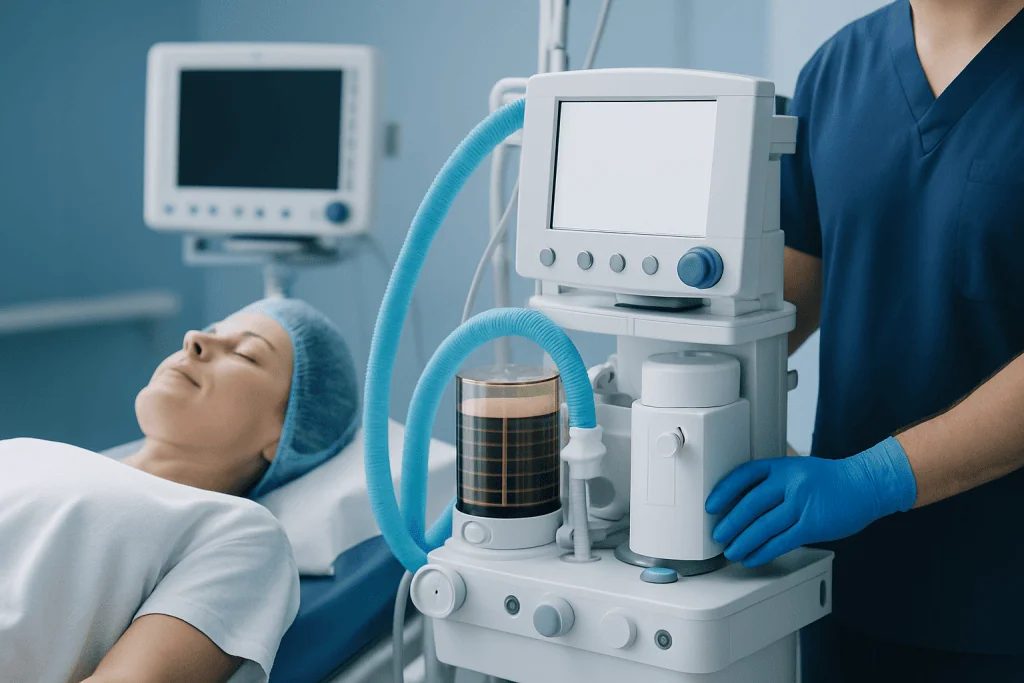
General anesthesia is used when a procedure would be too painful, too long, or too technically demanding to perform while you are awake. Common examples include abdominal surgery, orthopaedic operations, ear, nose and throat procedures, plastic surgery, neurosurgery, thoracic and gynaecological surgery, urological operations, and many paediatric procedures.
It is also chosen when complete stillness matters, or when the operation needs muscle relaxation that only a general anesthetic provides. Some procedures can technically be done under local or regional anesthesia, yet the team may still recommend a general anesthetic because of the expected duration, your airway, your anxiety level, or the need to combine several procedures in one session.
The decision is individual. Two patients having the same operation may reasonably receive different anesthetic plans, because the plan reflects the person, not just the procedure. Your surgeon and anesthesiologist weigh this together before the plan is confirmed.
Who is assessed as suitable?

Suitability is decided by assessment, not by age. Anesthesiologists look at your general health, heart and lung function, weight, chronic conditions, previous anesthetic experiences, medications, allergies and smoking status. They also examine your airway, because anatomy affects how breathing is supported while you sleep.
Chronic conditions such as high blood pressure, diabetes, asthma, thyroid disease or reflux do not automatically rule out general anesthesia. They change how it is planned. Obstructive sleep apnea is a good example: it needs to be known about in advance because it affects airway management and post-operative monitoring. If sleep apnea is suspected but never confirmed, testing and evaluation may be discussed as part of the workup.
For planned, non-urgent surgery, active problems such as fever, infection or an unstable chronic condition are usually addressed first. Occasionally an operation is postponed because the anesthesiologist judges that waiting reduces risk. That is not a failure of planning; it is the assessment doing its job.
How the anesthetic is planned
General anesthesia can be started through an intravenous line, through inhaled anesthetic gases, or a combination of both. It is then maintained for the length of the operation while your vital functions are monitored continuously.
Airway support varies. It often begins with a face mask, and may involve a breathing tube or another airway device depending on the operation, your anatomy, your fasting status and any history of reflux, sleep apnea or previous airway difficulty. This is one of the main reasons the in-person assessment matters: airway decisions cannot be finalised from documents alone.
General anesthesia is frequently combined with other pain-control methods, local anesthetic injections by the surgeon, regional nerve blocks, epidural techniques for selected operations, and multimodal pain relief planned by the anesthesia team. The aim is a smoother wake-up: less pain, less nausea, earlier mobility. Depth of anesthesia, airway support and post-operative observation are all scaled to the operation, so a short procedure and a major one produce genuinely different experiences of the same anesthetic.
The review before you travel
For international patients, preparation for general anesthesia in Turkey usually starts on paper. Hospitals typically review your diagnosis, planned procedure, medical history, medication list, allergies, previous operations and any known anesthetic issues, severe post-operative nausea, difficult intubation or delayed waking in the past all matter. Recent blood tests, ECG results, imaging or specialist letters can be useful where they exist.
This early review identifies gaps: information that is missing, tests that may be repeated on arrival, and issues that could affect timing, such as blood-thinner use or diabetes control. It shapes the schedule and the quote, which is why it happens before travel dates are fixed. Our guide on what happens after you accept a quote walks through this stage in detail.
Be clear about the limit here: a remote review does not replace the in-person anesthetic assessment. Airway examination, up-to-date tests and final confirmation of the procedure with the surgeon can only happen after you arrive. Patients with complex medical histories should expect the in-person stage to carry more weight, not less.
Before the anesthetic: fasting and medications
The single most important preparation is following the fasting instructions given specifically to you. You will typically be told when to stop eating and when to stop drinking; some clear fluids may be permitted up to a defined point depending on your case. Fasting reduces the risk of stomach contents entering the lungs while you are unconscious, which is why the rules are strict and why an incomplete fast can delay surgery.
Medication decisions belong entirely to your treating team. Some medicines are continued on the day of surgery, some are adjusted, and some are paused, but which is which depends on your case, and this guide cannot answer it. What you can do is make the list complete: prescription medicines, injections, inhalers, painkillers, herbal products and vitamins all count.
Before surgery you may also have blood tests, a heart tracing, imaging or specialist consultations. The pre-anesthetic conversation covers allergies, previous anesthetics, loose teeth and dentures, reflux, pregnancy possibility, smoking, alcohol use and recent fever. For some operations, admission happens the day before treatment so this workup can be completed calmly. On the day itself: comfortable clothing, jewellery and nail products removed if asked, contact lenses out before the operating area.
What happens before you sleep
In the pre-operative area, your identity, procedure, consent and key medical details are checked, then checked again by the anesthesiologist. Repeated verification is a deliberate safety step, not a sign of disorganisation. Allergies, fasting status and the side of surgery, if relevant, are all confirmed.
A cannula is placed in your hand or arm so medicines and fluids can be given. In the operating room, monitors are attached for blood pressure, heart rhythm and oxygen levels. You may breathe oxygen through a mask for a few minutes. Then the anesthesiologist gives the medicines that put you to sleep, most people describe it as a fast fade, often mid-sentence. Once you are unconscious, your airway is supported as planned and the anesthetic is maintained for the whole operation.
Throughout surgery, the anesthesia team manages pain control, fluids, nausea prevention, temperature and blood pressure, adjusting continuously to the stage of the operation. Their role runs unbroken from the moments before sleep until you are awake and stable afterwards.
Waking up and the recovery room
At the end of surgery, the anesthetic medicines are reduced or stopped and you begin to wake. You are moved to a recovery area where nurses and doctors monitor you closely as you become alert. Feeling sleepy, dry-mouthed, cold, mildly confused or nauseated at this stage is common and expected; the recovery team treats these routinely.
The first hours follow a fairly predictable pattern, observation, gradual reorientation, pain and nausea management, then transfer back to your room when defined criteria are met. We describe this stage fully in the recovery room, nausea, and going back to your room.
Do not equate feeling awake with being recovered. Judgment, balance, reaction time and short-term memory can remain affected for the rest of the day and sometimes longer. This is why discharge instructions and escort arrangements exist, and why they apply even to people who feel fine.
Hospital stay and discharge
Your length of stay is set by the operation, not the anesthetic. Some procedures are day cases: once you are awake, comfortable, drinking fluids and stable, you may return to your accommodation the same day. Others need one or more nights for observation, pain control, drain care or early rehabilitation. Major surgery may include planned time in a monitored unit.
Before discharge, the team confirms that your vital signs are stable and that nausea, dizziness and pain are reasonably controlled. Depending on the surgery, you may be asked to eat lightly, walk with help and pass urine first. You leave with written instructions covering medications, wound care where relevant, activity, bathing, diet and follow-up.
For international patients, discharge and travel clearance are separate decisions. Being well enough to leave the hospital is not the same as being well enough to fly. A first control visit, a dressing change or a results review may sit between the two, which is why departure dates stay flexible until the treating team confirms them.
Recovery timeline
Recovery happens in stages, and the honest answer to “how long” is: it depends on the length of the procedure, the medicines used, your age and your usual health. The table below describes typical patterns, not guarantees.
| Timeframe | What to expect |
|---|---|
| First 24 hours | Sleepiness, slower thinking, thirst, mild nausea, chills or a sore throat are common. Rest, hydrate as advised, and avoid driving, alcohol and important decisions. |
| First week | Most anesthesia-related effects settle. Energy may stay lower than usual, particularly after major surgery. Recovery is now shaped more by the operation than the anesthetic. |
| Weeks 2–4 | Concentration, sleep pattern and strength usually keep improving. Follow the surgical aftercare plan and attend any review scheduled before long-distance travel. |
| Months 1–3 | For major procedures, activity increases gradually. Lingering symptoms at this stage usually relate to the surgery or the underlying condition, not the anesthetic. |
| Final result | Anesthesia has no result of its own. The meaningful milestone is a stable recovery from your operation, which varies by procedure and by person. |
Do not base your departure date on how you feel in the first day or two. After major surgery, or if you had drains or catheters, travel timing is a medical decision that accounts for pain, bleeding risk and blood-clot risk during a long flight.
What to avoid afterwards
In the early recovery period, avoid driving, operating machinery, signing legal or financial documents, and drinking alcohol. These restrictions apply even when you feel alert, because reaction time and judgment recover more slowly than wakefulness does.
Ease back into eating rather than starting with a heavy meal, particularly if nausea lingers. If your throat is sore from airway support, softer foods and steady fluids are more comfortable for a day or two. If you smoke, not smoking during recovery supports breathing and healing.
Keep your travel plans modest. An early flight, a long car journey or a demanding sightseeing schedule before your doctor confirms readiness is the most common self-inflicted setback among international patients. Recovery from the anesthetic may be quick; recovery from the surgery usually is not, and it should not be rushed. It also helps to think ahead about the journey homepreparing your home for recovery before leaving Turkey covers the practical side.
Risks and possible complications
General anesthesia is widely used and closely monitored, but no anesthetic is without risk, and this guide will not pretend otherwise. Common short-term effects include drowsiness, nausea, vomiting, sore throat, chills, dizziness, dry mouth, temporary confusion and muscle aches. These are usually manageable and improve with time and supportive care.
Less common but more serious complications can include breathing problems, allergic reactions, aspiration of stomach contents, heart or blood pressure instability, dental or lip injury, nerve or positioning injuries, awareness under anesthesia, and delayed recovery from the anesthetic. Risk is influenced by your health status, the complexity and urgency of the surgery, age, airway anatomy, weight, smoking, sleep apnea and existing heart or lung disease.
Some patients need extra planning: difficult airways, previous anesthetic complications, or medicines that affect bleeding or blood pressure. Occasionally surgery is delayed or a different anesthetic approach is recommended. Treat that as the system working, not as a setback. The most effective risk reduction available to you is complete honesty in the pre-anesthetic assessment, every illness, every medicine and supplement, every allergy, every past anesthetic problem, and any known family history of unusual reactions to anesthesia.
What a good outcome looks like
The goal of anesthesia is invisible: you are adequately asleep, pain is managed, vital functions are supported, and you wake and recover in a medically appropriate way. Most patients remember nothing between the medicines starting and the recovery room. Anxiety beforehand is normal, particularly for a first operation or one far from home.
Keep expectations realistic. Some people wake quickly; others need more time. Some feel little nausea; others need additional treatment for it. This variation is normal and does not by itself indicate that something went wrong.
If previous anesthetics went badly for you, severe nausea, slow waking, difficult pain control, raise it during your assessment. Anesthesiologists can often adapt the plan, though the final approach always depends on what is safest for your current procedure. Writing these points down beforehand helps; see how to prepare your questions.
Travel planning for international patients
Plan your trip around the whole episode of care, not the operation date. A realistic schedule for general anesthesia in Turkey includes pre-operative tests after arrival, the in-person anesthetic assessment, the surgery itself, the hospital stay, and at least one follow-up visit before travel clearance. The total depends on the type of surgery and your condition, and it is confirmed, not merely estimated, by the treating team.
Bring your passport, medical records, medication list, allergy information, previous operation summaries and relevant imaging or reports. Translated summaries help if your records are in another language. Pack enough of your regular medication for the trip, including any devices such as a CPAP machine.
Travel with a companion whenever possible for anything beyond a minor day case. After anesthesia, a second person for transport, communication and early recovery is genuinely useful, not a formality. If you must travel alone, say so early so discharge planning can account for it.
Cost structure: what a quote depends on
Anesthesia is usually priced as part of the overall surgical plan rather than as a stand-alone item, and this guide deliberately contains no figures: a number without your medical details would be meaningless. What a quotation reflects: the type and length of surgery, the complexity of your health condition, the planned hospital stay, whether the procedure is day-case or inpatient, and the level of monitoring you need.
Factors that can move the final quotation include pre-operative tests, consultations from other specialties, airway or intensive monitoring requirements, recovery room time, and any needs identified during evaluation. Non-medical costs, flights, accommodation, a companion, an extended stay if recovery takes longer, sit outside the medical quote and are worth budgeting separately.
Packages commonly cover the procedure, anesthesia services, operating room use, the standard hospital stay and routine immediate post-operative care; some include transfers, interpreter support and scheduled follow-up. Items often excluded: unrelated consultations, treatment of unexpected complications, extra hospital nights, intensive care when required, additional tests beyond the routine plan, special devices and personal travel expenses. Ask for a written breakdown so you can see what is included, what is conditional, and what may change after physician evaluation.
How Acibadem organises anesthesia care
At Acibadem, anesthesia care is not handled in isolation. Anesthesiology, surgery, intensive care, imaging and laboratory services operate within the same hospital environment, and the anesthetic plan is coordinated with the surgical team, pre-operative testing and post-operative recovery. When needed, specialist input, cardiology, pulmonology, internal medicine, critical care, is part of the same planning process. This matters most for complex procedures and for patients with chronic conditions.
For patients from abroad, the practical layer matters too. Interpreter support and coordinated scheduling reduce the chance that fasting instructions, medication guidance or travel timing are misunderstood. That is a safety function, not just a convenience.
The limit worth stating plainly: the right anesthetic plan is the one tailored to you after physician evaluation. No description on a website, including this one, can substitute for that.
Medical review and disclaimer
This guide has been medically reviewed by the Acibadem International medical team. It is intended to help you understand general anesthesia in broad terms and to prepare informed questions before treatment in Turkey.
The information provided here is for general education only. It does not replace a consultation, examination, informed consent discussion, or the advice of your anesthesiologist, surgeon, or another qualified physician who knows your case.
Suitability for general anesthesia depends on your medical history, current condition, examination findings, test results, and the specific procedure planned. Recommendations on fasting, medications, travel timing, and recovery must always come from your treating doctors.
If there is any difference between general online information and the instructions given by your care team, follow the individualized medical advice you receive during your evaluation and hospital stay.
Step by step
- Initial contact. You contact Acibadem International with your treatment request and planned procedure details.
- Medical record submission. You share your medical history, medication list, allergy information, previous surgery details, and relevant reports or imaging.
- Preliminary medical review. The medical team reviews your records to assess whether treatment appears appropriate and what additional information may be needed.
- Treatment plan and quotation. You receive a preliminary plan, expected timeline, and a written quotation based on the available medical information.
- Travel planning. Dates are arranged around consultation, testing, surgery and recovery time, with guidance on accommodation and transfers if needed.
- Arrival. After arriving in Turkey, you are supported with logistics and prepared for your in-person appointments.
- In-person consultation. You meet the surgeon and anesthesia team for final evaluation, consent discussions, and confirmation of the plan.
- Pre-operative tests. Blood tests, ECG, imaging or specialist reviews are completed if required before anesthesia and surgery.
- Treatment. You undergo your planned procedure under general anesthesia with continuous monitoring by the anesthesiology team.
- Hospital stay. You recover in the post-anesthesia area and then in your room or a monitored unit for the length of stay recommended for your procedure.
- First control. Your team reviews early recovery, adjusts medications if needed, and answers questions about mobility, food and travel.
- Discharge and travel clearance. You receive discharge instructions and are advised when it is medically appropriate to leave hospital and, later, to travel home.
- Remote follow-up. After returning home, remote follow-up can help review recovery progress.
Your checklist
- Passport and travel documents
- Diagnosis and referral details, if available
- Full medical history including chronic conditions
- Complete medication list including supplements and injections
- Known drug, food, latex, or anesthesia-related allergies
- Previous surgery and anesthesia history
- Current symptoms and recent health changes such as fever or infection
- Recent blood tests, ECG, imaging, or specialist reports if relevant
- Information about smoking, alcohol use, sleep apnea, or CPAP use
- Emergency contact and companion details if traveling with someone
Key takeaways
- General anesthesia keeps you unconscious, unaware and continuously monitored; it is a layer of care, not the treatment itself.
- A remote record review before travel is useful but never replaces the in-person anesthetic assessment after arrival.
- Fasting rules and medication instructions come from your treating team and must be followed exactly: the fast exists to protect your lungs.
- Feeling awake is not the same as being recovered: judgment, balance and reaction time lag behind wakefulness.
- Discharge from hospital and clearance to fly are separate decisions; keep your departure date flexible until the treating team confirms it.
Frequently asked questions
Is general anesthesia safe?
General anesthesia is widely used and delivered with continuous monitoring by trained anesthesia professionals, but no anesthetic is entirely without risk. Your individual risk depends on your health, the operation, and the quality of the pre-anesthetic assessment, which is why that assessment is always required.
Will I be completely asleep and unaware?
Yes: the purpose of general anesthesia is full unconsciousness with no awareness of the procedure. The anesthesiologist monitors you throughout and adjusts the anesthetic continuously. Most patients remember nothing between the medicines starting and the recovery room.
Why do I need to fast before general anesthesia?
Fasting reduces the risk of stomach contents entering your lungs while you are unconscious, which is a serious complication. Your hospital gives exact timings for stopping food and fluids, and an incomplete fast can delay surgery, so the instructions should be followed precisely.
How long will I feel sleepy afterwards?
Most people begin waking soon after surgery, but drowsiness and slower thinking often continue for hours and sometimes into the next day. Recovery from the anesthetic itself is usually the quick part; overall recovery depends mainly on the operation you had.
Can I fly soon after surgery under general anesthesia?
Travel timing is decided by your treating team based on the surgery and your recovery, not the anesthetic alone. After some procedures, flying is delayed to reduce risks related to pain, bleeding, swelling or blood clots on a long flight.
How long should I stay in Turkey?
The stay depends on the operation, your condition, and whether pre-operative testing and post-operative review are needed. Minor day-case procedures need a shorter stay; major operations usually require more time before travel clearance is given. The treating team confirms the total, not the calendar.
Can I have general anesthesia with a chronic medical condition?
Often yes. Conditions such as diabetes, high blood pressure or asthma do not automatically prevent anesthesia, but they change how it is planned and monitored. Careful pre-anesthetic assessment is what makes the plan appropriate for your case.
What if I had nausea or a bad experience with anesthesia before?
Mention it during your assessment, even if it seems minor. Previous severe nausea, difficult intubation or delayed waking all inform the anesthetic plan, and the team can often adapt it, although the final approach always depends on what is safest for your current procedure.
Add us as a Preferred Source to see more of our trusted health content across Google Search, AI Overviews and Discover.

Update history
- PublishedJuly 8, 2026
- Medical review approvedSeptember 13, 2026
- Last content updateSeptember 12, 2026
References2
- General anaesthesia: NHS nhs.uk
- General anesthesia: MedlinePlus Medical Encyclopedia medlineplus.gov
More Patient Guides

HoLEP in Turkey: How It Compares With TURP and What Recovery Involves
HoLEP in Turkey treats enlarged prostate tissue with laser enucleation; learn how it compares with TURP, recovery, travel and follow-up.

Porcelain Veneers in Turkey: Who Is Suitable and How Many Visits Are Needed?
Porcelain veneers in Turkey can enhance tooth shape and colour in two visits for suitable patients after a personalised dental assessment.

How to Prepare for a Sedation Procedure in Turkey
Prepare safely for a sedation procedure in Turkey with guidance on fasting, medicines, travel, recovery and follow-up.

Treatment Delays in Turkey: What Happens If Tests or Recovery Change Your Schedule
Treatment delays in Turkey can happen if tests or recovery change your plan. Learn how to manage appointments, travel, accommodation and follow-up.