

At Acibadem, What Happens After You Accept a Quote and Before You Arrive in Turkey

After you accept a quote, your case moves from estimating to organising. A coordinator confirms your treatment plan and dates, the clinical team reviews any updated records, and you prepare documents, medicines information and travel arrangements. Final details of the plan are often confirmed in person after you arrive, so the aim before travel is a clear schedule with sensible flexibility built in.
You have said yes to the quote. The next stage is mostly coordination: confirming the plan, sharing final documents, arranging travel, and preparing for a calm, organised arrival in Turkey.
This guide explains what happens after you accept a quote and before you arrive in Turkey, what Acibadem International handles, what sits with you, and where the plan may still flex. None of it is complicated, but knowing the order of events makes the weeks before departure much easier to manage. If you are still weighing the offer itself, it helps to first understand what your treatment quote includes, because the scope of the quote shapes several of the steps below.
At a glance
- Best for: International patients who have accepted a quote and are preparing to travel
- What happens next: Medical record review, schedule confirmation, travel planning and arrival preparation
- Who helps you: Acibadem International patient services, your coordinator and interpreters where needed
- What to prepare: Passport and visa, medical records, a full medicines list, travel details and your questions
- Main goal: A confirmed schedule, an organised file, and enough flexibility for in-person assessment
What happens after you accept a quote and before you arrive in Turkey
Accepting a quote marks the shift from general planning to active coordination. Until this point, the hospital has been reviewing your records and describing what treatment would likely involve. From now on, the work is practical: fixing dates, confirming the hospital location, checking documents, and building a realistic travel timeline around your appointments.
In most cases, an international patient coordinator gets in touch to confirm the essentials: the treatment you discussed, the treating department, the expected sequence of appointments, and anything that could affect scheduling. If your circumstances have changed since the original review, this is the right moment to mention it. A new prescription, a recent scan, or a fresh test result can all affect timing and preparation instructions, so coordinators expect to hear about updates like these as part of the normal process.
Understanding what happens after you accept a quote and before you arrive in Turkey also means understanding what does not happen yet. Final clinical decisions are often confirmed in person. The quote reflects the plan as it stands on paper; the treating team usually reviews you face to face, sometimes with repeat tests, before the plan is locked in. That is not a sign of uncertainty: it is how careful care works when the initial assessment was done at a distance.
How your medical plan is finalised before travel
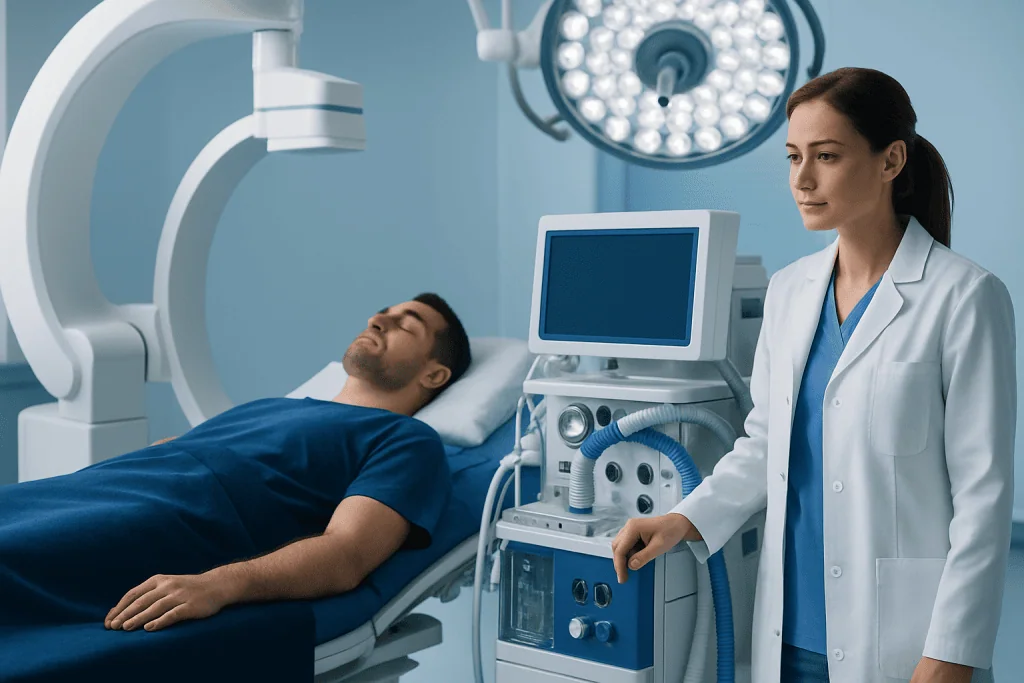
Before your travel dates are fixed, the clinical team may ask for updated medical records: recent imaging, laboratory results, specialist letters, or operation summaries. The point of this is accuracy. Records that are several months old may no longer describe your current situation, and reviewing fresh information before you fly reduces the chance of surprises, and delays, once you are on site.
Three things are worth doing on your side. First, check whether any of your reports need translation. Documents in English or Turkish can usually be reviewed directly; reports in other languages may need translating, and it is better to find out before departure than at the registration desk. Second, keep everything in a clear, readable format, legible scans or original digital files rather than photographed pages where possible. Third, keep your own copies, both digital and printed, in your hand luggage. Your first hospital day is far smoother when your file travels with you.
It is also normal for parts of the plan to be described as provisional. The team may explain that the final decision on a procedure date, or on the exact approach, depends on an in-person consultation or on tests repeated in Istanbul or at another Acibadem location. If extra assessment does turn out to be needed once you are there, it follows a predictable pattern: this guide on what happens if you need extra tests after arriving in Turkey explains how that usually works and why it rarely derails a trip that was planned with a little slack.
Your coordinator’s role and what support you can expect

This stage is easier when you know exactly who your point of contact is. Your international patient coordinator is normally your main channel for practical questions before arrival: what has been confirmed, what is still outstanding, and what you should do next. Medical questions go through the same route: the coordinator passes them to the relevant clinical team rather than answering them personally, so you are never left guessing whom to ask.
Coordinators at Acibadem International typically help with appointment flow, hospital location details, interpreter arrangements and general travel logistics. Their job is to make the process predictable. If you are unsure about transfer timing, whether a companion can stay with you, or what to bring on your first hospital day, these are exactly the questions they handle every week.
Two things are worth raising early rather than late. If you need language support, say so as soon as your dates start to firm up; interpreters for many common languages can be arranged for consultations, admission and discharge discussions, but arrangements take time. And if you are travelling with a relative or friend, ask what the practical arrangements for companions look like at your specific hospital, visiting patterns, overnight options and waiting areas vary by location and by the type of treatment.
- Confirm who your main contact is and how best to reach them
- Confirm your appointment dates, times and hospital location in writing
- Mention any new symptoms, test results or medication changes promptly, as part of the coordination process
- Request interpreter support in advance if you will need it
- Ask about companion arrangements before booking accommodation
Travel planning: documents, flights, accommodation and arrival timing
Passport and visa
Check your passport validity well before booking anything. Visa requirements for Turkey depend on your nationality, and many travellers can apply online in advance, but the rules are yours to verify for your own passport, official government travel pages are the reliable source here, not forums or booking sites. If your treatment plan means a longer stay, check that any visa you hold covers the full expected period, with margin.
Flights and how long to stay
The recommended length of stay depends on your consultation schedule, any pre-treatment tests, the treatment itself, and early follow-up before you fly home. Do not book non-refundable flights until your schedule is reasonably confirmed. If your plan includes tests after arrival, or the team has said final decisions will be made in person, changeable tickets buy you calm. Arriving too late compresses your preparation; leaving too soon puts pressure on your recovery. For surgery in particular, the question of how many days early to land has its own logic, see when to arrive before surgery in Turkey for a simple timing framework.
Accommodation and transfers
Acibadem International can guide you on accommodation options, airport transfers and routes to the hospital. Even if you prefer to book your own hotel, choose it for practicality rather than views: proximity to the hospital matters more when you have early appointments, limited mobility after a procedure, or a companion shuttling between hotel and ward. Ask whether the location suits your specific situation: a hotel that works well for a two-day consultation trip may be a poor fit for a two-week recovery.
Fitness to fly
If you have a condition that could be affected by air travel, or you are booking a long-haul return soon after a procedure, raise the question of flight timing with the clinical team through your coordinator before you fix dates. Return-flight timing after treatment is a clinical judgement, not a booking preference, and it is far cheaper to plan for it than to change it later.
What you should prepare before you leave home
Good preparation makes your first days in Turkey noticeably smoother. Beyond travel documents, assemble one organised file: your medical records and imaging, a complete list of current medicines with doses, allergy information, previous operation summaries where relevant, and emergency contacts at home. Keep the essentials in your hand luggage, never only in checked baggage.
Medicines deserve particular care. Carry enough of your regular medicines for the whole trip plus a margin for delays, keep them in original packaging where possible, and bring copies of prescriptions. Any question about whether a medicine should continue, pause or change around your treatment belongs to your treating doctor, do not make those decisions yourself, and do not act on advice from anyone outside your clinical team. How the hospital handles this once you are under its care is covered in how Acibadem manages your medicines before and after treatment.
Prepare practical information for yourself and anyone travelling with you: your coordinator’s contact details, the hotel address, the hospital address and transfer arrangements, saved in your phone and written on paper, because phones run out of battery at inconvenient moments. If you have dietary, mobility, religious or personal care needs, mention them to the international patient team before departure so arrangements can be made in time rather than improvised on arrival.
What happens when you arrive in Turkey and come to the hospital
After landing, your priorities are simple: reach your accommodation, rest if you need to, and be ready for your first scheduled contact with the hospital. Depending on your plan, that first contact might be an outpatient consultation, a pre-admission assessment, imaging, blood tests, or direct admission. Your coordinator can tell you the expected order in advance, so the first day holds no mysteries. A fuller picture of the on-the-ground experience is in what happens after you arrive for treatment in Turkey.
At the hospital you will complete registration and identity checks, review your appointment schedule, and meet the relevant staff. Structured admission checks, confirming your identity, records, allergies and planned care all match, are a standard part of the process. They can feel repetitive; that repetition is deliberate.
Expect the first in-person day to feel busy. You may meet several team members, particularly if your care involves more than one specialty, and you may move between departments for tests. Interpreter support, where arranged, is there for exactly these moments. If your treatment involves being admitted the evening before a procedure, that has its own rhythm toowhen hospital admission happens the day before treatment explains what that looks like in practice.
A few practical expectations to keep in mind
Even well-planned healthcare travel involves adjustments. A test may need repeating, an appointment may shift, or the team may recommend a different sequence after seeing you in person. This does not usually mean something is wrong; more often it reflects individualised planning done properly, with your current state of health rather than a months-old report as the reference point.
Build slack into your itinerary. Avoid packing the days around your treatment with sightseeing, work calls or tight onward travel. If you are travelling for a significant consultation or procedure, protecting your time and energy is worth more than a full schedule. A margin of a day or two absorbs most of the small changes that occur; a schedule with no margin turns every small change into a problem.
And ask early rather than late. Questions about fasting, medicines, companion access, payment steps, transfer timing or discharge planning are all reasonable, and none of them is too small for your coordinator. The goal before you arrive in Turkey is not to know every detail perfectly. It is to feel informed, organised, and ready for the next stage.
Step by step
- Confirm that you want to proceed. Once you accept the quote, your coordinator sets scheduling, document review and pre-arrival planning in motion, and tells you the specific action points for your case.
- Share any updated medical information. Recent results, scans, reports and changes in your medicines help the team confirm whether the initial plan and timing still hold. Do this early: it is the step most likely to affect your dates.
- Review and confirm your schedule. Ask for a clear outline of your first appointments, likely hospital visits and estimated length of stay. Make sure you know which parts of the plan are provisional pending in-person assessment.
- Arrange documents and travel. Check passport validity and visa requirements for your nationality before booking. Prefer changeable flights until the schedule is firm, and choose accommodation for practicality over comfort of location.
- Build your health and travel file. One folder, passport copy, hospital correspondence, medical records, medicines list, prescriptions, allergy information, emergency contacts, in both digital and printed form, carried in hand luggage.
- Clarify practical questions before departure. Fasting instructions, medicines logistics, companion arrangements, interpreter needs, and what to bring on day one are all better settled from home than from an airport.
- Arrive with time and flexibility. Land with enough margin before your first appointment, especially after long-haul travel, and leave room in the itinerary for schedule changes, repeat tests or additional consultations.
Your checklist
- Passport with adequate validity and any required visa
- Confirmed hospital contact details and coordinator information
- Recent medical reports, imaging and lab results, translated where needed
- Current medicines list, prescriptions and allergy information
- Enough regular medication for the full trip, in original packaging
- Flight, accommodation and transfer details, saved digitally and on paper
- Printed and digital copies of all key documents in hand luggage
- A written list of the questions you want answered before the first hospital visit
Key takeaways
- Accepting the quote starts active coordination: it is the beginning of the practical stage, not the end of planning.
- Updated medical records are often reviewed before travel dates are fixed, and parts of the plan may stay provisional until in-person assessment.
- Your international patient coordinator is the single point of contact for scheduling, interpreter support and practical travel questions.
- Travel with one organised file: records, medicines list, prescriptions, documents, printed and digital, in hand luggage.
- Build flexibility into your itinerary; changeable bookings and a day or two of margin absorb most schedule adjustments.
Frequently asked questions
Does accepting the quote mean my treatment plan is fully final?
Not always. The plan is usually well defined, but final confirmation may depend on updated records, an in-person consultation, or tests done after you arrive in Turkey. This is a normal part of careful, individualised care when the initial assessment was made at a distance.
Who answers my questions before I travel?
Your international patient coordinator is the first contact for practical and scheduling questions. Medical questions go through the same channel: the coordinator passes them to the relevant clinical team, so you always know where to direct a query.
Should I book flights as soon as I accept the quote?
It is usually better to wait until your expected schedule is reasonably confirmed, or to book changeable tickets. If your case may involve extra tests or a flexible timeline, refundable or flexible travel reduces stress and avoids rebooking costs later.
What documents should I bring with me to Turkey?
Bring your passport, visa if required, hospital correspondence, medical reports, scans, test results, prescriptions, a medicines list and allergy information. Keep printed and digital copies in your hand luggage so you can reach them quickly.
Can Acibadem help with language support and logistics?
Yes. International patient services can arrange interpreter support for many common languages and guide you on practical matters such as hospital location, transfers and accommodation. Request this early so arrangements are in place before your first appointment.
What if my health changes after I accept the quote?
Changes such as new symptoms, a new diagnosis, a new test result, or a change in your medicines can affect preparation instructions, scheduling, or which specialist sees you first. Sharing updates with your coordinator promptly is a normal part of the pre-travel process, so the clinical team is always working from current information.
Will I go straight into treatment when I arrive?
Not necessarily. Many patients first have consultations, blood tests, imaging or pre-admission checks before treatment proceeds. The exact pathway depends on your condition, the planned treatment, and what the team needs to confirm in person.
How much flexibility should I build into my trip?
Enough that a shifted appointment or a repeated test does not break your plans. In practice that means changeable bookings where possible, a margin of a day or two around key appointments, and a return flight that is not booked tightly against your last expected hospital visit.
Add us as a Preferred Source to see more of our trusted health content across Google Search, AI Overviews and Discover.

Update history
- PublishedJune 25, 2026
- Medical review approvedSeptember 13, 2026
- Last content updateSeptember 12, 2026
References2
- Foreign travel advice: Turkey: GOV.UK gov.uk
- Travelers' Health: Türkiye (Turkey): CDC wwwnc.cdc.gov
More Patient Guides

At Acibadem, How We Explain Expected Clinical Outcomes and Treatment Success Information
Expected clinical outcomes at Acibadem are explained in clear, realistic terms so you understand likely benefits, limits, risks, and next steps in…

At Acibadem, How Families and Companions Are Supported During Treatment Travel
At Acibadem, family support during treatment travel in Turkey includes interpreters, planning help, visitor guidance, and practical support for companions.

At Acibadem, How Our JCI-Accredited Hospitals Support Safe International Care
JCI-accredited hospitals at Acibadem support safe international care in Turkey with standardized quality, interpreters, coordination and follow-up.

At Acibadem, What Our International Patient Package May Include Before You Travel
International patient package at Acibadem may include medical planning, travel help, interpreters, and stay support in Turkey before you travel.