

What Happens After You Arrive for Treatment in Turkey

After you arrive in Turkey, you are usually transferred to your hotel or hospital, registered, and examined by your specialist in person. Tests such as blood work or imaging may follow, then the treatment itself if scheduled, a hospital stay where medically needed, and discharge with written instructions and a follow-up plan. In-person evaluation can confirm, refine or reschedule the plan agreed before travel.
You have accepted a plan, booked your flights and sent your reports. The part most patients worry about is what actually happens after you arrive for treatment in Turkey: the gap between walking out of the airport and sitting in front of your doctor.
This guide walks through that gap step by step: transfer, admission, in-person consultation, tests, the treatment itself, hospital stay, discharge and follow-up. It also explains the one thing first-time medical travellers most often misunderstand: that arrival is the start of a clinical process, not the end of the planning one. Your doctors confirm the plan in person before anything irreversible happens.
At a glance
- What this covers: The arrival, admission and treatment pathway for international patients in Turkey
- Purpose: To explain each practical and medical step between landing and discharge
- Anaesthesia: Depends on your planned treatment; it rarely applies on arrival day itself
- Hospital stay: Ranges from same-day care to several days, decided on medical grounds
- Recovery: Depends on the procedure, your general health and your discharge plan
- Return travel: Your treating doctor confirms when flying home is appropriate
- Key principle: Preliminary plans made online are confirmed, refined or rescheduled after in-person evaluation
- Suitable department: International Patient Services, coordinating with the relevant medical specialty
- Support available: Interpreters, transfer coordination, admission assistance, accommodation guidance and remote follow-up
What happens after you arrive for treatment in Turkey?
In short: a sequence, not a single event. What happens after you arrive for treatment in Turkey typically includes an airport transfer, check-in at your hotel or the hospital, administrative registration, an in-person consultation with your specialist, any tests your doctor needs, the treatment itself if it goes ahead, and a discharge plan before you travel home.
The exact sequence depends on why you are travelling. Some patients come for surgery, some for imaging or a second opinion, others for staged treatment over several days. Even where everything has been agreed by email, the first clinical step on the ground is almost always an examination. That is deliberate. Records and photographs show a lot, but they cannot replace a direct assessment of your condition on the day.
At Acibadem, international patient coordinators connect the administrative, travel and clinical parts of the journey so that you know where to go, which documents are needed and what comes next. They do not make medical decisions, your doctors do, but they keep the practical side moving.
Who this guide is for
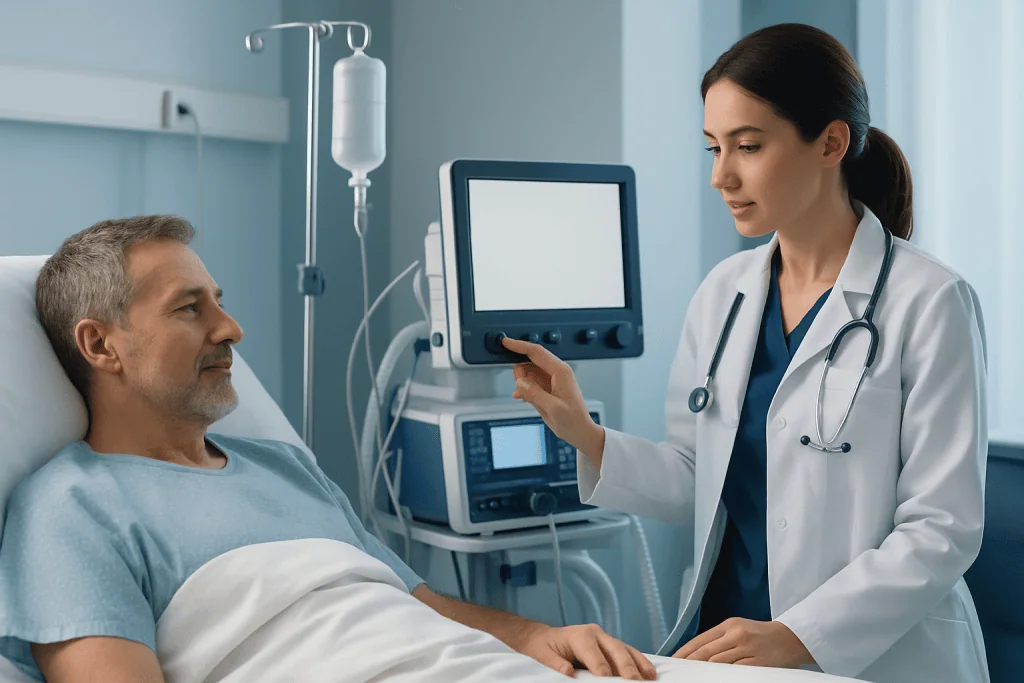
This guide is written for anyone travelling to Turkey for hospital-based care: surgery, a procedure, a specialist consultation or advanced diagnostics. It is most useful on a first medical trip abroad, when the sequence of events is unfamiliar and small unknowns feel large.
It is also relevant if your case is complex. Some treatment plans involve more than one department, laboratory tests, imaging, an anaesthesia review and consultations across specialties before the final plan is fixed. Knowing that this coordination is normal makes the first days feel less like delay and more like due diligence.
If you travel with a companion, take regular medication, have a chronic condition, have significant mobility needs or are managing tight travel dates around work and family, the practical detail here should help you prepare the right questions before you fly. These factors can affect how quickly treatment proceeds after arrival and whether extra specialist review is needed.
Before you travel: the online evaluation
Most of what happens after landing is shaped by what happened before it. You will usually have shared medical records, diagnosis, medication list, operation notes, pathology, imaging, blood results or photographs, depending on the treatment, so the team could make a preliminary assessment, route your case to the right department and estimate how long you may need to stay.
That review is preliminary by design. Final decisions follow the in-person consultation and up-to-date tests. If your condition changes between submitting records and travelling, the schedule on the ground may need to change with it. The full pre-travel sequence, confirmations, scheduling, documents, is covered in what happens after you accept a quote and before you arrive in Turkey.
Arrival day: from the airport to your first appointment
Where a transfer has been arranged, you are met at the airport and taken to your hotel or directly to the hospital, depending on your schedule. If you are staying off-site, you are told when and where to attend the hospital, usually the same day or the next.
Arrival day is mostly practical. Keep your passport, appointment details and medical documents in your hand luggage, along with any prescription medicines in their original packaging. If your consultation is the next morning, use the evening to rest and rehydrate after the flight, fatigue and dehydration are unremarkable in themselves, but a rested patient makes for a better examination.
Two things are worth managing on day one: expectations and flexibility. Arrival does not always mean immediate treatment, and hospital schedules stay responsive to medical findings. Keeping your return date loose, where possible, removes the most common source of pressure on the whole trip.
Registration, admission and your coordinator
At the hospital, registration comes first: identity checks against your passport, document verification and the administrative file that follows you through your stay. You then meet your international patient coordinator and, where needed, an interpreter.
The coordinator’s job is navigation, appointment timings, which floor, which department, which forms. The interpreter’s job is precision, making sure that consultations, consent discussions and discharge instructions are understood exactly, not approximately. Interpreter support works best when it is arranged before travel rather than improvised on the day.
The in-person consultation

This is the pivotal appointment. Your specialist reviews your records against a direct physical examination, asks about your history, current symptoms and medications, and decides whether the preliminary plan stands. There are three broad outcomes: the plan is confirmed as agreed, it is refined in timing or technique, or, less often, it is postponed or changed because the examination found something the records did not show.
All three outcomes are normal medicine. A plan built on emailed records is a well-informed hypothesis; the consultation is where it is tested. If you are having surgery or sedation, you will also meet an anaesthesiologist, whose separate assessment covers fitness for anaesthesia, fasting requirements and how your regular medications will be handled around the procedure. Decisions about any medicine, pausing, continuing, timing, belong to your treating doctors, not to guesswork or general advice.
Tests and pre-treatment checks
Depending on your treatment, the consultation may be followed by blood tests, imaging, an ECG or additional specialist review. Some of these are routine safety checks before anaesthesia; others clarify a finding or update results that are too old to rely on.
Extra tests can shift the schedule by hours or days, which is why flexible planning matters. What they involve, why they are requested and how they affect timing is covered in detail in what happens if you need extra tests after arriving in Turkey.
If the plan changes after evaluation
Occasionally the in-person assessment leads to a different recommendation: a modified procedure, a delay to optimise your condition, or additional steps before treatment. This is not a failure of planning: it is the point of examining you in person before proceeding. The reasoning should always be explained to you, along with the revised sequence and what it means for your stay.
How these situations are handled, including your options when a plan shifts, is set out in what happens if your treatment plan changes after in-person evaluation.
Treatment day
What treatment involves depends entirely on your plan: a consultation and test review, an outpatient procedure, imaging-guided intervention, endoscopy, or inpatient surgery. Before anything begins, your doctor explains the purpose of the treatment, its expected benefits, its limitations, the material risks and the likely recovery needs. You sign consent forms only after you have had the chance to ask questions, with interpreter support where needed, so nothing is signed on trust alone.
During a procedure, the clinical team monitors you according to its nature: nursing care, vital-sign monitoring, anaesthesia support and immediate post-treatment observation. If findings on the day require a change of approach, the team explains why and what happens next. For procedural patients, the hours immediately afterwards are described in what happens in the recovery room after a procedure in Turkey.
Hospital stay and discharge
Your stay may be a few hours or several days. Some patients go back to their hotel the same day after minor or day-case treatment; others need overnight monitoring, pain management, wound care or intravenous treatment first. The deciding factor is your condition, not your itinerary. Typical discharge criteria include eating and drinking comfortably, walking safely, passing urine normally, managing pain with the prescribed plan and showing stable results.
Before discharge you receive written instructions covering medications, wound care where relevant, activity limits, showering, follow-up visits and the specific warning signs that matter for your procedure. Those warning signs are individual to your treatment, which is why they belong on your discharge paperwork rather than in a general guide. Keep that paperwork with you for the rest of your stay and the journey home. What comes next, controls, remote contact and handover to care at home, is covered in what happens after discharge and when you return home.
Recovery timeline
Recovery after treatment in Turkey depends on what was done. A consultation-only visit has almost no recovery at all; major surgery has a structured one. The table below is a general framework for patients who undergo a procedure: it is not a substitute for your own discharge plan, which always takes precedence.
| Timeframe | What to expect |
|---|---|
| First 24 hours | Observation, rest and monitoring. Tiredness, drowsiness or discomfort is common depending on anaesthesia, sedation or the procedure itself. |
| First week | Follow the discharge plan closely. There may be a control visit, dressing changes, result reviews and specific advice on walking, eating, bathing and travel timing. |
| Weeks 2–4 | Many patients gradually resume routine activities, though restrictions may still apply. Swelling, fatigue or temporary discomfort can persist depending on the treatment. |
| Months 1–3 | Internal healing continues. Local follow-up at home, remote updates to your treating team, or review of pathology, imaging or rehabilitation progress may be recommended. |
| Final result | Some outcomes are visible quickly; others take weeks or months to assess fully. Long-term follow-up may be advised. |
What to avoid after treatment
Avoid, above all, borrowing another patient’s timeline. Restrictions depend on your condition and on what was actually done, and two people with the same procedure can be given different instructions for good reasons.
After surgery or an invasive procedure, typical restrictions include heavy lifting, strenuous exercise, smoking, alcohol, swimming, driving for a period, and handling the treatment area unnecessarily. Your discharge plan sets out how to take prescribed medicines and for how long; any change to those, or to medicines you were already taking before travel, including supplements and blood-thinning products, is a decision for your treating doctor. Keep your written instructions accessible during your remaining time in Turkey and after you return home.
Risks and things that can affect your schedule
The arrival and admission process itself is straightforward for most patients, but medical treatment always carries potential risks, and these vary widely between a consultation-only visit, imaging with contrast, an endoscopic procedure and inpatient surgery. General concerns can include pain, nausea, bleeding, infection, medication reactions, slower-than-expected recovery or the need for further testing. Your doctor discusses the risks specific to your treatment before you consent.
Travel itself can also influence the plan. Flight fatigue, dehydration, a recent illness, missed doses of regular medication or incomplete records may affect whether treatment proceeds exactly as scheduled. Where doctors judge that optimising your condition first is the safer route, they will say so plainly. A delayed procedure is an inconvenience; it is also how avoidable risk gets removed from the pathway.
Results and expectations
The most useful expectation to carry off the plane is this: what happens after you arrive for treatment in Turkey is a structured process, not a fixed script. Plans are confirmed, refined or occasionally changed after direct assessment, and treatment outcomes depend on the procedure, your starting condition, your general health, the healing process and how closely aftercare instructions are followed.
Some patients feel better quickly; others improve gradually over weeks or months. In some cases further treatment, local follow-up or later review is discussed. Clear communication with your medical team and realistic recovery planning do more for the experience than any amount of optimism about timelines.
Flying home
The safest return date depends on your operation, mobility, pain control, complication risk and whether you still need dressings, drains or other support. Some treatments allow relatively early travel; others need more time on the ground first. Your treating physician confirms fitness to fly, which is why an unchangeable return ticket is the one booking worth avoiding. The factors doctors weigh are explained in when is it safe to fly home after surgery in Turkey.
How costs are structured
Costs are not covered in figures here, because no figure would survive contact with an individual case. Structurally, the final amount depends on the type and complexity of treatment, how many specialists are involved, whether additional tests are needed, the length of any hospital stay and whether the plan changes after in-person assessment. A preliminary quotation is based on the records shared before travel; final needs can only be confirmed on the ground.
Packages vary in what they include. The planned procedure or consultation and the standard hospital services attached to it are commonly covered. Items that may sit outside a package include consultations beyond the original plan, unplanned tests, treatment for unrelated conditions, a longer-than-expected stay, medications after discharge, and non-medical costs such as flights, visas, accommodation and companion expenses. A written breakdown usually sets out what is included, what could change the final amount, and which parts depend on physician evaluation after arrival.
Why patients choose Acibadem
For international patients, the practical advantage is coordination: medical, administrative and communication needs handled as one journey rather than a series of disconnected appointments. Support can include record review before travel, appointment organisation, interpreter services, transfer coordination, accommodation guidance and remote follow-up planning.
Just as importantly, the treatment plan is evaluated by the relevant physicians after you arrive. That emphasis on in-person assessment and safety checks means the pathway stays medically grounded rather than rushed, which is exactly what you want it to be.
Medical review and disclaimer
This guide has been medically reviewed by the Acibadem International medical team. It describes the usual steps after arriving in Turkey for treatment, but it provides general information only.
It does not replace a consultation, examination, diagnostic testing or individualised medical advice. The exact sequence of appointments, tests, treatment, hospital stay and discharge depends on your condition, your history and the findings of your treating physicians. Suitability for treatment, anaesthesia, recovery expectations and fitness to fly are always determined by a qualified physician after proper evaluation.
Step by step
- Initial contact. Your case is directed to the appropriate department based on your treatment request and medical goal.
- Record submission. You share reports, imaging, medication lists and photographs where relevant so preliminary review can begin.
- Preliminary medical review. The relevant team assesses whether treatment planning in Turkey appears suitable and what further detail is needed.
- Treatment plan and quotation. You receive a preliminary pathway and cost outline, on the understanding that final decisions follow in-person evaluation.
- Travel planning. Appointments, expected length of stay, companion needs, accommodation and transfers are arranged before departure.
- Arrival. You are transferred to your hotel or the hospital according to your schedule, with arrival support where arranged.
- In-person consultation. Your doctor examines you, reviews your records and confirms or adjusts the initial plan.
- Pre-treatment tests. Blood work, imaging, ECG, anaesthesia review or other assessments are completed where needed.
- Treatment. Your consultation, procedure or surgery takes place according to the confirmed clinical plan.
- Hospital stay. You are monitored for as long as medically necessary, from short observation to inpatient care.
- First control. A follow-up review checks healing, symptoms, results and readiness for discharge.
- Discharge and travel clearance. You receive written instructions, medication guidance and advice on when flying home is appropriate.
- Remote follow-up. After you return home, follow-up may include report review, photo updates and coordination of recommended local checks.
Your checklist
- Passport and any required visa or travel documents
- Previous medical history summary
- Current medication list, including supplements and blood thinners
- Known allergies, including medication or anaesthesia reactions
- List of previous surgeries or hospitalisations
- Current symptoms and when they started
- Recent test results such as blood work, pathology or ECG if available
- Relevant imaging and reports: MRI, CT, ultrasound or X-ray
- Referral letters or treatment summaries from your local doctor if available
- Emergency contact details
- Companion details if someone is travelling with you
- Comfortable clothing and any regularly used medical devices
Key takeaways
- After arrival, you are guided through transfer, admission, in-person consultation and any needed tests before treatment.
- Online evaluation is preliminary; your doctors confirm, refine or reschedule the plan after examining you directly.
- Bring your passport, records, medication list and recent results so the team can assess you safely and quickly.
- Hospital stay, discharge timing and fitness to fly depend on your condition and are confirmed by your doctor, not your itinerary.
- Keep travel plans flexible, especially the return date, because schedules stay responsive to medical findings.
Frequently asked questions
Will my treatment start immediately after I arrive in Turkey?
Not always. Some patients proceed quickly, but many first complete registration, an in-person consultation and possibly tests before treatment is confirmed. Final timing depends on your condition and your doctor’s assessment on the day.
Do I still need an in-person consultation if I already had an online evaluation?
Yes, in most cases. Online review is a planning tool and is preliminary by design. Your doctor generally needs to examine you and review current findings before making final treatment decisions.
How many days should I plan to stay in Turkey?
It varies widely, from a short visit for consultation only to a longer stay for a procedure that needs recovery and follow-up before travel clearance. The estimate is individual to each case, and it helps to keep the return date flexible.
Can my treatment plan change after I arrive?
Yes. Findings during examination or testing may confirm the original plan, refine it, delay it or lead to a different recommendation. This is a normal part of safe, individualised care, and the reasoning should always be explained to you.
What documents should I keep with me during travel?
Keep your passport, appointment details, medical records, medication list, allergy information and recent test results accessible in your hand luggage. Carry prescription medicines in original packaging where possible, and keep digital backups of important documents.
Will someone help me if I do not speak Turkish?
International patient services can coordinate interpreter support so you can communicate clearly with your care team, particularly during admission, consent discussions and discharge planning. Interpreter support is typically arranged before travel rather than on the day.
Is it safe to fly home soon after treatment?
It depends on the treatment, your recovery, your mobility and any complication risk. Some patients can travel relatively soon; others need more time in Turkey before being cleared to fly. Your treating physician confirms the safest timing.
What if I need extra tests after arriving?
Additional tests are sometimes needed to confirm a diagnosis, check fitness for treatment or clarify unexpected findings. They can affect scheduling, length of stay and the final care plan, one more reason flexible travel planning pays off.
Add us as a Preferred Source to see more of our trusted health content across Google Search, AI Overviews and Discover.

Update history
- PublishedJune 22, 2026
- Medical review approvedAugust 31, 2026
- Last content updateAugust 31, 2026
References1
- CDC Yellow Book: Medical Tourism wwwnc.cdc.gov
More Patient Guides

HoLEP in Turkey: How It Compares With TURP and What Recovery Involves
HoLEP in Turkey treats enlarged prostate tissue with laser enucleation; learn how it compares with TURP, recovery, travel and follow-up.

Porcelain Veneers in Turkey: Who Is Suitable and How Many Visits Are Needed?
Porcelain veneers in Turkey can enhance tooth shape and colour in two visits for suitable patients after a personalised dental assessment.

How to Prepare for a Sedation Procedure in Turkey
Prepare safely for a sedation procedure in Turkey with guidance on fasting, medicines, travel, recovery and follow-up.

Treatment Delays in Turkey: What Happens If Tests or Recovery Change Your Schedule
Treatment delays in Turkey can happen if tests or recovery change your plan. Learn how to manage appointments, travel, accommodation and follow-up.